Plastic free bathroom: an honest, refill-first guide to swapping what you actually use
Search “plastic free bathroom” and you will find the same list, again and again: buy a bamboo toothbrush, a safety razor, reusable cotton rounds, tooth tablets, a dozen small new objects to replace the plastic ones already sitting on your shelf. It is well-meaning advice, and almost none of it starts in the right place. A genuinely plastic free bathroom does not begin with fourteen new purchases. It begins with what you already own, and whether you can refill it instead of replacing it.
We have run an in-store refill program since our earliest days in Ubud, and the pattern we see is consistent: the households that cut the most plastic are not the ones who bought the most new things. They are the ones who kept a small set of good containers and kept them full. This guide follows that order. We start with the refill-first rule, move through the daily-use items that matter most, then to the parts nobody thinks to recycle, then to honest label-reading, and finish with a swap order you can actually live with.
Start with what you already own: the refill-first rule
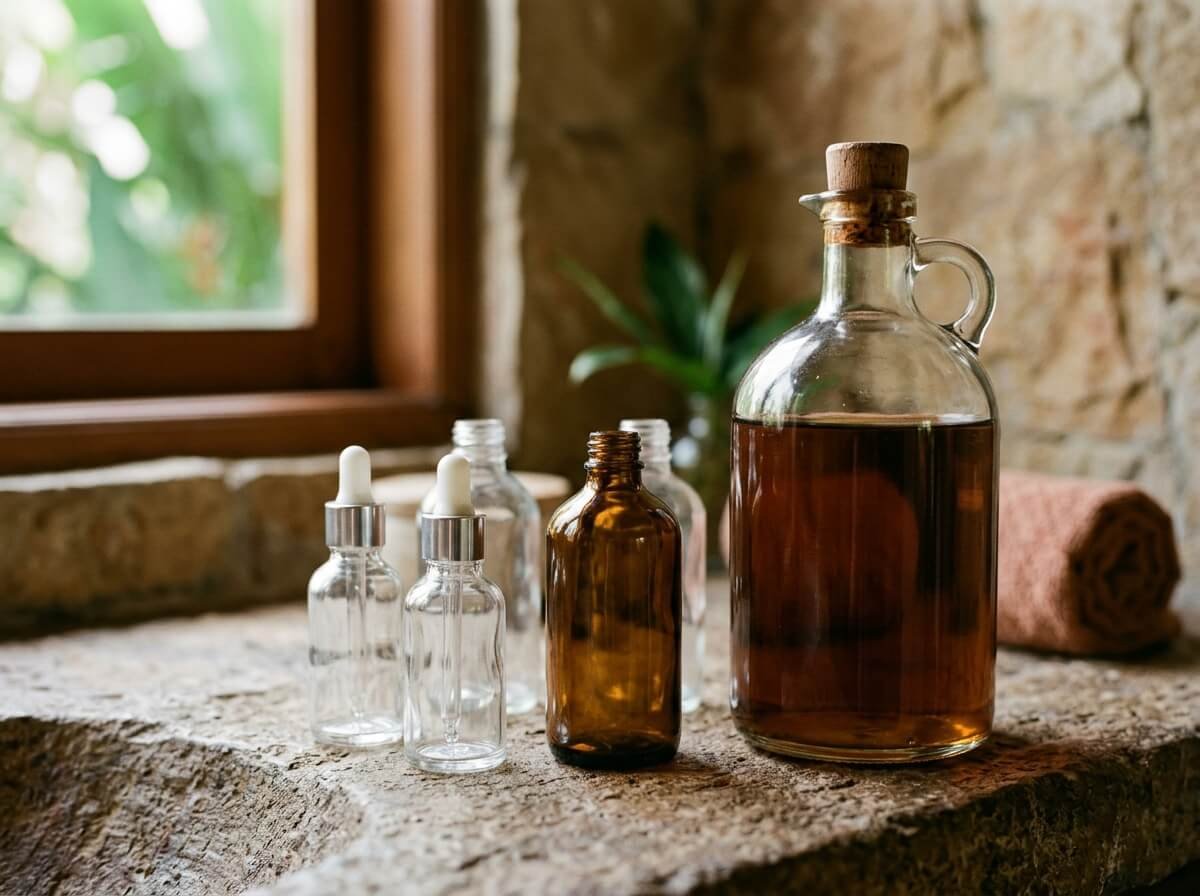
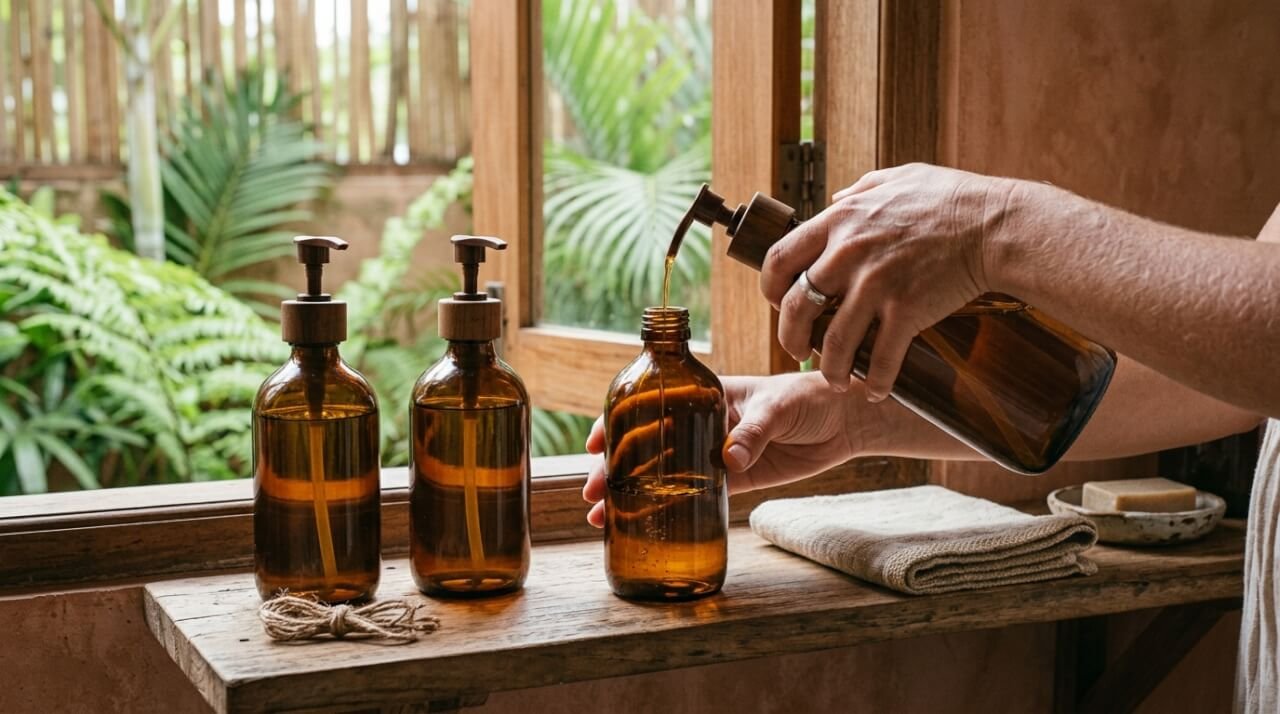
Before you buy a single new object, look at what is already in your bathroom cabinet. A pump bottle of shampoo, a tub of body butter, a bottle of hand soap: almost all of these are containers built to be used once and thrown away, but very few of them need to be. The lowest-waste choice is rarely a new purchase. It is refilling the container you already have, or replacing it once with a container built to be refilled for years.
This is the part most “zero waste bathroom” checklists skip, because a list of things to buy is easier to write than a habit to build. But the arithmetic only works if you refill. A glass bottle that gets replaced every eighteen months because you forgot the refill program is not meaningfully better than plastic. Real care means rethinking the system, not just the packaging. If you are new to refill and want the fuller picture of how a program should actually work, our guide to choosing a real refill program covers what to look for and what greenwashing looks like when a brand calls something “refillable” but makes it inconvenient on purpose.
This is not a new idea to us, or to Bali. Balinese daily life has practiced reuse for generations, long before “zero waste” became a marketing term. Offering baskets, canang sari, are woven fresh from palm leaf each morning and their contents are biodegradable by design, meant to return to the earth rather than sit in it. Refill culture is not a trend we adopted for a campaign. It is closer to how the community around us has always approached daily ritual: use what you have with intention, and let very little go to waste. When we built our first refill station, we were not inventing something new. We were formalizing a habit that was already here.
The numbers back up why this matters more than any single swap. In 2025 alone, our refill stations kept two thousand two hundred and forty-five bottles out of landfill, not because two thousand two hundred and forty-five people bought something new, but because that many refills happened instead of that many new bottles being manufactured, shipped, and thrown away. That is the refill-first rule in practice: the win is in the repetition, not the purchase.
So the rule, before anything else: can this be refilled. If yes, refill it. If no, and it is close to empty, replace it once with something that can be. That single question will do more for your bathroom’s plastic footprint than any list of fourteen swaps.
The daily-use audit: swap the high-frequency items first
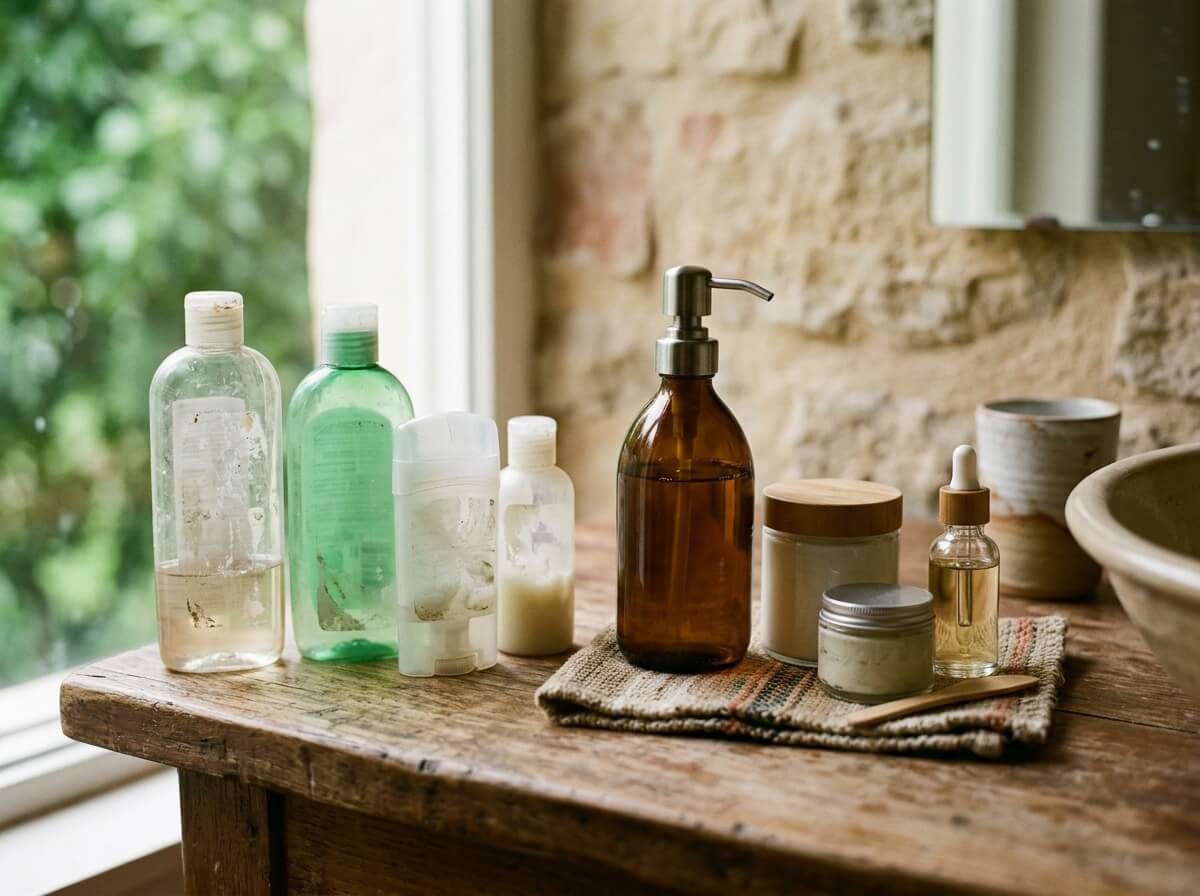
Not every bathroom product deserves the same attention. A novelty gadget you use twice a year has a small footprint no matter what it is made of. The items you touch every single day, soap, body wash, shampoo, deodorant, are the ones worth auditing first, because frequency is what turns a small plastic footprint into a real one over a year.
Do the arithmetic once and the priority becomes obvious. A household that replaces a plastic hand soap bottle every five weeks goes through roughly ten bottles a year. A cotton round dispenser, by comparison, might last two years before it needs replacing at all, because the packaging itself is not the disposable part. Ranking your bathroom by replacement frequency, not by how visible or “eco” a product feels, is the fastest way to find where your actual impact is.
Start with soap. A natural liquid body soap in a refillable format replaces a bottle that would otherwise be thrown out every four to six weeks in an average household. Move to body wash next: our guide on reading a body wash label and what Balinese mandi bathing practice teaches about washing with intention, not just habit, is worth reading alongside this one. The mandi tradition treats bathing as a daily reset, not a rushed task, and that same unhurried attention is useful when you are deciding what actually belongs on your shelf.
Deodorant is the item people forget to audit, mostly because so few plastic-free versions actually work well. A probiotic deodorant formulated without aluminum or synthetic fragrance, packaged in a paper-forward tube rather than a plastic stick, is one of the easiest high-frequency swaps to make, because you already replace deodorant every few weeks regardless of format. If you have tried a “natural” deodorant before and found it did not hold up, our breakdown of deodorant ingredients to avoid explains why some natural-labeled formulas underperform and what to look for instead.
The honest version of this audit: pick the two or three products you replace most often, and start there. A single high-frequency swap, done properly and kept up, outweighs a shelf full of low-frequency purchases made once and never repeated.
The parts nobody recycles: pumps, caps, and mixed materials
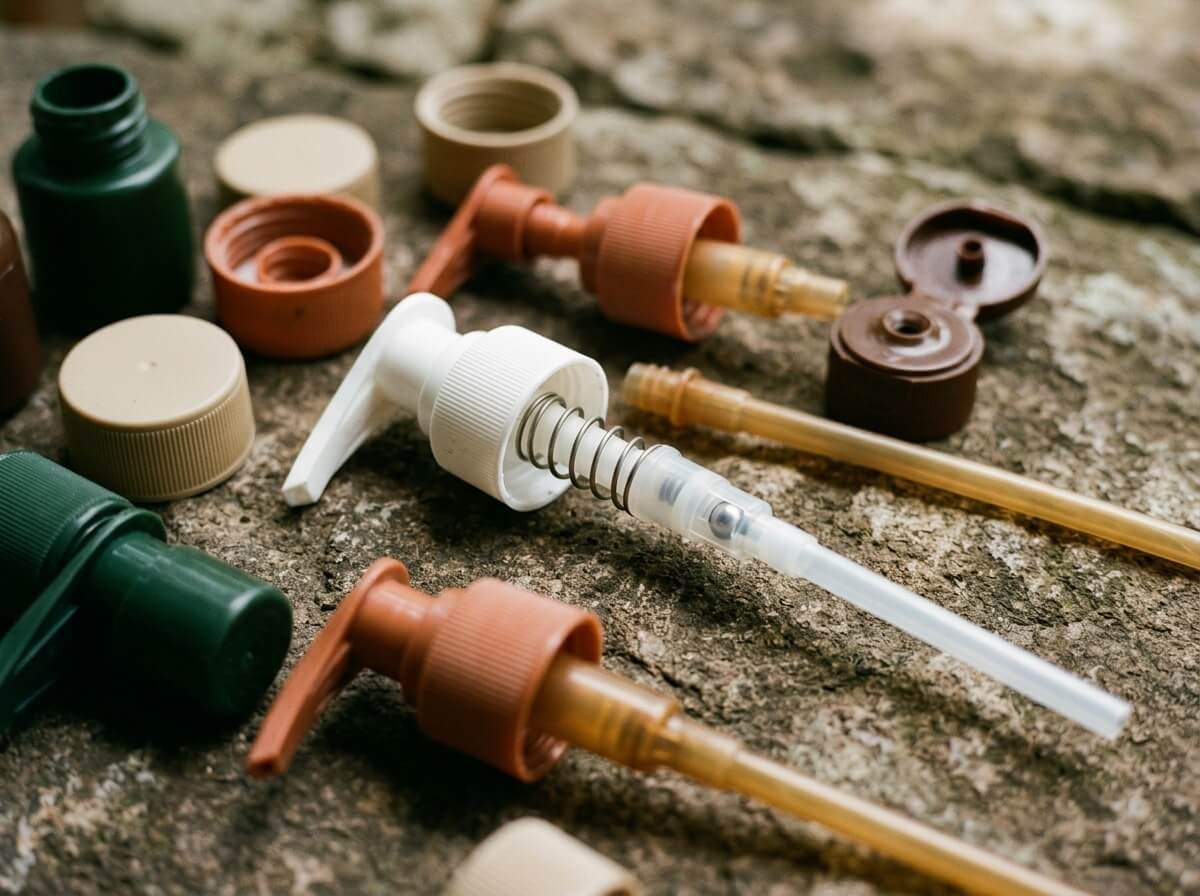
Even a household that recycles carefully still loses on this point: the pump mechanism inside a soap or lotion bottle is almost never recyclable. It combines a metal spring, a plastic tube, and a rubber gasket, three materials fused together in a way that most recycling facilities cannot separate. The bottle body might get recycled. The pump, in nearly every case, goes to landfill.
Caps carry a quieter version of the same problem. A cap is frequently made from a different grade of plastic than the bottle it seals, which means a fully “recyclable” bottle can still shed a non-recyclable cap at the exact moment you throw it away. Most municipal facilities are built to sort a small number of clean, single-material streams. A three-part pump or a mismatched cap does not fit that system, however careful you are about which bin it goes in.
This is not a reason to give up on recycling. It is a reason to weight refill above recyclability when you are choosing between two products, because a container you refill for years produces one pump and one cap, not one per replacement. A single glass pump bottle refilled twenty times over three years generates one unrecyclable pump assembly. Twenty disposable bottles over the same period generate twenty. The material each individual bottle is made from matters far less than how many times the container gets used before anything is discarded.
If you are auditing your cleaning cupboard as well as your bathroom cabinet, the same logic applies to spray triggers. Our natural bug repellent guide touches on this: a trigger spray head is mechanically complex in the same way a pump is, which is part of why we sell our Begone Bug spray as a refill can rather than asking you to buy a new trigger bottle every time. Keep the one trigger, refill the can, and the mixed-material part of the product only ever gets manufactured once.
Plastic-free in the cleaning cupboard, too
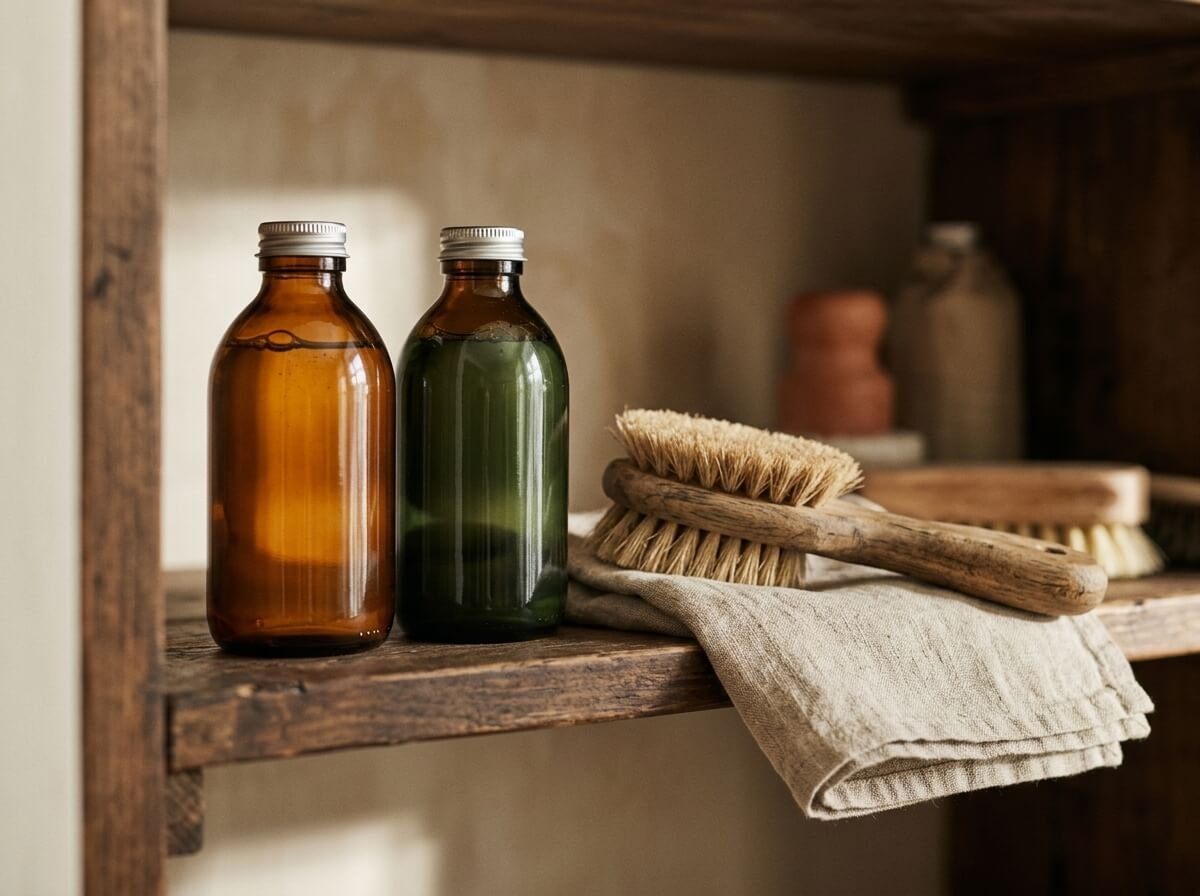
A bathroom is not only what sits on the shelf. It is also what lives under the sink: surface cleaner, and whatever you use on the bathroom floor and mirror. These bottles are typically replaced more often than shampoo or soap, because cleaning products get used up fast and refilled rarely.

A multi-purpose natural surface cleaner in a refillable spray bottle covers the bathroom counter, mirror, and floor without the plastic churn of a disposable spray bottle every month. The same logic extends past the bathroom door: natural dish soap and natural laundry detergent follow the identical refill-first pattern in the kitchen and laundry room, and a natural linen spray handles the fabric-freshening job that aerosol sprays usually do, without the can.
We are not suggesting you replace your entire cleaning cupboard this week. We are suggesting that when a bottle runs out, the next one you buy is a refillable one, not a like-for-like replacement of the plastic bottle you just finished. Small choices, repeated, become the real accounting. A household does not need a dramatic single purchase to make a difference here, it needs a small rule applied consistently at the exact moment a bottle runs dry, when it is easiest to default back to whatever is cheapest and most familiar on the shelf.

Start your daily-use audit with deodorant
Our probiotic deodorant skips aluminum and synthetic fragrance, and comes in packaging designed to cut plastic, not just talk about it. It is one of the easiest high-frequency swaps on this list.
Reading “eco” and “plastic-free” claims honestly

Not every label that says “eco” or “plastic-free” means what it implies, and a plastic free bathroom built on unexamined claims is its own kind of trap. A few honest distinctions are worth carrying with you at the shelf.
“Recyclable” does not mean recycled. It means the material could theoretically be processed by a facility, if one exists near you, if it is clean enough, and if the material is sorted correctly. A great deal of “recyclable” plastic still ends up in landfill because one of those conditions was not met. “Bioplastic” is another term that sounds like a fix but often is not: many bioplastics require industrial composting facilities that most municipalities do not have, so in a normal household bin they behave exactly like ordinary plastic.
Third-party claims deserve the same scrutiny as on-pack ones. A brand that says it “gives back to the ocean” should be able to name the partner and the mechanism. We work with Seven Clean Seas on a plastic credit system tied to what we actually produce, and we would rather a reader ask us to show that math than take the phrase “ocean positive” at face value from anyone, including us. Wild harvesting claims deserve the same treatment: when we talk about sourcing illipe butter or kukui oil through our Forestwise partnership in Kalimantan, or coconut oil through Aluan, that is a named relationship with a named community, not a vague “sustainably sourced” sticker.
We would rather you read one ingredient list and one packaging claim carefully than trust ten marketing badges. No greenwashing, no pretending: that is not a slogan for us, it is the actual standard we hold our own labels to, and it is the standard worth holding any brand to before you buy.
A related trap: buying a new “eco” product to replace a perfectly functional plastic one you already own is not always the lower-impact choice. Manufacturing and shipping a replacement has its own footprint, and that footprint is wasted if the plastic item you threw away still had years of use left in it. The most honest plastic-free swap is sometimes no swap at all, just a commitment to refill what you have until it is genuinely finished.
A realistic swap order: progress over perfection
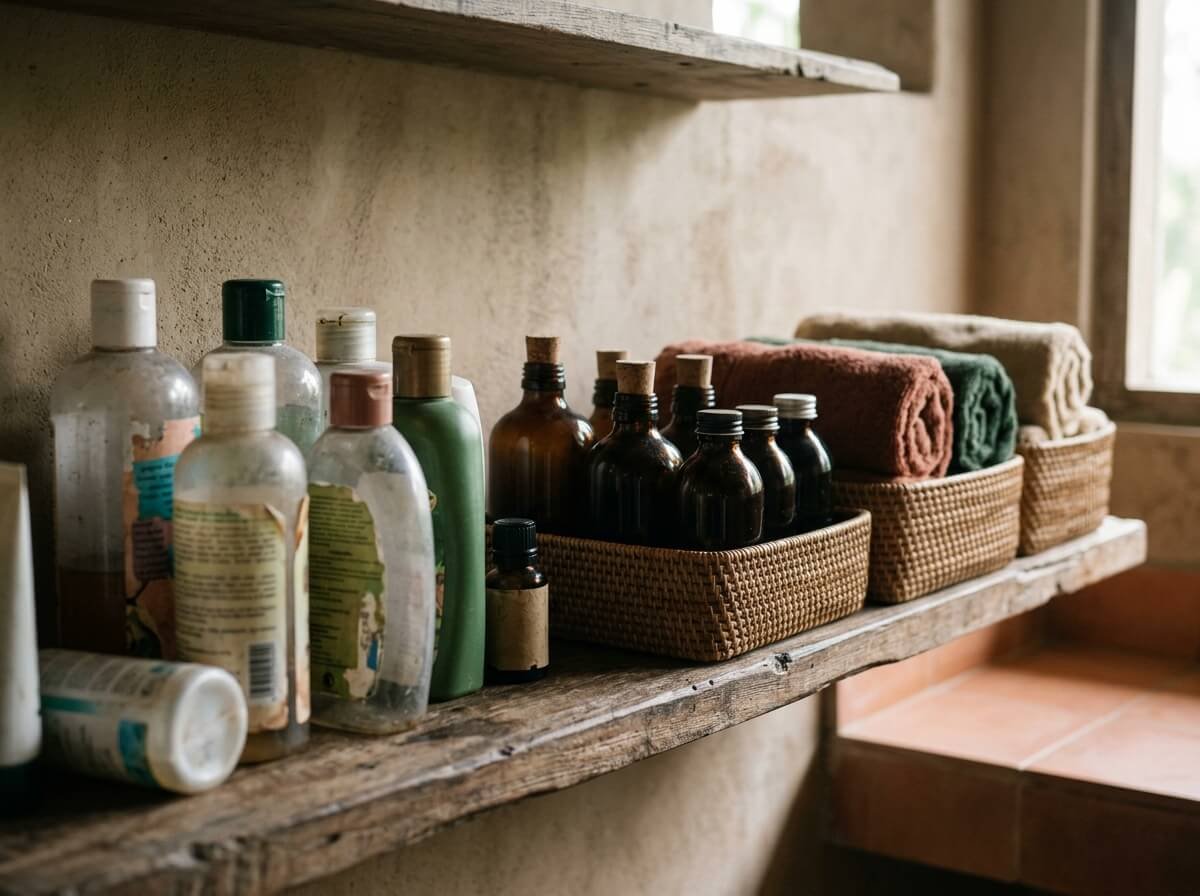
A full bin-everything overhaul is how most plastic-free attempts quietly fail. The bathroom is full of half-used products, the swap feels expensive all at once, and by month two the momentum is gone. A realistic order works better than a complete one.
- Finish what you have. Do not throw away a half-used bottle to feel more “plastic-free” today; that wastes both the product and the container.
- Replace your single highest-frequency item first, usually soap or body wash, with a refillable version.
- Add deodorant next. It is replaced often enough that the switch compounds quickly.
- Move to the cleaning cupboard once the bathroom shelf feels settled: surface cleaner, then dish soap, then laundry detergent.
- Leave low-frequency items, and any gadget-style purchase, for last, or skip them altogether if the plastic version still works.
This is slower than a weekend haul, and it is also the version that actually holds a year from now. Change starts small, and a bathroom that gets ten percent more plastic-free every few months, permanently, beats one that goes eighty percent plastic-free for a fortnight and quietly reverts.
There is also a cost benefit to spacing the swap out. Refill formats are usually priced below a full new bottle, since you are not paying for a fresh cap, pump, and label every time, but the container itself is an upfront cost. Spreading that cost across several months, item by item, is both more affordable and more sustainable than a single large purchase made in one sitting and never revisited.
Frequently asked questions

Is bar soap actually better than liquid soap in a plastic-free bathroom?
It depends on the bar, and on the household. A well-formulated bar soap in simple paper packaging genuinely cuts plastic, and it travels well for exactly that reason. A refillable liquid soap does the same job for households that prefer liquid, as long as the refill habit sticks, since a container that never gets refilled loses its advantage quickly. Neither format is automatically better on paper. The one that gets refilled or repurchased consistently, in your household specifically, is the one that actually works.
Are plastic-free bathroom products less hygienic?
No. Glass, aluminum, and well-formulated bar products are not inherently less hygienic than plastic pump bottles. Basic care, keeping a bar soap dish drained and a refill bottle clean between fills, is enough for normal household use. The hygiene concern people raise about bar soap specifically, that it can harbor bacteria if left sitting in water, is solved by a draining dish, not by switching back to plastic.
Does switching to refill actually save money?
Usually, over time. The container is a one-time cost, and refills are typically priced lower than a full new bottle because you are not paying for packaging again. The saving shows up after the second or third refill, not the first, so this is a swap that rewards patience rather than an immediate discount.
What about travel? Plastic-free feels harder on the road.
Travel is the one place we would not ask you to be strict. Decant a small amount from your refill bottle into a reusable travel-size container, or pack a bar soap, and let go of perfection for the trip. Progress over perfection applies here more than anywhere: one trip using travel-size plastic bottles does not undo months of refill habits at home.
How long does a typical refill container actually last?
A well-made glass or aluminum refill bottle, treated normally, holds up for years rather than months. The point of a refill-first bathroom is that the container stops being a consumable at all. You are no longer buying a new bottle every time you buy more soap, only the soap itself, which is the entire reason the frequency math in this guide favors refill over any single “eco” material.
Where do I start if I can only make one change this month?
Whichever product you replace most often. For most households that is soap, body wash, or deodorant. Start there, refill it consistently, and let the rest of the bathroom follow at its own pace.
A plastic free bathroom is not a single purchase or a weekend project. It is a habit of refilling what works and questioning what you are told to buy next. What you give, you get back, and that is as true of a refill habit as it is of anything else.