Essential oils for menstrual cramps: a warm, honest guide
Essential oils for menstrual cramps show up on almost every wellness list, usually headed by the same bottle and a promise that a few drops will melt the pain away. We want to offer something calmer and more useful. Cramps are real, they have a clear biological cause, and there are honest ways that warm oil, a pair of hands, and a little ritual can make a hard day softer. There are also limits, and it helps to know both.
This guide starts with why periods cramp at all, then looks at what actually helps (warmth and massage do most of the work), which oils earn their place, and how the warm-belly traditions of Bali and wider Indonesia fit in. We close with safety, the red-flag signs that mean “see a doctor, not an oil”, and a short FAQ. No grand promises. Just care that works with your body, not against it.
Why periods cramp, and what essential oils for menstrual cramps can realistically do
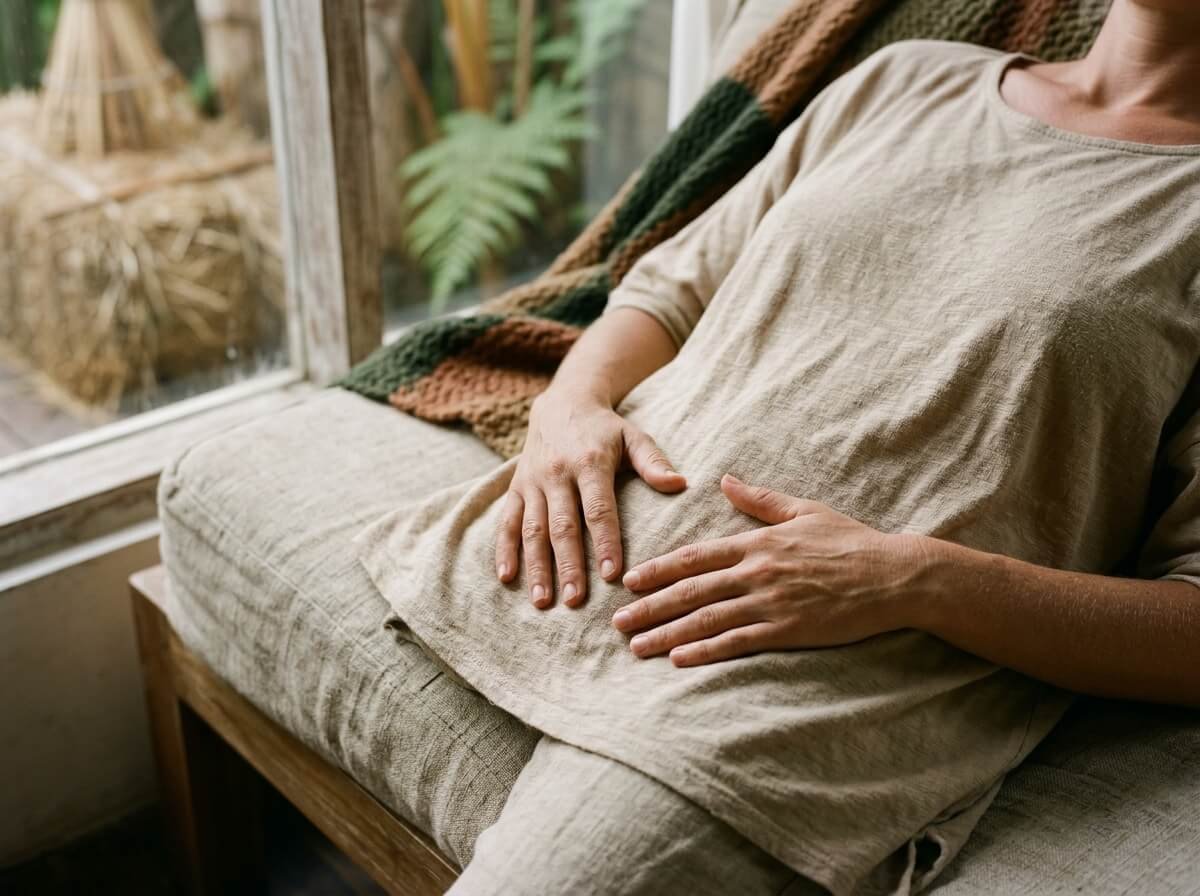
The ache most of us know as period cramps has a medical name: primary dysmenorrhoea. It is common, it is usually not a sign of disease, and it has a well-understood cause. In the days before and during a period, the lining of the uterus releases hormone-like compounds called prostaglandins. Prostaglandins tell the muscular wall of the uterus to contract so it can shed that lining. When levels run high, the contractions grow stronger and more frequent, and they briefly squeeze the blood vessels that feed the muscle. Less blood flow means less oxygen, and a muscle short on oxygen hurts.
That is why cramps often feel like a deep, rolling ache low in the belly that can spread into the lower back and thighs. It is also why the pain tends to peak on the first day or two, when prostaglandin levels are highest, and then ease. Some people also feel nausea, loose stools, or a headache in the same window, because prostaglandins act on the gut and blood vessels too.
So what can aromatherapy touch in this picture? Honestly, not the prostaglandins themselves. Common over-the-counter pain relievers such as ibuprofen work by reducing prostaglandin production, which is why they are often the first recommendation from doctors. No essential oil rubbed on the skin does that in a way the research can confirm.
What oils can do is support the two levers we can reach from the outside. The first is local warmth and circulation: warming oils and warm hands encourage blood flow to the area and relax tight muscle. The second is the nervous system: a slow massage, a calming scent, and a few minutes of deliberate rest lower the stress response that makes pain feel louder. Small clinical studies on aromatherapy massage for period pain point in a helpful direction, but they are small, and in several of them plain massage oil helped too. The most honest reading is this: the ritual is the medicine, and the oil is the vehicle and the scent that make the ritual easier to return to.
That framing matters because it changes what we reach for. Instead of hunting for the one “cramp oil”, we can build a comfort practice: heat, hands, breath, and a well-diluted blend we genuinely enjoy smelling. If anxiety rises with the pain, our guide to essential oils for stress and anxiety covers the calming side in more depth.
Warmth and massage: the two things that actually help
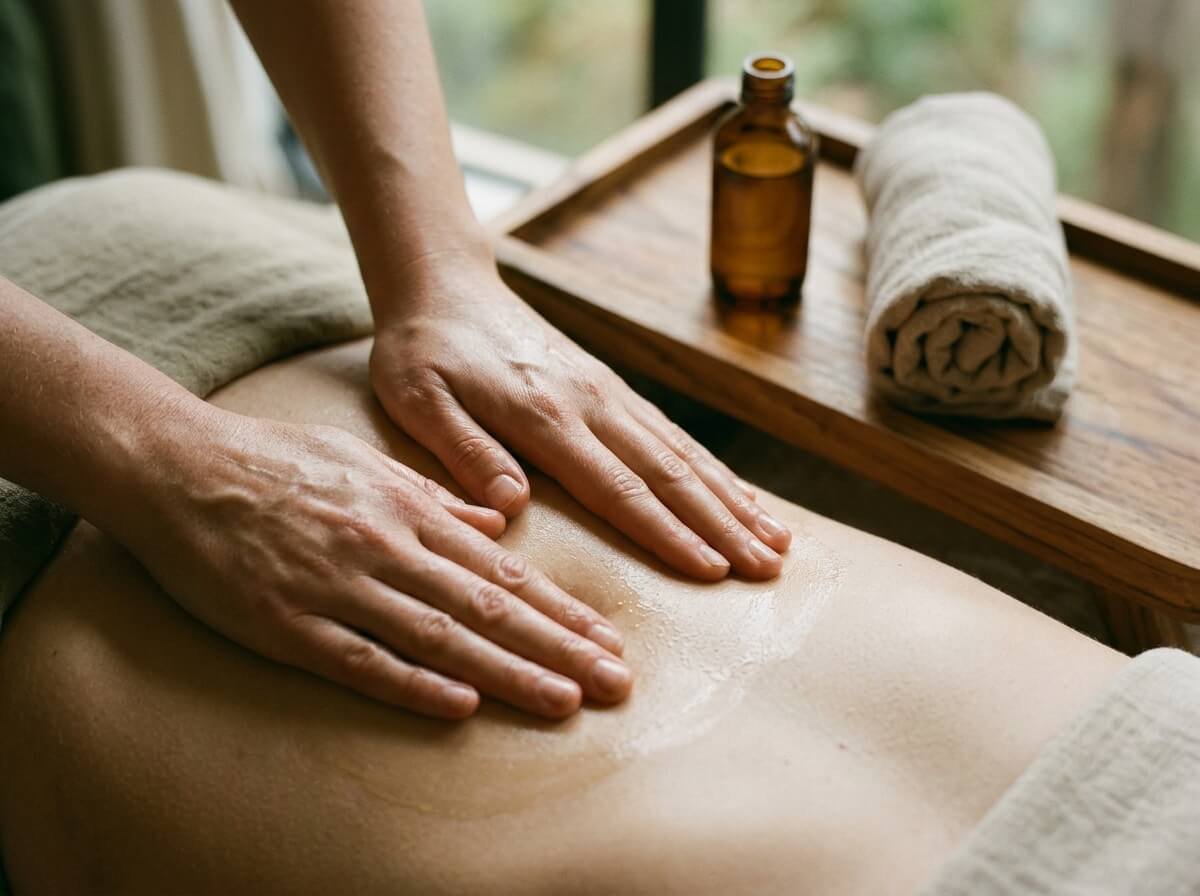
If we had to name the two most useful tools for cramps that do not come in a blister pack, they would be heat and touch. Both have better evidence than any single essential oil.
Why warmth works
Heat on the lower belly is one of the oldest cramp remedies in almost every culture, and modern studies back it up. Trials of continuous, gentle heat (heat wraps and patches worn for several hours) found it eased period pain meaningfully, and in some comparisons about as well as a standard dose of ibuprofen. Warmth relaxes smooth muscle, encourages blood flow back into the area, and gives the nervous system a competing, pleasant signal to attend to. A hot-water bottle wrapped in a cloth, a warm rice bag, or a folded towel soaked in hot water and wrung out all work. Keep the heat warm, not hot, and never sleep on a heating pad.
Why massage works
Abdominal massage brings warmth through friction, moves blood, and invites the muscles of the belly and lower back to soften. It also does something oils cannot do alone: it gives us a few quiet minutes of attention. Small trials comparing aromatherapy massage with massage using an unscented carrier oil found that both groups reported less pain, with the scented group sometimes doing a little better. That tells us the hands are carrying most of the effect, and the oils add a layer of comfort and scent memory on top.
A simple self-massage sequence
- Warm the oil first. Rub about a teaspoon of diluted oil between your palms for 10 seconds.
- Rest your hands. Lay both palms flat below the navel and take three slow breaths before you move.
- Circle clockwise. Using the flat of your fingers, make slow, wide circles clockwise around the navel for two to three minutes. Clockwise follows the direction of the large intestine, which many people find settling when cramps come with bloating.
- Sweep outward. Slide both hands from the centre of the lower belly out towards the hip bones, 10 times.
- Finish at the back. Rub the remaining oil into the lower back and sacrum with firm, slow strokes, then cover with a warm cloth or hot-water bottle for 15 minutes.
Pressure should feel comforting, never sharp. If any movement makes the pain spike, stop and simply rest your warm hands there instead.
If you want to go deeper into the techniques behind a good massage, our guide to Balinese massage oil walks through long strokes, pressure, and carrier choices. And if the ache travels into tight hips and back muscles, essential oils for muscle pain covers warming and cooling oils for skeletal muscle, which behaves a little differently from the uterus.
Which oils, and why: ginger, cajeput, lavender, and the clary sage question
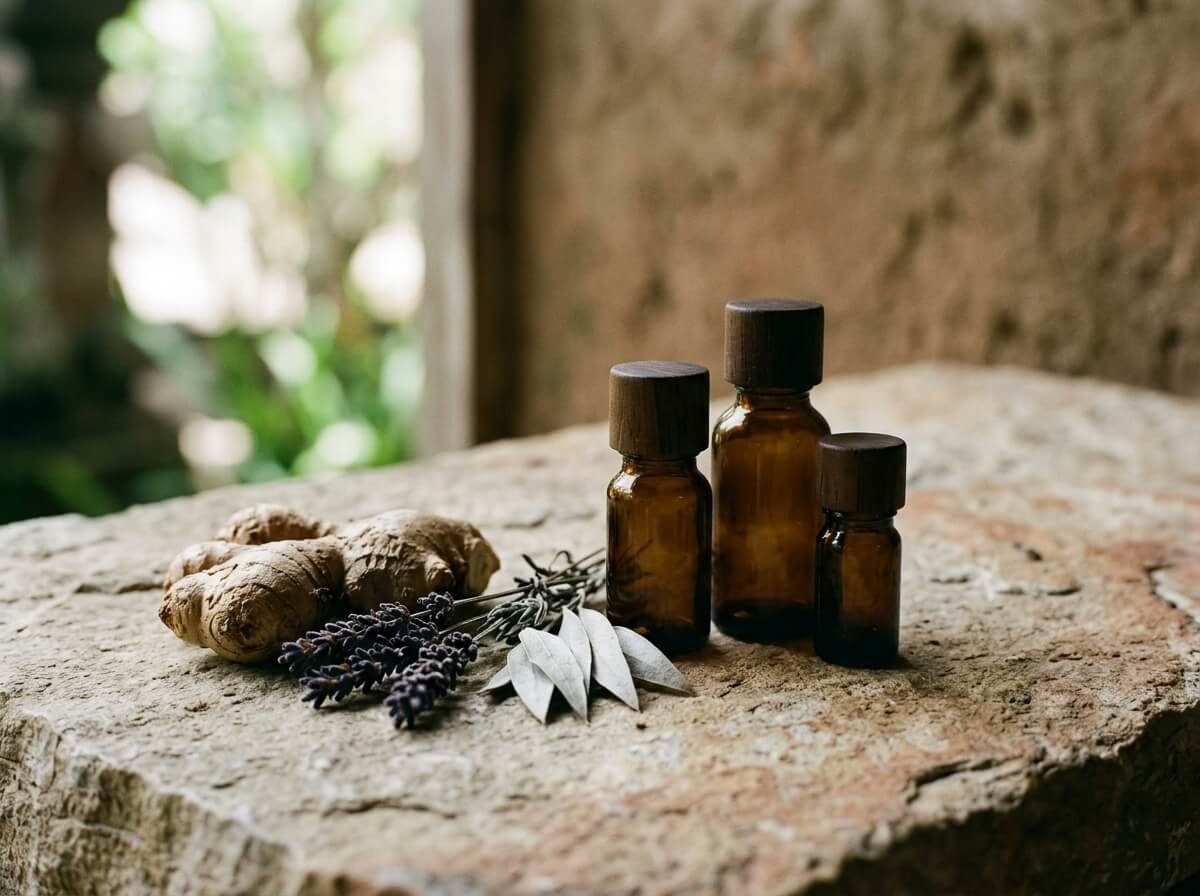
With the mechanism in mind, choosing oils becomes simpler. We want oils that feel warming, oils that feel calming, and oils that are gentle enough on the skin to use across a broad patch of belly. Here is how we think about the main candidates.
Ginger: slow, steady warmth
Ginger root has a long place in Indonesian kitchens and home remedies, and its essential oil carries the same spicy, woody warmth. On the skin, diluted ginger oil gives a gentle heat that builds slowly rather than stinging. It pairs naturally with a warm compress. Ginger taken as food (fresh ginger tea, for example) has its own small body of research for period pain, but that is the root, not the essential oil, and essential oils should never be swallowed. Our Ginger Essential Oil is steam-distilled from the root, and our ginger essential oil guide covers its wider uses.
Cajeput: the familiar Indonesian warmth
Cajeput, known across Indonesia as kayu putih, is the oil inside the small green bottles of minyak kayu putih that live in so many Indonesian handbags and bathroom cabinets. It has a fresh, camphor-like lift and a mild warming effect when rubbed in. Many families reach for it for tummy aches, chills, and general discomfort, including period discomfort. In a cramp blend it adds warmth and a clean, open scent that many people find easier to breathe with. You can read more about it in our cajeput essential oil profile or find our Cajeput Essential Oil in the shop.
Lavender: the calming one with the most study
Lavender appears in more period-pain studies than any other single oil, mostly as an inhaled scent or in massage blends. The results are modest and the trials are small, but they consistently suggest lavender helps people feel calmer and rate their pain a little lower. That fits what we know about its effect on the nervous system. Our Lavender Essential Oil works as the soft, floral heart of a cramp blend, and our lavender essential oil guide explains why it earns its reputation.
The clary sage question
Here is the honest part. Nearly every list of essential oils for menstrual cramps puts clary sage at the top. It is a reasonable choice: clary sage is rich in linalyl acetate, a calming compound, and it appears in several of the small massage studies. Some sources also describe one of its constituents, sclareol, as having hormone-like activity, though the evidence for that on the skin is thin.
We do not sell clary sage. We could pretend otherwise, or quietly skip it, but that is not how we work. If you already own a good clary sage oil and it suits you, it is a fine addition to a well-diluted massage blend. Just know that most of the benefit comes from the warmth, the massage, and the calming scent, which ginger, cajeput, and lavender deliver well. Clary sage also carries a pregnancy caution (more on that below), so it is not the right choice for everyone.
A simple warm blend to try
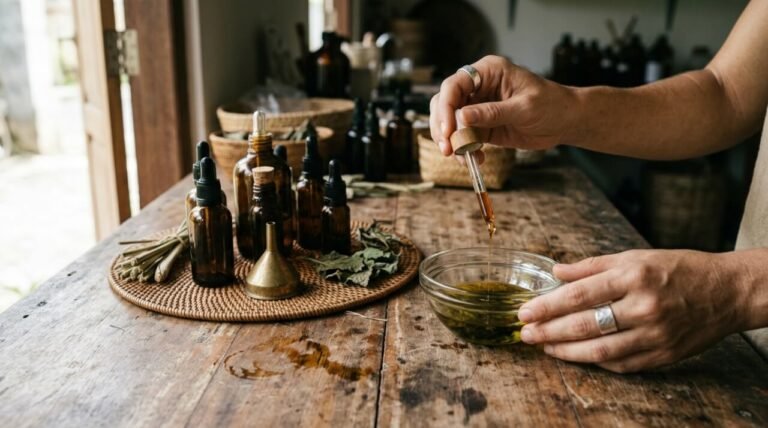
For a 30 ml bottle of carrier oil such as coconut or jojoba, add six drops of ginger, four drops of lavender, and two drops of cajeput. That is 12 drops, roughly a 2% dilution, which suits a broad area of skin like the belly and lower back. Patch-test first. If you would rather browse further, our list of essential oils and their uses is a good map.
The Balinese warm-belly ritual: heritage, heat, and hands
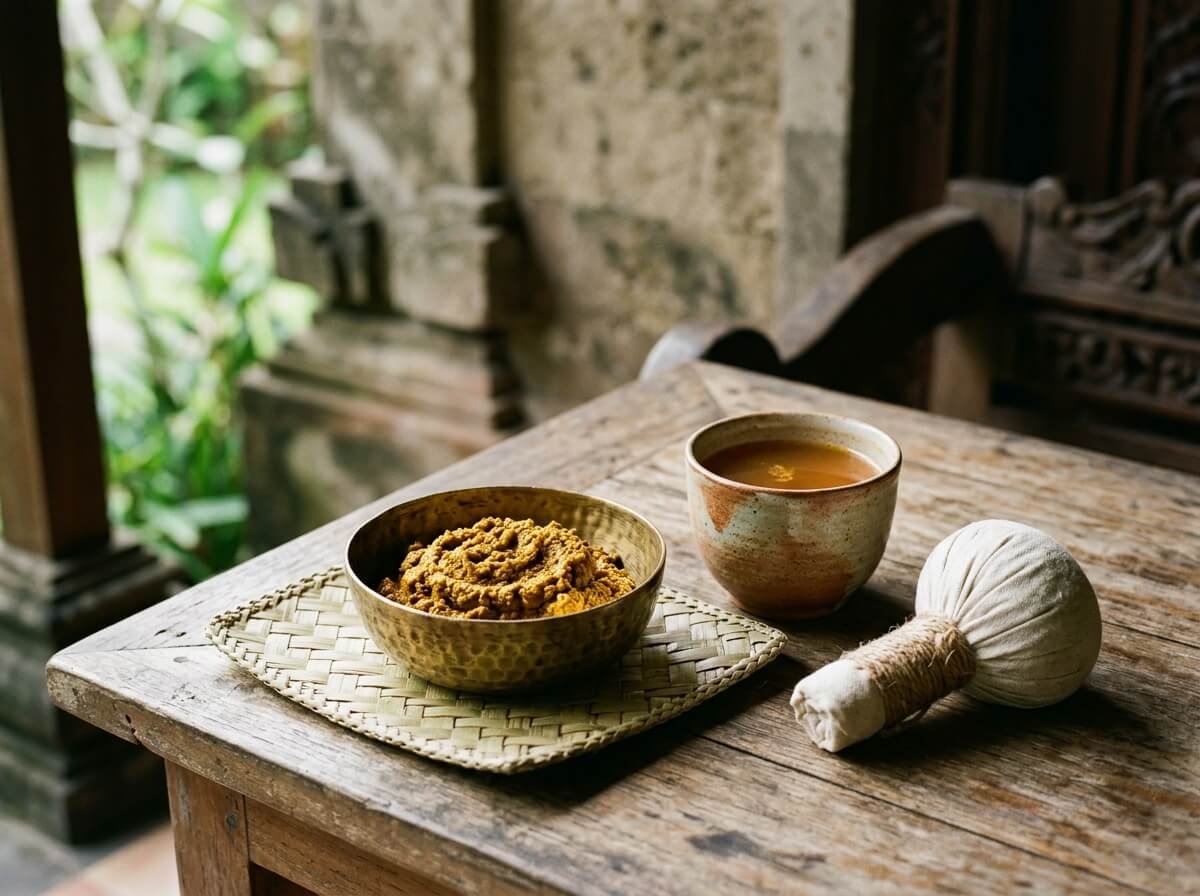
Long before anyone wrote a list of essential oils for menstrual cramps, households across Bali and the wider Indonesian archipelago had their own answers, and almost all of them involved warmth.
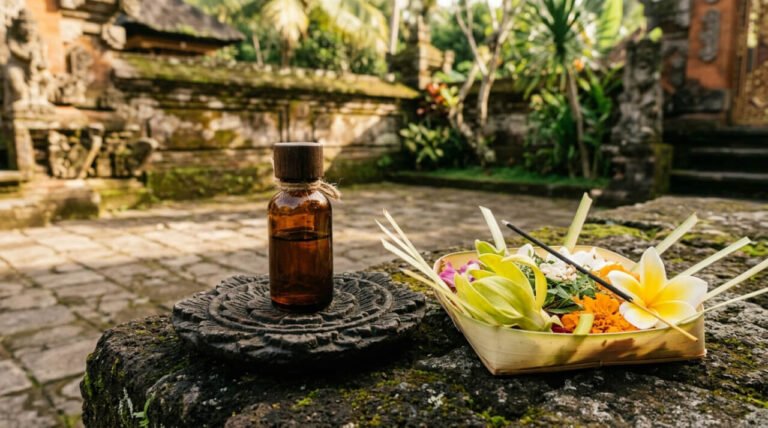
In many Indonesian homes, a stomach ache, a chill, or a hard first day of a period is met with a few drops of minyak kayu putih rubbed into the belly, or a warm spiced oil worked in by a mother, aunt, or grandmother. Across Java, the turmeric and tamarind tonic known as jamu kunyit asam is a familiar drink around menstruation, sold by jamu makers and brewed at home. In Bali, warming pastes of ground spices and roots, the family of preparations that includes boreh, have long been used to bring heat into tired or chilled bodies. We explore that heritage in our guide to Balinese beauty rituals.
We share these traditions with respect for where they come from. They belong to real families and real healers, and they vary from village to village. What they teach is consistent, though: warmth, touch, rest, and spices that feel heating. Modern research has caught up with the first three, and it is still exploring the last.

Bringing the ritual home
- Make space. Choose a quiet 20 minutes. Lie down on a towel with a pillow under your knees, which relaxes the belly and lower back.
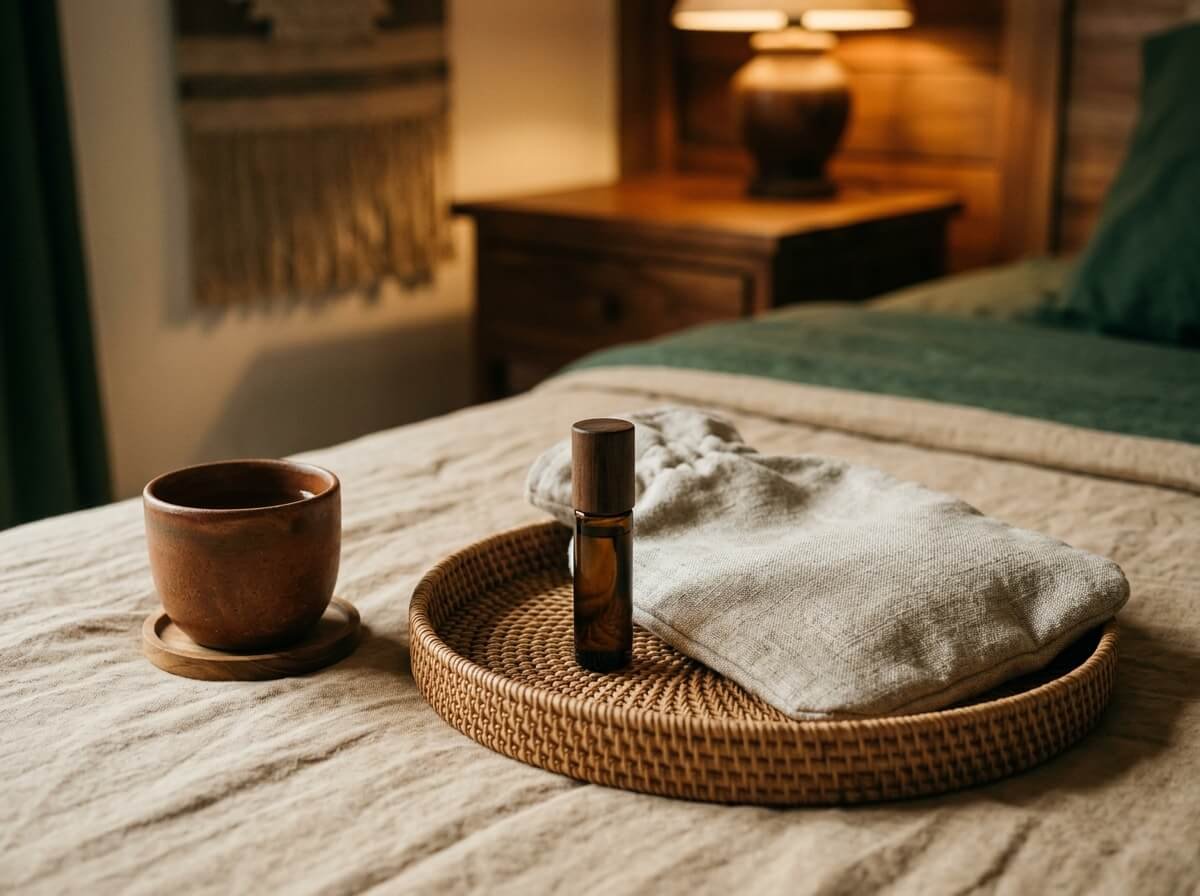
- Warm a compress. Soak a small cotton or linen cloth in hot water, wring it out well, and test it on your inner wrist. It should feel warm and comfortable.
- Oil and massage. Warm a teaspoon of diluted oil in your hands and follow the clockwise sequence above for five minutes.
- Layer the heat. Lay the warm cloth over your oiled belly, then a dry towel or hot-water bottle on top to hold the warmth.
- Breathe and rest. Slow your breath so the exhale is longer than the inhale. Stay for 10 to 15 minutes.
- Sip something warm. Fresh ginger tea, or a warm turmeric drink, closes the ritual from the inside.
If you would rather not blend your own oils on a day you feel unwell (a very reasonable choice), a ready-diluted body oil keeps it simple. Our Lemongrass Ginger Body Oil is blended in coconut oil with ginger, lemongrass, cinnamon, cubeb, and fennel, a warm, spicy profile made for massage. One honest note: because it contains fennel, it is not the oil to use if you are pregnant or could be (see the safety section below).

A warm belly-rub oil, ready when you are
Ginger, lemongrass, cinnamon, cubeb, and fennel, hand-blended in Bali into coconut oil and ready to warm between your palms. No mixing on the days you feel least like it. Contains fennel, so choose lavender instead if you are or could be pregnant.
Safety first: dilution, pregnancy, and the oils to skip
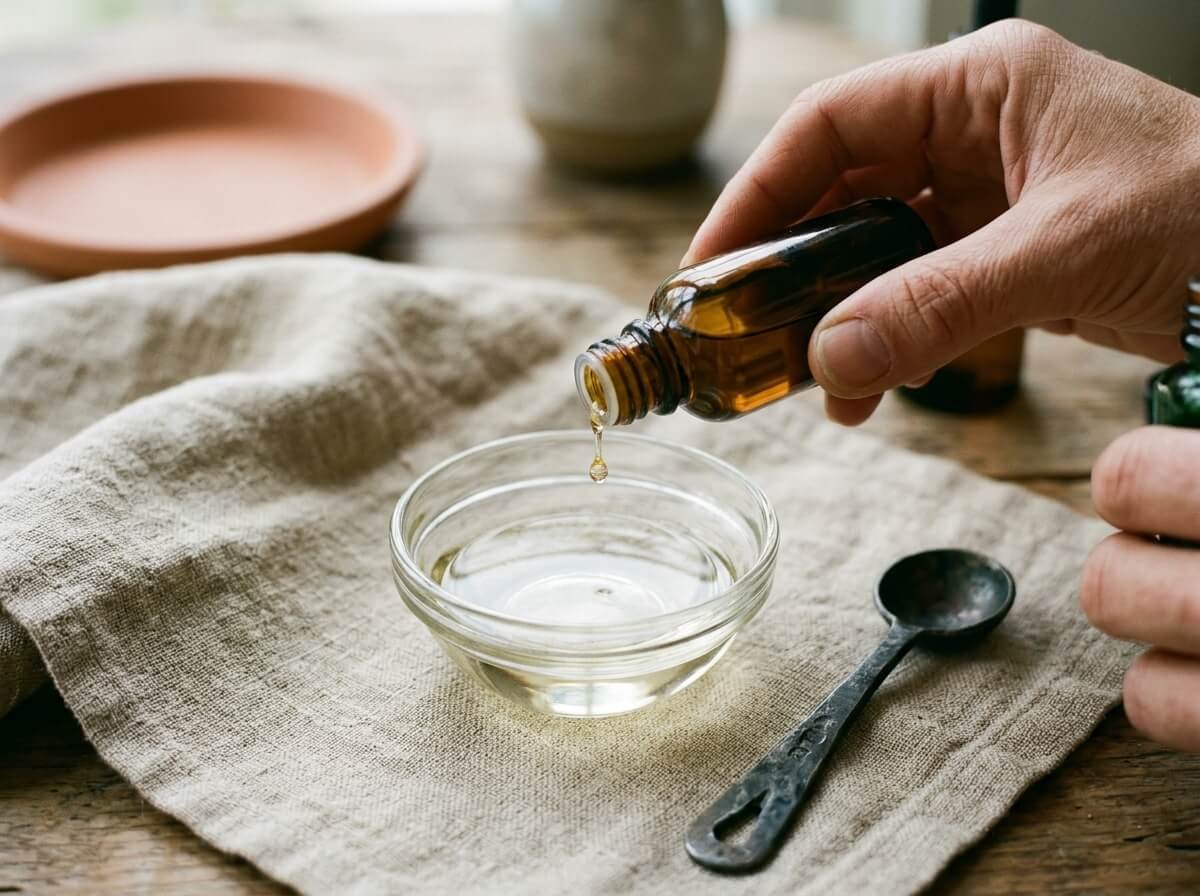
Essential oils are concentrated plant chemistry. Used well, they are gentle. Used carelessly, they can irritate skin or interact with conditions we may not know we have. Here is what every cramp blend should respect.
Always dilute
Never apply essential oils neat to the belly. For a broad area of skin, 1% to 3% is the comfortable range: roughly six to 18 drops in 30 ml of carrier oil. Start at the low end if your skin is sensitive. Our step-by-step guide to how to dilute essential oils includes a full drop chart.
Patch-test every new blend
Rub a little of the diluted blend on your inner forearm and wait 24 hours. Redness, itching, or burning means the blend is not for you. Warming oils such as ginger and cinnamon are more likely to sensitise skin over time, so keep dilutions modest and avoid broken or freshly shaved skin.
Never swallow essential oils
Some online sources suggest adding drops of oil to water or capsules for cramps. Please do not. Essential oils are far more concentrated than the herbs they come from and can harm the gut, liver, and kidneys. Ginger tea, yes. Ginger essential oil in water, no.
Pregnancy and hormone-sensitive conditions
Some oils traditionally linked to periods are linked for a reason: they may influence hormones or the uterus. Clary sage, fennel, and a handful of others are commonly flagged as oils to avoid in pregnancy, and fennel is also best avoided with endometriosis or estrogen-sensitive conditions. If there is any chance you are pregnant, if you are trying to conceive, or if you are breastfeeding, choose a simple lavender blend at low dilution, or skip oils altogether and use plain warm massage. When in doubt, ask your doctor or midwife.
Warming or cooling?
Most people prefer warmth for uterine cramps. Cooling, menthol-rich oils such as peppermint feel refreshing on a tight lower back or a tension headache (our guide to essential oils for headaches covers that use), but cold can make some people’s cramps tighten. If you try a cooling oil, use it on the lower back rather than the belly, and never combine it with a heat pack right away.
Children, teens, and sensitive bodies
For young teens, keep dilutions at 1% or lower, use gentle oils like lavender, and let heat and massage do the heavy lifting. Avoid strong camphor-rich oils such as cajeput near the face of young children.
When it is not just cramps: red flags that need a doctor
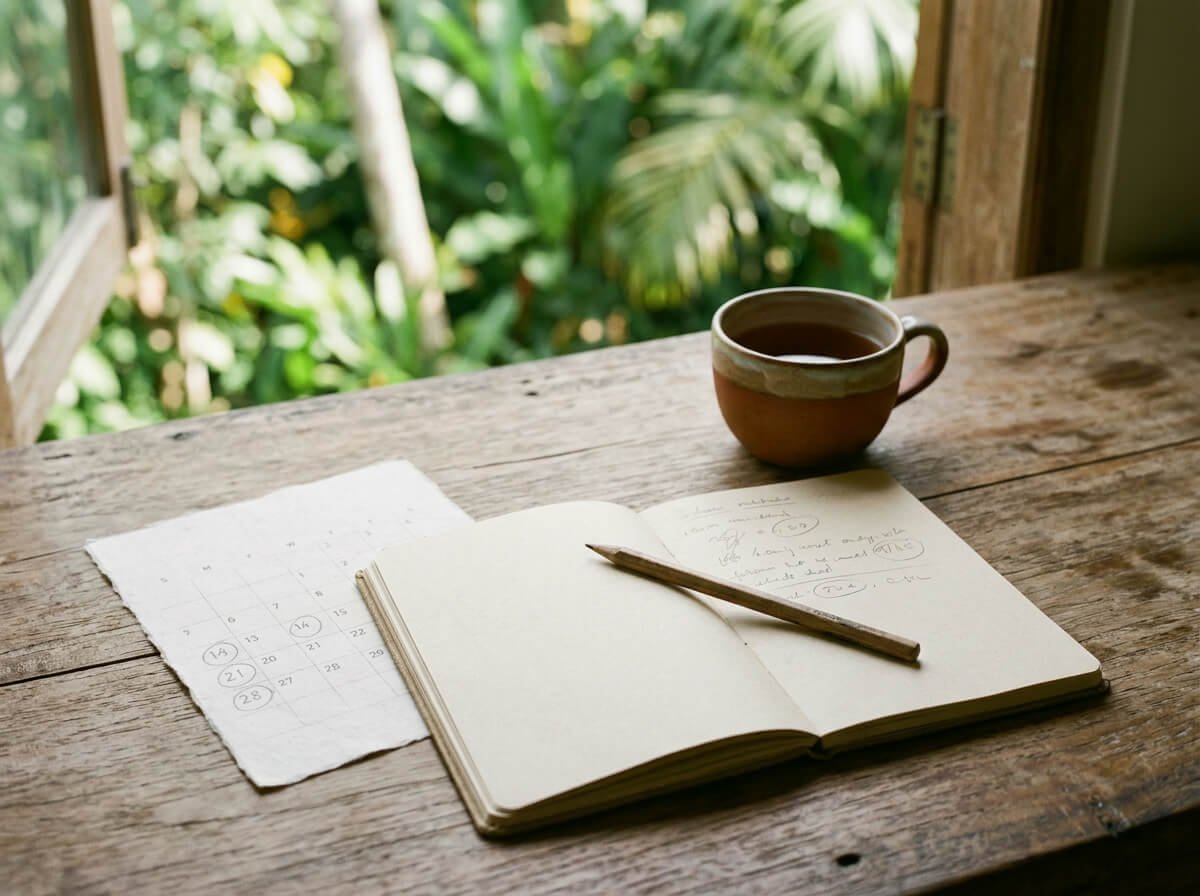
Aromatherapy is comfort care. It sits alongside medical care, never in place of it. Most period pain is primary dysmenorrhoea, but some pain is a symptom of something else, and some of those conditions can take years to diagnose if pain is brushed off as normal.
Please see a doctor if any of these sound familiar:
- Pain that is severe enough to stop you working, studying, or sleeping, even with over-the-counter pain relief.
- Pain that is getting worse each cycle, or that started for the first time after your mid-twenties.
- Pain outside your period, during or after sex, or with bowel movements or urination.
- Very heavy bleeding, bleeding between periods, or large clots.
- Fever, unusual discharge, or feeling generally unwell alongside pelvic pain.
- Sudden, sharp, one-sided pain, especially if a period is late or you could be pregnant. This needs urgent care.
Conditions such as endometriosis, adenomyosis, fibroids, and pelvic infections can all cause painful periods. Endometriosis in particular is known for long diagnostic delays, partly because so many people are told that severe pain is simply part of having a period. It is not.
A practical step that helps any appointment: track your cycle and symptoms for two or three months. Note the day of your cycle, how strong the pain was on a scale of one to 10, where you felt it, and what helped. That record gives your doctor a clearer picture than memory alone, and it helps you notice patterns too.
If cramps come with nausea, some of the gentle inhalation ideas in our guide to essential oils for nausea may help you feel steadier while you rest. But if something feels wrong, trust that feeling and get it checked.
FAQ: essential oils for menstrual cramps
How fast do essential oils work for cramps?
Most people notice the warmth and calm of a massage within a few minutes, and the effect builds with a warm compress over 15 to 20 minutes. Oils are not a fast-acting painkiller. Think of them as part of a comfort ritual you can repeat through the day.
What is the most useful oil for period cramps?
There is no single winner. Lavender has the most study for calm and pain perception. Ginger and cajeput bring warmth. A blend of the three, well diluted and paired with heat and massage, covers more ground than any one oil.
Can I use essential oils for cramps if I might be pregnant?
Be cautious. Avoid clary sage, fennel, and blends that contain them. If pregnancy is possible, plain warm massage with an unscented carrier oil is the safest choice, and it is worth checking with a doctor or midwife before using any oils.
Is it better to inhale or massage essential oils for cramps?
Massage, if you can. It combines warmth, touch, and scent. Inhalation, from a diffuser or a few breaths from a roller on your wrists, is a good option when you are out or cannot lie down. Our Santi Essential Oil Roller, a calming lavender and rose geranium blend pre-diluted in jojoba, slips into a bag for exactly those moments. It also contains bergamot, so keep it on skin that stays out of strong sun.
Can I drink essential oils for cramps?
No. Essential oils should not be swallowed. If you want an internal remedy, a cup of fresh ginger tea or a warm turmeric drink is a gentle, food-based option.
Can I use essential oils alongside pain relievers?
Yes. Massage, heat, and diluted oils on the skin do not interact with common over-the-counter pain relievers. Many people find the combination works better than either alone. Follow the dosing on your medicine and speak to a pharmacist if you take other medication.
How often can I repeat the massage?
Two to three times a day during the first days of your period is comfortable for most skin at a 2% dilution. If your skin feels warm, itchy, or irritated, take a break and switch to plain carrier oil.
Cramps can make a body feel like something to push through. We would rather treat those days as an invitation to slow down. A warm cloth, a pair of hands, a scent you love, and the knowledge of when to ask for help: that is a ritual worth keeping. If you want a calm, ready-made option for the evenings, our Deep Calming Essential Oil Blend in a diffuser makes the room feel softer while you rest.