Ingredient Tuesday: cendana (sandalwood), the temple wood that quiets skin
Cendana is the wood that has perfumed Balinese temples for centuries. It is also one of the most studied botanicals in modern dermatology. The same compounds that lift the air above an offering tray are the ones that calm reactive skin, and that overlap is the reason cendana sits at the centre of Indonesian wellness in a way that few ingredients can match.
Where cendana actually comes from
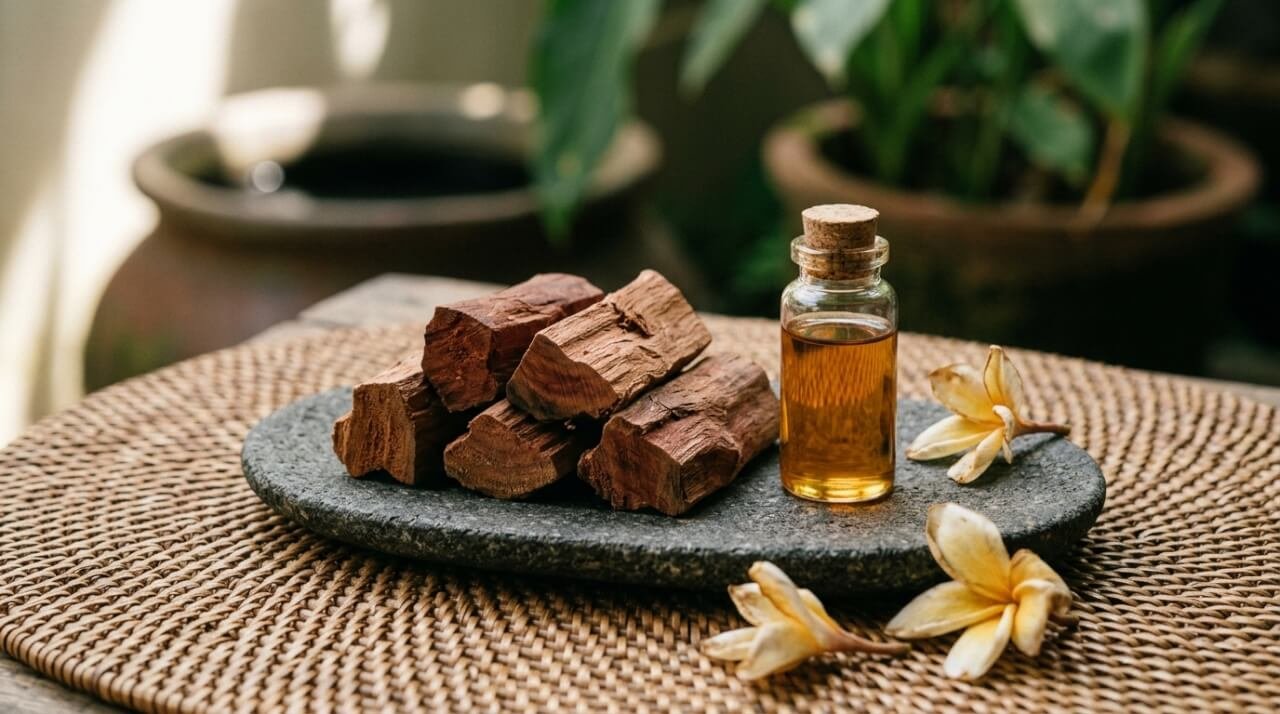
True cendana is Santalum album, the Indian sandalwood that has been cultivated and wild-harvested across the eastern Indonesian islands since the Majapahit era. The most prized trees still grow on Sumba and Timor, where the soil is volcanic and the dry season is long enough to concentrate the heartwood’s aromatic oils. Sandalwood is not a fast crop. A tree needs roughly 30 years to develop the heartwood that yields essential oil, and centuries of unmanaged extraction have made the species rare enough that responsible sourcing is no longer optional. Anyone working with real cendana today is working with a long chain of patience and accountability, from cultivation cooperatives to small distilleries that can prove provenance.
What the science says
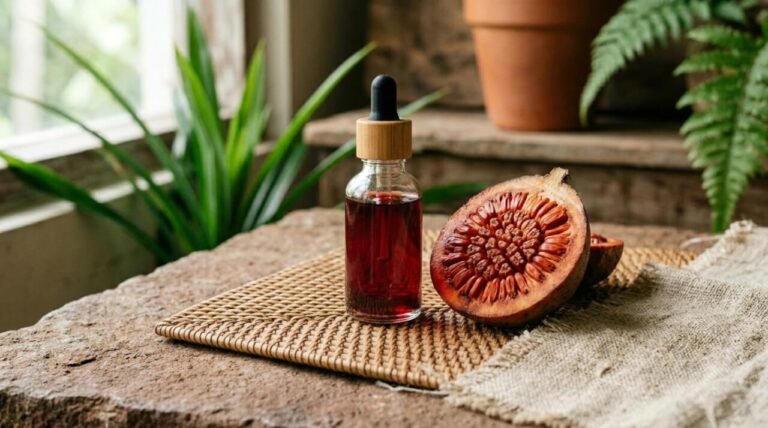
The oil of cendana is rich in two molecules called alpha-santalol and beta-santalol. Together they make up between 70 and 90 percent of a well-distilled sandalwood oil, and they are the reason the ingredient appears in so much peer-reviewed skin research. Studies have shown santalols to be measurably anti-inflammatory, to support a calmer skin barrier, and to reduce the kind of low-grade redness that follows shaving, sun exposure, or the slow stress of urban air. None of this is news to a Balinese healer. It is simply the contemporary vocabulary for something that has been known and used for generations.
How we use it in Bali
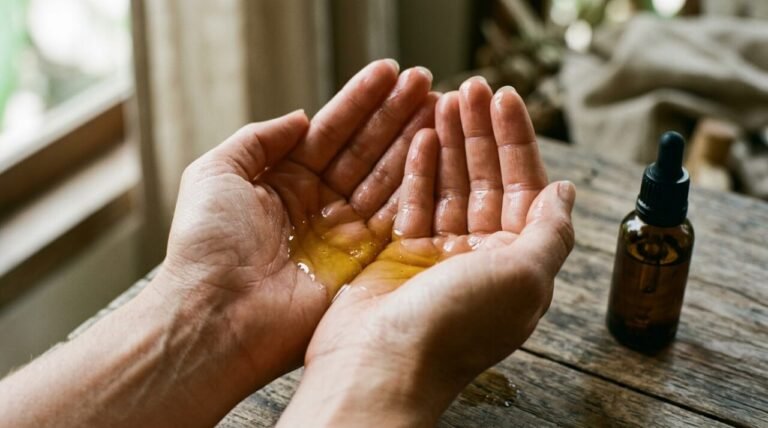
In Bali, cendana finds skin in three quiet ways. It is ground into boreh, the warming body scrub used at the end of a long day. It is layered into ritual oils for massage. And it is burned as dupa, the incense whose scent shapes the temple air and, by extension, the breath of anyone nearby. The skincare use and the ritual use are not two separate traditions. They are the same practice, scaled differently.
Where it sits in a daily ritual
If you want to bring cendana into your own routine, start with the senses before the science. A drop in a diffuser blend at the end of the day. A few drops in a carrier oil for a slow shoulder massage. A boreh treatment once a week, if your skin tolerates warm botanical scrubs. The compound has the credentials. The practice is what makes them yours. For a wider tour of the oils Bali has shaped, our complete guide to aromatherapy oils is a useful next read.