Balinese boreh: the warming herbal body ritual, and how to bring it home
Balinese boreh is one of the oldest forms of care on the island, a warming herbal paste that farmers have pressed into aching shoulders and cold legs for generations. Long before it appeared on any spa menu, boreh was medicine you could hold in your hands: ground ginger, cloves, and roots, mixed to a rough paste and rubbed into the body to bring back heat. This guide looks at what balinese boreh actually is, the botanicals inside it, why it warms the skin, and how to bring a version of the ritual home with respect for where it comes from.
We craft in Bali, and boreh belongs to the same highland tradition our founders learned from. So we want to tell it plainly, without the mystique and without the marketing. What follows is the heritage, the ingredient science, the cultural context, and an honest, practical way to practise a warming ritual at home.
What balinese boreh actually is
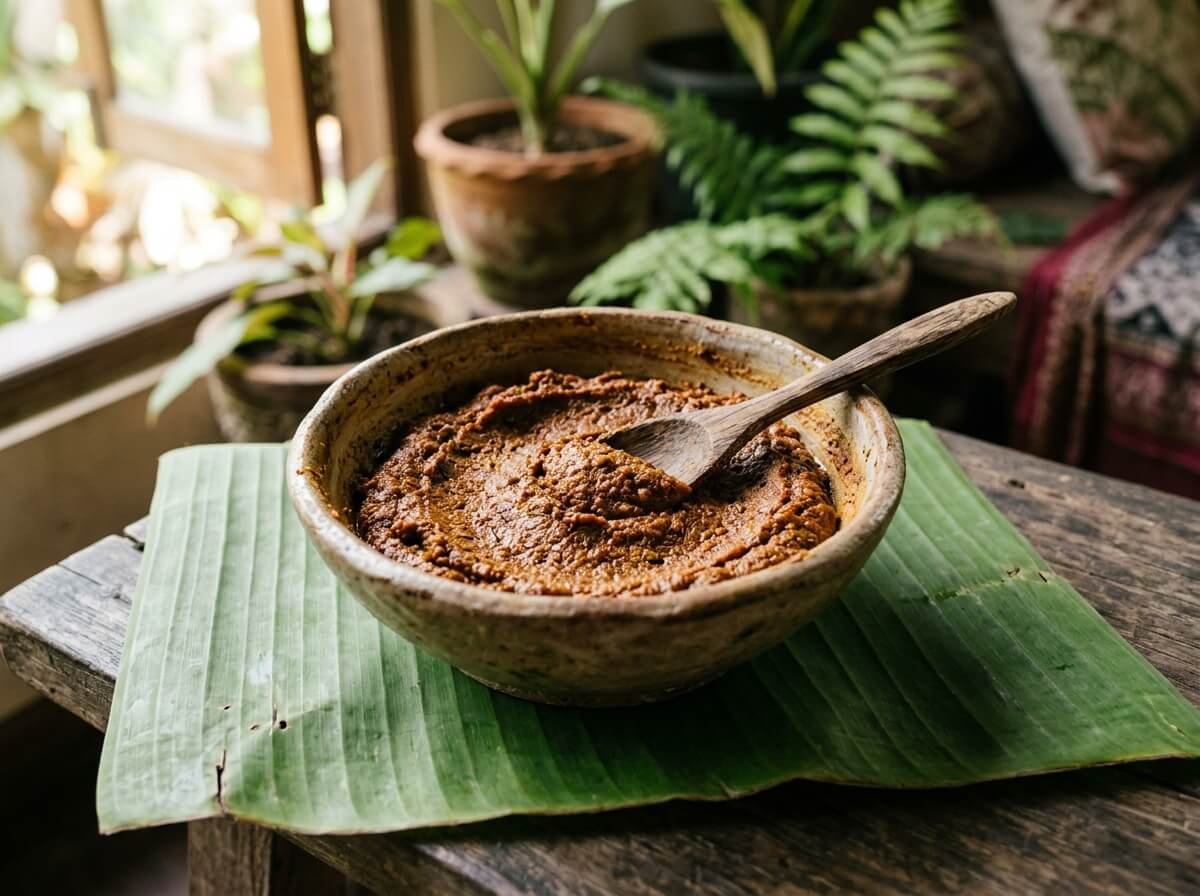
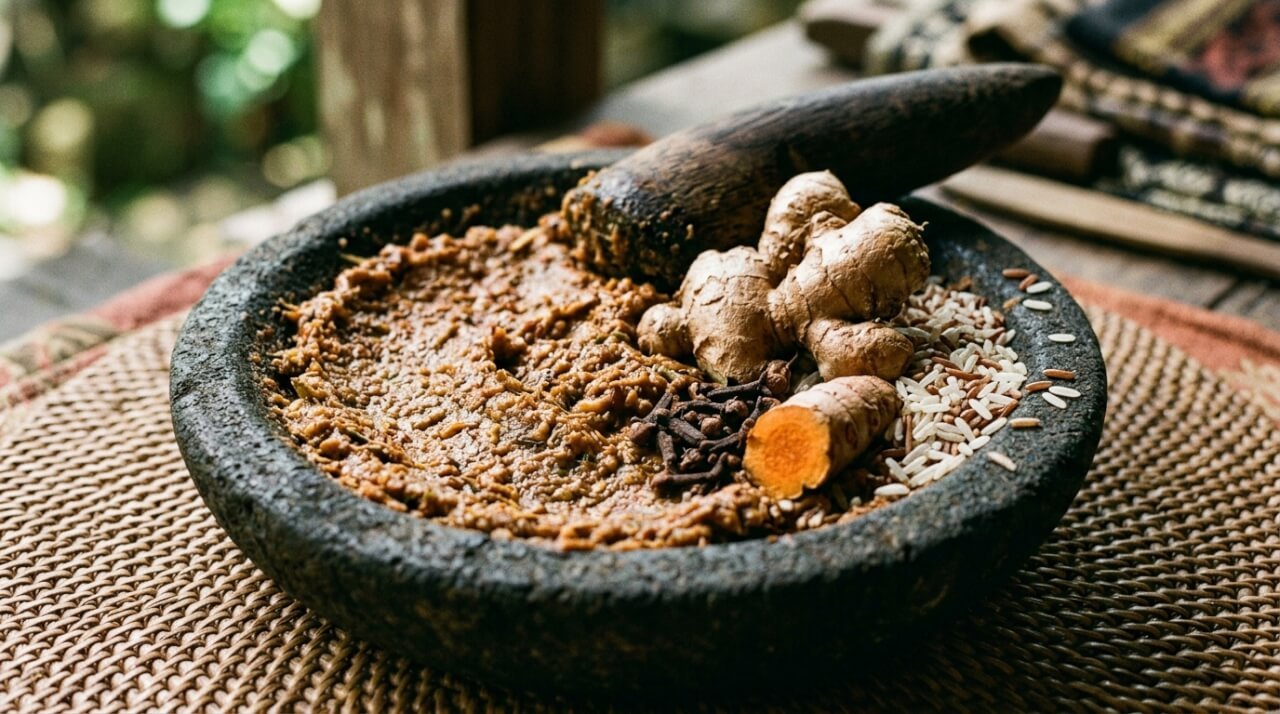
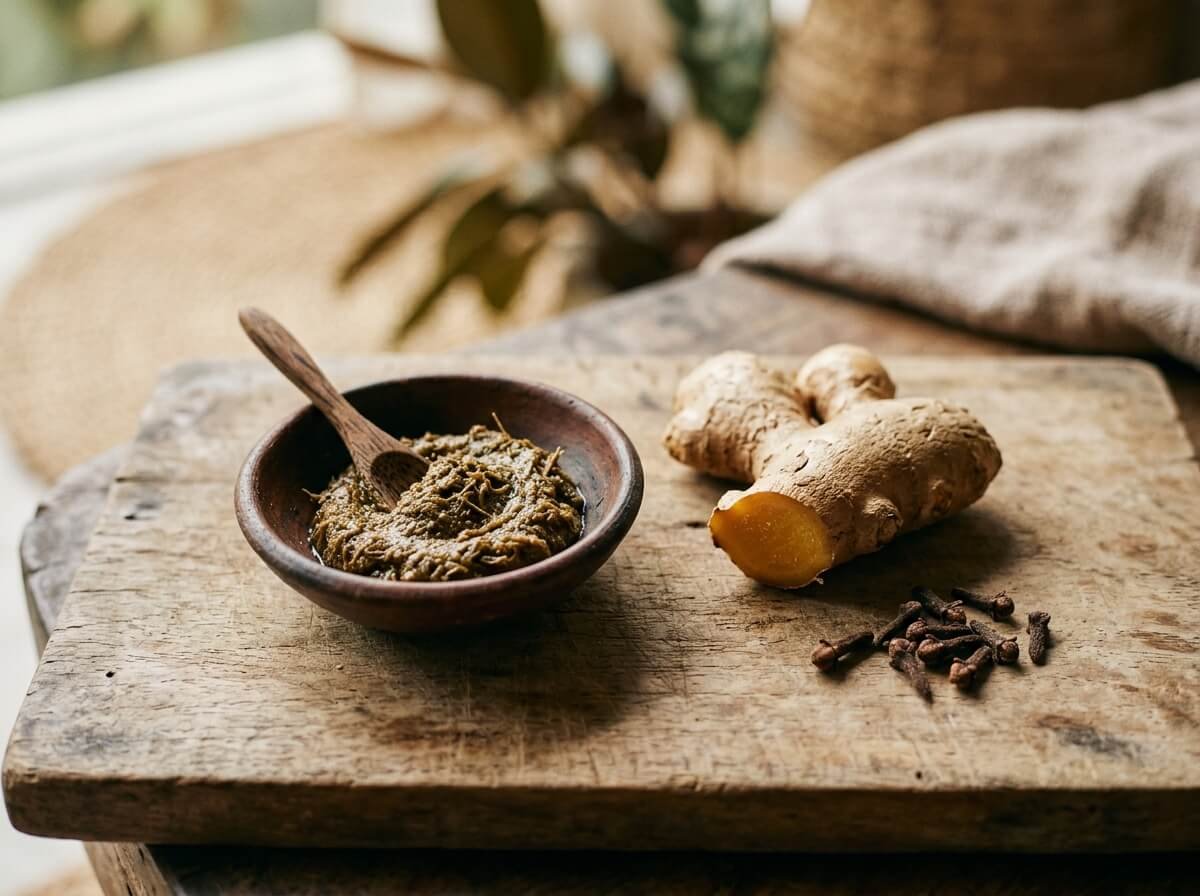
Boreh is a traditional Balinese herbal body mask, a thick paste of ground spices and roots applied to the skin to warm the body and ease tired muscles. In its oldest form it is folk medicine, not beauty. Rice farmers in the cool, wet highlands of Bali used it after long days standing in flooded paddies, when the damp settled into their joints and the cold would not leave their hands and feet. The paste was warming, grounding, and made from whatever the household grew or traded for.
The word carries weight on the island. Boreh is prepared, not bought, and many families keep their own recipe, passed down and adjusted over years. Some blends lean hot and spiced for aching backs; others are gentler, made for a child with a chill or a mother recovering after birth. This is the first thing to understand about balinese boreh: it is plural, personal, and rooted in daily life, closer to a home remedy than a single fixed product.
Today you will find boreh on spa menus across Bali, often described as a warming scrub or body wrap. That is a real and living part of the tradition, and a lovely thing to experience in Ubud or Ubud’s surrounding villages. It is worth knowing, though, that the spa version is one branch of a much older practice. If you enjoy this kind of heritage ritual, our guide to the Balinese lulur scrub covers a sister tradition, the one built around glow and softness rather than warmth.
Boreh, jamu, and the wider web of Balinese herbal care
Boreh does not stand alone. It belongs to a much broader Indonesian tradition of plant-based care that includes jamu, the herbal tonics people still drink daily, and lulur, the ceremonial scrub once reserved for brides. What ties them together is a single idea: that the plants growing around you are the first place to look for wellbeing. In the Balinese view, care is not separate from the kitchen, the garden, or the temple; it moves through all of them. A boreh is simply the version of that idea you wear on your skin. Understanding this web is part of why we treat the ritual with care rather than novelty, and it is the same thread we follow across our writing on Balinese heritage.
The warming botanicals inside a boreh
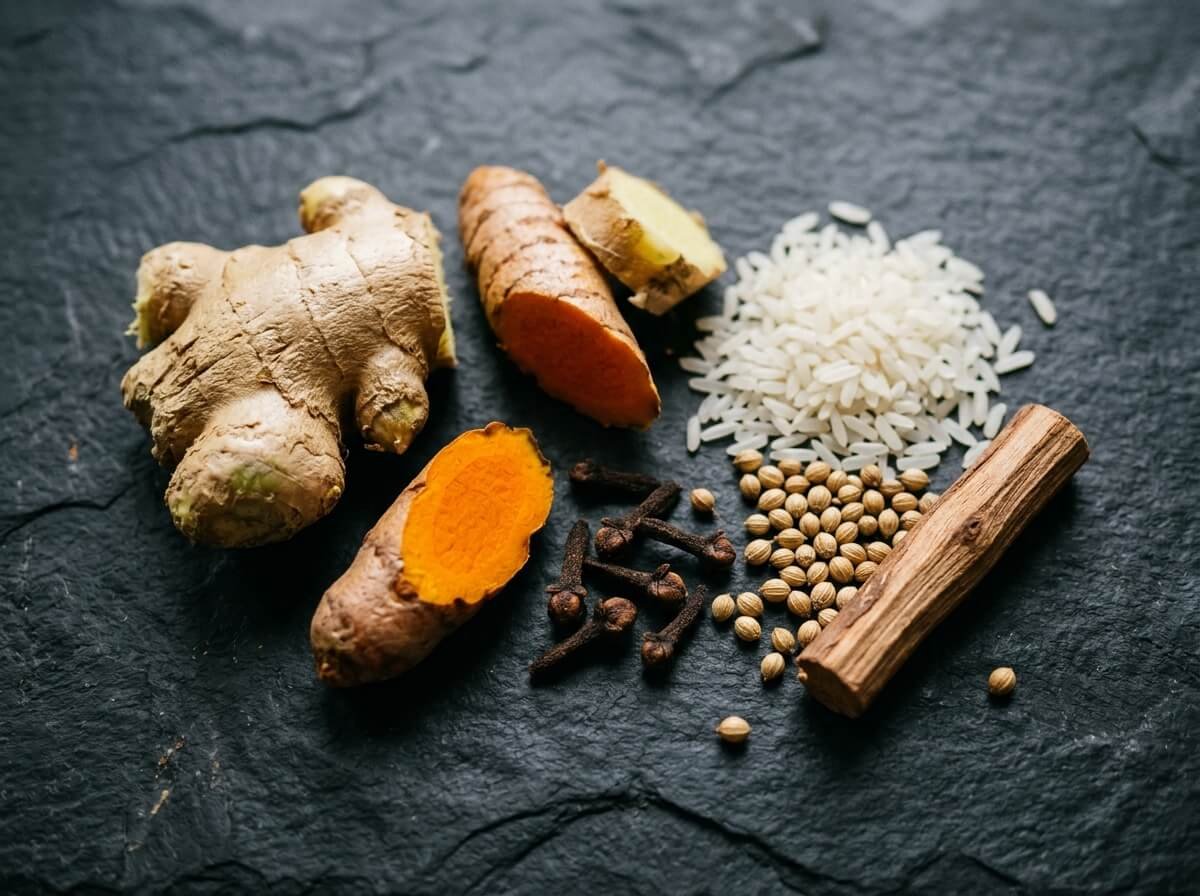
A boreh is only as good as the botanicals ground into it, and the classic blend reads like a highland spice garden. Recipes vary from family to family, but a warming boreh usually gathers most of the following:
- Ginger, the heart of the blend, prized across Indonesia for the deep, spreading warmth it brings to skin and muscle.
- Galangal (laos), a cousin of ginger with a sharper, more peppery heat, common in Balinese kitchens and medicine alike.
- Cloves, intensely aromatic and warming, long used in Indonesian herbal care for their tingling, heating quality.
- Turmeric, the golden root that colours the paste and carries generations of use in Indonesian skin and wellness ritual.
- Coriander seed, nutmeg, and cinnamon, rounding, warming spices that soften the sharpness of the ginger and clove.
- Sandalwood and rice powder, added in many blends to smooth the texture, calm the scent, and help the paste sit on the skin.
These are not random choices. Nearly every ingredient in a traditional boreh is a warming or aromatic spice, the same family of botanicals Balinese healers have reached for over centuries. If you have read our piece on essential oils benefits, you will recognise the logic: the plants that carry the most aroma tend to carry the most active compounds, and warmth is one of the clearest things they express on skin.
Ginger deserves a moment on its own, because it does so much of the work. Its warmth is not imagined; it is a felt, spreading heat that has made it central to Indonesian home remedies for colds, aches, and cold extremities. We love it enough to bottle it: our Ginger Essential Oil and our Coconut Lotion Lemongrass Ginger both carry that same grounding heat into everyday care, the modern echo of what a boreh does in its raw, unrefined form.
Why balinese boreh warms the skin
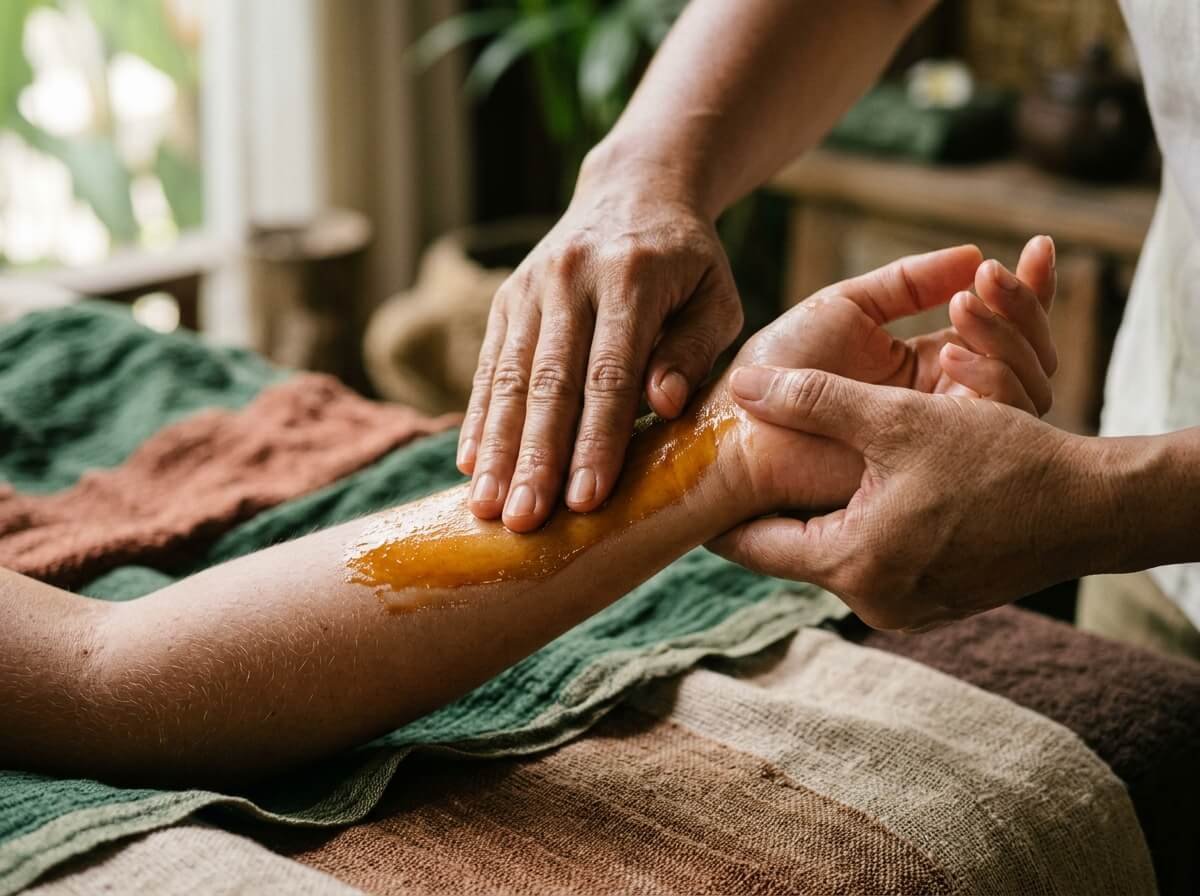
The warmth of a boreh is real, and there is a simple, grounded reason for it. Spices such as ginger, galangal, and clove are what herbalists call rubefacients: applied to the skin, they create a gentle sensation of heat and bring blood flow to the surface. That is the flush, the tingle, the slow spreading warmth people describe after a boreh sits on the skin. It is the same principle behind a warming balm on a sore shoulder, only drawn entirely from roots and seeds.
For the rice farmers who relied on it, this mattered. Cold and damp are hard on joints and muscles, and a warming paste offered relief that was cheap, local, and made at home. We want to be honest here, in keeping with how we write about everything: boreh is a traditional comfort ritual, not a cure, and we make no medical claims for it. What it offers is warmth, touch, and a pause, three things that have real value in a tired body and a busy life.
There is a sensory side worth naming too. The aroma of a freshly ground boreh, all ginger and clove and warm root, is grounding in the way scent often is. We wrote about that in our note on aromatherapy diffuser blend recipes: warm, spiced aromas tend to settle the nervous system and signal rest. A boreh works on the body and the senses at once, which is part of why it has lasted.
It also asks something of you that most modern skincare does not: time and touch. A boreh is applied by hand, worked into the muscle, and left to sit. That slowness is not incidental. The act of massaging warmth into your own shoulders, or having someone do it for you, is part of the relief. In a culture that increasingly treats care as something quick and transactional, this is quietly radical. Real care takes a little time, and boreh has never pretended otherwise.
Boreh in Balinese life: occasion, meaning, and respect

To understand boreh, it helps to picture where it lives. In the cooler villages of the Balinese highlands, above the terraced rice fields, warmth is not a luxury; it is a daily need. Boreh grew out of that landscape, applied at the end of a working day, before sleep, or when a chill or fever settled in. In some families it accompanies recovery after childbirth. In others it is simply the thing you reach for when the body is tired and the evening is cool.
Because it is woven into ritual and care, boreh deserves to be treated as more than an exotic scrub. It carries the knowledge of Balinese healers and households, and it belongs to the people who kept it alive. When we share it, we try to do so the way we approach all of our heritage writing, as guests crediting a tradition, not owners claiming it. That same respect runs through our pieces on Indonesian wellness at home and Balinese massage oil, both of which sit beside boreh in the same living culture of care.
One honest note on language. You will sometimes see boreh, and its sister ritual lulur, sold abroad on the promise of lighter or whiter skin. We do not frame it that way, and we would ask you not to either. Boreh is about warmth, circulation, and comfort, not correction. That distinction is small in words and large in meaning, and it is the difference between honouring a tradition and reshaping it to sell something.
How to bring balinese boreh home
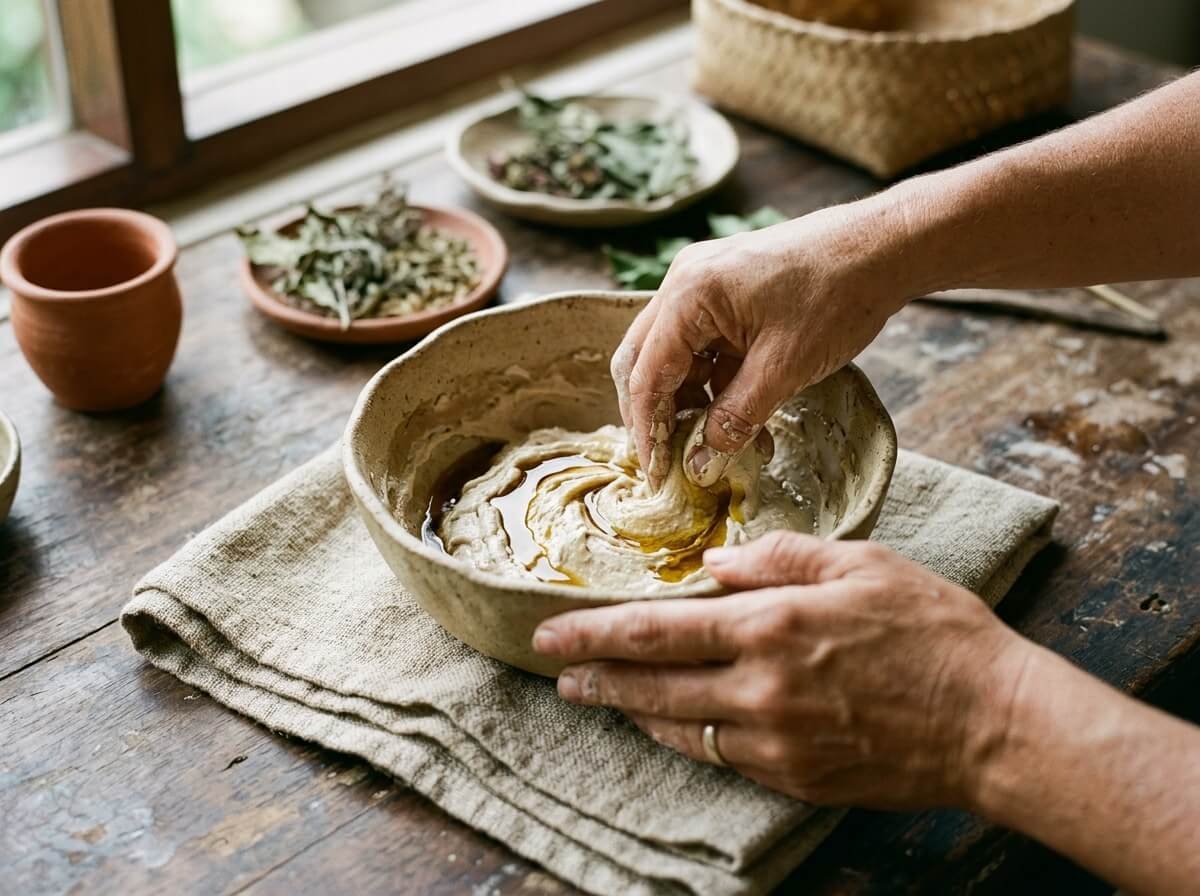
You do not need to fly to Ubud to practise a warming ritual, though we would never talk you out of the trip. With a little care, you can build a gentle, boreh-inspired practice at home, using real ingredients and an unhurried evening. Here is a simple, respectful way to begin.
A simple warming ritual, step by step
- Warm the room and set aside 20 to 30 quiet minutes. Boreh is slow by nature, and rushing it misses the point.
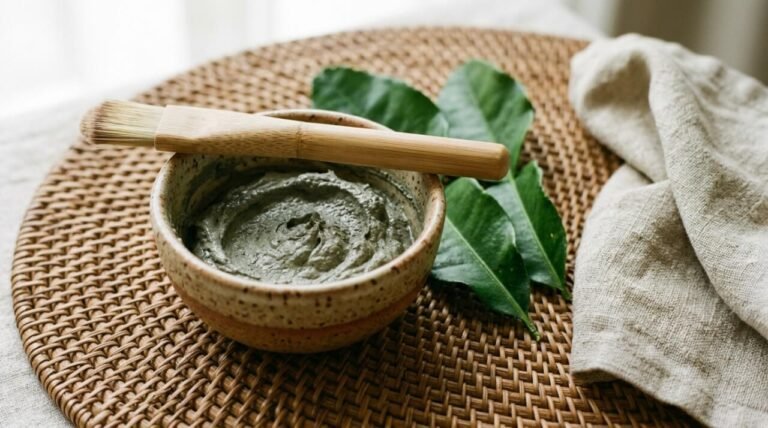
- Build a warming paste. Loosen a spoon of mineral clay with a little warm carrier oil, then work in a small amount of ground ginger or a drop of warming essential oil until it holds together as a soft paste.
- Massage it into the places that hold tension: the shoulders, the lower back, the calves, the soles of the feet. Use slow, firm strokes and let the warmth build.
- Let it rest on the skin for 10 to 15 minutes, then rub or rinse it away in a warm shower.
- Seal the warmth with an oil or a rich butter while the skin is still warm and slightly damp.
This is where a good, honest base matters. We do not make a boreh, and we will not sell you one dressed up as tradition. What we make is our Face and Body Clay, a mineral-rich Balinese clay you can loosen and warm and make your own, and a range of warming oils to finish the ritual, from our grounding Aphrodisia Body Oil to the softer Rose Allure Body Oil. Together they let you approximate the spirit of a boreh, warmth, touch, and slowness, with clean ingredients and no pretending.

A clay to build your own warming ritual
We do not sell boreh in a jar, and we would not pretend to. What we do make is a simple, honest base you can build a warming ritual around. Our Face and Body Clay is mineral-rich Balinese clay you can loosen with a warm oil and your own chosen spices, then apply to tired shoulders and legs the way the tradition intends. Crafted in Bali, refillable, and made to be used slowly.
Aftercare, cautions, and who should take it gently
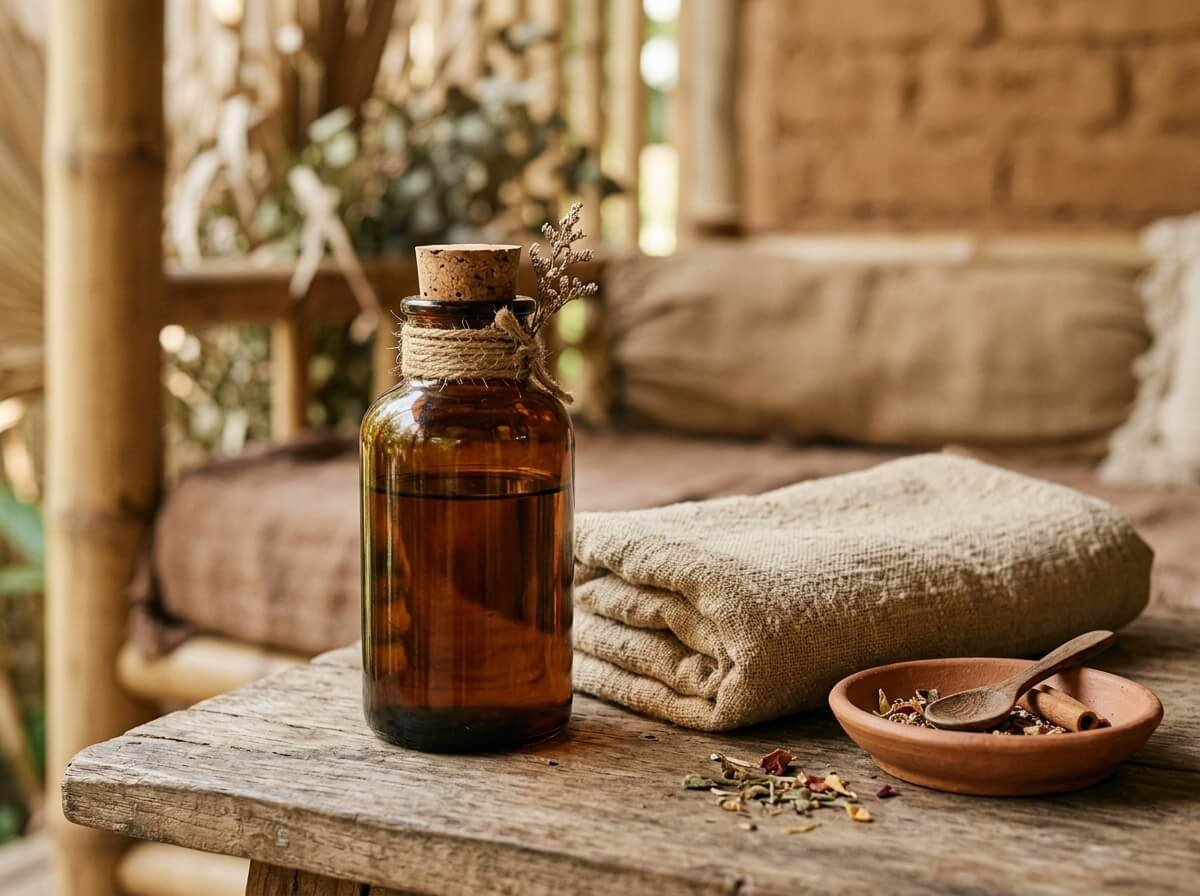
Warmth on the skin asks for a little aftercare. Once you have rinsed the paste away, seal in moisture while the skin is still warm; this is the moment an oil or a butter absorbs best and the warmth lingers longest. A slow massage here turns the ritual into a full pause rather than a quick scrub, the same principle we describe in our guide to Balinese face oil, where sealing warmth is half the practice.
A few honest cautions, because warming spices are potent and every body is different:
- Patch test first. Ginger, clove, and other warming spices can be strong on sensitive skin, so try a small area before a full application.
- Keep it off broken or irritated skin, and away from the eyes and other delicate areas.
- Go gentle if you are pregnant, have a skin condition, or have sensitive skin, and check with a health professional if you are unsure. Traditional postpartum use of boreh in Bali is guided by experienced hands, not a jar of spices from a shelf.
- Start mild. You can always add more warmth next time; you cannot take it back once it is on.
None of this is meant to make a simple ritual feel fraught. It is the same honesty we bring to everything: real ingredients have real effects, and a little respect for their strength is part of using them well.
Frequently asked questions about balinese boreh
Is balinese boreh a scrub or a mask?
It is closer to a warming mask or paste than a scrub, though the two overlap. A boreh is applied thickly, left to sit so the warming spices can work, and then rubbed or rinsed off. Some blends have a light grainy texture from rice powder, which gives a mild exfoliating feel, but the purpose is warmth and comfort rather than polishing. Its sister ritual, the lulur scrub, is the one built around gentle exfoliation and glow.
What does a boreh actually do?
Traditionally, boreh warms the body and eases the aches that come from cold, damp, and hard physical work. The warming spices bring a felt heat to the skin and a grounding, aromatic calm to the senses. We describe it as a comfort ritual, not a medical treatment, and we make no health claims for it.
Can I make boreh at home?
Yes, with care and respect for the tradition. Many people build a simple version by loosening mineral clay with a warm carrier oil and a small amount of ground ginger or warming essential oil, then massaging it into tired muscles. Patch test first, keep it mild, and treat it as a slow evening ritual rather than a quick fix. Our Face and Body Clay makes a clean, honest base to start from.
Where does the tradition come from?
Boreh is Balinese, rooted especially in the cooler highland villages where farmers used it to warm the body after working the rice fields. It is part of a wider Indonesian culture of herbal care, alongside practices such as jamu and lulur, and many families keep their own recipes. You can read more about that broader culture in our guide to Indonesian wellness at home.
Is boreh used for skin whitening?
We do not frame it that way, and the tradition itself is about warmth and circulation, not lightening the skin. Some overseas marketing has attached whitening claims to boreh and lulur, but that is a distortion of the original practice. Care, not correction, is the point.
Balinese boreh has lasted for one simple reason: it works as care. It warms a cold body, eases a tired one, and turns a handful of spices into a moment of pause. You can honour it by keeping it honest, using real botanicals, respecting where it comes from, and letting it be slow. That, more than any single ingredient, is the heart of the ritual, and it is exactly the kind of care we believe in. What you give, you get back.