Reed diffuser guide: how they work and what is really in the bottle
A reed diffuser is one of the quietest pieces of scent in a home. No cord, no water, no switch, no timer. Just a bottle of scented oil, a handful of natural reeds, and a room that slowly begins to smell like somewhere you want to be. Because it asks so little of us, it is easy to buy one without ever asking what is actually inside the bottle, or how it works. This guide answers both, in plain terms, so you can choose a reed diffuser that is honest about its ingredients and gentle on the air you breathe.
We make our diffusers in Bali, and we have spent more than 35 years learning how botanical scent behaves. Along the way we have watched the reed diffuser become a shelf staple, and we have watched a lot of them fill up with things we would rather not name on a label. So this is the calm, unhurried version: what a reed diffuser is, how it works, what belongs in the bottle, and how to care for one so it lasts.
What a reed diffuser actually is
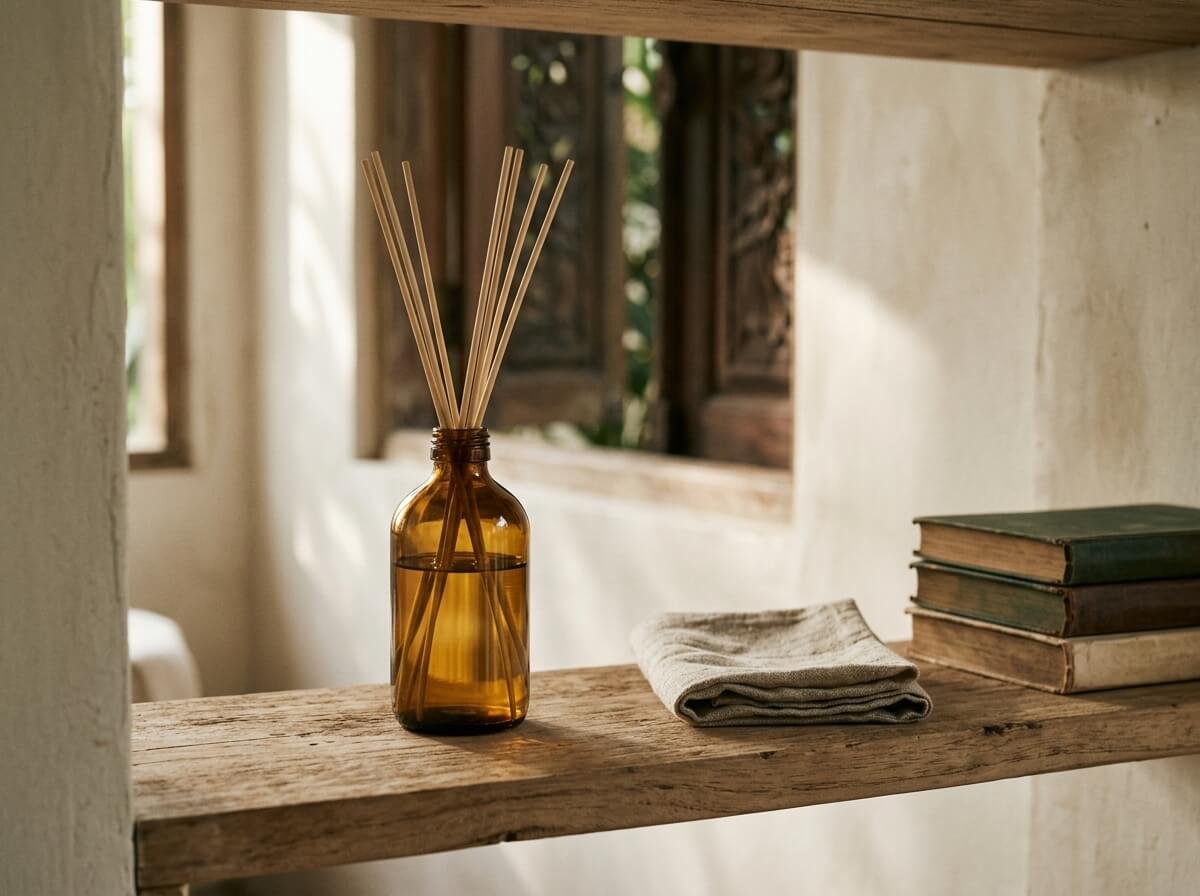
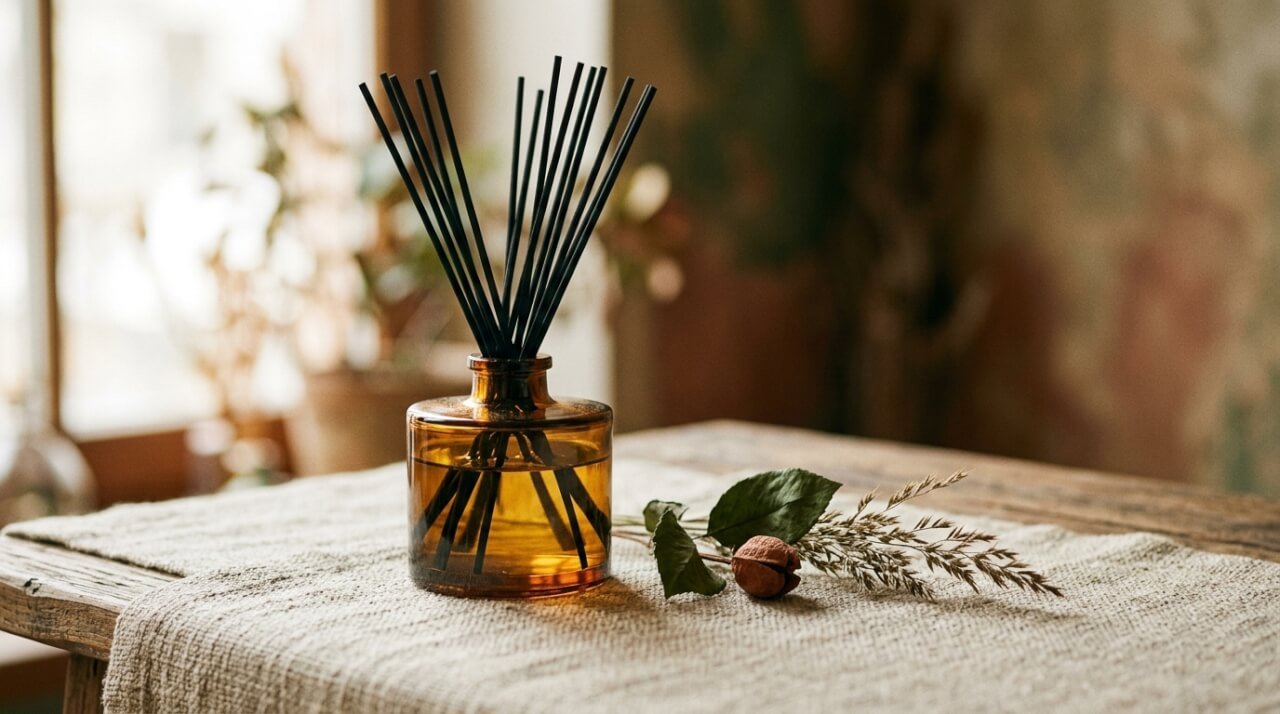
A reed diffuser is a small glass bottle filled with scented oil, with several slim reeds standing in the neck. The reeds are porous. They draw the oil up from the bottle and release its scent into the air as the oil evaporates from their surface. There is no heat and no electricity involved. The scent simply drifts, steadily and softly, for weeks or months.
This makes a reed diffuser different from almost every other way of scenting a room. An electric or nebulizing diffuser pushes essential oil into the air with water vapor or pressurized air, which you can read more about in our guide to different types of oil diffusers. A candle uses a flame. An incense stick burns. A reed diffuser does none of these things. It is passive, which is exactly why people reach for it. You set it down and forget it, and the room keeps its scent.
The trade-off is control. A reed diffuser gives a low, constant note rather than a strong burst, and you cannot turn it up or down beyond flipping the reeds. For a bedroom, a bathroom, an entryway, or any small-to-medium room you want to smell welcoming at all times, that steadiness is the appeal. If you want a stronger, on-demand scent for a larger space, an electric option may suit you better, and our guide to choosing the best aromatherapy diffuser walks through that decision.
How a reed diffuser works
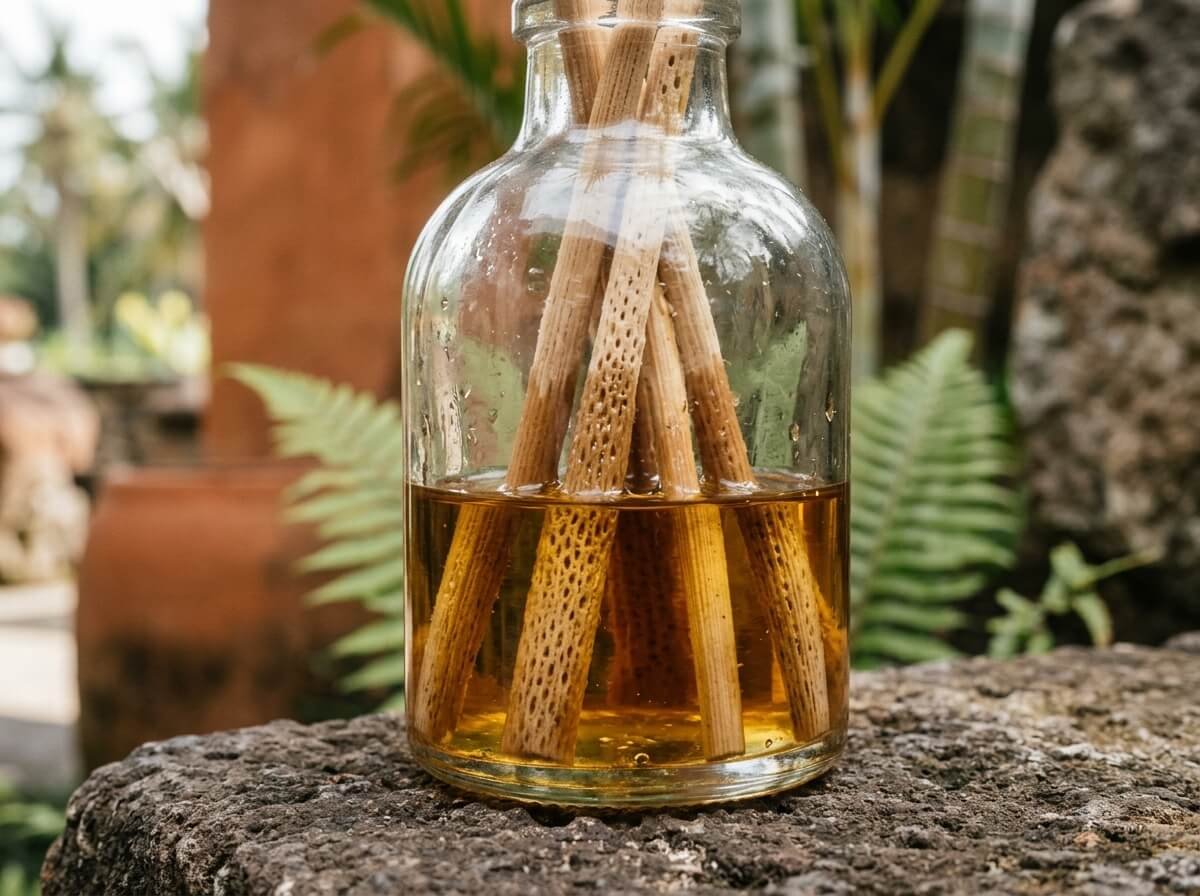
The whole mechanism rests on two simple ideas from physics: capillary action and evaporation. Capillary action is the same force that lets a paper towel soak up a spill or a plant draw water up through its stem. The reeds are full of tiny channels, and those channels pull the scented oil upward against gravity, all the way to the exposed tips.
Once the oil reaches the open air at the top of the reeds, it begins to evaporate. As it evaporates, it carries the scent molecules with it, and they spread through the room. The bottle keeps feeding oil up the reeds to replace what has evaporated, so the process continues on its own until the bottle runs low. This is why a good reed diffuser can scent a space for two to four months without any attention.
Why the reeds matter
The reeds are not a decorative detail. They are the engine. Natural rattan reeds have an open, fibrous structure with channels that run the length of the stick, which makes them excellent at wicking oil. Some cheaper diffusers use synthetic fiber sticks that clog quickly and stop drawing oil, which is one common reason a diffuser seems to fade after a week. If your scent throw drops off fast, tired or clogged reeds are usually the cause.
Flipping the reeds is the one small ritual a reed diffuser asks of us. When you turn the reeds so the saturated ends point up, you refresh the surface that is evaporating and the scent lifts again. We will come back to how often to do this later on.
Scent throw and room size
The reach of a reed diffuser, what people in the trade call its throw, depends on three things: the number of reeds, the surface area of oil that is evaporating, and the air movement in the room. This is why the same bottle can feel perfect in a small bathroom and almost silent in an open living room. A reed diffuser is designed for close, ambient scent, not for filling a large open-plan space. If you match the diffuser to a modest room, and give it a spot with a little natural airflow, it will hold that room beautifully. Ask it to scent a whole floor and it will always feel faint, no matter how many reeds you add.
What is really in the bottle
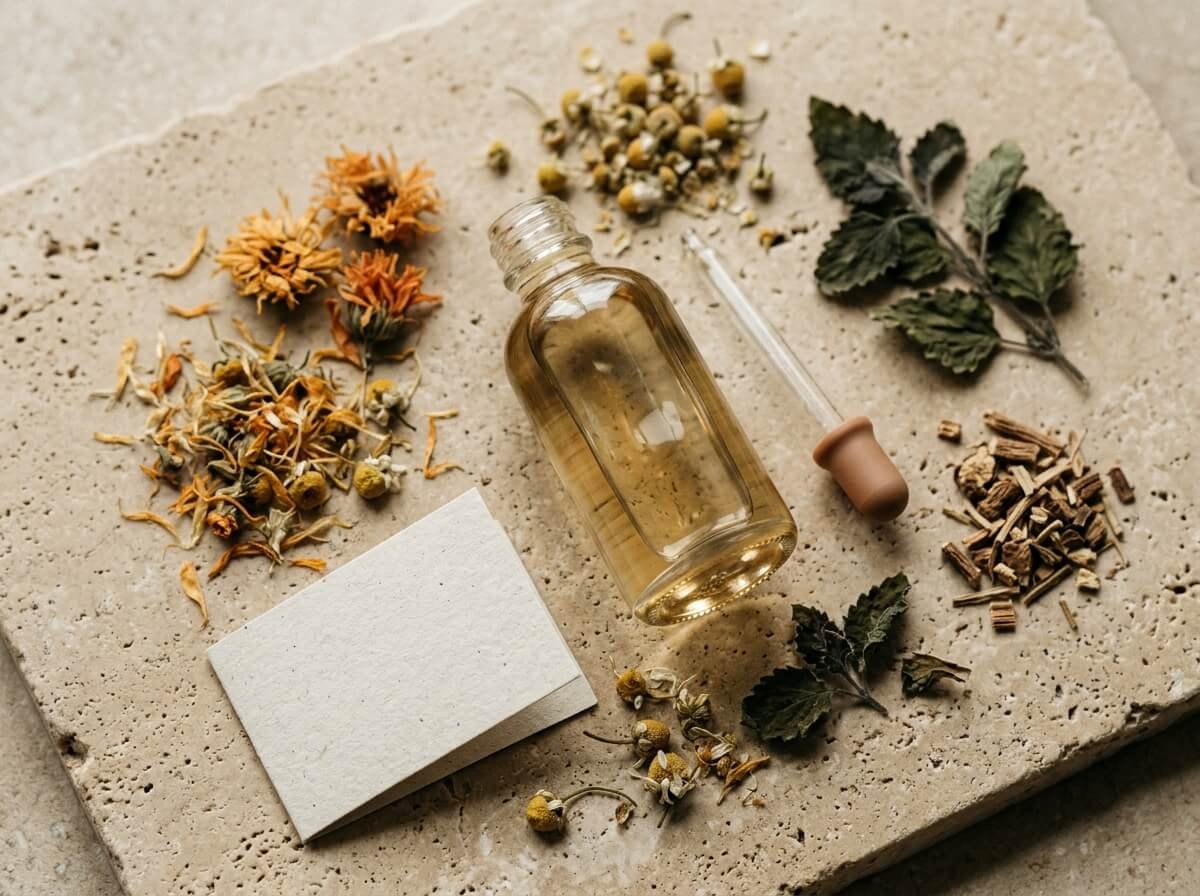
A reed diffuser is only two things: a base that carries and thins the scent so it can travel up the reeds, and the aromatic oils that give it its smell. The base is where most of the honesty, or the lack of it, hides. It is worth knowing the common options before you buy.
- Dipropylene glycol (DPG). A synthetic solvent used in the majority of mass-market diffusers because it is cheap, nearly odorless, and slow to evaporate. It works, but it is a petroleum-derived carrier, and many people prefer not to have it evaporating into the air of a small room for months.
- Alcohol. Sometimes used as a thinner. It evaporates quickly, which can mean a strong first impression and a short life.
- Plant-based carriers. Lighter botanical oils and plant-derived solvents that carry scent without a petroleum base. These tend to cost more and are the choice of brands that would rather tell you what is in the bottle than hide it.
The second half of the bottle is the scent itself, and here the label often says less than you would like. A fragrance can be built from natural essential oils, from synthetic fragrance oils, or from a blend of both. The word “fragrance” or “parfum” on an ingredient list can legally stand in for a long list of undisclosed synthetic compounds. That is not a scandal on its own, but it is a reason to look for brands that name their oils rather than hiding behind one vague word. If you want to understand what essential oils actually do once they are in the air, our explainer on essential oils benefits is a good place to start.
Essential oils, not synthetic fragrance
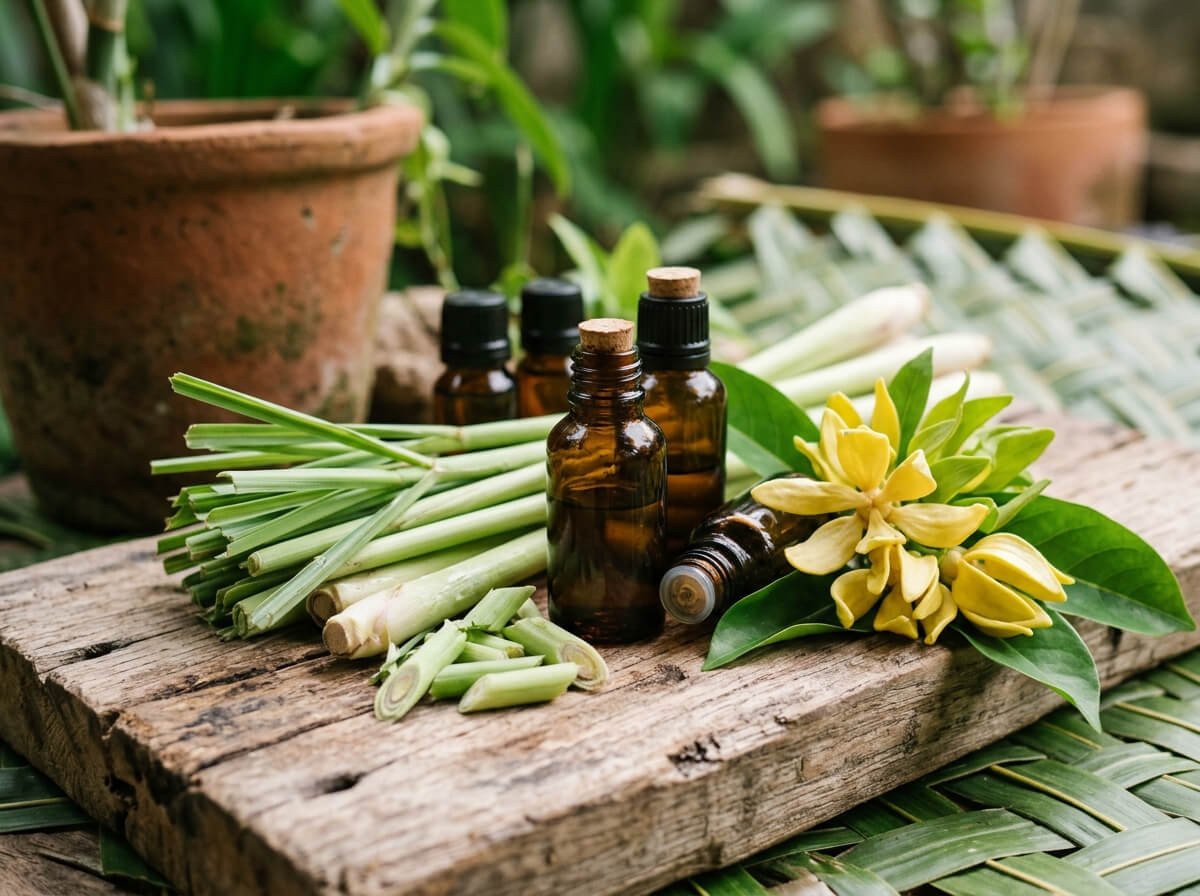
This is where we hold a clear line. A reed diffuser scented with real essential oils and one scented with synthetic fragrance can smell similar on the shelf, but they are not the same thing drifting through your bedroom for two months. Essential oils are pressed and distilled from actual plants: the peel of a citrus fruit, the leaf of a lemongrass stalk, the flower of an ylang ylang tree. Synthetic fragrance is assembled in a lab to imitate them, often more cheaply and more loudly.
We are not here to moralize about it. Synthetic fragrance is everywhere, and it is not going away. What we will say plainly is this: if a diffuser is going to release its scent into a room you sleep in, cook in, or raise a family in, we think you have a right to know exactly what that scent is made of. A brand that uses real essential oils will almost always tell you which ones. A brand relying on undisclosed synthetics usually will not. That gap is the whole story.
It is worth being honest about the trade-offs, because we do not believe in pretending nature always wins on every measure. Synthetic fragrance is often engineered to throw harder and last longer, which is part of why it dominates the shelf. Essential oils are more delicate. Some, especially the bright citrus notes, are lighter and fade sooner, so a natural reed diffuser can ask for a flip or a top-up a little more often. We think that is a fair exchange for knowing exactly what is drifting through your home, and it is the same honest trade we make across the whole range. Truth in nature over theatrics on the shelf.

There is a practical side too. Real essential oils carry the character of the plant they came from, which is why a natural Lavender essential oil smells rounder and softer than a synthetic “lavender,” and why a bright Lemongrass essential oil has a green, living edge that lab fragrance tends to flatten. Building a reed diffuser scent from genuine oils is the same craft as building a blend for an electric diffuser, and our guide to essential oil blends for a diffuser and our Balinese diffuser blend recipes both translate directly to reeds.
Choosing a natural reed diffuser, or making your own
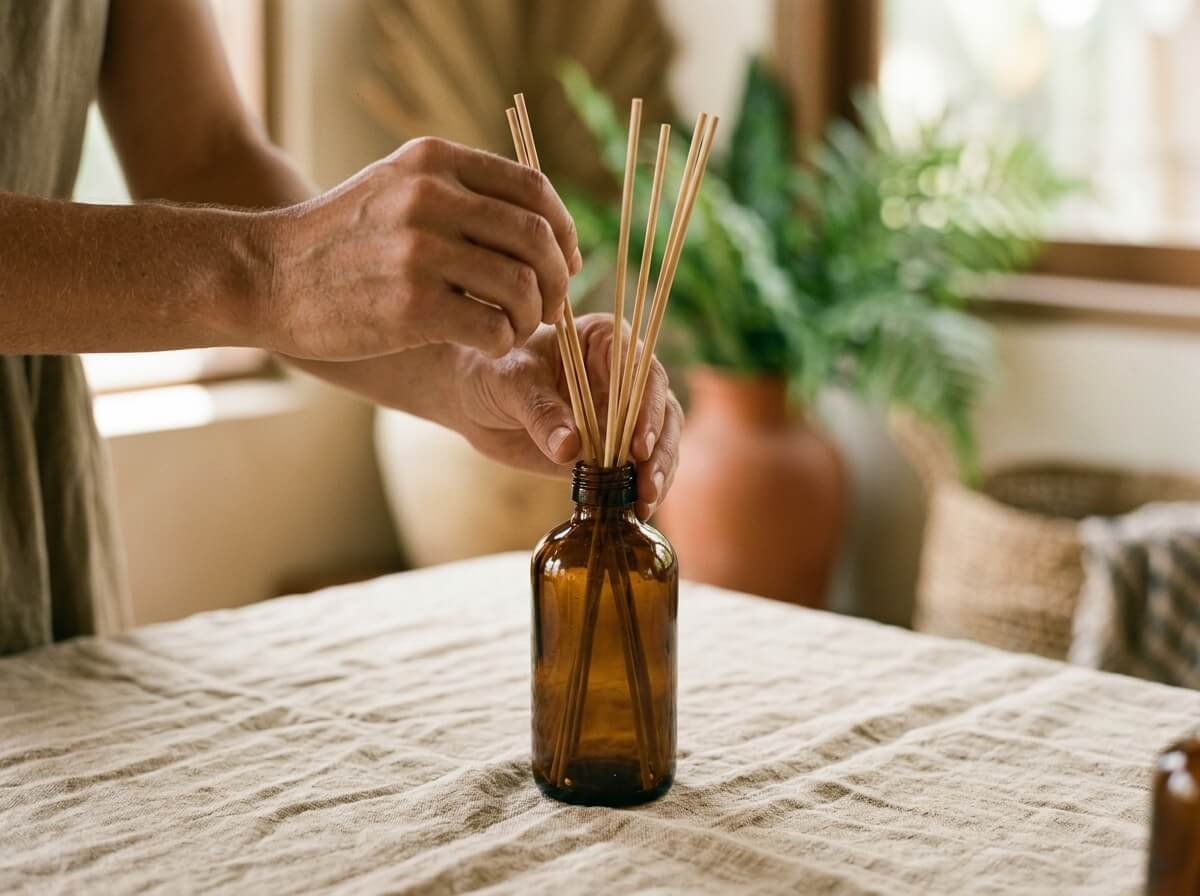
When you are choosing a reed diffuser, a short checklist saves you from most of the regret:
- The base is named, and it is plant-based rather than an unexplained solvent.
- The scent is built from essential oils that are listed by name, not a single word like “fragrance.”
- The reeds are natural rattan, not synthetic fiber.
- The bottle is glass, refillable, and worth keeping rather than throwing away.
That last point matters more than it seems. A reed diffuser bottle is a lovely object that most people bin the moment the oil runs out. It does not have to be that way. A refillable bottle means one vessel and many refills, which is the same circular thinking behind our in-store refill stations. Care that gives back is care that does not end up in landfill.
If you would rather have this done for you, our Nayla Apothecary Reed Diffuser is a 230ml amber glass bottle scented with our Nayla essential oil blend and set with natural black reeds, made to scent a small-to-medium room for months. It is the reed diffuser we reach for ourselves, and the bottle is built to be refilled rather than replaced.
Making your own reed diffuser
Making one is genuinely simple, and it is the surest way to know what is in the bottle, because you put it there. You need a small glass bottle with a narrow neck, natural rattan reeds, a light carrier such as fractionated coconut oil or a plant-based diffuser base, and your chosen essential oils.
- Fill the bottle about three-quarters full with your carrier base.
- Add roughly 20 to 30% essential oil to the base, adjusting to taste. A restful bedroom blend might lean on lavender; a bright kitchen might lean on citrus and lemongrass. Our Bali Night essential oil blend is an easy shortcut for an evening scent.
- Stir or swirl gently to combine.
- Add five to eight natural reeds. Fewer reeds give a softer scent; more reeds give a stronger one.
- Let the reeds soak for an hour, then flip them once to start the scent, and set the bottle where you want it.
If a full DIY feels like a lot, a ceramic diffuser refill is a middle path: a ready-made botanical scent you can decant, with no electricity required.
A reed diffuser you can refill, not replace
Our Nayla Apothecary Reed Diffuser holds 230ml of our Nayla essential oil blend in refillable amber glass, set with natural reeds to scent a room for months. Real oils, named on the label, crafted in Bali.
Caring for your reed diffuser
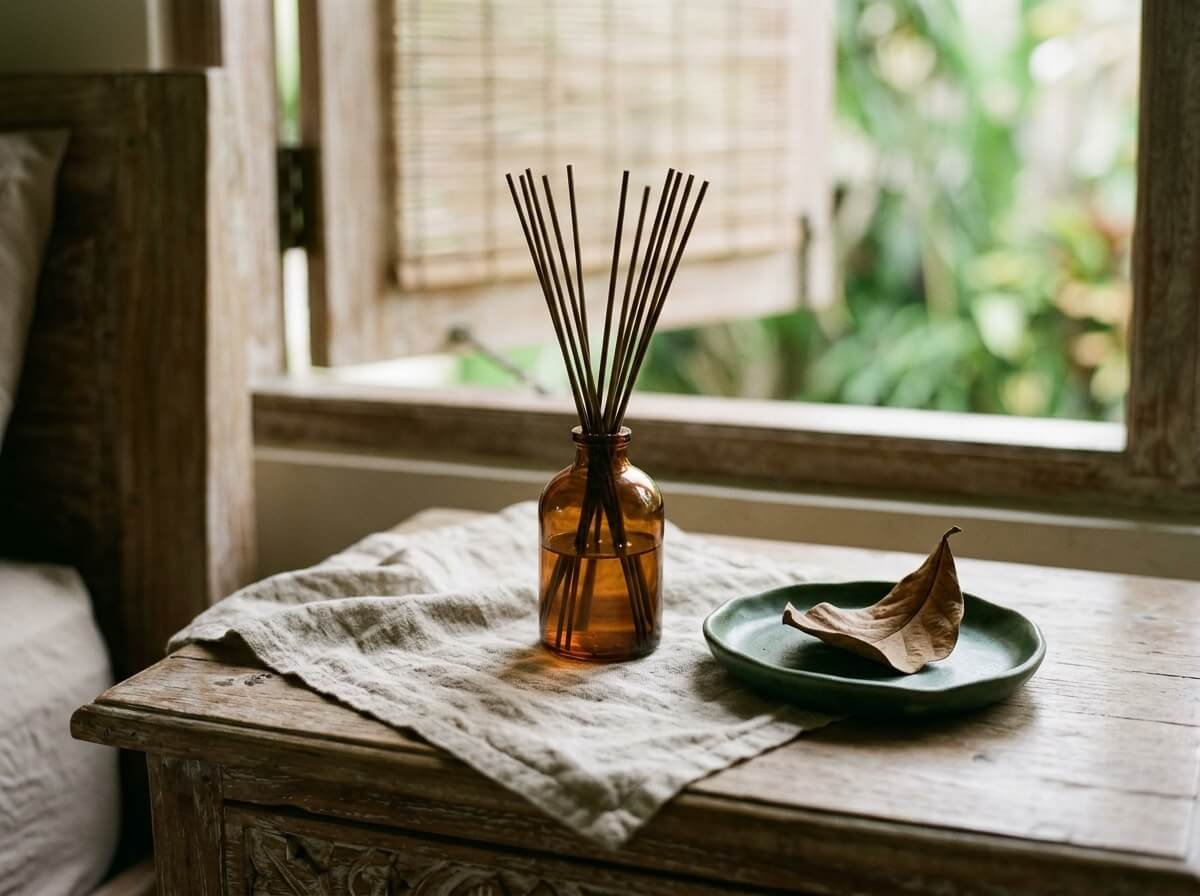
A reed diffuser rewards a little attention, and none of it is hard. Think of it as a small, steady ritual rather than a chore.
- Flip the reeds. Turn them over once or twice a week to refresh the scent. If the room has gone quiet, a flip usually brings it back. In a warm, dry Balinese climate you may flip more often; in a cool room, less.
- Mind the placement. Set the bottle where there is gentle air movement, such as an entryway or a hallway, so the scent can travel. Avoid direct sun and heat, which make the oil evaporate too fast and shorten its life. Keep it out of reach of children and curious pets, since the oil is concentrated and not meant to be touched or tasted.
- Use the right number of reeds. More reeds mean a stronger scent and a faster burn; fewer reeds mean a softer scent that lasts longer. Adjust to the size of the room and your own preference.
- Refill, do not rebin. When the oil is nearly gone, refill the bottle and add fresh reeds rather than buying a whole new unit. Old reeds clog and stop wicking, so new reeds with every refill keep the scent honest.
Placed well and flipped now and then, a reed diffuser holds a room for two to four months. If yours fades much faster than that, the likely culprits are heat, a spot with no airflow, tired reeds, or a thin alcohol base that has simply evaporated away. When you want a stronger presence in a bigger room, pairing a reed diffuser in one corner with an electric option elsewhere is a calm way to layer scent, and our guide to the best essential oil diffuser covers the electric side.
Reed diffuser questions, answered
How long does a reed diffuser last?
Most reed diffusers scent a room for two to four months, depending on the bottle size, the number of reeds, the room temperature, and how often you flip the reeds. Heat, airflow, and an alcohol-heavy base all shorten that window.
Are reed diffusers safe?
Used sensibly, yes. There is no flame and no heat, which removes the main risks of candles and incense. The oil is concentrated, so keep the bottle upright, out of reach of children and pets, and away from surfaces that stain. If anyone in the home is sensitive to scent, start with fewer reeds and a well-ventilated room.
Can I refill a reed diffuser?
Yes, and we think you should. Keep the glass bottle, top it up with fresh scented oil, and add a new set of reeds each time, since old reeds clog and stop drawing oil. Refilling turns a throwaway object into a lasting one.
Are essential oil reed diffusers better than synthetic fragrance ones?
They are more honest, and for a scent that lives in your home for months, honesty matters. Essential oils come from named plants and carry the real character of those plants. Synthetic fragrance can smell convincing but often hides behind a single word on the label. If you want to know what you are breathing, choose a diffuser that lists its oils.
Where should I put a reed diffuser?
Entryways, bathrooms, bedrooms, and hallways all work well, ideally where there is a little natural air movement to carry the scent. Keep it out of direct sun and away from heat, and give it a stable surface where a knock will not spill the oil.
A reed diffuser is a small thing, and that is the point. It asks for a bottle, a few reeds, and the occasional flip, and in return it keeps a room quietly welcoming for months. Choose one that names its oils and its base, keep the bottle and refill it, and you have scent that is both sensory and honest. That is what real care looks like, even in something as small as the way a room smells.