Argan oil vs tamanu oil: the everyday oil and the healer, compared
When people ask us to settle argan oil vs tamanu oil, they are usually really asking a quieter question: which single plant oil should live on the shelf and earn its place in a daily ritual. Both are pressed from a nut, both have travelled through generations of traditional care, and both belong to the small family of botanical oils that genuinely do what they claim. They are not, however, interchangeable. Argan is the steady everyday oil. Tamanu is the healer you reach for when skin needs repair. This guide walks through where each comes from, what the research shows, and how to choose with clarity rather than marketing noise.
We craft in Bali, and we work with plant oils every day, so our bias is toward honesty over hype. There is no miracle here, only two well-understood oils with different jobs. By the end you will know which one suits your skin, and why keeping both is often the wisest answer of all.
A quick word on how to read this comparison. We are not here to crown a winner, because the plants are not competing, they are cooperating. What follows is a practical map: origin, chemistry, feel, use, and the honest situations where each oil shines. Read it the way you would ask a knowledgeable friend, and take from it only what fits your skin and your life.
Two oils, two jobs: argan and tamanu at a glance
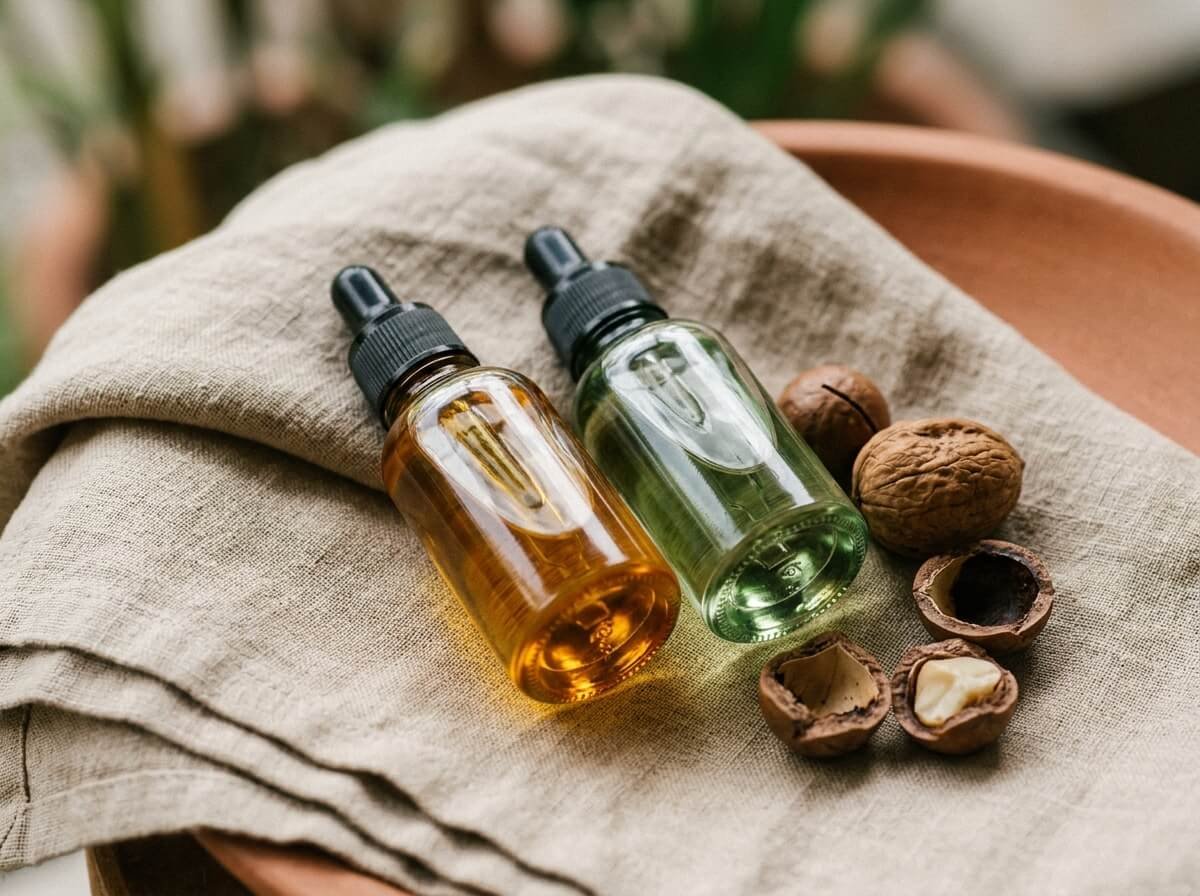
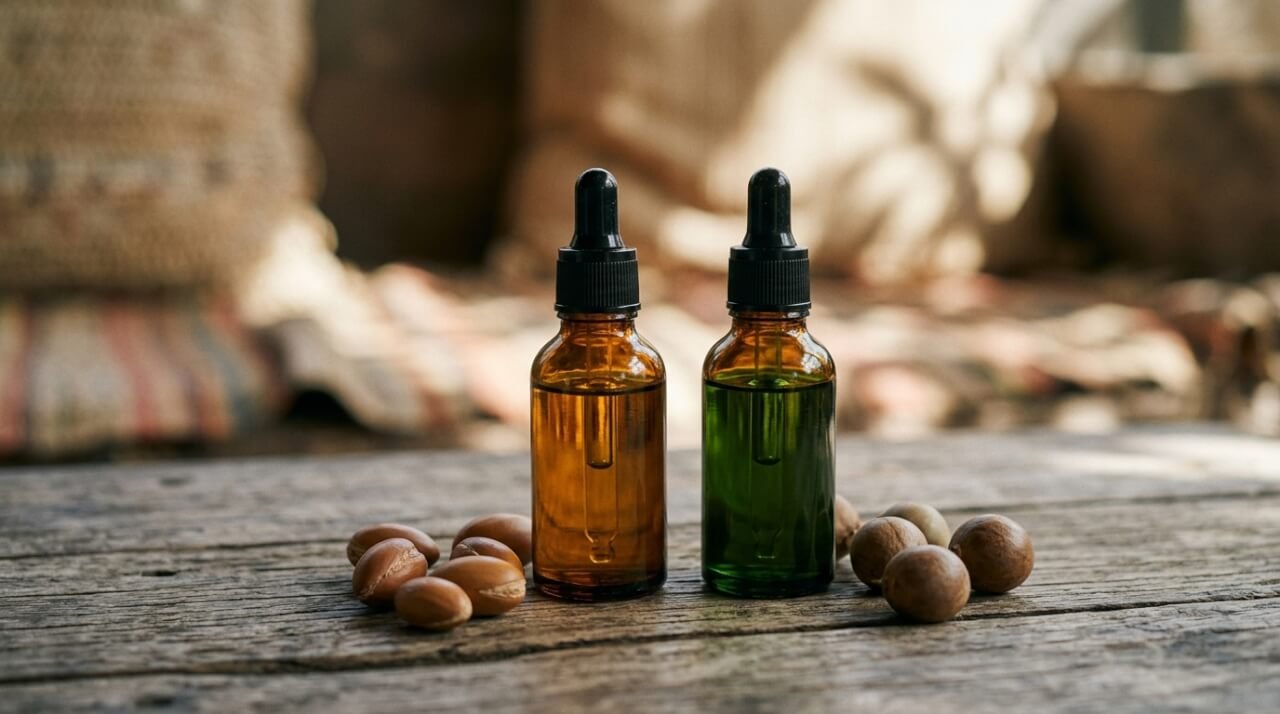
The fastest way to understand argan oil vs tamanu oil is to picture the role each plays. Argan oil is light, golden, and quietly balancing. It absorbs without fuss, softens the feel of skin and hair, and behaves like a dependable daily moisturiser. Tamanu oil is thicker, deep green, and unmistakably active. It carries a reputation across the tropics as a repair oil, the one families kept for scrapes, blemishes, and stubborn marks.
Think of it as the difference between maintenance and mending. Most days your skin wants maintenance, the calm support that argan gives. On the days it is healing, from a breakout, a scar, or a rough patch, tamanu steps forward. Neither is better in the abstract. The better oil is the one matched to what your skin is doing this week.
- Argan oil: light texture, fast absorption, everyday softness and shine.
- Tamanu oil: rich texture, targeted use, support for scars, blemishes, and barrier repair.
- Shared ground: both are nut-pressed, non-synthetic, and rooted in traditional skincare.
If you have followed our other head-to-head guides, this framing will feel familiar. We used the same lens in our look at body oil versus body butter, and in our comparison of coconut oil and shea butter. The pattern holds: choose by job, not by hype.
Where they come from: Moroccan groves and tropical shores
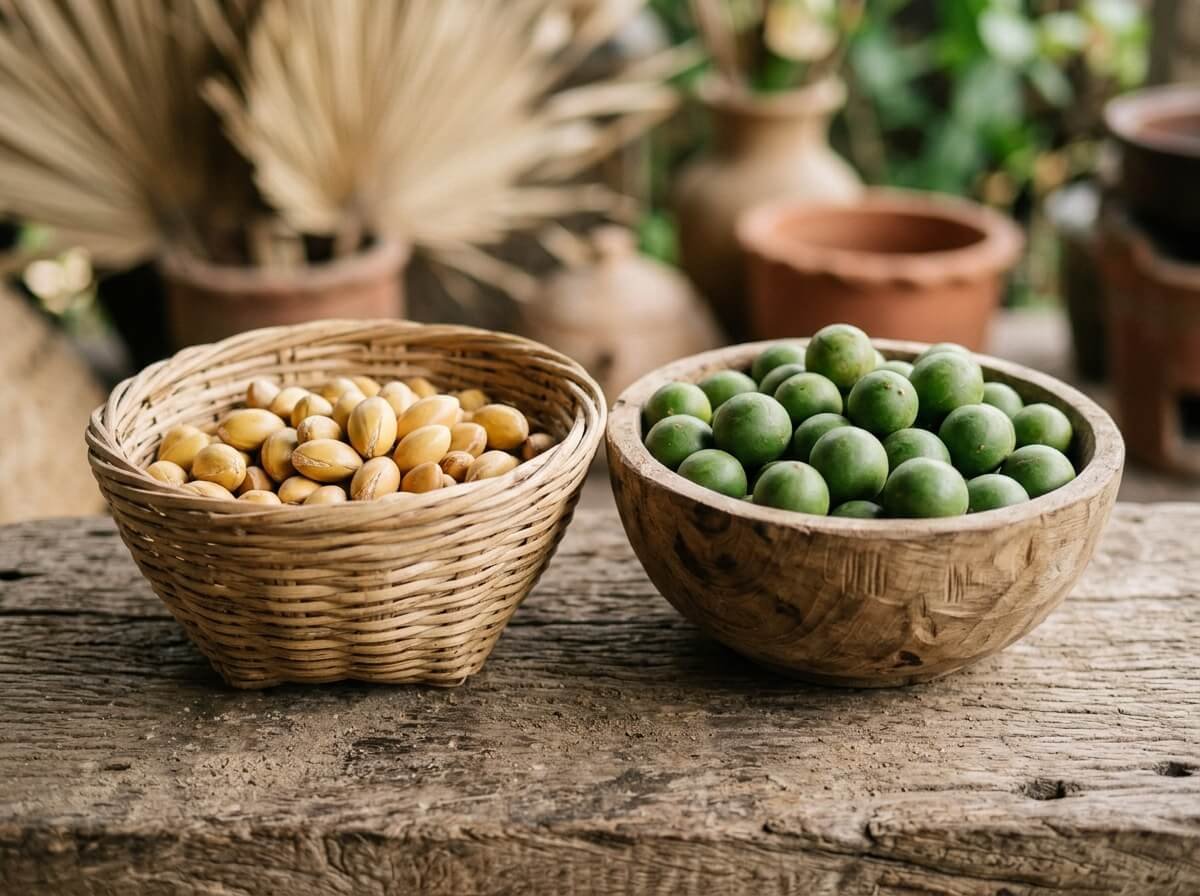
Argan oil comes from the kernels of the argan tree, which grows almost entirely in the semi-arid woodlands of southwestern Morocco. For generations, the pressing has been women-led work, and the cooperatives that produce it are a genuine story of craft and livelihood. The oil that reaches your skin is the same oil that has softened hands and hair across the Atlas foothills for centuries.
What matters about that origin is not romance, it is continuity. Argan is slow to grow and the trees are protected, so the oil carries a built-in lesson about patience and stewardship. When you buy it from a source that respects the cooperatives, you are supporting the same hands that have kept the practice alive. That is the difference between a commodity and a craft.
Tamanu oil is pressed from the nut of Calophyllum inophyllum, a tropical evergreen that lines coastlines across Southeast Asia, the Pacific, and here in Indonesia. In Balinese and wider Pacific tradition, tamanu was the trusted oil for damaged skin, applied to help wounds and marks recover. It is a coastal tree, salt-tolerant and generous, and the oil it yields is one of the more remarkable in the botanical world.
Tamanu also teaches patience. The nuts are gathered, dried for weeks until they turn sticky and dark, and only then pressed. That slow ripening is where the oil develops its depth of colour and its active character. Nothing about a good tamanu is rushed, which is precisely why the rushed, bleached, deodorised versions on some shelves are worth avoiding. The colour and the smell are the evidence of a real oil.
Sourcing is where care becomes real, not performative. We hold the same standard for the botanicals we own outright, the wild-harvested illipe and kukui we source through our Forestwise partnership in Kalimantan. If that side of our work interests you, our guides on illipe butter versus shea butter and kukui oil versus coconut oil go deeper into where an oil is born and who benefits when it is harvested with respect.
What is inside: fatty acids, antioxidants, and how they behave
The way an oil feels and behaves comes down to its fatty-acid make-up. Argan oil is rich in oleic and linoleic acids, with a notable share of vitamin E and plant sterols. That balance is why it sits so comfortably on most skin types: enough oleic acid to soften, enough linoleic acid to avoid feeling heavy or pore-clogging for many people.
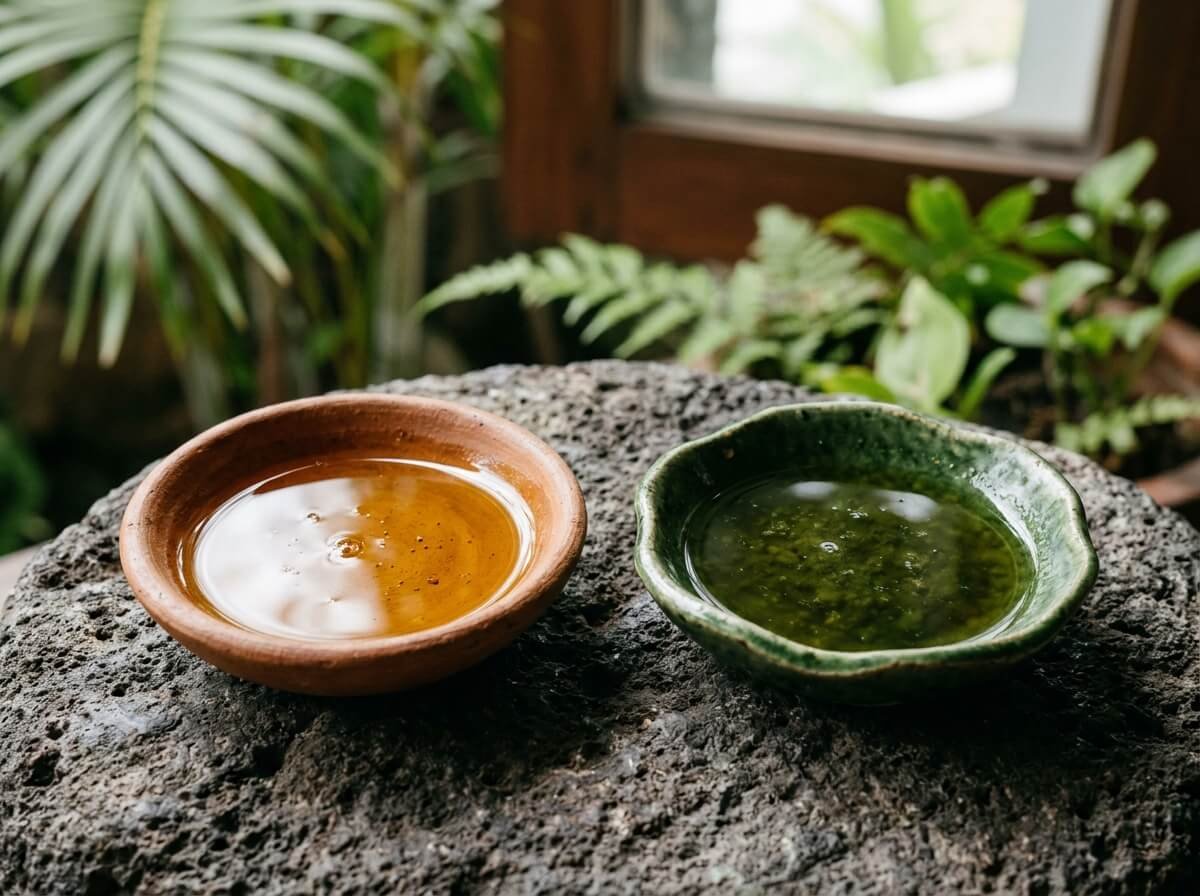
Tamanu oil has a more unusual profile. Alongside oleic and linoleic acids, it carries distinctive compounds, including calophyllolide and other natural constituents, that researchers have studied for their soothing and skin-supporting properties. This is part of why tamanu behaves less like a plain moisturiser and more like a treatment oil. It is denser, greener, and more assertive on the skin.
Comedogenic feel and skin type
Argan tends to suit oily, combination, and normal skin because it wears light. Tamanu is richer, so it is often better used sparingly or blended, especially on the face. Dry and mature skin frequently welcomes both. As with any oil, a small patch test over a couple of days is the honest first step, because skin is individual and real care means paying attention rather than assuming.
Colour, scent, and shelf life
Argan is pale gold with a mild, nutty scent that fades quickly on the skin. Tamanu is deep green to amber-brown with a distinctive, earthy aroma that some people love and others prefer to blend down. Both keep best in a cool, dark place, sealed between uses. Cold-pressed oils are living things in a sense, and they reward being stored with a little care rather than left open in the light.
Argan oil: the everyday oil for balance and shine
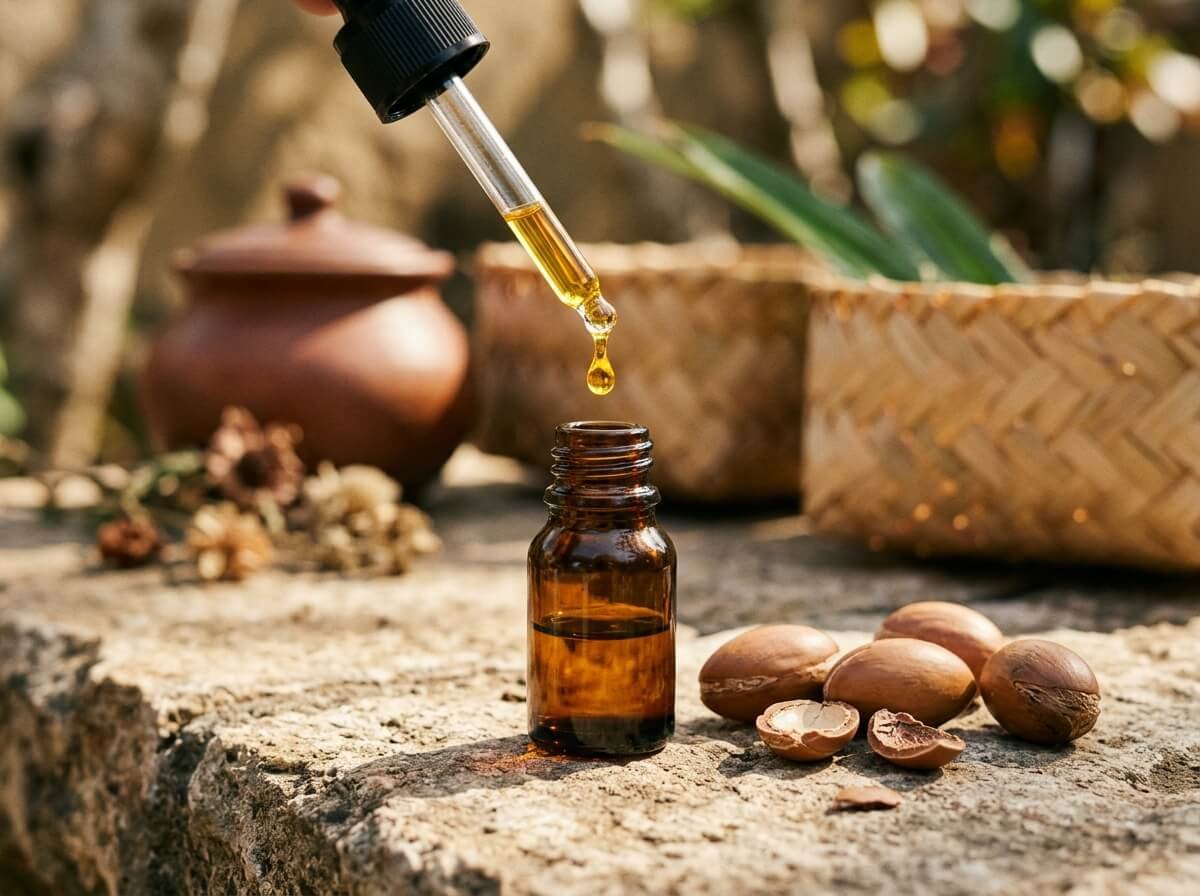
Argan is the oil we reach for when skin simply needs to be kept well. A few drops pressed into slightly damp skin after cleansing lock in moisture without a greasy film. On hair, it tames frizz and adds a soft shine to mid-lengths and ends. On cuticles and dry elbows, it is quietly effective. This is unglamorous, dependable care, and that is exactly its strength.
Because it absorbs quickly and rarely overwhelms, argan layers well. Many people use it as the last step over a water-based cream, sealing hydration in place. If you prefer a ready-blended approach, our HydroBotanic 3-in-1 hydrating face cream carries that same balancing intention in a lighter daily format. For those who want the pure oil to keep and use as they wish, our Argan Oil 30ml is cold-cared for and single-ingredient.
- Press two to three drops into damp skin as a final moisture step.
- Smooth a single drop through hair ends to soften and add shine.
- Use on cuticles, elbows, and dry patches through the day.
There is a reason argan has become a quiet staple rather than a headline act. It does not fight your skin or demand a complicated routine. It slots into whatever you already do and makes it a little better. For anyone building a first natural routine, or simplifying an overcrowded one, argan is a forgiving place to start, and it plays well with almost everything else on the shelf.
Tamanu oil: the healer for scars and barrier repair
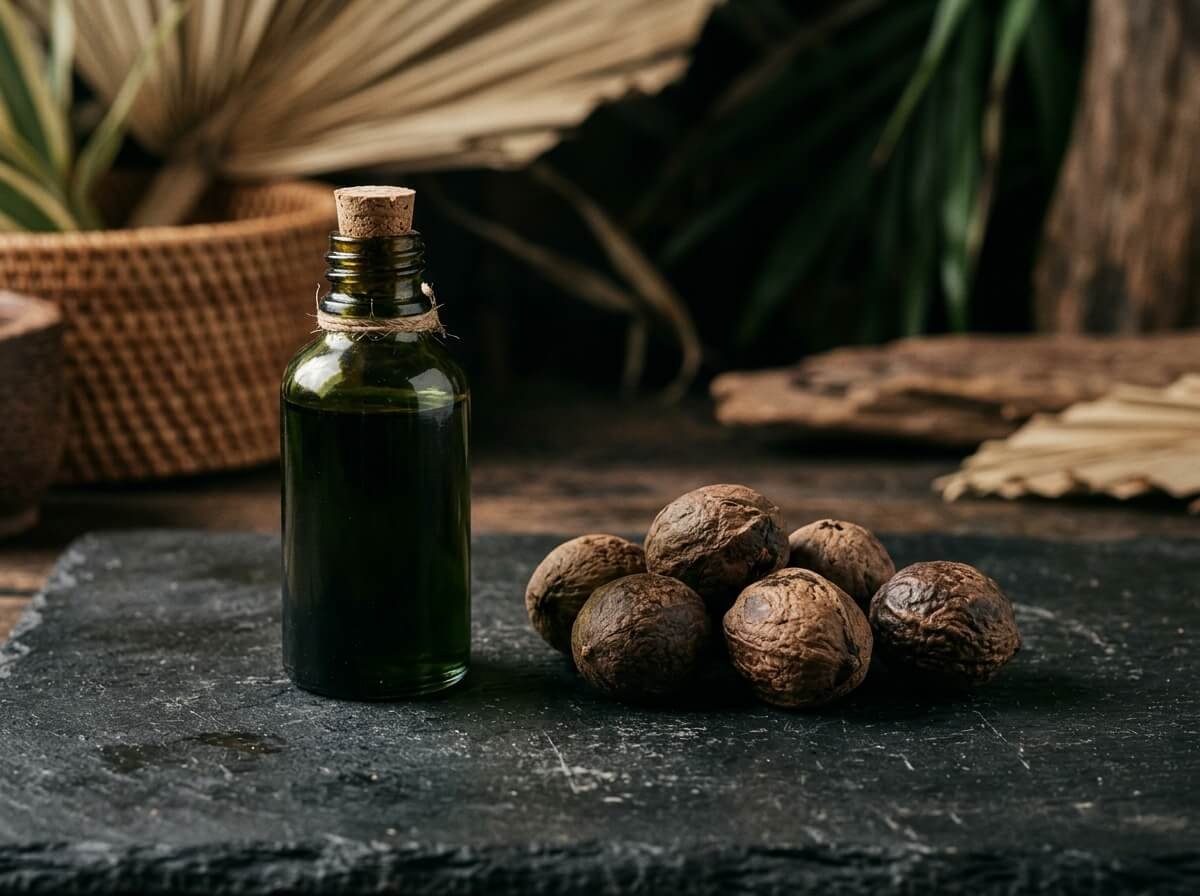
Tamanu earns the word healer through tradition and a growing body of research into its soothing constituents. It is the oil to consider for the skin that is recovering: fading the look of scars, calming the aftermath of blemishes, and supporting a barrier that feels rough or compromised. Its deep green colour and heavier body are signs of how concentrated it is.

Used with restraint, tamanu is a targeted tool rather than an all-over moisturiser. A drop worked gently into a mark at night, or blended into a carrier, is usually enough. Because it pairs so naturally with blemish-prone skin, it also appears in more focused formulas, such as our Acne Treatment Oil, where tamanu does what it has always done, quietly and without drama.
If you want to understand tamanu next to other actives before committing, our guide to tea tree essential oil benefits is a useful companion, since the two are often reached for together in blemish care, one soothing and one purifying.
It helps to set expectations honestly. Tamanu supports the skin as it does its own repair work, it does not erase a scar overnight, and any brand that promises that is selling theatre. What consistent, patient use offers is a softening of texture and a calming of the look of marks over weeks, not hours. Used that way, with realistic hope and a light hand, tamanu rarely disappoints.
Argan oil vs tamanu oil: a side-by-side summary
Before the decision, here is the whole comparison distilled. Keep this in mind as a quick reference whenever you are standing in front of the shelf, or reading a label that is trying a little too hard.
Texture and absorption
Argan is light and sinks in fast, leaving skin soft rather than slick. Tamanu is heavy and stays present longer, which is exactly what you want from a treatment oil and exactly why you use less of it.
Best for
Argan is best for everyday moisture, hair shine, oily and combination skin, and simplicity. Tamanu is best for scars, blemishes, rough or recovering skin, and focused night care.
Price and value
Both are affordable in the small, honest bottles that good oils come in. Because tamanu is used sparingly, a single bottle lasts a long time, which makes the pair together a genuinely economical way to cover most of what skin asks for. Buying two considered oils instead of ten novelty products is the quiet definition of value.
How to choose between argan oil and tamanu oil
Here is the honest decision, stripped of noise. Choose argan when your skin is well and you want steady daily softness, lightweight moisture, and a little shine for hair and skin alike. Choose tamanu when your skin is healing and you want focused support for scars, blemishes, and a stressed barrier. Most people, over a full month, meet both of those situations, which is why the wisest answer to argan oil vs tamanu oil is often to keep both and use each for its purpose.
A simple way to layer both
Cleanse, then treat any specific marks with a small amount of tamanu at night. On mornings and calmer evenings, finish with a few drops of argan over your usual hydration. You are not doubling up for the sake of it, you are matching each oil to the moment. Slow, considered layering is the heart of a natural ritual, and it costs less than a shelf full of single-use products.
If you want to make the ritual feel like more than maintenance, slow down the moment. Warm a drop or two between your palms, breathe in the faint scent, and press the oil into skin rather than rubbing it. This is the small daily pause that turns a task into care, and it is available to anyone, at any budget. The oils do the physical work, but the attention is what makes it a ritual.
One more note on integrity: buy oils that are cold-pressed, single-ingredient where possible, and honest about origin. If a label leans on words like miracle or ultimate, be sceptical. Good oil does not need theatrics.
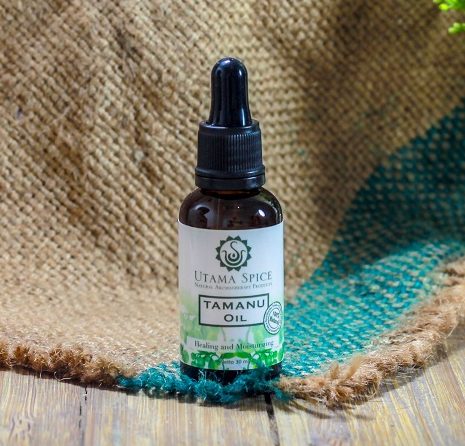
Meet the healer: Tamanu Oil 30ml
Cold-cared, single-ingredient tamanu oil, pressed from a tropical nut and trusted across the Pacific for scars, blemishes, and barrier repair. A small bottle, a focused ritual, real care that works.
Argan oil vs tamanu oil: common questions
Can I use argan oil and tamanu oil together?
Yes. They complement each other well. Use tamanu for targeted repair, usually at night, and argan as a lightweight finishing oil for everyday moisture. Applying tamanu to specific marks and argan more broadly is a common, sensible routine.
Which is better for acne-prone skin?
Tamanu is the more traditional choice for blemish-prone skin, thanks to its soothing constituents, and it appears in focused blends for exactly that reason. Argan is lighter and less likely to feel heavy, so some people prefer it for daily wear. Patch test either oil first, and introduce one change at a time.
Which is better for wrinkles and mature skin?
Both support mature skin. Argan brings vitamin E and a soft, replenishing feel for daily use, while tamanu offers richer, more concentrated repair. We avoid the phrase anti-aging on principle, because skin does not need fixing, it needs care. Together these oils nourish and soften over time.
Is tamanu oil safe for the face?
For most people, yes, when used sparingly. Because it is rich, a drop or a blended application is usually plenty on the face. As always, patch test over a couple of days and pay attention to how your skin responds.
Does argan oil or tamanu oil clog pores?
Argan is generally well tolerated and sits on the lighter end, so many people with oily or combination skin use it without trouble. Tamanu is richer and is best used sparingly on the face, or blended into a carrier, to keep it comfortable. Everyone is different, so a short patch test remains the honest first step for either oil.
Which oil should I buy first?
If your skin is generally well and you want one oil that does the everyday work, start with argan. If you are dealing with scars, blemishes, or a stressed barrier right now, start with tamanu. Over time, most people find a place for both, using each for the job it does best.
The honest takeaway
Argan oil vs tamanu oil was never really a contest. It is a question of matching the right oil to what your skin is asking for. Argan is the calm, everyday softener. Tamanu is the focused healer. Keep them for their separate jobs, buy them honestly sourced and cold-pressed, and let your ritual stay simple. That is what real care looks like: fewer, better choices, made with intention, and rooted in the wisdom of the plants themselves.
So keep the question simple the next time you weigh argan oil against tamanu oil. Ask what your skin is doing, not what a label is shouting. Reach for argan on the ordinary days and tamanu on the healing ones, store both with a little care, and trust that two honest oils, used with intention, will serve you better than a cupboard of promises. That is care in action, and it is the same principle that guides everything we make in Bali.