Mud mask vs clay mask: which one your skin actually needs
If you have ever stood in front of a shelf of face masks wondering whether to reach for a mud mask or a clay mask, you are not alone. The two words get used as if they mean the same thing, and most labels do nothing to clear it up. So let us settle the mud mask vs clay mask question honestly, with a formulator’s eye rather than a marketing one. They are not interchangeable. They come from different places, they behave differently on the skin, and they suit different skin types. Choosing well is the difference between skin that feels balanced and skin that feels tight, stripped, and unhappy.
This guide walks through what each mask actually is, what it does, and how to match one to your skin. We will also share the Balinese way we make ours, rooted in clay and white turmeric rather than theatrics. Care, not performance. That is the whole idea.
Mud mask vs clay mask: the honest difference
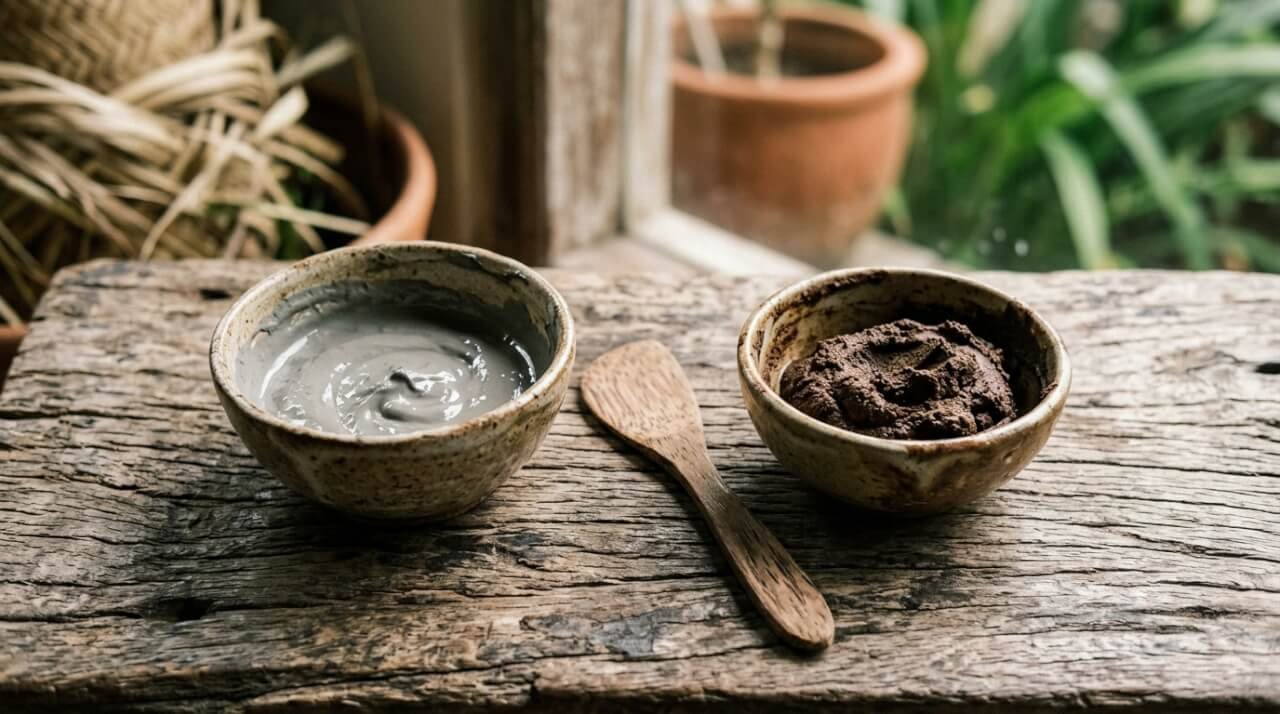
Here is the short version. A clay mask is built around cosmetic clays, mineral-rich powders like kaolin and bentonite that are prized for their ability to bind to oil and lift it away. A mud mask is built around sediment, often sourced from lakes, hot springs, or the sea floor, and it carries a mix of minerals, humus, and water. Clay is dry, powdery, and absorbent. Mud is wet, dense, and mineral-heavy. That single distinction, dry mineral powder versus wet mineral sediment, sits underneath everything else in the mud mask vs clay mask comparison.
Because clay arrives as a powder, it is thirsty. Mixed with water and left on the skin, it draws oil and moisture toward itself as it dries. That is what gives a clay mask its signature tightening pull. Mud, already hydrated, works more gently. It sits on the skin and shares its minerals without the same aggressive draw. Neither is better in the abstract. They are simply tuned for different needs, and the right choice depends entirely on the skin wearing it.
One more honest note, because transparency matters to us. Some products sold as mud masks are really clay masks with a darker pigment, and some so-called clay masks are mostly filler. The only reliable way to know what you are buying is to read the ingredient list, not the front of the jar. If kaolin or bentonite sits near the top, you are holding a clay mask, whatever the name says.
What clay masks actually do for your skin
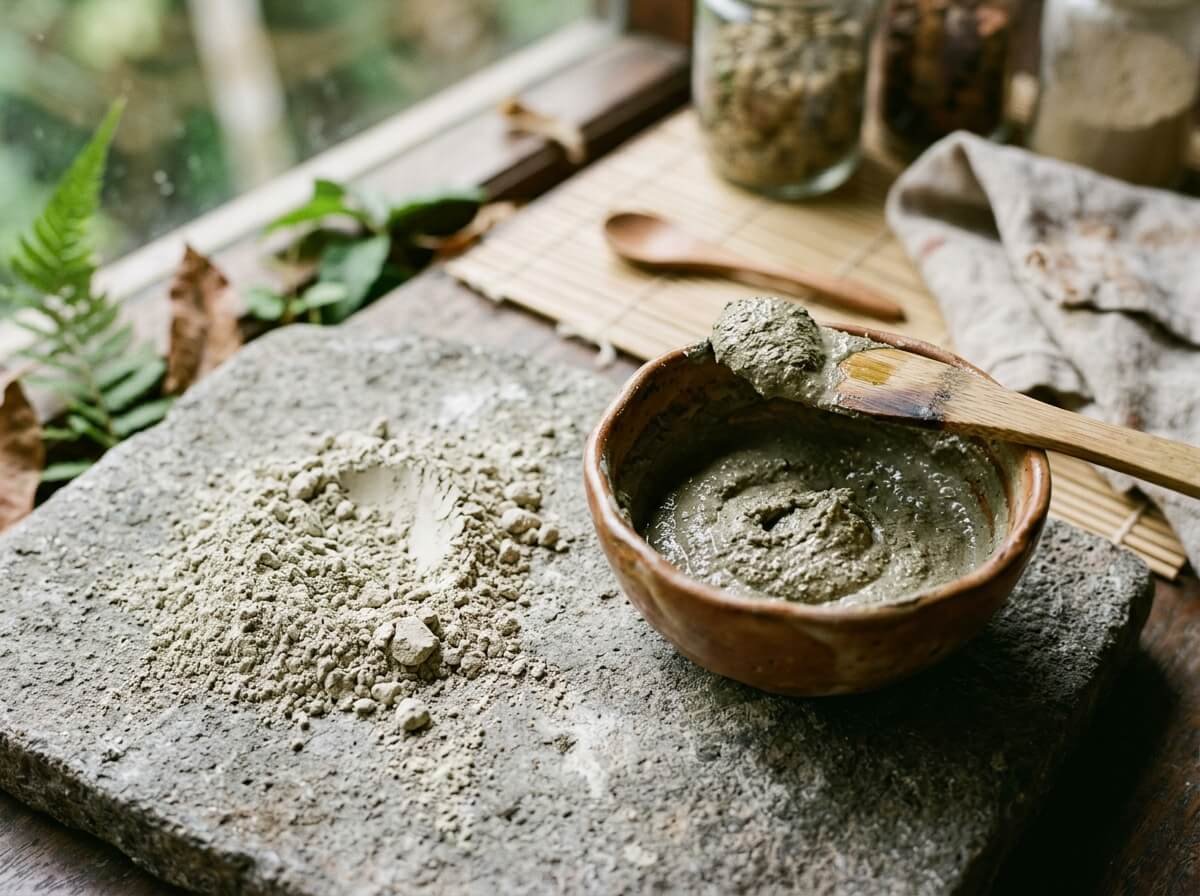
Clay masks earn their reputation through absorption. The two clays you will meet most often are kaolin, a soft white clay that is gentle and mildly absorbent, and bentonite, a more powerful clay that swells with water and binds strongly to oil and impurities. When you spread a clay mask on and let it set, it pulls sebum and everyday grime from the surface and the mouths of your pores. For skin that runs oily or congested, that reset can feel genuinely clarifying.
There is real science under the ritual. Clays carry a slight electrical charge that helps them attract and hold oily, positively charged particles. This is not a miracle, and it will not shrink a pore permanently or erase a blemish overnight. What a good clay mask does is temporarily reduce surface oil and leave skin feeling clean and matte. Used with a light hand, it is a useful tool for balance. Used too often, it tips into stripping, which we will come back to.
It helps to know that not all clays are equal. Kaolin comes in several shades, and the white and pink varieties are the mildest, well suited to skin that wants a light touch. Bentonite, often called montmorillonite, is the workhorse for oily skin because it swells and grips hard. There is also rhassoul, a mineral-rich clay from Morocco that sits somewhere in between, cleansing while feeling more conditioning than bentonite. Reading which clay leads the formula tells you more about how a mask will feel than any claim on the label. A single mask can even blend two clays to balance pull and comfort, which is often the most forgiving approach for combination skin.
Clay pairs naturally with a considered routine. Many people like to cleanse first, so the mask works on bare skin rather than the day’s residue. If you are building your rhythm from scratch, our guide to a natural face wash for your skin type is a good place to start, and our Pore Cleansing Facial Wash with Clay carries the same clay principle into a daily cleanser for skin that needs it. For a deeper look at clay on oil-prone skin specifically, we wrote a whole piece on the clay mask for oily skin and the common mistake that makes oil worse.
What mud masks actually do for your skin
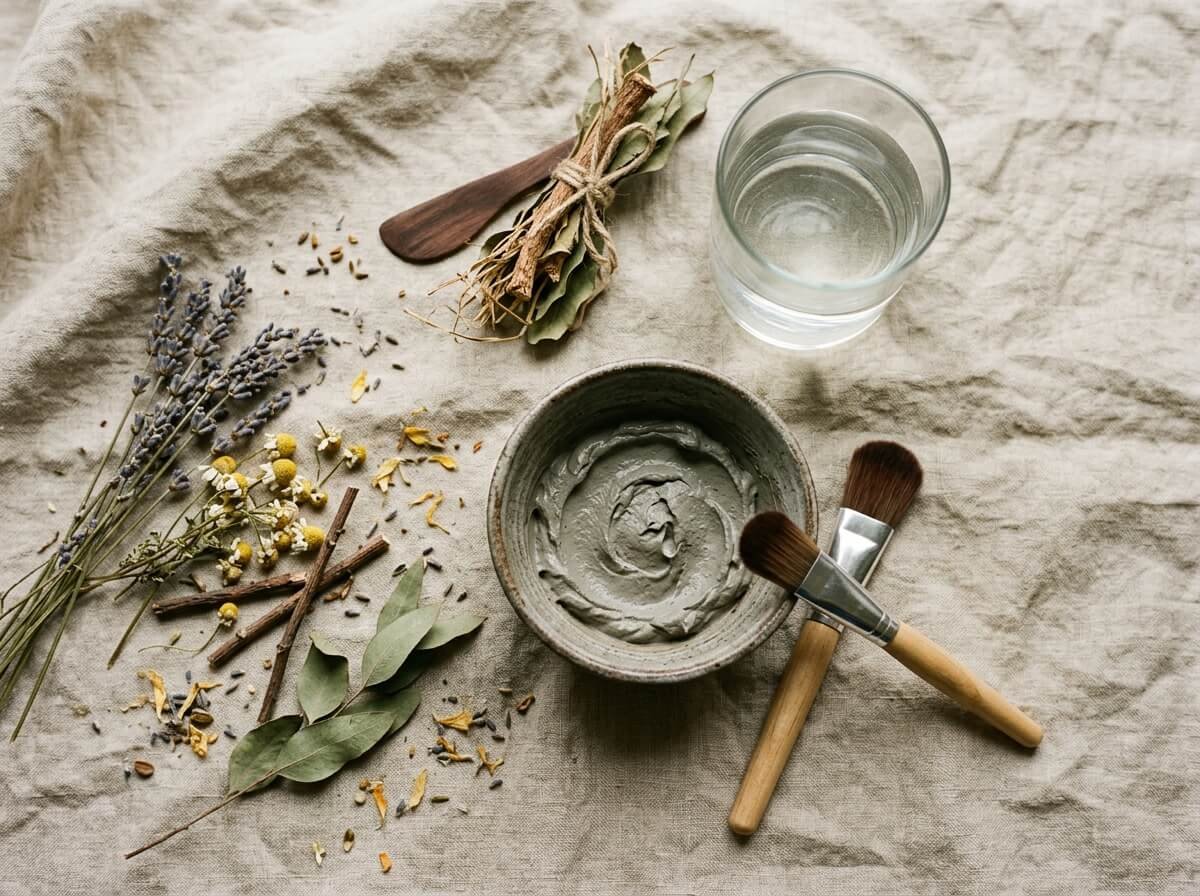
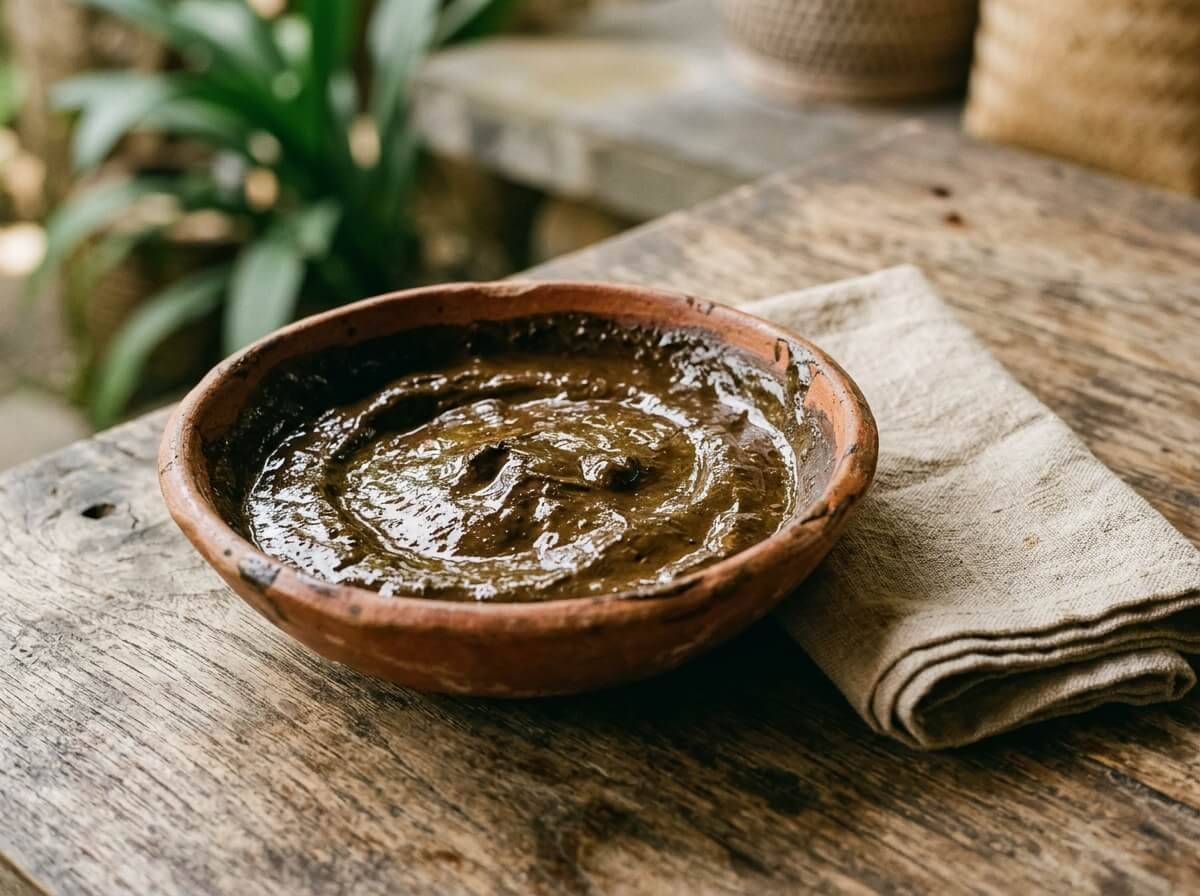
If clay is about drawing out, mud is more about giving back. A mud mask carries dissolved minerals, magnesium, calcium, and others depending on its source, held in a naturally hydrated base. Rather than pulling hard at the skin as it dries, it tends to soften, condition, and lend a gentle mineral boost. Many mud masks stay slightly tacky rather than setting bone-dry, which is a clue to how they behave. Less pull, more nourishment.
That gentleness is exactly why mud suits skin that clay can overwhelm. Dry, sensitive, and mature skin often finds a full bentonite mask too much, ending up tight and flaky afterward. A mineral-rich mud can offer the ritual of a mask, the pause, the slow rinse, the sensory reset, without the same stripping cost. Some mud masks also help skin hold water better in the hours after, which is the opposite of what an over-drying clay can do.
Mud comes in as many characters as clay does, and the source shapes the effect. Dead Sea mud is prized for its high concentration of magnesium and other salts. Moor mud, drawn from ancient peat bogs, is rich in plant-derived organic matter and often chosen for its softening feel. Volcanic and hot-spring muds carry their own mineral fingerprints depending on the ground they come from. What they share is that hydrated, mineral-forward character, which is why they tend to comfort rather than clarify. If your skin has ever felt cared for rather than scrubbed after a mask, there is a good chance mud, not clay, was doing the work.
Mud is not magic either. It will not detoxify your body through your face, whatever a label promises, because your liver and kidneys already do that job. What a mud mask offers is real but modest, a hit of minerals, a moment of hydration, and a soft, comforted finish. For skin recovering from irritation or over-exfoliation, that modesty is a feature. If your skin is genuinely inflamed rather than just dull, our honest walk-through of natural acne treatment may serve you better than any mask.
Mud mask vs clay mask: which one your skin actually needs
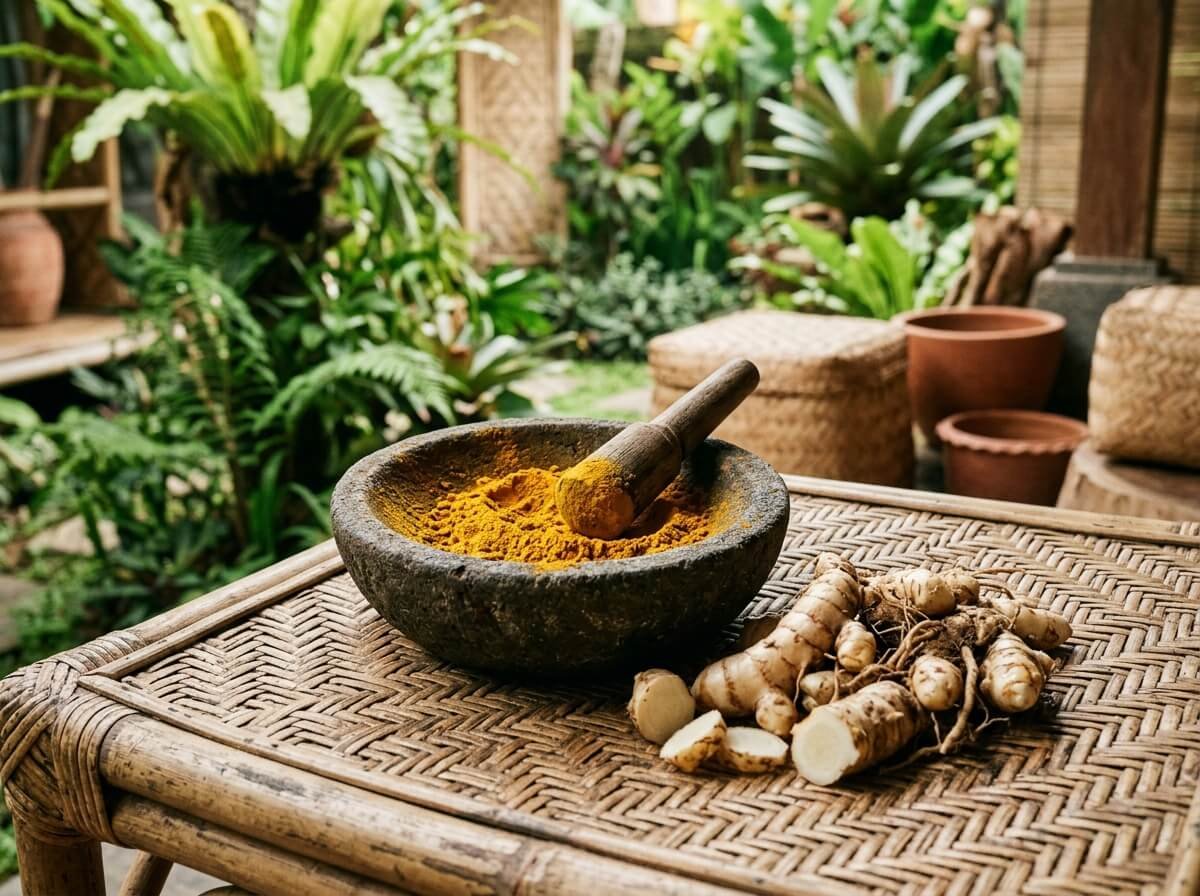
This is where the mud mask vs clay mask decision finally gets practical. Forget the marketing and start with your skin. Skin type, not trend, decides the winner.
- Oily or combination skin: a clay mask is usually the better fit. Kaolin for a gentle weekly reset, bentonite when you need more pull on an oil-prone T-zone. Watch the frequency so you clarify without stripping.
- Dry or dehydrated skin: lean toward mud, or a clay softened with hydrating botanicals. A pure, fast-drying clay tends to leave dry skin tighter than it started.
- Sensitive or reactive skin: mud is the calmer choice, and gentle kaolin over strong bentonite when you do reach for clay. Patch test first, always.
- Mature skin: mineral-rich mud tends to comfort more than it clarifies, which is often what mature skin wants. Follow with oil to seal in the moment.
- Normal or balanced skin: you have room to enjoy both. Clay when skin feels congested, mud when it feels dull or dry.
Climate deserves a mention, because it changes your skin more than most people expect. In heat and humidity, skin tends to produce more oil, and a clay mask can feel like a welcome reset. In cold, dry air, or under constant air conditioning, the same skin can turn tight and parched, and mud or a softened clay serves it better. Season by season, your skin shifts, and there is no shame in keeping both on the shelf and reaching for whichever the week calls for. Listening beats loyalty to a single jar.
If you are unsure where your skin sits, a simple test helps. Cleanse, wait an hour without applying anything, then notice how your skin feels. Shiny and slick across the T-zone points toward clay. Tight, flaky, or comfortable-but-dull points toward mud or a gentler clay. This is the same skin-first thinking behind building a whole routine, which we cover in our guide to reading a label honestly and choosing what your skin actually needs.
Notice that no single mask wins for everyone. That is the honest answer the internet rarely gives. The best mask is the one matched to the skin in front of you, this week, in this climate. Your skin in a humid Bali afternoon and your skin in a dry winter are not the same skin, and your mask can change with them.
The Balinese way: clay, white turmeric, and the lulur tradition
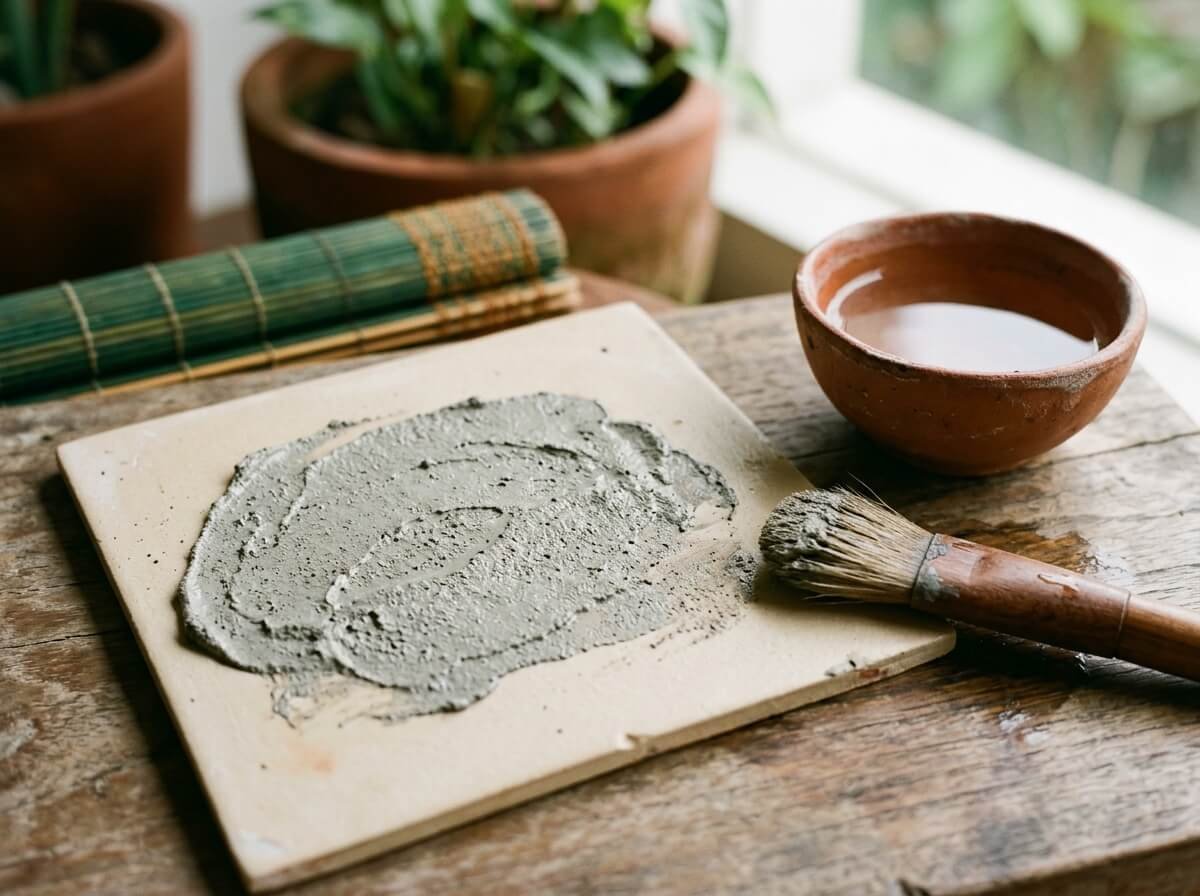
At Utama Spice we make a clay mask, not a mud mask, and we say so plainly. Our Face and Body Clay is built on mineral clay blended with Balinese botanicals, designed to clarify without the harshness that gives clay a bad name. We chose clay because it does its one job well, and because it connects to something older than any skincare trend: the Balinese ritual of lulur, the traditional body treatment that has used clays, roots, and spices for generations.
Central to that heritage is turmeric. Golden turmeric, or kunyit, has been part of Balinese jamu and lulur for centuries, valued for its calming, brightening character. White turmeric plays a related role. Our Temu-Temu Face Mask is named for temu, the Indonesian word for these rhizomes, and it carries that tradition into a modern mask. When we talk about tradition as innovation, this is what we mean. The knowledge came first; we simply keep it honest and make it easy to use. You can read more about turmeric’s roots in our note on turmeric, the golden root of Balinese jamu and lulur.
There is a quieter reason we favor a considered clay mask over the endless novelty of new formats. Care that lasts is care you can repeat. A mask you understand, made from ingredients you can name, becomes part of a rhythm rather than a one-time experiment that ends up half-used at the back of a drawer. That is what ritual means to us: not theater, but a small, repeatable act of attention. It is the same thinking behind our refill program, where reusing what you already own is treated as the default rather than the exception.
This is also where sourcing matters. A mask is only as clean as the ground its minerals and botanicals come from. We work with clays and plants chosen for purity, blended in small batches in Bali, and we would rather tell you exactly what is inside than dress a jar up with borrowed mystique. No greenwashing, no pretending, just a clay mask that respects where it comes from.

A clay mask, made honestly in Bali
Our Face and Body Clay pairs mineral clay with Balinese botanicals to clarify without stripping, rooted in the lulur tradition and blended in small batches. Care, not performance.
How to use a clay or mud mask without wrecking your skin barrier
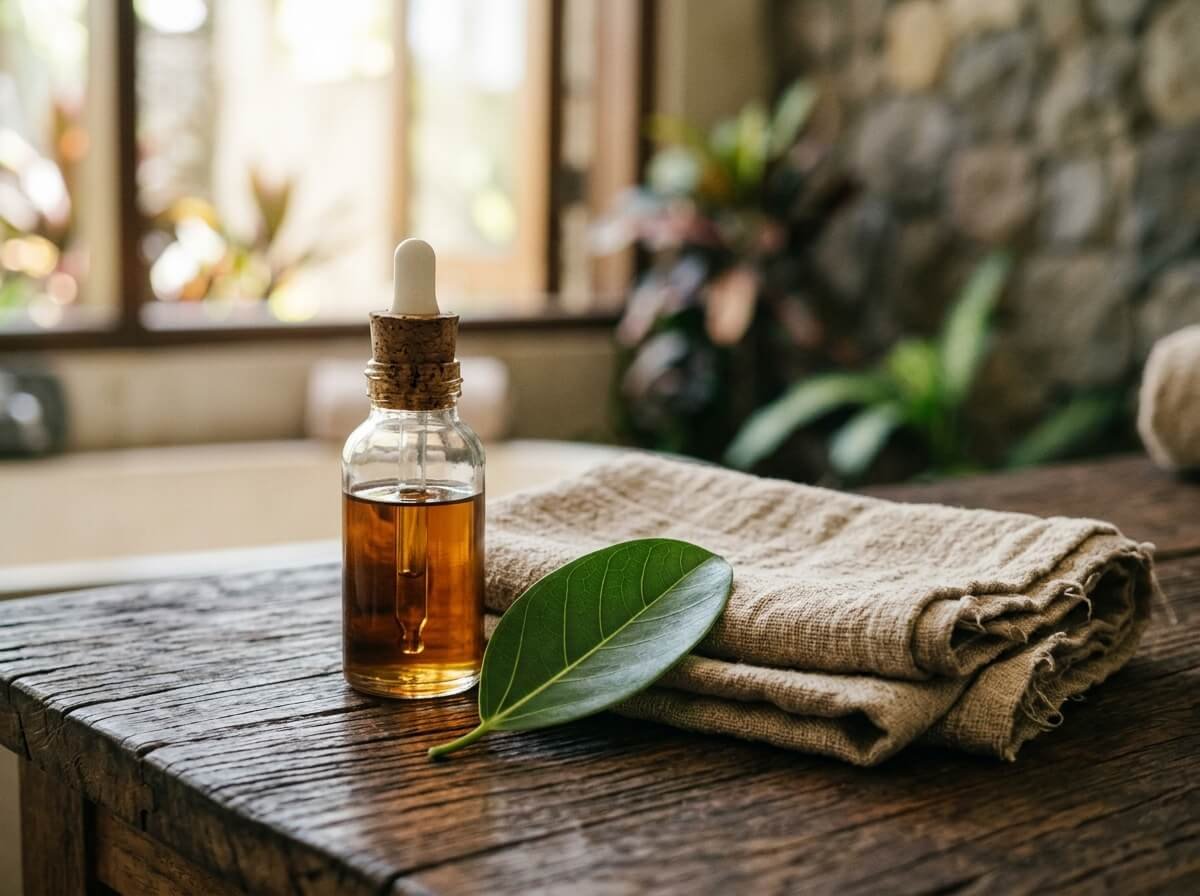
Here is the mistake that quietly undoes most masking: letting a clay mask dry until it cracks. That tight, cracking-desert feeling is not proof it is working. It is the point where the mask has finished pulling oil and has started pulling water from your living skin, which can leave your barrier weakened and your skin producing more oil to compensate. More is not better. Timing is everything.
A few grounded rules make masking kind rather than punishing:
- Rinse before it fully dries. When a clay mask turns matte but is still slightly pliable, it is done. Do not wait for the crackle.
- Keep it occasional. Once or twice a week is plenty for most skin. Sensitive skin may want less.
- Mist or dampen as it sets. A light spritz of water keeps a clay mask active without over-drying, a trick that makes clay far gentler.
- Rinse with lukewarm water, never hot, and use soft circular motions rather than scrubbing.
- Always follow with moisture. This step is not optional. Seal the reset with a hydrating layer.
If you like the idea of getting more from one session, multi-masking is a gentle way to respect a face that is not uniform. Many of us run oily through the T-zone and dry across the cheeks, so a clay mask on the forehead, nose, and chin with a mud or hydrating mask on the cheeks treats each zone for what it actually is. It takes an extra minute and asks you to look closely at your own skin, which is rather the point. Store your masks somewhere cool and dry, keep water out of the jar, and use clean fingers or a spatula so the formula stays fresh between uses.
Masking is a step, not a routine on its own. A mask clarifies or comforts; the rest of your care does the daily work. Keep exfoliation separate from masking day so you do not overload the skin. If you enjoy a gentle polish, our Green Leaf Face Scrub is a soft option, and our guide to a natural face scrub explains how to exfoliate without damage. After any mask, restore moisture, and if skin feels warm or over-treated, the calm approach in our piece on soothing skin with aloe vera applies just as well to a mask that ran a little long.
Frequently asked questions
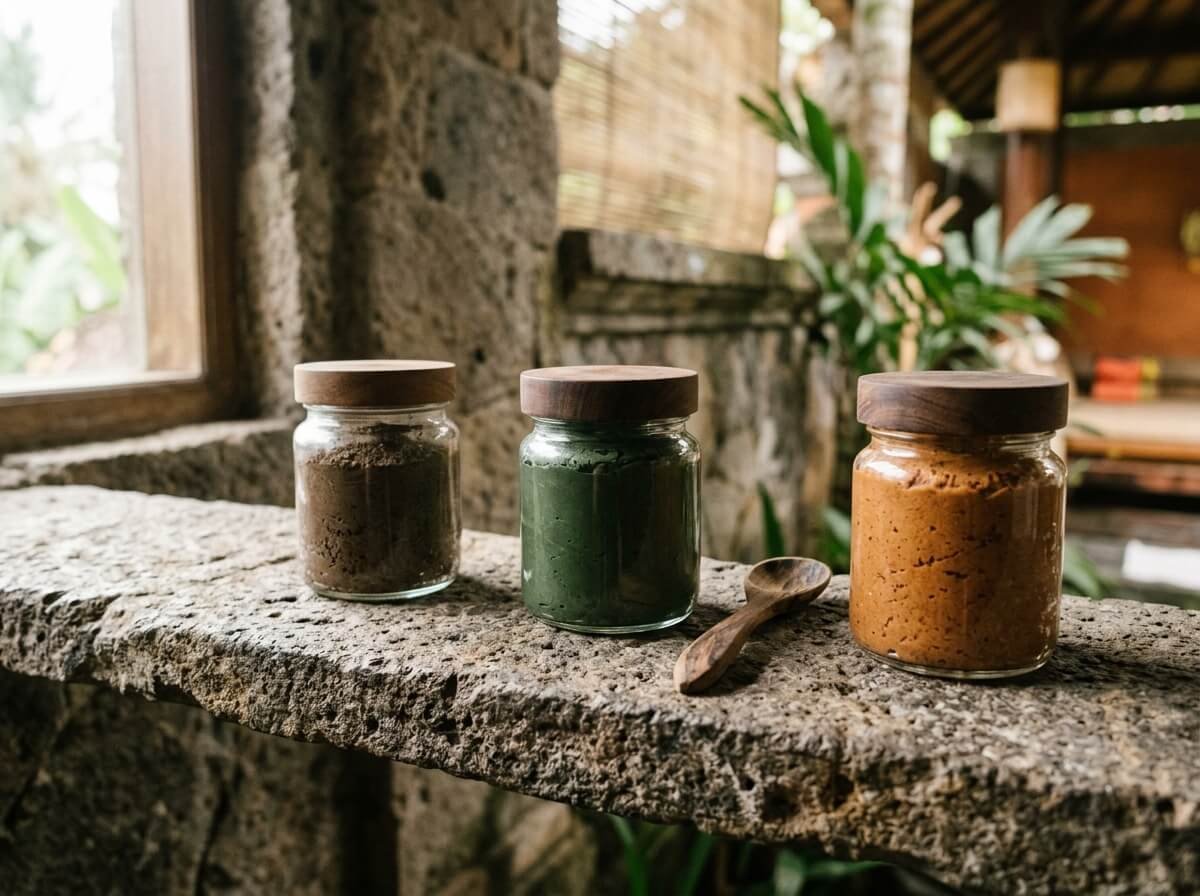
Is a mud mask or a clay mask better for acne?
For oily, breakout-prone skin, a clay mask usually helps more, because clays absorb the excess oil that feeds congestion. Use it once or twice a week, not daily, and pair it with a gentle routine rather than harsh scrubbing. If breakouts are inflamed or persistent, treat the routine first and let the mask play a small supporting role.
Can I use a clay mask every day?
We would not. Daily clay tends to over-strip, which can leave skin tight and, paradoxically, oilier as it overcompensates. Once or twice a week is the sweet spot for most people, and sensitive skin may prefer even less.
Do mud and clay masks actually detox the skin?
Not in the literal sense. Your body detoxifies through your liver and kidneys, not your pores. What these masks genuinely do is absorb surface oil and grime, or share minerals and hydration. That is worthwhile and real; the word detox is just marketing.
Which mask is best for dry or sensitive skin?
Lean toward a mud mask, or a clay mask softened with hydrating botanicals and gentle kaolin rather than strong bentonite. Always patch test, rinse before it fully dries, and follow with moisture to protect your barrier.
Should I moisturize after a mask?
Yes, every time. A mask resets the skin; moisture completes the ritual. Sealing with a hydrating layer, or a facial oil for drier skin, is what keeps the barrier calm and comfortable afterward.
How do I know if a product is really clay or really mud?
Read the ingredient list. If kaolin or bentonite sits near the top, it is a clay mask, whatever the front label says. Mud masks list a sourced sediment or mineral mud instead. The label name is marketing; the ingredients are the truth.
Final thoughts: choose the mask, not the hype
The mud mask vs clay mask question does not have one answer, and any brand that tells you otherwise is selling, not helping. Clay draws out oil and suits skin that runs congested. Mud gives back minerals and comfort and suits skin that runs dry or sensitive. Match the mask to your skin, use it with a light hand, and always follow with moisture. That is the whole practice.
Whatever you choose, choose it consciously. A mask is a small ritual, a few quiet minutes of care in a busy week. Made honestly and used kindly, it is one more way to reconnect with your skin and the botanicals that nourish it. What you give, you get back.