Body balm vs body butter: an honest, climate-first guide to two anhydrous body treats
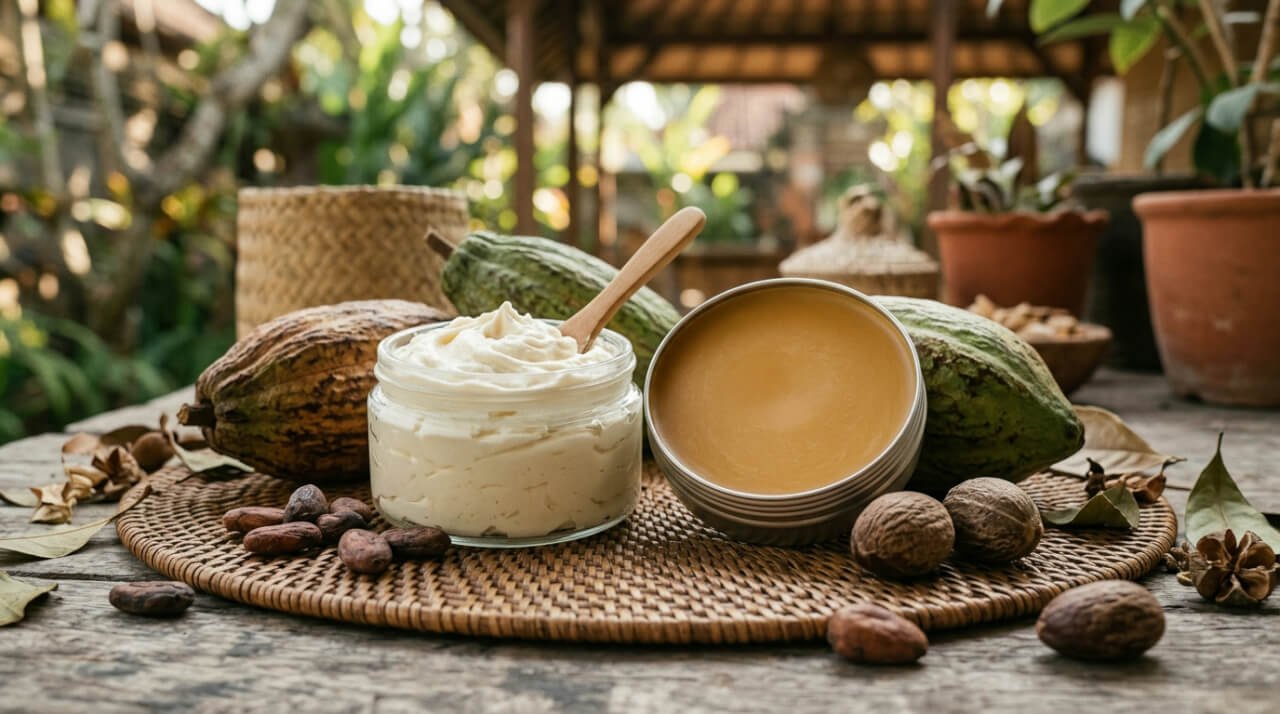
Stand two jars side by side and the question sorts itself out fast: body balm vs body butter is really a question about texture, water, and climate. Both are anhydrous, which means neither contains added water. Both are built to seal moisture into the skin rather than deliver it. Yet they feel like different creatures in the hand. A body butter is soft, whipped, and airy. A body balm is dense, firm, and slow to melt. Understanding why comes down to how they are made, what they are made from, and where you plan to use them. This guide walks through both, honestly, so you can match the right one to your skin and your weather.
We make both at Utama Spice, hand-blended in Bali since 1989, so we have spent years watching how these two formats behave on real skin in a humid tropical climate and in the dry winters our customers write to us from. The short version: neither is better. They solve different problems. Here is how to tell which problem is yours.
Body balm vs body butter: the honest short answer
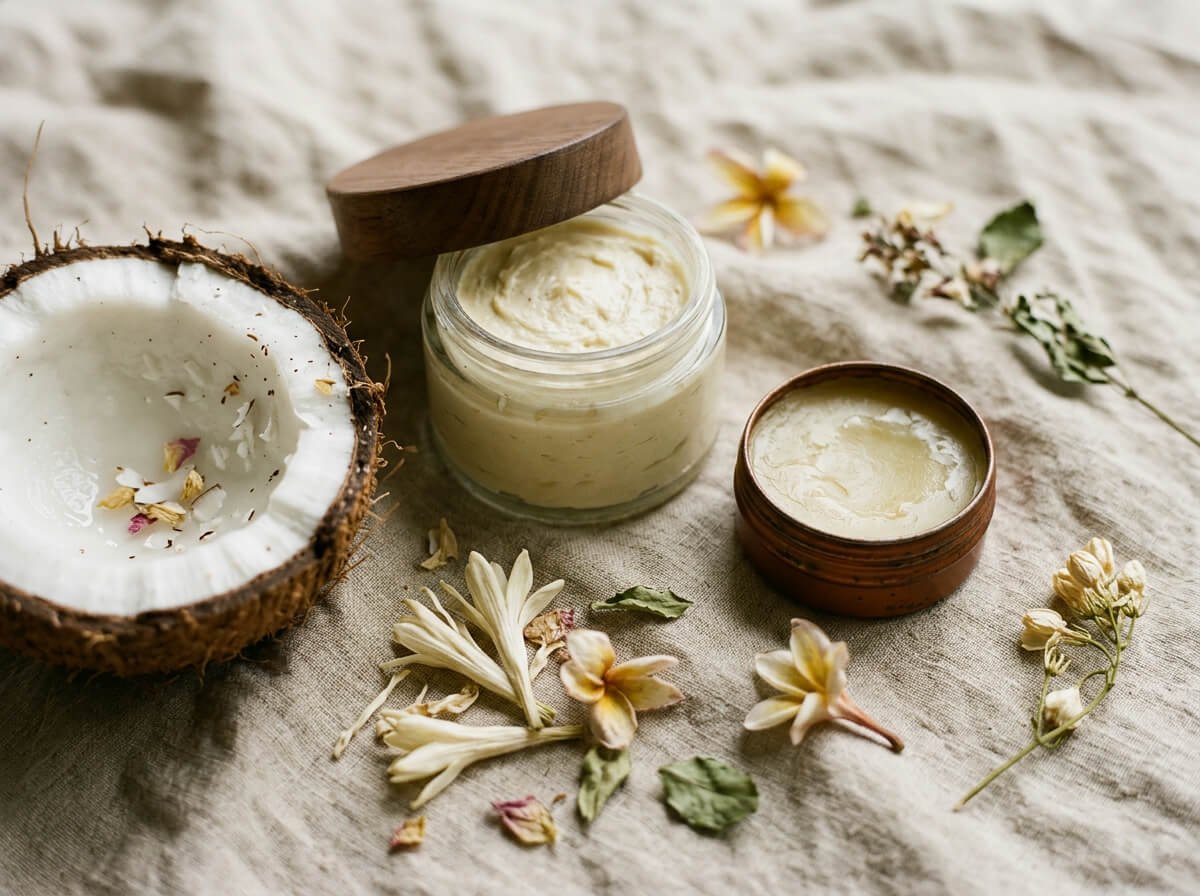
A body butter is a whipped blend of soft plant butters and liquid oils, aerated until it holds a light, scoopable peak. It sinks in with a little massage and suits everyday, all-over moisture. A body balm is a denser, more concentrated blend, often with a little more wax or a higher ratio of firm butters, so it sets solid and stays put. It is slower to absorb and works best on the spots that take the most punishment: heels, elbows, knuckles, and cuticles.
Think of it as coverage versus concentration. Butter is your generous, all-over layer. Balm is your targeted repair. If you only remember one line from this piece, remember that. Everything below is the reasoning that supports it, because we would rather you understand the choice than simply take our word for it. If you like this format, our honest guide to coconut oil vs shea butter unpacks the raw ingredients that sit underneath both a balm and a butter.
What a body butter actually is
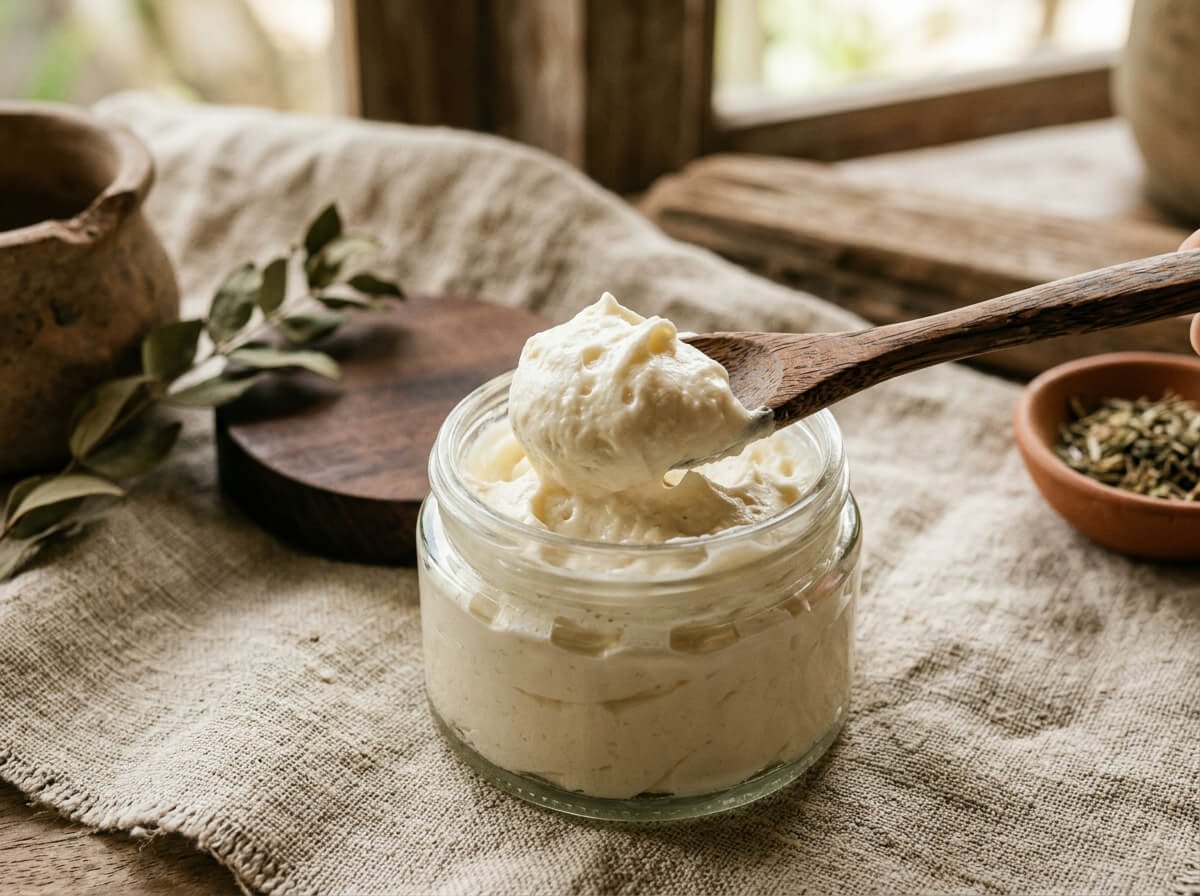
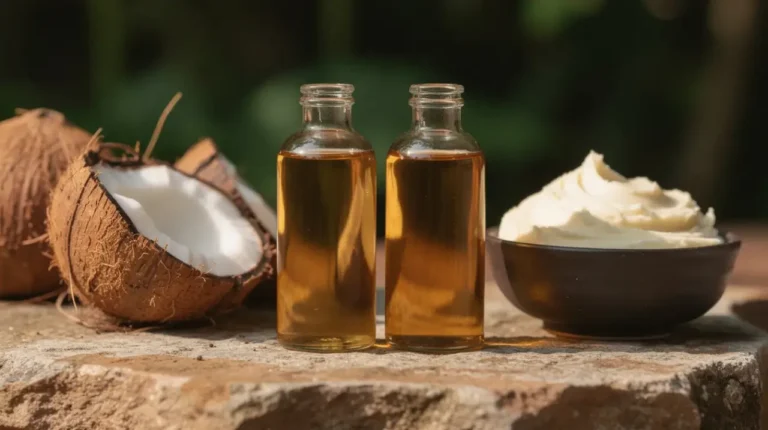
A body butter starts with solid plant butters, cocoa butter, shea butter, illipe butter, or a blend, gently warmed until soft, then combined with lighter carrier oils like coconut or jojoba. The mix is whipped as it cools, folding air through it. That aeration is the whole trick. It turns a firm block into something soft enough to scoop, and it makes the butter melt quickly against skin temperature so it spreads without dragging.
Because a body butter carries a good proportion of liquid oil, it feels cushioned rather than heavy. It gives the skin a supple, conditioned finish and a slight sheen that settles within a few minutes. This is the format most people picture when they think of rich body care: the Bliss Body Butter and the deeply rich Cocoa Love Body Butter both sit here, built for all-over use after a shower when skin is still slightly damp.
Butters shine on larger areas: arms, legs, shoulders, the whole canvas of the body. They are forgiving, sensory, and quick to apply. The trade-off is that all that softness comes from oils that can feel too much in high heat, which is exactly where a balm, or a lighter format, earns its place. Illipe butter is a favourite base for ours because it is wild-harvested in Kalimantan by families who have worked the same groves for generations; you can read its full story in our illipe butter vs shea butter guide.
Applying a butter well is its own small ritual. Warm a modest scoop between your palms until it turns to oil, then press it into skin that is still slightly damp from the shower, working in slow circles rather than quick swipes. Damp skin traps a thin layer of water underneath the butter, and the oils seal it in, so you get more softness from less product. This is where the sensory side earns its keep: the scent lifts, the texture melts, and the two-minute application becomes a genuine pause in the day rather than another chore. That is the version of body care we believe in, care as practice, not performance.
What a body balm actually is
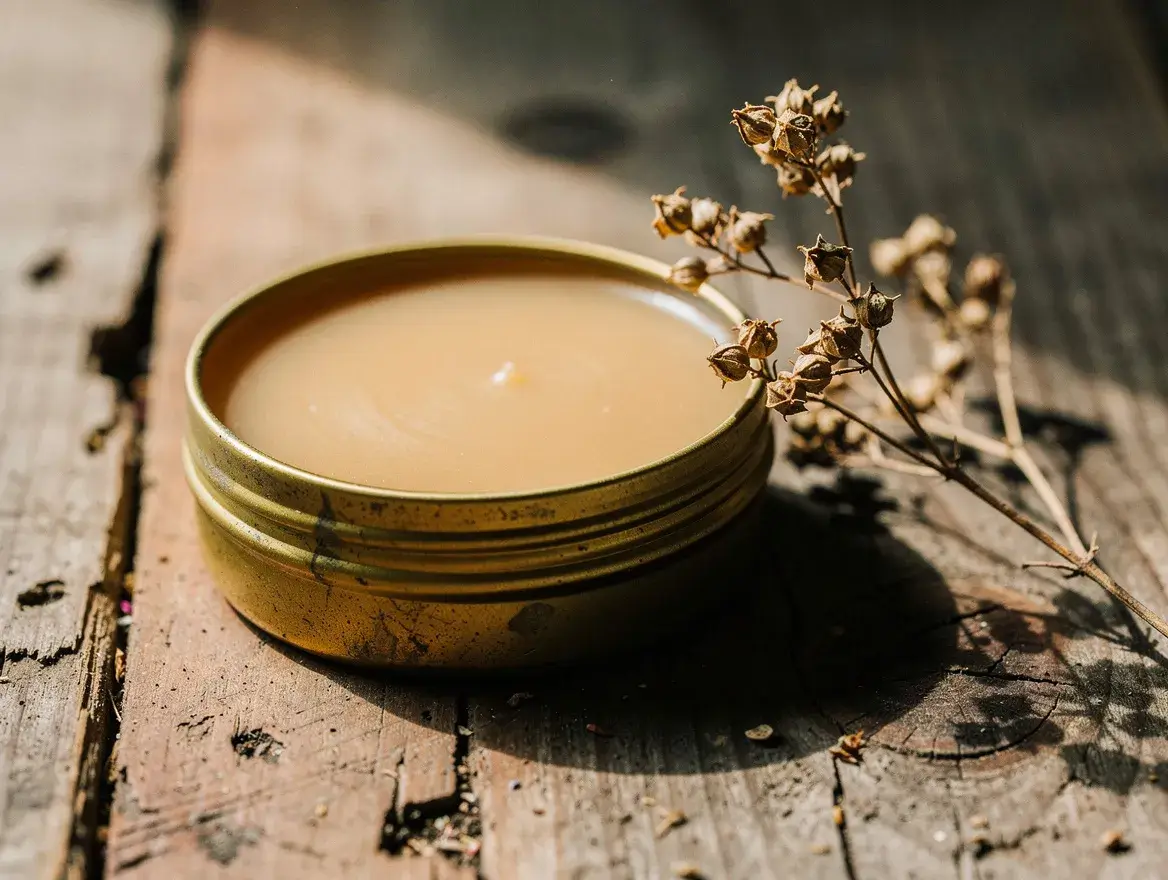
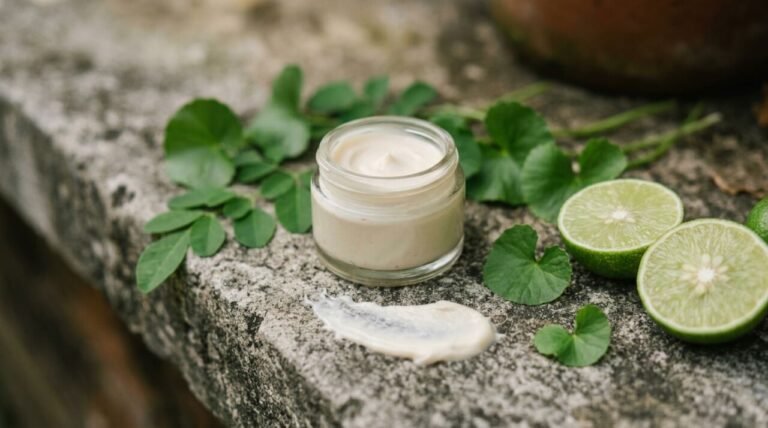
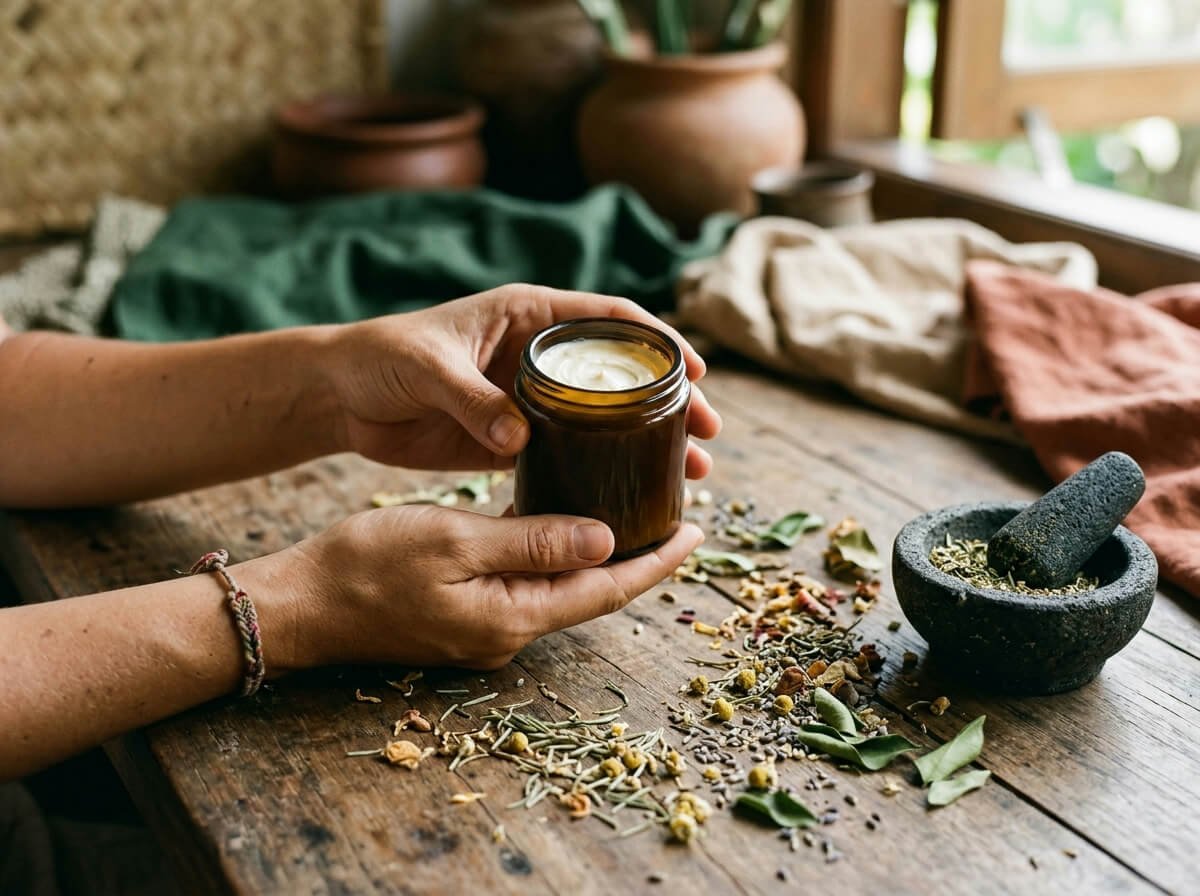
A body balm is the concentrated cousin. It uses a similar family of butters and oils but shifts the ratio toward firmness, often with a touch of plant wax or a higher share of solid butter, and usually less air whipped through it. The result sets denser and stays semi-solid at room temperature. You warm a little between your fingers, and it melts on contact into a protective, cushioning film.
That film is the point. A balm is more occlusive, meaning it forms a longer-lasting barrier over the skin that slows water loss. It does not disappear in ninety seconds the way a whipped butter does. It lingers, which is precisely what you want on skin that is cracked, chapped, or chronically dry. Our Fresh Soul Body Balm is built for this: small, dense, and made to be used sparingly on the parts that need real staying power.
Balms are targeted tools. A pea-sized amount handles both heels, or a whole set of dry cuticles, or the rough patch on an elbow. Used all over, a balm can feel heavy and take too long to sink in, so most people reach for it as a finishing step, sealing in a lighter product underneath. If your hands are the problem rather than your body, our guide to choosing a natural hand cream covers that specific job in more detail.
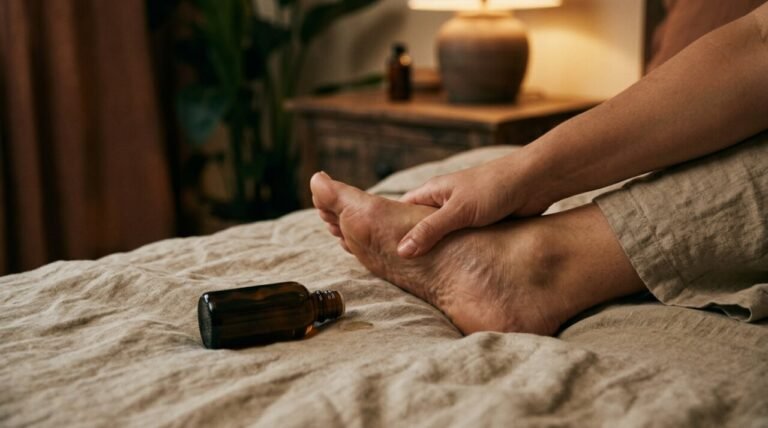
A balm also comes into its own overnight. On the nights when your heels are rough or your hands are raw from washing, a thin layer of balm before bed, sometimes under cotton socks or gloves, gives the skin hours of uninterrupted sealing while you sleep. By morning the difference is real, not because the balm worked a miracle, but because it simply held moisture in place long enough for the skin to catch up. Plant waxes and firm butters do quiet, unglamorous work, and that is exactly why we trust them.
Body balm vs body butter: texture, absorption, and when to reach for each
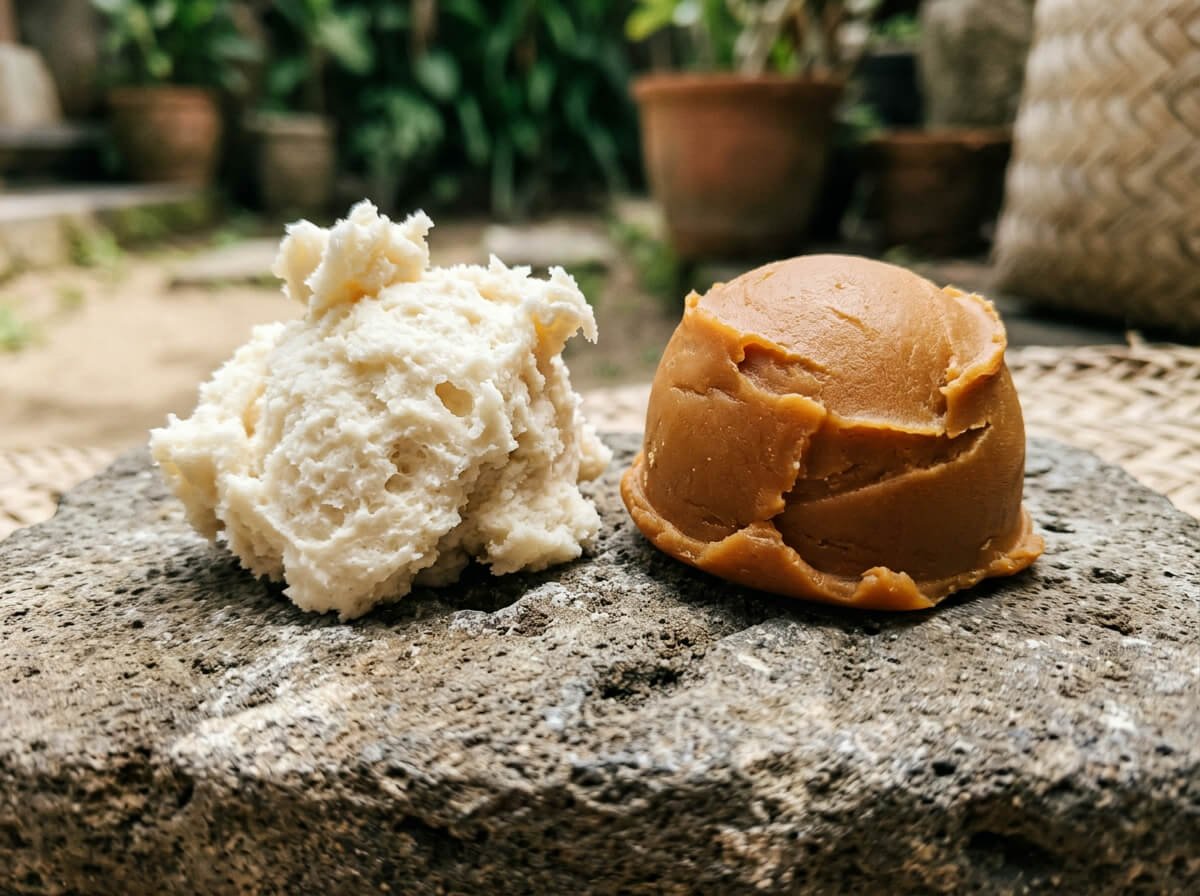
Put the two head to head and the differences line up cleanly. Texture: butter is soft and whipped, balm is firm and dense. Absorption: butter sinks in within a few minutes, balm sits on top and seals for longer. Coverage: butter is generous and all-over, balm is concentrated and targeted. Finish: butter leaves a supple, lightly conditioned feel, balm leaves a protective, cushioned layer you can still sense an hour later.
The decision rule is simple. Reach for a body butter when you want everyday, head-to-toe moisture and a fast, sensory finish. Reach for a body balm when you have a stubborn dry spot that needs protecting through the day or overnight. Many people keep both: a butter for the morning ritual and a balm for the trouble areas, layered balm-over-butter when the weather turns harsh. It is the same logic we cover in our face oil vs body oil comparison, where the right choice depends less on which is superior and more on the job in front of you.
One honest caveat: absorption speed also depends on how much you apply. Pile a butter on too thick and it will feel greasy; use a balm too generously and it will sit forever. Both formats reward a light hand and a little patience, warming the product between your palms before you spread it.
Here is the same comparison as a quick reference you can keep in mind at the shelf:
- Body butter: soft, whipped, absorbs in a few minutes, best for everyday all-over moisture, lighter feel, generous coverage.
- Body balm: firm, dense, sits and seals for longer, best for targeted dry spots, more occlusive, a little goes a long way.
- Use a butter after every shower, on arms, legs, and shoulders, when you want a fast, sensory finish.
- Use a balm on heels, elbows, knuckles, and cuticles, overnight, or in harsh, dry weather when skin needs protecting.
- Layer both butter first, balm on top, when the season turns cold and one product alone is not enough.
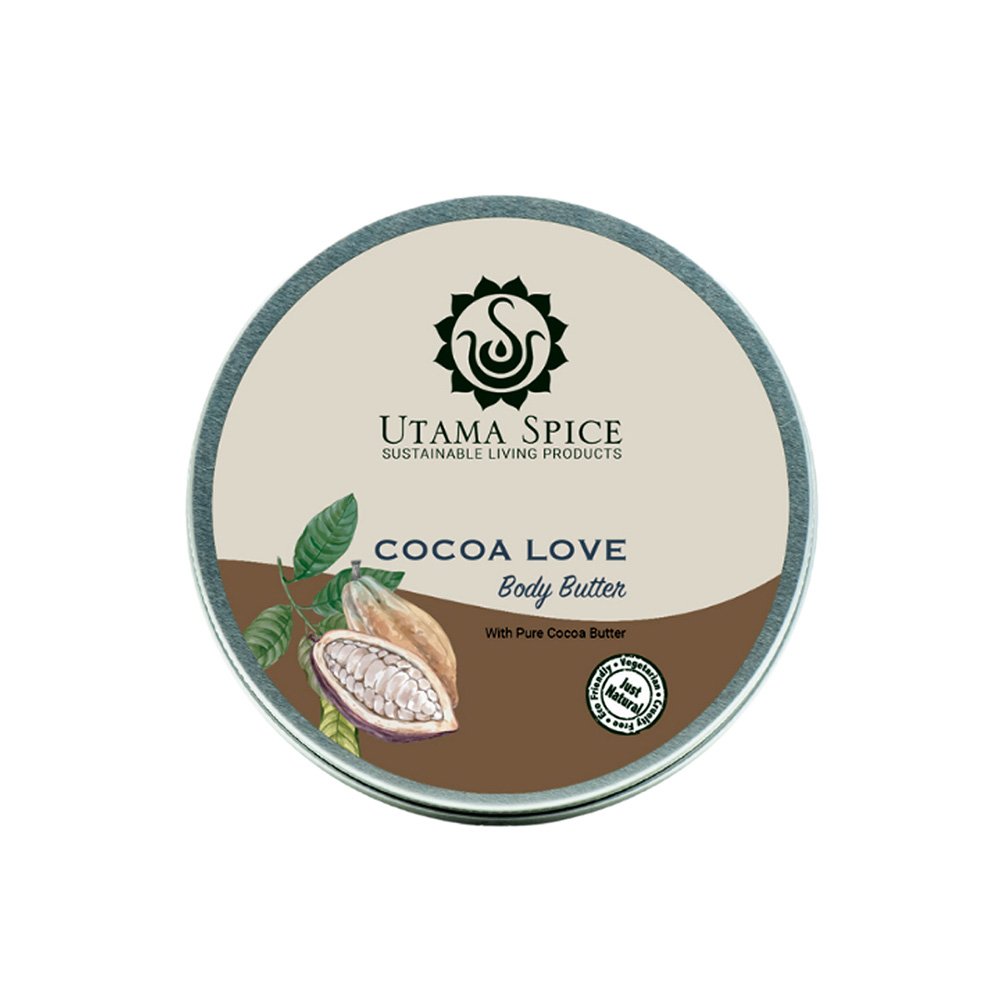
Rich, whipped, and made in Bali
Our Cocoa Love Body Butter blends cocoa butter and cold-pressed coconut oil into a soft, deeply nourishing whip for everyday all-over care. Crafted in small batches, refillable, and honest about every ingredient.
How to read the label on a balm or a butter
The label tells you almost everything, if you know where to look. Ingredients are listed by weight, high to low, so the first three or four decide how a product behaves. On a genuine butter or balm, you should see recognisable plant butters and oils near the top: shea, cocoa, illipe, coconut, jojoba. If water (listed as aqua) appears first, you are holding a lotion or a cream, not an anhydrous butter or balm, and it will behave differently.
A few honest things to watch for. First, order matters more than a long list of botanical extras added in trace amounts at the end. Second, plant wax such as candelilla or beeswax near the top signals a firmer, more occlusive balm; less wax signals a softer butter. Third, be wary of a fragrance-heavy formula where perfume outranks the actual conditioning oils, especially on skin that is already sensitised or cracked.
We list what goes in and, just as importantly, what does not. No fillers padding the jar, no synthetic claims dressed up as nature. That is the same standard we hold for our whole range, from the natural face cream to the body line, because a label you cannot read is not transparency. If you want a lighter, water-based option for hot days, a well-made coconut body lotion is the format to compare against, and its label will read very differently.
Marketing language deserves the same scrutiny as the ingredient list. Words like natural, botanical, and nourishing are not regulated, so they can sit on a jar that is mostly cheap filler oil and synthetic fragrance. Turn the jar over. The ingredient deck cannot lie the way the front label can. If the front says whipped shea body butter but the back lists mineral oil and water before any shea, the story does not hold together. We would rather earn your trust with a readable label than win it with a clever claim, which is the whole point of refusing to greenwash.
Matching a balm or butter to your skin and climate
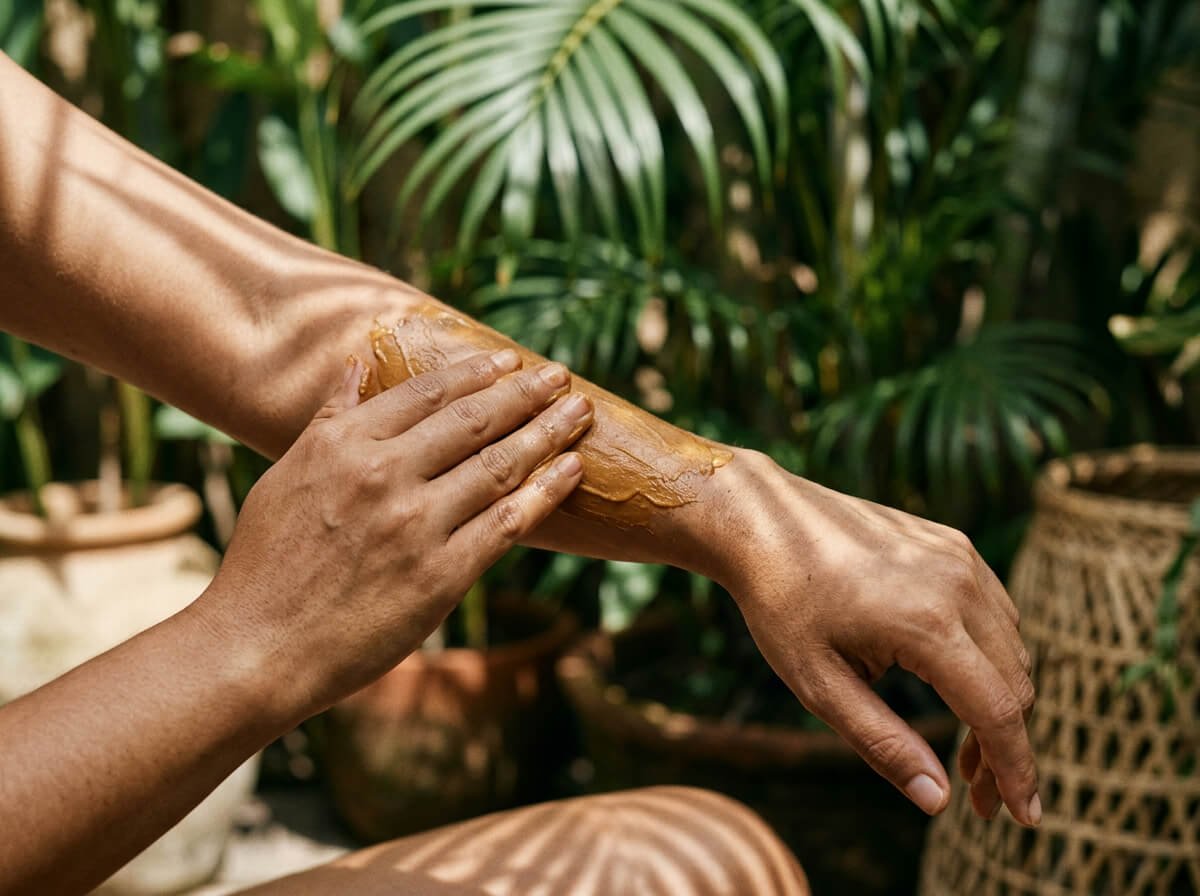
Climate does most of the deciding. In cold, dry air, when skin loses water fast and cracks at the knuckles, the occlusive staying power of a balm is a genuine advantage, layered over a butter for a double seal. In hot, humid weather, a heavy layer of either can feel like too much, so a lighter body butter used sparingly, or a coconut lotion, tends to sit better. We formulate in a tropical climate and ship to temperate ones, so we think about this constantly.
Skin type layers on top of climate. Very dry, mature, or eczema-prone skin usually welcomes the richness of a balm on the worst areas and a butter everywhere else. Combination or easily overwhelmed skin often prefers a butter alone, applied to slightly damp skin so it spreads thin. There is no single right answer, only the honest match between your skin, your season, and the format in your hand. The scented options help here too: a warming Lemongrass Ginger Delight Body Butter suits cool mornings, while a calming Lavender Dream Body Butter works into an evening wind-down ritual.
One more principle we hold to: less packaging, more refills. A body butter or balm you finish and refill, rather than replace, is a small act of care that adds up. Every refill saves another container from landfill, and that circular habit is as much a part of good body care as the ingredients themselves.
Switching with the season is not fussy, it is just responsive. Many people find they reach for a whipped butter through spring and autumn, lean on a balm through the coldest, driest months, and drop back to a light lotion or a sparing butter when the heat and humidity peak. Your skin is not the same in January as it is in July, so your body care does not need to be either. Because we blend in Bali, in year-round warmth, and ship to customers moving through four distinct seasons, this flexibility is built into how we think about the whole range. The goal is never one perfect product; it is the right format for the day in front of you.
A simple routine for layering a balm and a butter
If you decide to keep both, a light routine makes them work together rather than competing. You do not need a shelf of products, just two, used in the right order at the right moment.
- Cleanse and pat, do not rub. Leave skin very slightly damp; that trapped water is what your butter will seal in.
- Warm and press in your butter. A modest scoop, melted between the palms, over arms, legs, and body for all-over softness.
- Spot-seal with balm. Only where you need it, heels, elbows, knuckles, cuticles, a pea-sized amount worked in until it disappears.
- Adjust with the season. Skip the balm in humid heat, add a second thin layer of it in dry cold, and let your skin tell you what it needs.
That is the entire system. Two honest products, a little intention, and the patience to use less than you think you need. Over weeks it becomes second nature, a quiet ritual rather than a routine, and your skin stays comfortable through whatever the weather does.
Frequently asked questions
Is a body balm or a body butter better for very dry skin? For genuinely cracked or chronically dry skin, a balm gives more protection because it seals the skin for longer. The most effective approach is often both: a butter for all-over moisture, then a balm on the worst spots to lock it in.
Can I use a body butter on my face? It depends on your skin. Body butters are richer than most facial formats and can feel heavy or clog easily on breakout-prone skin. For the face, a lighter cream or serum is usually the better match, as our natural face cream guide explains.
Why does my body butter feel greasy? Usually because too much has been applied. Butters are concentrated; a small amount worked into slightly damp skin absorbs far better than a thick layer on dry skin. If it still feels heavy, switch to a lighter format for daytime.
Do balms and butters expire? Anhydrous formats last well because there is no water for microbes to grow in, but the oils can oxidise over time. Keep them cool and out of direct sun, use clean fingers, and finish within the shelf life on the jar. A denser body balm tends to keep its texture longer in warm weather than a soft whipped butter.
How much of each should I actually use? Less than most people expect. For a butter, a scoop the size of a small coin covers an arm; for a balm, a pea-sized amount handles both heels. If a product feels greasy or takes an age to sink in, that is usually a signal to use half as much next time, not to switch products.
What is the difference between a balm and an ointment? They overlap. Both are occlusive and anhydrous, but a plant-based body balm leans on butters and waxes for a cushioned, breathable feel, while a traditional ointment is often a heavier petroleum base. We choose botanical butters for a reason: they condition as they protect.
Body balm vs body butter: the takeaway
The choice between a body balm vs body butter is not about which is superior. It is about coverage versus concentration, and about the weather outside your window. A body butter gives you soft, everyday, all-over moisture with a quick, sensory finish. A body balm gives you dense, targeted, longer-lasting protection for the spots that need it most. Keep one, keep both, or layer them as the seasons turn.
What matters is choosing with intention: reading the label, matching the format to your skin and climate, and reaching for something crafted with care rather than marketed with noise.
So the next time you stand in front of the shelf, weighing a body balm vs body butter, do not ask which one wins. Ask what your skin needs today, and in what weather, and reach for the format that answers honestly. That small, considered choice, repeated, is what real care looks like.
That is how we have made body care in Bali since 1989, and it is how we would choose it ourselves.