Facial massage with face oil: the Balinese ritual, done by hand (no tool required)
Facial massage with face oil is not a trend. It is one of the oldest and most grounded acts of skin care in Balinese tradition, practised for generations by women who understood that the hands are the best tool, that the oil is the medium, and that the ritual itself is the point. No jade rollers. No Gua Sha stones. No ten-step sequences. Just clean oil, warm hands, and two or three minutes of attention given to your own face. This guide covers how to do it, why it works, which oils to choose, and the simple Balinese technique that makes it feel less like a beauty routine and more like something you actually want to do.
If you have ever wondered whether facial massage with face oil is actually worth the step, or whether it delivers results beyond what your usual moisturiser does, the answer is yes, and the reasons are rooted in both tradition and physiology. We will cover both.
What facial massage with face oil actually does
Before considering technique or oil choice, it helps to understand what is actually happening during a facial massage. Skin is not a passive surface. It is living tissue with lymphatic vessels, capillaries, sebaceous glands, nerve endings, and a remarkable capacity to respond to pressure and movement.
When you massage your face, several things happen at once. The first is improved circulation. Gentle pressure and movement bring more blood to the surface of the skin, which carries oxygen and nutrients to cells that are working hard to maintain the barrier, produce collagen, and carry away cellular waste. You will notice this as a temporary warmth and often a visible flush, both signs of increased blood flow.
The second is lymphatic drainage. The lymphatic system in your face is responsible for clearing excess fluid, cellular debris, and immune byproducts from tissue. Unlike the circulatory system, lymph does not have a pump. It moves through the pressure of surrounding muscles and tissue. Facial massage, when done in the right direction (more on this in the technique section), encourages lymphatic flow from the face and jaw toward the lymph nodes at the neck and collarbone, which can reduce puffiness and a sense of congestion in the skin.
The third is tension release. The face carries more than 40 muscles, many of which we chronically hold in patterns of stress, concentration, or emotional guardedness. Jaw clenching, brow furrowing, the subtle tightening around the eyes that comes with screen time. Regular facial massage, done slowly and with intention, softens these holding patterns. Over time, people report that their face actually looks more relaxed, not just in the moment but across the day.
The fourth, and most relevant to the oil: absorption. Face oil applied before massage penetrates the skin more effectively because the movement increases skin temperature slightly and encourages the oil to work deeper into the lipid barrier. This is the practical reason that Balinese women have long used coconut oil, tamanu oil, and kukui oil as the base for facial massage rather than just applying them and leaving them to sit.
The fifth is sensory grounding. This is less measurable but just as real. Taking two to three minutes to touch your own face with care and attention activates the parasympathetic nervous system. It is, in the simplest terms, calming. And calm skin, physiologically, performs better: lower cortisol levels correlate with reduced sebum overproduction, a stronger barrier, and less reactive inflammation.
How to choose the right face oil for massage
Not every oil belongs on every face. The chemistry of the oil matters because different oils behave differently on different skin types, and using the wrong one can lead to congestion, breakouts, or a greasy feel that puts you off the practice entirely. The good news is that there is a clear framework for choosing well.
The first thing to understand is the fatty acid profile of the oil. Oils rich in oleic acid (a monounsaturated fatty acid) tend to be heavier, more occlusive, and better suited to dry, mature, or compromised-barrier skin. They form a protective seal and are deeply nourishing. Oils rich in linoleic acid (a polyunsaturated fatty acid) are lighter, more rapidly absorbed, and better for oily, acne-prone, or combination skin. Linoleic-rich oils also have anti-inflammatory properties and help regulate sebum production, which is why research has found that people with acne-prone skin often have a linoleic deficiency in their sebum.
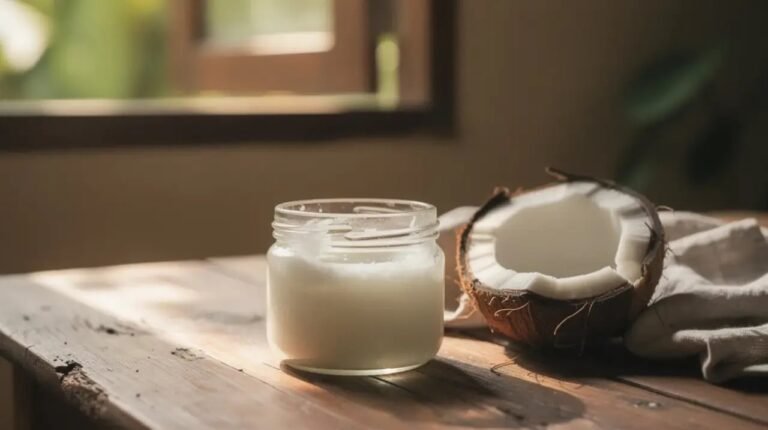
Dry or mature skin benefits most from oleic-rich oils such as avocado, marula, and coconut. These feel richer and take longer to absorb, which makes them ideal for a longer massage when you have the time. If you use our guide to coconut oil for skin, you will see that cold-pressed coconut is one of the most well-documented natural emollients for dry and dehydrated skin, and it doubles as an excellent massage oil given its smooth, non-sticky texture.
Oily or combination skin does better with linoleic-rich oils such as rosehip, jojoba, or tamanu. These absorb quickly, do not leave a residue, and do not trigger the skin to produce more oil in response to over-occlusion. They sit closer to the skin’s natural sebum in composition, which means the skin accepts them readily rather than reacting to them as foreign.
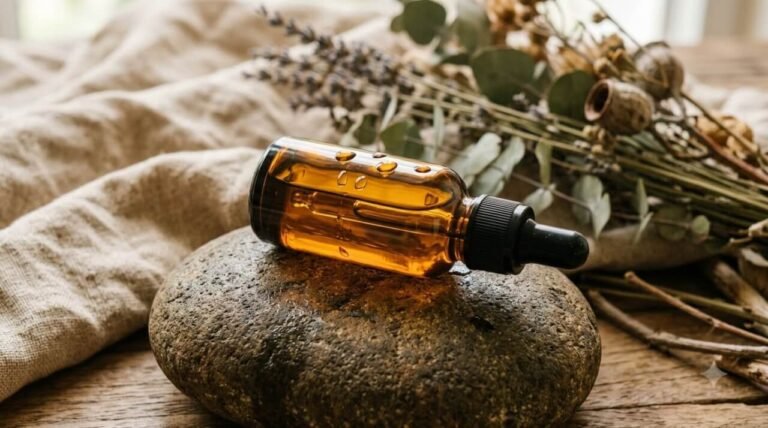
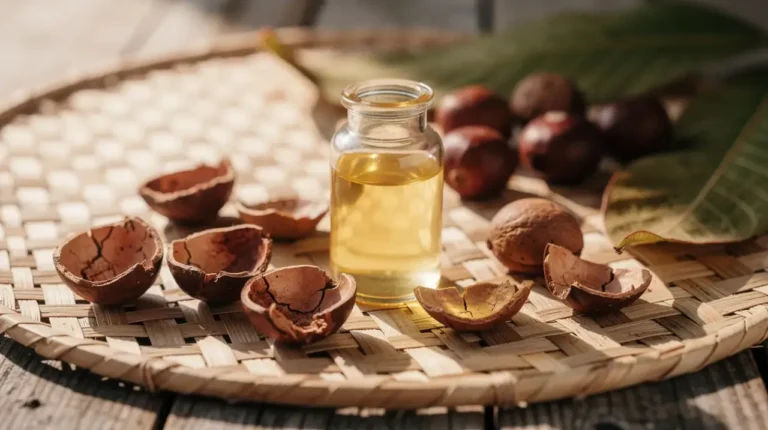
Sensitive or reactive skin benefits from oils with low comedogenic ratings and proven calming properties. Tamanu oil, in particular, stands out here. Cold-pressed tamanu oil is rich in calophyllic acid, a fatty acid found almost nowhere else in nature, which has documented anti-inflammatory and wound-healing properties. Balinese healers have used it for generations to treat skin irritation, scarring, and inflammation. It is the kind of ingredient that earns its credibility not from marketing but from centuries of consistent use and growing scientific confirmation. Our Tamanu Oil 30ml is cold-pressed and formulated specifically for facial use, at a concentration suitable for daily massage.
A note on scented oils: essential oils can be added to a carrier for aromatherapeutic benefits during facial massage, but they must be diluted correctly. A standard safe dilution for facial use is one to two drops of essential oil per ten ml of carrier. If you are new to this, our guide to how to dilute essential oils covers the ratios and the logic behind them clearly.
Whatever oil you choose, the quantity matters. For facial massage, less is more. Two to four drops in the palm of your hands, warmed between your hands before applying, is enough for the full face and neck. You are not moisturising; you are creating a slip layer that lets your hands move without dragging on the skin.
The Balinese facial massage technique, step by step

The Balinese approach to facial massage is not a single codified method. It is a set of principles passed through generations of healers, mothers, and jamu practitioners, each adapting the basic movements to what the skin in front of them needed. What follows is the distilled version, grounded in those same principles and designed for the reality of daily life.
Start with clean skin and clean hands. This is not optional. Any oil you apply to a face with residual sunscreen, make-up, or pollution will be massaged into the barrier along with those particles. If you are doing this at night, your usual cleanser is enough. If you use the oil cleansing method, you can transition directly from the rinse to the facial massage oil, since the skin is already conditioned and slightly warm from the cleanse.
Warm the oil between your palms. Place two to three drops in one palm, press both palms together, and rub gently until you feel warmth. This step matters: cold oil on warm skin contracts slightly, and warm oil on warm skin penetrates more readily. Press your warm palms over your whole face, holding for a moment. This is the moment of arrival before the technique.
Begin at the centre of the forehead and work outward. Use three fingers (index, middle, ring) together as a flat surface, not just fingertips. Small, slow, upward and outward circles from the centre of your brow toward your temples. Repeat five to six times. The direction matters: you are encouraging lymphatic flow away from the face, not pushing fluid toward the centre.
Move to the under-eye area with the lightest touch possible. The skin here is the thinnest on the face, and it benefits from the gentlest pressure. Use your ring finger, which naturally exerts less force, and trace small circles from the inner corner outward toward the temple. Then gently trace the orbital bone just below the eye, moving from inner corner outward, and then above the brow returning inward. This circuit encourages lymphatic drainage from the eye area.
Work the cheeks with broad upward sweeps. Using the flat of your whole hand or four fingers together, move from the jaw and chin upward and outward toward the ears. This lifts rather than drags, and the direction again mirrors the path lymphatic fluid needs to take to reach the lymph nodes at the sides of the neck. Spend a little extra time on the lower cheeks and the area around the nasolabial folds, which tend to hold muscular tension.
Address the jaw and chin with gentle rolling pressure. The jaw is one of the most chronically tense areas for most people. Use your thumb and index finger to gently roll along the jawline from chin to ear, or use the flat of your knuckle in slow circles along the masseter muscle (the thick muscle you can feel when you clench your jaw). This is often where people feel the most noticeable release.
Finish at the neck and decolletage. Long downward strokes from jaw to collarbone, using the flat of the hand, encourage the lymph that has been mobilised from the face to continue its journey toward the lymph nodes at the base of the neck. This is the step many people skip, and it is the one that closes the circuit the technique creates.
Total time: two to four minutes, done daily. It does not need to be a ceremony. It can be quiet and ordinary and done while standing at the bathroom sink. The consistency matters more than the occasion.
When and how often to do facial massage
The honest answer is: whenever you will actually do it. The best facial massage practice is the one that becomes habitual rather than aspirational. That said, there are practical reasons why different timings suit different goals.
Morning facial massage is excellent for reducing overnight puffiness. Skin holds fluid differently during sleep, particularly if you sleep on your stomach or side. The lymphatic drainage movements in the technique above are especially effective in the morning when there is the most fluid to move. A morning practice also has the benefit of warming and activating the skin before the rest of your routine, which can improve the absorption of whatever you apply afterward.
Evening facial massage, done after cleansing, is better for deep nourishment and tension release. The skin is in its most receptive state in the evening: repaired, calm, and ready to absorb. Massage at night also gives the oil time to work into the barrier undisturbed while you sleep, which is when most of the skin’s repair processes are most active. If your goal is nourishment and barrier restoration, evening is the stronger choice.
Daily is ideal. If you can only manage a few times a week, that is still genuinely useful. What matters most is that the technique is gentle enough to do daily without stressing the skin, and the oils chosen are appropriate for your skin type so that consistent use builds benefit rather than congestion.

One caution: if your skin is actively inflamed, broken out, or sunburned, skip massage on those areas. The increased circulation that makes massage so beneficial for healthy skin can intensify inflammation in compromised skin. For advice on caring for skin that has been through a lot of sun and heat, our guide to natural after-sun care is a useful companion read.
Building facial massage into an existing step rather than adding a new one makes it far more likely to stick. The easiest entry point for most people is to replace the passive application of their face oil with a two-minute massage using the same oil. Same product, same timing, just more intentional hands.
If you are new to using face oil as a regular skincare step and wondering which one works well both as a massage medium and as a daily skin treatment, our Tamanu Oil 30ml is made for exactly this. Cold-pressed, unrefined, with a fatty acid profile that suits most skin types, it is a one-ingredient face oil that has been in use in this region for generations.
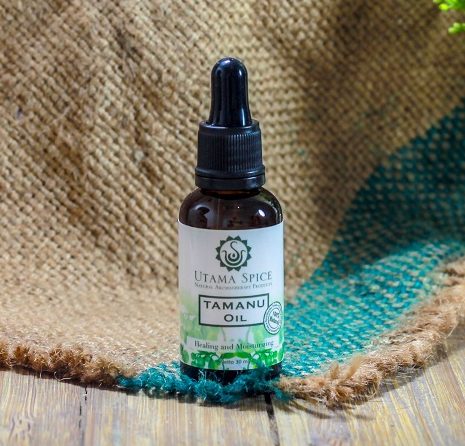
A cold-pressed face oil rooted in Balinese tradition
Tamanu oil has been used in Bali for generations to heal, nourish, and restore skin. Cold-pressed and unrefined, our Tamanu Oil 30ml is formulated for daily facial use, with a lightweight texture that absorbs in minutes and suits most skin types, including oily and sensitive.
The science of why oils work so well for facial massage
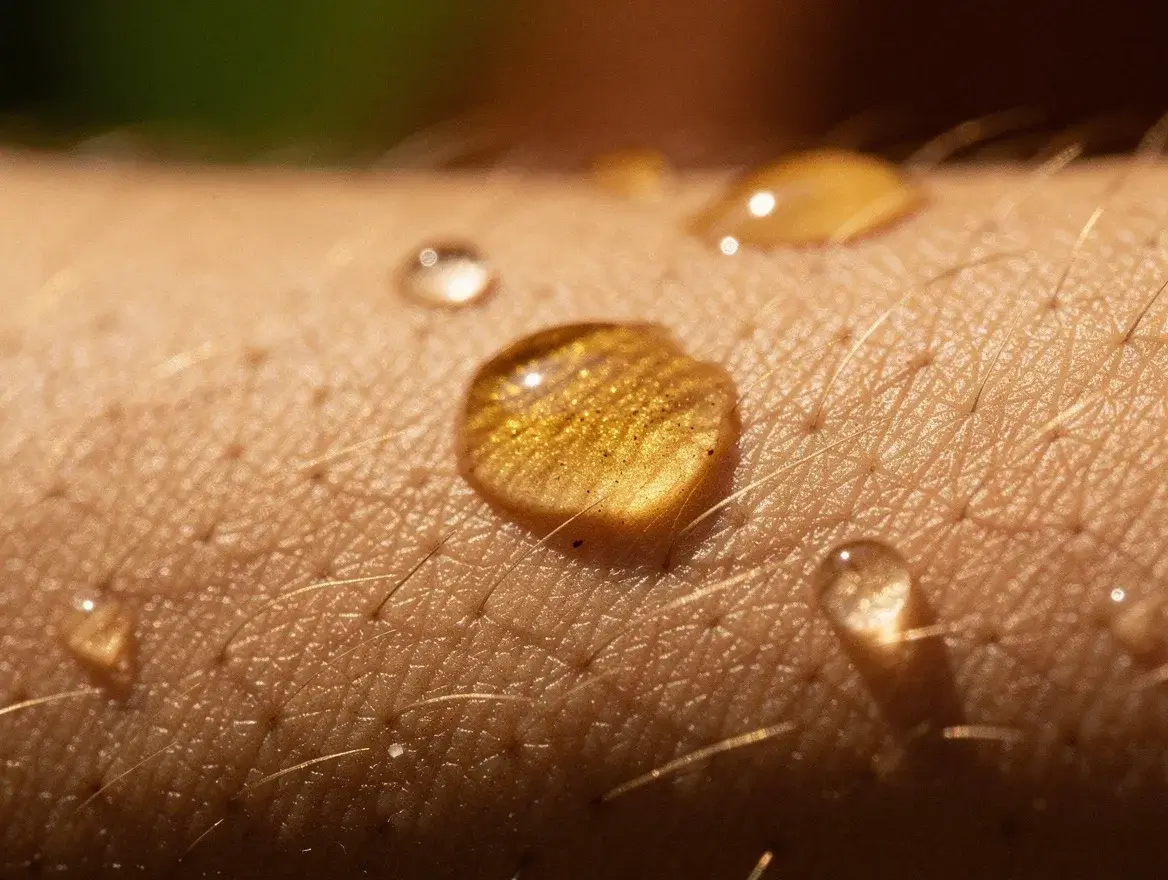
The skin barrier, also called the stratum corneum, is a layered structure of dead skin cells (corneocytes) suspended in a lipid matrix made up of ceramides, cholesterol, and fatty acids. It functions like bricks and mortar: the cells are the bricks, and the lipids are the mortar that holds them together and regulates what passes through.
Oils are lipid-soluble, which means they can interact directly with this lipid matrix in a way that water-based products cannot. A face oil applied to the skin can supplement and reinforce the lipid mortar, filling in gaps caused by environmental damage, harsh cleansing, or natural depletion. This is the real mechanism behind oil-based moisturisation: not hydration in the water sense, but barrier repair and reinforcement at the lipid level.
Massage accelerates this process in two ways. First, the warmth generated by friction and pressure temporarily softens the lipid matrix, making it more permeable and receptive. Second, the physical movement of the oil across the skin surface creates what is called a concentration gradient: more oil on one side of the barrier than the other, which encourages it to move inward. This is the same basic physics as any transdermal delivery, just achieved through simple mechanical means rather than chemical penetration enhancers.
This is also why the concept of oil feeding the skin from the outside is not just metaphor. Fatty acids that match those in the skin’s own barrier (linoleic acid in rosehip and tamanu, for example) can genuinely be incorporated into the barrier structure, not just sit on top of it. Research on skin barrier restoration consistently shows that applying the right fatty acid topically improves barrier function at the structural level.
One more piece of the science worth noting: the sebaceous glands that produce your skin’s natural oil (sebum) are responsive to what is being applied topically. When the skin’s barrier is sufficiently nourished from the outside, it can signal the sebaceous glands to reduce output. This is why people with oily skin who start using the right face oil consistently often find, counter-intuitively, that their skin becomes less oily over time. The glands are producing less because the barrier signals that there is no deficit to compensate for.
For a deeper look at how to read an ingredient label and tell the difference between oils that deliver these results and those that are mostly marketing, our post on skincare ingredients to avoid is worth reading alongside this one. You can also explore our Immortelle Helichrysum Face Serum as a companion active serum to use alongside your facial massage oil, applied first on clean skin before the oil layer.
Frequently asked questions about facial massage with face oil
Will facial massage make me break out?
Only if you use an oil that is comedogenic for your skin type, use too much of it, or massage over actively inflamed spots (which spreads bacteria). Choosing a non-comedogenic oil matched to your skin type and keeping the amount to two to four drops eliminates most of the risk. If you are acne-prone, jojoba or tamanu are the better choices over coconut or avocado oil.
Can I use body oil on my face for massage?
Sometimes, but not always. Body oils are typically formulated for the thicker, less sensitive skin of the body and may use combinations of oils that are too heavy or comedogenic for facial skin. Our Rose Allure Body Oil uses rose and lightweight botanicals that are gentle enough for many skin types, but the general recommendation is to use a face-specific oil if you have sensitive, oily, or acne-prone skin.
How long before I see results from facial massage?
Lymphatic drainage and tension release are immediate: you will notice a difference in puffiness and facial muscle tension after the first session. Longer-term changes to skin texture, barrier strength, and the appearance of fine lines develop over weeks of consistent practice, usually four to eight weeks for noticeable cumulative improvement. Like most genuine skincare, the honest answer is: consistency over time, not one extraordinary session.
Do I need to use a Gua Sha tool or jade roller instead of my hands?
No. Tools can be effective, but they are not more effective than trained hands used with intention. The advantage of tools is mainly consistency of pressure and the cooling effect of certain stones. The disadvantage is that they require cleaning, storage, and a learned technique of their own. The Balinese tradition of facial massage has always been hand-based, and there is no evidence that a jade roller achieves results that skilled hands cannot.
Can I do facial massage if I have rosacea or eczema?
Gently, and with the right oil. Very light pressure, linoleic-rich oils with anti-inflammatory properties (rosehip, sea buckthorn, tamanu in small amounts), and avoiding trigger areas or active flares. Many people with rosacea and eczema find that consistent, gentle oil massage improves their barrier over time and reduces the frequency of flares. But start cautiously, test one oil at a time, and stop if any redness or stinging occurs.
What is the difference between a face oil and a face serum?
A face serum is typically water-based, designed to deliver concentrated active ingredients (vitamin C, retinol, hyaluronic acid) into the skin. A face oil is lipid-based, designed to nourish and protect the barrier. They serve different functions and can be used together. The general layering rule: serum first on clean skin (water-based products apply first), then face oil on top to seal and enhance absorption.
Is there a natural face oil that does not feel greasy?
Yes. The greasiness of a face oil is mainly a function of fatty acid composition and the amount used. Light, linoleic-rich oils (jojoba, rosehip, tamanu) absorb in two to three minutes and leave a skin-soft, non-greasy finish. The key is to use only two to four drops, warmed between the palms, and to massage them in rather than just pressing them onto the surface and leaving them.
Making the ritual yours
Facial massage with face oil is ultimately a practice, not a product category. The technique can be done in two minutes standing at a sink, or in ten minutes as a slow, quiet morning ritual. It can be done in silence or with music or as part of a longer self-care routine. What it cannot be is passive. The act of placing warm, oiled hands on your own face with intention is the whole point. The science, the technique, the oil selection: all of it is just information in service of that simple act.
Balinese skin care has always worked this way: not products as events, but practices as rhythms. The goal is not to look different in a single morning. It is to build a relationship between you and your skin that is consistent, informed, and grounded. Two minutes a day over a month is worth far more than an elaborate weekly ceremony you abandon after three weeks.
Start with one oil you trust, one technique you can remember, and one moment in your day that already exists and can absorb this. Morning after cleansing or evening before sleep. A few drops of tamanu oil, warmed between your hands. Upward and outward movements. Two minutes. That is the whole ritual, and it is enough.
Your skin will tell you over time what to adjust. Listen to it.