Balinese beauty rituals: the daily practices, the ingredient science, and how to bring them home
Search for Balinese beauty rituals and most of what comes back is a spa menu: a ninety-minute package, a price list, a photograph of hot stones and flower petals. That is not wrong, exactly, but it is incomplete. What tourists book for an afternoon, Balinese families have practised every day for generations, not as an indulgence but as a quiet form of care, built into the rhythm of morning, week, and month. There is no appointment required, no fifteen-step cabinet, and no single miracle product. There is a sequence: oil before water, a paste once a week, warmth once a month, scent every day.
We have been formulating from this tradition since 1989, and the question we hear most from people outside Bali is some version of “what do you actually do at home.” Not the spa version. The daily one. This is the full ritual map: what each practice is for, the ingredient science behind it, and how to bring it home without turning it into another routine to keep up with.
What Balinese beauty actually means
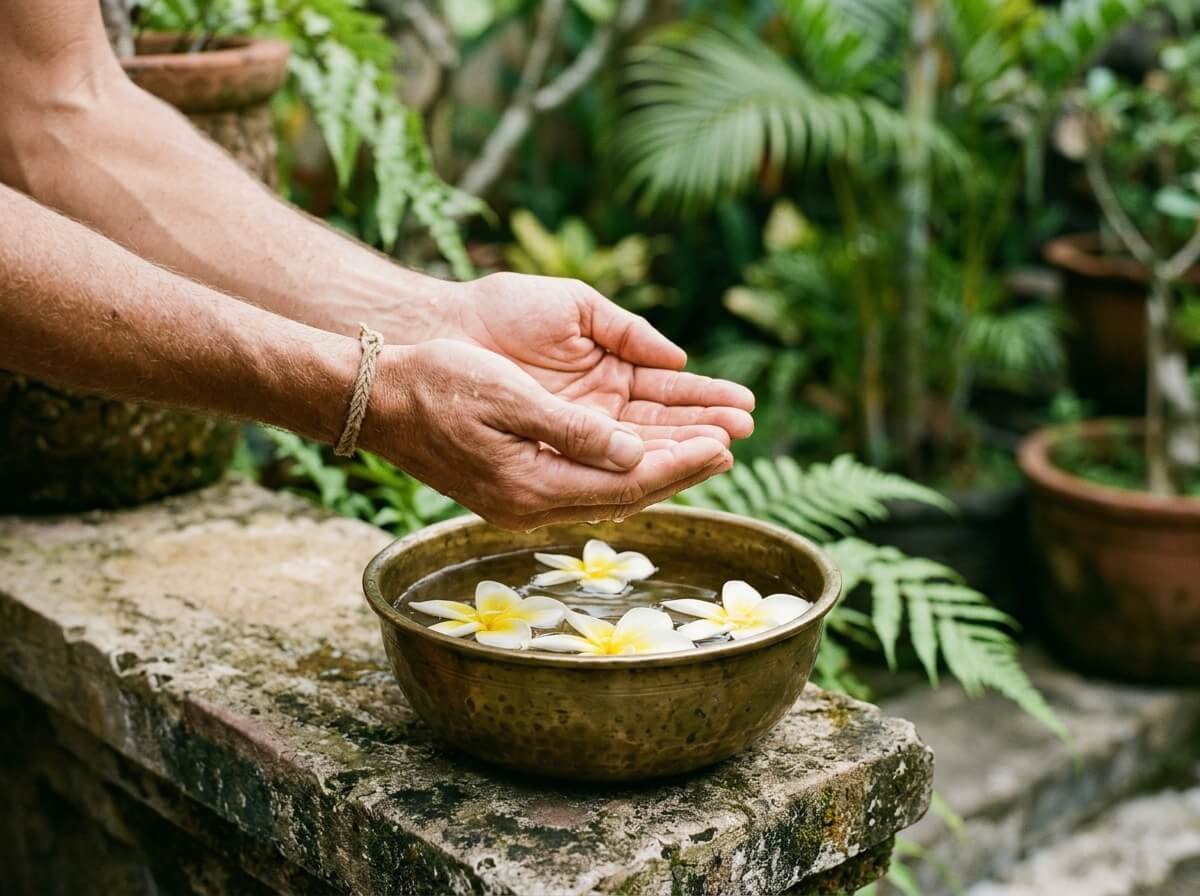
In Bali, care for the body sits inside a wider practice of offering. Balinese Hindu philosophy carries the concept of Tri Hita Karana, harmony between people, nature, and the divine, and that same logic runs quietly through skin and body care. A few drops of oil pressed into skin before the day begins is not so different in spirit from a canang sari set down on a doorstep: a small, repeated act of attention rather than a performance for anyone watching.
Beauty, in this framing, is not appearance management. It is connection, to the body, to the ingredients that come from the land, and to the people who prepared them. A woman is not less cared for because she used three ingredients instead of twelve. If anything, the restraint is the practice. Where a Western routine often measures effort by the number of products used, the Balinese measure is closer to attention: did you slow down long enough to actually feel what you were doing.
This distinction matters because most beauty marketing sells the opposite idea, that more steps and more products signal more care. Balinese ritual runs on a different logic: consistency over quantity, and ingredients you can trace back to a farm, a grove, or a family recipe passed down rather than a lab formulation chasing a trend. That is the frame for everything that follows, four practices at four different rhythms, each doing a job the others do not.
It is also worth naming what this is not. It is not the wellness-industry version of self-care, where rest and skin care get sold back to us as one more thing to optimise, one more habit tracker to fill in. Balinese ritual predates that framing by centuries and has no interest in it. Nobody is being graded on consistency. The practice exists because it works, and because doing it alongside people you love, a mother oiling a daughter’s shoulders, a sister mixing the lulur paste, is part of the point.
Mandi: the morning ritual that begins with oil, not cleanser
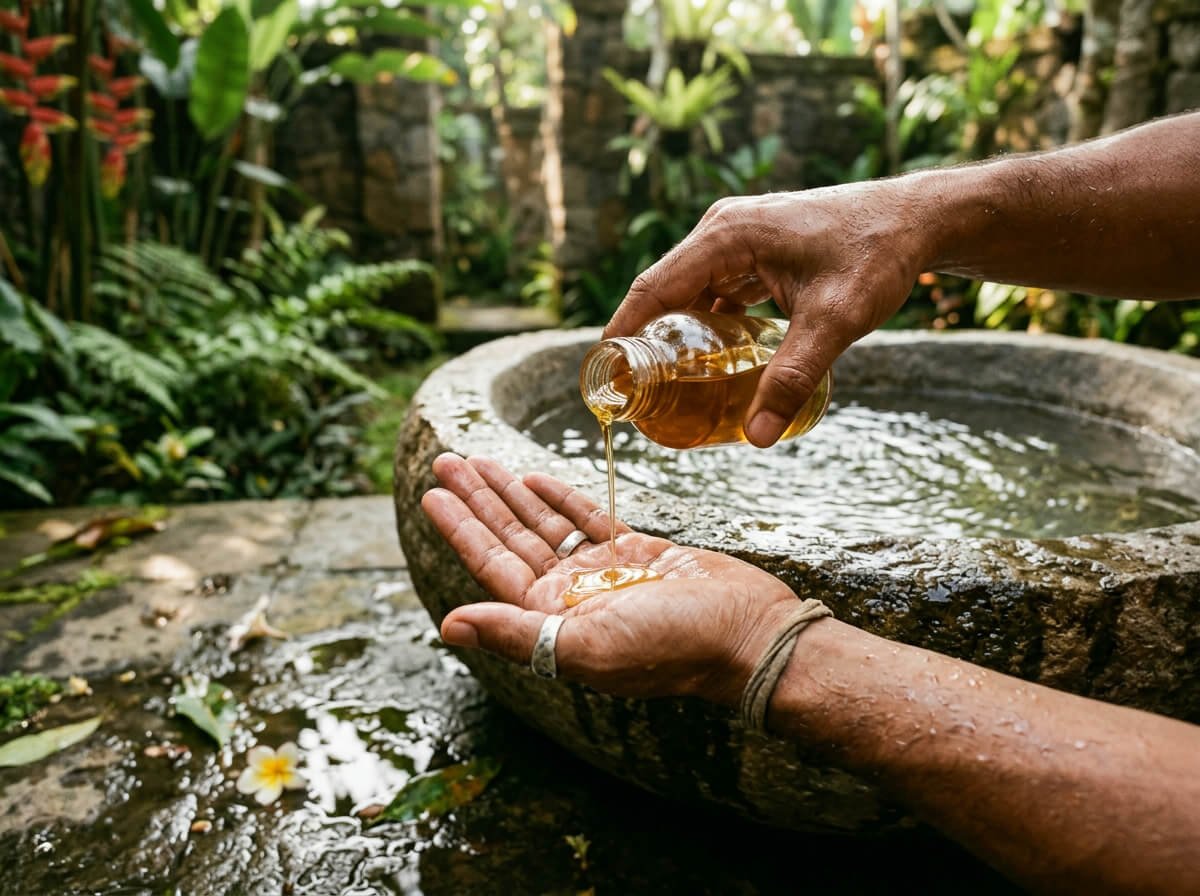
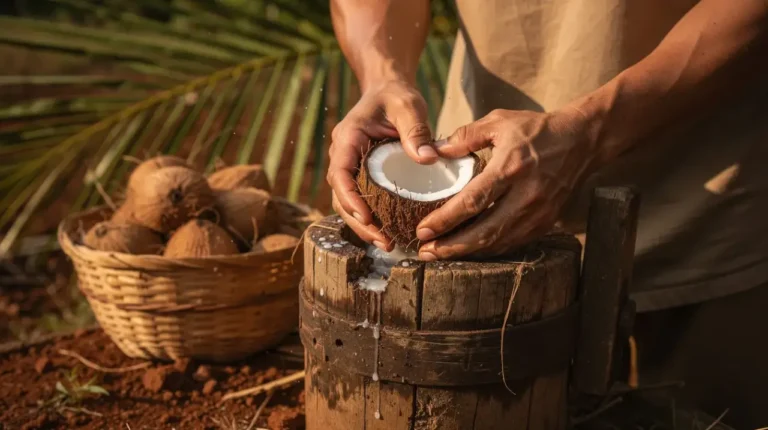
Mandi is the daily bath, and the part most guides skip is what happens before the water touches skin. Balinese practice begins with oil pressed into dry skin, usually virgin coconut oil, warmed between the palms first so it spreads rather than sits. The bath that follows is treated as a rinse and a reset, not the main event. Skin comes out of the water already carrying a layer of protection instead of stripped bare and waiting for a cream to undo the damage hours later.
The science behind pre-oiling is straightforward, even if it runs against how most of us were taught to bathe. Coconut oil is rich in medium-chain fatty acids, mainly lauric and capric acid, that sit well within the skin’s lipid barrier rather than sitting on top of it. Applying oil before water measurably reduces the amount of moisture skin loses during washing, a phenomenon researchers call transepidermal water loss. Wash first, moisturise after, and you are always playing catch-up, trying to replace what the water and any surfactant already stripped away. Oil first, and the barrier has a head start before it ever gets wet.
Warm climates make this even more relevant. Frequent bathing in heat and humidity strips lipids faster than it does in cooler, drier climates, which is likely part of why this sequence developed where it did. Choosing the right oil matters as much as the timing. Our guide to Balinese face oil and our carrier oil guide both walk through how to match oil weight to skin type, but the short version for mandi is this: lighter oils like coconut for daily use, richer botanical blends like our Balinese massage oil for evenings when skin needs more, especially after sun exposure or long days. The ritual is the same either way: oil on dry skin, a few unhurried minutes, then water.
Lulur: the palace exfoliation paste, four hundred years running
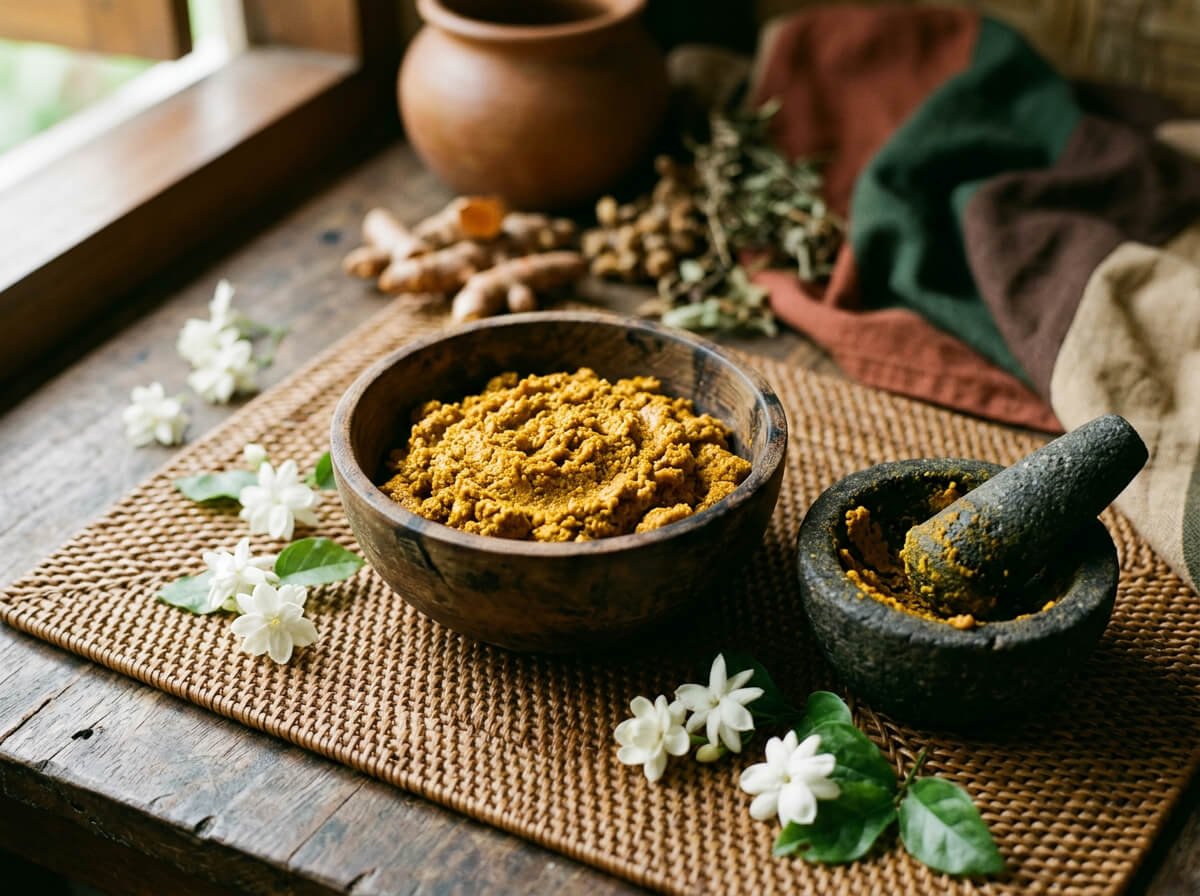
Lulur began as a bridal preparation inside Javanese and Balinese palaces, applied daily in the weeks before a wedding so skin would be at its calmest and most even by the ceremony. Outside of that context, it is a weekly practice, not a daily one, and that distinction is part of what makes it work. Skin needs time to recover between exfoliation sessions, and a once-weekly paste does the job without the irritation that comes from daily scrubbing, something a lot of Western exfoliation habits get wrong.
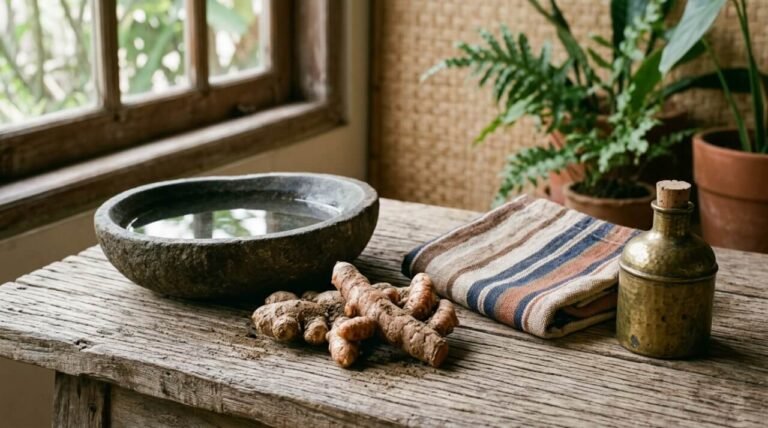
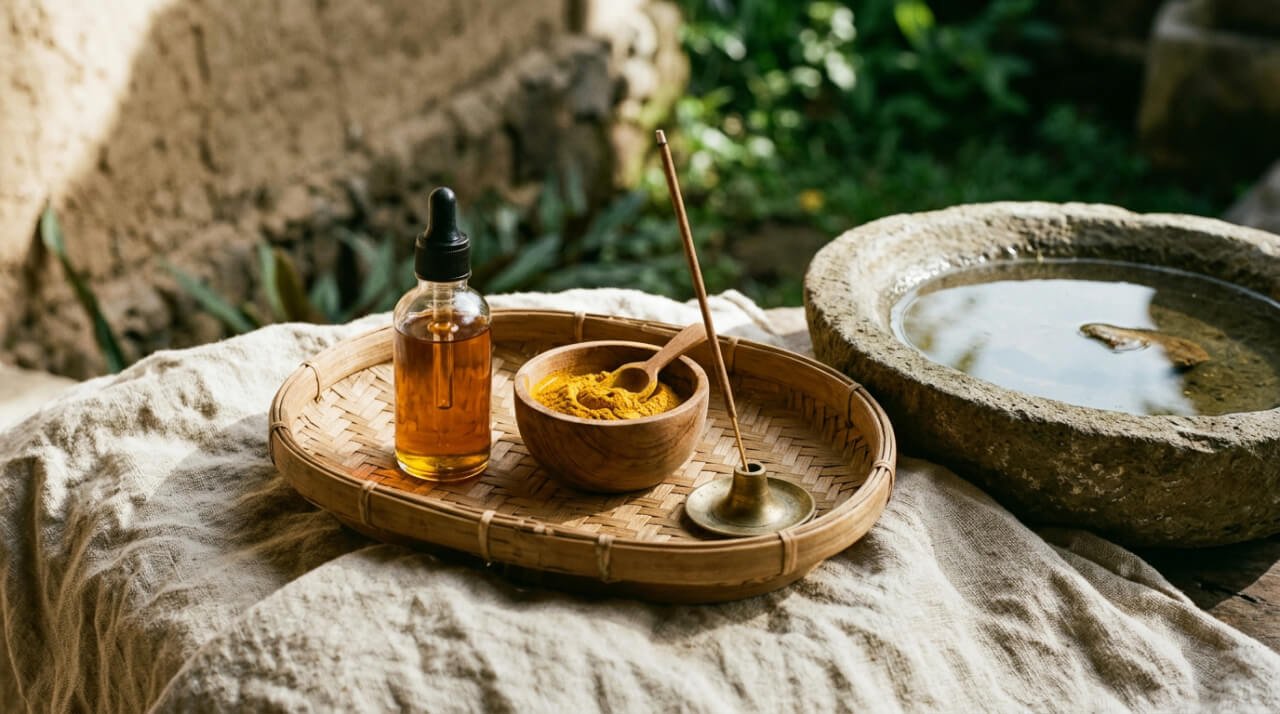
Turmeric, or kunyit, is the ingredient doing the real work. Its active compound, curcumin, has well-documented anti-inflammatory and antioxidant properties, which is why the paste leaves skin looking calmer rather than just smoother the way a purely physical scrub would. We go deeper into the chemistry, including the staining question everyone asks first, in our piece on turmeric for skin. Rice flour supplies the gentle physical exfoliation, fine enough not to tear or micro-scratch the surface the way coarser walnut-shell or sugar scrubs can, and jasmine rounds out the scent without adding anything synthetic to a paste that is otherwise entirely food-grade.
The traditional method is worth knowing even if you never do it exactly this way: the paste is applied thickly, left until it starts to dry and tighten at the edges, then rolled off with the hands rather than rinsed away immediately. That rolling motion is its own gentle exfoliation, on top of the rice flour. At home, our Temu-Temu Face Mask follows the same logic for the face, built on temu-temu root, a white turmeric relative used across Balinese herbal medicine for generations, or reach for the Face and Body Clay when you want the body-scale version. Apply once a week, let it sit until it starts to dry at the edges, then rinse. Resist the urge to do it more often. The restraint is the ritual.
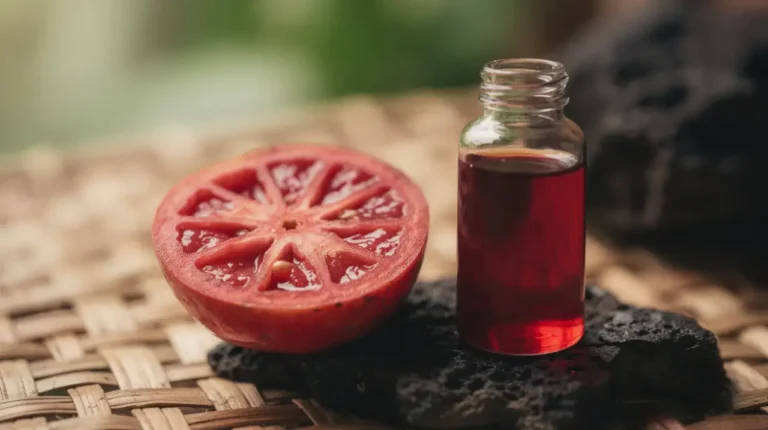
Mandi and lulur work together, oil daily, paste weekly, and the natural next step is locking that care in while skin is most receptive. Our Rose Allure Body Oil is built for exactly that moment, smoothed on right after a lulur session or a mandi bath while skin is still slightly damp, when it absorbs fastest and the barrier is primed to hold onto it.

Lock in the ritual with Rose Allure
Smooth this rose-scented body oil on damp skin right after mandi or lulur, when it absorbs deepest. A small daily habit that finishes what the ritual started.
Boreh: the warming herb wrap, once a month
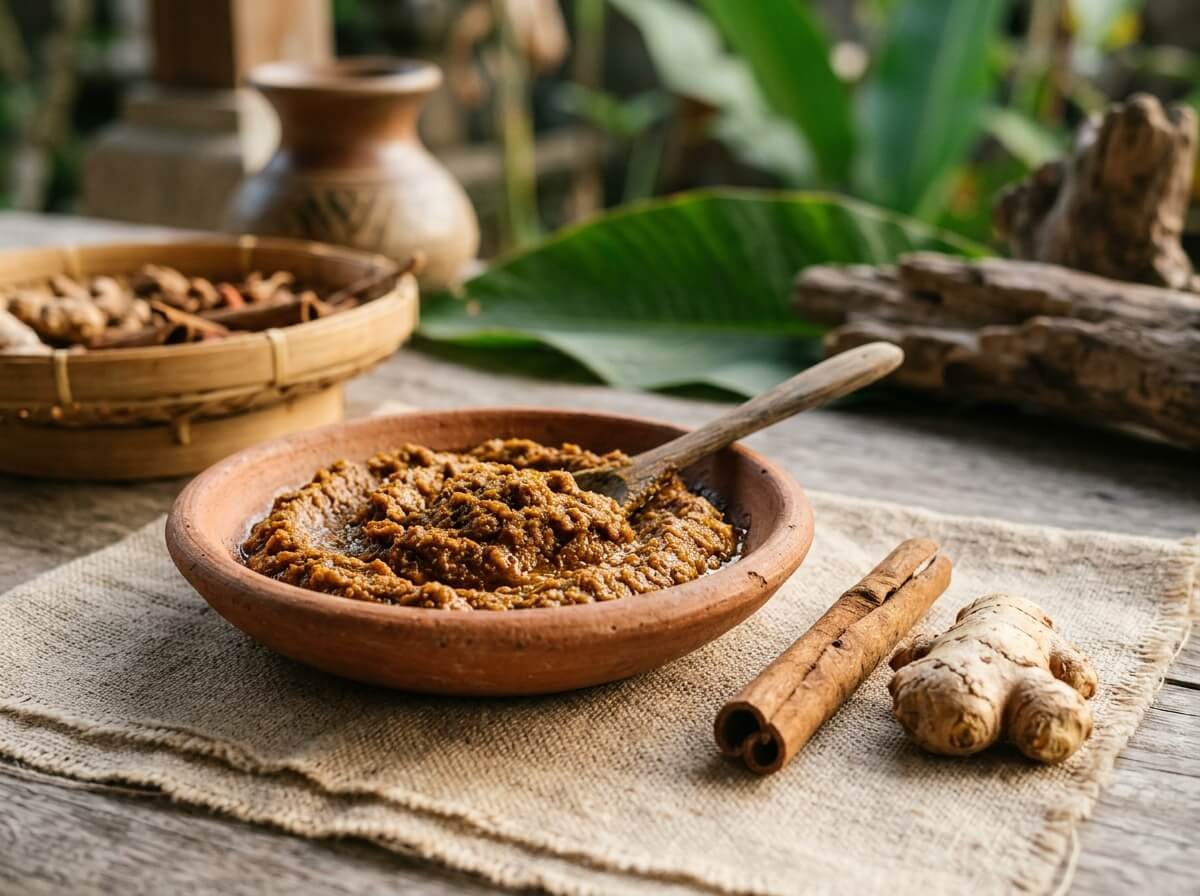
If mandi is daily and lulur is weekly, boreh is monthly, and it works on an entirely different principle: heat rather than cleansing. The paste is ground from warming spices, typically ginger, cinnamon, cloves, and rice, applied thickly to the body and left to work while circulation increases beneath it. Balinese rice farmers traditionally used it after long days in the fields, when tired muscles needed more than rest, which tells you a lot about what it is actually for. This was never primarily a beauty treatment. It was recovery.
The warming sensation comes from compounds in ginger, notably gingerol, and cinnamaldehyde in cinnamon, both of which stimulate blood flow at the skin’s surface. That increased circulation is also why boreh has a long history as relief for muscle stiffness and joint aches, not just a beauty treatment layered on top. The paste’s paste-like consistency, usually held together with a little rice flour and water, keeps the warmth in contact with skin long enough to work rather than evaporating off in minutes the way a liquid liniment would.
We cover the full traditional formulation and application method, including exactly how long to leave it on and how often is too often, in our dedicated guide to Balinese boreh. It is a deeper read than this section has room for, and worth it if the warmth appeals to you, particularly heading into a season where joints and muscles tend to complain more.

The frequency is the important part to take from this section regardless. Boreh is intense enough that using it more than monthly can irritate rather than soothe, especially on sensitive skin. Balinese tradition treats it as a seasonal reset, not a weekly habit, and that pacing is exactly why it still feels effective after decades of continuous use rather than losing its impact through overuse the way many “intense” treatments do.
Dupa: how scent became a daily anchor
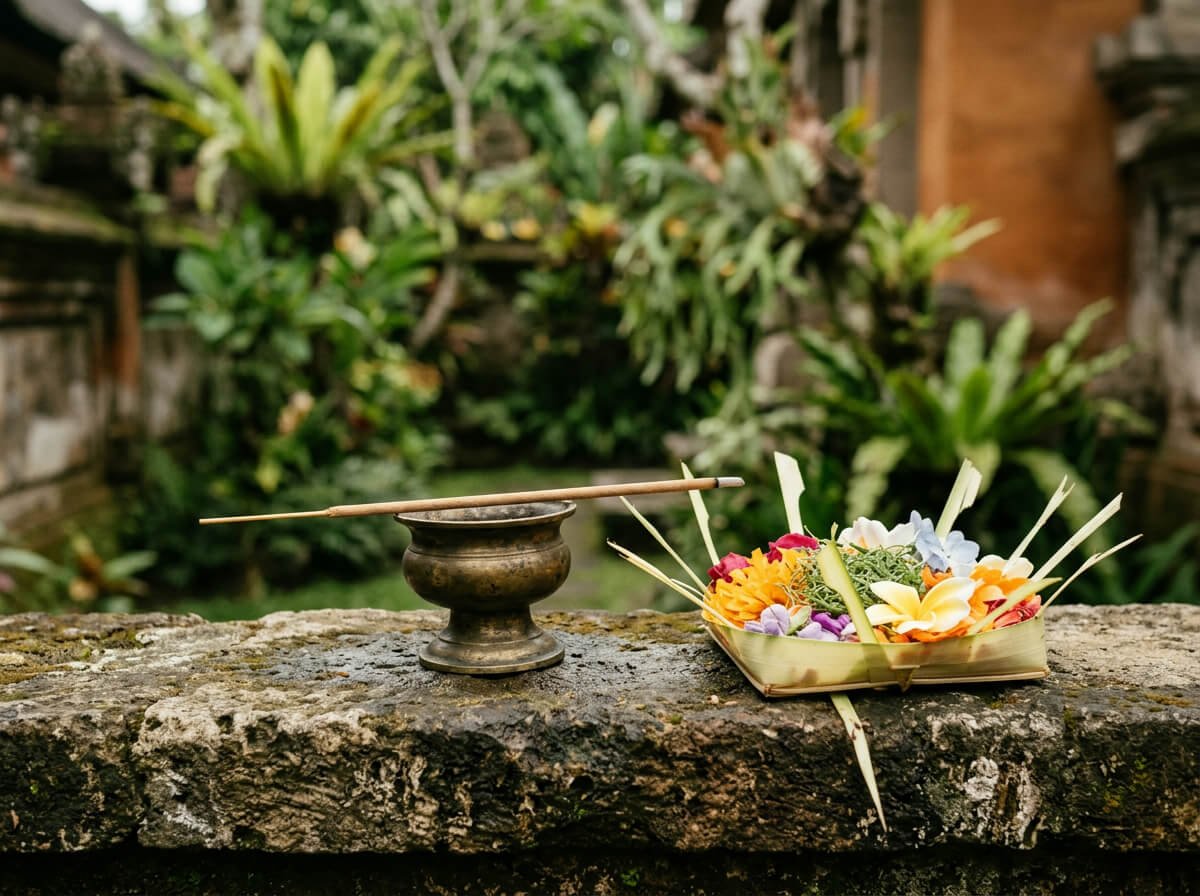
Every canang sari offering placed outside a Balinese home carries a thread of incense smoke, dupa, lit as part of the daily ritual of gratitude and grounding. It is easy to file this under spirituality alone and move on, but there is a practical wellness lesson inside it too: scent, used consistently at the same point in the day, becomes an anchor the nervous system learns to associate with calm, independent of whatever else is happening around it.
This is different from reaching for a diffuser only when stress already hits. The Balinese approach is preventative rather than reactive: the same scent at the same moment each day, morning or evening, so the mind starts to settle before the incense is even fully lit, through simple association built over months and years. Sandalwood and clove-based blends are traditional choices, warm and grounding rather than sharp or citrus-forward, chosen for how long and evenly they burn as much as for their scent profile.
Our Temple Spice Incense and Moonflower Incense follow the same hand-rolled tradition, made without synthetic fragrance oils or charcoal fillers, which is worth checking for in any incense you buy, since cheap sticks often carry both and burn with a harsher, headache-inducing smoke as a result. We go into what to look for on the label, and what a genuinely clean stick smells and burns like, in our guide to natural incense sticks.
You do not need a temple or a formal offering to borrow this practice. Light incense at the same point in your routine, morning coffee or the last few minutes before bed, and let the scent do the work of marking the transition, the same way it has marked transitions in Balinese daily life for generations.
Bringing the ritual home: a simple weekly framework
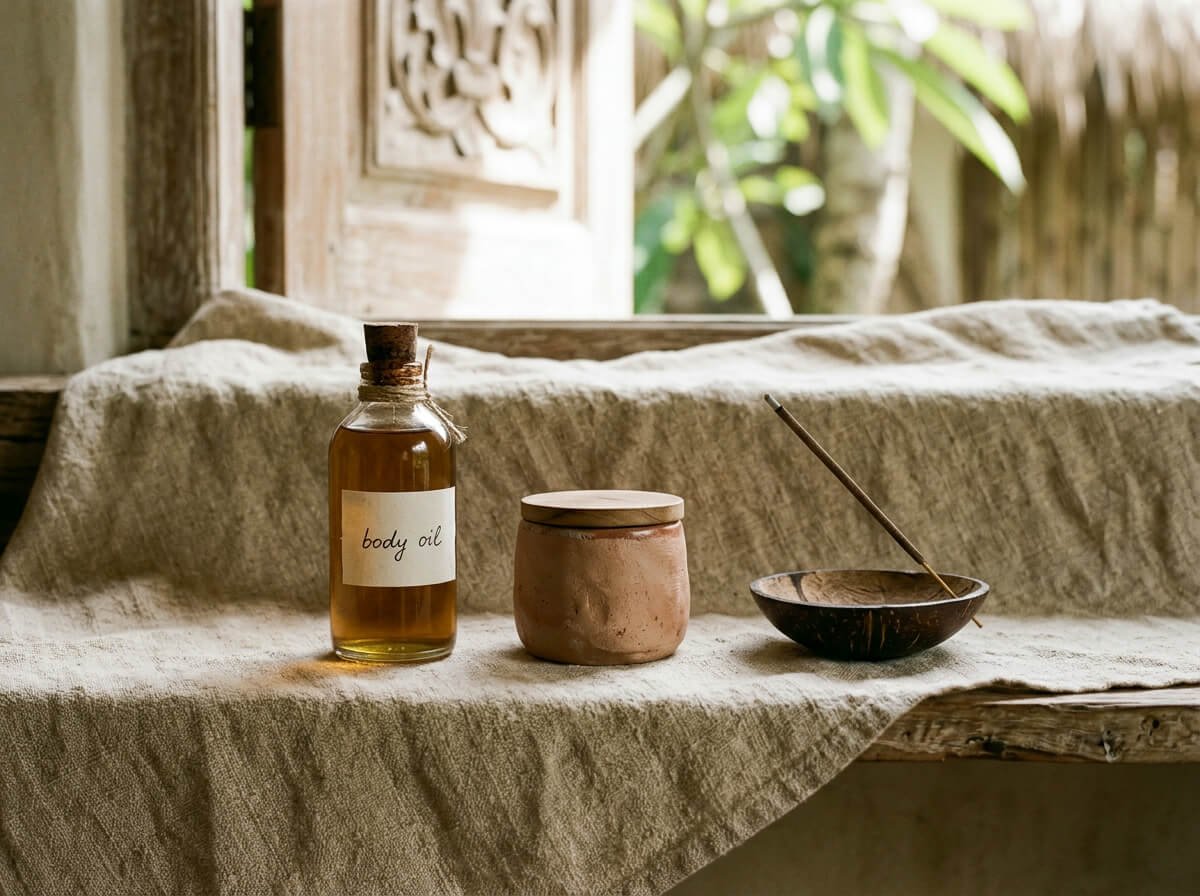
Laid out together, the four practices form a rhythm rather than a checklist. Nothing here needs a spa booking, a flight to Bali, or a bathroom cabinet full of products:
- Daily: oil before mandi, incense at one fixed point in the day
- Weekly: a lulur paste, turmeric and rice flour or a ready-made version like our Face and Body Clay
- Monthly: boreh, when muscles or mood ask for something warmer
Start with one layer, not all four at once. Most people find the daily oiling habit easiest to keep, since it slots into a bath or shower that already happens rather than asking for new time in the day. Add the weekly paste once oiling feels automatic, usually after two or three weeks, then boreh when the season or your body calls for it, rather than on a fixed schedule imposed from outside. Our Balinese massage oil is a useful bridge between the weekly and monthly layers, rich enough for an evening ritual without the full commitment of a boreh session on a night you are short on time.
None of this requires perfection. A week where the daily oiling slips is not a failure of the practice, it is just a week. The whole point of building the framework around rhythm rather than rules is that it survives being imperfect, which is more than most fifteen-step routines can say for themselves.
Climate changes the details but not the framework. In dry or cold climates, oiling before water still matters, arguably more, since indoor heating and low humidity strip moisture faster than Bali’s tropical air ever does. Lulur once a week still holds, though richer skin may tolerate it slightly more often, every five days rather than seven. Boreh’s warmth is genuinely welcome in a cold winter in a way it rarely is needed in the tropics. The rhythm travels. Only the pacing needs a small adjustment for where you live.
Frequently asked questions about Balinese beauty rituals

Do I need to do all four practices to see a benefit?
No. The daily oiling habit before mandi delivers the most consistent return on its own, since barrier support compounds over time. Add lulur and boreh as your routine allows; neither is required for the daily habit to work.
Will turmeric stain my skin or clothes?
A properly formulated lulur paste is designed to rinse clean off skin within minutes; any faint yellow tint fades within an hour. Clothing is a different story, so apply over a towel rather than good linens, and let the paste dry before you touch fabric.
Can I use boreh if I have sensitive skin?
Patch-test first, on the inner forearm, and leave it on for a shorter window than the full-body instructions suggest. The warming spices that make boreh effective are the same ones that can irritate reactive skin, so this is one ritual where less frequently and more cautiously genuinely is better.
What is the difference between mandi oiling and a body oil applied after showering?
Timing and intent. Mandi oiling happens on dry skin before water, to reduce what the bath strips away. A post-shower body oil, like our Rose Allure, works on damp skin after water, to seal moisture in. Balinese practice actually uses both, oil before and oil after, at different points in the day.
Is dupa the same as aromatherapy?
Related, not identical. Aromatherapy as commonly practised in the West tends to be reactive, a diffuser reached for during stress. Dupa is a fixed daily practice regardless of mood, which is closer to habit-building than mood management, even though both rely on the same basic mechanism of scent and memory.
The Balinese principle that changes everything: fewer products, deeper practice
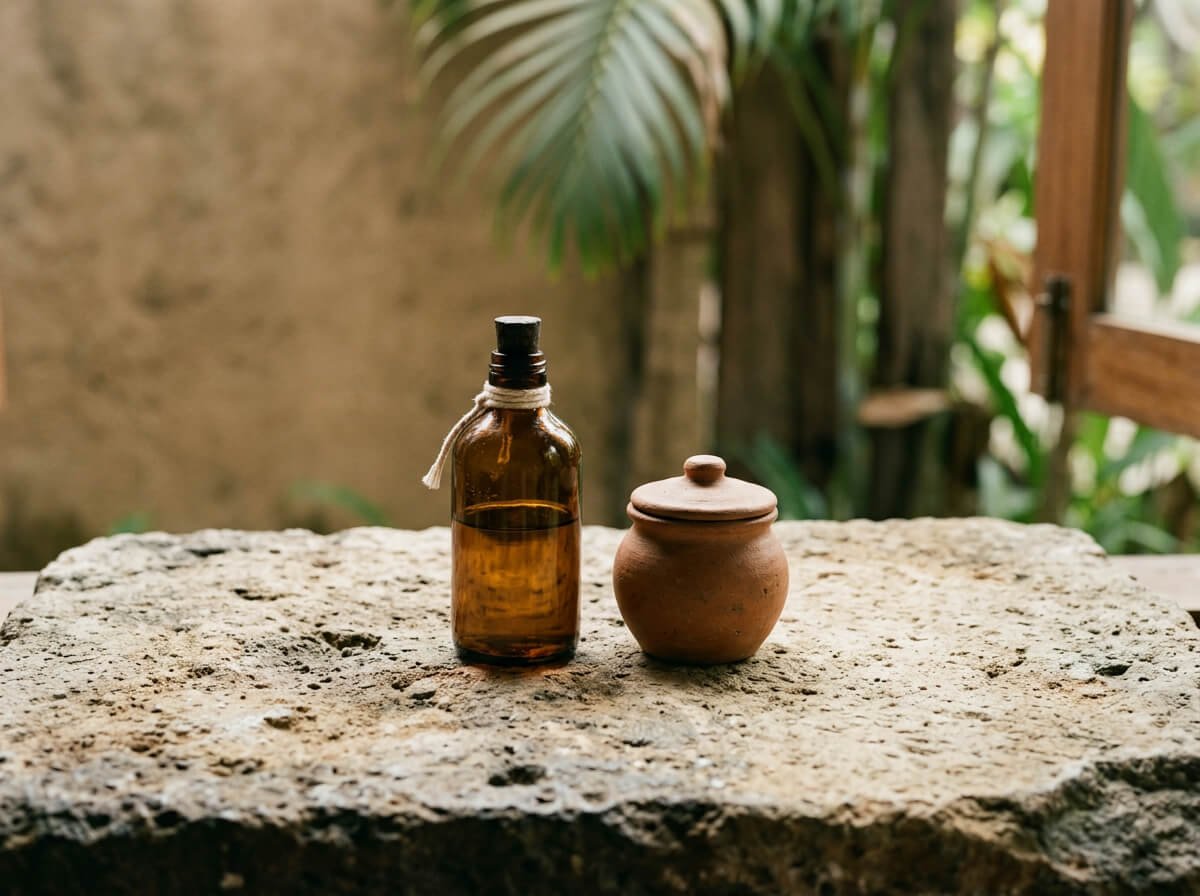
The spa industry sells a version of Balinese beauty rituals built around the experience: the robe, the flower petals, the ninety minutes of being tended to. There is nothing wrong with that experience, but it is not the ingredient the tradition is actually built on. The real practice runs on three or four ingredients used consistently, not twelve products used once and abandoned on a shelf six weeks later.
That restraint is also, quietly, the more sustainable choice. Fewer products bought less often means less packaging, fewer half-used bottles thrown out, and a routine that is actually simple enough to keep for years rather than weeks. This is the same logic behind our refill program: care that lasts because it was never designed to be complicated in the first place. A cabinet with four trusted ingredients outlasts a cabinet with twenty untested ones, and it costs the planet less along the way.
It also connects back to who makes these ingredients in the first place. The rice flour, the turmeric, the coconut oil, all of it traces to farmers and small-batch makers in and around Bali, including the women of the Munti Gunung Social Enterprise in East Bali, whose work we have supported since the beginning. Buying fewer, better things is not just a personal discipline. It is a vote for the people whose knowledge the ritual actually belongs to.
If there is one thing to take from this whole ritual map, it is that Balinese beauty was never about the appointment. It is a small, repeated act of attention, oil on the skin, a paste once a week, scent at the same hour, warmth when the body asks for it. What you give, you get back. That is the whole practice, and it fits into a life far smaller than a spa brochure ever suggests.