Skinimalism: how to tell real multi-tasking skincare from a five-step bundle
Skinimalism finally has a name, and a real cultural moment behind it: fewer products, chosen with more care, instead of a crowded shelf bought on promises. It sounds like exactly the shift a brand built on restraint should welcome. But look closely at how the wider skincare industry is actually answering the trend, and something odd shows up. The word “skinimalism” is being used to sell routines that still ask for five separate bottles. That gap between the word and the shelf is worth naming honestly, because it is the difference between a real multi-tasking formula and a bundle that only looks smaller.
Skinimalism got a name in 2026. Many brands answered with a five-step bundle.

The pitch for skinimalism is simple and genuinely appealing: stop buying ten half-used products and build a routine around a few things that actually work. Beauty journalists have spent much of 2026 writing about it as a correction to over-consumption, a quiet rebellion against the ten-step routines of a few years ago. Some have gone further, pointing out an uncomfortable pattern: the same industry that sold us the long routine is now selling us the short one, often at a premium, without changing what is actually in the bottles.
Here is the pattern worth watching. Search for skincare advice on skinimalism and a familiar shape appears: a cleanser, an exfoliant, a hydrating mist, a targeted serum, and a sunscreen, rebranded as “multi-tasking formulas” and marketed as the answer to doing less. Five products. Five steps. Five price tags. The word on the label changed. The step count did not.
That is not a failure of any single brand so much as a structural habit: a shelf model built around selling more formulas is always going to answer “buy less” with a smaller version of “buy more.” There is also a cost worth naming plainly. A shopper who trades ten mid-priced products for five “multi-tasking” ones at a higher price point each has not necessarily spent less, or ended up with a simpler bathroom shelf. They have often spent about the same, on fewer boxes that each promise to do more than any single formula reasonably can.
Skinimalism deserves a more honest test than a new label on an old shelf, and that test starts with asking what a product is actually doing, not how its marketing describes it.
What counts as real multi-tasking, and what is just a shorter ingredient list
“Multi-tasking formula” gets used two very different ways, and the difference matters more than the marketing copy lets on. The first way: a brand combines several synthetic actives, each doing one job, into a single bottle. A humectant for hydration, a peptide for firmness, a brightening agent for tone, a preservative system to hold it all together. That is not one ingredient doing several jobs. It is several ingredients doing their usual single jobs, packaged together so the step count looks smaller on the box.
The second way is the real thing: one ingredient whose own chemistry happens to do several jobs at once, by nature, not by formulation trickery. This is where botanical oils and butters have always had an honest advantage, long before anyone needed a trend name for it. A well-chosen plant oil can cleanse, because its fatty acids bind to the same oils that trap grime on skin. It can treat, because many carry their own antioxidant and anti-inflammatory compounds. And it can seal, because its fatty acid profile sits close enough to skin’s own sebum to reinforce the barrier rather than fight it.
The test for telling these apart is not complicated, but it does take reading past the word “multi-tasking” on the label. Ask what job each listed ingredient is doing. If the answer is “three different actives, each doing its own one job,” the formula has not become simpler. It has just been bottled together. If the answer is “one ingredient, several real functions,” the product has earned the name.
Consider a hydrating serum marketed as replacing three separate steps, with a job for each listed ingredient: a humectant drawing in moisture, a peptide complex targeting firmness, and a plant extract claiming to even tone. That is a well-made product, but it is three jobs assigned to three ingredients, still doing their usual single jobs, inside one bottle. Compare that with a single plant oil whose own fatty acid chain happens to hydrate, soften, and support the skin barrier at once, with nothing added to make it do so. Both might sit under the word “multi-tasking” on a shelf. Only one of them is actually multi-tasking by nature rather than by formulation.
One oil, several real jobs: what multi-tasking by nature actually looks like
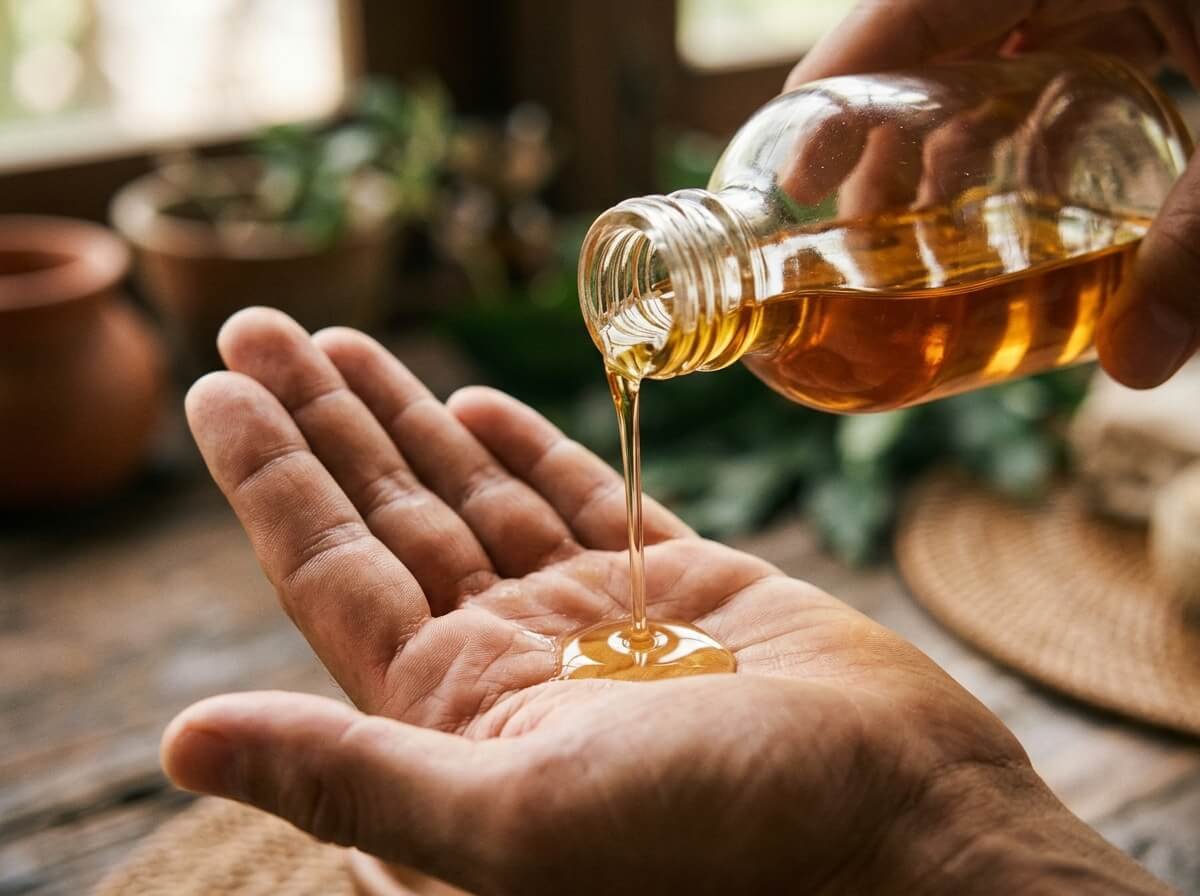
Argan oil is a clear example of multi-tasking that needed no new name. Its fatty acid profile, rich in oleic and linoleic acid, lets it sink in without sitting heavy, while its natural vitamin E content works as an antioxidant on the skin’s surface. The same bottle moisturizes, softens, and helps protect against everyday environmental stress, without asking the fatty acid profile to do anything it was not already built to do. No added actives. No fragrance load to mask. One ingredient, several real jobs.
Tamanu oil tells a similar story from a different part of the world. Traditionally used across the Pacific for its skin-supportive properties, tamanu’s dense fatty acid and bioactive compound profile gives it a reputation for calming compromised or irritated skin while still functioning as a genuine moisturizer. Reach for it to settle a rough patch, and it is also doing the ordinary daily work of locking in moisture at the same time. That is the quiet standard every oil in a non-comedogenic oil lineup should be held to: does this ingredient do several real jobs on its own, or does it just carry a longer ingredient list that performs the appearance of doing more.
None of this is a new discovery dressed up for a trend cycle. It is simply fatty acid chemistry, observed and used for generations before “skinimalism” needed a hashtag. Naming it now does not make it new. It makes it easier to recognize, which is useful, as long as the recognition goes toward the right products.
The same quiet multi-tasking shows up across the botanicals this brand has worked with since 1989. Wild-harvested illipe butter, sourced through the Forestwise partnership in Kalimantan, deeply nourishes and helps restore skin barrier function on its own, without needing a second or third ingredient added to finish the job. Cold-pressed coconut oil, sourced through the Aluan partnership with Bali’s own plantations, works as a cleanser, a moisturizer, and a hair treatment depending on how it is used, the same versatility that makes it the most reached-for carrier across this entire product line. None of these ingredients needed a 2026 trend name to justify doing several real jobs. They have simply always done them.
How to read a label and tell the difference
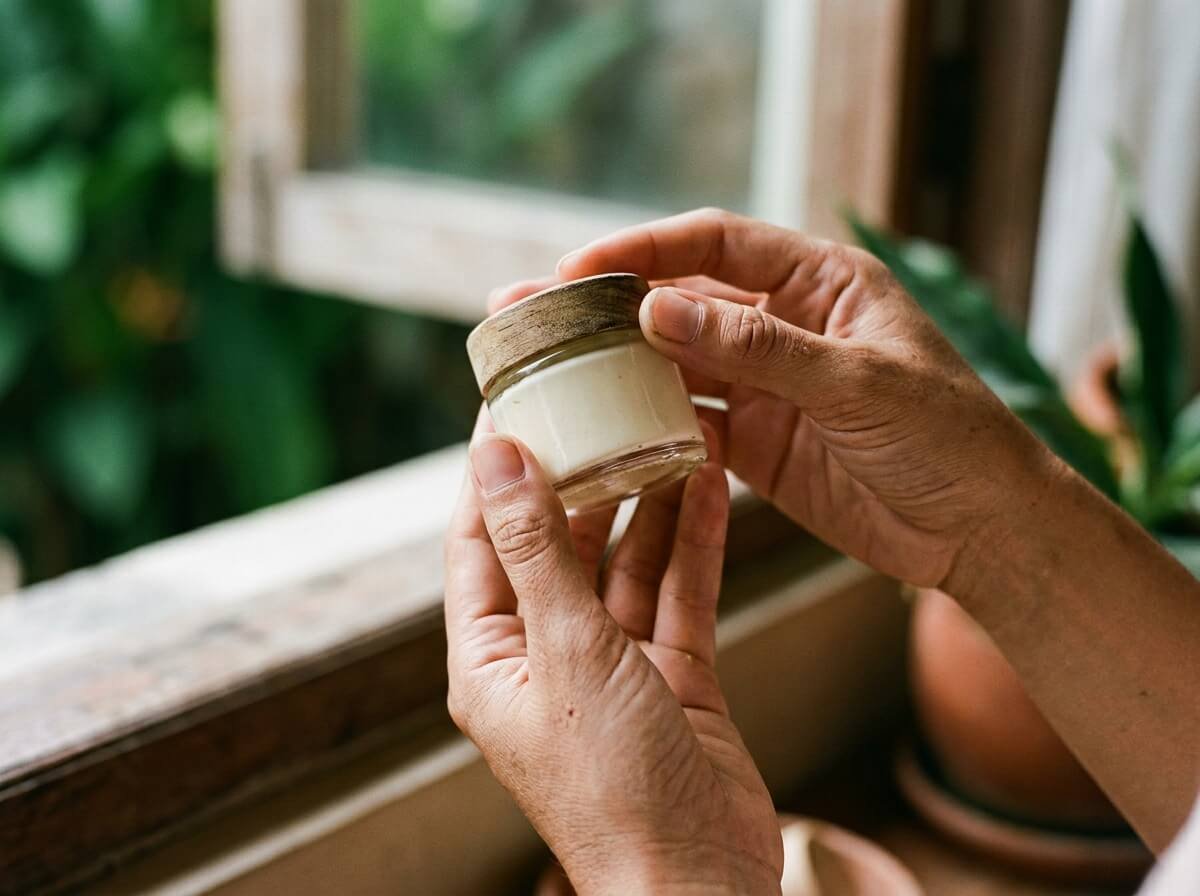
A short ingredient list is a reasonable starting signal, but it is not proof on its own. The honest check takes four steps, and none of them require a chemistry degree.
- Count the active ingredients doing the actual work, not the full list including water, preservatives, and texture agents. Three or four real actives in one formula is not minimal, no matter how short the overall list looks.
- Ask whether the claimed “jobs” require different chemistry. Hydrating, brightening, and firming genuinely need different tools in most synthetic formulas. If a product claims all three, it is very likely layering several actives, not multi-tasking with one.
- Look for a single-source botanical ingredient doing the heavy lifting, the way a sensitive-skin face serum can calm and hydrate from one gentle oil blend rather than a stack of active percentages.
- Notice the fragrance and filler load. A genuinely minimal formula rarely needs much of either, since it is not trying to disguise a long list of actives behind a pleasant scent.
This is the same label literacy that matters anywhere “natural” gets used loosely. A product can have a short name and a long list of quietly stacked actives underneath it. Reading past the marketing word, to the actual function of each ingredient, is the whole skill. Our guide to skincare ingredients to avoid covers the same fragrance loophole in more depth: the word “parfum” on a label can legally hide dozens of individual fragrance compounds, each doing its own small job of scent, none of which has anything to do with the skin-care claim on the front of the bottle. A genuinely multi-tasking formula rarely needs to hide behind that word, because it is not trying to make a thin formula feel fuller.
Once that habit is built, it travels to every shelf, not just the skinimalism-branded one.
Why a genuinely minimal routine still needs the right two or three things, not zero

Skinimalism is not the same thing as doing nothing, and it is worth saying that plainly, because the two get confused. A real minimal routine still needs to cleanse, treat, and seal in moisture. What changes is how many separate products carry out those three jobs, not whether the jobs get done at all.

Our own guide to how to layer natural skincare makes a related point: more steps is not automatically better, and the order those steps happen in matters more than the count. The same logic applies here from the opposite direction. Fewer steps is not automatically better either, if the two or three products left are not actually covering cleanse, treat, and seal between them. The goal is not the smallest possible number. It is the smallest number that still does the complete job honestly.
This matters most for anyone building a sensitive skin routine, where fewer products usually means fewer chances for a reaction, but only if each product is pulling real weight. Cutting a routine down to one cleanser and one oil, where the oil is doing genuine multi-tasking work, is skinimalism done well. Cutting it down to one product that cannot actually seal in moisture on its own, just because the bottle count looks minimal, trades one problem for another.
There is a budget argument here too, and it deserves to be said plainly rather than implied. A routine built around two or three genuinely multi-tasking botanicals usually costs less over a year than a five-step bundle, even when each individual multi-tasking product costs slightly more up front, because there are fewer bottles to replace and fewer half-used products left behind when a routine changes with the seasons. Minimal, done honestly, tends to be the cheaper habit as well as the simpler one.
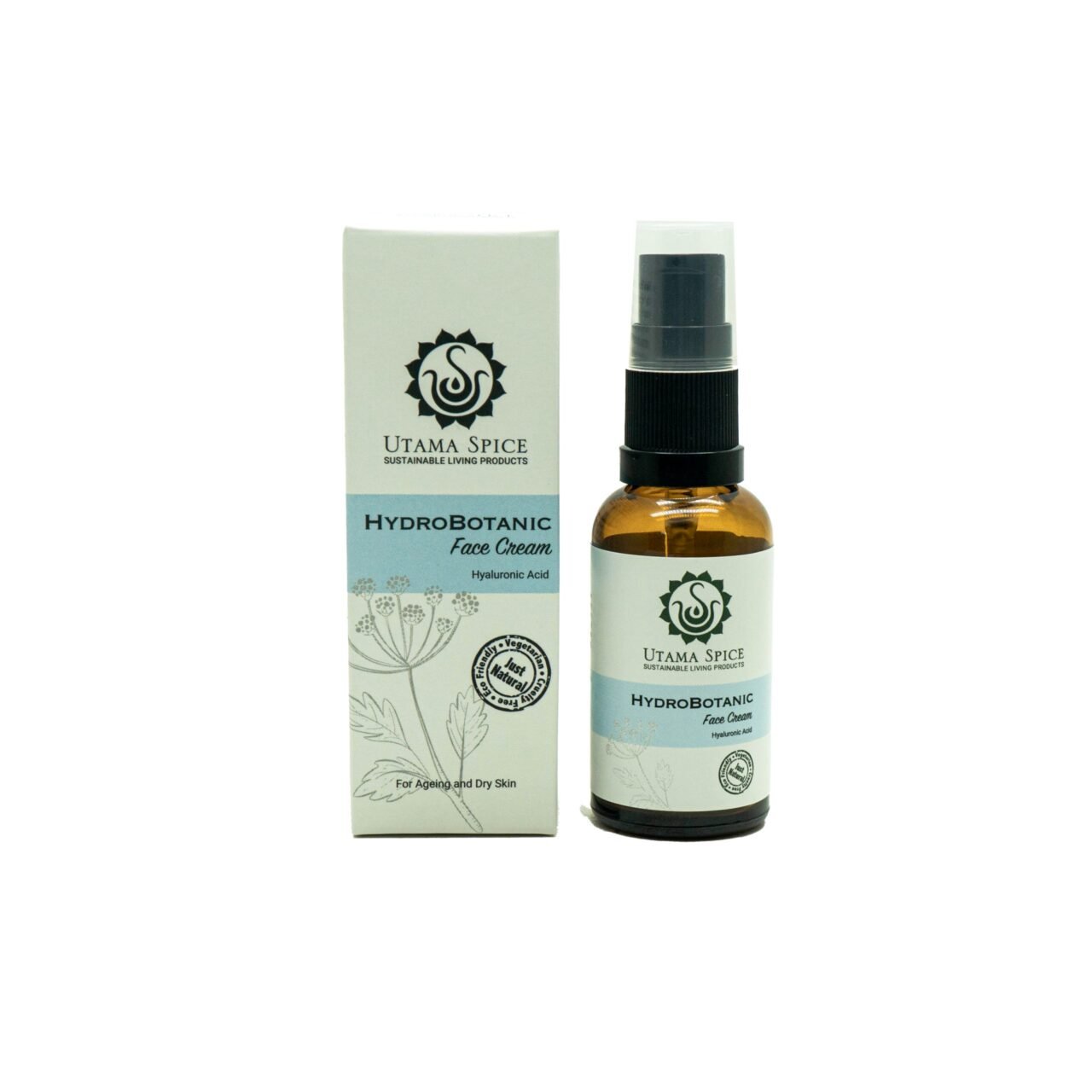
One cream, three real jobs, no bundle required
HydroBotanic 3-in-1 Hydrating Face Cream is named exactly for what it does: hydrate, soothe, and seal, from one botanical formulation, not three separate bottles. It is the honest comparison case for every “multi-tasking” claim on a crowded shelf.
This is not new here: the anhydrous ritual Bali has used for generations

Crafted in Bali with care since 1989, this brand did not arrive at a short ingredient list because a trend asked for one. Oil-based, anhydrous skincare, meaning formulas built without added water, has been the everyday practice here for generations, long before “skinimalism” needed a word. Warmed oil, pressed between the palms and worked into the skin, is one of the oldest rituals in Balinese daily care, and it was never built around a long list of separate steps. It worked because the oil itself was doing the job, not because anyone was counting bottles.
Our oil cleansing method guide walks through the same principle from the cleansing side: one oil, used with intention, can do what a multi-step cleansing routine is usually assembled to do. The ritual and the chemistry agree with each other here, which is a rarer thing than it should be.
There is also a quieter kind of minimalism built into refill culture, one that skinimalism as a trend rarely mentions. A zero waste skincare routine is minimal in the bottles it buys, not only the bottles it keeps on the shelf. Fewer formulas and fewer single-use containers point in the same direction: care that does not need to multiply to prove it is working. The refill stations that have run here since the beginning, and the two thousand two hundred and forty-five bottles they kept out of landfill in 2025 alone, were never built around a trend word either. They were built around the same instinct this whole piece is arguing for: do not multiply what does not need multiplying.
The women of the Munti Gunung Social Enterprise in East Bali, who hand-roll and package much of this range, work from the same principle in a different form: skilled, careful work on a small batch, rather than mass output chasing scale. A short ingredient list and a short supply chain tend to come from the same values. Neither one needs a hashtag to be worth doing well.
A real skinimalist routine, and the questions it raises
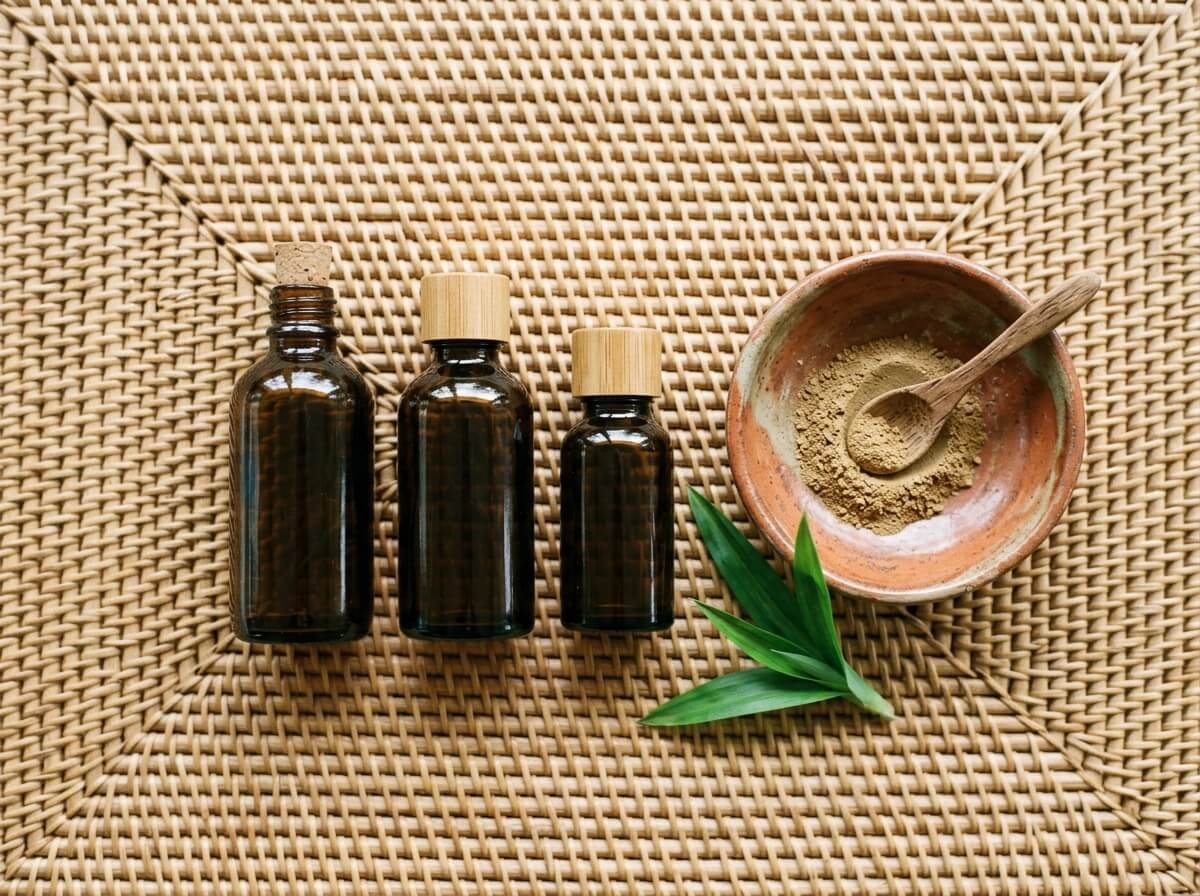
A workable skinimalism routine, built honestly, usually looks like this: one oil-based cleanser, one multi-tasking treatment oil or serum chosen for what its own fatty acid profile can do, and one cream or balm to seal everything in before the day or night ahead. That is three products doing the complete job cleanse, treat, and seal, the same three jobs a crowded shelf is trying to split across five or more bottles. Anyone building out a travel skincare routine already knows this instinct well: pack light, choose formulas that earn their place, and nothing earns its place by doing only one thing.
Skinimalism is not the only 2026 trend doing this kind of renaming. The same thing happened with butter skin, where an ingredient this brand has used for decades suddenly needed a trend name to be noticed by the wider industry. Watching for this pattern, a real practice getting a marketing word attached to it, is useful well beyond skincare.
Switching to a routine like this does not need to happen all at once. The most reliable way to start is to retire one product at a time, beginning with whichever bottle is closest to running out, rather than clearing a shelf in a single afternoon. Replace it with a genuinely multi-tasking oil or cream, give the skin two to three weeks to adjust to the change, and only then decide whether the next product in the old routine is still earning its place. Skin often looks slightly different, not worse, in that adjustment window, simply because it is recalibrating to fewer inputs rather than reacting badly to any one of them.
Is skinimalism the same as having sensitive skin?
No. Skinimalism is a choice about how many products to use. Having sensitive skin is a condition that often benefits from that choice, since fewer products mean fewer chances for a reaction, but the two are not the same thing and do not require each other.
Does a short ingredient list always mean a product is minimal?
Not on its own. A short list is a reasonable starting signal, but the real test is whether each ingredient is doing one job or several, and whether the routine as a whole still covers cleansing, treating, and sealing in moisture.
Can one oil really replace several products?
For many skin types, yes. A well-chosen botanical oil with a broad fatty acid profile can cleanse, moisturize, and support the skin barrier at once. It will not replace sun protection or a targeted treatment for a specific concern, but it can honestly replace several of the everyday steps in a routine.
How do I know if a “multi-tasking” product is genuinely minimal?
Count the actives doing real work, not the full ingredient list. If the formula leans on one or two botanical ingredients to do several jobs, it has earned the name. If it leans on several separate actives bottled together, it is a bundle wearing a shorter label.
Will my skin get worse before a minimal routine starts working?
Sometimes skin looks slightly different for a week or two as it adjusts to fewer inputs, but that is recalibration, not damage. If irritation, breakouts, or real discomfort show up and stay, that is a sign the remaining products are not the right fit, not a sign to add more products back in.
What is the easiest first step toward a skinimalist routine?
Do not clear the shelf in one afternoon. Let the product closest to running out be the one you do not replace, and swap it for a genuinely multi-tasking oil or cream instead. Repeat that one decision each time a bottle empties, and the routine simplifies on its own, without a single overwhelming reset.
Skinimalism, done honestly, is not a new discipline. It is an old one, finally given a name the wider industry can market. The test was always the same, long before the word existed: ask what each ingredient is actually doing, choose the ones doing several real jobs, and let the routine be as small as the honest answer allows it to be.