Essential oils for headaches: the right oil for the right kind of head pain
It often starts quietly. A tight band settles across the forehead late in the afternoon, or a dull throb builds behind one eye. Most of us have a reflex for that moment: a glass of water, a pause from the screen, and for many people, a small bottle of oil rubbed into the temples. Essential oils for headaches are among the oldest comfort remedies we have, and two of them carry real, if modest, human evidence. But most guides miss one thing that matters more than which oil you buy. The type of headache changes the oil, the route, and whether aromatherapy belongs in the picture at all.
This guide is built around that idea. We start by telling tension, migraine, and sinus pain apart. Then we look at how cooling menthol and calming lavender actually work, which oils match which headache, and how to use them safely around the eyes, in pregnancy, and near children. We are also honest about where the evidence is thin and when a headache is a reason to put the bottle down and call a doctor.
And because we make our oils in Bali, we close with a household ritual most Western guides never mention: the small bottle of kayu putih that lives in almost every Indonesian home.
First, what kind of headache is it?

Head pain is not one thing. Doctors classify more than 100 headache types, but three cover most of what people reach for an essential oil to soothe. Knowing which one you have is the single most useful step, because each responds to a different approach.
Tension-type headache
This is the everyday headache, and it is the most common kind worldwide. It usually feels like pressure or a tight band around the forehead, temples, or back of the head, on both sides. It is mild to moderate, it does not usually make you feel sick, and you can generally keep going with your day. Stress, long hours at a desk, poor sleep, skipped meals, and tight neck and shoulder muscles are frequent triggers.
Migraine
Migraine is a neurological condition, not simply a bad headache. The pain is often on one side, throbbing or pulsing, and moderate to severe. It tends to worsen with movement and often comes with nausea, sensitivity to light and sound, or both. Some people see an aura first: zigzag lines, blind spots, or tingling. An attack can last from four hours to three days.
Sinus pressure
A true sinus headache sits behind the cheekbones, around the eyes, and across the forehead, and it arrives with a blocked or runny nose, often during or after a cold. Here is a useful truth: research suggests a large share of self-diagnosed “sinus headaches” actually meet the criteria for migraine. If your “sinus” pain keeps returning without a cold, it is worth asking a doctor about migraine.
Why does this matter for oils? Because the evidence does not transfer neatly between types. A study on migraine says little about a stress headache, and an oil that cools a tight forehead may do nothing for a throbbing attack in a dark room. We match oil to type throughout this guide, rather than offering one long list.
How essential oils for headaches actually ease head pain
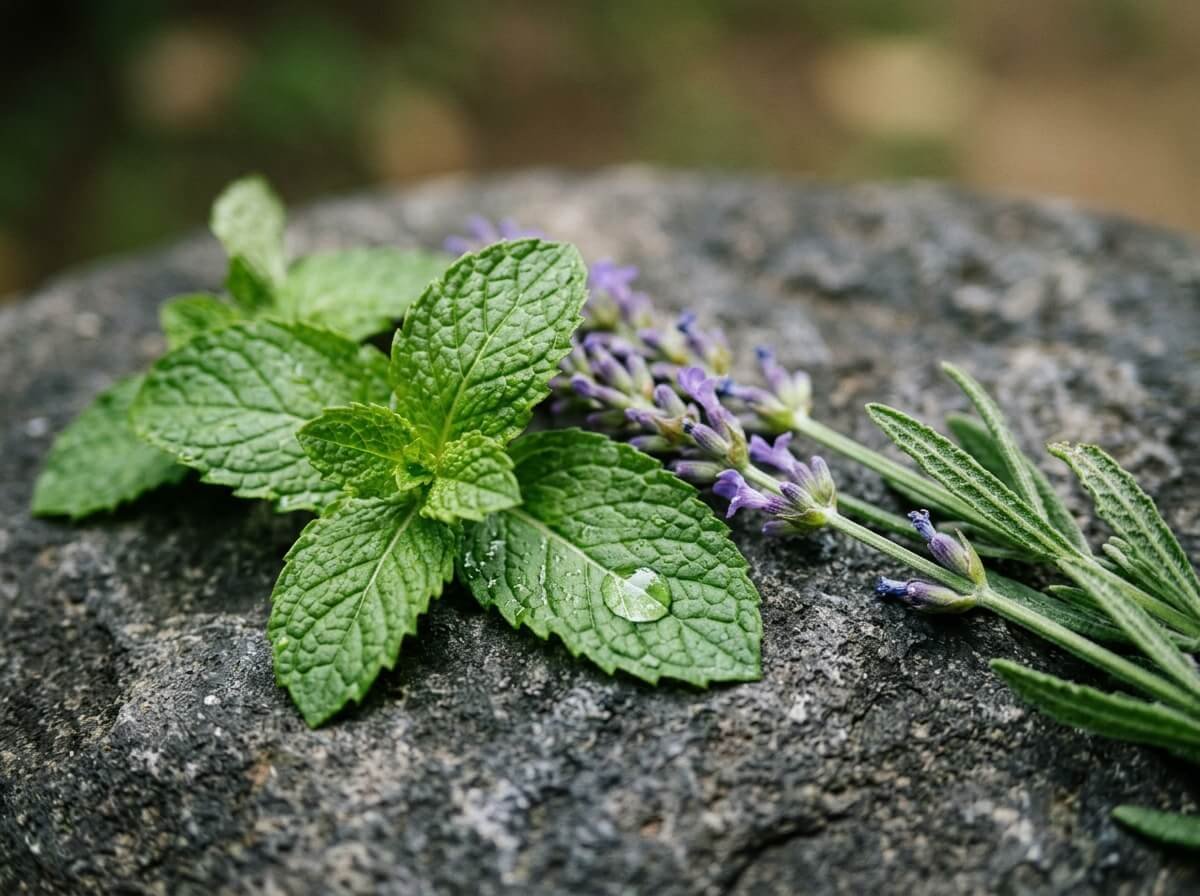
It helps to know what an oil can and cannot do. Essential oils are concentrated aromatic compounds distilled or pressed from plants. They reach us in two ways: through the skin, where some compounds act on local nerve endings, and through the nose, where scent signals travel directly into the limbic brain (the region that handles emotion, memory, and the stress response). The two leading headache oils use different routes.
Menthol: the cooling route
Peppermint and other mint oils are rich in menthol. Menthol switches on a cold-sensing receptor in the skin called TRPM8, the same receptor that responds to a cool breeze. The result is a distinct cooling, tingling sensation that can compete with and dull the pain signal, a little like rubbing a bumped elbow. Researchers have also observed changes in local blood flow and muscle tension in the forehead area. That is why menthol suits the tight, muscular band of a tension headache, applied to the skin where you feel it.
Linalool: the calming route
Lavender’s main aromatic compounds are linalool and linalyl acetate. Laboratory and small human studies suggest they have a calming effect on the nervous system when inhaled. Lavender does not numb pain the way menthol does. Its potential role in migraine is to quiet the stress, tension, and restlessness that often travel with an attack, through the nose rather than the skin.
Cineole: the clearing route
Cajeput and eucalyptus oils are rich in 1,8-cineole (also called eucalyptol). Inhaled, it creates a strong sense of open, cool airflow. That sensation is why these oils feel so welcome when sinus pressure comes with congestion, even though the feeling of easier breathing is partly perceptual.
Understanding these three routes keeps us honest. None of these compounds treats the cause of a headache. At best, they ease how it feels, and that is worth something on a long afternoon.
The oils with the best evidence, matched to headache type

There are dozens of oils marketed for headaches. Only a few have been tested in people, so we focus on those and say plainly how strong the evidence is.
Tension headache: diluted peppermint on the forehead and temples
The best-known study here is a German trial from 1996. Researchers asked 41 people with tension-type headache to treat 164 headaches. When a 10% peppermint oil solution was brushed across the forehead and temples, pain eased noticeably within 15 minutes compared with a placebo, and the effect was similar to a standard 1,000 mg dose of paracetamol (acetaminophen). It was a small study, and it used a single type of peppermint (Mentha piperita) in an alcohol base, but it remains the clearest human evidence for any headache oil.
A note on our own oil, because honesty matters. Our Mint Essential Oil is distilled from Mentha arvensis (cornmint), which is often listed as peppermint in trade but is a different species. Cornmint is typically even richer in menthol, so it delivers the cooling effect strongly, and it deserves a slightly more cautious dilution than the trial used. For more on mint’s chemistry, see our guide to peppermint essential oil benefits.
Migraine: lavender by inhalation
In a 2012 trial in Iran, 47 people with migraine inhaled lavender oil for 15 minutes at the start of an attack. About 71% of lavender-treated attacks responded fully or partly, compared with about 47% in the placebo group. That is encouraging. Yet a 2023 review that pooled seven trials of essential oils for migraine found no clear difference from placebo in how often attacks happened or how severe they felt, with only small, uncertain signals for related symptoms such as sensitivity to sound.
So the honest picture is this: lavender may help some people feel calmer and more comfortable during an attack, and it is gentle to try, but it is not a migraine treatment. If migraine shapes your life, it deserves a proper medical plan. We cover the plant itself in our lavender essential oil benefits guide.
We do not sell a single-note lavender, but lavender leads our Deep Calming Essential Oil Blend, softened with rose geranium, bergamot, cananga, and sweet orange, for inhaling from a tissue or diffuser.
Sinus pressure: cajeput and other cineole oils
There are no good headache trials for cineole oils. Their place is supportive: a few drops in a bowl of hot water for steam, or on a tissue, can make congestion feel more open, which may ease the pressure that comes with it. Our Cajeput Essential Oil and the Clearing Essential Oil Blend (cubeb, cajeput, fennel, ginger, mint, and nutmeg) both suit this use. For the full approach, read our guide to essential oils for congestion.
What about the rest?
Rosemary, chamomile, eucalyptus, and frankincense appear on many lists. Some have early or traditional support, but none has the human evidence of peppermint for tension headache. They may still smell lovely and help you rest. We simply do not want to promise more than the research can hold.
How to use essential oils for headaches safely

Most bad experiences with headache oils come from one mistake: using strong menthol oil neat, close to the eyes. Menthol vapour irritates the eyes even when it never touches them, and undiluted mint oil on thin facial skin can sting, redden, or burn. Good placement and dilution solve most of that.
Dilute first
For adults, a 2 to 3% dilution is a sensible starting point for mint oil on the face and neck. In practice that is two to three drops of essential oil in one teaspoon (5 ml) of a plain carrier oil such as coconut, jojoba, or sweet almond. For cornmint, stay at the lower end. Patch test on the inner arm first and wait a day if you have sensitive skin. Our guide on how to dilute essential oils walks through ratios for every age.
Place it where the tension lives
- Temples: a fingertip’s worth, worked in small circles, staying well back from the outer corner of the eye.
- Hairline and forehead: a thin stroke along the upper forehead, never on the eyelids or brow bone.
- Back of the neck and shoulders: often the best spot for tension headaches, since tight muscles here feed the band across the head.
- Never: on or around the eyes, inside the nose, or on broken skin.
Wash your hands well after applying. If oil gets into an eye, do not rub it. Wipe the area with a cotton pad soaked in plain carrier oil, rinse with cool water, and seek medical advice if stinging continues.
Inhalation or topical?
Match the route to the type and the evidence. For tension headache, diluted mint on the skin is the route that has been studied. For migraine, lavender was inhaled: two or three drops on a tissue held a few centimetres from the nose, breathing slowly for several minutes, or a short session with a diffuser in a ventilated room. Many people in the middle of a migraine find strong scents unbearable, so keep it gentle and stop if it makes things worse. Our piece on essential oils you can use without a diffuser has more simple inhalation methods.
A pre-diluted option
If measuring drops feels like too much in the moment, a roller already blended in a carrier is the simpler path. Our Santi Essential Oil Roller pairs lavender with rose geranium, bergamot, cananga, and sweet orange in jojoba oil, ready for the wrists, neck, and temples. Bergamot can make skin more sensitive to sunlight, so keep rolled areas covered or out of strong sun for a few hours.
Pair the oil with the basics
An oil works best alongside the simple things that ease most headaches: a large glass of water, food if you have skipped a meal, a break from the screen, and slow breathing. A gentle neck and shoulder massage helps too, and our guide to stress-reducing massage techniques shows a few easy holds. The ritual of slowing down is often half the relief.


A cool drop for tension days
Our Mint Essential Oil is steam-distilled Mentha arvensis, rich in menthol and hand-bottled in Bali. Two drops in a teaspoon of carrier oil, worked into the neck and temples, and a slow, cooling pause in a long afternoon.
Who should be cautious

Essential oils are concentrated plant chemistry. Gentle for most adults, they ask for more care in some groups.
Pregnancy and breastfeeding
Headaches are common in pregnancy, and many usual pain relievers are restricted, so the appeal of a natural option is understandable. Inhaling a gentle oil such as lavender occasionally is generally considered low risk, but please talk to your midwife or doctor first, and use lower dilutions (around 1%) for anything on the skin. A headache in the second half of pregnancy, especially with vision changes, swelling of the face or hands, or pain under the ribs, can be a sign of pre-eclampsia and needs urgent care the same day.
Babies and young children
This is the most important caution in this guide. Never apply mint, peppermint, or menthol products on or near the face of a baby or young child, particularly under six. In very young children, menthol near the nose can trigger a reflex that tightens the airway and makes breathing difficult. Cineole-rich oils such as cajeput and eucalyptus need the same care. Keep all bottles high and closed, out of reach of curious hands. Children with recurring headaches should see a doctor rather than rely on oils.
Asthma and scent sensitivity
Strong aromas, especially menthol and cineole, can tighten the airways in some people with asthma. If that is you, start with a very light inhalation, keep rooms ventilated, and skip diffusing altogether if your chest feels tight.
Medications and health conditions
If you have epilepsy, heart conditions, or take regular medicines, check with a pharmacist before using oils frequently. Never swallow essential oils, and never put them in drinks.
Pets
Cats lack some of the liver enzymes needed to process certain essential oil compounds, and dogs are sensitive to many oils too. Diffuse only in rooms where pets can freely leave, and keep bottles and oiled skin away from their mouths. Our essential oil safety guide covers household precautions in more depth.
When a headache is a red flag

Here is the line most aromatherapy guides avoid. Some headaches are not for oils at all. They are the body asking for urgent help, and no product, ours included, should stand between you and a doctor.
Call emergency services or go to the nearest emergency department if a headache:
- Arrives suddenly and severely, reaching full intensity within a minute (sometimes called a thunderclap headache), or feels like the worst of your life.
- Comes with a fever, stiff neck, rash, or confusion.
- Comes with weakness, numbness, a drooping face, slurred speech, loss of vision, or difficulty walking.
- Follows a blow to the head, or comes with a seizure or fainting.
See a doctor promptly if:
- You are over 50 and experiencing a new kind of headache.
- Your headache pattern has changed, or headaches are becoming more frequent or severe.
- Headaches wake you from sleep or are worse when lying down, coughing, or straining.
- You are pregnant or recently gave birth and develop a new or severe headache.
- You have a weakened immune system or a history of cancer.
The rebound trap
One more pattern deserves a plain word. Taking pain relievers on many days each month (roughly 10 to 15 days or more, depending on the medicine) can itself cause near-daily headaches, known as medication-overuse headache. If you find yourself reaching for something, oil or tablet, most days of the week, that is a signal to see a doctor and look at the bigger picture rather than adding another remedy.
None of this is meant to frighten. Most headaches are benign, and many ease with rest, water, and a few quiet minutes. But real care means knowing the difference.
An Indonesian household ritual: kayu putih and minyak angin at the temples

Walk into almost any Indonesian home, and somewhere in a drawer or handbag you will find a small green bottle of minyak kayu putih. The name means “white wood oil”, after the pale, papery bark of the cajeput tree (Melaleuca cajuputi). In fact, the English word “cajeput” comes from kayu putih itself. The oil is distilled from the tree’s leaves, with the islands of Maluku in eastern Indonesia long known for it.
For generations, families have reached for it at the first sign of a headache, a cold, an upset stomach, or a long day. A few drops are rubbed between the palms, then pressed into the temples, the back of the neck, the chest, or the belly. Parents and grandparents rub it onto children’s tummies (a practice we would gently adapt today, keeping it well away from small faces). It is part of the everyday language of care, closely linked to masuk angin, a traditional idea of “wind entering the body” that describes a cluster of chills, aches, bloating, and fatigue.
Alongside kayu putih sits minyak angin, which means “wind oil”. These are medicated rubbing oils and balms, often built on menthol, camphor, and eucalyptus, that people apply to the temples for headaches and to the body for aches. Many households keep both within reach.
What strikes us is how closely this household wisdom lines up with what we now understand about menthol and cineole: cooling, clearing, applied to the temples and neck. The ritual also carries something research rarely measures, the comfort of being cared for. Someone notices you are unwell, warms oil in their hands, and presses it into your temples. That attention is part of the relief.
We share this with respect. Kayu putih belongs to Indonesian daily life, not to a wellness trend, and its use is practical rather than ceremonial. If you would like to explore the oil itself, our guides to cajeput essential oil benefits and unlocking the power of cajeput essential oil tell its story in more depth. As with mint, dilute it for the face and keep it away from the eyes.
Frequently asked questions about essential oils for headaches

Where do I put essential oil for a headache?
For tension headaches, apply a diluted oil (about 2 to 3% for adults) to the temples, the hairline, and the back of the neck and shoulders. Stay well away from the eyes. For migraine, inhalation from a tissue is gentler and is the route that has been studied for lavender.
Is peppermint or lavender better for headaches?
It depends on the type. Diluted peppermint on the skin has the stronger evidence for tension headaches. Lavender, inhaled, has a small amount of evidence for easing migraine discomfort. Some people use both: mint on the neck and lavender on a tissue.
How fast do essential oils work on a headache?
In the 1996 peppermint trial, people noticed relief within about 15 minutes, and the effect grew with repeat applications over the next half hour. Lavender was inhaled for 15 minutes. If you feel no change after half an hour, the oil is unlikely to help this particular headache.
Can I use essential oils for headaches during pregnancy?
Talk to your midwife or doctor first. Gentle inhalation of lavender is generally considered low risk, and skin applications should be kept to about 1%. Any severe or unusual headache in pregnancy needs prompt medical attention.
Can I put peppermint oil on my child’s head?
No, not on or near the face of a young child, especially under six. Menthol can affect breathing in small children. For a child with a headache, offer water, rest, and a cool cloth, and speak to a doctor about recurring pain.
Can essential oils replace headache medication?
They should not replace any treatment a doctor has prescribed, especially for migraine. For occasional tension headaches, some people find diluted peppermint helps enough that they need less else. Treat oils as one part of care, alongside sleep, water, food, movement, and medical advice when needed.
Should I use essential oils for headaches every day?
If you have headaches most days, that pattern deserves a doctor’s attention. Daily oil use on the face can also irritate the skin over time. Occasional, mindful use is the healthiest approach.
Final thoughts
Essential oils for headaches are not a cure, and anyone who tells you otherwise is selling something other than care. What they can offer is quieter and more honest: a cool, clearing sensation for a tight forehead, a calming breath during a hard afternoon, and a small ritual that reminds us to stop, drink water, and rest. Match the oil to the headache, dilute it, keep it away from the eyes, and know the red flags by heart.
If stress is the thread running through your headaches, our guides to essential oils for stress and anxiety and essential oils for sleep look at the bigger picture. And if your headaches tend to arrive with a queasy stomach, our guide to essential oils for nausea covers that side of the story.
From our hands in Bali, take good care of yourself.