Essential oils for bug bites: how to calm the itch the gentle way
A mosquito finds us on the veranda at dusk, and by morning there is a raised, hot, maddening bump on the ankle. Most of us reach for something, anything, to make it stop. Essential oils for bug bites are one of the oldest answers in a Balinese home, and one of the most misunderstood. Search for them and you will find long lists of oils that claim to do everything at once: keep insects away, stop the itch, heal the skin, and prevent infection.
The truth is quieter and more useful. Repelling a bite and relieving one are two different jobs, and the oils that do each well are not always the same. In this guide we separate the two, explain why a bite itches in the first place, and match each oil to the job it actually does. We also cover how to dilute safely on skin that has already been scratched open, what changes for children, the after-bite ritual many Indonesian families still keep, and the signs that a bite needs a doctor rather than a bottle.
Repelling vs relieving: two different jobs for essential oils
Most articles about essential oils for bug bites quietly blend two separate ideas. One is prevention: making skin less appealing to a mosquito, sandfly, or midge before it lands. The other is after-care: calming the bump that is already there. They happen at different moments, they work through different mechanisms, and they ask for different products.
Prevention is about scent and timing. Oils like citronella, lemongrass, clove, and cajeput carry aromatic compounds that make it harder for an insect to find us. They evaporate, so they need reapplying, and they work best as a light mist over exposed skin and clothing before we head outside. We have written about this side in depth, from our guide to the best natural bug repellent to choosing a natural bug repellent for skin, natural mosquito repellent options for the home, and the plants that naturally repel insects around a garden.
Relief is about the skin’s own response. Once a bite has happened, the insect is gone. What remains is our immune system reacting to the saliva it left behind. A repellent oil does little here. What helps is cooling the itch signal, calming the inflammation, and keeping the spot clean while it heals.
This matters because the most honest advice about bug bites is also the least exciting: preventing them beats treating them. In Bali we reach for Begone Bug Spray before the evening mosquitoes arrive, a water-based mist with citronella, clove bud, and cajeput that we have hand-blended for years. For a family that spends long evenings outdoors, the 230 ml Begone Bug size is the practical choice. Then, for the bites that get through anyway (and some always do), we keep a small, separate after-care kit.
So the rest of this guide is about the bite you already have. Think of it as the second half of the routine, not a replacement for the first.
Why a bite itches, and why scratching makes it worse
When a mosquito feeds, it injects a little saliva to keep our blood from clotting. That saliva contains proteins our body reads as foreign. Mast cells in the skin respond by releasing histamine and other signalling molecules, which widen nearby blood vessels and stir up local nerve endings. The result is the familiar trio: a raised bump, redness, and an itch that seems to grow the more attention we give it.
Reactions vary a great deal from person to person. Some people barely notice a bite; others develop a welt the size of a coin that lasts for days. Children, and newcomers to a region, often react more strongly because their immune systems have not yet grown used to the local insects. Long-term residents of tropical places tend to react less over time, which is why a visitor to Bali can be covered in bumps while their host shrugs at the same mosquitoes.
Then comes scratching. It brings a few seconds of relief because the mild pain of scratching briefly overrides the itch signal. But it also damages the skin, releases more inflammatory signals, and makes the next wave of itching stronger. Dermatologists call this the itch-scratch cycle, and it is the real reason a small bite can turn into a week-long problem.
There is a third stage worth naming. Skin that has been scratched open is broken skin. Bacteria from fingernails and the skin’s surface can get in, and in warm, humid climates a scratched bite can become infected surprisingly quickly. The signs are spreading redness, warmth, swelling, pus, or pain that increases after the first day instead of fading.
Seen this way, after-bite care has three clear goals:
- Interrupt the itch, so we stop scratching.
- Calm the inflammation, so the bump settles faster.
- Keep the area clean, so a small wound does not become an infection.
Each goal suits a different kind of oil, and that is where most lists go wrong. They treat every oil as if it does every job.
Three jobs, three kinds of essential oils for bug bites
Rather than a long list, we find it more helpful to sort the oils by what they actually do. Most good after-bite blends work because they combine one oil from each group.
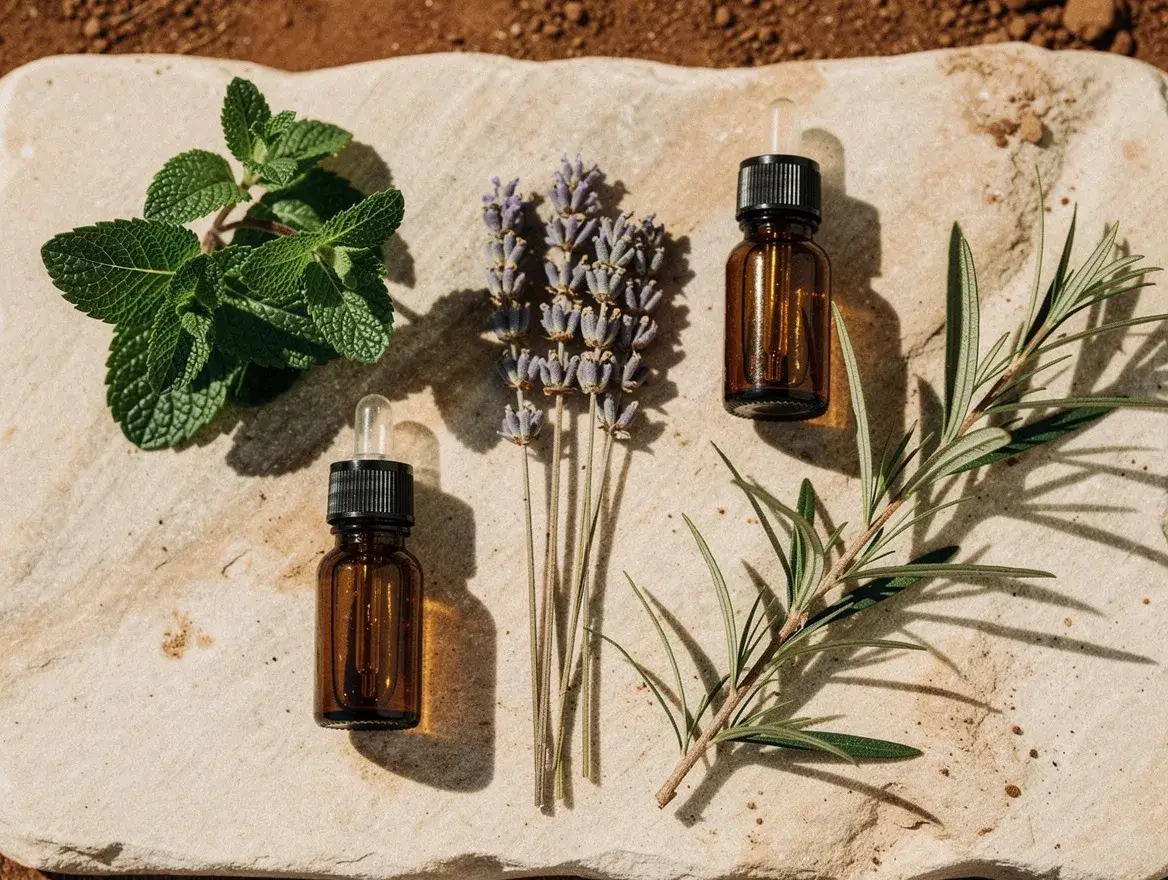
Cooling: mint and its menthol
Menthol, the main compound in mint oils, activates a receptor in our skin’s nerve endings called TRPM8, the same one that responds to cold. When it fires, the brain registers a cool sensation, and that sensation competes with the itch signal. Topical menthol is a long-established ingredient in pharmacy anti-itch creams for exactly this reason, usually at low concentrations around 1%.
Our Mint Essential Oil is distilled from Mentha arvensis. It is often sold as peppermint, but botanically it is corn mint, which is especially rich in menthol. That makes it effective in tiny amounts and harsh if overused. A single drop in a roller blend is plenty. You can read more about its character in our peppermint essential oil benefits guide.
Calming: lavender
True lavender (Lavandula angustifolia) is the gentle anchor of most after-bite blends. Laboratory and animal studies suggest its main compounds, linalool and linalyl acetate, have anti-inflammatory and mild pain-relieving effects. Human evidence specifically for bites is limited, so we would not claim more than this: lavender is soothing, well tolerated by most skin when diluted, and its calm floral scent makes the ritual itself a little more restful.
Our Lavender Essential Oil is pure Lavandula angustifolia, and it is the oil we reach for first. For more on its wider uses, see our lavender essential oil benefits guide. Chamomile, especially German chamomile, sits in the same calming group, though it is harder to find pure and costs more.
Protecting: tea tree
Tea tree oil (Melaleuca alternifolia) is the most studied of the three for skin. It has well-documented antimicrobial activity, which makes it useful on a bite that has been scratched open. There is also a small but interesting human study: in 2002, researchers in Australia found that tea tree oil applied to the skin reduced histamine-induced swelling in volunteers. That is not proof that it stops bite itching, but it supports its long traditional use.
Our Tea Tree Essential Oil is the one we use for this job, and our tea tree essential oil benefits guide covers how to use it well. Tea tree can irritate when used undiluted or when it has oxidised with age, so keep the cap tight and the bottle out of the sun.
A Balinese bridge: cajeput
Cajeput (Melaleuca cajuputi), a close relative of tea tree, does a little of all three jobs. It cools, it is mildly antiseptic, and its camphor-like scent has a long household history across Indonesia, which we come back to below. Our Cajeput Essential Oil is a good single-bottle option for adults who want one oil to keep in a bag.
An honest evidence grade
Here is how we would sum up the research, without dressing it up:
- Menthol for itch: good evidence, and widely used in pharmacy products.
- Tea tree for skin inflammation and keeping broken skin clean: moderate evidence, mostly laboratory work plus a few small human studies.
- Lavender and chamomile for calming: mostly laboratory and traditional evidence, gentle and well tolerated.
None of these oils replace an antihistamine for someone who reacts strongly, and none of them cure an infected bite. They are comfort and care for an ordinary bite, used carefully.
How to apply essential oils on an itchy bite safely
A bite that itches is often a bite that has been scratched, and that changes the safety picture. Broken skin absorbs more of whatever we put on it, and repeated exposure of damaged skin to concentrated oils is one of the main ways people develop a lasting sensitivity. So the first rule is simple: never apply essential oils neat to a bite.
Start with cold
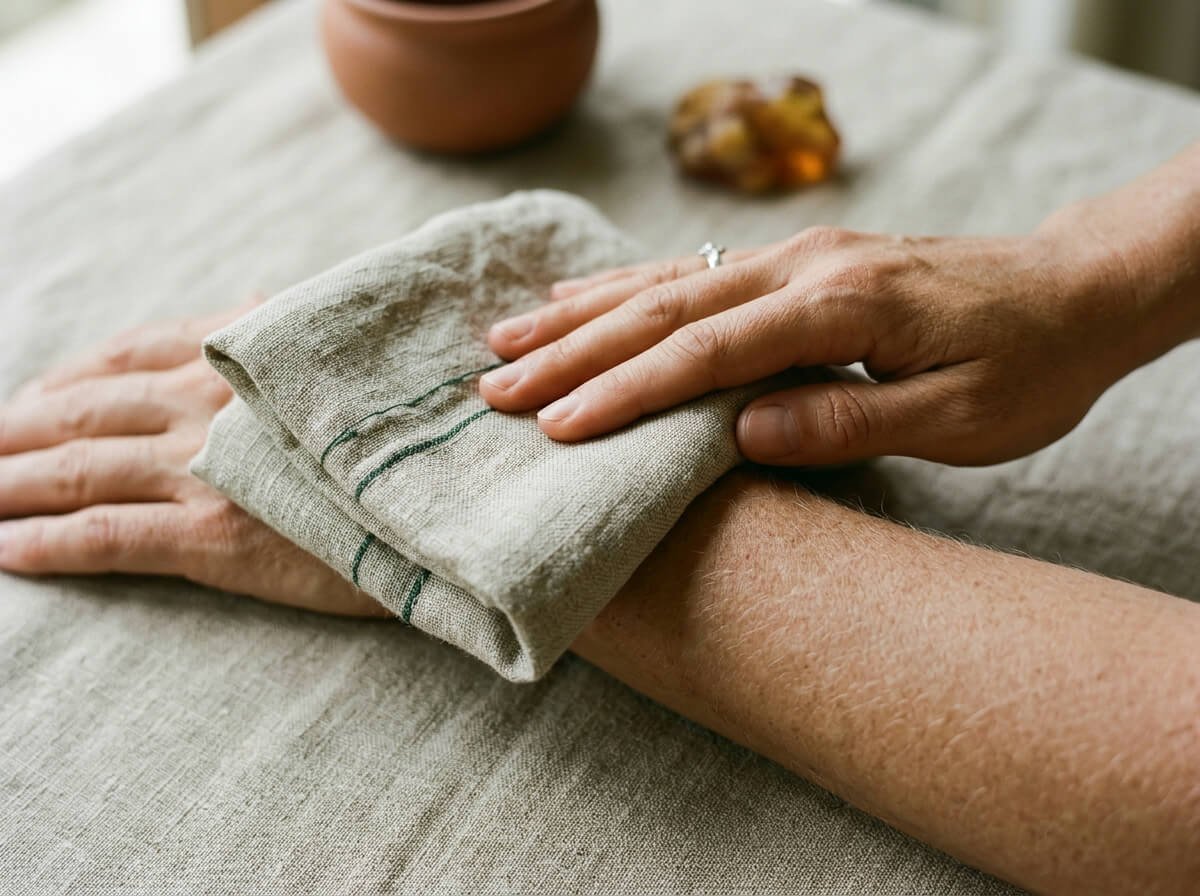
Before any oil, try cold. A cool, damp cloth or a wrapped ice cube held on the bite for 10 minutes slows the local inflammation and quiets the itch. Then wash gently with mild soap and water, and pat dry. Often that alone is enough.
A simple after-bite roller for adults
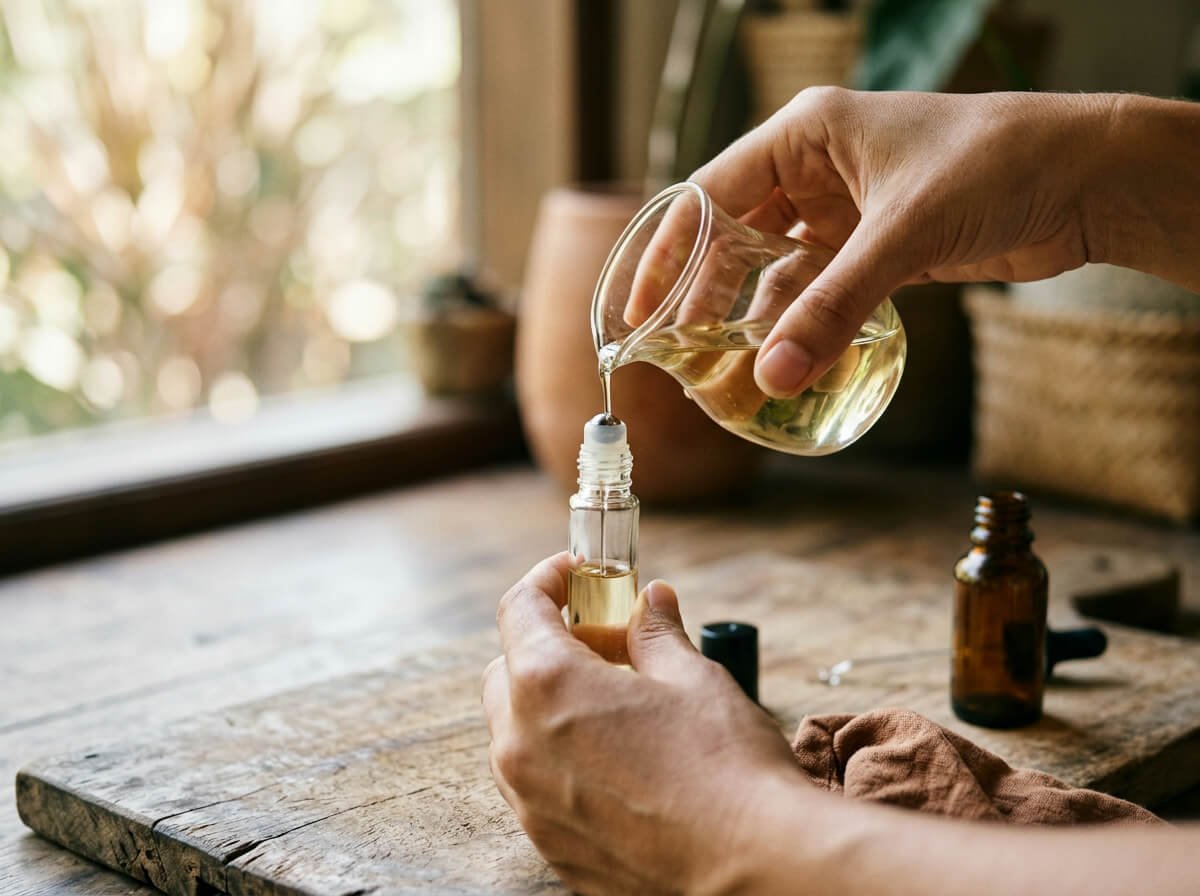
For bites that keep nagging, a diluted roller is easy to make and lasts for months. As a rough guide, one drop is about 0.05 ml, so four drops in a 10 ml bottle makes roughly a 2% blend.
- Fill a 10 ml glass roller bottle almost to the top with a carrier oil such as fractionated coconut oil or jojoba.
- Add two drops of lavender essential oil.
- Add one drop of tea tree essential oil.
- Add one drop of mint essential oil for cooling (leave it out for sensitive skin).
- Cap, roll between your palms, and label it with the date.
Roll a small amount onto the bite up to three or four times a day. If the skin stings sharply, wash it off with mild soap and water. A gentle cool tingle from the mint is normal; burning is not.
Patch test first
If you have not used these oils before, test the blend on the inside of your forearm and wait 24 hours. Redness, itching, or small bumps at the test spot mean the blend is not for you.

Quick answers on application
How quickly does it work? The cooling effect of menthol is felt within a minute or two. The calming effect on swelling is gradual, usually over a day or two of regular use.
Can I use a bug spray on a bite? A repellent is made to sit on intact skin and evaporate, not to soothe a wound. Use it to prevent the next bite, not on an open scratch.
Is it fine on the face? Keep mint and cajeput well away from the eyes and nose. For a bite on the face, use a lavender-only blend at 1% or less, or simply a cold compress.
Can I use aloe vera instead? Yes. Pure aloe vera gel is cooling and gentle, and works well on its own or with a single drop of lavender stirred into a teaspoon of gel.
Does toothpaste help? It is a common home remedy. Toothpaste can dry a bite and briefly distract from the itch, but it can also irritate broken skin. We prefer cold water, clean hands, and a gentle diluted oil.
Essential oils for bug bites on children and sensitive skin
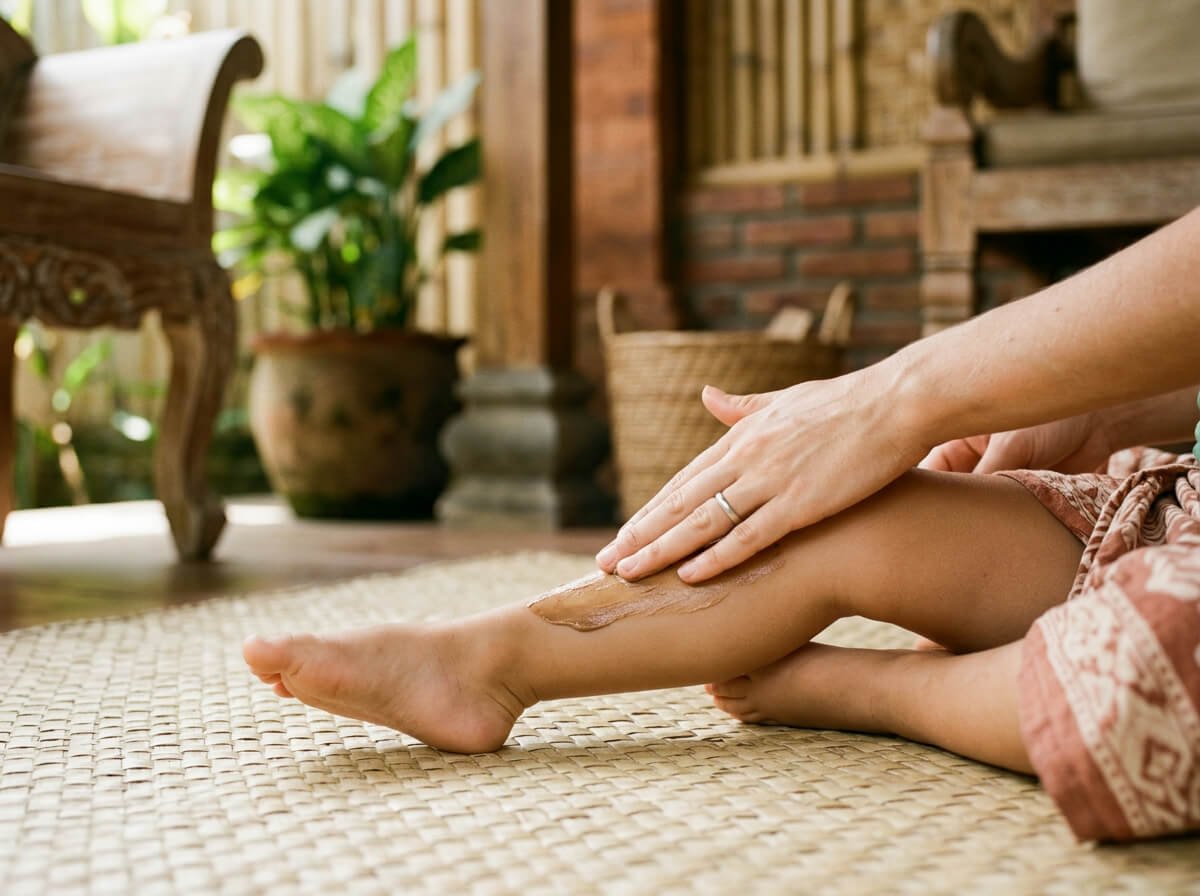
Children often get bitten more and react more strongly, and they are also the people for whom essential oils need the most care. Their skin is thinner, they rub their eyes and put their hands in their mouths, and some aromatic compounds affect young airways in ways they do not affect adults.
The menthol and cineole rule
Menthol, camphor, and 1,8-cineole (the main compound in cajeput and eucalyptus) can trigger breathing difficulties in babies and young children when applied near the face or chest. Most aromatherapy safety references advise keeping these oils off children under six altogether, and never applying them near the face of any young child. For children, that means mint and cajeput come out of the blend.
Gentler options by age
- Under two years: skip essential oils. Use a cool compress, gentle washing, and short nails. If a baby is bitten often, ask your doctor about the right approach.
- Two to six years: a lavender-only blend at about 0.5% (one drop in 10 ml of carrier oil), applied to the bite only, away from the face and hands.
- Six and over: one drop of lavender and one drop of tea tree in 10 ml of carrier (about 1%), still kept away from the face.
Whatever the age, the strongest tool is still prevention. Light long sleeves at dusk, a fan to keep the air moving (mosquitoes are weak fliers), nets over beds, and a gentle repellent on clothing do more than any after-bite blend. Our guide to natural baby skin care covers more on choosing gentle products for little ones.
Sensitive or eczema-prone skin
If your skin reacts easily, keep the blend simple. One oil is easier to tolerate than four, and lavender at 1% is the gentlest place to start. Skip tea tree on skin that is already cracked from eczema, and patch test everything. If a bite sits on top of an eczema flare, treat the eczema first with whatever your doctor has advised.
Pregnancy and breastfeeding
Lavender and tea tree are generally regarded as low-risk in diluted, topical use on small areas. Still, it is worth checking with your midwife or doctor before using any essential oil while pregnant or breastfeeding, and avoiding the chest while nursing.
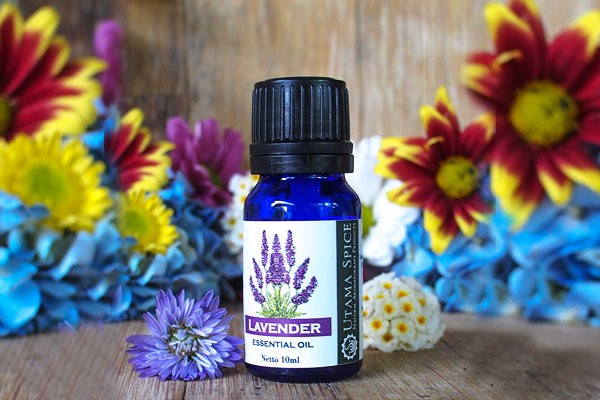
The gentle anchor of an after-bite blend
Our Lavender Essential Oil is pure Lavandula angustifolia, with a soft floral scent and a calm, balsamic edge. Diluted in coconut or jojoba oil, it is the first oil we reach for when a bite needs care.
The Balinese household after-bite ritual

Long before roller bottles, Indonesian families had their own answer to mosquito season. In many homes across Bali and the wider archipelago, a small bottle of minyak kayu putih, cajeput oil, sits on a shelf within reach of the door. Kayu putih means “white wood,” after the pale, papery bark of the tree. It is rubbed on bites, on aching shoulders, and on the back of the neck during a cold, and its sharp, clean scent is one many Indonesians link with home and with being cared for.
Minyak telon, a gentler family blend, softens kayu putih with fennel oil and coconut oil. It is traditionally warmed between the hands before being smoothed onto children’s tummies and legs. It is a ritual of touch as much as of scent: a parent’s hands, a quiet moment at the end of the day, and a small, familiar smell that says the day is done.
Sereh, or lemongrass, plays its own role. It grows in kitchen gardens across Bali, and crushed stalks have long been kept around the home where people want fewer insects. Its oil belongs on the prevention side of the line, and our Lemongrass Essential Oil is lovely in a diffuser on a veranda at dusk. Our lemongrass essential oil benefits guide explores it further, and our cajeput essential oil benefits guide tells the fuller story of kayu putih.
We share this tradition with respect, and with one honest update. Older family habits sometimes included rubbing kayu putih on babies’ chests or under the nose. Modern safety knowledge about cineole and young airways has changed that advice, and many Indonesian parents now keep kayu putih for older children and adults while choosing gentler blends for babies. That is how traditions stay alive: they keep their heart and adjust their practice.
Bringing the ritual home
You do not need to live in Bali to keep the spirit of this ritual. A few ideas:
- Keep two small bottles by the door: a repellent spray for going out and an after-bite roller for coming in.
- Make application a slow moment rather than a rushed one. Cool the bite, wash it, then apply the oil with clean hands.
- Diffuse lemongrass or citronella in the evening where you sit outside, and keep a fan moving the air.
- For adults, a single drop of cajeput in a teaspoon of coconut oil is a simple, time-honoured after-bite rub.
If you enjoy using oils for everyday comfort, our guides to essential oils for headaches and essential oils for nausea follow the same careful, dilution-first approach.
When a bite needs a doctor, not an oil

This is the section many guides leave out, and for anyone living in or travelling through the tropics it may be the most important. Most bites are a nuisance. A few are a warning. Essential oils are comfort for the first kind and no help at all for the second.
Seek emergency care immediately if
- Lips, tongue, face, or throat start to swell.
- Breathing becomes difficult, wheezy, or tight.
- Hives spread across the body, or the person feels faint, dizzy, or confused after a bite or sting.
These are signs of a severe allergic reaction (anaphylaxis), which is a medical emergency. If someone has a prescribed adrenaline auto-injector, use it and call for help straight away.
See a doctor soon if
- Redness spreads outward from the bite, or red streaks appear.
- The bite becomes hot, more painful, or starts to ooze pus after the first day.
- A bump grows larger over several days instead of shrinking.
- A tick bite develops a spreading rash, especially a ring-shaped one.
These can be signs of a skin infection such as cellulitis, which usually needs antibiotics, or of an illness carried by the insect. In humid climates infected bites are common, especially in children who scratch.
Bite plus fever in mosquito regions
In places where dengue, malaria, or chikungunya are present, including much of Indonesia and Southeast Asia, a fever in the days or weeks after mosquito bites needs medical attention. Dengue symptoms often begin between four and 10 days after a bite and include high fever, headache, pain behind the eyes, joint and muscle aches, and sometimes a rash. Malaria can appear a week or more later. Tell the doctor where you have been.
If dengue is a possibility, doctors generally advise avoiding aspirin and ibuprofen until it has been ruled out, because they can increase bleeding risk. Paracetamol is the usual choice for fever while you wait to be seen. And no oil, however loved, should delay that visit.
Frequently asked questions
Which essential oil should I start with for bug bites? Lavender. It is the gentlest all-rounder and suits most skin when diluted. Add a drop of tea tree to help keep scratched skin clean, and a drop of mint if you want faster cooling.
Do essential oils really work on mosquito bites? For comfort, yes, within limits. Menthol has good evidence for cooling the itch, and tea tree and lavender have reasonable support for calming the skin. They will not stop a strong allergic reaction.
Can I put tea tree oil directly on a bite? We do not recommend it. Undiluted tea tree can irritate and sensitise skin, especially skin that has been scratched. Dilute it to between 1% and 2% in a carrier oil.
How do I stop scratching at night? Cool the bite before bed, apply a diluted roller, keep nails short, and for children consider light cotton sleeves. If itching keeps someone awake for several nights, ask a pharmacist about an oral antihistamine.
Are after-bite oils safe for pets? Many are not. Tea tree in particular can be toxic to cats and dogs. Do not use human after-bite blends on pets without a vet’s advice.
A quiet routine for bite season
Bug bites are part of life in the tropics, and in any garden on a warm evening. The goal is not to win a war against every mosquito. It is to keep most bites from happening, care for the few that do with gentle and honest tools, and know the signs that call for more than care.
Prevent first, cool and calm second, and watch for the warning signs always. It is a simple rhythm, rooted in generations of Indonesian households, and it still serves us well today.