
Natural skincare routine for men: three honest steps for oily, shaved skin
A natural skincare routine for men does not need to be long. It needs to be honest. Most guides hand men the same cleanse, tone, serum, moisturise, and protect routine everyone else gets, poured into a darker bottle with a woodier scent. That misses the two things that really are different about the skin on a face that gets shaved: more oil, and a daily scrape with a blade. This guide builds a three-step routine around those two facts, plus the one protective step that makes the other three worth doing.
We have been crafting skincare in Bali since 1989, and none of our face products were ever made “for him” or “for her”. They were made for skin. So this is not a pitch for a new men’s line. It is a plain explanation of why male skin behaves the way it does, what each step is for, and which simple botanicals do the job without the theatrics.
What a natural skincare routine for men should account for

Start with the biology, because it explains every choice that follows. Skin responds to hormones, and androgens such as testosterone are the main signal that tells sebaceous glands to produce oil. Men generally carry higher androgen levels across adult life, so on average their skin makes more sebum, and that output stays higher for longer. Women’s sebum production tends to fall more sharply after menopause. Men’s tends to hold steady well into later decades.
Male facial skin is also, on average, measurably thicker, with denser collagen in the dermis and larger pores in the T-zone. None of that makes it tougher in the way the marketing suggests. Thicker skin with more oil is still skin. It still loses water, still reacts to harsh surfactants, and still burns.
Three practical consequences follow:
- Oil choice matters more. When skin is already producing plenty of sebum, a heavy, pore-clogging oil can tip it into congestion fast. That is why we lean on non-comedogenic oils in this routine.
- Stripping backfires. Harsh cleansers that leave skin squeaky can push oily skin to feel tight and dry on the surface while still shining by midday.
- The real variable is the razor. More oil is a constant. Shaving is the thing that changes the skin every single morning.
Most competitor routines stop at the first point and dress it up with charcoal and menthol. We think the second and third points matter more. If you want the general, gender-neutral version of a daily routine first, our natural skincare routine guide covers the full picture. What follows is the version that takes the blade seriously.
There is also a cultural barrier worth naming. Many men grew up treating skincare as an unfamiliar category, something that belonged in someone else’s bathroom. The common response from brands has been to make it louder: bigger claims, sharper fragrance, more steps in a matte black box. We would rather make it smaller. Three steps, done daily, using products whose ingredients you can read in one breath.
Shaving is the daily skin stress every routine skips
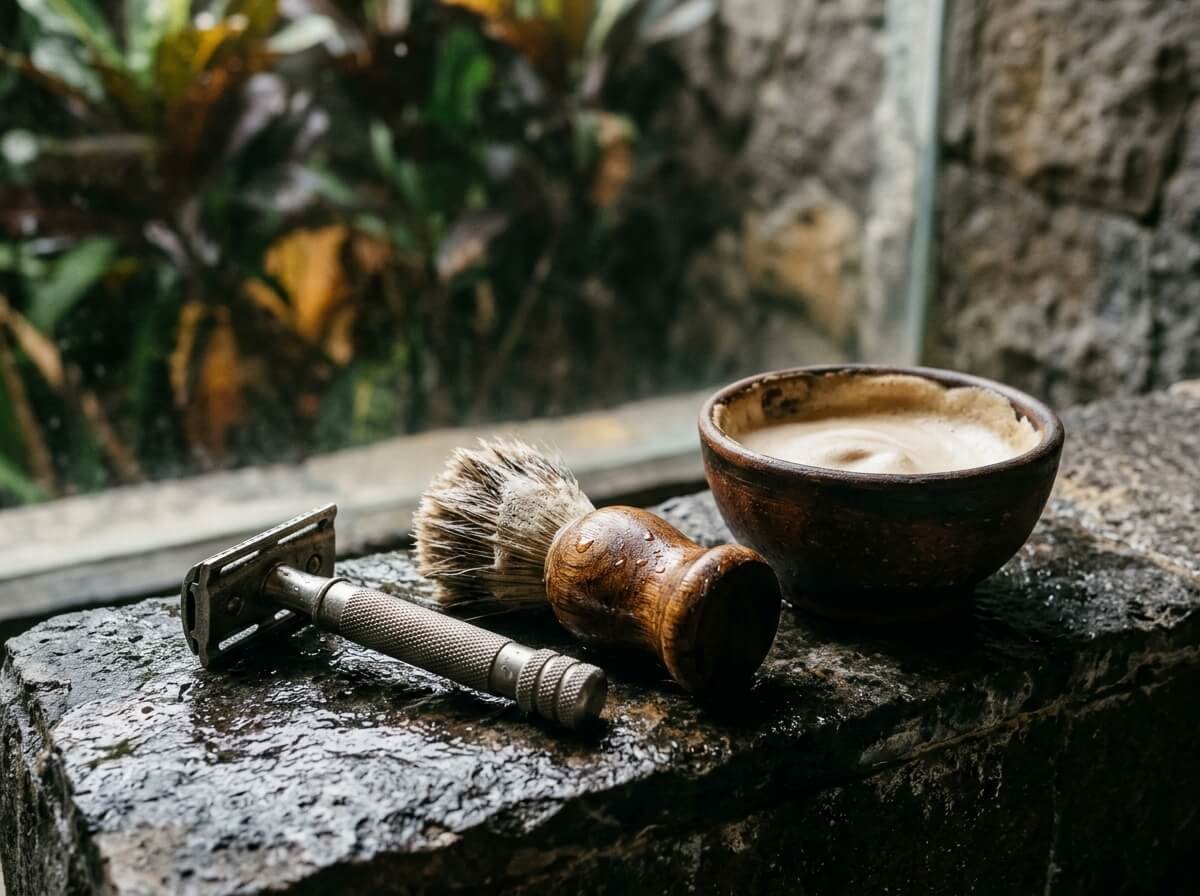
A razor does not only cut hair. With every pass, the blade also lifts away a thin layer of the stratum corneum, the outermost layer of dead cells that forms the skin’s barrier. That barrier is what keeps water in and irritants out. Shave every morning and you are, quite literally, sanding back your first line of defence every day.
That is not a reason to stop shaving. It is a reason to understand what the skin needs afterwards. Freshly shaved skin tends to:
- lose water faster for a while, so it can feel tight or flaky by the afternoon
- react more to fragrance, alcohol, and strong essential oils, because they meet a thinner barrier
- carry tiny nicks and micro-abrasions that are easy to irritate
- develop razor bumps when short, curled hairs grow back into the skin instead of out of it
Razor bumps (the medical name is pseudofolliculitis barbae) are especially common in people with tightly curled hair. They are not acne, though they often get treated like it with drying spot products that make the irritation worse.
A few shaving habits that protect the barrier
- Soften the hair first. Shave after a warm shower or after holding a warm, damp cloth to the face for a minute.
- Use a sharp blade. A dull blade needs more passes and more pressure, and each extra pass takes more of the barrier with it.
- Shave with the direction of growth, at least on the first pass. Going against the grain gives a closer shave and more ingrown hairs.
- Rinse with cool or lukewarm water, then pat dry. Rubbing a towel across fresh skin adds friction it does not need.
If you already deal with tightness or redness after shaving, our guide on how to repair your skin barrier goes deeper on the lipids and habits involved. For this routine, the key idea is simple. Every step after the razor should calm and seal, not sting.
Beards, stubble, and skin that is not shaved daily
Not everyone shaves every morning, and a beard changes the routine rather than ending it. The skin under facial hair still makes oil, still sheds cells, and still dries out, but it is harder to reach. Flakes trapped in a beard are usually dry skin underneath, not a hair problem. Washing the beard area with the same gentle face wash and working a few drops of oil through to the skin, not just the hair ends, deals with most of it. Stubble that is trimmed every few days sits in between: less barrier stress than a daily wet shave, but the same need for moisture as the hairs push back through.
Step one: cleanse without stripping the skin

It is tempting to assume oily skin wants the strongest cleanser available. It does not. High-foaming washes built on harsh surfactants can strip the natural lipids between skin cells, the same lipids shaving already disturbs. Skin that has been stripped often responds by feeling tight and looking dull, while the T-zone carries on producing oil anyway.
A good cleanser for this routine does three things. It lifts sweat, sebum, and pollution. It rinses clean. And it leaves skin feeling comfortable rather than squeaky. Squeaky is not a sign of clean. It is usually a sign the barrier lost something it wanted to keep.
Morning or night, and how often
- Morning: wash before you shave. Cleansing first removes surface oil and lets the blade glide, and it means you are not dragging a cleanser across freshly shaved skin afterwards.
- Evening: wash once to clear the day. If you exercise, sweat heavily, or work outside, this is the wash that matters most.
- Twice a day is plenty. More than that, and you start working against the skin.
Our Bliss Botanical Face Wash is a gentle, plant-based cleanser handmade in Bali. It is scented with essential oils, so we suggest using it before the razor rather than after, when skin is still intact. If your skin is very reactive, keep the wash on for a few seconds only, rinse thoroughly, and read our sensitive skin routine for a lower-scent approach.
One more note on body washes and bar soaps. Many men use whatever is in the shower on their face too. Body cleansers are often built for larger, tougher areas of skin and can be harsher than a face needs. A dedicated face wash is one of the few extra bottles genuinely worth owning.
Step two: witch hazel after shaving, the honest way
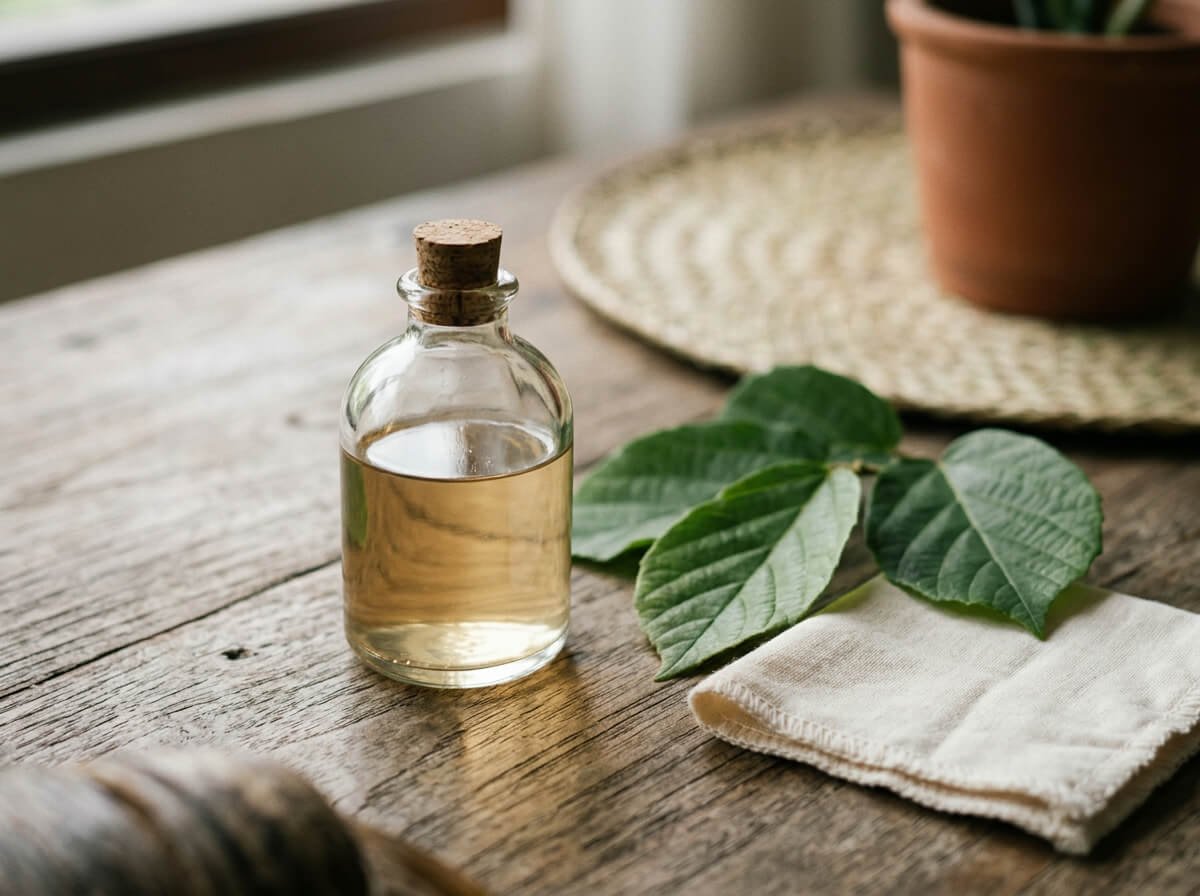
Witch hazel has a long history as a post-shave splash, and for good reason. Distilled from the bark and leaves of Hamamelis virginiana, it carries tannins that have a mild astringent effect, which helps skin feel tighter and calmer after the razor. It is light, it absorbs quickly, and it leaves no residue under a moisturiser.
It also gets oversold. You will often read that witch hazel “shrinks pores”. It does not change pore size. Pore size is largely set by genetics, oil output, and age. What an astringent does is make skin feel firmer for a while and help it feel less oily on the surface. That is useful. It is just not permanent.
There is a second honest point. Many witch hazel preparations, including ours, are preserved with a little grain alcohol. Alcohol on freshly cut skin stings, and too much of it, too often, can dry skin out. So we suggest a gentle approach:
- Wait a minute or two after shaving and rinsing, so the first sting of the blade has settled.
- Apply with a cotton pad or the palms, pressing rather than wiping.
- Start every other day if you are new to it. If skin feels tight afterwards, use it less or skip it on heavy-shave days.
- Do not use it on open nicks.
Our Witch Hazel 100ml keeps the ingredient list short: witch hazel water and grain alcohol, nothing else. For the full argument on what toners can and cannot do, and why we treat the whole category with healthy scepticism, our natural toner guide covers it in depth.
If you do not shave daily, or you grow a beard, this step becomes optional. You can still use witch hazel on oily days to take the shine off the T-zone, but the routine works without it.

Step three: a non-comedogenic oil, chosen for skin, not scent

This is the step most men skip, and it is often the one that makes the biggest difference. Oily skin still needs moisture. In fact, skin that is regularly stripped by cleansing and shaving can feel tight and produce more visible shine as it tries to compensate. A few drops of the right oil help seal water into the skin and support the lipid layer the razor just disturbed.
The word that matters here is “right”. Oils sit on a rough scale called the comedogenic index, which estimates how likely they are to clog pores. It is not exact science (individual skin varies a lot), but it is a useful starting point for skin that already makes plenty of sebum.
Oils that tend to suit oily, shaved skin
- Argan oil is light, absorbs quickly, and sits low on most comedogenic charts. It carries linoleic acid and vitamin E, and it leaves skin soft rather than shiny. Our Argan Oil 30ml is cold-pressed and single-ingredient, with no added scent.
- Tamanu oil has a long traditional use across Southeast Asia and the Pacific for minor wounds and irritated skin, which makes it a thoughtful choice for razor bumps. It is richer than argan, so use one or two drops. Our Tamanu Oil 30ml is also fragrance-free and single-ingredient.
Oils to approach with care
Coconut oil is one of the ingredients we love most and use across our body line, but it sits high on most comedogenic scales and can be too heavy for an oily face. Keep it for the body, the hair, and the beard ends rather than the T-zone.
Notice what is missing from the selection criteria: scent. Much of men’s grooming is sold on smell, usually a heavy fragrance meant to signal masculinity. On skin that has just been shaved, fragrance is one of the most common triggers of irritation. If you want to smell of cedar and sage, put that on your Probiotic Deodorant in Sage and Cedar, not on a fresh shave.
How to apply: after witch hazel (or after cleansing, if you skipped it), warm two or three drops between your palms and press them into damp skin. Damp skin helps the oil spread thinly and lock in water. For the reasoning behind this order, see our guide on how to layer natural skincare.

One oil, two drops, after every shave
Our cold-pressed Argan Oil is a single ingredient with no added scent. It is light enough for oily skin, gentle on a fresh shave, and works through a beard too.
Do you need sunscreen if you are not on the beach? Yes, here is why

We call this a three-step routine because cleansing, toning, and oil are the daily care steps. Sunscreen is something different. It is protection, and it is the step that keeps the other three from being undone.
Ultraviolet light breaks down collagen, drives dark spots and uneven tone, and is the leading environmental cause of skin cancer. In many countries, men are less likely than women to wear sunscreen and more likely to die of melanoma. A morning commute, a lunch break outdoors, a drive with the window down: these add up across a year, whether or not anyone thinks of them as “sun exposure”.
Freshly shaved skin adds a further reason. With part of the outer barrier removed, skin can be more sensitive to the sun’s irritation in the hours after shaving.
Why mineral sunscreen suits this routine
- Zinc oxide provides broad-spectrum protection by sitting on the skin and reflecting and absorbing UV.
- It is generally well tolerated by sensitive and post-shave skin.
- It does not need time to “activate”, so it works as soon as it goes on.
Our Zinc Natural Sunscreen SPF50 keeps it simple with water, zinc oxide, vitamin E, and beeswax. Mineral sunscreens can leave a light white cast at first; massage it in well and let it settle for a minute. Apply it last, after your oil, and reapply if you are outdoors for long stretches or sweating heavily. For more on choosing and using mineral filters, our natural sunscreen for face guide has the details.
Frequently asked questions about a natural skincare routine for men

Is men’s skincare really different from women’s?
The products do not need to be different. The skin’s behaviour often is. Men tend to produce more oil and, if they shave, put their skin barrier through daily stress. A good routine responds to those facts with ingredient choices, not with packaging.
What is the simplest routine for a beginner?
Cleanse, moisturise with a light oil, and protect with sunscreen in the morning. Cleanse again at night. Add witch hazel after shaving once the basics feel automatic.
Should I use an aftershave with alcohol?
Strong alcohol-heavy aftershaves sting because they meet a freshly opened barrier, and frequent use can dry skin out. If you use witch hazel, wait a minute or two after shaving and press it on gently. If your skin reacts, skip it on that day.
What helps with razor bumps naturally?
Shave with the grain, use a sharp blade, and avoid pulling the skin taut. Keep skin calm afterwards with a fragrance-free oil like tamanu. If bumps are persistent or painful, see a dermatologist, as they can scar if left inflamed.
Can I use the same oil on my beard?
Yes. Argan oil works well on beard hair and the skin beneath it. Warm a few drops in your palms and work them through to the skin. Our natural shampoo for men guide covers hair and scalp care, and the same Tea Tree Shampoo can wash a longer beard.
How long until I see a difference?
Skin turns over its outer layer roughly every four weeks in younger adults, and more slowly with age. Give a new routine about a month of daily use before judging it. Less tightness after shaving is usually the first change people notice.
Does a natural routine need to be expensive?
No. Three or four bottles, used daily, will last most people months. Choosing products that come in refillable or recyclable packaging keeps the cost to the planet low too.
Three steps, done daily, beat ten steps started once

The most effective routine is the one that still happens on a tired Tuesday. Long regimens look impressive and tend to fall apart within a fortnight. Three steps take a few minutes, fit around a shave, and quietly change how skin feels over months.
Here is the whole routine in one view:
- Morning: cleanse, shave, witch hazel (optional), two or three drops of oil, sunscreen.
- Evening: cleanse, then oil.
- Weekly: notice how your skin feels after shaving and adjust. Less witch hazel if it is tight, a drop more oil if it is dry, a lighter oil if it is congested.
This is what we mean by skinimalism: fewer products, chosen with care, used consistently. It is also why we do not believe in “for men” versions of products that work for everyone. The skin under a beard and the skin under a lipstick both want the same things: a gentle wash, the right moisture, and protection from the sun.
The rest of a natural grooming routine follows the same logic. If you are rethinking what goes on your skin, the switch to an aluminum free deodorant for men is a natural next step. Start small. Keep it honest. Let the ritual become yours.