Natural skincare routine for teenagers: the honest three-step version
A natural skincare routine for teenagers can be three steps long. Cleanse, protect, and add a little moisture if the skin asks for it. That is the whole of it. If that sounds too simple, it is because the shelves, the feeds, and the shopping bags have been telling young people a very different story.
We have been crafting skincare in Bali since 1989, and over those years we have watched routines grow longer and younger at the same time. Today children of 10 and 11 film multi-step regimens built for skin three or four times their age. This guide is our honest answer to that trend. It is written for teenagers who want clear, comfortable skin, and for the parents who quietly wonder how much of this is actually needed.
Here is what we will cover: why teenage skin does not need an adult’s routine, what the research says about the products being marketed to kids, what young skin genuinely needs, the three steps that matter, how to think about acne without overreacting, how parents can open the conversation, and how a routine can grow over time. No shopping list required.
Why a natural skincare routine for teenagers doesn’t need ten steps
Most long skincare routines are designed to solve problems that teenage skin simply does not have. Serums for fine lines, creams for lost firmness, peels for sun damage that took decades to build: these products target changes that come with time. A 14-year-old’s face has not had that time. Asking it to process half a dozen treatments every evening is like servicing a new car every week. Nothing gets better. Something eventually gets worn.
Teenage skin does have real needs, and they are worth taking seriously. Puberty brings a rise in androgen hormones, which signal the oil glands to produce more sebum. Pores can clog more easily. Breakouts appear, often around the nose, chin, and forehead first. Skin may feel oily by midday and tight after a harsh wash. These are genuine concerns. They respond best to gentleness and consistency, not to volume.
There is also a quieter cost to complexity. Every extra product is another set of ingredients the skin has to tolerate, and every new active is another chance for irritation. When a reaction happens in a ten-step routine, it is very hard to know which step caused it. A short routine is easier to read. If something goes wrong, the culprit is obvious.
This is the same principle behind skinimalism, the movement toward fewer, better products, and it applies with even more force to young skin. Our broader natural skincare routine guide lays out the framework for adults. For teenagers, we strip it back further still.
What a long routine usually includes
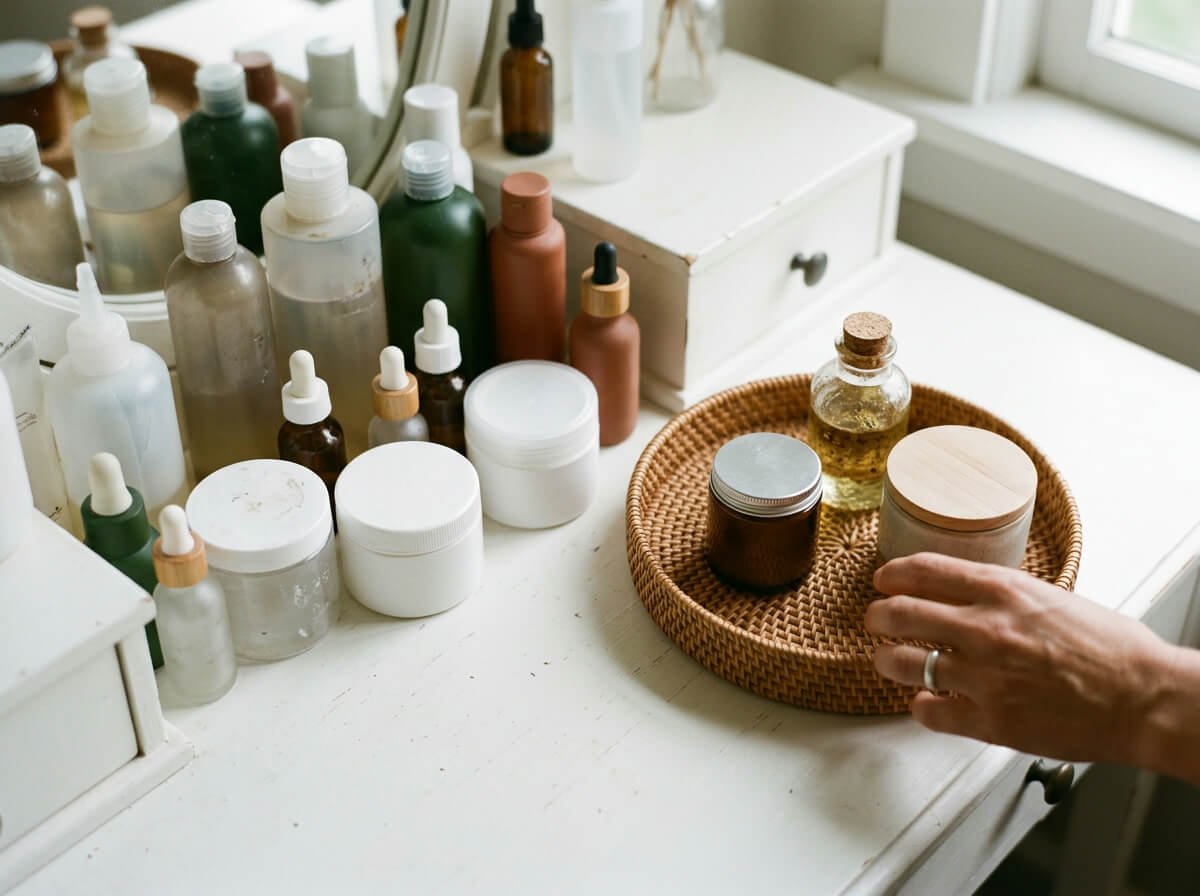
When dermatologists look at the routines young people copy from social media, the same categories appear again and again:
- Two or three cleansers, often including a foaming or exfoliating one
- Toners and essences, some containing alcohol or acids
- Several serums layered on top of each other
- Eye creams and products sold to fight wrinkles
- Face masks used several times a week
- Heavy, highly fragranced moisturizers
Very little of this list serves a teenager. Most of it adds cost, irritation risk, and the feeling that skin is a problem to be managed rather than a living organ that mostly knows what to do.
The trend worth naming: when skincare marketing skips straight to kids

We do not usually call out trends by name. This one deserves it. Over the past few years, children and young teens have become one of the most enthusiastic audiences for adult skincare. Retail workers and parents nicknamed them the “Sephora kids”: tweens filling baskets with retinol serums, acid toners, and premium creams built for mature skin.
The research has now caught up with what parents were seeing. A 2025 study published in the journal Pediatrics by researchers at Northwestern University analyzed 100 popular TikTok skincare videos made by creators aged seven to 18. The average routine used six products. Some used more than a dozen. Across the videos, the researchers counted an average of 11 potentially irritating active ingredients per routine, and the average monthly cost came to roughly $168, with some routines topping $500.
Dermatologists have been seeing the consequences in clinic. In 2024, several told NBC News that tweens were arriving with red, dry, bumpy, and itchy rashes after using products they did not need. Some reported seeing these patients weekly. A particular concern is fragrance and certain actives, which can sensitize young skin and lead to allergies that last into adulthood.
Lawmakers noticed too. In 2024, a California bill (AB 2491) proposed restricting the sale of over-the-counter products containing retinoids or alpha hydroxy acids marketed for ageing skin to children under 13. It did not advance, largely over questions of how stores could enforce it. A broader follow-up bill was introduced in 2025. Whatever happens in law, the signal is clear: something has gone sideways when products for wrinkles are bestsellers among children.
Here is the honest part. The problem is not that young people care about their skin. Caring is good. The problem is an industry that profits from turning that care into anxiety, and anxiety into a basket of products. We would rather turn it back into a ritual: small, calm, and enough.
What teenage skin actually needs
To understand why less works, it helps to know what skin is already doing on its own. The outer layer of skin, the stratum corneum, works like a brick wall. Skin cells are the bricks, and a mix of fats (ceramides, cholesterol, and fatty acids) forms the mortar. Together they keep water in and irritants out. By the teenage years this barrier is fully formed and, in healthy skin, working well.
On top of that wall lives a community of microbes that help keep the surface balanced and slightly acidic. We wrote about this in depth in our guide to the skin microbiome. Harsh cleansers, alcohol-heavy toners, and frequent exfoliation strip away the fats and disturb the microbes, which is why over-washed skin so often feels tight, then oily, then irritated, in a loop.
So what does teenage skin need from a routine? Four things, and only four:
- Clean without stripping. Remove sweat, sunscreen, and excess oil, then stop.
- Protection from the sun. Ultraviolet light is the single biggest driver of long-term skin damage, and the habits formed now carry forward for decades.
- Light moisture where needed. Some teenage skin needs none. Some needs a little, especially in dry climates or air-conditioned rooms.
- Time and patience. Skin renews itself roughly every month. Most changes take weeks to show.
What it does not need is a treatment for every imagined flaw. If a teenager’s skin is comfortable, mostly clear, and not burning, the routine is already working. If you would like to go deeper on the science of that protective layer, our article on how to repair your skin barrier explains it in detail. The short version: protect what is there, rather than trying to rebuild what was never broken.
A word on natural ingredients and young skin
Natural does not automatically mean gentle. Essential oils are potent plant compounds, and some people, including some teenagers, react to them. Many of our own products contain essential oils because we love what they bring to a ritual. For a teenager with reactive or very sensitive skin, though, a fragrance-light approach is the wiser start, as we explain in our sensitive skin routine. Patch test anything new on the inner arm for 48 hours first. That habit alone prevents most bad surprises.
The natural skincare routine for teenagers: cleanse, protect, light moisture

Here is the full natural skincare routine for teenagers, morning and evening. It takes about two minutes.
Step one: cleanse gently
Wash with lukewarm water and a mild cleanser, using fingertips rather than a scrubbing brush or rough cloth. Thirty seconds of gentle massage is enough. Rinse well and pat dry with a clean towel. In the morning, many teenagers with normal or dry skin can simply rinse with water. In the evening, especially after sport, sunscreen, or a humid day, a real cleanse matters more.
For a natural option, our Bliss Botanical Face Wash and Serenity Face Wash are both gentle, everyday cleansers. Both contain essential oils, so patch test first if skin is reactive. Our guide to choosing a natural face wash covers what to look for in any cleanser, whoever makes it.
Step two: protect from the sun
If there is one habit worth building in the teenage years, this is it. Apply a broad-spectrum sunscreen of SPF 30 or higher every morning when time outdoors is likely, and reapply every two hours during long days outside. Mineral sunscreens, which use zinc oxide to physically reflect and scatter UV light, are often well tolerated by young and sensitive skin.
Our Zinc Natural Sunscreen SPF50 keeps the ingredient list short: water, zinc oxide, vitamin E, and beeswax. Mineral formulas can leave a slight white cast, so a thin, well-massaged layer works better than a thick one. Our full guide to natural sunscreen for the face explains how mineral filters work and how to apply them well.

Step three: light moisture, only if needed
Oily skin may not need a moisturiser at all, particularly in Bali-like humidity. Skin that feels tight after washing, or flakes around the nose and eyebrows, benefits from something light. A thin layer of a water-based gel is usually enough. Heavy butters and rich face oils are rarely necessary for young faces and can feel congesting on acne-prone skin.
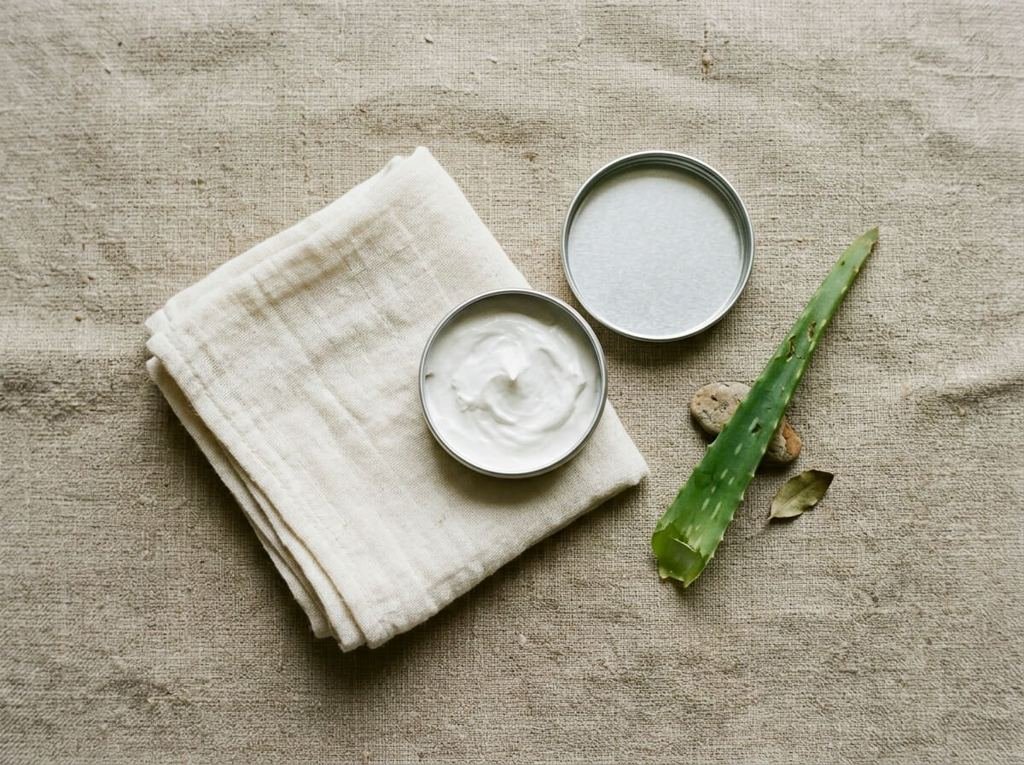
Our Aloe Vera Gel is a light option many people enjoy, especially after sun. It contains lavender essential oil and a small amount of grain alcohol, so if it stings, skip it. Our article on aloe vera gel for the face explains when aloe helps and when it does not.
What to leave out, for now
- Retinol and prescription-strength retinoids, unless a doctor prescribes them for acne
- Exfoliating acid toners and peels used several times a week
- Physical scrubs with rough particles
- Products marketed for wrinkles, firmness, or “age-defying” results
- Layering more than one new product at a time
If you are curious about how to add things later, our guide on how to layer natural skincare explains the order and the restraint behind it. For teenagers, the most useful lesson in that article is the simplest: fewer layers, fewer problems.
Acne is normal: what actually helps without overdoing actives

Let us start with reassurance, because it is often what teenagers most need to hear. According to the American Academy of Dermatology, around 85% of people between the ages of 12 and 24 experience at least minor acne. It is not a sign of dirt, poor hygiene, or a failing routine. It is a normal part of hormonal change, and for most people it settles with time.
The instinct when a breakout appears is to do more: scrub harder, wash more often, pile on spot treatments. That instinct usually makes things worse. Over-cleansing strips the barrier, the skin responds with irritation and sometimes more oil, and the cycle continues. Dermatologists consistently recommend the opposite approach: wash twice a day with a gentle cleanser, avoid scrubbing, and steer clear of harsh astringents and alcohol-heavy toners.
Small habits that make a real difference
- Hands off. Picking and squeezing push inflammation deeper and raise the risk of marks and scars.
- Clean pillowcases. Changing them once or twice a week reduces oil and bacteria contact overnight.
- Wash after sport. Sweat left on skin under helmets, headbands, or masks can trigger breakouts.
- Clean phone screens. A phone pressed to the cheek collects oil and transfers it back.
- Rinse hair products off the face. Heavy conditioners and styling products can clog pores along the hairline.
- Sleep, water, and steady meals. Not cures, but they support skin as they support everything else.
Some families like a gentle clay mask once a week for oily areas. Our Face and Body Clay is a volcanic clay that can be mixed with water and rinsed off after a few minutes. Keep it to once a week at most, and skip it entirely on irritated skin. Our article on clay masks for oily skin explains how to use clay without over-drying.
When to see a doctor
A gentle routine handles most teenage acne. It is not the right answer for all of it. See a doctor or dermatologist if acne is painful, deep, or cystic, if it leaves marks or scars, if over-the-counter care has not helped after two or three months, or if it is affecting confidence and mood. Effective medical treatments exist, and seeking them early prevents scarring. There is no virtue in waiting. Our guide to natural acne treatment covers what plant-based care can and cannot do, honestly.

The one habit worth starting young
Our Zinc Natural Sunscreen SPF50 keeps it short: water, zinc oxide, vitamin E, and beeswax. A mineral shield for young skin, hand-blended in Bali.
A note to parents: starting the ritual conversation, not a shopping list
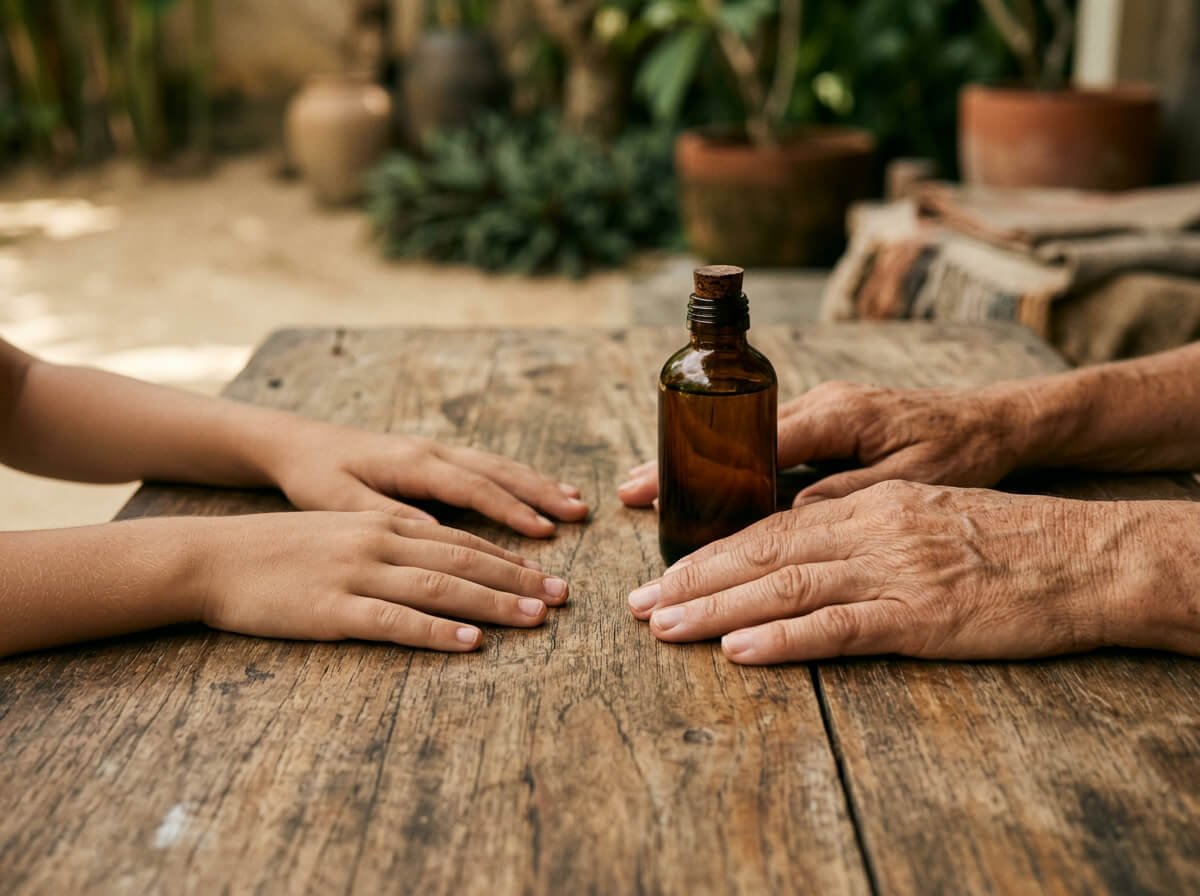
If you are a parent reading this, you may be in one of two places. Perhaps your child has started asking for products you have never heard of, at prices that make you wince. Or perhaps they have shown no interest at all, and you are wondering when and how to bring it up. Either way, the conversation matters more than the products.
Start with curiosity rather than correction. Ask what they have seen, who they follow, and what they hope a product will do. Often the answer is less about skin and more about belonging: everyone at school has it. That is a real feeling, and it deserves respect. It also opens the door to a gentle truth: most of those products were made for skin with very different needs.
Ways to make it a ritual, not a performance
- Do it together. Washing faces side by side in the evening turns skincare into connection rather than a solo task done for a camera.
- Read labels together. Turn an ingredient list into a small puzzle. Which words are plants? Which are preservatives? Which are fragrance?
- Set a simple rule. One new product at a time, patch tested, used for four weeks before judging it.
- Talk about the sun. Frame sunscreen as care for the future self, not a chore.
- Notice the feeds. Ask, kindly, whether a video is teaching something or selling something. Teenagers are often sharper about this than we expect.
We think of skincare as one of the first rituals of self-care a young person can own. Done well, it teaches patience, attention, and a calm relationship with the body. Done badly, it teaches that the face is a problem to fix. As a parent, you have real influence over which lesson lands. Many of the same principles apply to teenage boys, who are often left out of the conversation entirely; our natural skincare routine for men offers a simple starting point that translates well.
A routine that can grow with them
A three-step routine is not a ceiling. It is a foundation. As teenagers move into their late teens and twenties, their skin will change, and their needs may grow with it. Some will find they need richer moisture as oil production settles. Some will develop a specific concern, such as persistent pigmentation or sensitivity, that warrants a targeted product. Some will simply enjoy the ritual of a face oil on a cool evening.
The skill worth building now is not mastery of a product list. It is the ability to listen to skin. Is it tight? Shiny? Flaky? Calm? A teenager who learns to notice these signals, and to respond with one small adjustment at a time, will make better choices for decades than one who learned to follow a 12-step video.
Signs it might be time to add something
- Skin feels tight or rough even with a light moisturiser, which suggests a richer cream
- Sun exposure is increasing with sport or outdoor work, which calls for more diligent reapplication
- A specific, persistent concern appears, which is a good reason to ask a professional before buying anything
And signs it is time to subtract: stinging, redness, new breakouts after a product change, or a routine that has become a source of stress. Taking something away is often the most caring step of all.
There is a Balinese rhythm to this, too. Here, daily bathing has long been an unhurried act, water poured from a dipper, a moment of quiet in the day. It is not about doing more. It is about doing something simple, with attention, every day. That is the spirit we hope a young person’s first routine can carry.
Frequently asked questions about natural skincare for teenagers
At what age should a teenager start a skincare routine?
A basic routine of washing the face and wearing sunscreen outdoors can start whenever a child shows interest or when puberty begins, often between nine and 13. There is no need to introduce treatment products at that stage. Simple, gentle habits are enough.
Is a natural skincare routine for teenagers better than a conventional one?
Not automatically. What matters most is gentleness and simplicity. Many natural products are excellent for young skin, but some natural ingredients, including essential oils, can irritate reactive skin. Choose short ingredient lists, patch test, and pay attention to how skin responds.
Can teenagers use retinol?
Over-the-counter retinol marketed for fine lines is not needed for teenage skin. Dermatologists sometimes prescribe retinoids to treat acne, and in that case they should be used exactly as directed, under medical supervision. Self-prescribing retinol from a beauty shop is a common source of irritation in young skin.
Does a teenager need a toner?
Usually not. Many toners contain alcohol or exfoliating acids, which can dry and irritate young skin. If a teenager enjoys a toning step, a gentle, alcohol-free hydrating mist is the softer choice.
How often should a teenager wash their face?
Twice a day is plenty for most, plus a rinse after heavy sweating. Washing more often than that tends to strip the skin and can make both dryness and oiliness worse.
Do teenagers really need sunscreen every day?
On days with meaningful time outdoors, yes. Daily sun protection in youth helps reduce the risk of sunburn and long-term damage later in life. A mineral sunscreen of SPF 30 or higher is a good everyday choice.
How much should a teenage skincare routine cost?
Very little. A gentle cleanser and a sunscreen cover the essentials, with an optional light moisturiser. If a routine costs more each month than a family’s weekly groceries, it is almost certainly doing more than young skin needs.
Final thoughts: enough is a good place to start
The most honest natural skincare routine for teenagers is also the shortest. Cleanse gently. Protect from the sun. Moisturize lightly if needed. Leave the wrinkle creams and acid stacks on the shelf, and let young skin do what it already does well.
For parents, the gift is not a full basket. It is a calm conversation, a shared ritual, and the reassurance that a changing face is normal. For teenagers, it is permission to care for their skin without turning it into a project. What you give, you get back. With skin, a little steady care gives back a lot.