Natural mosquito repellent: which botanical actives actually work, and for how long
A good natural mosquito repellent is not a fragrance you hope works. It is a botanical formula built on actives that genuinely interrupt how a mosquito finds you, applied at the right strength and reapplied on an honest schedule. That distinction matters, because the internet is full of pretty blends that smell like a holiday and do very little once the sun drops and the biting begins. This guide is the calm, no-greenwashing version: which plant oils actually repel mosquitoes, how long each one holds, where natural protection reaches its limits, and how to use it safely on skin, in the air, and around the home.
We have made botanical repellents in Bali since 1989, in a climate where mosquitoes are not a summer nuisance but a year-round fact of life. That experience taught us to respect the science and to be truthful about the trade-offs. Nature gives us real tools here. It also asks us to reapply, to dilute properly, and to know when a stronger option is the caring choice. Let us walk through all of it.
How a natural mosquito repellent actually works
Mosquitoes do not see you the way you see a room. They track you by chemistry. Carbon dioxide from your breath, lactic acid and other compounds on your skin, body heat, and moisture all draw them in from a surprising distance. A repellent works by getting in the way of that tracking. Some botanical molecules mask the human scent signals a mosquito is hunting for. Others irritate the insect’s sensory receptors enough that it chooses to land elsewhere. The effect is real, but it is also volatile in the literal sense: these aromatic molecules evaporate, and once they lift off your skin, the protection lifts with them.
It also helps to know why some people seem to get bitten far more than others. Mosquitoes respond to the particular mix of compounds your skin gives off, and that mix is shaped by your metabolism, your skin’s microbes, how much carbon dioxide you exhale, and even what you have eaten. Two people on the same veranda can have very different evenings. A repellent evens the odds by covering those signals, but it does not change the underlying chemistry, which is one more reason to apply it thoroughly rather than assume you are the lucky one who never gets bitten.
This is the single most important thing to understand about any plant-based repellent. Its strength is tied to how much active is present on your skin and how fast it evaporates. Warm, humid weather, sweat, swimming, and simple time all shorten that window. A synthetic like DEET is engineered to sit and release slowly, which is why it lasts for hours from one application. Most botanical actives are lighter and more fleeting, which is why reapplication is not a flaw in a natural mosquito repellent, it is part of using one correctly.
It also explains why concentration matters so much. A drop of essential oil lost in a big bottle of lotion will smell lovely and repel almost nothing. A properly built formula holds the actives at a meaningful percentage, in a carrier that helps them cling and release at a steady rate. When you read a label, you are really asking two questions: which actives are in here, and are they present in a serious amount. Everything else is packaging.
The botanical actives that hold up, and for how long
Not every plant oil that claims to repel insects earns its place. A handful have real evidence behind them, and it helps to know each one’s honest duration so you can plan reapplication rather than be caught out.
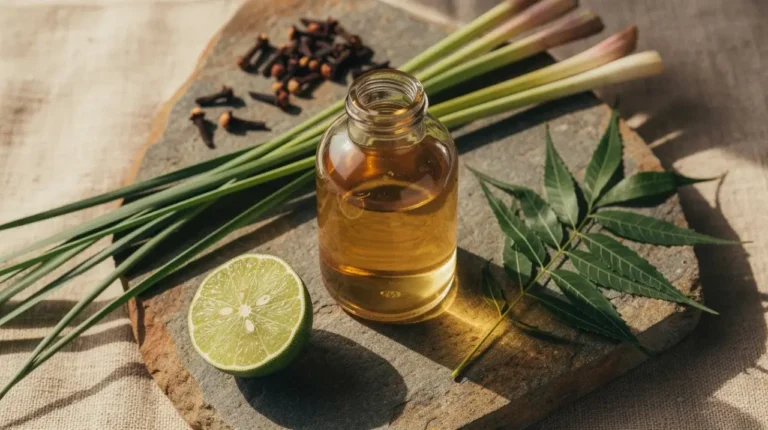
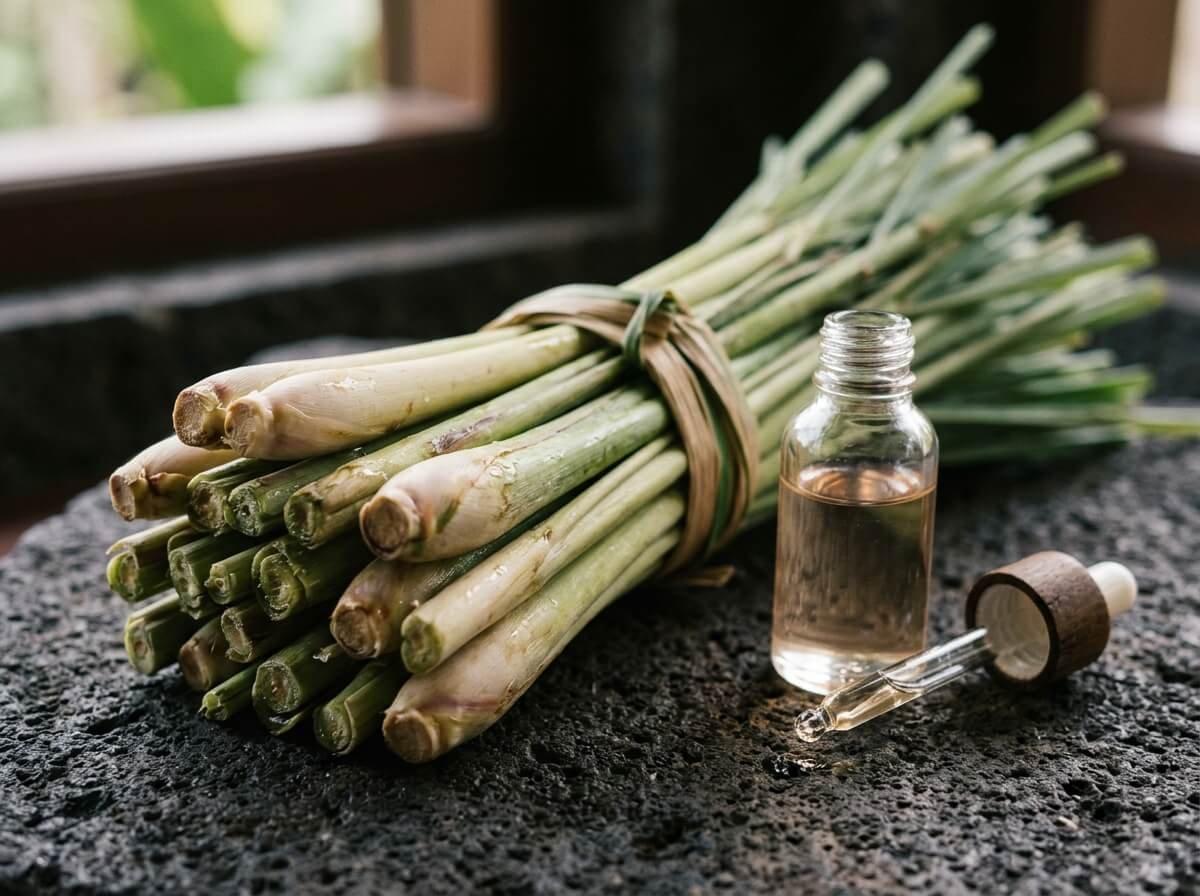
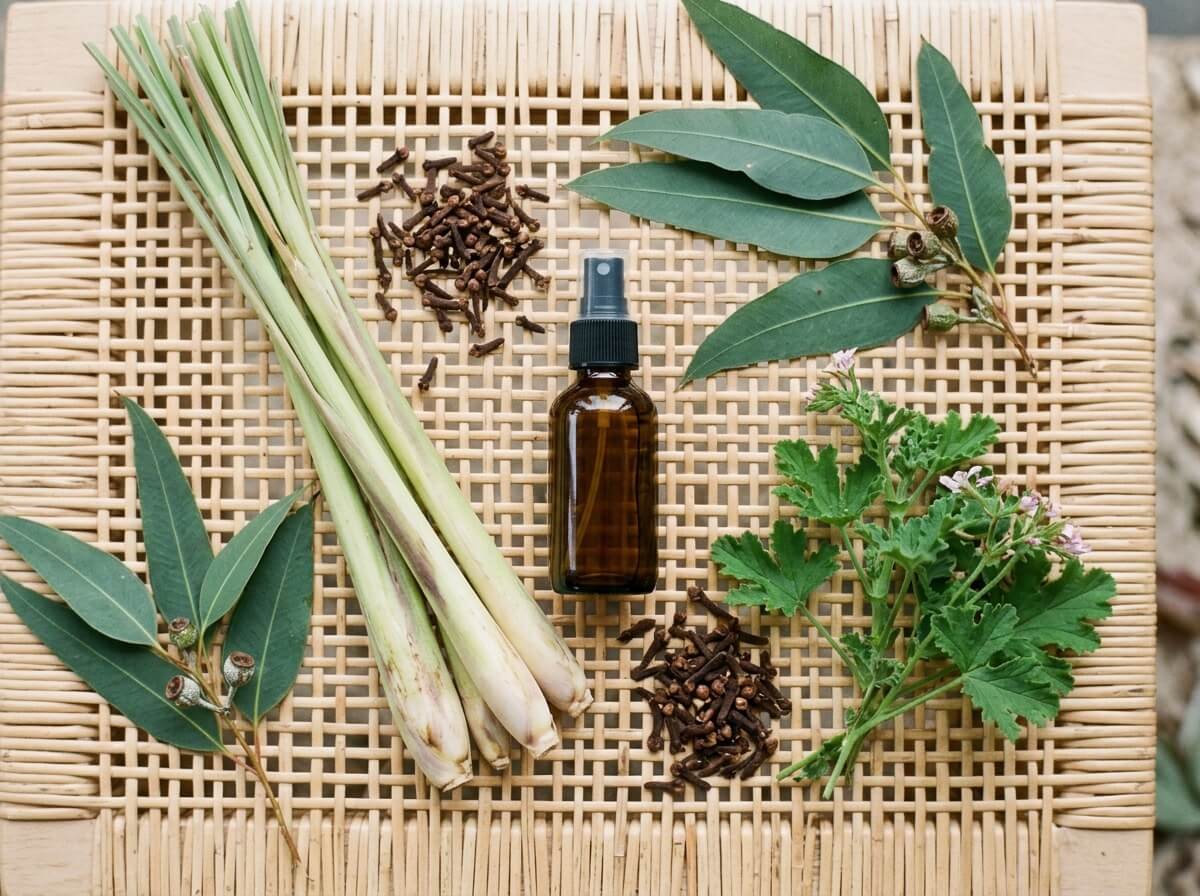
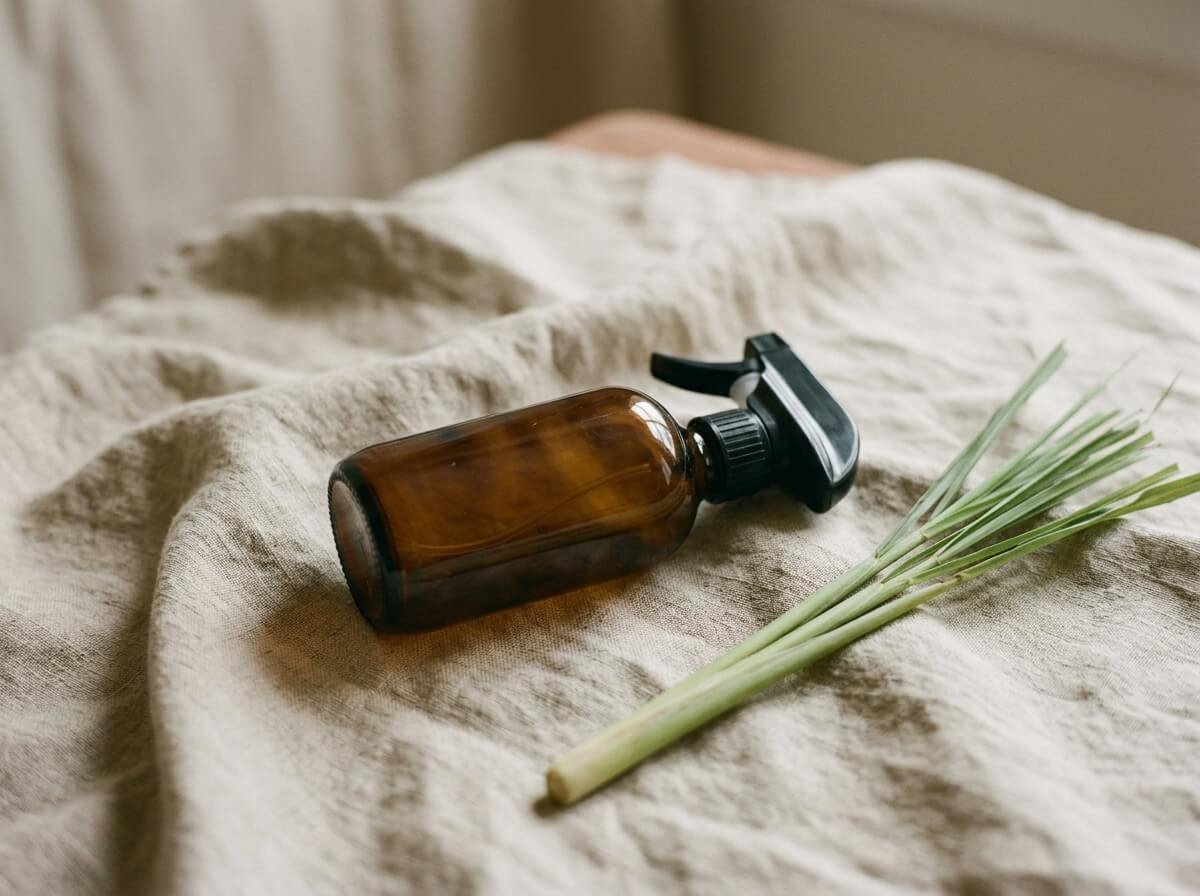
- Citronella. The classic, drawn from certain lemongrass species. It works by masking your scent signals, and it is genuinely effective, but it is short-lived. Expect meaningful protection measured in tens of minutes rather than hours, which is why citronella rewards frequent reapplication and pairs so well with candles and incense in a fixed space.
- Lemongrass. A close botanical cousin, rich in the same citral and geraniol chemistry. Bright, green, and sharp, it is one of the workhorses of tropical repellent blends. You can read more in our guide to lemongrass essential oil benefits.
- Lemon eucalyptus and its refined form, PMD. This is the strongest natural option by a clear margin. Oil of lemon eucalyptus, and the purified compound PMD derived from it, is the one plant-based active that public-health bodies list alongside DEET for longer protection. It can hold for several hours. The one caveat: it is not recommended for children under three.
- Geraniol and rose geranium. A sweet, rosy molecule with solid repellent activity and a gentler scent than citronella. Our note on rose geranium oil benefits covers its wider skin uses too.
- Clove and other spice oils. Eugenol-rich oils repel well but are potent and can irritate skin, so they belong in careful dilution, often supporting a blend rather than leading it.
- Peppermint and other mints. A useful supporting note that adds a cooling lift and some repellent action. See peppermint essential oil benefits for how to use it without overdoing the intensity.
A few other actives deserve a mention as they appear more often on labels. Soybean-oil-based formulas have shown surprisingly steady, moderate protection in trials, and the oil doubles as a skin-friendly carrier. Catnip oil, rich in a compound called nepetalactone, is an emerging repellent with real promise, though it is still less established than the classics. What all of these share is the same honest arc: genuine effect, real but limited duration, and better performance in a considered blend than alone. Quality and sourcing matter here too. An oil distilled carelessly, or cut with cheaper material, simply will not carry the active chemistry that does the work, which is why we distil and blend our own rather than buy on price.
The pattern is clear. Most single botanicals protect for a short stretch and benefit from company. This is why a thoughtful natural mosquito repellent is almost always a blend: several actives working across slightly different mechanisms, layered so that as one evaporates another is still on duty. It is also why the Balinese kitchen never relied on one plant alone, but on a small chorus of them.
What a natural mosquito repellent cannot do: the honest limits
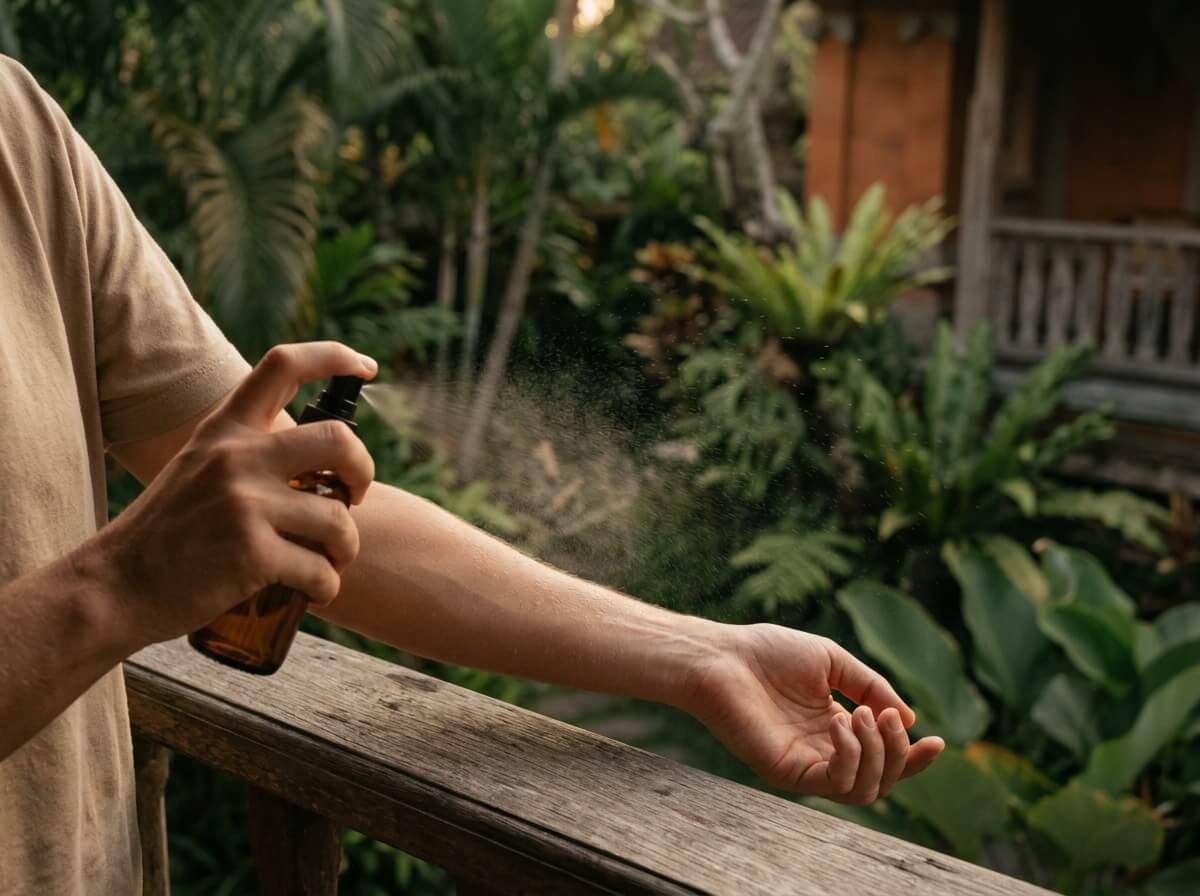
Here is where we part ways with the greenwashing. A botanical repellent is a fine choice for everyday comfort: an evening on the veranda, a garden dinner, a walk at dusk, a market trip. What it is not is a guarantee against mosquito-borne disease in a high-risk setting. If you are travelling in a region with active malaria, dengue, or other serious mosquito-borne illness, this is not the moment for progress over perfection. The caring, honest advice is to use a proven longer-lasting repellent, and to layer physical barriers like nets, screens, and covering clothing. Real care means telling you that plainly.
We are not against synthetics out of principle, either. DEET and picaridin are well-studied and have their place, especially where disease risk is real, and pretending otherwise would be its own kind of dishonesty. What we offer is a considered, plant-based choice for the far more common situation: everyday evenings where comfort, a light scent, and something you feel good wearing on your skin matter more than maximum duration. Knowing when each belongs is the whole of good sense here.
Even in low-risk everyday use, natural repellents ask more of you than a synthetic does. You will reapply more often, usually every one to two hours, and sooner if you are sweating or in water. Coverage has to be even; mosquitoes will find the patch of ankle you missed. And stronger is not always better, because the potent actives that repel best are also the ones most likely to irritate skin if you tip the dilution too high. The goal is a formula that is strong enough to work and gentle enough to wear daily, which is a narrower target than it sounds.
It is worth being clear about what a repellent is and is not, as well. A repellent keeps mosquitoes from landing and biting; it does not kill them, and it does nothing for bites you already have. If you are itching from last night, that is a job for a soothing balm or a cool compress, not for more repellent. Keeping those two needs separate saves you from over-applying an active in the hope it will calm skin it was never meant to treat.
One more honest note on “natural.” The word on a front label means very little on its own. A product can say natural and still lean on a token drop of citronella for scent while doing nothing at a functional dose. Turn the bottle over, read the actives, and look for real percentages and named oils. Truth in nature is not a slogan for us; it is the only way to judge whether a repellent will actually hold when the biting starts.
How to use a natural mosquito repellent safely
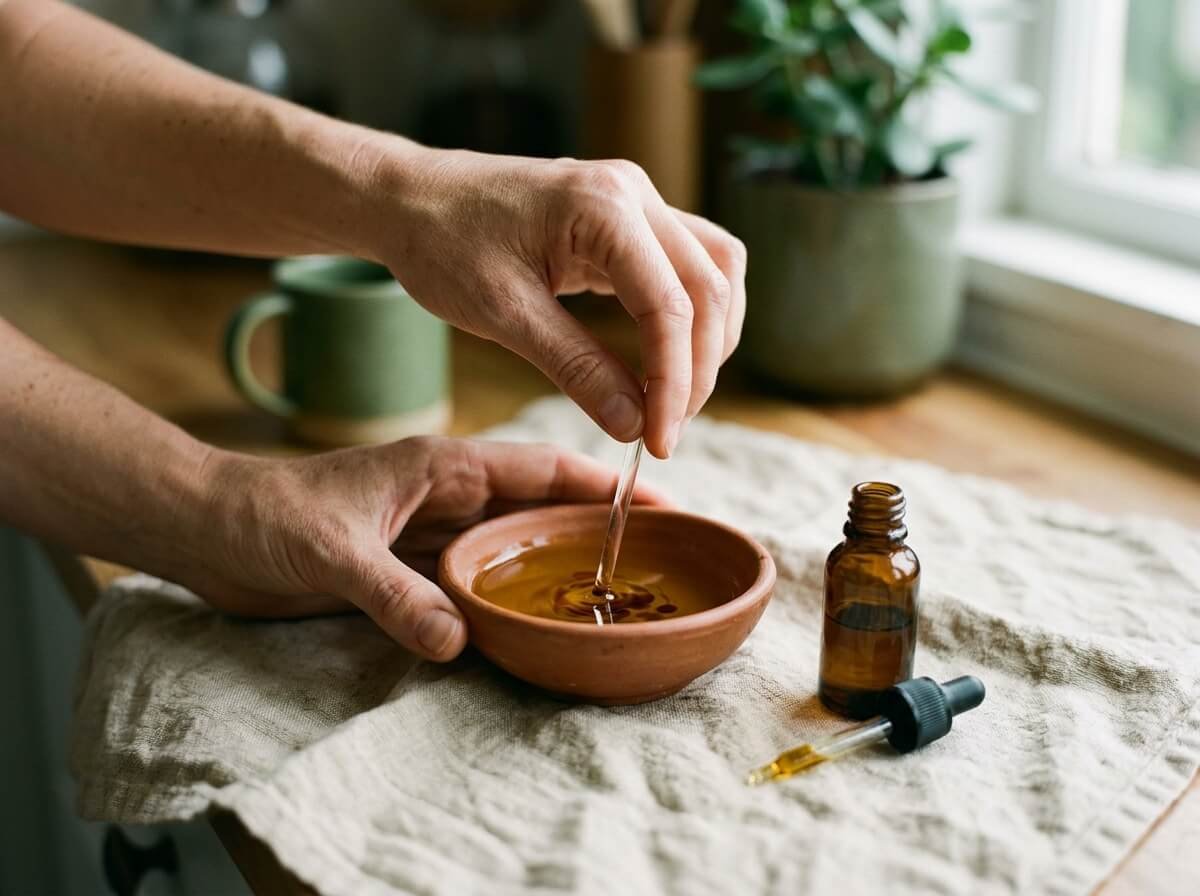
Safe use comes down to a few grounded habits. Never apply undiluted essential oils straight to skin. Repellent actives belong in a carrier, whether that is a water-and-alcohol spray base or a plant oil; if you blend your own, our guide to choosing a carrier oil is a good place to start. Patch test any new formula on your inner forearm and wait a day before wider use. Keep repellent away from eyes, lips, and broken skin, apply it to your hands first and then to a child’s skin rather than spraying directly at their face, and wash it off once you are indoors for the night.

If you like to blend your own, a little arithmetic keeps you safe. For an adult skin application, a total essential-oil concentration of around 2 to 4 percent is a sensible working range: that is roughly 12 to 24 drops of oil in every 30 millilitres of carrier. Go higher only briefly and only if your skin tolerates it, and always drop the concentration for children and sensitive skin. Shake before every use, since oil and water bases separate, and make small batches you will finish within a few weeks so the actives stay fresh. Ready-made formulas do this measuring for you and add stabilisers that keep the blend even, which is much of what you pay for in a good bottle.
Children, pregnancy, and sensitive skin all call for extra care. Lemon eucalyptus and PMD are not for children under three. Very young infants are best protected by physical barriers such as nets rather than any topical repellent. If you are pregnant or managing a skin condition, choose gentler, well-diluted blends and check with a professional when in doubt. Progress over perfection still means erring toward caution with the people who need it most.
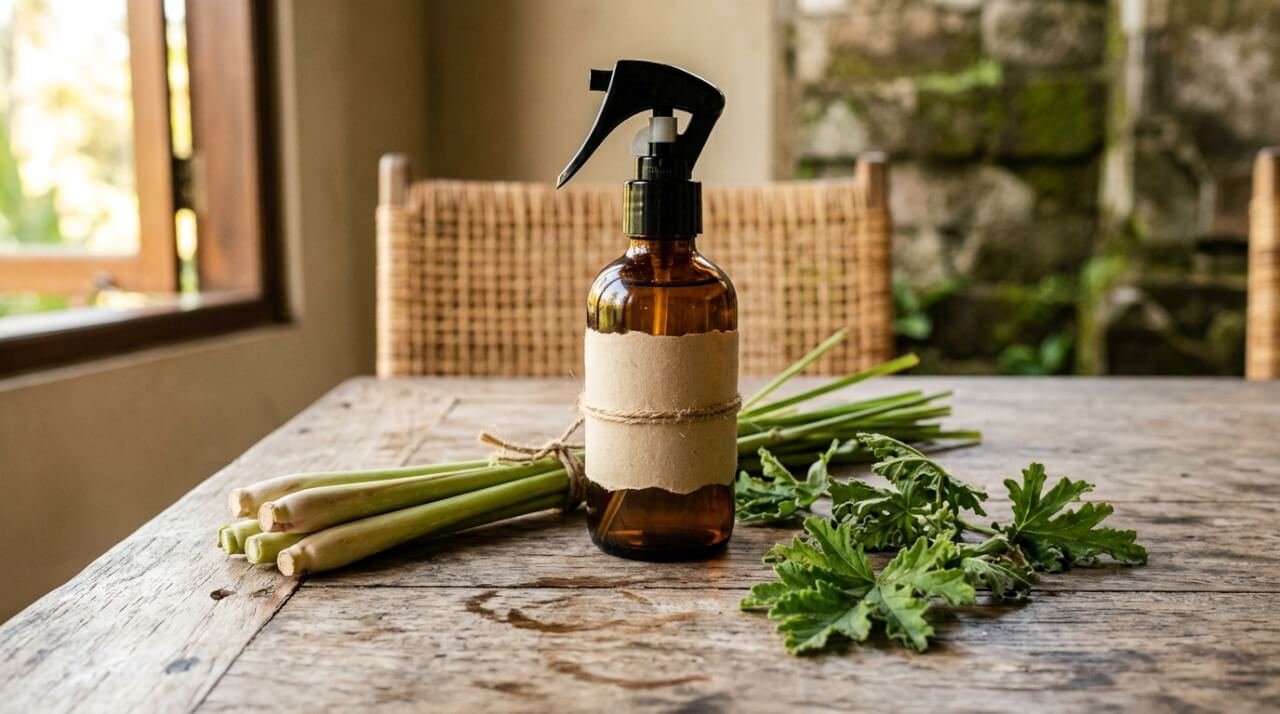
If you would rather not measure and mix, a ready-made blend takes the guesswork out. Our Begone Bug Spray is our botanical answer to Bali’s mosquitoes: a considered blend of repellent plant oils in a light, wearable base, formulated to work at a real dose and gentle enough for daily evening use. It travels well, and there is a compact 100ml size for a bag or carry-on, plus a refill can so you can top up the same bottle instead of buying another.

Begone Bug Spray: our botanical repellent, made in Bali
A wearable blend of repellent plant oils, formulated at a real dose and gentle enough for daily evening use. Hand-crafted in Bali, refillable, and honest about how it works.
Beyond the skin: candles, incense, and the Balinese way
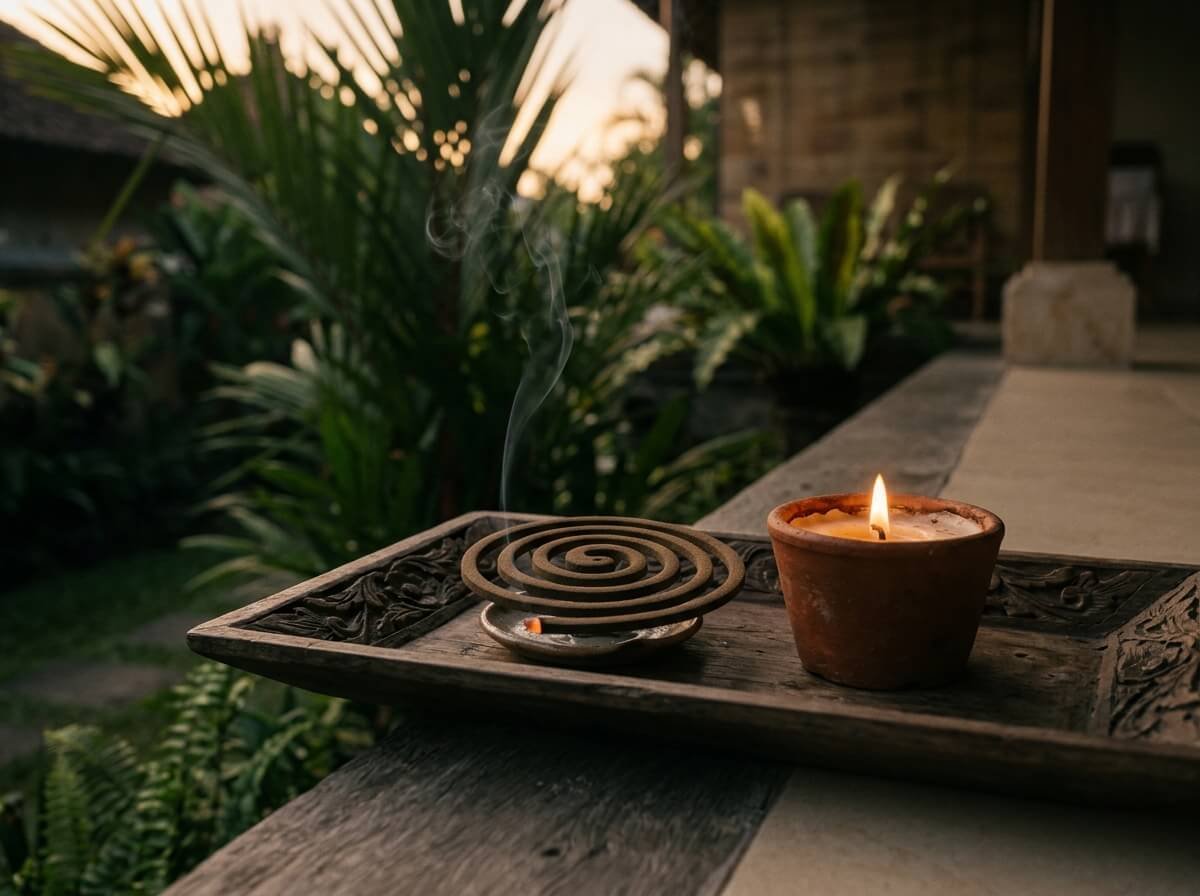
Skin is only half the story. In Bali, protection has always been a matter of scenting the space as much as the body. A repellent burning quietly in the corner of a veranda changes the whole evening, filling the air with citronella and lemongrass so mosquitoes drift elsewhere before they ever reach an ankle. This is the layered approach we grew up with, and it is genuinely effective in a still, enclosed space where the aromatic molecules can build up rather than blow away.
A botanical repellent candle is the gentlest of these, a soft ring of protection around a table for dinner or a slow morning outdoors. Begone Bug incense is the more traditional tool, a single stick that scents a porch or garden corner through an entire evening, the way Balinese households have done for generations. If you want to explore the wider craft of scenting a room well, our notes on choosing natural candles and on the best aromatherapy diffuser both go deeper.
Before any of this, though, the most effective step costs nothing: deny mosquitoes the water they breed in. Tip out saucers under plant pots, refresh pet bowls and bird baths, clear blocked gutters, and empty anything that holds still water after rain. A single forgotten bucket can hatch hundreds. Screens on windows, a net over the bed, and long, loose clothing at dusk do more heavy lifting than most people expect. Repellent, candle, and incense then become the finishing layer on top of a home that simply hosts fewer mosquitoes in the first place. This is the quiet, unglamorous half of the Balinese approach, and it is the half that matters most.
You can also build a repellent atmosphere with a diffuser and a considered blend of citronella, lemongrass, and a lifting citrus note; our diffuser blend recipes include options for exactly this. For a bright, clean addition to any air blend, the kaffir lime of Balinese cooking earns its place in the repellent kit too. Think of it as layering: spray or oil on the skin for direct contact, and candle, incense, or diffuser for the space around you. Together they cover far more than either does alone.
Natural mosquito repellent: frequently asked questions
Does natural mosquito repellent really work?
Yes, within honest limits. Actives like citronella, lemongrass, geraniol, and especially lemon eucalyptus genuinely repel mosquitoes when present at a functional dose. The catch is duration: most protect for a shorter window than a synthetic and need reapplication. For everyday comfort they work well; for high-risk disease settings, choose a proven longer-lasting option.
How often should I reapply?
As a rule, every one to two hours, and sooner if you are sweating, swimming, or towelling off. Reapplication is not a sign the product is weak; it is simply how volatile plant actives behave. Set the expectation, keep the bottle to hand, and you will stay comfortable.
Is natural repellent safe for children?
Generally yes, with care. Keep any repellent away from a child’s hands and face, apply it to your own hands first and then to them, and dilute properly. Lemon eucalyptus and PMD are not for children under three, and very young infants are best protected by nets and clothing rather than a topical product.
Which oil is the strongest natural repellent?
Oil of lemon eucalyptus, and its refined compound PMD, is the strongest plant-based active and the only one health bodies list alongside DEET for longer protection. Citronella and lemongrass are effective but shorter-lived, which is why blends that combine several actives tend to outperform any single oil.
Do citronella candles actually help?
In the right setting, yes. A candle or incense works best in a still, enclosed space where the repellent scent can build up, like a covered veranda. In open, breezy areas the effect thins out, so pair it with a spray or oil on the skin for reliable coverage.
Final thoughts
A natural mosquito repellent is a real and worthy tool, as long as you meet it on honest terms. Choose formulas built on proven actives at a serious dose, reapply on a sensible schedule, layer skin protection with a candle or incense for the space around you, and reach for stronger measures when the risk is genuinely high. That is not a compromise; it is simply care with its eyes open, the same care Balinese households have practised for generations.
None of this needs to be complicated. Keep a repellent you trust within reach, reapply without resenting it, scent your evening spaces with a candle or a stick of incense, and clear the standing water that invites mosquitoes in the first place. Match the tool to the risk, gentle for a garden dinner, serious for a high-risk trip, and you have a system that respects both your comfort and your health. Balinese households have refined exactly this rhythm across generations, not through a single miracle product but through steady, layered, everyday care.
What you give, you get back. Protect yourself thoughtfully, choose products that tell the truth about how they work, and keep refilling rather than throwing away. Small, grounded choices, made every evening, add up to comfort you can trust and a footprint you can live with.