Essential oils for muscle pain: warming, cooling, and how to use them safely
When a muscle aches, the whole day narrows to that one tight, complaining spot. It is one of the oldest kinds of discomfort we know, and one of the oldest things people have reached for plants to soothe. Long before the word aromatherapy existed, healers in Bali were warming ginger, clove, and other roots into pastes and pressing them into tired bodies after work in the fields. Essential oils for muscle pain sit inside that same lineage: concentrated plant compounds, used with care, to ease the feeling of tension and help the body settle. In this guide we look honestly at what these oils can and cannot do, which ones are worth keeping, how warming and cooling oils differ, and how to use them safely so relief never comes at the cost of irritated skin.
A quick, grounding truth before we begin. Aromatherapy is real care, but it is not a cure. Botanical oils can soften the experience of a sore back, a stiff neck, or legs that have carried you too far. They pair beautifully with the two things that genuinely move muscle recovery along: rest and touch. Everything here is written to help you use them well, not to promise more than a plant can give.
How essential oils for muscle pain actually work
Muscle discomfort usually comes from one of a few places: the small strain of overuse, the tightness of holding one position too long, or the dull ache that follows a hard day of movement. The muscle fibers are not damaged in any dramatic way, they are simply tense, a little inflamed, and asking for attention. This is where botanical oils earn their place.
Essential oils work along three honest, well-understood paths. The first is sensory. Warming and cooling compounds, such as the gingerols in ginger or the menthol in mint, interact with the temperature-sensing nerve endings in your skin. They do not change the muscle underneath, but they change the message your brain receives from the area, and that shift in sensation can quiet the feeling of pain. The second path is circulatory. A warming oil, massaged in, encourages blood to move toward the surface, which many people experience as a loosening, softening warmth. The third, and perhaps the most underrated, is the nervous system. Scent travels quickly to the parts of the brain that govern stress and rest, and a calmer nervous system holds less tension in the body.
It helps to know what kind of soreness you are dealing with, because the two most common types respond a little differently. The first is the immediate tightness of overuse or a held position, the stiff neck after a day at a screen or the cramped calf after a long walk. This kind of tension eases quickly with warmth and gentle movement. The second is the delayed ache that arrives a day or two after unfamiliar effort, the tender, heavy feeling in muscles you worked harder than usual. That one needs time above all, and botanical oils are there to make the waiting more comfortable rather than to hurry it along. Naming which one you have makes it easier to choose the right oil and, just as importantly, the right expectation.
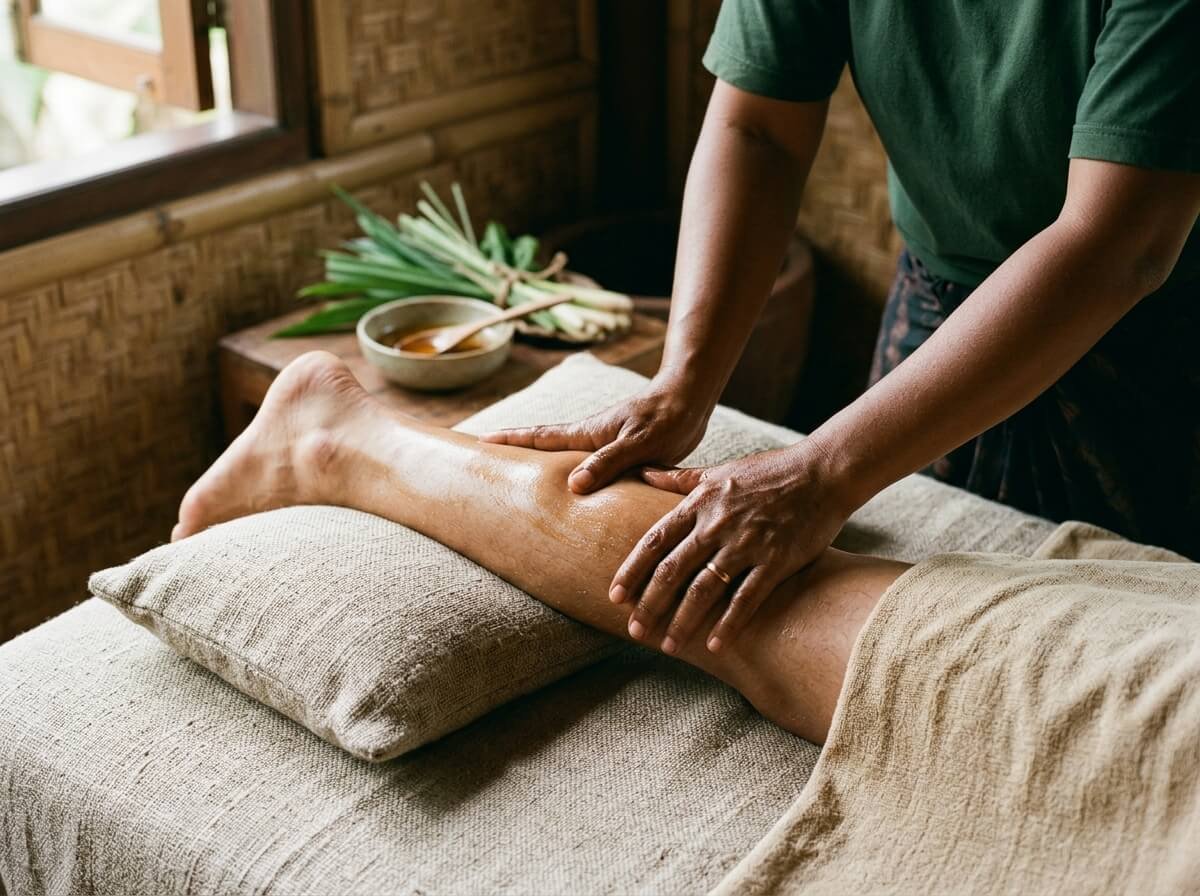
None of this happens in a vacuum. The single biggest reason an oil helps a sore muscle is that applying it means someone is massaging the area, slowly and with intention. The oil gives the hands something to glide with, and the ritual of the massage does much of the work. If you want to understand that side of the tradition more deeply, our guide to Balinese massage oil walks through how the botanicals and the touch work together.
Warming or cooling: two ways to meet a sore muscle
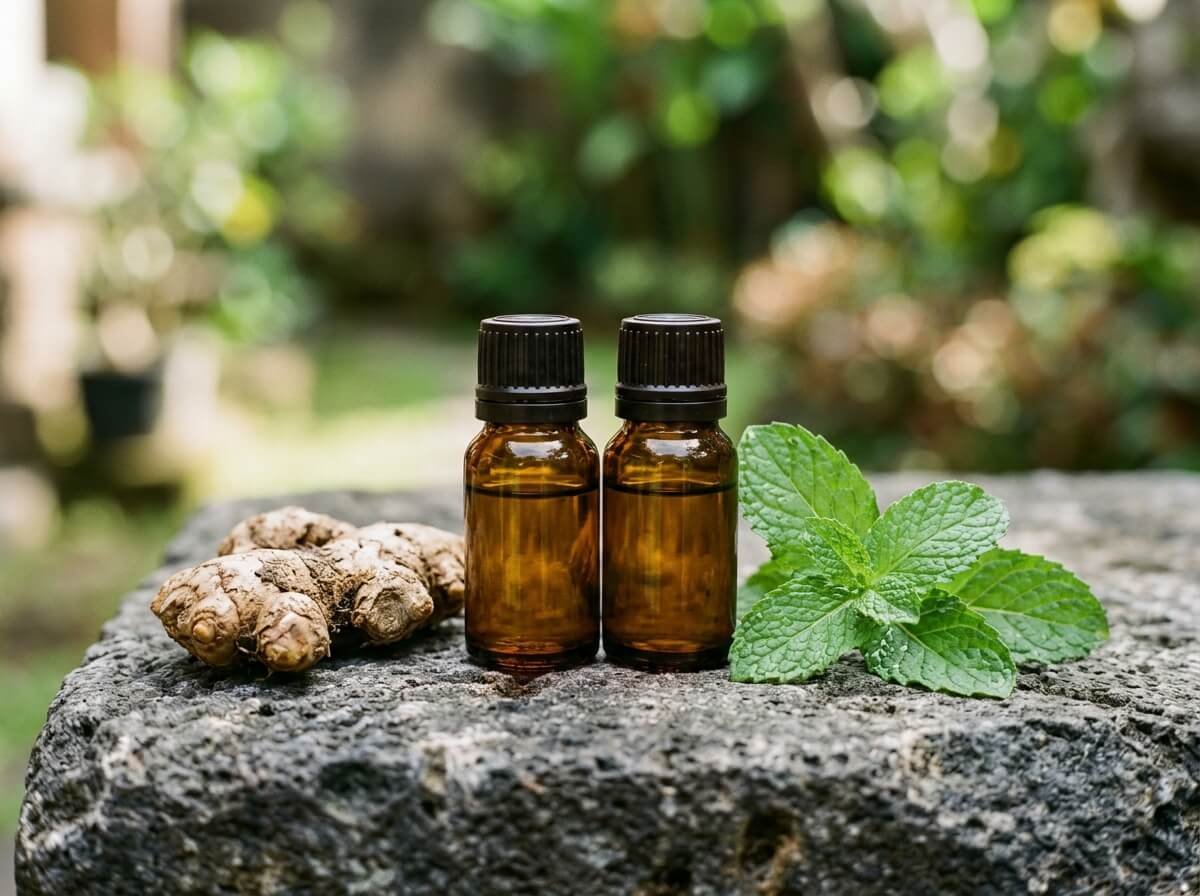
Almost every oil people reach for falls into one of two camps, and knowing which you want saves a lot of guesswork. Warming oils bring heat and circulation. Cooling oils bring a fresh, numbing lightness. The right choice depends less on the oil and more on what your muscle is telling you.
Reach for warming oils when the ache is deep, stiff, and old. Think of the tightness that comes from cold weather, from sitting too long, or from a muscle that has seized up and will not let go. Warmth invites the area to soften and open. Ginger, black pepper, and warming spice oils belong here. This is the same logic behind the traditional Balinese boreh paste, a warming blend of ground roots pressed into aching bodies for generations.
Reach for cooling oils when the discomfort is sharp, hot, or recent, such as the sting after a long run or an overworked shoulder that feels inflamed. Cooling compounds create a bright, distracting freshness that eases the sensation without adding heat to an already irritated area. Peppermint and its relatives lead this group. A useful rule of thumb: if warmth feels good on the spot, choose a warming oil, and if you instinctively want something cool against it, choose a cooling one. Your body is usually right.
Some blends carry both, a warming base with a cooling top note, which is why so many traditional massage oils feel complex on the skin. There is no single correct answer, only the one that suits the muscle in front of you today.
There is a sensory logic here worth trusting. Warmth reads to the body as comfort and permission to let go, which is why a warming oil on a stiff shoulder can feel like a slow exhale. Cool reads as relief and alertness, a small resetting of an area that feels overheated and overworked. Neither is stronger than the other, they simply speak different languages to the nervous system. Over time you learn your own preferences, and part of the pleasure of keeping a few oils at home is discovering which one your body reaches for on a given evening.
The best essential oils for muscle pain
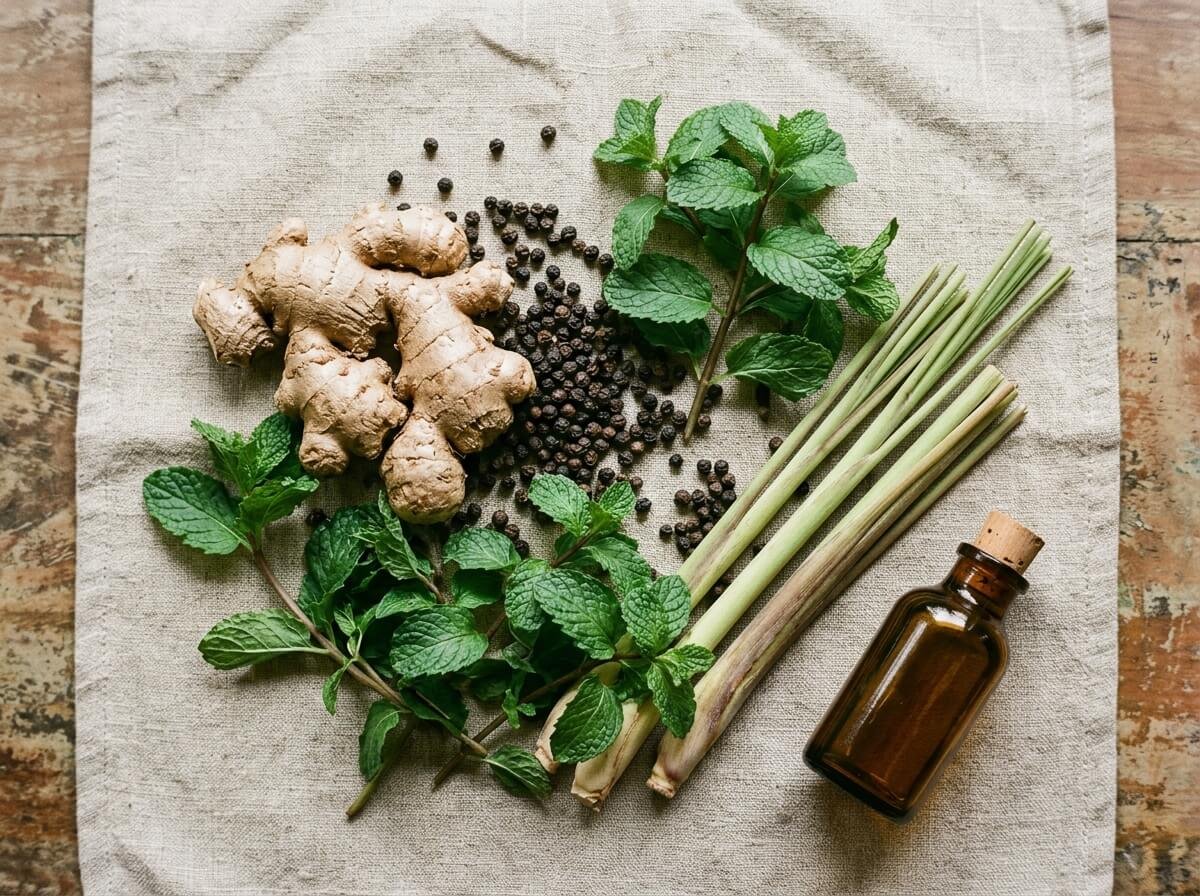
You do not need a shelf of 20 bottles. A handful of well-chosen oils covers almost every kind of everyday ache. Here are the ones we return to, and why.
- Ginger. The warming workhorse. Ginger has been used for aches and pains for a thousand years, and its warming, circulation-friendly character makes it a natural first choice for stiff, cold, tired muscles. Our Ginger Essential Oil carries that woody, peppery warmth, and you can read more about its chemistry in our deep dive on ginger essential oil benefits.
- Black pepper. A close cousin to ginger in feel. Warming, grounding, and often blended with ginger for deep, stiff tension across the lower back and shoulders.
- Peppermint. The cooling classic. Its menthol gives that clean, bright freshness that suits hot, recently overworked muscles. If you want to know which mint is actually in your bottle, our piece on peppermint essential oil benefits explains the difference.
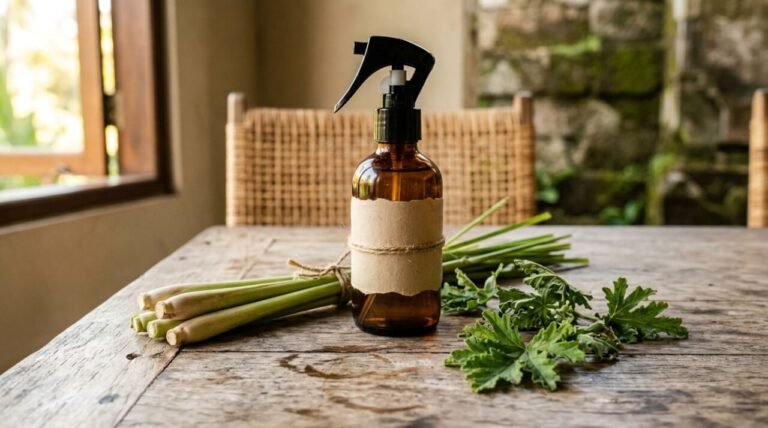
- Lemongrass. Light, herbaceous, and quietly soothing, lemongrass is a lovely partner in a muscle blend and doubles as an uplifting scent. Our Lemongrass Essential Oil is a good place to start, and there is more in our guide to lemongrass essential oil benefits.
- Marjoram and rosemary. Both have a long folk history with tired, overworked muscles. Rosemary brings a green, rousing sharpness, while marjoram is warmer and more comforting.
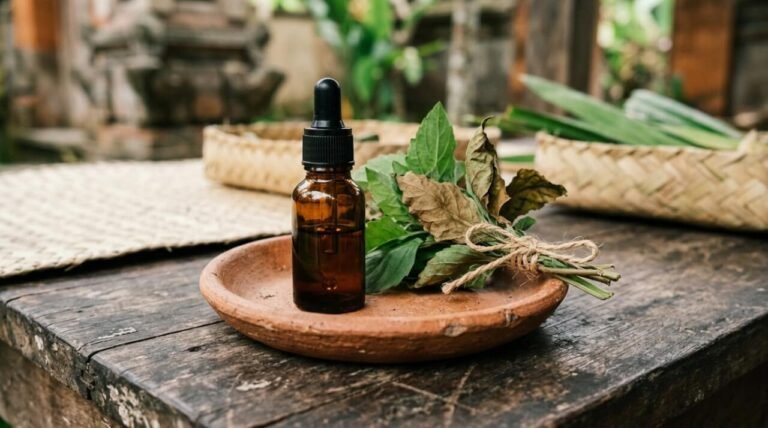
- Clove. Intensely warming and best used in tiny amounts inside a blend, clove adds depth to a warming massage oil for stubborn, deep-seated stiffness.
Notice a pattern. The most trusted oils for muscle pain are the warming spices and the cooling mints, the same botanicals that generations of Balinese and Indonesian healers pressed into working bodies. The tradition and the chemistry point in the same direction.
The Balinese way: boreh, touch, and ritual
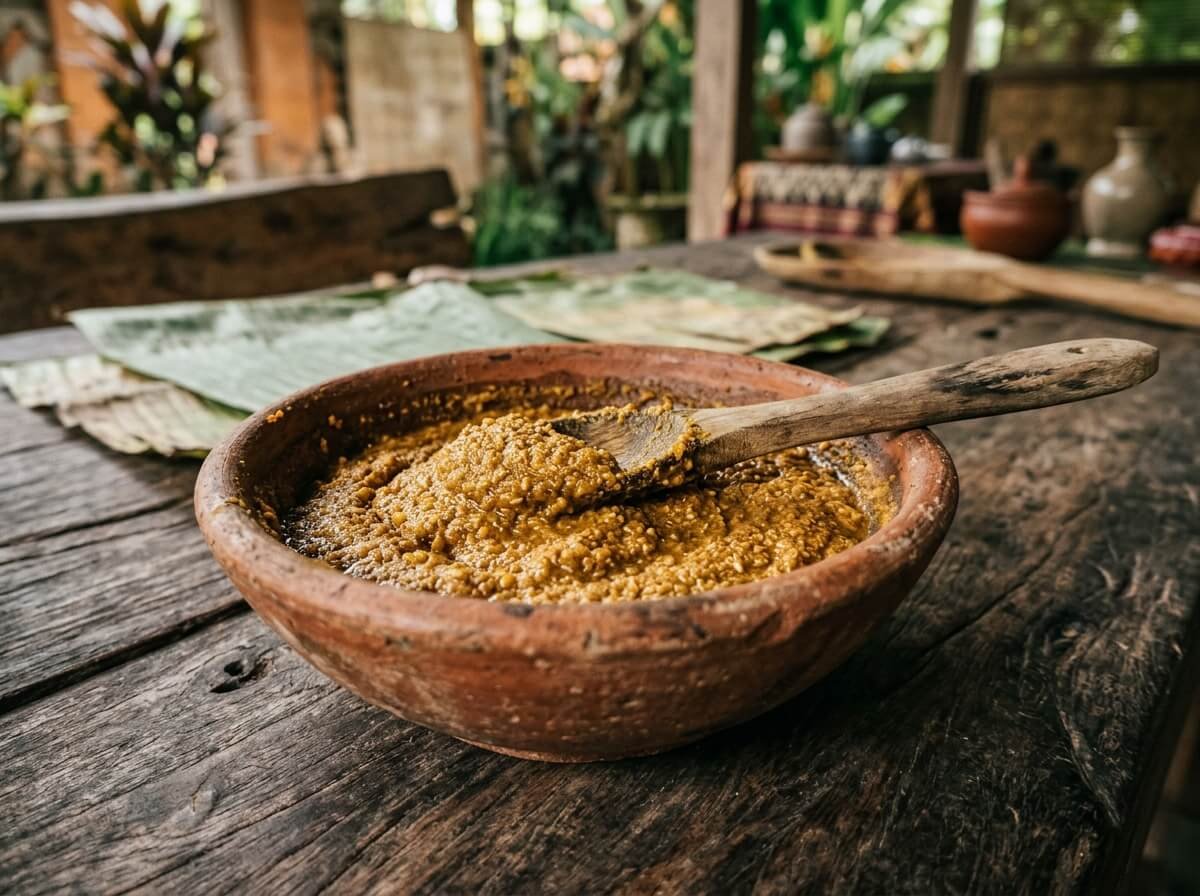
In Bali, easing a sore body was never a quick fix sprayed on and forgotten. It was a practice. After long days in the rice fields, farmers would have a warming boreh paste of ground ginger, clove, and other roots massaged into their backs and legs. The heat drew out the stiffness, the massage released the tension, and the shared act of care mattered as much as the botanicals. This is the heart of what we mean by ritual, care as something you do with attention, not something you rush.
What makes this tradition worth honoring is that it treats the body as part of a whole. The roots came from the same soil that fed the family, ground by hand, warmed with intention, and shared between people who knew each other. There is a quiet wisdom in that, and it sits close to how we think about craft at Utama Spice. We have hand-blended botanicals in Bali since 1989, and the same belief that started in Melanie Templer’s Ubud kitchen still holds: what you put on your body should come from a place that also nourishes it. When you warm an oil between your palms before a massage, you are not just softening a texture, you are stepping into a lineage of care that stretches back generations.
You can bring that spirit home without any special training. Choose your oil for the kind of ache you have, dilute it properly, warm a little between your palms, and take five slow minutes to work it into the muscle. Breathe. The point is not to fix yourself efficiently, it is to reconnect with a body that has been carrying you all day. If you enjoy this kind of small daily practice, the same principle guides our thinking on the foot massage you have been skipping.

For a ready-made place to start, a single warming oil like ginger is hard to beat. It carries centuries of use, blends easily with a carrier, and turns any evening into a small ritual of restoration.

Warmth in a bottle, rooted in Bali
Our Ginger Essential Oil brings a woody, peppery warmth that has soothed tired bodies for a thousand years. Blend a few drops into a carrier oil, warm it between your palms, and let the ritual do the rest.
How to use essential oils safely on sore muscles
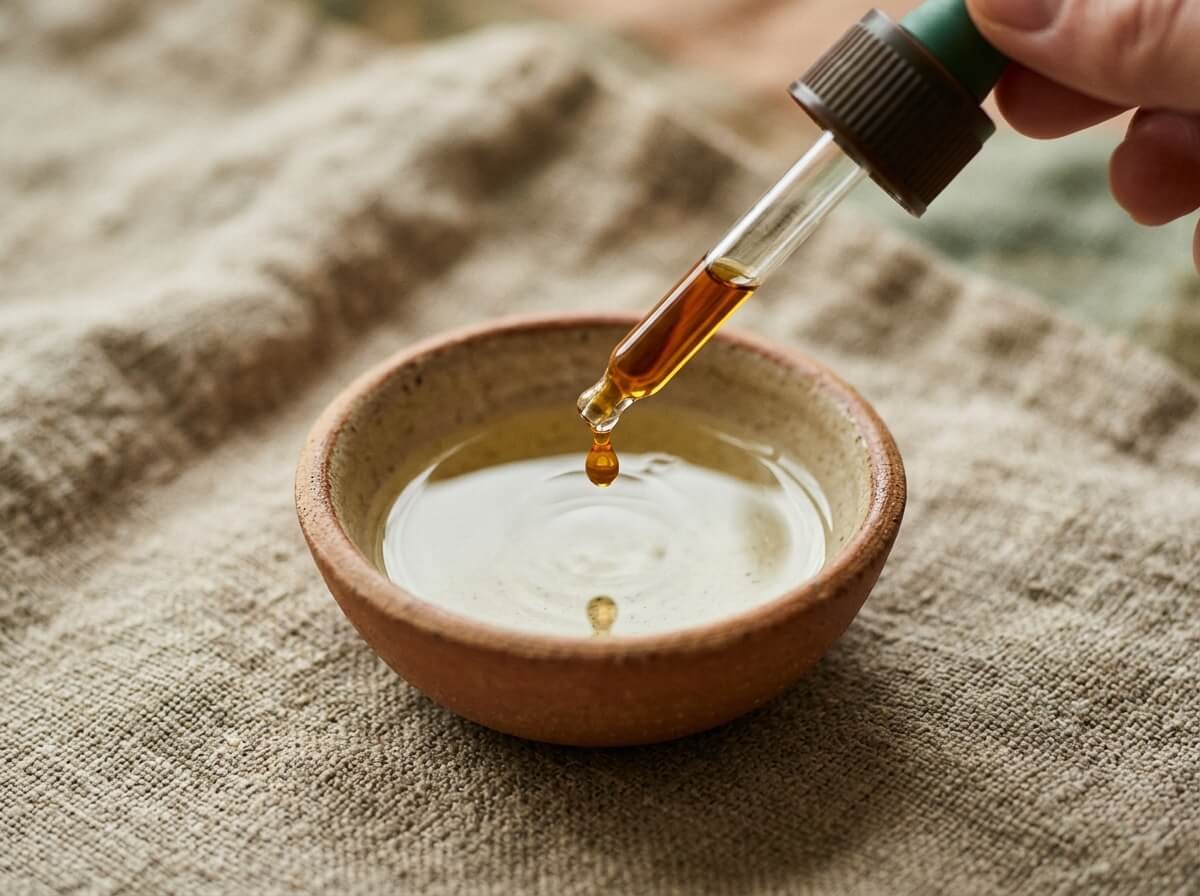
This is the part that matters most, and the part most guides rush past. Essential oils are concentrated. A single drop holds the aromatic strength of a great deal of plant material, and applied undiluted to skin, warming and cooling oils can burn, sting, or sensitize. The one rule that organizes all the others: never put a neat essential oil straight onto your skin. Always dilute it first in a carrier oil.
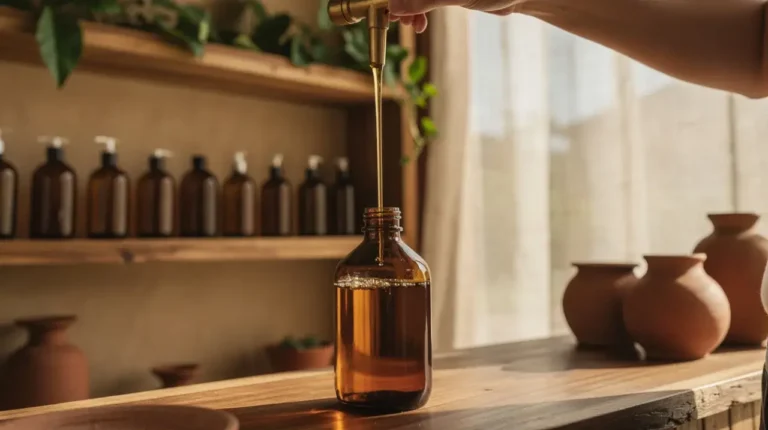
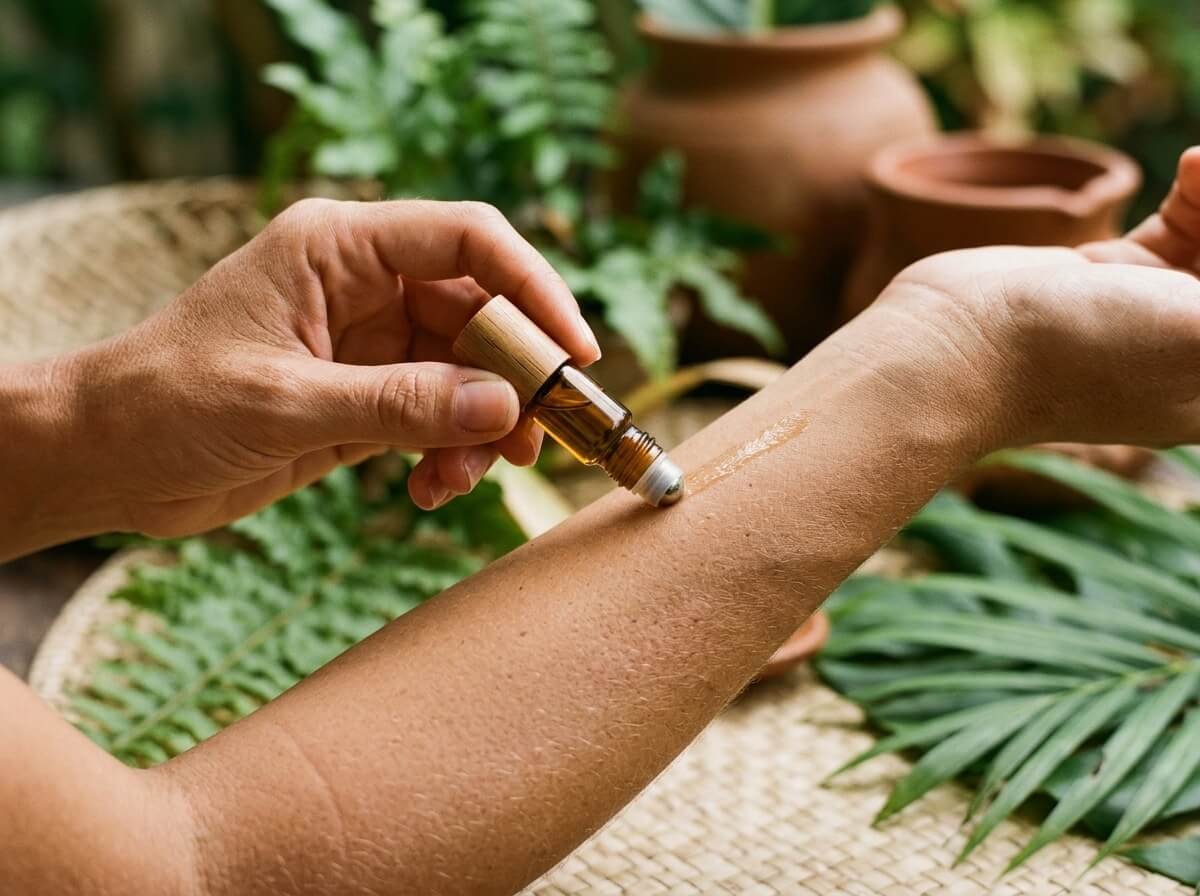
A carrier oil is a gentle, skin-friendly base such as coconut, jojoba, or sweet almond. It carries the active oil safely across a wider area, and it is what lets your hands glide during a massage. For most adults, a dilution of around 2% to 3% works well for a targeted sore area, which is roughly 12 to 18 drops of essential oil in 30 ml of carrier. Start lower and build up. If you are new to carriers, our guide to the best carrier oil to mix with essential oils and our overview of natural body oils both explain how to choose one for your skin.
A few more honest safeguards, worth reading once and remembering:
- Patch test first. Apply your diluted blend to a small area on your inner forearm and wait 24 hours before using it more widely.
- Keep warming oils away from delicate areas. Ginger, clove, and black pepper should stay well clear of eyes, broken skin, and sensitive areas. Wash your hands after applying.
- Take care in pregnancy and with children. Several oils, including some listed here, are not suitable during pregnancy or for young children. When in doubt, ask a qualified practitioner.
- Cooling oils and small children do not mix. Menthol-rich oils like peppermint should not be used on or near the faces of infants and young children.
- Never take essential oils internally, and stop use if any irritation appears.
One more piece of honesty belongs here. Essential oils are for the everyday aches of a well-used body, not for pain that is severe, sudden, or lingering. If a muscle pain is sharp, does not ease over a few days, follows an injury, or comes with swelling, numbness, or weakness, that is a sign to see a healthcare professional rather than reach for a bottle. Real care includes knowing the limits of what a plant can do. Used within those limits, botanical oils are a gentle, grounding way to tend to yourself.
If you would rather not blend from scratch, a pre-diluted product takes the guesswork out. A cooling body balm such as our Fresh Soul Body Balm is already formulated at a safe strength, so you can simply warm it in your hands and apply.
Simple blends for tired, aching muscles
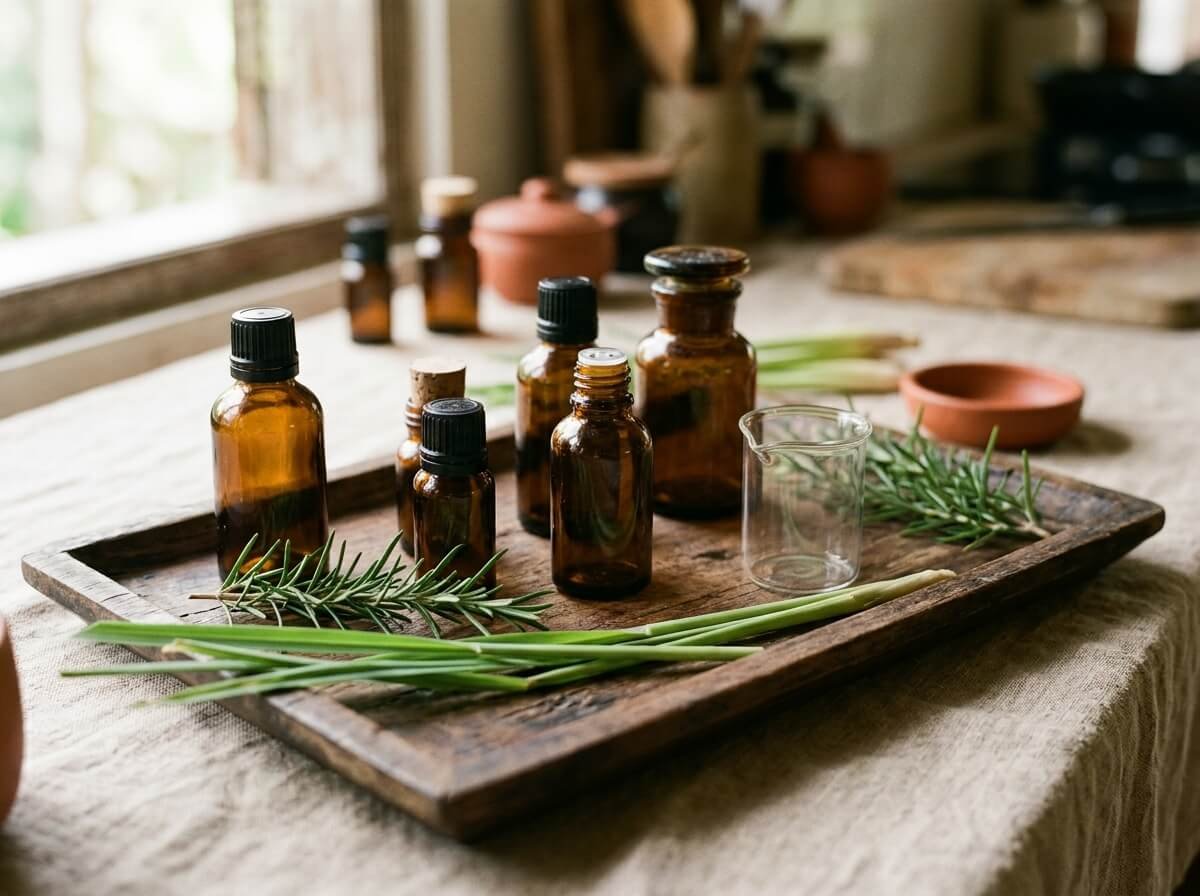
Once you are comfortable diluting, blending your own massage oil is simple and quietly satisfying. Each of these recipes fits into 30 ml of carrier oil, kept in a small dark glass bottle. Shake gently before each use, and remember to patch test any new combination.
- Warming evening blend. Eight drops ginger, four drops black pepper, and four drops lemongrass in 30 ml of carrier oil. Deep, warming, and grounding, this suits stiff shoulders and a tired lower back after a long day.
- Cooling recovery blend. Six drops peppermint, four drops rosemary, and three drops lemongrass in 30 ml of carrier oil. Bright and fresh, this one is made for hot, recently worked legs and feet.
- Balanced all-rounder. Five drops ginger, five drops peppermint, and three drops marjoram in 30 ml of carrier oil. A warming base with a cooling lift, useful when you cannot quite decide what the muscle wants.
Do not overlook the scent while you blend. The aroma is not a side effect, it is part of how the oil works, reaching the parts of the brain that govern stress and rest. A warming, spicy blend suits a wind-down before sleep, while a fresh, minty one lifts a heavy afternoon. Choosing a combination you genuinely enjoy smelling makes the ritual something you look forward to, and a ritual you return to is one that actually helps. If building scent combinations interests you, our guide to lemongrass essential oil benefits is a good companion read on pairing bright, herbaceous notes.
For an even gentler option, you can add a few drops of your chosen oil to an unscented base such as a plain body oil. A ready-made carrier like our Rose Allure Body Oil gives you a nourishing base to build on, and a small drop of Mint Essential Oil turns it into a cooling after-exercise rub. Keep your blends small, use them within a few months, and store them away from heat and light so the botanicals stay fresh.
Frequently asked questions about essential oils for muscle pain
What is the single best essential oil for muscle pain?
There is no one answer, because it depends on the ache. For deep, stiff, cold tension, a warming oil like ginger is a reliable first choice. For hot, freshly overworked muscles, a cooling oil like peppermint tends to feel better. If you want one bottle to cover most situations, warming ginger is the most versatile place to start.
Can I apply essential oils directly to a sore muscle?
No. Essential oils are highly concentrated and should always be diluted in a carrier oil before touching skin. Neat application can cause burning, stinging, or long-term sensitivity, especially with warming and cooling oils. Aim for roughly a 2% to 3% dilution for a targeted area.
How often can I use a muscle massage oil?
A properly diluted blend can usually be used two or three times a day on the same area for short periods. Watch how your skin responds, take breaks, and stop if you notice any redness or irritation. Less, applied with a slow massage, often works better than more.
Do essential oils actually heal muscle damage?
No, and we will always be honest about that. Essential oils ease the sensation of discomfort and support the ritual of rest and massage, but they do not repair a strained or injured muscle. Genuine recovery comes from rest, gentle movement, and time. For any severe, sudden, or lasting pain, see a healthcare professional.
Which oils should I avoid during pregnancy?
Several oils commonly used for muscles, including rosemary, clove, and some warming spices, are best avoided in pregnancy. If you are pregnant or breastfeeding, do not assume an oil is safe simply because it is natural. Speak with a qualified aromatherapist or your doctor before use.
Warming or cooling: which should I choose after exercise?
Straight after intense exercise, when muscles feel hot and worked, a cooling oil like peppermint usually feels most welcome. Later, once the heat has settled and stiffness sets in, a warming oil like ginger helps loosen the area. Let the sensation you crave guide the choice.
Soothing a sore body has always been a small act of care, one that connects tradition, plants, and touch. Choose your oil for the ache in front of you, dilute it with respect, and give the massage the few unhurried minutes it deserves. That is where the real relief lives, in the ritual as much as the botanicals. What you give your body, it tends to give back.