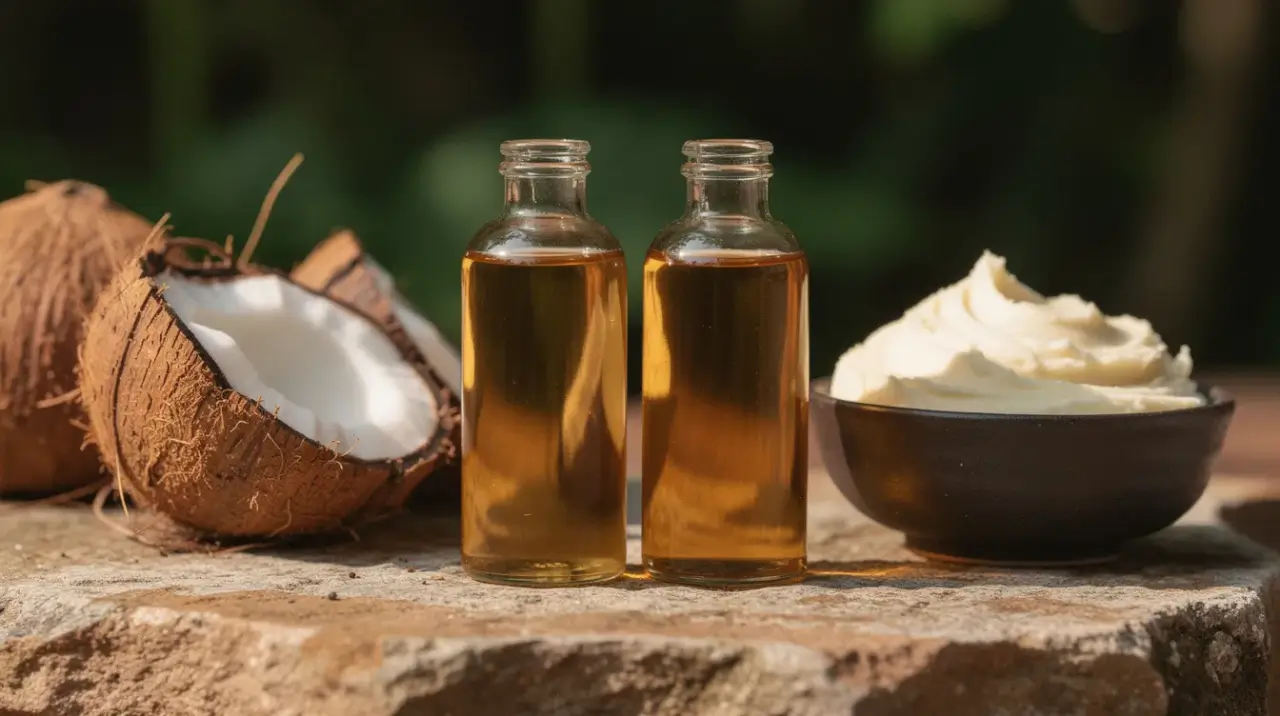
Coconut oil vs illipe butter: which Balinese base your skin actually wants
When you look at the ingredients in a good body butter or a Balinese skin oil, two names come up again and again: coconut oil and illipe butter. Both are plant-derived. Both are used in natural skincare with long traditions behind them. And both are bases that Utama Spice has worked with since the early years of the brand. So when people ask which one their skin actually wants, the honest answer is: it depends on what you are asking each ingredient to do. This guide walks through what coconut oil vs illipe butter actually means at the molecular level, in the field where they are sourced, and on your skin where it matters most.
Neither ingredient is better in absolute terms. They have different structures, different textures, different absorption speeds, and different histories. Choosing between them is less about trend and more about skin type, climate, and the kind of care your skin needs right now. What follows is the information you need to make that choice with confidence.
Coconut oil: Bali’s most versatile botanical base
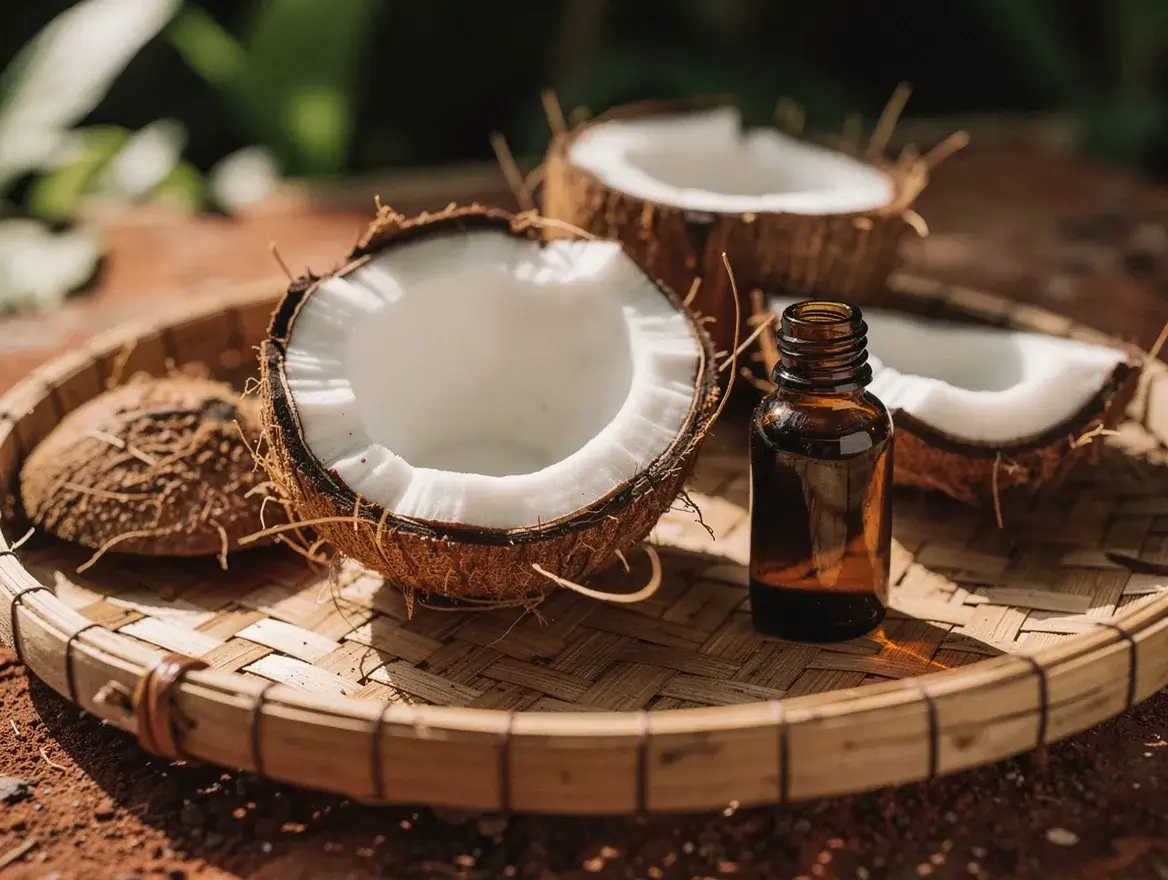
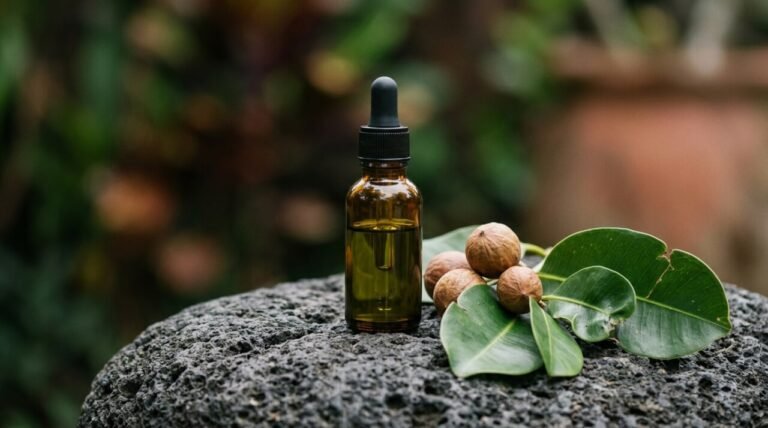
Coconut oil comes from the flesh of the coconut, cold-pressed to preserve the fatty acid profile that makes it so useful in skincare. Utama Spice sources its coconut oil through the Aluan Partnership, working with sustainable coconut plantations in Bali. That sourcing relationship matters: it supports local agricultural livelihoods and ensures the oil is extracted without chemical solvents, which can degrade both quality and the surrounding environment.
At a molecular level, coconut oil is dominated by medium-chain saturated fatty acids. Lauric acid (around 47% of its composition) gives it natural antimicrobial properties. Caprylic and capric acids round out the profile with additional antimicrobial and skin-softening effects. Because these chains are shorter, they penetrate the outer layers of the skin more easily than longer-chain fats, which is why coconut oil is sometimes described as a “fast” oil.
Coconut oil is solid at room temperature (below about 24°C) and melts on contact with skin, which is part of why it has always been used in balms, body butters, and massage blends across tropical cultures. In Bali, it has been a household staple for generations: used on hair, on the body after bathing, in cooking, and as a base for herbal preparations.
The one nuance worth naming honestly: coconut oil has a comedogenic rating of three to four on a scale of five, which means it has a moderate-to-high potential to clog pores for certain skin types, particularly on the face. This does not mean it is bad, it means it belongs on the body more than the face for most people. On our complete guide to using coconut oil on skin, we go deeper into where it works well and where caution applies. For the body, especially the arms, legs, and hands, coconut oil is one of the most effective and accessible bases in natural skincare.
Its versatility also makes it ideal as a carrier oil in formulations: it blends smoothly with essential oils, absorbs at a medium pace, and has good shelf stability thanks to its saturated fat content. That stability means a well-formulated product will not go rancid quickly, which matters for quality and for reducing waste.
Illipe butter: the wild-harvested fat from Kalimantan’s rainforest
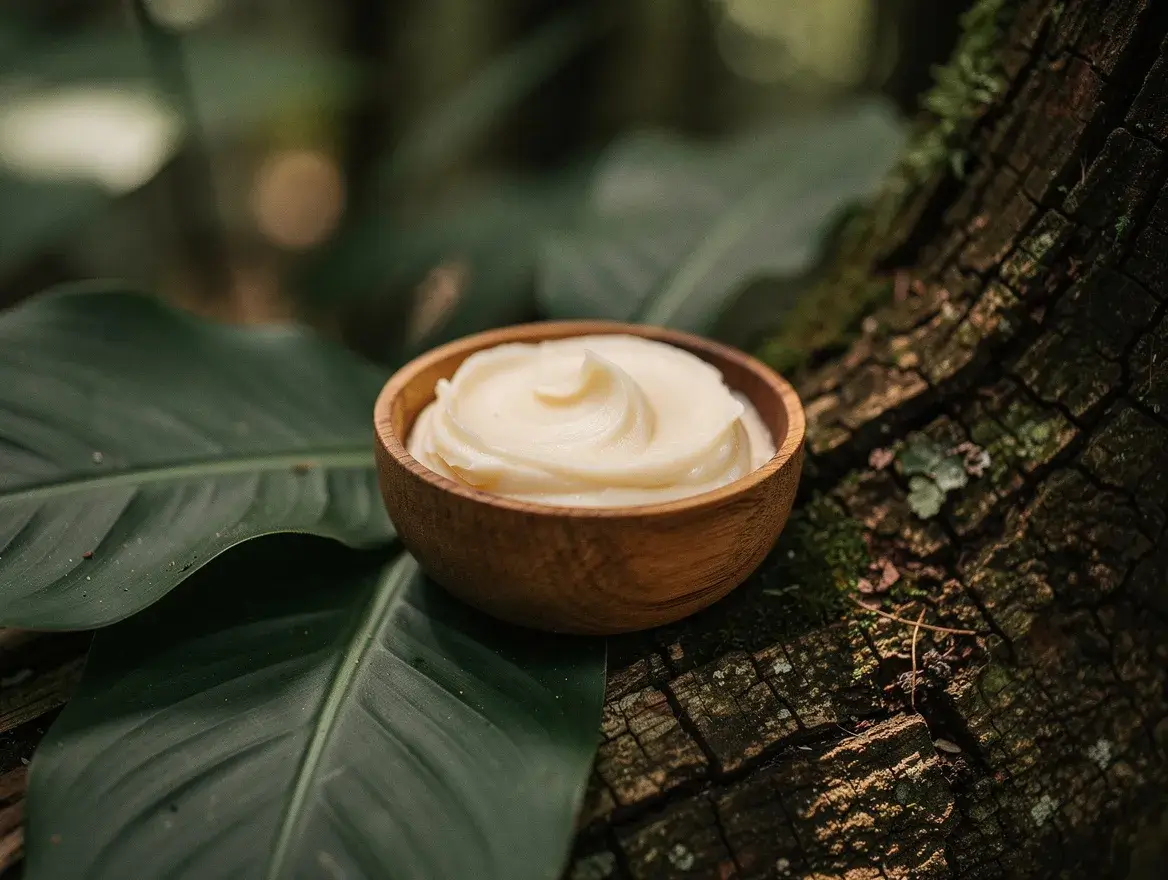
Illipe butter is extracted from the nut of the Shorea stenoptera tree, a species that grows in the rainforests of Kalimantan, the Indonesian portion of Borneo. Unlike coconut oil, which is pressed from cultivated crops, illipe butter comes almost entirely from wild trees. Utama Spice sources illipe butter through the Forestwise Partnership, a regenerative sourcing network that works with families who have harvested from the same forest groves for generations.
This is not a farming relationship. The trees grow wild, and the harvest happens when the nuts fall. The families who collect them are protecting the forest as they earn from it: a genuinely circular relationship between livelihood and ecosystem. When you use a product with illipe butter in it, the sourcing chain connects directly to rainforest conservation. That is not a marketing line; it is the structural logic of the Forestwise model.
At the molecular level, illipe butter looks quite different from coconut oil. Its fatty acid profile is dominated by stearic acid (around 40 to 50%) and oleic acid (around 35%), with very little lauric acid at all. Stearic acid is a long-chain saturated fat that behaves differently on skin: it melts at or just below skin temperature, which gives illipe butter a melt-on-contact feeling that is richer and slower than coconut oil. Oleic acid penetrates deeply and is one of the key fatty acids for barrier restoration, particularly on dry or compromised skin.
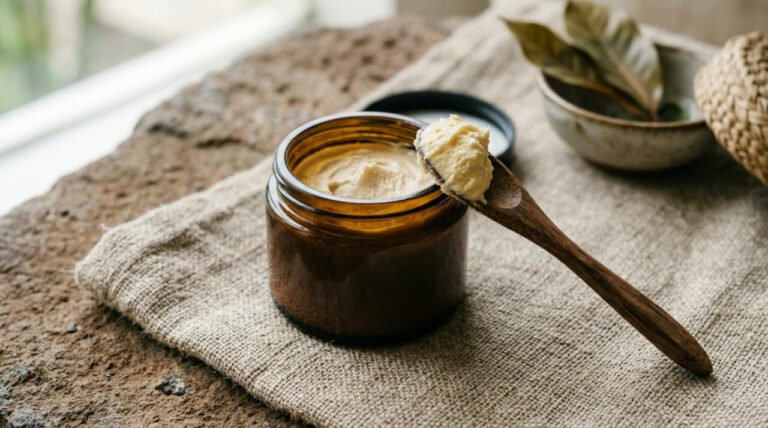
The result is a butter that is firmer in texture than shea, feels luxurious when it melts, and leaves skin noticeably nourished rather than just moistened. It is often compared to shea butter, and the comparison is fair in terms of use cases, but illipe has a slightly higher melting point, which gives it better performance in tropical climates where shea can become very soft and oily. In Bali’s heat, illipe behaves more consistently across seasons.
Illipe butter also has a relatively low comedogenic rating (around two), which means it is far less likely to block pores than coconut oil. This makes it more versatile for face use than coconut oil, though most body butter applications focus it on the body anyway, where that distinction matters less.
How coconut oil behaves on skin: absorption, feel, and honest limitations
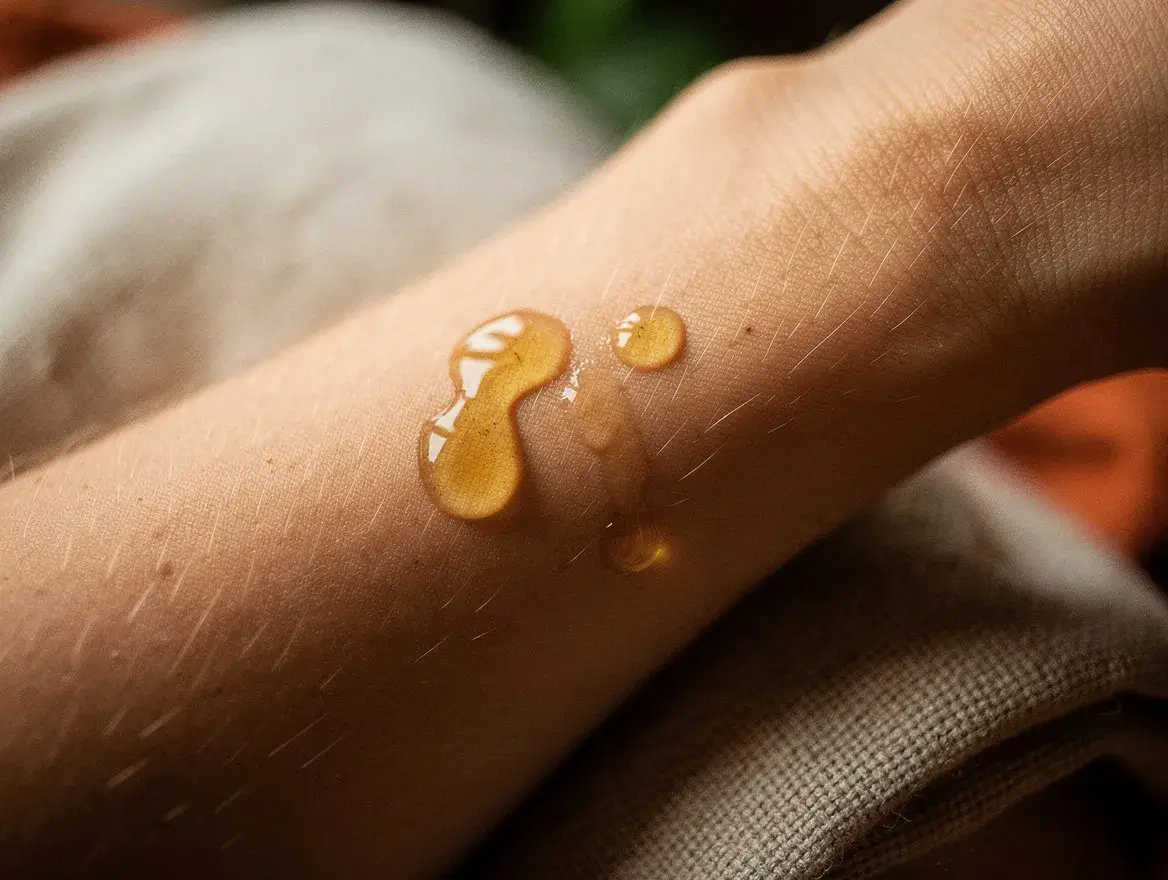
Coconut oil absorbs at a medium pace. Applied after a shower on damp skin, it sits on the surface for a minute or two, then gradually works in, leaving a slight sheen for the first few minutes and a soft, smooth feel once it has absorbed. On dry skin, especially during cold, low-humidity weather, it creates a protective layer that helps slow transepidermal water loss.
The texture is also context-dependent. In a warm bathroom or on warm skin, it is liquid and spreads easily. In a cool room, it may be more solid and require warming between palms first. This is not a flaw; it is simply the physics of saturated fats. Most people find the warming ritual pleasant, a natural moment of intention before application.
Where coconut oil consistently performs well: body hydration as a post-shower ritual, massage (it does not absorb so fast that friction becomes an issue), hand care for dry skin, and as a hair treatment applied to ends before washing. It is also a reliable base for oil cleansing for those who prefer a pure oil to a blended formula, though again, this works best on dry-to-normal skin types that do not struggle with breakouts.
Where to use with caution: on acne-prone skin, particularly on the face and chest, where the higher comedogenic rating can contribute to clogged follicles. This is especially relevant for those who are already prone to whiteheads or comedonal acne. If your skin does not have that tendency, coconut oil on the body is generally fine for most people. If you are unsure, patch-test on the inner arm before applying to the face or chest.
It is also worth noting that lauric acid’s antimicrobial properties may be helpful for mild bacterial concerns on the body, though it is not a replacement for medical treatment of actual skin conditions. For general wellness and daily nourishment, coconut oil earns its place in a natural skincare routine through straightforward effectiveness and a history that predates any modern formulation by centuries.
For a more complete picture of what coconut oil can and cannot do on skin, including which product formulations use it as a carrier base at Utama Spice, the Balinese coconut oil guide is the place to start.
How illipe butter behaves on skin: depth, barrier repair, and the body butter case
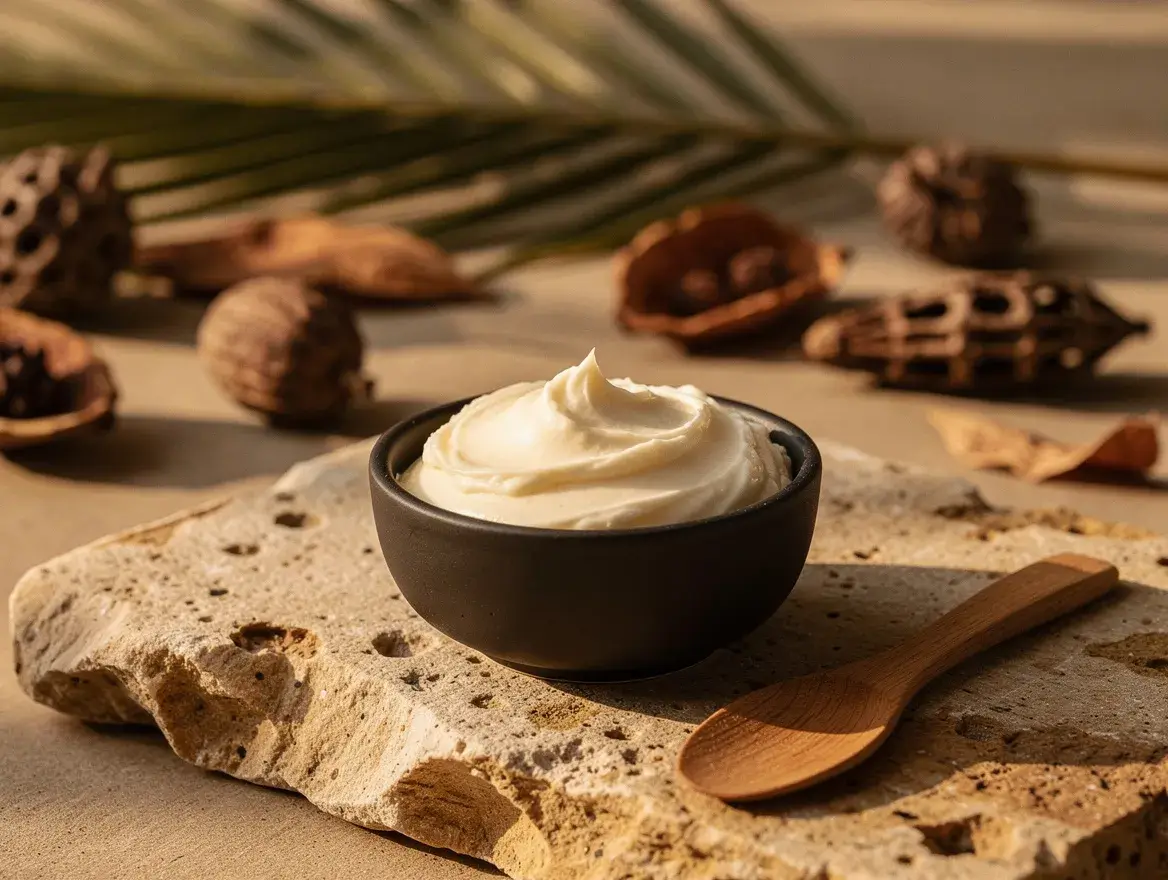
Illipe butter absorbs more slowly than coconut oil. It is an emollient first, with meaningful occlusive properties, meaning it helps seal in moisture as well as deliver fatty acids to the skin. Applied to clean, slightly damp skin after a bath or shower, it creates a barrier that feels nourishing rather than greasy, particularly on very dry areas like elbows, knees, shins, and feet.
The feel on skin is what most people notice first: it melts at skin temperature but does not immediately disappear. There is a moment of richness before it absorbs, which signals that something substantive is happening. The stearic acid content provides that barrier-sealing effect, while oleic acid works its way into the upper layers of the skin to support lipid repair. For people with chronically dry skin, this combination is particularly valuable because the skin barrier is often depleted, and illipe butter addresses that depletion directly.
Illipe butter is also well-suited for application to skin that has been stressed by sun, heat, or environmental exposure. After a day outdoors in Bali’s sun, the restorative quality of a butter with high stearic acid content is something skin registers immediately. Our guide on natural after-sun care covers this application in more depth, including how to layer a butter correctly after cooling skin first.
One practical note: illipe butter is firmer than coconut oil at most room temperatures, particularly in air-conditioned spaces or cooler climates. This is a feature in tropical conditions (it stays solid in Bali’s warmth where shea would become very liquid), but in cold climates it needs the same hand-warming technique as coconut oil to become spreadable. If a product uses illipe butter as a primary ingredient, the product formulation usually adjusts the ratio of oils to achieve a good texture for the target climate.
The lower comedogenic rating also makes illipe butter more appropriate for the chest and neck area than coconut oil, and for those who want to use a richer, more occlusive moisturiser on the face during winter months without the breakout risk coconut oil carries. That said, the primary application for illipe butter in the Utama Spice range is body care, where its richness, barrier-sealing quality, and wild-sourced origin story all come together in a complete and meaningful way.
If you are thinking about how skin moisturisation works in layers, our post on face serum vs face oil covers the principle of layering well, even though it focuses on the face. The same logic of “what absorbs fast vs what seals” applies when choosing between a light body oil and a butter for the body.
Coconut oil vs illipe butter: matching the base to your skin type
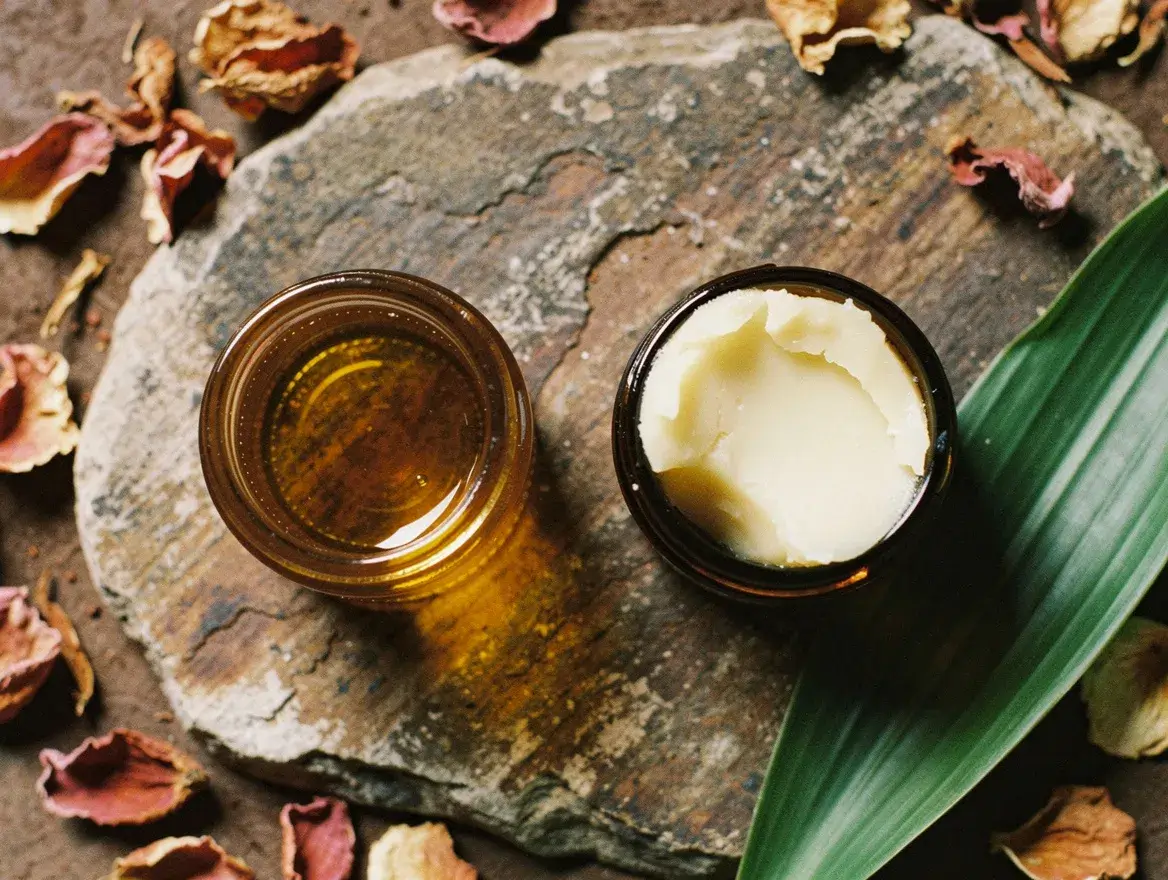
The clearest way to think about this comparison is by function, not by which ingredient sounds more impressive.

Dry to very dry skin: Both work, but illipe butter wins for most people. The stearic acid content provides the barrier repair and occlusive protection that very dry skin needs. Coconut oil is a good secondary ingredient in the same routine, applied first as a lighter carrier, with illipe butter-based products on top.
Normal skin in a humid climate: Coconut oil on the body is generally more than enough. The lighter texture, faster absorption, and easy spreadability suit normal skin that just needs daily maintenance rather than intensive repair. A coconut oil body product after showering is a simple, effective ritual that does not overload skin.
Oily or combination skin on the body: Coconut oil in moderation works for most body areas. On the face, both are generally better avoided in favour of lighter botanicals. But on the body, where pore size and sebum production are lower, even oily-skin types can usually use coconut oil without issue. Illipe butter may feel too rich for the same skin types in humid climates.
Acne-prone skin: Neither coconut oil nor illipe butter belongs on acne-prone areas of the face. On the body, illipe butter is the safer of the two due to its lower comedogenic rating. Patch-test and monitor over a week before committing to a new product on areas prone to congestion. Our post on skincare ingredients to avoid covers the broader topic of comedogenicity and how to read labels with a clear head rather than fear.
Sensitive skin: Illipe butter is generally the gentler choice here. Coconut oil’s lauric acid content, while antimicrobial, can be sensitising for some people, particularly those with eczema or contact dermatitis. Illipe butter, with its simpler fatty acid profile and milder skin response, tends to be better tolerated. As always, patch-test any new product and observe for 48 hours before widespread application.
Mature or sun-damaged skin: Illipe butter is the stronger choice, particularly for the body. The oleic acid supports cellular function in the upper layers of the skin, and the stearic acid helps maintain a barrier that tends to thin and become more permeable with age and prolonged UV exposure. Coconut oil remains useful, particularly for massage applications, but for intensive nourishment, a body butter built around illipe butter delivers more.
Cold or dry climates: Illipe butter is notably better in cold, low-humidity environments where skin loses moisture rapidly. The slower absorption and barrier-forming quality protect against transepidermal water loss in ways that a lighter oil cannot match. Many people who live in temperate climates find coconut oil sufficient in summer but need the richer protection of illipe butter through winter months.
One more note worth making: these ingredients are not mutually exclusive. Many well-formulated products, including in the Utama Spice range, use both. Coconut oil provides lighter lubrication and a pleasant slip, while illipe butter adds depth, barrier protection, and richness. Together, they create a texture and efficacy profile that neither achieves alone.

Try the Bliss Body Butter
Formulated with illipe butter sourced from Kalimantan’s rainforest, our Bliss Body Butter blends bergamot, rose geranium, sweet orange, and patchouli into a slow-absorbing ritual that restores dry and tired skin. Wild-harvested, consciously made, refillable.
How Utama Spice works with both in formulation
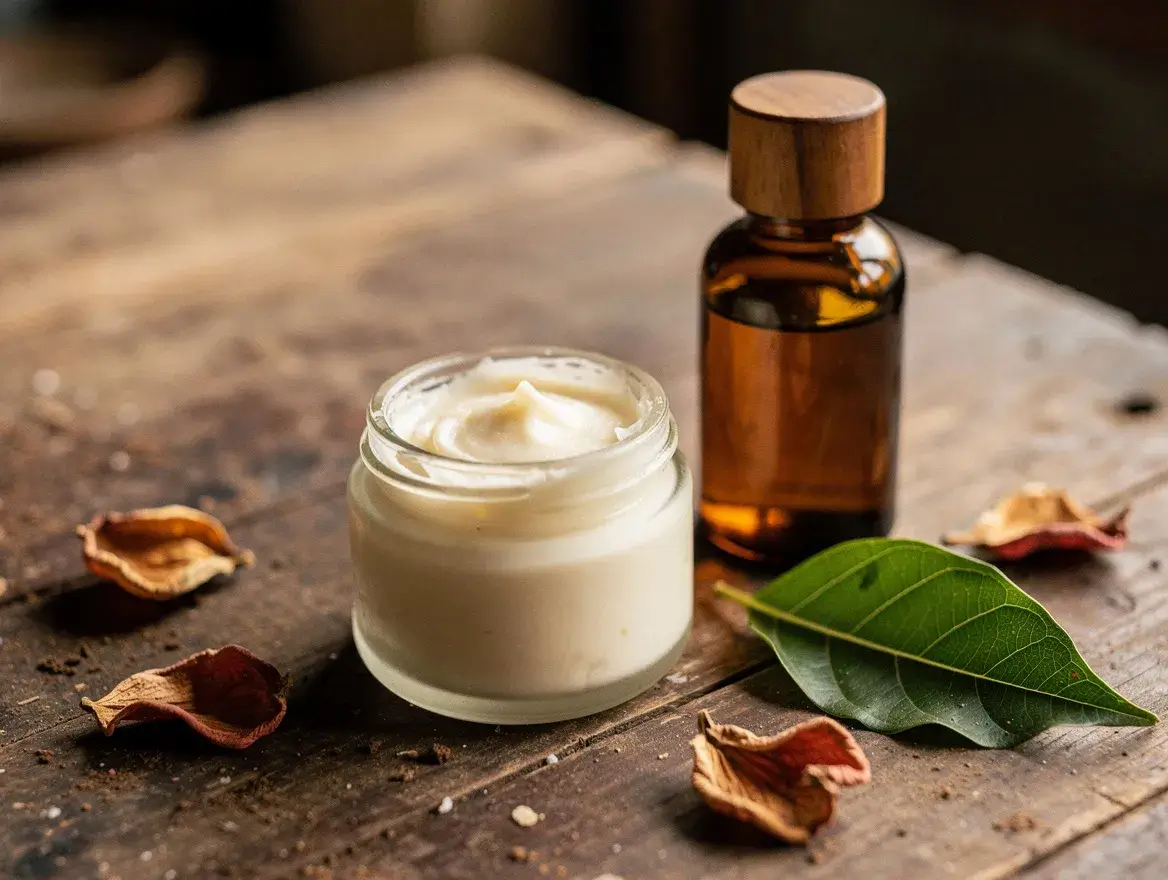
Utama Spice has been formulating with Balinese and Indonesian botanical ingredients since 1989. Both coconut oil and illipe butter appear throughout the range because they are not interchangeable, they each do something the other does not.
Coconut oil appears in the body oil range, in the shampoo line (the Tea Tree Shampoo uses coconut-derived ingredients as part of its cleansing and conditioning base), and in the lighter body care formulations that are designed for daily use in humid Balinese conditions. Where the goal is a lighter, faster-absorbing product that leaves a clean finish, coconut oil is often part of the base.
Illipe butter is the heart of the body butter range. Our Bliss Body Butter and Pure Energy Body Butter are both built around illipe butter as the primary fat, with the essential oil blends and any lighter carrier oils layered on top to create the right texture and scent profile. The choice was deliberate: body butters are designed for intensive nourishment, and illipe butter delivers that more completely than coconut oil can on its own.
The sourcing philosophy behind each ingredient is also deliberate. Aluan Partnership for coconut oil means Bali-grown, sustainably cultivated. Forestwise Partnership for illipe butter means wild-harvested, rainforest-protective, and community-supported in Kalimantan. These are not interchangeable sourcing relationships: they reflect the different geographies and ecosystems that each ingredient comes from, and they ensure that buying either product supports the specific community and conservation effort behind it.
Both products are available for refill at Utama Spice refill stations, which means the packaging consideration is the same for both. The formulation may differ, but the principle does not: use what you need, refill when you are done. Over 2,245 bottles were saved from landfill through the refill program in 2025 alone. That number grows with every refill, regardless of whether the product inside is coconut-oil-based or illipe-butter-based.
If you are curious about how the body butter ritual works in practice, including when to apply and how to get the most from a slow-absorbing butter, that guide covers the specific steps that help the ingredients do their work properly.
For those interested in how other Balinese botanicals are used alongside these bases, the kukui oil guide covers the candlenut oil that often appears in the same formulations as a lighter, faster-penetrating complement to richer butters. The relationship between these oils is worth understanding if you want to develop a deeper literacy of natural skincare ingredients.
Frequently asked questions about coconut oil and illipe butter
Can I use coconut oil on my face?
Coconut oil can be used on the face for some skin types, particularly dry skin that is not prone to congestion. However, its comedogenic rating (three to four out of five) means it has a real potential to block pores for oily, combination, or acne-prone skin. If you want to try it on your face, apply a small amount to a clean patch of skin on the jaw or cheek, wait 48 hours, and see how your skin responds. For most people with normal-to-dry skin, a small amount of coconut oil used occasionally is fine. For daily face use, a lighter botanical oil or a serum is usually a better choice.
Is illipe butter vegan?
Yes. Illipe butter is extracted entirely from the nut of the Shorea stenoptera tree and involves no animal products. It is a plant-derived fat, wild-harvested from Kalimantan’s rainforest. This makes it suitable for vegan and plant-based skincare routines. It is sometimes compared to beeswax in terms of its protective, barrier-forming properties, but it achieves those properties through its fatty acid profile rather than any animal-derived compound.
What is the difference between illipe butter and shea butter?
Both illipe butter and shea butter are plant-derived fats with high stearic and oleic acid content, which is why they feel similar on skin. The practical differences are in texture, melting point, and sourcing. Illipe butter has a slightly higher melting point than shea, which makes it more stable in warm climates. In Bali’s heat, shea can become quite soft and oily, while illipe retains more of its solid, spreadable consistency. Sourcing is also distinct: shea comes primarily from West Africa, while illipe butter comes from Kalimantan’s rainforest. Both are ethical when properly sourced. If you have tried shea and liked it, illipe butter will feel familiar and likely better suited to a tropical or warm-climate routine.
Can I mix coconut oil and illipe butter together at home?
Yes. This is actually one of the most common DIY body butter approaches: a base of illipe (or shea) butter thinned with coconut oil to adjust texture and absorption speed. A basic ratio to start with is two parts illipe butter to one part coconut oil, melted together gently and then cooled. This gives a body butter that has the nourishing depth of illipe butter with the lighter, faster feel of coconut oil. You can add essential oils at the end when the mixture has cooled slightly. Keep the finished product in a cool, dark place and use within three months. If you are interested in exploring more about how botanical oils layer in skincare, our argan oil guide covers similar territory for facial oils.
Does illipe butter expire?
Illipe butter has a relatively good shelf life compared to more unsaturated oils. The high stearic acid content is more resistant to oxidation than oleic or linoleic-dominant fats, which means it is less likely to go rancid quickly. Properly stored, in a cool, dark place with the lid on, illipe butter lasts 12 to 24 months. In tropical climates, keeping it out of direct sunlight and heat extends its life. If it develops an off or sour smell, that is the signal that the fats have begun to oxidise and the product is past its best. Most well-formulated body butters will indicate a period-after-opening (PAO) symbol on the label. Our guide on reading skincare ingredients covers how to interpret those symbols alongside the ingredient list.
Which one is better for massage?
Coconut oil is generally preferred for massage because its medium absorption speed allows for sustained glide without friction during a longer session. Illipe butter absorbs a bit too slowly to replenish and can feel sticky if applied in large quantities during an active massage. That said, if you are using massage as a short ritual rather than a full bodywork session, a body butter containing both coconut oil and illipe butter in a blended formulation works well. The coconut oil provides the glide; the illipe butter delivers the post-massage nourishment once the skin has had time to settle.
If you would like to understand more about how to incorporate oils and butters into a body ritual with intention, our post on the slow body butter ritual walks through the steps in detail.
What your skin actually needs: starting with the question
Coconut oil vs illipe butter is a question that only makes sense once you know what your skin needs right now. If the answer is quick daily hydration after a shower in a warm, humid climate, coconut oil is the simpler, lighter, more accessible answer. If the answer is deep repair for dry, compromised, or stressed skin, illipe butter is the more targeted and substantive choice.
For most people, the more truthful answer is that both have a role. Coconut oil for maintenance, for massage, for the lighter days when skin just needs a little care. Illipe butter for repair, for winter, for the body parts that take the most environmental pressure and ask for something richer in return.
What Utama Spice has learned across 35 years of formulating with Balinese and Indonesian botanicals is that the best skincare is specific. It knows what it is for, it uses ingredients that are genuinely suited to the task, and it sources them in ways that connect care for yourself to care for the places those ingredients come from. Both coconut oil and illipe butter, sourced responsibly and used thoughtfully, do exactly that.