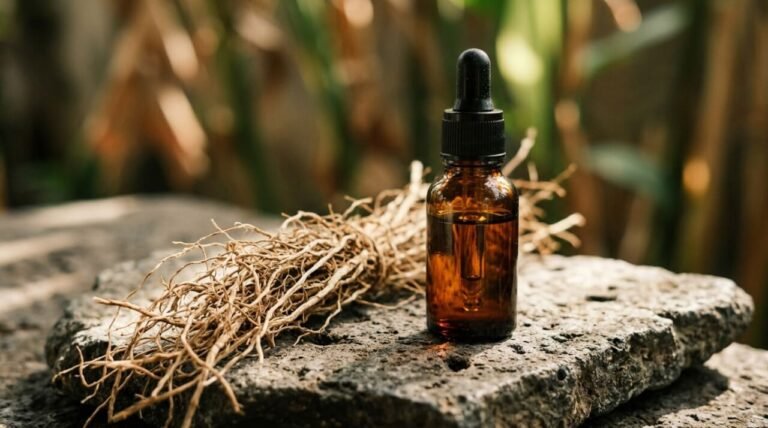
How to store essential oils: the oxidation rules that keep your oils (and your skin) safe in a humid climate
Most guides to storing essential oils are really about tidying a shelf. Ours is about something slower and less visible: oxidation, the chemical process that quietly turns a vibrant, therapeutic oil into a dull, irritating one. Learning how to store essential oils properly is not a styling choice. It is the difference between an oil that still does what the label promises after six months and one that has already started to work against your skin.
In a humid, tropical climate like Bali’s, that clock runs faster than most storage guides written in cooler countries ever account for. This guide walks through the chemistry in plain terms, the habits that actually slow it down, and the honest safety case for taking storage seriously, not as a tidiness ritual, but as part of caring for your skin.
We have thought about this question from the other side of the counter for a long time. Our oils are still hand-blended in small batches in Bali, the way they were when Utama Spice began in a kitchen in Ubud in 1989. A small batch sold and used quickly never has the chance to sit, degrading, on a warehouse shelf for a year before it reaches anyone. That same logic can work in your home, once you understand what it is protecting against.
Two different questions hiding in “storage”
Search for storage advice and you will find two very different answers tangled together. One is about keeping oils organized: a wooden box, a labeled tray, bottles lined up by color. The other is about keeping oils good: slowing the chemical changes that start the moment a bottle is opened.
The pretty box matters for convenience. It does nothing for chemistry. An oil can sit in the most beautifully organized case in the house and still oxidize weeks before it needs to, if the case sits on a sunny windowsill or in a warm bathroom. This guide is about the second question: what keeps an oil’s constituents intact, so the oil you use at month eight smells and performs the way it did at month one.
That distinction matters more than it sounds. Once you understand oxidation as the real enemy, every storage decision becomes simple: does this habit slow oxidation, or does it just look tidy? Keep the habits that do the first job. Treat the second as a bonus.
Most storage guides blur the two because organizing advice is easier to photograph than chemistry. A neat wooden tray makes a better picture than a sentence about ultraviolet light. That is not dishonest, exactly, but it leaves readers with a tidy shelf and oils that still degrade on schedule, because nobody told them tidiness was never the variable that mattered.
What actually spoils an oil: oxygen, heat, light, and time
Essential oils are mixtures of volatile aromatic compounds, mostly terpenes, and terpenes react with oxygen. That reaction, oxidation, is the same one that turns a cut apple brown or lets a glass of wine go flat. It is not dramatic. It is slow, cumulative, and invisible until the oil already smells sharper, thinner, or faintly plasticky instead of fresh.
Four conditions accelerate it: oxygen exposure (every time a cap comes off, a little air gets in), heat (chemical reactions speed up as temperature rises), light, especially ultraviolet light (it breaks molecular bonds directly), and time (oxidation is cumulative, so an oil bought a year ago has simply had more opportunities to react, even if it was stored well).
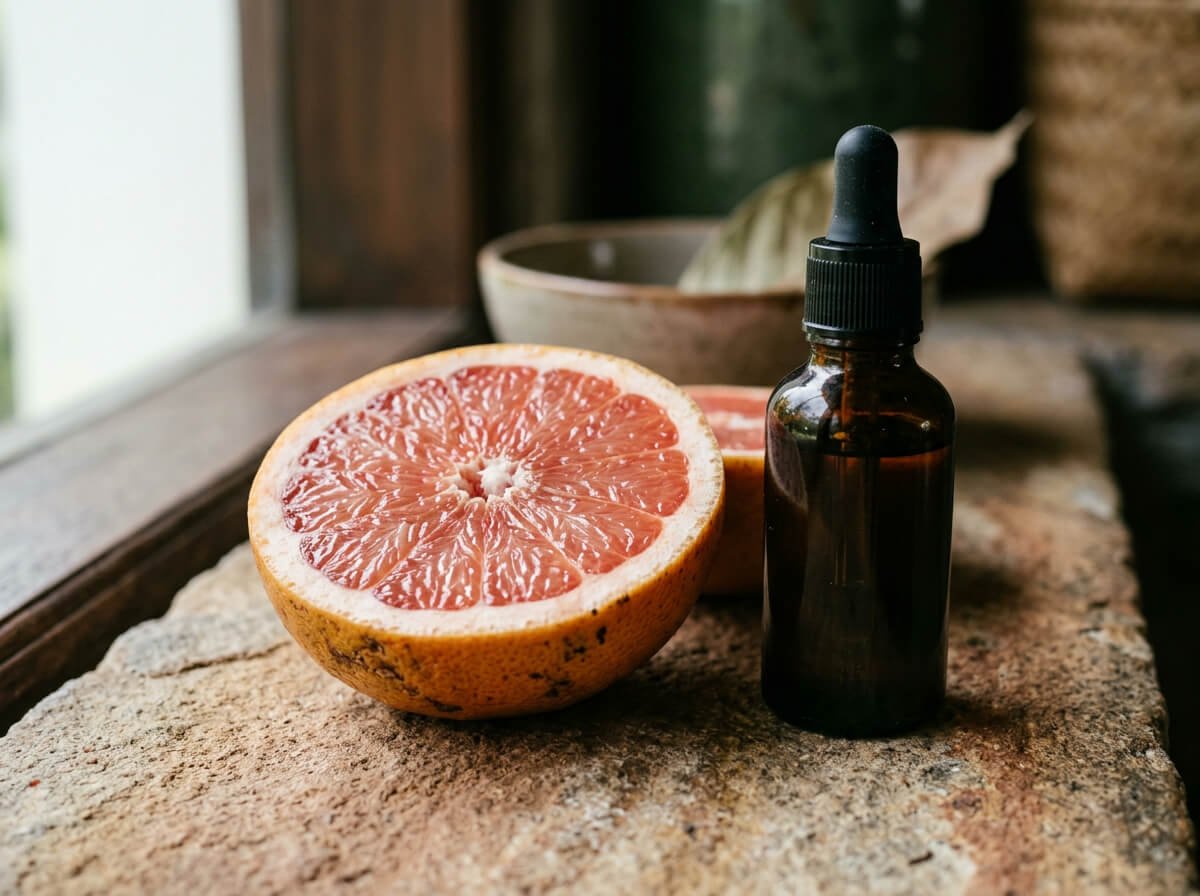
Citrus oils show this most clearly. Our grapefruit essential oil and other citrus oils are rich in a terpene called d-limonene, the molecule behind that bright, zesty top note. D-limonene oxidizes readily, and as it does, it forms compounds that are more likely to irritate skin than the fresh terpene itself. This is why a bottle of lemon or grapefruit oil that has turned noticeably more acrid over a year is not just less pleasant to diffuse. It has also become more likely to sensitize skin on contact than it was the day it was pressed.
Woods and resins, like sandalwood, patchouli, and vetiver, contain larger, heavier molecules that resist this process far longer. That is not a coincidence of nature. It is a useful map for how you store and how quickly you use what you own.
Chemically, oxidation in essential oils is what is known as autoxidation: a chain reaction that, once it starts in a small part of the bottle, keeps feeding itself. A terpene molecule reacts with oxygen to form a peroxide, that peroxide goes on to react with another terpene molecule, and the process compounds rather than staying contained. This is why an oil does not degrade evenly or predictably. It can seem stable for months, then shift noticeably within a few weeks once the reaction reaches a certain point. There is no enzyme involved, no living microorganism to kill off the way heat kills bacteria in food. It is pure chemistry, temperature-dependent like any reaction, which is exactly why a cooler environment slows it down even without anything biological at play. Controlling the four conditions above is the only lever you actually have, and it works precisely because the chemistry is simple, not because of anything mysterious.
Do essential oils expire? Shelf life by family
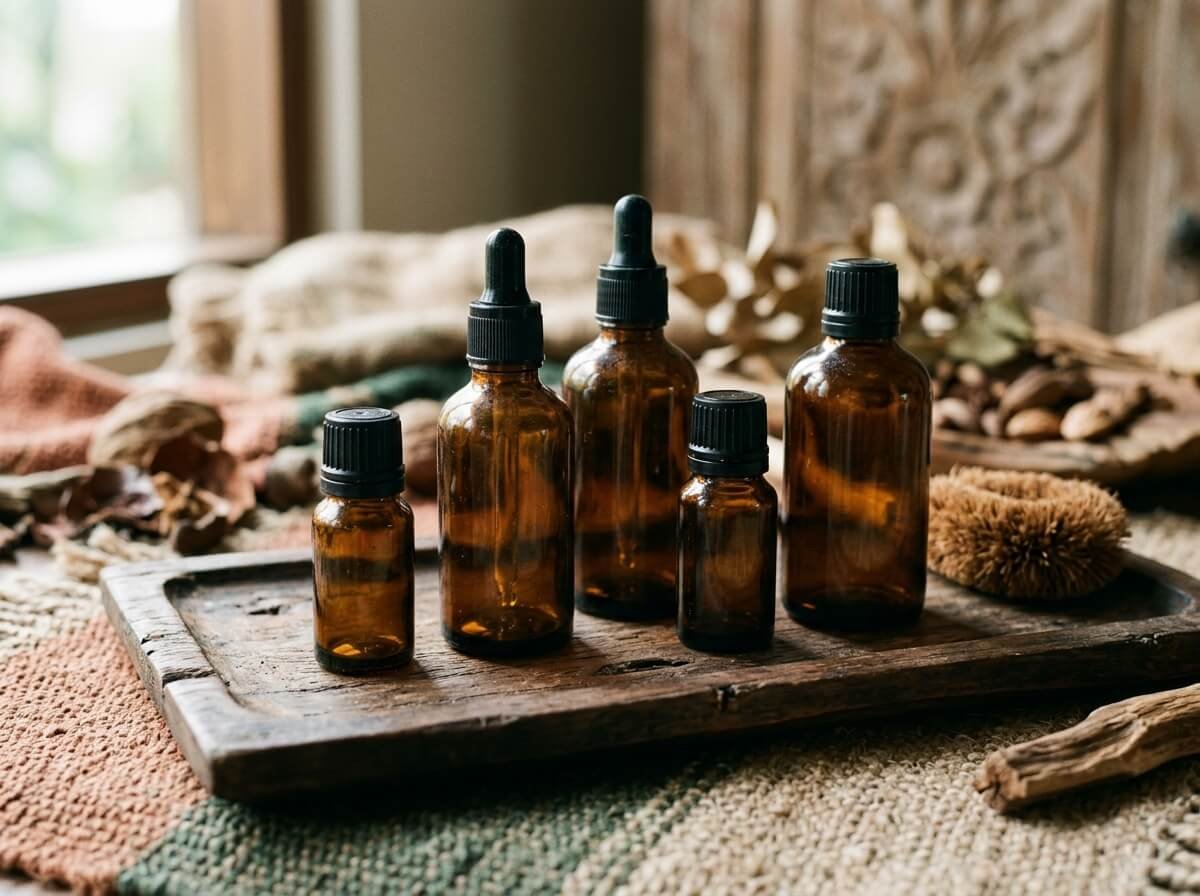
Yes, though “expire” is the wrong word for a product with no hard cutoff. Essential oils degrade gradually, and the honest answer is a range, grouped by chemical family rather than a single number stamped on every bottle.
- Citrus oils (lemon, grapefruit, orange, bergamot): roughly one to two years, shortest of any family, due to that d-limonene content.
- Herbaceous and floral oils (lavender, rosemary, geranium): roughly two to three years with proper storage.
- Spice oils (clove, cinnamon, ginger): roughly two to four years, moderate stability.
- Woods and resins (sandalwood, patchouli, frankincense, vetiver): four years and beyond. Some genuinely improve with a little age, the way a good patchouli deepens over time.
Your nose is a better instrument than a calendar. An oil that has shifted is usually the oil that tells you so directly: a sharper or more acrid top note, a cloudy or noticeably thickened texture, or a smell that has simply gone flat where it used to be vivid. When any of those show up, retire the bottle. Do not apply it to skin on the hope that it still has some life left.
These ranges assume a bottle that has been opened and used, since the clock on oxidation really starts the first time air reaches the oil inside. An unopened bottle, properly sealed in its original dark glass, holds up meaningfully longer than these figures suggest. A simple habit worth adopting: write the date you opened each bottle on a small sticker on the base. It takes a few seconds, and it turns a guess into a fact the next time you reach for it.
Dark glass, tight caps, cool and dark: the four habits that do the work
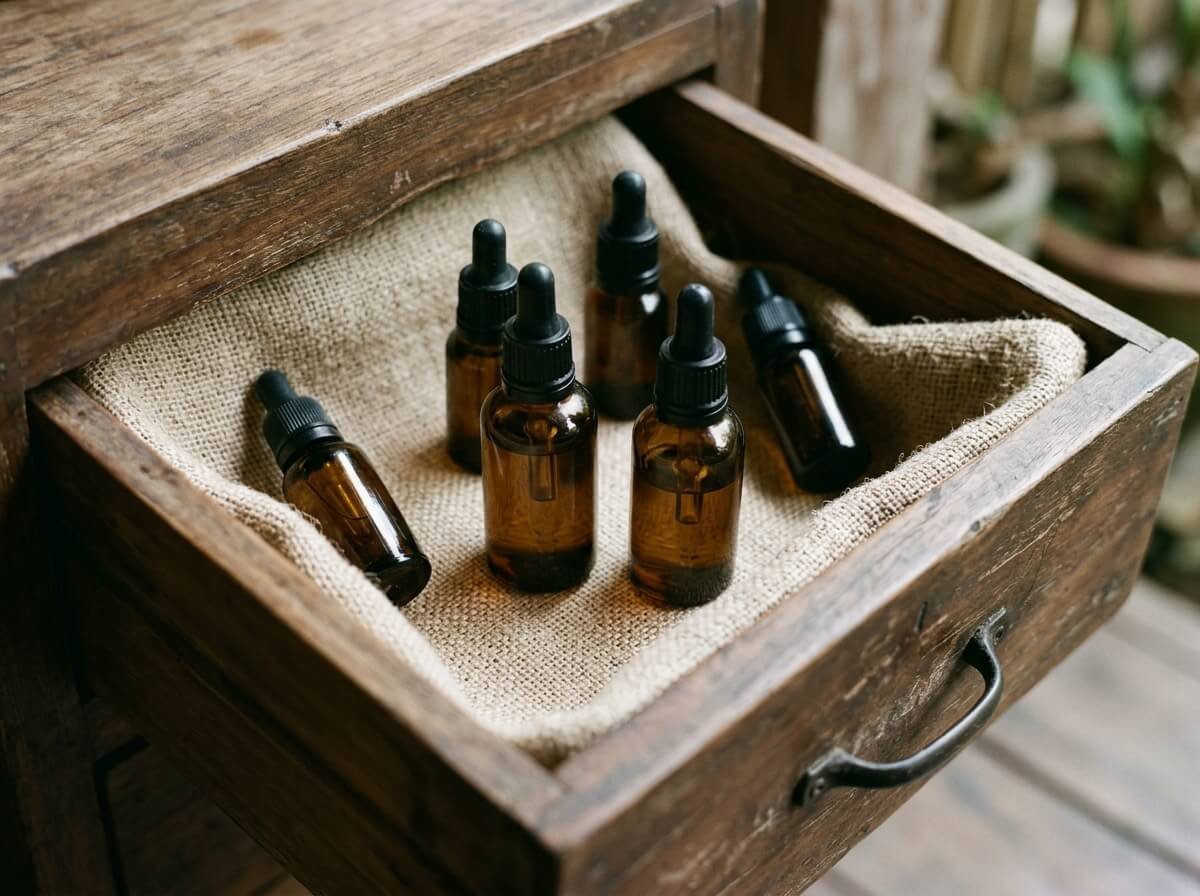
Everything in the oxidation lens points to the same four habits, and none of them require a special cabinet.
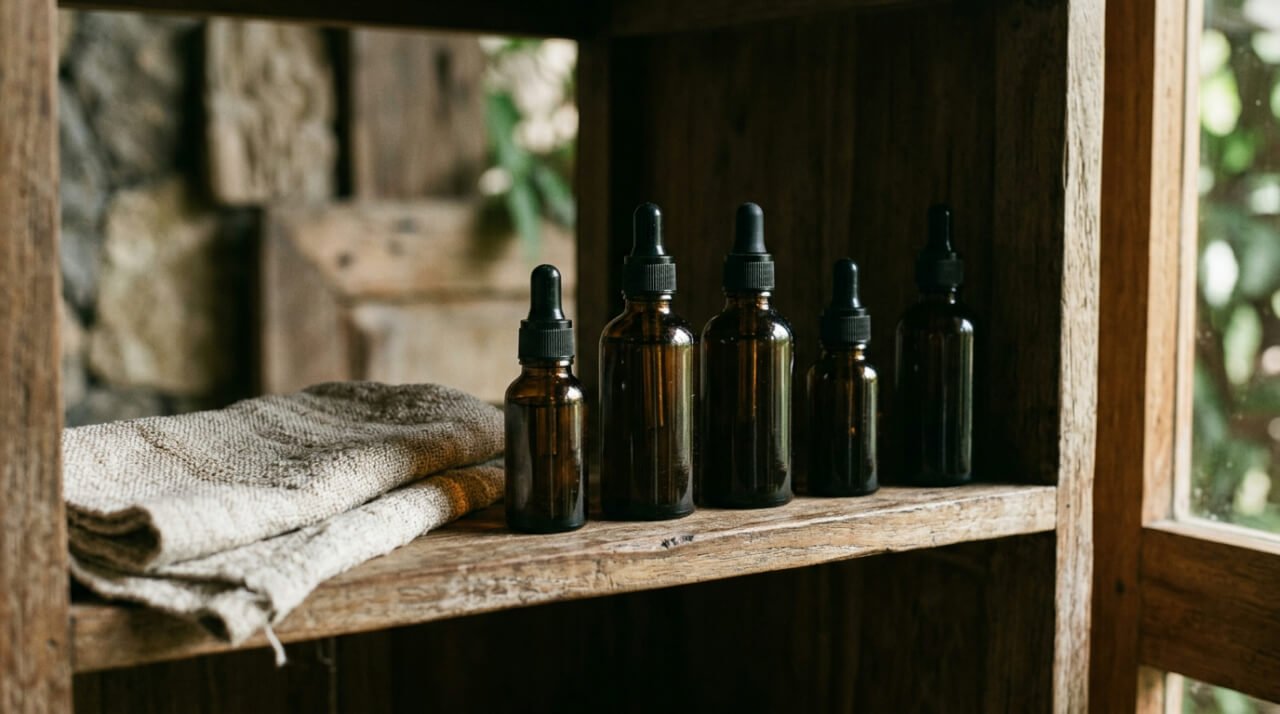
- Keep oils in dark glass. Amber or cobalt glass blocks the ultraviolet light that clear glass and plastic let straight through. This is why reputable oils never ship in clear bottles. If a bottle you own is clear, decant it.
- Close the cap fully and promptly. Every open bottle lets in a small dose of oxygen. A cap left loose overnight does real, measurable damage over the life of the bottle.
- Choose cool over warm. Room temperature, out of direct sun, is enough for most oils. A refrigerator can extend shelf life further for citrus oils specifically, though condensation on a cold bottle, then capped while still damp, can introduce moisture that encourages its own kind of degradation. If you refrigerate, let the bottle come fully to room temperature before reopening it.
- Choose dark over bright. A bathroom shelf steamed by every hot shower, a car console baking in tropical sun, or a kitchen windowsill are the three worst places in most homes. A closed drawer or cabinet away from appliances that generate heat is the simple, unglamorous answer.
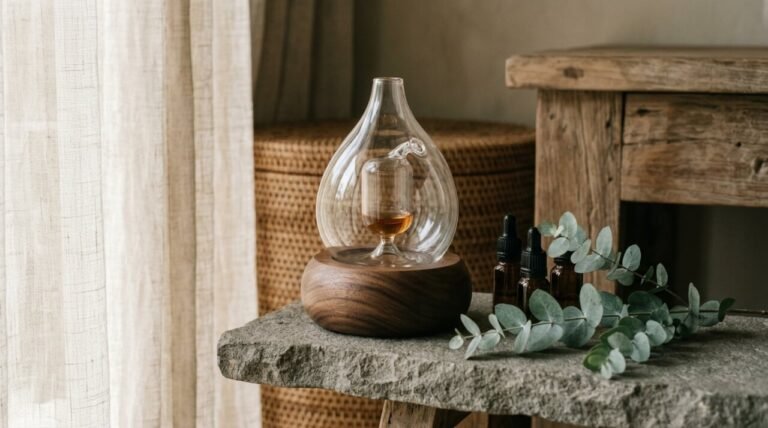
None of this requires special equipment. It requires knowing which ordinary surfaces in your home are quietly working against your oils, and choosing a different one. The same logic applies to your diffuser: store the reservoir oils away from the unit itself if the appliance runs warm, and clean a nebulizing diffuser‘s glass chamber regularly, since residue left inside oxidizes too and can taint the next oil you load.
Travel is worth a specific word, since it is where most of the damage we see actually happens. A car console or glovebox in Bali’s midday sun can reach temperatures well beyond anything a bottle experiences at home, often within minutes. A checked suitcase sitting on airport tarmac is not much gentler. If you are traveling with oils, keep them in a bag you carry with you, out of direct sun, and resist the habit of leaving a roller in a hot car between uses even for a short errand. It is a small discipline that protects the most-used, and often most-loved, bottles in a collection.

Do not forget the carriers: rancidity is a different failure
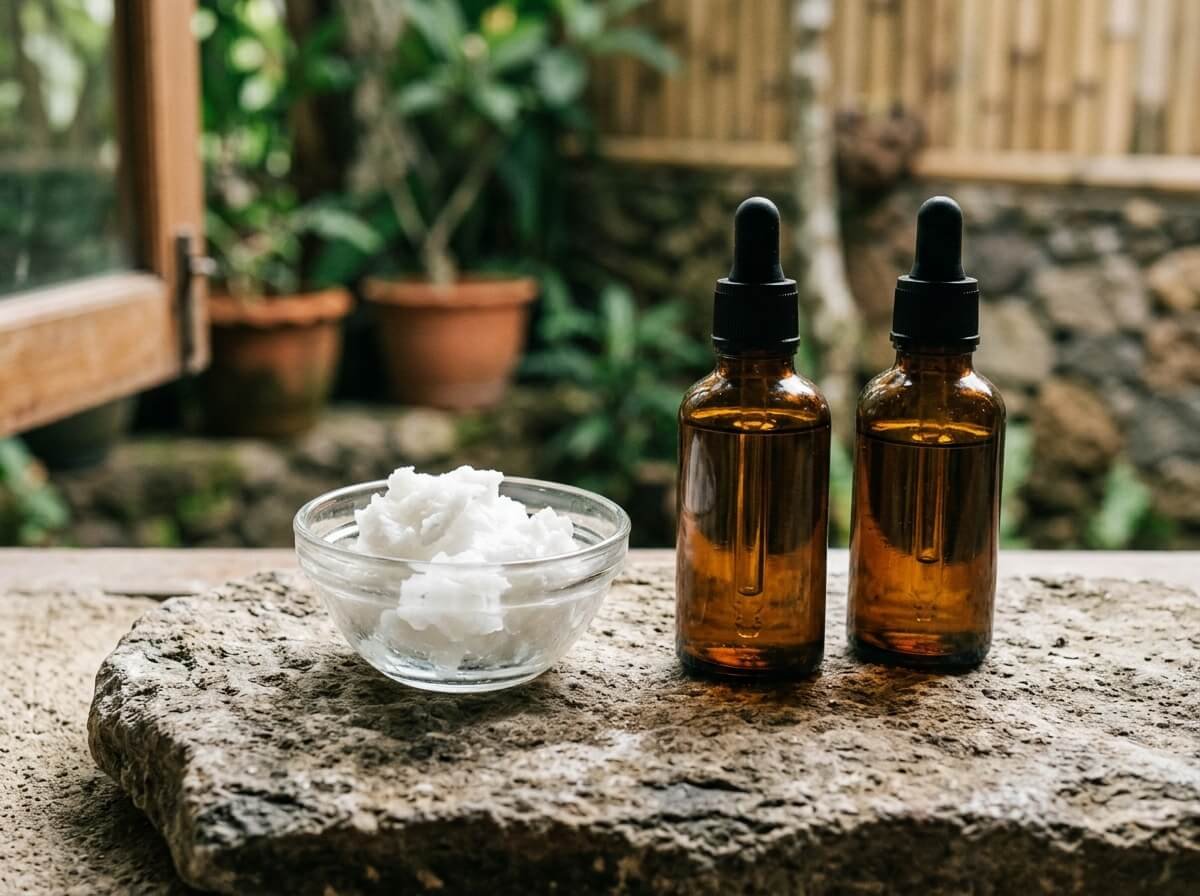
Carrier oils spoil through a different mechanism entirely, and it is worth knowing the difference. Essential oils oxidize. Carrier oils, rich in fatty acids rather than terpenes, go rancid. Rancidity smells unmistakably different: a crayon-like, slightly sour note that has nothing in common with a fresh oil’s clean scent. Once a carrier smells rancid, the fatty acids have broken down into compounds that can irritate skin rather than nourish it, so it goes in the bin, not on your face.
The same four habits apply: dark glass, tight caps, cool and dark storage. Our tamanu oil and argan oil both benefit from a cool cabinet rather than a steamy bathroom shelf, and our virgin coconut oil is unusual in that it solidifies below about 24 degrees Celsius and liquefies again above it. That is a normal property of coconut oil, not spoilage, and it has no bearing on shelf life either way.
Pre-diluted rollers deserve a specific note. A roller like our Bliss roller, Santi roller, or Pure Energy roller combines essential oil with a carrier at a safe dilution, ready for direct skin contact. That convenience comes with a shorter shelf life than the neat essential oil alone, since you are now managing two degradation processes, oxidation and rancidity, in the same small bottle. If you want the chemistry of correct dilution itself, we cover the full method in how to dilute essential oils. Treat a roller as a six-to-twelve-month product, used and replaced, rather than something to stockpile.
Some carrier oils resist rancidity better than others, which is worth knowing before you buy a size you cannot reasonably use within its stable window. Virgin coconut oil, being highly saturated, is one of the slower carriers to turn, which is part of why it has remained a dependable base across Balinese skin and hair care for generations. More unsaturated carriers, rich in the same linoleic and oleic acids that make them so effective at nourishing skin, are also the ones most prone to going rancid sooner. The honest rule, whichever carrier you reach for, is the same one we keep returning to: buy the size you will actually use within a season, not the size that looks like better value on the shelf.
Storing oils in the tropics: humidity and heat run the clock faster
Every shelf-life estimate above assumes a temperate climate. Bali is not a temperate climate. Ambient heat accelerates every oxidation reaction described in this guide, and humidity brings its own complication: moisture finding its way past a cap, however briefly, which can encourage mold in carrier oils and dilute the integrity of an essential oil’s chemistry over time.
We do not say this to sell you a dehumidifier. We say it because the honest answer for anyone living somewhere warm and humid is to shift the whole mental model: buy smaller bottles, more often, and use what you have before it has the chance to degrade. This is not a compromise. It is the same logic behind the refill culture we have built our business on since 1989, in a kitchen in Ubud where nothing sat on a shelf long enough to need a shelf-life chart in the first place.
A smaller bottle, used within a season, is simply a fresher bottle. That is the single highest-leverage habit in this entire guide, and it costs nothing extra to practice.
It is also, in a quieter way, the same thinking behind refill culture. We built our refill stations around the idea that a container reused and topped up little and often beats a large bottle bought once and left to sit, and the chemistry in this guide is the other half of that argument. Buying small is not a compromise on value. In a humid climate, it is often the only way to guarantee the oil in your hand is still the oil it was meant to be.

An oil worth storing properly
Our tea tree essential oil ships in dark glass for a reason: it is one of the oils most affected by oxidation, and one whose oxidized form is most likely to irritate skin. Store it right, and it stays the steady, reliable oil it was pressed to be.
Why this is a safety issue, not just a waste one
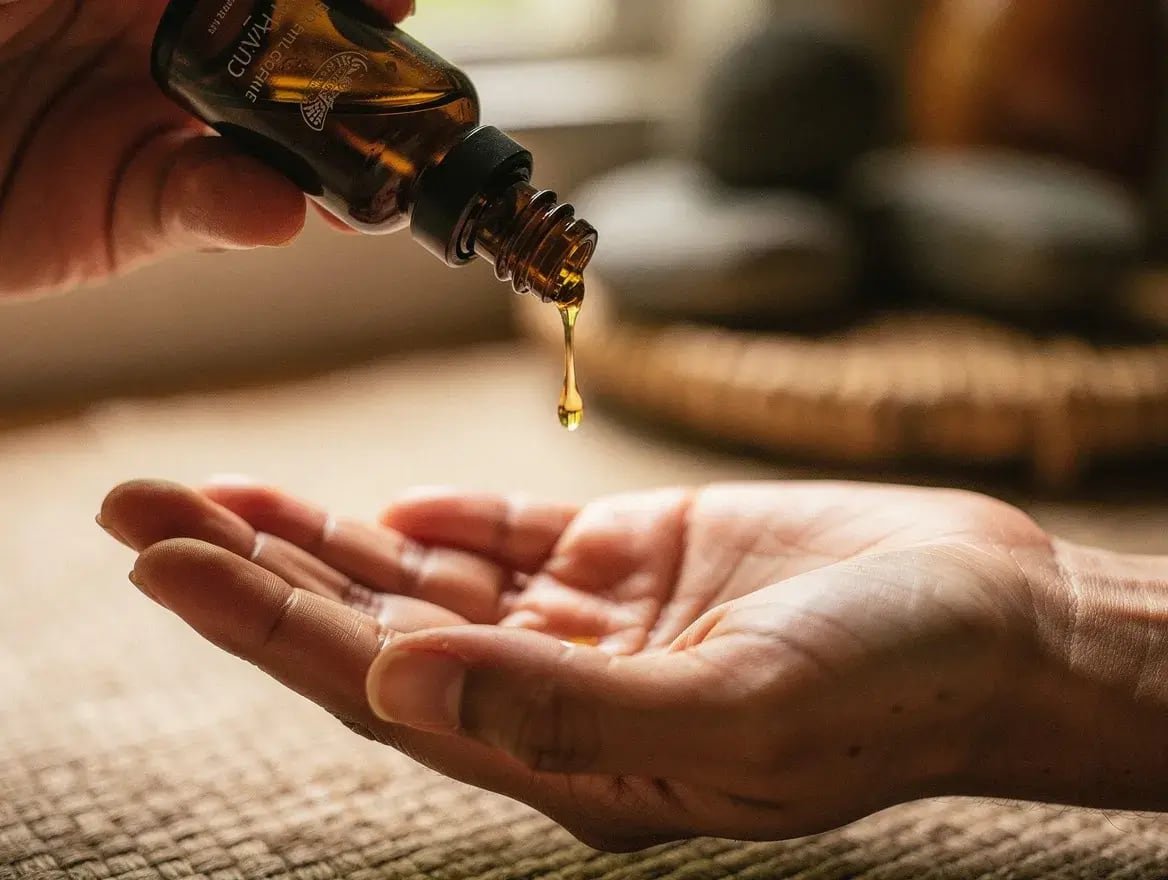
It is tempting to file storage under thrift: store well, waste less. The more important reason is safety. Oxidized essential oils are a recognized cause of contact allergy, and two of the oils most implicated, tea tree and citrus, are also among the most commonly used at home.
We cover the full picture, including why tea tree’s oxidation products specifically are flagged in dermatology literature, in tea tree essential oil benefits. If you keep a bottle of our own tea tree essential oil in your bathroom cabinet right now, this is the oil to move first: dark glass, a tightly closed cap, somewhere cool and out of the light. The short version: a fresh essential oil and an oxidized one are not the same substance on your skin, even if the label and the bottle look identical. The oil’s molecular structure has genuinely changed, and with it, how your skin responds.
This reframes storage from a tidiness habit into a direct extension of using oils safely. A cap closed promptly, a bottle kept out of the sun, a smaller size bought more often: these are not precious rituals. They are the quiet, practical steps that keep what touches your skin working the way it was meant to.
Frequently asked questions
Can I store essential oils in the fridge or freezer?
Refrigeration can extend the shelf life of citrus oils in particular, since cold slows oxidation further. Let a chilled bottle return to room temperature before opening it, so condensation does not form inside the cap. Freezing is unnecessary for almost every oil and offers no meaningful benefit over a cool, dark cabinet.
Can I store essential oils in plastic?
Avoid it where possible. Many essential oils, particularly citrus oils, can degrade plastic over time, and the plastic can leach into the oil in return. Dark glass is the standard for a reason, and it is the format every oil in our own range ships in.
Can I store essential oils in the bathroom?
It is the single most common storage mistake we see, and understandably so, since it is where most people reach for oils during a shower or bath ritual. The heat and humidity from regular hot showers accelerate oxidation meaningfully over months. A closed drawer in a bedroom or a dedicated case kept elsewhere in the home will do far better by your oils.
How do I know if an essential oil has gone off?
Trust your nose before the calendar. A sharper, more acrid, or flattened scent, a texture that has thickened or clouded, or any noticeable change from the oil’s fresh character are all signs to retire the bottle. When in doubt, do not apply an oil you are unsure of directly to skin.
Does it matter which way up a bottle is stored?
Upright is the safer default, mainly because it keeps oil away from the dropper or orifice reducer inside the cap, reducing the surface area exposed to air inside the neck of the bottle. It is a minor factor next to heat, light, and cap discipline, but it costs nothing to get right, so there is little reason not to.
Good storage is a small, quiet practice, four habits repeated without much thought once they become routine. In a climate like ours, it is also one of the more honest forms of care we can offer our oils, and in turn, our skin: buy a little, use it well, and let nothing outlast its usefulness on a shelf.