Dry skin on face: causes by zone and a calm routine that seals moisture in
Dry skin on face rarely arrives all at once. It starts as a tight feeling after washing, then a rough patch on one cheek, then a dusting of flakes beside the nose that foundation clings to by noon. Most advice treats it like dry skin anywhere else on the body: drink more water, moisturize more, exfoliate the flakes away. Some of that helps. Some of it makes things worse.
This guide reads the face zone by zone. We look at why facial skin dries out differently, how to tell dry from dehydrated, and the quiet habits that strip moisture without you noticing. Then we build a calm routine, with fewer steps rather than more, and cover when flaking deserves a dermatologist’s eye.
Why dry skin on face behaves differently from the rest of your body
Your face is not simply a smaller patch of the skin on your arms. It is thinner, more exposed, and more handled than almost anywhere else on the body, and each of those three facts changes how it loses water.
Thinner skin, faster water loss
The outermost layer of skin, the stratum corneum, works like a brick wall: skin cells are the bricks, and ceramides, cholesterol, and fatty acids are the mortar. On the face, that wall is thinner than on the body, and thinnest around the eyes. Studies of transepidermal water loss (how fast water escapes through skin) consistently find the face loses water faster than the forearm or back. That is physics, not a personal failing.
More exposure, every single day
Your legs spend most of the year under fabric. Your face meets everything: sun, wind, cold air outside, dry air inside, and the steady breeze of a fan or air conditioner at night. Ultraviolet light breaks down the lipids in that mortar over time, which is one reason sunscreen belongs in any honest conversation about dryness.
More products, more friction
The face is also where we stack the most products. Cleanser, toner, serum, actives, moisturizer, sunscreen, makeup, and remover can add up to eight layers a day, plus the cloths and fingertips that apply them. The result is a paradox we see often: the people with the driest faces are frequently the ones doing the most. Keep that idea close, because it runs through every section that follows.
The balance of oil across the face
Oil glands are not spread evenly either. The forehead, nose, and chin (the T-zone) carry far more of them than the cheeks and jaw, which is why many people have an oily nose and dry cheeks on the same face.
Dry or dehydrated: a two-minute check

These two words get used as if they mean the same thing. They do not, and the difference changes what your skin needs. We have written about hydration versus moisture before, and here is the short version for the face.
Dry skin is short on oil. It is a skin type, and it tends to run in families and increase with age as oil production slows. Dry skin often feels rough, looks matte, can flake, and rarely gets shiny even by late afternoon. Pores tend to look small.
Dehydrated skin is short on water. It is a condition, and any skin type can have it, including oily skin. Dehydrated skin often feels tight, shows fine crisscross lines that soften when you add water, and can look dull while still producing oil. Oily skin that is also dehydrated sometimes produces a slick surface over a tight, uncomfortable feel underneath.
The two-minute check
Try this on a quiet morning, with nothing on your skin.
- Cleanse with lukewarm water only, pat dry, and wait 30 minutes without applying anything.
- Notice how your face feels. Tightness across the cheeks, especially right after washing, points to dehydration or a stripped barrier.
- Look in natural light. Fine, shallow lines that look like crepe paper on the cheeks suggest dehydration. Rough, flaky, or scaly patches suggest dryness.
- Press a clean blotting paper or tissue to your nose and forehead. If it comes away with oil while your cheeks still feel tight, you are likely oily or combination and dehydrated.
- Apply a few drops of plain water to one cheek and nothing to the other. If the fine lines soften visibly within a minute, water is what is missing.
The check is not a diagnosis, and plenty of people are both at once. What it gives you is direction. Dehydrated skin wants water held in place with humectants such as glycerin and aloe. Dry skin wants lipids: plant oils and butters. Most dry faces need both, in that order, which is the logic behind the routine below.
Reading your face by zone

Dryness rarely spreads evenly. Where it shows up on the face tells you a lot about what is going on, and occasionally tells you it is not simple dryness at all.
Cheeks and jaw
These are usually the first areas to dry out. They have fewer oil glands, take the most wind and sun, and meet our phones, hands, and pillowcases. They usually respond well to gentle cleansing and a layer of oil after a water-based step. If your cheeks also flush easily and sting with most products, read our guide to natural skincare for rosacea, because redness changes the rules.
Around the nose, eyebrows, and hairline
This is the zone where most people get it wrong. Flaking in the creases beside the nose, between and through the eyebrows, or along the hairline is very often seborrheic dermatitis, not ordinary dryness. The flakes tend to be slightly greasy and yellowish rather than powdery and white, the skin underneath can look pink or red, and it often comes and goes with stress, cold weather, and illness. It is linked to a yeast that lives naturally on oily skin.
Here is why the distinction matters. Heavy oils and rich creams that soothe a dry cheek can make seborrheic flaking worse, and scrubbing the flakes off only brings them back. If the flaking sits in these oily zones and returns within days of clearing, it is worth asking a doctor or pharmacist about it rather than adding more moisturizer.
Under the eyes
The skin here is the thinnest on the face, with very few oil glands, so it is often the first to show fine lines when it is dehydrated. It is also the most reactive to fragrance and essential oils. Keep anything aromatic away from the eye area, and use a tiny amount of a single, unscented plant oil if you want extra comfort here. Our guide to natural eye cream covers this zone in depth.
Around the mouth and the edge of the lips
Flaky skin along the lip line often comes from lip licking, toothpaste ingredients, or saliva drying on the skin overnight. A rash of tiny bumps around the mouth and nose that gets worse with heavy creams can be perioral dermatitis, which often improves only once the creams stop. If this area burns or keeps cracking, step back rather than layer up.
Scattered rough, red, itchy patches
Itchy patches that look red or darker than the surrounding skin, on the eyelids, cheeks, or neck, may be eczema, including contact dermatitis from a new product, fragrance, or hair dye. Our post on essential oils for eczema covers gentle support, but persistent itchy patches belong with a professional.
The quiet causes: you cannot scrub your way out of dryness

Some causes of a dry face are obvious, such as winter wind or a week of hiking at altitude. The ones that matter most are quieter, because we repeat them every day without noticing.
Hot water
A hot shower feels wonderful and pulls lipids from the skin faster than lukewarm water does. Many of us let the shower run straight over our face, or wash our face at the end of a long hot shower when the skin is already softened. Lukewarm water is enough. We explored the habit in a short piece on hot water and the skin barrier.
Foaming cleansers and double cleansing every night
A rich, squeaky lather often comes from strong surfactants that lift oil very efficiently, including the oil your skin needs. That squeaky-clean feeling is the sound of a barrier being stripped. If you wear sunscreen or makeup, double cleansing can help, but on a bare-faced day a single gentle cleanse, or just water in the morning, is often plenty.
Stacked actives
Retinoids, acids (AHAs, BHAs, and PHAs), vitamin C, and benzoyl peroxide all have their place. Used together, or all at once in a new routine, they can leave the barrier raw, tight, and flaky. Flaking after starting a retinoid is common and expected. Flaking from three actives layered every night is a sign to pause.
Over-exfoliation
This is the point we want to make plainly. Flakes are not a layer to remove. They are a signal that the skin’s shedding process is out of balance because the barrier is struggling. Scrubbing them away gives you smooth skin for an afternoon and a more damaged barrier by the next morning, which then flakes again. Many popular routines answer flaky skin with more exfoliation. We think that gets the cause and the symptom the wrong way round. If you do exfoliate, keep it gentle and occasional, as we describe in our guide to safely exfoliating your face.
Air conditioning, fans, and flights
Here in Bali, people are often surprised to have a dry face in one of the most humid places on Earth. The answer is usually indoors. Air conditioning removes moisture from the air as it cools, and many of us sleep for eight hours with cool, dry air blowing across our face, often with a fan on top. Office air in a cooled building can be far drier than the street outside. Long-haul flights are drier still: cabin humidity commonly sits below 20%, lower than most deserts. If you travel often, our travel skincare routine is built for exactly this.
Inside causes worth knowing
Dryness can also come from within. Oral acne treatments and diuretics can dry the skin, as can an underactive thyroid. Oil production also slows with age, often noticeably around menopause. If dryness arrived suddenly with other changes in how you feel, mention it to your doctor.

A calm routine for dry skin on face

Once you stop stripping the skin, it needs surprisingly little. The routine below is built on one principle: put water in, then hold it there. It has four steps in the morning and three at night, and none of them is complicated.
Step one: cleanse gently, or not at all
In the morning, lukewarm water and clean hands are enough for most dry faces. In the evening, if you have worn sunscreen or makeup, use a mild, low-foam cleanser. Our Bliss Botanical Face Wash is built on gentle sugar-derived surfactants (lauryl and decyl glucoside) with glycerin, aloe, olive oil, and jojoba, and it carries a light essential-oil scent, so patch test first if your skin is reactive. Massage for 30 seconds, rinse with lukewarm water, and pat dry with a soft cloth. Do not rub.
Step two: leave the skin damp
This is the step most routines skip. Instead of drying your face completely, leave it slightly damp, or mist it with plain water or a simple floral water. Humectants and oils work far better on damp skin because there is water on the surface for them to hold in place.
Step three: press in a water-based layer, then a few drops of oil
If you use a hydrating toner, aloe, or a serum with glycerin or hyaluronic acid, apply it now to damp skin. Then warm three to four drops of oil between your palms and press it into your cheeks, jaw, and forehead rather than rubbing. The warmth of your hands helps the oil spread thinly and evenly, and pressing avoids the friction that irritated skin does not need. We wrote about this simple ritual of face serum and warm palms on a quiet Monday.
Our Natural Face Serum is an oil serum of argan, jojoba, and coconut oils with cocoa butter, scented with lavender, cananga, rose geranium, and patchouli. It is made for exactly this pressing step on dry cheeks and jaw. Because it contains essential oils, keep it away from the eye area. If your skin is reactive or flaking in the oily zones, a single-ingredient, fragrance-free oil such as our Tamanu Oil or Argan Oil is the calmer choice. If you are unsure whether you need a serum or an oil, our guide to face serum versus face oil walks through the difference.
A note on coconut oil: it is comforting on dry body skin, but some people find it congests pores around the nose and chin. Watch how your skin responds and adjust.
Step four, by day: sunscreen
Sun breaks down the lipids your barrier depends on, so daily sunscreen is part of fixing dryness, not a separate concern. A mineral sunscreen such as our Zinc Natural Sunscreen SPF50 goes on last, after your oil has settled for a few minutes. Our guide to natural sunscreen for the face covers application in more detail.
If you need more than oil
On very dry or windburned skin, or in a cold climate, oil alone may not be enough to slow water loss. Add a cream or a thin layer of balm over the oil on the driest areas only. Our post on choosing a natural face moisturizer explains how to match texture to your skin, and our winter skincare routine shows how to adjust across the season.
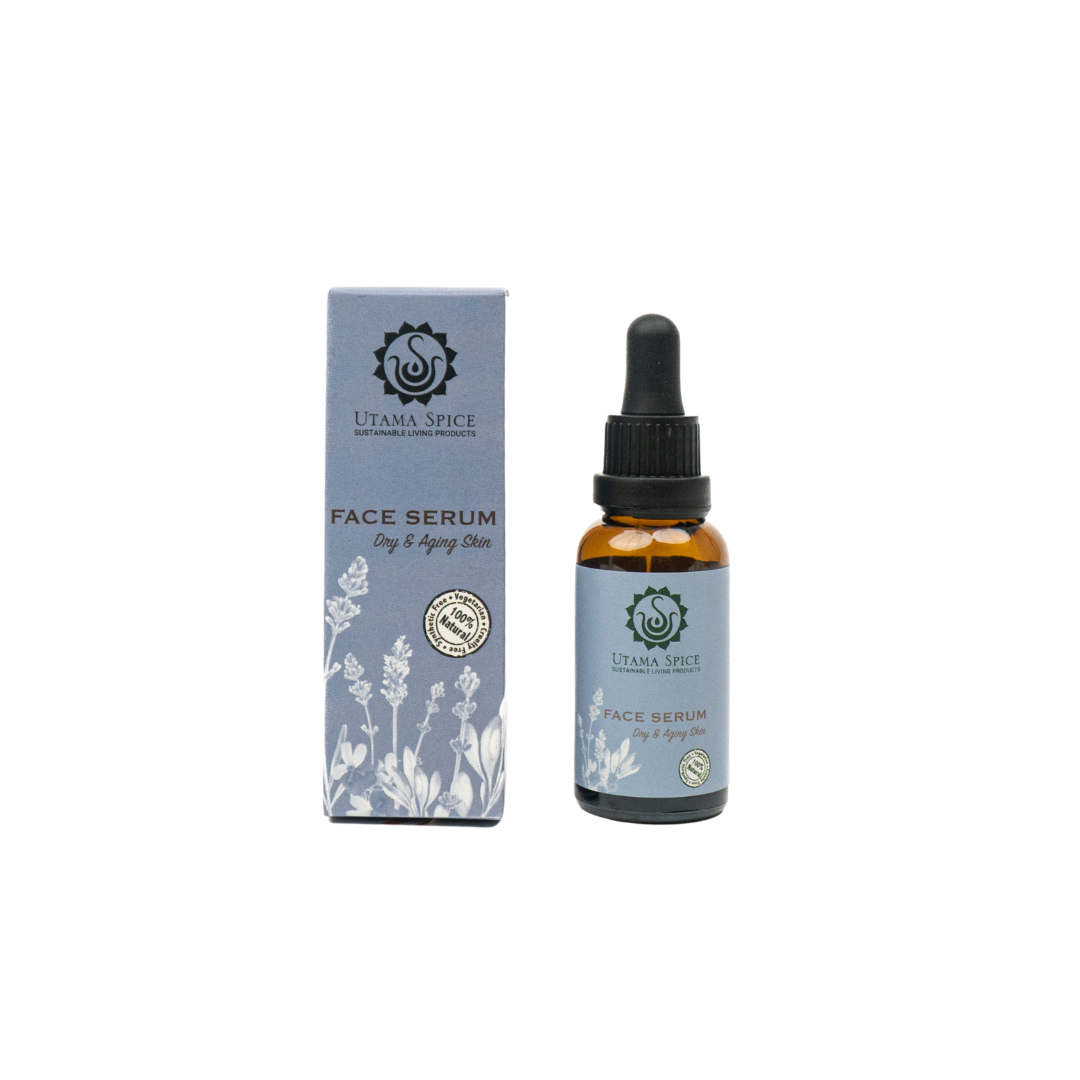
A few drops, pressed in on damp skin
Our Natural Face Serum blends argan, jojoba, and coconut oils with cocoa butter and a soft scent of lavender, cananga, rose geranium, and patchouli, hand-blended in Bali. Warm three or four drops between your palms and press them into dry cheeks and jaw after a water-based step. Keep it away from the eye area.
Night repair and the weekly reset
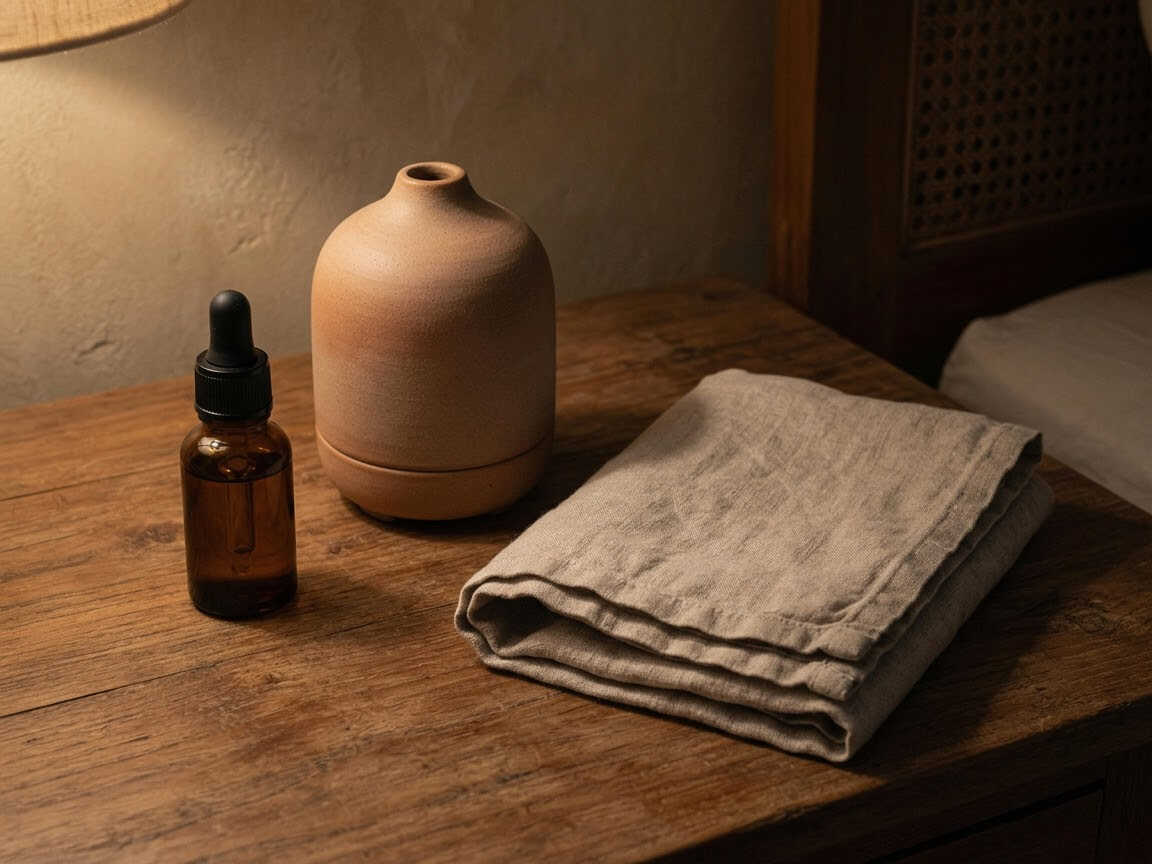
Night is when skin does much of its repair, and it is also when water loss quietly climbs. A good night routine for a dry face is short.
The night routine
- Cleanse gently with lukewarm water and a mild cleanser if you wore sunscreen or makeup.
- Leave the skin damp and press in your water-based layer.
- Press in four to five drops of oil, slightly more than in the morning, and finish with a thin layer of cream or balm on any rough patches.
That is all. If you use a retinoid or an acid, use it on two or three nights a week rather than every night while your skin recovers, and never on the same night you exfoliate.
Use your hands, not tools
Two minutes of slow pressing with your fingertips after the oil step helps it spread and turns the evening into a ritual. Our guide to facial massage with face oil has a simple sequence; skip it on any area that is cracked or stinging.
Look at the room you sleep in
If you sleep with the air conditioner on, set it a few degrees warmer, angle it away from the bed, and turn off any fan pointing at your face. A small humidifier can help in dry climates or in an air-conditioned room. Cotton or linen pillowcases washed in a fragrance-free detergent, changed often, also reduce friction and residue.
The weekly reset
Once a week, instead of adding a mask or a scrub, try doing less. Take one evening with only water and oil, with no actives and no new products. If your skin feels calmer the next morning, that tells you something about the rest of your week.
For the deeper science of how the barrier rebuilds itself, read our guide on how to repair your skin barrier. Most dry faces start to feel more comfortable within two weeks of this calmer approach, and the barrier itself takes around four weeks to renew fully. Give it that time before deciding something does not work.
When to see a dermatologist about dry skin on face

Most facial dryness responds to gentler cleansing, damp-skin layering, and a few weeks of patience. Some does not, and it is worth knowing the signs. Please see a doctor, dermatologist, or pharmacist if you notice any of the following.
- Dryness that does not improve after two to four weeks of a simple, gentle routine.
- Itching that disturbs your sleep or keeps you scratching.
- Redness, swelling, or burning that spreads or worsens with most products.
- Cracking, bleeding, oozing, or crusting, which can let infection in.
- Greasy, yellowish flakes around the nose, brows, or hairline that keep returning (possible seborrheic dermatitis).
- A bumpy rash around the mouth or nose that worsens with creams (possible perioral dermatitis).
- A rough, scaly patch that will not heal, especially on sun-exposed skin such as the forehead, nose, or tops of the ears. Persistent rough patches can be a sign of sun damage that needs checking.
- Dryness with other symptoms, such as tiredness, weight changes, or feeling unusually cold.
Before an appointment, note when the dryness started and which products you use, and take photos on bad days, because skin often looks calmer by the time you reach the clinic.
Natural care has a real and honest role here. Gentle plant oils, lukewarm water, and fewer products support the skin while it heals. They are not a substitute for a diagnosis, and we would rather you see someone early than layer more products on a problem that needs a different answer.
Frequently asked questions about dry skin on face
Why is my face dry even though I drink lots of water?
Drinking water matters for your overall health, but for most people with a dry face the limiting factor is the barrier, not hydration from within. If the barrier is stripped by hot water, harsh cleansers, or dry air, water escapes from the skin faster than drinking can replace it. Gentle cleansing and sealing moisture in on damp skin usually make a bigger difference than an extra glass a day.
Can oily skin be dry?
Oily skin can be dehydrated, which feels similar to dryness: tight, uncomfortable, and sometimes flaky, with oil on the surface. Strong cleansers and drying acne treatments are common causes. The two-minute check above helps you tell which one you are dealing with.
Should I exfoliate dry, flaky skin on my face?
Usually not while it is actively flaking. Flakes are a sign of a struggling barrier, and exfoliating removes them for a few hours while making the underlying problem worse. Focus on gentle cleansing and damp-skin layering for two weeks. Once the skin feels comfortable, a gentle exfoliation no more than once a week is fine for most people.
Is face oil or face cream better for dry skin on the face?
It depends on what is missing. Oils replace lipids and soften rough texture, and they suit dry skin well when pressed onto damp skin. Creams contain water and often humectants, which suit dehydrated skin. Many dry faces do best with a water-based step, then oil, then a thin layer of cream on the driest areas in cold or air-conditioned conditions.
Why is my face only dry around my nose?
Flaking in the creases beside the nose, especially with a slight pinkness or greasy flakes, is often seborrheic dermatitis rather than plain dryness. It tends to come and go and usually does not improve with heavier moisturizers. A doctor or pharmacist can confirm it and suggest targeted care.
How long does it take to fix dry skin on the face?
Most people feel a difference within one to two weeks of stopping stripping habits and sealing moisture in. The outer layer of skin renews over about four weeks, so give a new routine at least that long before judging it.
Final thoughts: less, and then a little more patience
A dry face is rarely asking for more products. It is asking for less friction, less heat, and fewer stripping steps, then a small amount of the right thing on damp skin. Read your face by zone, notice whether it is missing oil, water, or both, and watch the quiet causes, like the fan by the bed.
What you give your skin, you get back. Give it warmth, patience, and a few drops of oil pressed in with your palms, and let it do the slow work of restoring itself. If it does not respond, or if what you see looks more like a rash than dryness, ask a professional. That is care too.