Strawberry legs: what those dark dots really are, and why gentler beats harsher
Strawberry legs is the name for those tiny dark dots that show up on shaved legs, usually a day or two after the razor. Up close, the skin looks seeded, like the outside of a strawberry. Most advice online routes the fix straight to a daily acid toner. We want to start somewhere quieter: with what the dots actually are, and why the gentlest routine is often the one that works.
This guide explains what is happening inside each follicle, how to tell strawberry legs apart from keratosis pilaris, razor bumps, and folliculitis, and why the way you remove hair matters more than any product. Then we build a calm weekly rhythm, answer the coconut oil question honestly, and cover the signs that deserve a dermatologist’s eye.
What strawberry legs actually are

Strawberry legs is not a medical diagnosis. It is a descriptive phrase for a look, and several different things can create that look. What they share is the follicle: the small opening in the skin that each hair grows from. You have thousands of them on your legs, and each one is a normal, healthy part of your skin.
Open follicles and oxidized plugs
Every follicle produces a little sebum (the skin’s own oil) and sheds a little dead skin. When that mix sits in a wide follicle opening, the surface meets the air and darkens. It is the same process that turns the plug in a blackhead dark: oxidation, not dirt. We explain that chemistry in more detail in our guide to getting rid of blackheads naturally. On the legs, larger and coarser hair follicles mean larger openings, so the dots are easier to see.
Hair shadow under the surface
Some of the dots are simply hair. After shaving, the cut end of a dark hair sits just below the skin. On lighter skin, that stub shows through as a dark point, especially when hair is coarse and dark. This is why strawberry legs often look worst on the second day after shaving and fade when hair is removed from the root.
Marks left behind
The third source is pigment. When a follicle gets irritated, by a dull blade, a tight waistband, or an ingrown hair, the skin can respond by producing extra melanin around it. That leaves a small brown or purple mark called post-inflammatory hyperpigmentation. It can stay long after the irritation itself has calmed, and it tends to read darker and last longer on deeper skin tones.
Normal anatomy, not a flaw
Here is the truth that rarely makes it into product pages: visible follicles on legs are normal. Pores are not a defect to erase. The phrase “strawberry legs” is partly a marketing coinage, and a catchy name makes it easier to sell a daily treatment for ordinary skin. You may still want the dots to soften, and that is a reasonable wish. We simply want you to start from accurate information rather than worry.
Strawberry legs vs keratosis pilaris, razor bumps, and folliculitis

Four common leg textures get blended together online, and they need different care. Reading which one you have saves weeks of trying the wrong thing.
| Texture | What you see | How it feels | Usual cause |
|---|---|---|---|
| Strawberry legs | Flat dark dots at each follicle | Mostly smooth | Open follicles with darkened plugs, hair shadow, or old pigment marks |
| Keratosis pilaris | Small skin-colored or red bumps, often on upper arms and thighs | Rough, like fine sandpaper | Keratin plugs in follicles, often inherited |
| Razor bumps | Raised red bumps soon after shaving | Tender, sometimes itchy | Hairs curling back into the skin after a close shave |
| Folliculitis | Red bumps, sometimes with white heads | Itchy or sore | Inflamed or infected follicles (bacterial or fungal) |
How to read your own legs
Run your fingertips over the area. If it feels smooth but looks dotted, you are most likely looking at open follicles or hair shadow. If it feels like fine sandpaper, keratosis pilaris is the better match, and our guide to keratosis pilaris natural remedies covers that condition in depth. If the bumps are raised, red, and appear within a day or two of shaving, read our guide on how to get rid of razor bumps naturally. If the bumps carry white heads, feel tender, or itch, folliculitis is possible, and that one can need medical treatment.
Many legs have more than one at once. Someone with keratosis pilaris on the thighs may also see hair shadow on the shins. That is fine. Treat the dominant pattern first, and keep everything gentle while you watch what changes.
Strawberry legs often start with how you remove hair

If you take one idea from this guide, take this one. For many people, the root of strawberry legs is not a missing product. It is friction, heat, and pressure at the follicle, repeated every few days. Change the method and the dots often change with it.
A kinder shave, step by step
The American Academy of Dermatology offers simple shaving advice that happens to be the best starting point for strawberry legs. Here is our version, written as a ritual rather than a chore:
- Shave at the end of a warm shower. A few minutes of warm water soften hair and skin, so the blade glides instead of drags.
- Use a glide, never dry skin. A shaving gel, a gentle cleanser lather, or a thin film of oil all reduce friction.
- Shave in the direction the hair grows. Going against the grain gives a closer cut, but it also tugs the follicle and invites ingrown hairs.
- Rinse the blade after every stroke. A clogged blade presses harder for the same result.
- Replace blades often. A dull edge scrapes rather than cuts. The American Academy of Dermatology suggests a fresh blade after five to seven shaves.
- Let the razor dry between uses. A razor left wet in the shower collects bacteria between the blades.
Other methods and what they change
Waxing and sugaring pull hair from the root, so the shadow dots fade for a few weeks. They can also inflame follicles, especially at first, and some people see more ingrown hairs as regrowth comes in. Epilators work similarly and can feel harsh on sensitive legs. Electric trimmers leave a little stubble above the skin, which means less shadow from cut ends and almost no razor irritation. Laser hair removal, done by a qualified professional, reduces hair growth over time and is the one method that addresses the follicle itself. It costs more, and results vary by hair and skin tone, so it is a conversation worth having with a dermatologist rather than a salon promotion.
Timing matters too
Shaving right before the beach, the gym, or a long day in tight clothing stacks friction on fresh skin. If you can, shave in the evening. That gives follicles a quiet night to settle before sweat, sun, and seams arrive.
The acid problem: why harsher can make the dots darker

Search for strawberry legs and you will find a clear pattern: brand after brand recommends a glycolic or salicylic acid product, used daily. Acids are not villains. Chemical exfoliants can help loosen the plugs in follicles, and for some people they are part of a good routine. The problem is timing, frequency, and who gets left out of the conversation.
Acid on freshly shaved skin
Shaving removes a thin layer of surface skin along with the hair. Right after a shave, the barrier is briefly more open and more reactive. Apply a strong acid at that moment and many people feel a sting, then see redness around each follicle. Repeat that several times a week and you can create exactly the irritation that leads to dark marks. Many acid products quietly say so on the label, with a line advising against use on broken or freshly shaved skin.
Why deeper skin tones need extra care
On melanated skin, irritation is more likely to leave post-inflammatory hyperpigmentation, and those marks can take months to fade. That means a routine built on daily acids and frequent scrubbing can turn a few temporary dots into lasting brown spots. If your skin tends to darken after a bug bite or a scratch, treat that as useful information. Go slower, use less, and protect healed marks from the sun. Our guide to getting rid of dark spots naturally explains how pigment forms and why patience beats force.
Scrubs belong in the same conversation
Gritty scrubs used every day bring the same risk through a different route: mechanical friction instead of chemical. We explain the trade-off between physical and chemical exfoliation in our natural face scrub guide, and the broader logic in how important exfoliation is for the skin. The short version for legs: once a week is plenty for most people, and never on the same day you shave.
A gentle weekly rhythm for strawberry legs
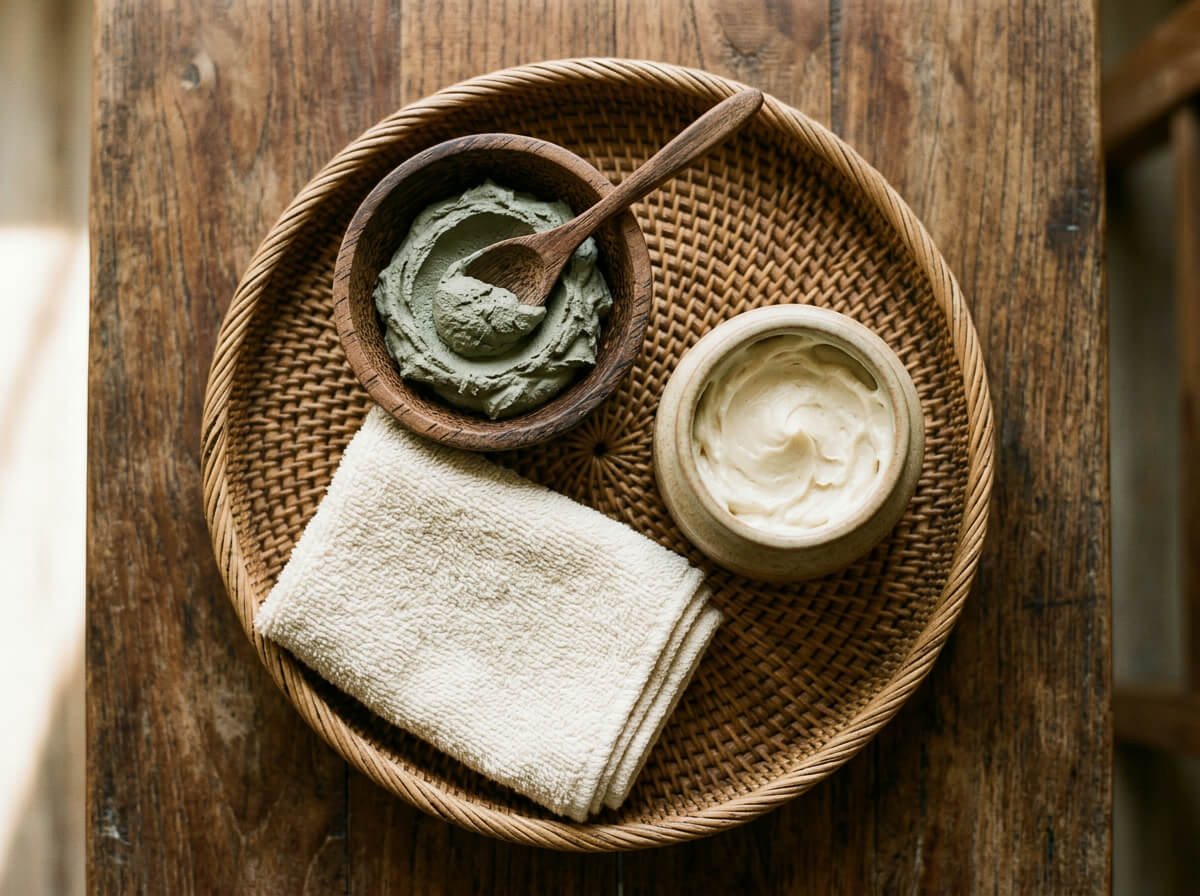
Instead of a daily treatment, we suggest a rhythm. Each step has a job, and none of them fights the skin.

Once a week: clay
Clay draws excess oil from the skin’s surface and leaves it feeling clean without scrubbing. Choose a day you are not shaving. Mix a spoonful of Face and Body Clay with a little water into a smooth paste, smooth a thin layer over the shins or thighs, and rinse with warm water after about 10 minutes, before it cracks fully dry. You are not trying to pull anything out by force. You are simply clearing the surface so follicles look less congested. If you are curious how clay differs from mud, our post on mud mask vs clay mask breaks it down.
Two or three times a week: a soft cloth
In the shower, a soft washcloth moved in small circles lifts loose skin cells without grit. Across Bali and Java, body care has long been about unhurried attention rather than force, a tradition we explore in our guide to the lulur scrub.
Every day after a shower: seal
This is the step most people skip, and it may matter most. Skin that is well moisturized is softer, sheds more evenly, and is less likely to trap dead cells at the follicle opening. Pat legs damp, then press in a plant butter while the skin is still slightly wet. Our Lavender Dream Body Butter blends coconut oil and wild-harvested illipe butter from Kalimantan with a gentle lavender scent. The illipe comes through our Forestwise partnership, gathered by families who have worked the same forest groves for generations. If you prefer a brighter, citrus morning scent, Pure Energy Body Butter uses the same base with bergamot and orange peel oils. Citrus peel oils can make skin more sensitive to sun, so we suggest keeping it for evenings or covered legs. Our guide to natural body butter explains how these butters seal moisture in, and body oil vs body butter helps if you are deciding between textures.
Daily, when legs see sun: protect
Sun darkens existing pigment marks and slows their fading. If your legs are out in daylight, a mineral sunscreen such as our Zinc Natural Sunscreen SPF50 protects healing marks without adding fragrance to freshly shaved skin. In the tropics, this one habit can do more for dark dots than any exfoliant.
What a week can look like
- Monday: shave at the end of a warm shower, then seal with body butter in the evening.
- Wednesday: soft cloth in the shower, then seal.
- Saturday: clay on a non-shave day, then seal.
- Every day outdoors: sunscreen on exposed legs.
Give this four to six weeks before you judge it. Skin renews itself roughly once a month, and pigment marks take longer still.

Seal freshly shaved legs, gently
Lavender Dream Body Butter blends cold-pressed coconut oil with wild-harvested illipe butter from Kalimantan and a soft lavender scent. Press it into damp legs after the shower, the quiet daily step that keeps follicles soft and skin supple. Handmade in Bali.
Can coconut oil remove strawberry legs? The honest answer

It is one of the most searched questions on this topic, and it deserves a straight reply. No, coconut oil will not remove strawberry legs. It cannot close a follicle, dissolve a hair stub, or erase a pigment mark. What it can do is still useful, as long as we are clear about it.
Where coconut oil helps
Coconut oil softens dry skin and adds glide. A thin film on wet legs before shaving reduces drag from the blade, which means less irritation at each follicle. Afterward, a few drops pressed into damp skin help keep the surface supple. Our Virgin Coconut Oil is cold-pressed from Bali coconuts through our Aluan partnership, and it is a single-ingredient option for people who want nothing else on fresh skin. For more ways to use it, see our guides to coconut oil for skin and how to use coconut oil for skin.
Where it is a mixed bag
Coconut oil is rich. A heavy layer left on legs that are prone to clogged or inflamed follicles can sit in those openings and make things worse for some people. If a dermatologist has told you that your bumps are fungal (Malassezia) folliculitis, ask before adding any rich oil, since this yeast feeds on certain skin oils. Rinse coconut oil used as a shave glide, and if you use it afterward, keep the layer thin.
Lighter choices for reactive legs
If your legs flush easily after shaving, a lighter, fragrance-free oil may suit you better. Our Tamanu Oil is a single-ingredient oil many people use on small areas of irritated skin. Patch test first on the inside of the ankle, as with any new product. Aloe vera gel is another soothing option, though many gels, including some natural ones, contain alcohol that can sting on a fresh shave, so check the label.
When to see a dermatologist

Most strawberry legs are cosmetic and harmless. A few situations deserve a professional look rather than another home remedy.
Signs worth a visit
- Bumps that are painful, swollen, or filled with pus.
- Redness that spreads beyond the follicle, feels warm, or comes with a fever.
- Boils or deep, tender lumps that keep returning.
- Dots or marks that do not change after six to eight weeks of a gentle routine.
- Intense itching, or a rash that appears after starting a new product.
- Dark marks that are new, changing, or different from the rest, which should always be checked.
What a dermatologist can offer
A dermatologist can tell folliculitis from keratosis pilaris from ordinary open follicles in a single visit. If an infection is present, they can prescribe the right treatment, whether bacterial or fungal. For persistent pigment, they may suggest prescription options, and for recurring ingrown hairs, they can discuss laser hair removal. Bring a short note of your hair-removal routine and the products you use. That simple record often speeds up the answer.
Strawberry legs FAQ

How long do strawberry legs take to fade?
Dots from hair shadow fade as soon as hair is removed from the root or left to grow. Clogged follicles usually look calmer within four to six weeks of a gentle routine. Dark marks from irritation can take several months to fade, longer on deeper skin tones, and sun exposure slows the process.
Does waxing help strawberry legs?
It can reduce the shadow dots because it removes hair from the root. It can also irritate follicles and cause ingrown hairs, especially in the first few sessions. If waxing leaves you with red bumps, it may not be the right method for your legs.
Are strawberry legs permanent?
Not usually. Open follicles are part of your skin’s structure, so they will always be there, but the dark look depends on what sits inside them. With kinder hair removal, regular moisture, and sun protection, most people see the dots soften a great deal.
Can I use a body scrub for strawberry legs?
A gentle scrub once a week is fine for many people, as long as you skip it on shave days. Daily scrubbing tends to irritate follicles. A soft cloth and weekly clay do the same job with less friction.
Is strawberry legs the same as keratosis pilaris?
No. Keratosis pilaris feels rough and bumpy, because each follicle holds a hard plug of keratin. Strawberry legs usually looks dotted but feels smooth. Some people have both.
Should I stop shaving to get rid of strawberry legs?
You do not need to stop, but it helps to shave less often, with a fresh blade, a glide, and the direction of hair growth. If you want a break, letting hair grow for a few weeks often shows you how much of the look comes from shaving itself.
Final thoughts
Strawberry legs is a story about follicles, friction, and time, not a flaw to fix by force. Kinder hair removal, steady moisture, weekly clay, and daily sun care respect how skin actually works. Care is an action, and on our legs, the quiet version tends to work best.