Aromatherapy diffuser oils: how to choose the right oils for your space
Aromatherapy diffuser oils are the small amber bottles that quietly change the feel of a room. A few drops in a diffuser can shift the air from heavy to clear, restless to settled, dull to alive. The trouble is that the shelf where these oils live has become crowded with mislabels and shortcuts, and most buying guides treat every oil as interchangeable. They are not. The plant, the place it grew, the way it was distilled, and the bottle it now sits in all decide whether your diffuser carries true therapeutic aromatherapy or just synthetic scent in disguise.
This guide is written from the workbench, not the marketing department. We have been hand-blending essential oils in Bali since 1989, working with growers in Java, Sulawesi, and Kalimantan whose families have distilled these botanicals for generations. What follows is how we choose oils for our own diffusers, how we teach customers to read a label, and the small set of decisions that separates a real aromatherapy ritual from an air freshener. By the end you will know what to look for, what to skip, and how to build a small, honest collection that serves your space and your nervous system.
What aromatherapy diffuser oils actually are
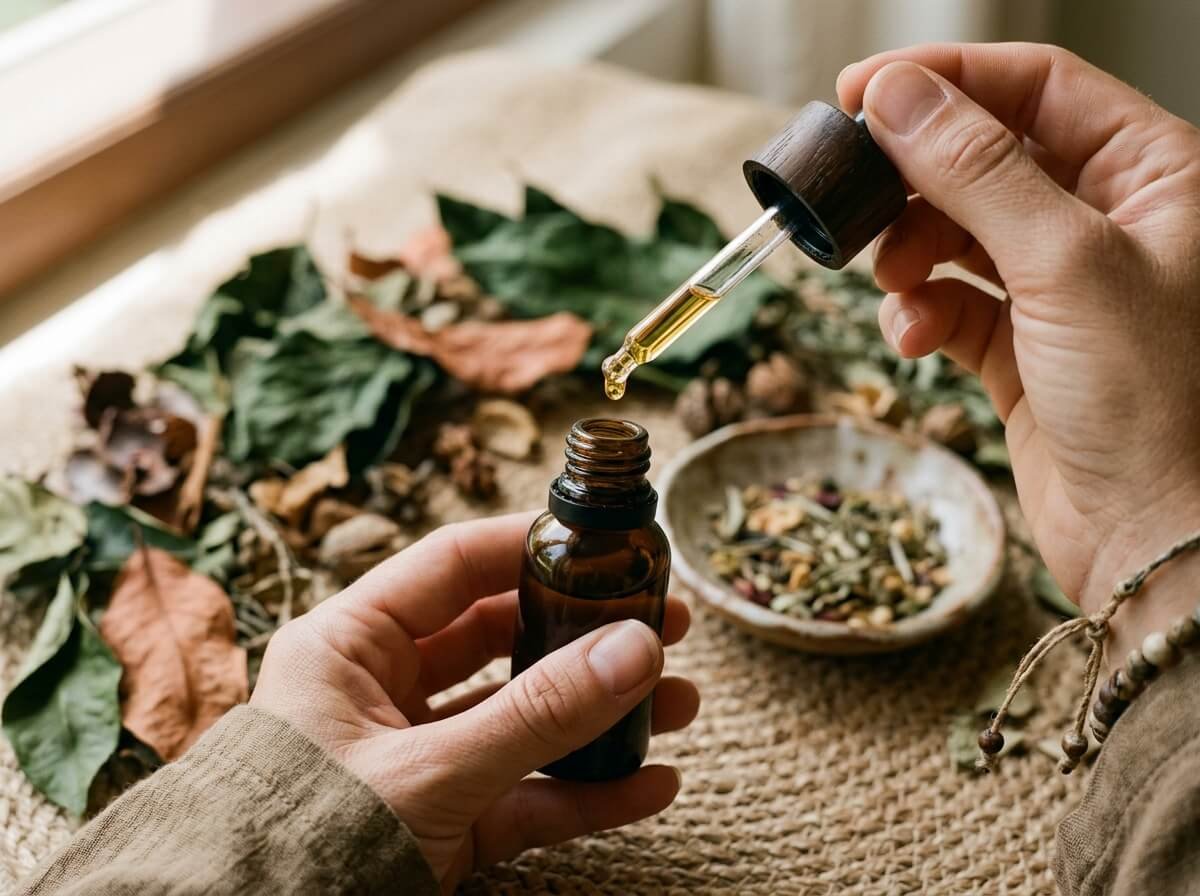
An essential oil is the volatile aromatic compound steam-distilled or cold-pressed from a plant. It is not an extract suspended in carrier oil, and it is not a perfume. A single ten-millilitre bottle of pure lavender oil represents around one kilogram of fresh flowers. A bottle of rose oil represents far more. That density is why a few drops carry a room, and why the price of real oil tracks the cost of the harvest behind it.
Fragrance oils are different. They are synthetic blends designed to mimic a botanical scent, often built on phthalate carriers and petrochemical aromatics. They smell strong, they last long, and they cost a fraction of the real thing. They also do not carry the chemistry that makes aromatherapy a therapeutic practice. Linalool from real lavender binds to GABA receptors in the brain and lowers measured cortisol. Linalool from a synthetic blend looks similar on a lab spec sheet, but the rest of the molecule profile around it is not the same plant, and the body knows the difference within minutes.
If you want the long view on why this matters, our piece on essential oils benefits covers the research on inhalation pathways, the olfactory-limbic connection, and which mechanisms are clinically supported. For our purposes here, hold one rule: a diffuser oil is worth buying only if the label tells you the botanical name, the country of origin, and the extraction method. If any of those three is missing, the bottle is not aromatherapy.
Choosing aromatherapy diffuser oils by therapeutic purpose
The fastest way to build a useful collection is to think in outcomes, not scent families. Most diffuser sessions fall into four intentions: calm, focus, energy, or sleep. Each one has a small group of botanicals that the evidence and the tradition both back.
For calm and stress relief
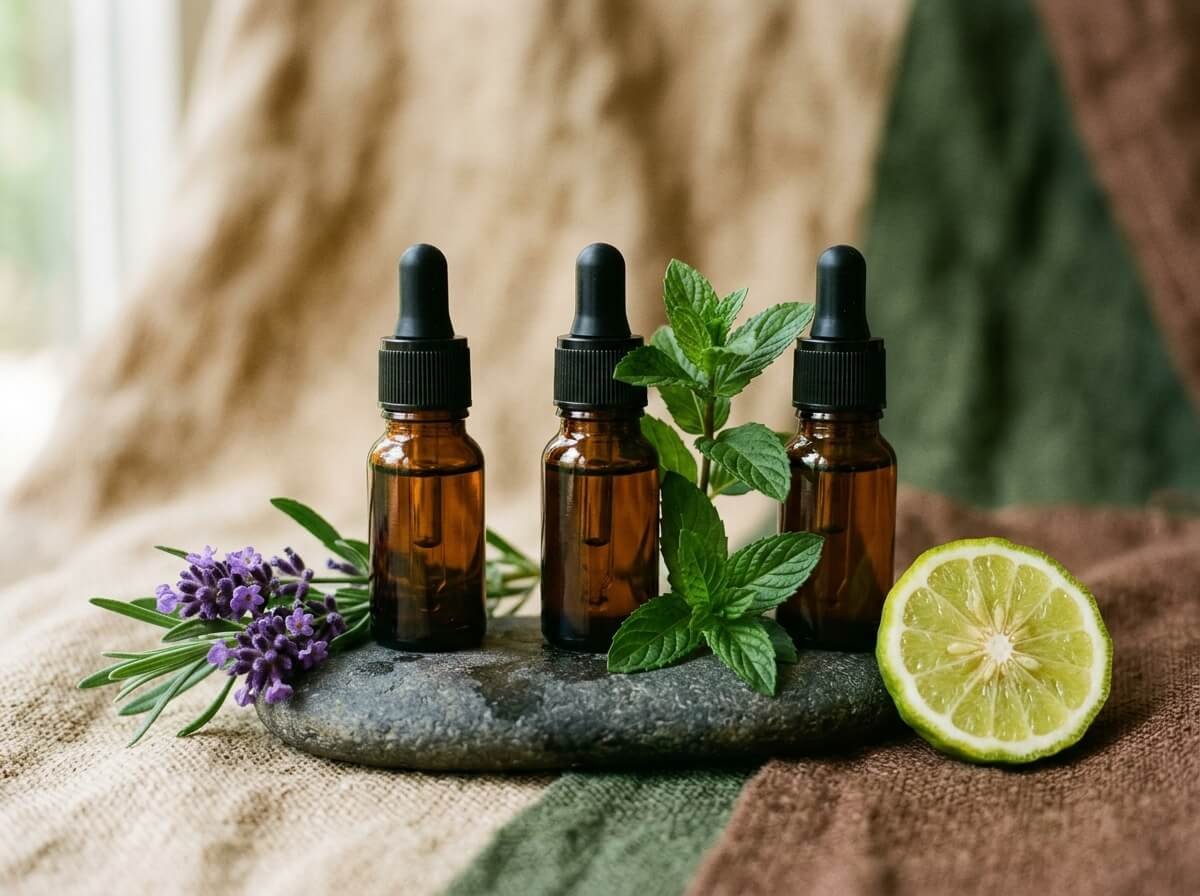
Lavender, bergamot, Roman chamomile, ylang ylang, and frankincense are the core. Lavender is the most studied: a 2012 meta-analysis in Phytomedicine found measurable reduction in anxiety markers across multiple trials. Bergamot lifts the nervous system out of the freeze response without sedating. Frankincense slows the breath, which is part of why it has been used in ritual contexts across cultures for thousands of years. Our aromatherapy oils for anxiety piece goes deeper on the calm category if you want the longer read.
For focus and clarity
Peppermint, rosemary, eucalyptus, lemon, and basil. Rosemary in particular has shown effect on working memory in controlled studies. Peppermint sharpens attention and helps with afternoon fatigue. We keep a small bottle of pure peppermint near the workbench for the same reason a barista keeps a coffee grinder within reach.
For energy and uplift
Sweet orange, grapefruit, lemongrass, ginger, and lime. The citrus family is fast and bright, and it reaches the brain through olfactory pathways within seconds. These are the oils to diffuse in the morning, in a shared workspace, or any time the room feels heavy. Our kaffir lime essential oil blend sits in this register, distilled from Indonesian kaffir lime leaf with a particular green-bright character that pure lime oil alone cannot reach.
For sleep and evening unwind
Lavender, cedarwood, vetiver, sandalwood, and sweet marjoram. The sleep-oriented oils tend to be lower and slower, with grounding base notes. Vetiver in particular drops the breath and supports parasympathetic activation. A sleep blend works best diffused for thirty to sixty minutes before bed, then switched off as you settle, so the oil sets the room rather than running through the night.
Essential oil quality: how to read a bottle
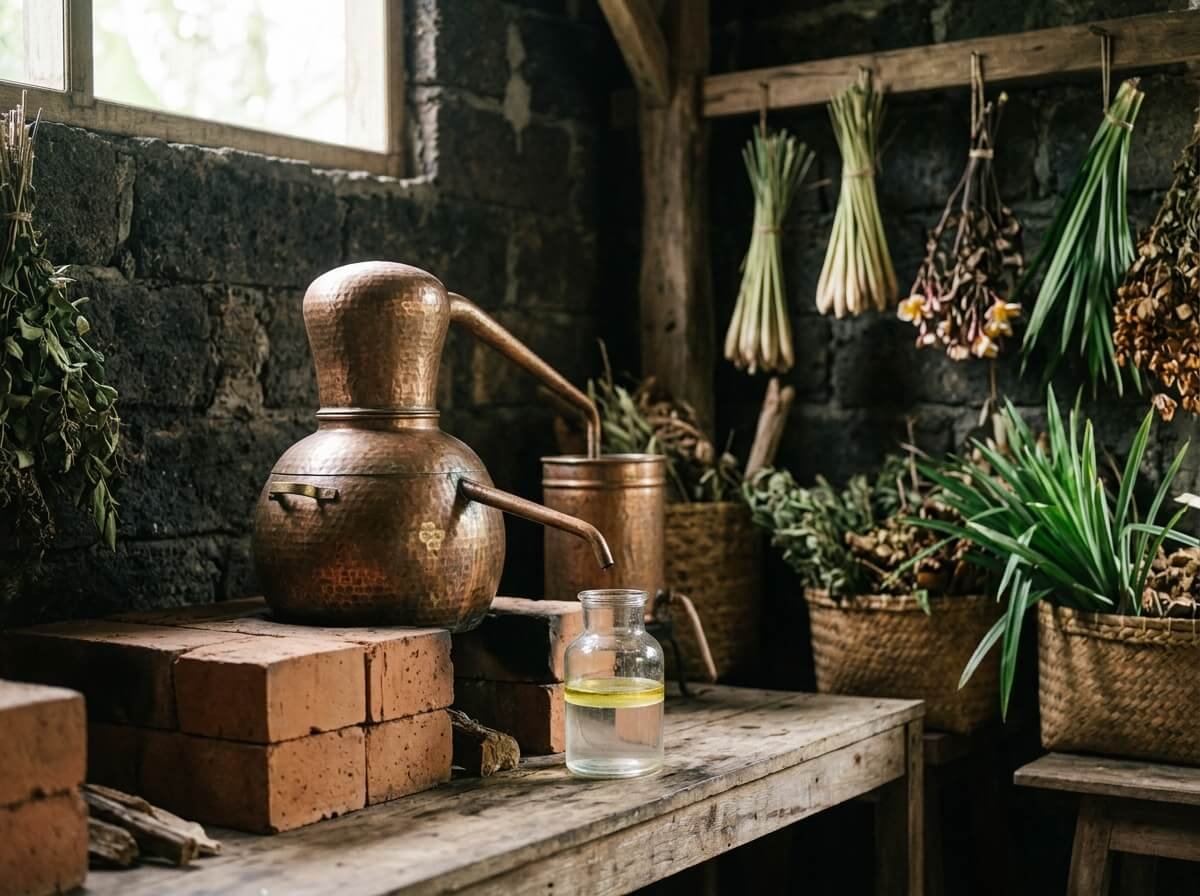
Most of what separates a serious aromatherapy diffuser oil from a perfumed substitute is decided long before the bottle reaches your hand. The plant, the harvest, and the extraction method carry most of the work. Here is what we look for on every label we buy, sell, and put in our own homes.
The Latin botanical name
A real essential oil shows its species. Lavandula angustifolia is true lavender. Lavandula latifolia is spike lavender. Lavandula x intermedia is lavandin, a hybrid often passed off as lavender on cheaper labels. The aromatic and therapeutic profile is different across all three. The same applies to chamomile, eucalyptus, rosemary, and any plant with multiple subspecies. If the label says only the common name, you are buying a guess.
Country and region of origin
Place is half the chemistry. The same plant grown at altitude in one country produces a different molecular profile from the same plant grown at sea level in another. Bulgarian rose, Indonesian ylang ylang, French lavender, and Madagascan ylang ylang carry distinct signatures, and a serious distiller will say so on the bottle. We source many of our singles from Indonesia because we know the growers and the growing conditions, and we list it because place matters.
Extraction method
Steam distillation is the standard for most essential oils. Citrus peels are cold-pressed because heat damages the aromatic compounds in the rind. A few delicate florals are solvent-extracted to produce absolutes, which are usable but technically not essential oils. If a label uses words like fragrance compound, parfum, or aromatic blend without naming the method, the contents are not pure essential oil.

Packaging and storage
Pure essential oils are sold in dark amber or cobalt glass because light degrades the volatile compounds. Plastic dropper inserts will deteriorate over months as the oils dissolve the lining. The shelf life of most essential oils, kept dark and cool, is one to three years, with citrus on the shorter end and woods, resins, and roots on the longer end. If you see clear glass, plastic bottles, or no batch date, walk past.
Best essential oil blends for diffusing, by mood
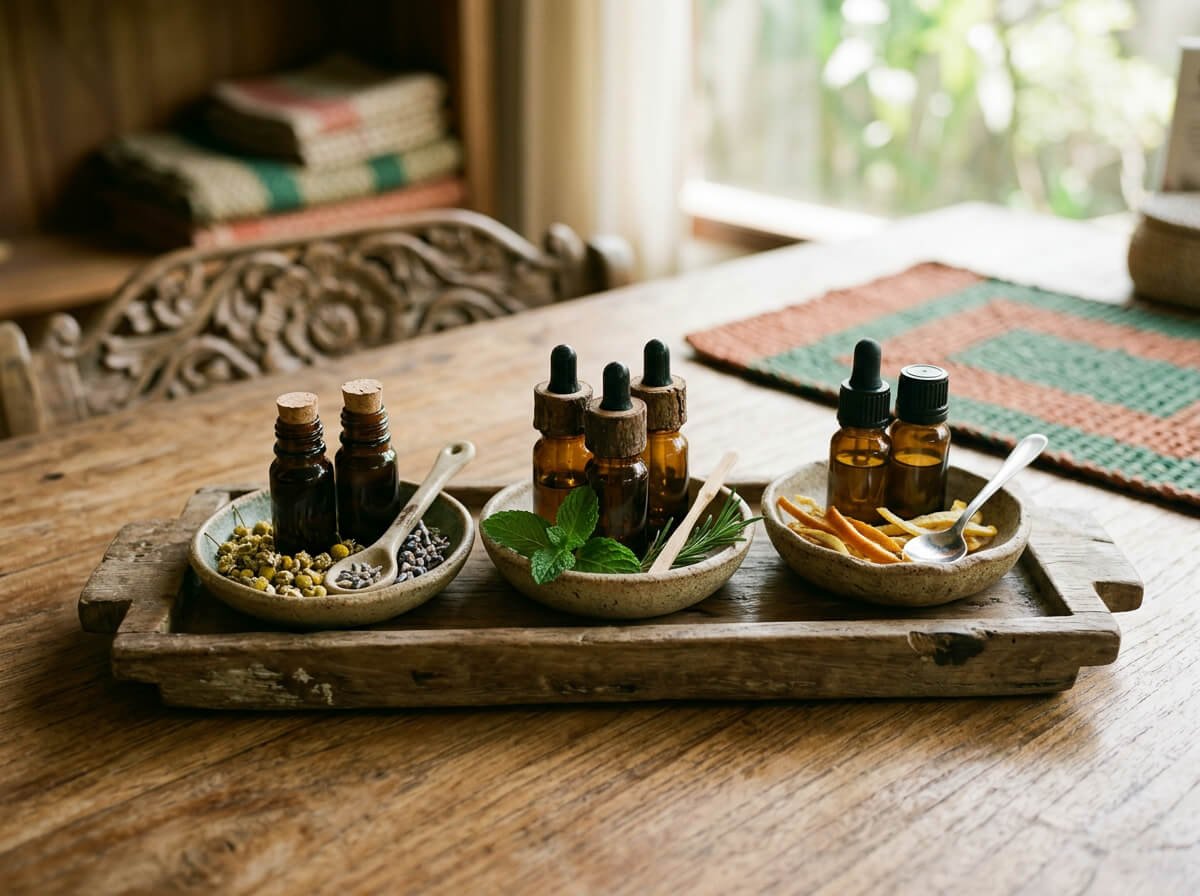
A pre-made blend takes the guesswork out of pairing. The work of building proportions across top, middle, and base notes is already done, and you reach for one bottle instead of three. We blend ours in small batches in Ubud, with single-origin Indonesian oils as the backbone, and we lean toward four moods that cover most of what a home actually needs.
- Evening and unwind: warm, floral, grounding. Our Bliss essential oil blend is built around ylang ylang and sandalwood for the lower-register quiet that settles a room.
- Morning lift: bright citrus over a soft herbal base. A few drops of a lemongrass or kaffir lime blend in an ultrasonic diffuser at sunrise can replace the second cup of coffee.
- Focus and work: rosemary, peppermint, and lemon. Strong enough to cut through afternoon fog without overwhelming a small office.
- Sleep and ritual: ylang ylang, cananga, vetiver, and orange. Our newest formulation, the Bali Night essential oil blend, sits in this register and was developed for the warm, slow evenings that Bali itself made us want to bottle.
If the blend route is not for you, the simplest custom approach is to pick one top note, one middle, and one base, and combine them in the diffuser at a three-two-one ratio of drops. Bergamot, lavender, and frankincense is a reliable starting set. So is lemon, rosemary, and cedarwood. Our longer guide to essential oil blends walks through the note pyramid in more detail if you want to start mixing your own.
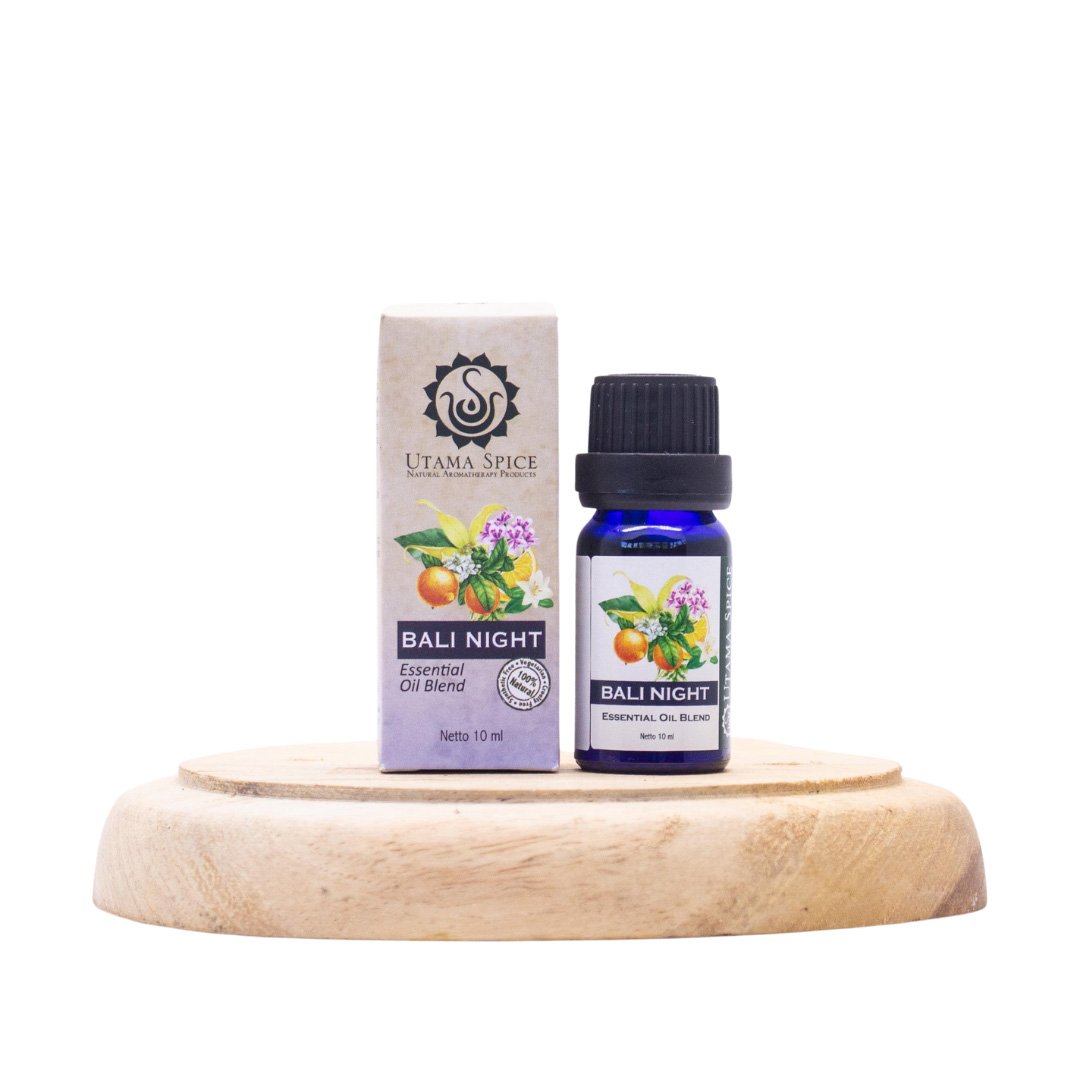
Bali Night essential oil blend
A sensual evening blend of cananga, vetiver, ylang ylang, rose geranium, and tangerine, hand-blended in Ubud from single-origin Indonesian oils. Built for the slow hour before sleep.
How to use a diffuser safely
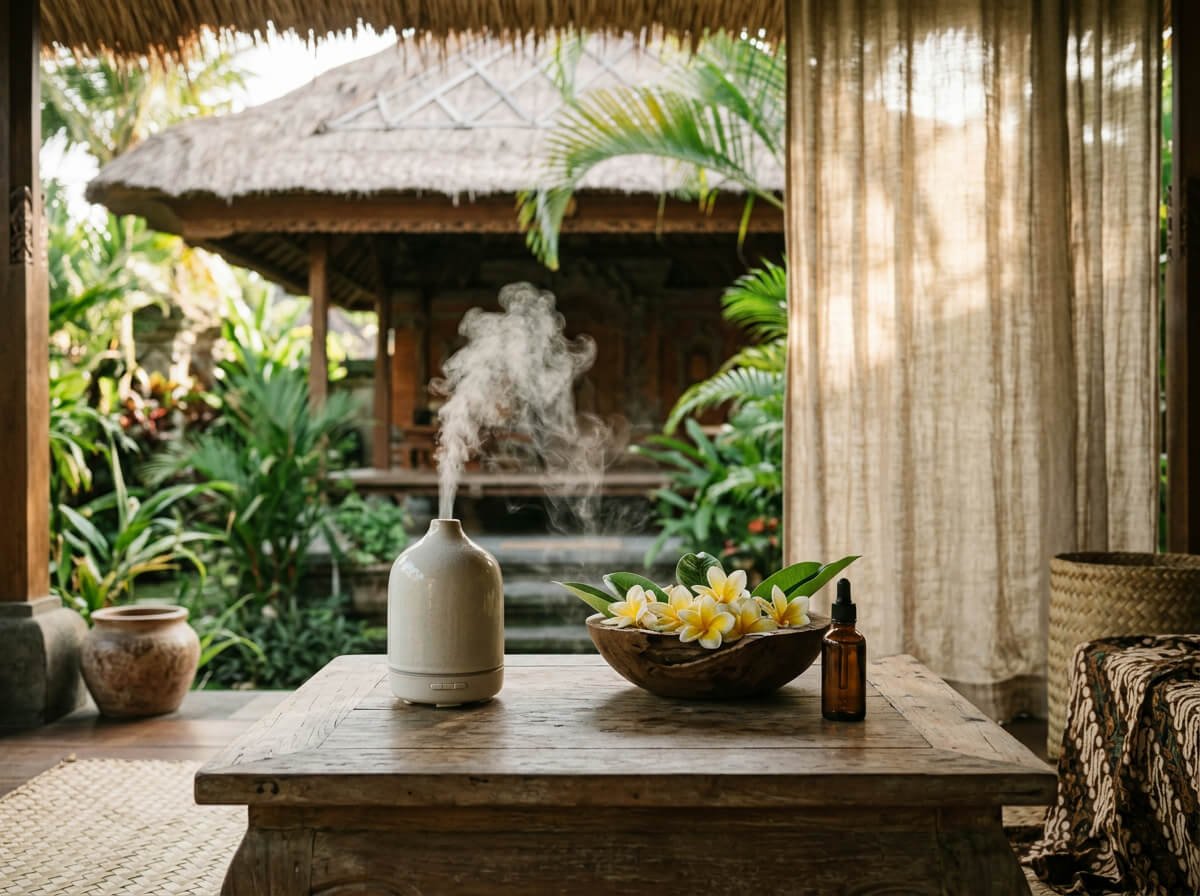
The therapeutic effect of aromatherapy diffuser oils depends on dose, time, and the room they meet. Too little and the molecule load never builds. Too much and the nervous system overshoots into headache or nausea. The good news is that the right amount is small, and the safety rules are short.
- Drops per session: three to six drops per 100 ml of water in an ultrasonic diffuser, scaled to room size. A small bedroom takes three. A large living room takes six.
- Duration: 30 to 60 minutes is a full session. Run, then rest. Continuous all-day diffusion is the most common mistake, and it dulls the olfactory response within an hour.
- Ventilation: diffuse in a room with some airflow. A closed, shut room concentrates the oils too quickly and irritates the airway.
- Pet safety: cats lack a liver enzyme needed to metabolise certain monoterpenes in citrus and tea tree oils. If you have a cat, keep diffusion intermittent, in a room they can leave, and avoid tea tree, pine, eucalyptus, and citrus singles when they are present. Birds are also sensitive. Dogs tolerate most diffusion at low concentrations.
- Children and pregnancy: diffuse at lower drop counts (two to three drops) and shorter duration around infants and during the first trimester. Some oils, including rosemary, sage, and clary sage, are best avoided in pregnancy. When in doubt, lavender, sweet orange, and Roman chamomile are widely considered safe.
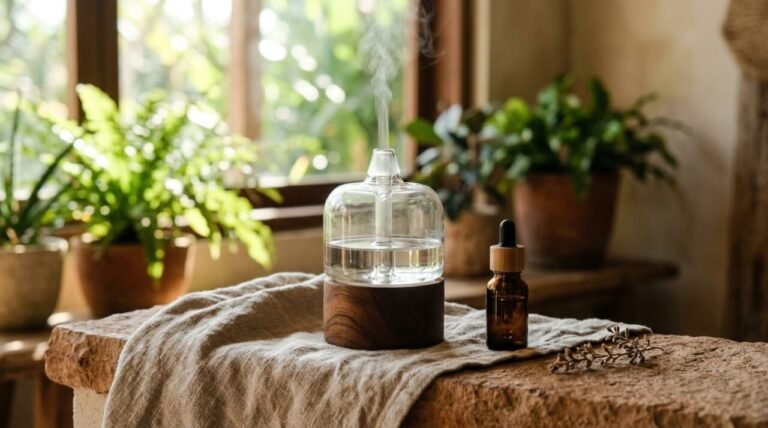
The device matters too. Ultrasonic diffusers use water and a piezoelectric plate to create a fine mist, and they are the easiest entry point. Nebulizing diffusers use pressurised air to atomise pure oil with no water, which is stronger and faster but uses more oil per session. Reed diffusers and ceramic stones release scent passively over weeks rather than in concentrated sessions. Our guide to the best aromatherapy diffuser walks through which type fits which space, and the piece on the essential oil diffuser humidifier combination explains where those two technologies overlap and where they diverge.
Single-origin oils versus blends: why sourcing matters
Behind every honest bottle of essential oil there is a farm, a still, and a relationship. The single biggest factor in the quality of an aromatherapy diffuser oil is not the brand on the label, it is the integrity of the supply chain that fills it. Most large fragrance houses buy oils on commodity markets, which means the oil in your bottle is a pooled blend from multiple farms, sometimes from multiple countries, often with no traceability beyond a regional name.
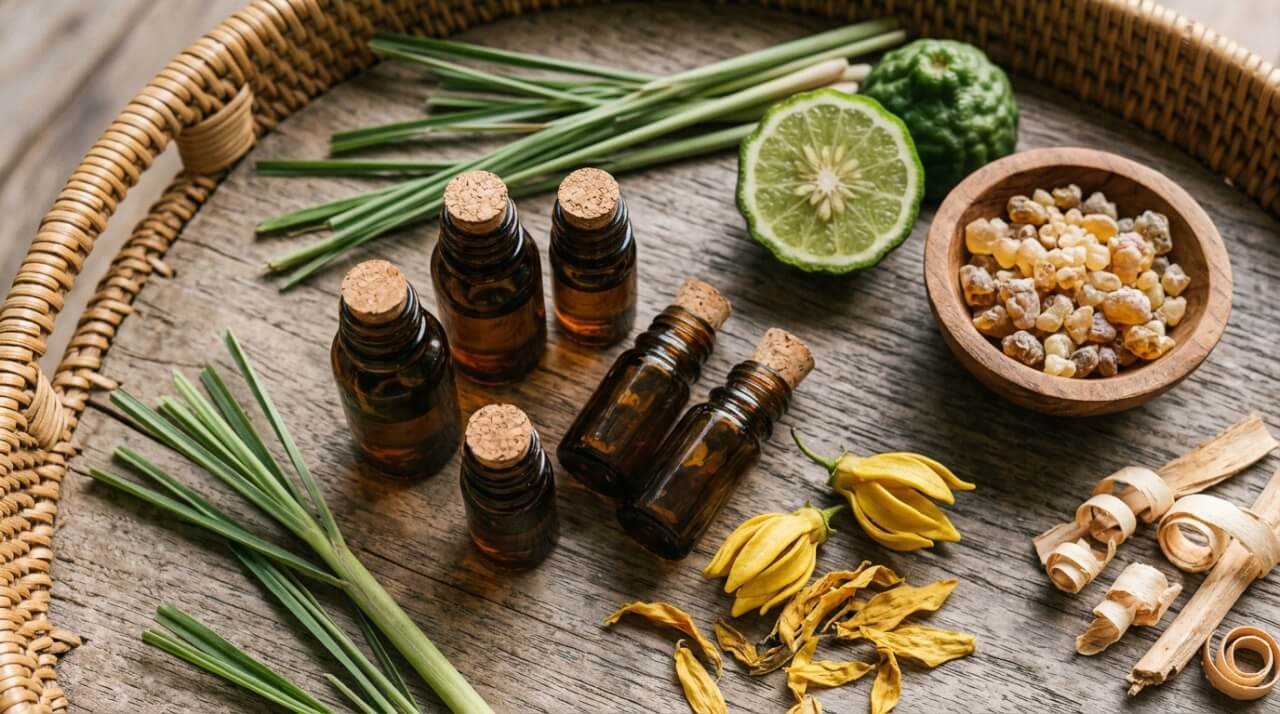
Single-origin oils come from one farm or one cooperative, with the harvest year known and the distiller named. Our frankincense essential oil is sourced through a partnership we have visited and inspected. Our ylang ylang essential oil comes from Indonesian growers who have worked the same cananga groves across generations. We do not buy oils we cannot trace, because the alternative is a guess painted as nature.
There is also an environmental case for traceable sourcing. Wild-harvested oils, when done well, support the forests they come from. When done badly, they strip-mine them. Sandalwood is the cautionary tale: Indian Mysore sandalwood is now nearly extinct in the wild because of unregulated extraction, and most sandalwood oil on the market today is Australian or New Caledonian. Buying single-origin from a brand that knows its growers is the closest thing the customer has to a vote against extractive sourcing.
For a longer treatment of how sourcing decides everything downstream, our piece on kukui oil tracks a single Indonesian botanical from grove to bottle, and the blue tansy aromatherapy guide unpacks how a niche oil with a tiny global supply gets adulterated when demand spikes.
Building a starter collection of aromatherapy diffuser oils
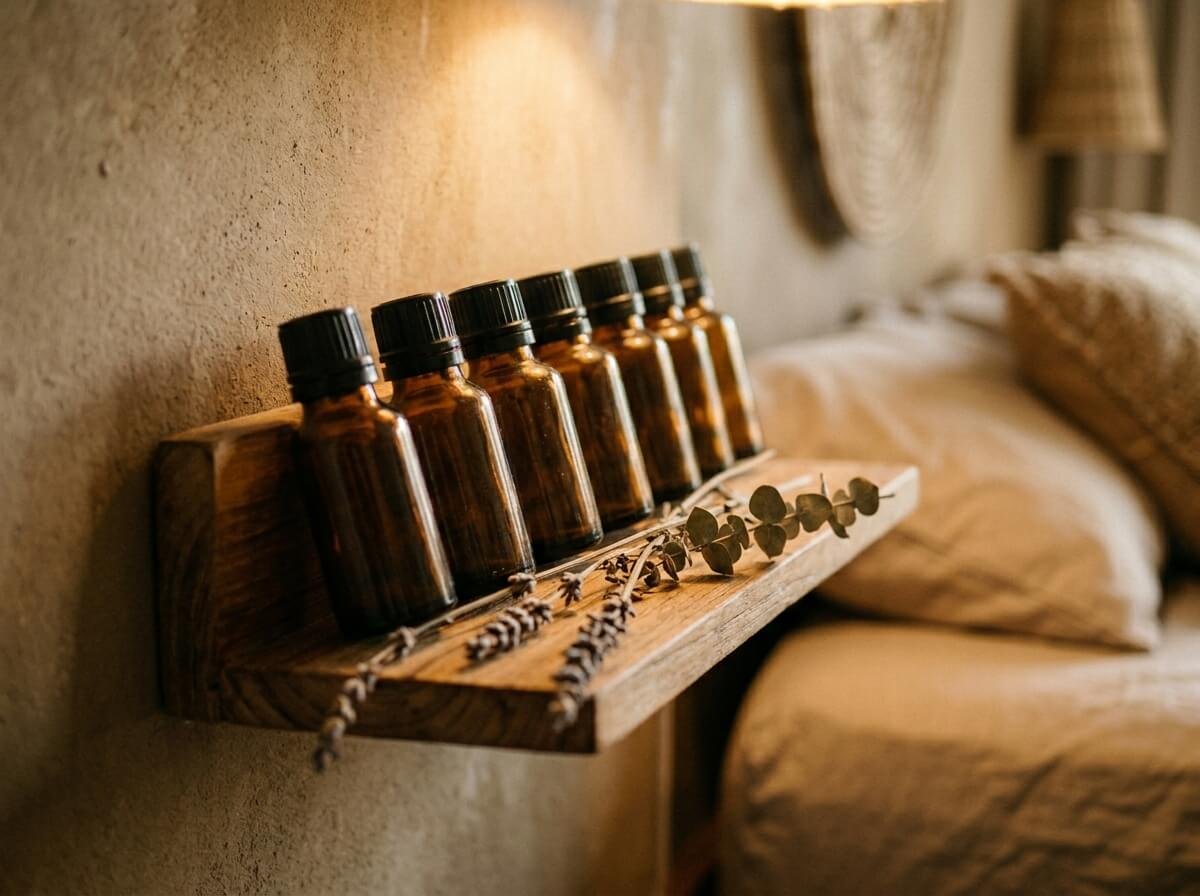
Most people start with too many bottles and use the same two. A better way is to start with a small, honest set and add one a season as your nose grows. Six oils, chosen well, will carry a household for a year of evening rituals, morning lifts, focused work, and slow weekend afternoons.
- Lavender for calm, sleep, and the universal first oil.
- Sweet orange or lemon, for morning brightness and air clearing.
- Peppermint for focus, headache, and afternoon energy.
- Frankincense for grounding, meditation, and the slow exhale.
- Ylang ylang for evening, intimacy, and tropical warmth.
- A pre-made blend in your favourite mood, for the days you want to reach for one bottle and have it work.
From this set you can build almost any blend. Lavender plus orange is a soft uplift. Frankincense plus ylang ylang is an evening grounding. Peppermint plus lemon is a clarifier for a stuffy work room. Once you have lived with six bottles for a month, the next purchases will choose themselves: a cedarwood if you want deeper sleep, a rosemary if you want sharper focus, a vetiver if you want the lowest register of grounding.
If you also reach for roll-ons during the day, a small dropper of pure essential oil is not the only format. Our Pure Energy essential oil roller is built around the same Indonesian-grown citrus and herbal singles, pre-diluted in fractionated coconut oil for application to wrists and temples between diffuser sessions. Different vehicle, same plants.
A quieter way to scent a home
The case for real aromatherapy diffuser oils is not nostalgia. It is that a few drops of a plant, distilled with care and used with intent, can do what a candle, a plug-in, or a spray cannot. They reach the nervous system through olfaction, they carry the chemistry of the place they grew, and they leave no residue beyond a slightly calmer room and a slightly settled body. For those willing to read a label and slow down, the practice is one of the simplest, most sensory rituals available in a home.
We do not believe in chasing trends or stacking shelves. We believe in small, honest collections, refilled when they run out, and used with the same attention you would give a cup of tea. If you are starting a diffuser practice for the first time, begin with two bottles, learn how they move through your day, and let the collection grow from there. The point is not how many oils you own. The point is what they do for the hour you sit with them. For more on building daily rituals around scent without overwhelm, our piece on natural candles covers the slower, ambient end of the same practice.