Hair oil for growth and thickness: tropical oil science most guides miss
Most guides on hair oil for growth and thickness recycle the same shortlist: rosemary, castor, peppermint, argan. Useful oils, all of them, but a thin slice of what botanical care can actually do for hair. The deeper story sits one layer below, in the science of how oils interact with the hair shaft, and in the tropical plant oils that Western roundups quietly leave out. This guide brings both layers together, weaving the trichology research with generations of Balinese practice, so you can build a hair oil routine that supports growth and thickness on the terms your hair actually responds to.
Utama Spice has hand-blended hair oils in Bali since 1989. What we have learned, across thirty-five years of small-batch craft, is that the right oils, applied the right way, with care for ritual as much as ingredient, do something a single bottle of any one product cannot do alone. Here is how the science reads, and where the Balinese tradition fits in.
How hair oils actually work: penetrating versus coating
Almost every conversation about hair oil treats the strand as a single surface. It is not. Each hair is built like a small architectural column. At the centre sits the medulla. Surrounding it is the cortex, which holds most of the strand’s protein, pigment, and tensile strength. Wrapped around the cortex is the cuticle, a layer of overlapping scales that protect the inner structure. When the cuticle is smooth and aligned, hair feels strong and looks glossy. When it lifts or fractures, hair feels rough, tangles easily, and breaks at length.
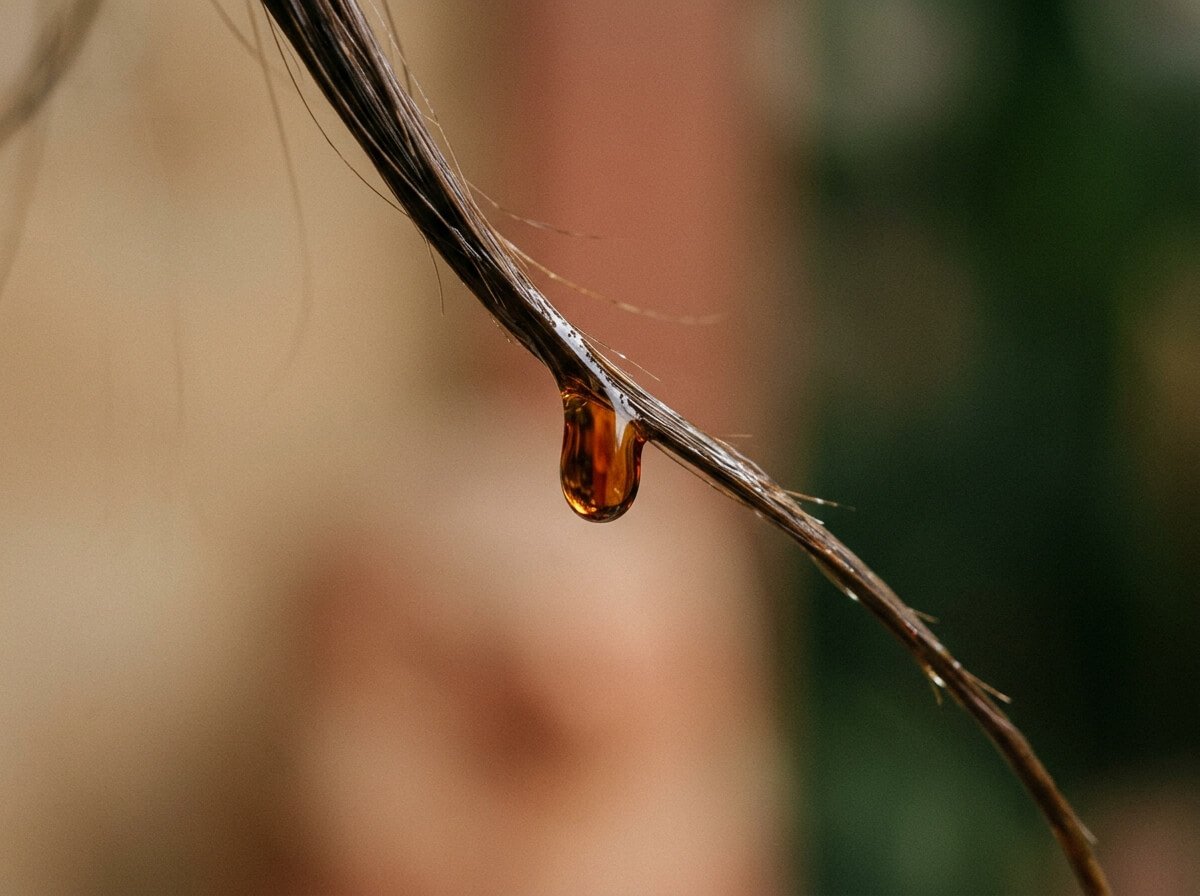
This is where the science of oils begins to matter. Most plant oils sit on top of the cuticle. They coat the strand, fill gaps between scales, reduce friction, and help retain moisture. That is a real, useful action. It is what gives oiled hair its softness and shine, and what reduces the daily mechanical wear that quietly thins ends.
A small group of oils does something different. Their molecular structure, particularly their fatty-acid profile and molecular size, allows them to migrate past the cuticle and into the cortex itself. Research published through the National Institutes of Health has tracked this behaviour, especially around lauric-acid-rich oils. The practical result is that a cortex-penetrating oil supports the strand from inside, reducing protein loss during washing and helping the hair hold structural integrity over time.
Growth and thickness, in other words, are not just a scalp story. They are a strand story too. A scalp that grows healthy hair is meaningful only if the strand that emerges can actually hold its length and density. Choosing oils that work at both layers, the scalp and the strand, is the foundation of any serious botanical haircare practice. For a broader view of how to think about hair oil categories, our guide to the best natural hair oil covers the field in more detail.
Coconut oil: why it penetrates the cortex when other oils cannot
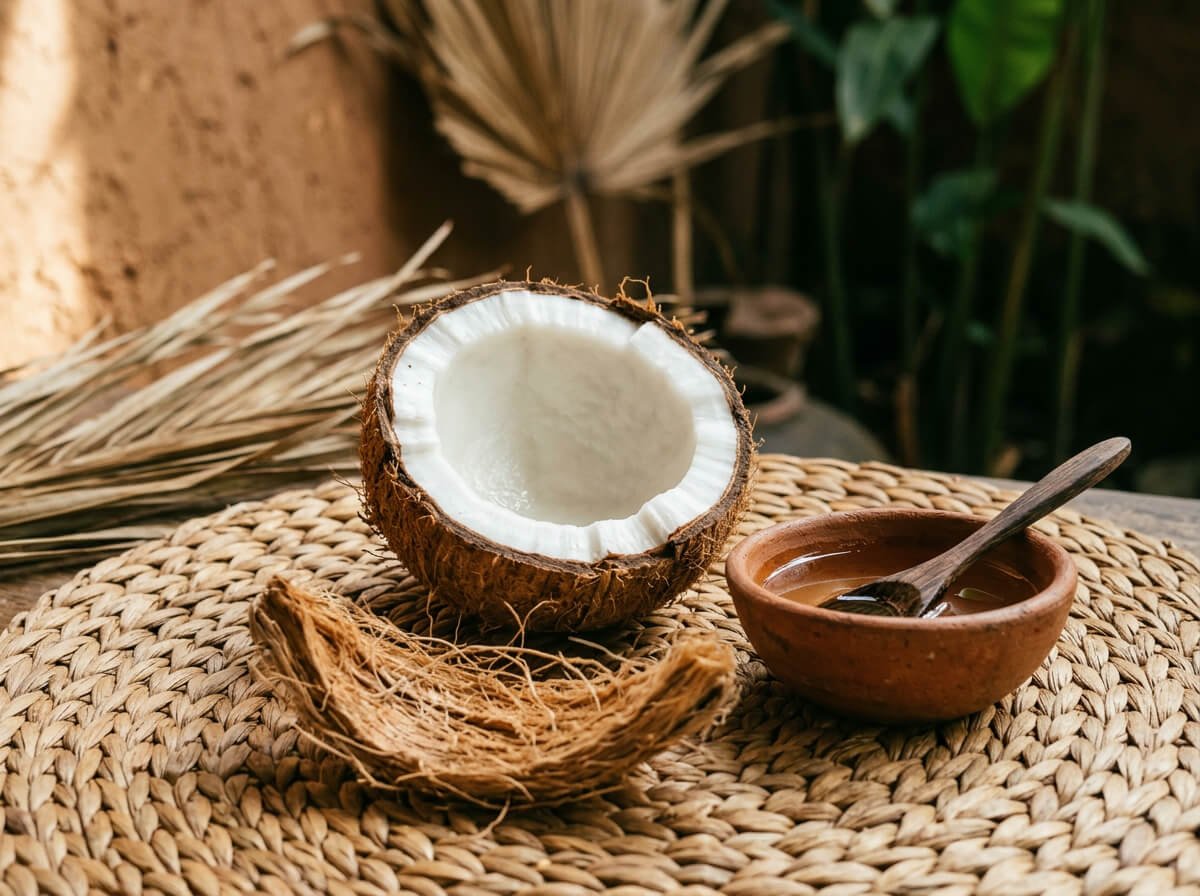
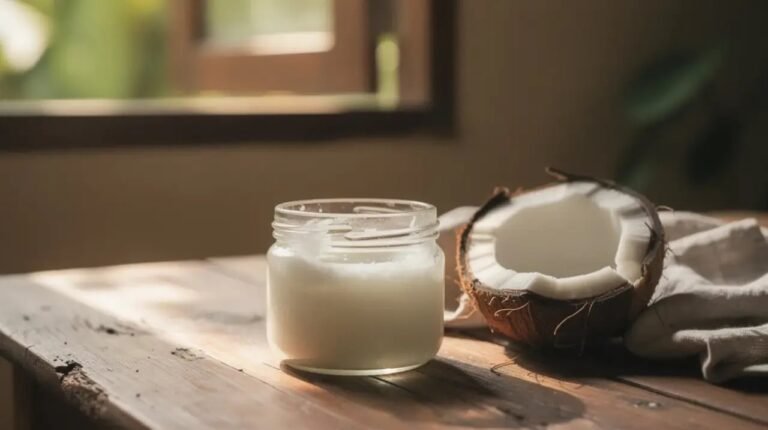
Of all the plant oils studied for hair, coconut oil is the one with the clearest body of penetration research behind it. The reason sits in chemistry. Coconut oil is rich in lauric acid, a medium-chain saturated fatty acid with a relatively small molecular structure and a strong affinity for hair protein. That combination lets it cross the cuticle and enter the cortex, where it reduces protein loss during washing and combing.
What that means in practice is straightforward. Hair that has been pre-treated with coconut oil before washing tends to retain more of its internal protein, which in turn supports tensile strength, the property that lets hair hold length without breaking. Over months, the cumulative effect can read as more density at the ends, less mid-shaft breakage, and visibly fuller hair, even before any growth-stimulating ingredient enters the conversation.
Quality of source matters here as much as the ingredient itself. Cold-pressed, unrefined coconut oil retains the full lauric-acid profile. Refined, deodorised coconut oil sold for cooking often does not, and is processed in ways that strip the very fractions that make the oil useful for hair. Bali grows extraordinary coconut, and we source ours through the Aluan Partnership, working directly with growers who care for the trees, the soil, and the people who harvest. Our Virgin Coconut Oil is cold-pressed in small batches; for a deeper look at how coconut oil performs across skin and hair contexts, our guide to coconut oil for skin covers the wider research base.
Application matters too. Coconut oil works best as a pre-wash treatment, applied to dry or slightly damp hair, left on the lengths for an hour or longer, then shampooed out. Used this way, it functions as a structural treatment rather than a finishing oil. The penetration effect is time-dependent, and the longer the contact, the more meaningful the protein-protection benefit.
Kukui oil: the Pacific nut oil Western guides overlook
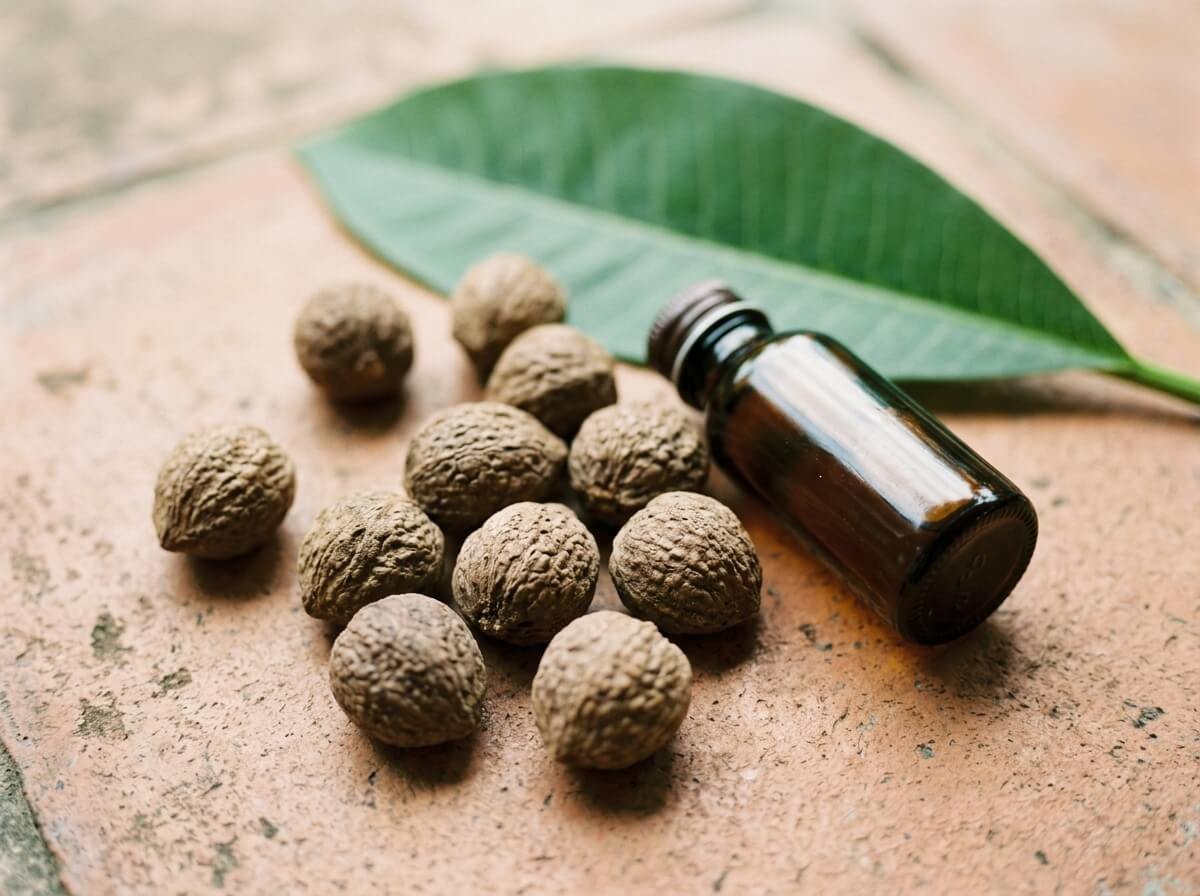
If coconut oil is the cortex penetrator, kukui oil is the conditioner the Western haircare canon largely forgot. Kukui is the candlenut, a Pacific tree whose oil has been used in Hawaiian and Balinese ritual for centuries. The traditional name in Hawai’i is kukui; in Indonesia it is kemiri. Same nut, same oil, two traditions arriving at the same conclusion: this is one of the most effective conditioners nature offers for hair and scalp.
The kukui oil profile leans toward linoleic and linolenic acids, two essential fatty acids the body cannot synthesise on its own and which the scalp readily absorbs. The oil is light, with a thin viscosity that allows it to spread easily through the hair without coating heavily, and it penetrates the scalp without the heaviness that holds back richer oils. That texture is part of why kukui has held its place in Pacific tradition: it works on every hair type, including fine hair that other plant oils tend to weigh down.
We source kukui oil through the Forestwise Partnership in Kalimantan, alongside our illipe butter. The harvest is wild, the trees are protected, and the income supports the families who have worked the same groves for generations. Each bottle of our pure Kukui Oil carries that story, and our complete guide to kukui oil covers the wider range of its applications. For a longer reflection on why kukui has earned its place in haircare specifically, our older essay on kukui nut oil for hair vitality and shine traces the tradition in more depth.
In a growth-and-thickness routine, kukui plays a different role to coconut oil. Coconut oil is the structural pre-wash. Kukui is the leave-in conditioner, the overnight scalp oil, the finishing touch that adds slip and gloss without buildup. The two oils work better together than either does alone.
The essential oil layer: rosemary, peppermint, and what the research actually shows
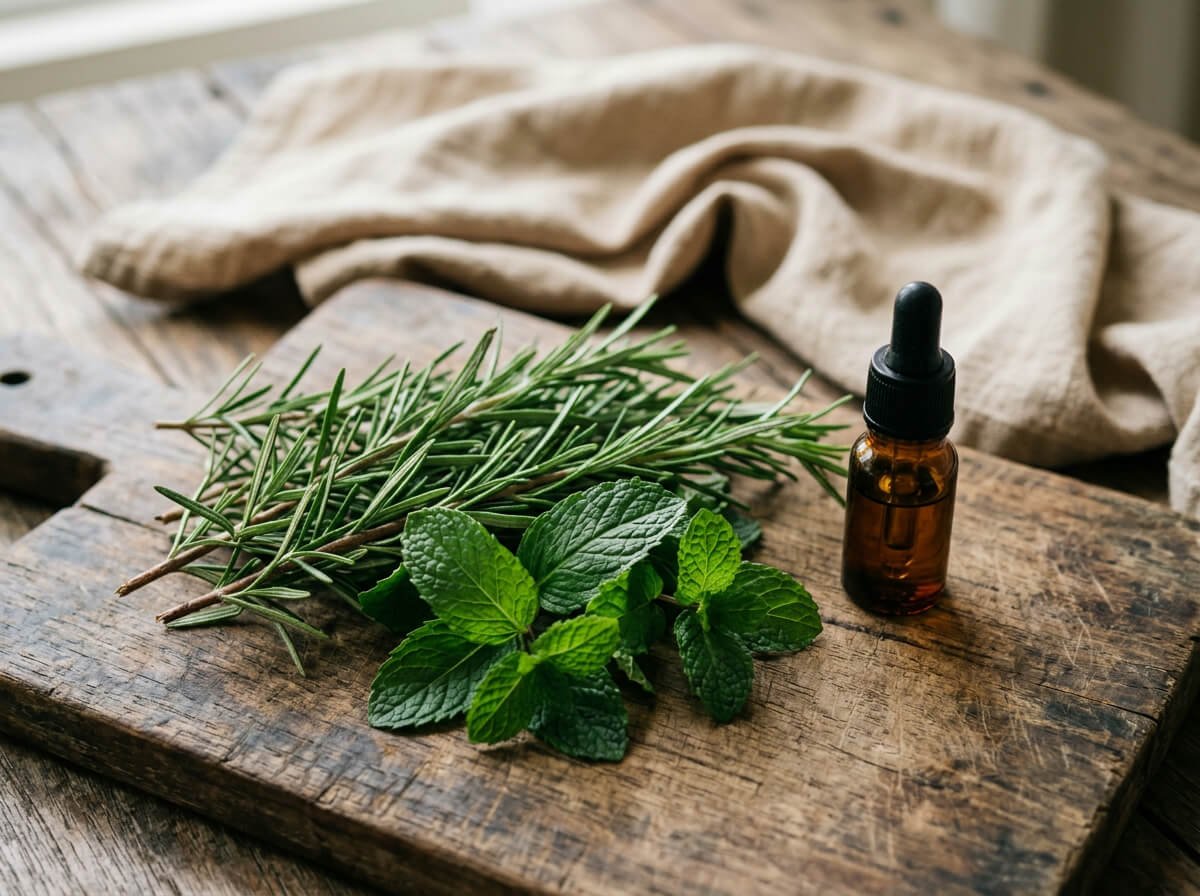
Carrier oils handle the structural work. Essential oils handle the scalp signalling. Both layers matter for growth and thickness, and neither is sufficient on its own.
Rosemary essential oil is the one that has earned the most clinical attention. A small but well-designed 2015 trial published in Skinmed compared rosemary oil to minoxidil 2% in androgenetic alopecia and found comparable hair-count results at six months, with less scalp itching reported in the rosemary group. That is a single study, on a specific population, and the broader picture remains less settled, but the proposed mechanism is interesting: rosemary appears to improve scalp microcirculation, which in turn supports follicle function. Used in a properly diluted carrier blend, applied to the scalp consistently, it has a credible role in a growth-oriented routine.
Peppermint essential oil has its own evidence, mostly from preclinical work. A 2014 study in Toxicological Research found that topical peppermint oil produced significant follicle deepening and growth-phase shift in mouse models, comparable to minoxidil. Animal data does not translate directly to human scalps, but it supports the long-held tradition of using peppermint for its tingling, vasodilating effect on the skin.
The practical lesson is that essential oils are concentrated, active, and only useful when they are diluted properly. A standard scalp dilution is roughly 1 to 2% essential oil in a carrier blend, which works out to about three to six drops of essential oil per tablespoon of carrier. Stronger is not better. Applying neat essential oil to the scalp risks irritation, contact sensitisation, and the kind of inflammation that does the opposite of supporting growth. For more on how to think about essential oil selection and combinations, our essential oils benefits guide and our essential oil blends guide cover the wider field, including which oils pair well for scalp and which to avoid.

Traditional Balinese hair oiling: what centuries of botanical practice teach modern haircare
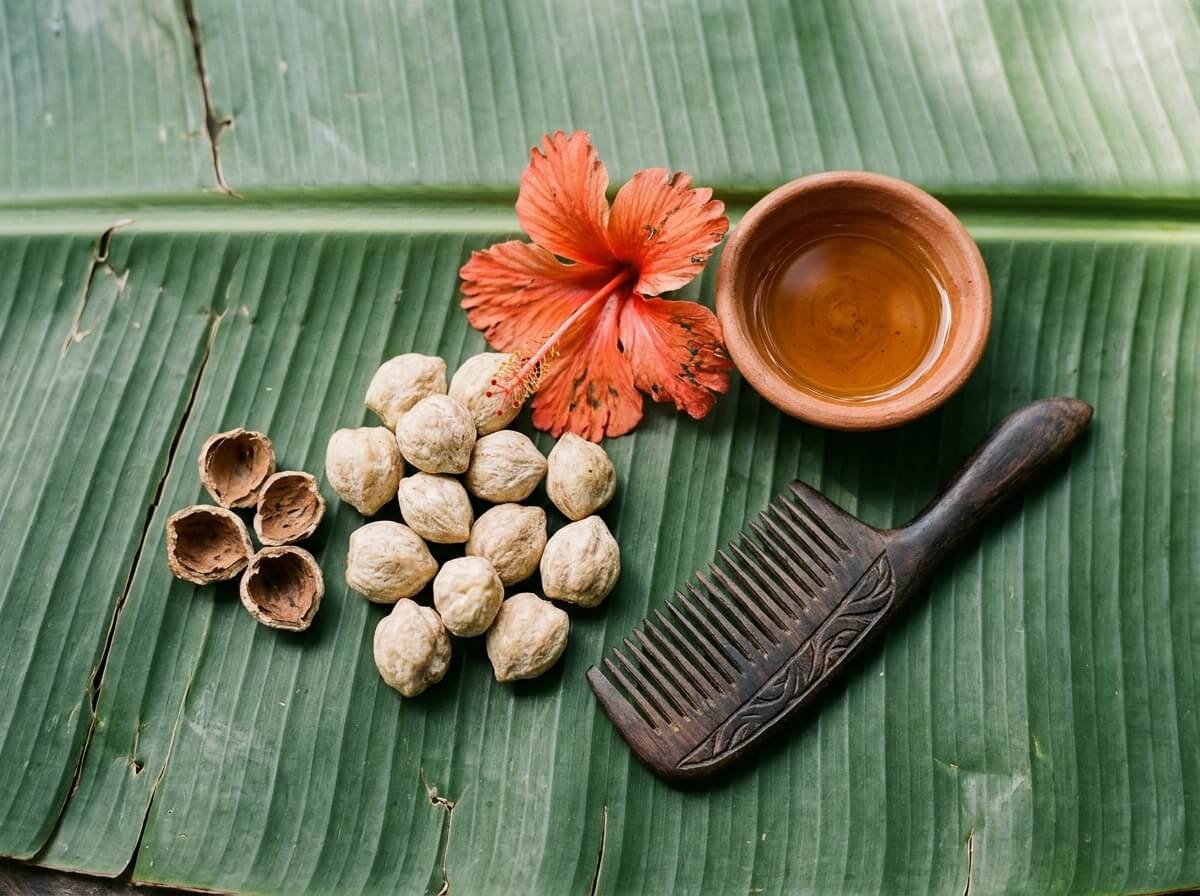
Long before there was clinical trichology, there was tradition. In Bali, hair oiling has been part of daily and ceremonial life for generations. Mothers oil the hair of their children. Grandmothers prepare warm coconut oil with a few crushed leaves and flowers for ritual blessing. The practice is unhurried, sensory, and embedded in family life. Our older essay on Indonesian traditional herbal knowledge traces some of the wider context.
What modern trichology research is now confirming, generation by generation of small studies, is what those grandmothers already understood. The act of warming an oil before application increases its fluidity, lets it spread further with less product, and supports absorption into both scalp and strand. The act of massaging an oil into the scalp, slowly, with the pads of the fingers, increases microcirculation in the dermis and reduces the cortisol response, the same stress hormone that is repeatedly implicated in telogen effluvium, the diffuse shedding that follows physical or emotional stress.
In other words, the ritual is not separate from the science. It is part of the mechanism. A daily hair oil practice that is rushed, mechanical, or stress-filled delivers less benefit than the same product applied slowly, with breath, in a calm moment. This is the part of haircare that does not show up in ingredient lists, and the part that the Western product roundup format misses almost entirely.
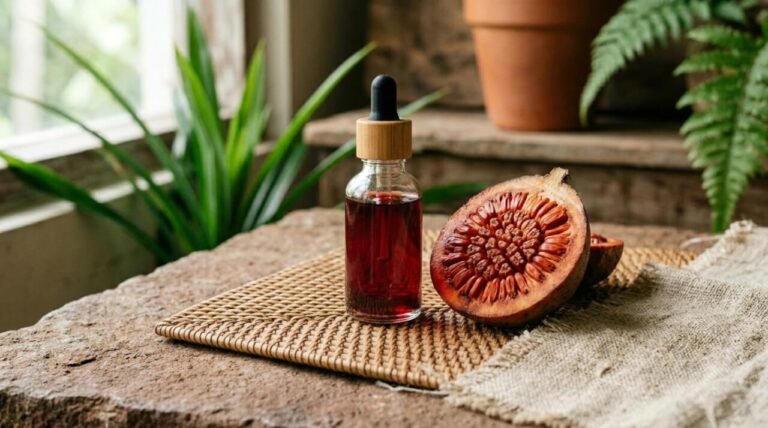
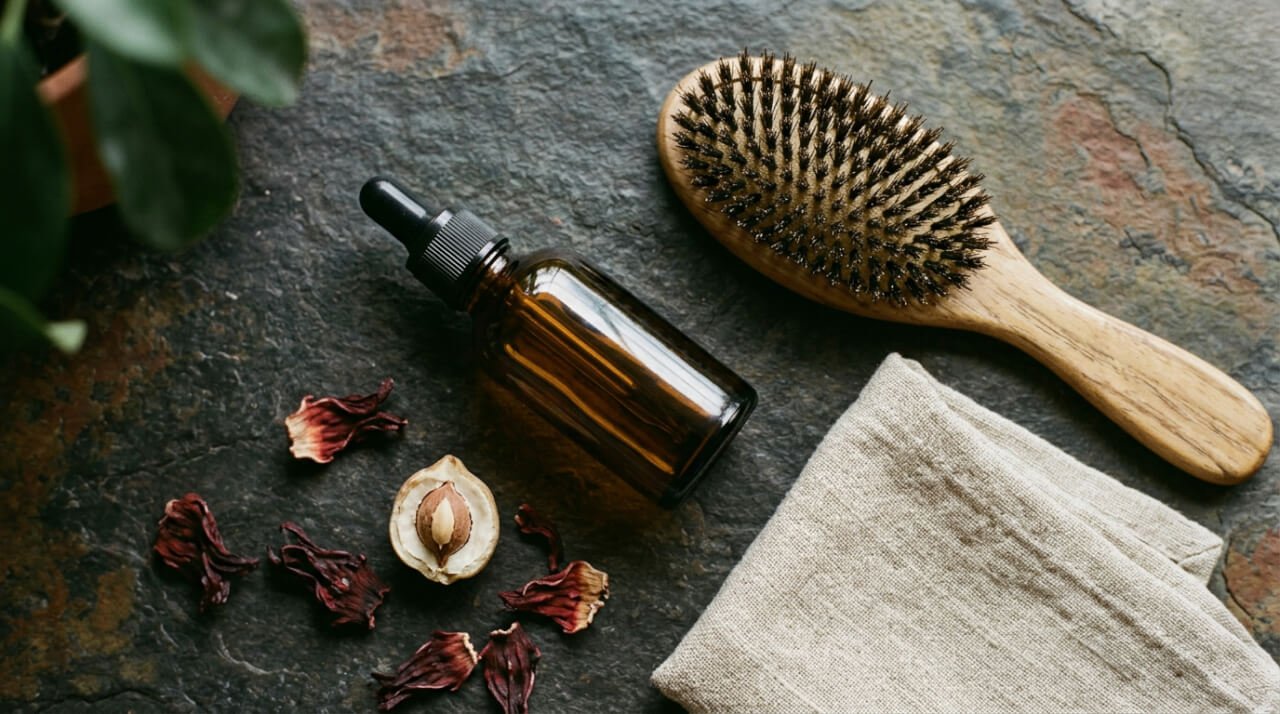
Balinese tradition layers ingredients too. Coconut oil is the base. Kemiri (kukui) adds conditioning and gloss. Hibiscus flower, in some traditions, is infused into the oil to deepen colour and strength. Each blend belongs to a region, a family, a way of doing things. Our hair oils carry that lineage forward, and our Herbal Silk Hair Oil, formulated with kukui, Buah Merah, and castor oils, sits at the centre of that tradition for thinning hair specifically.

Herbal Silk Hair Oil
Hand-blended in Bali with kukui oil, Buah Merah, and castor oil. Crafted for thinning hair and scalp care, with the lineage of Balinese hair oiling built into every drop. Refillable, small-batch, and rooted in heritage.
How to build a hair oil blend for your hair type

The right blend depends on three things: hair texture, scalp condition, and goal. A single product can do a lot. A custom layered approach can do more.
For fine hair, the rule is lightness. Heavy oils flatten fine strands and weigh the roots down. Build the blend around kukui oil, which spreads thin and absorbs cleanly, and reserve coconut oil for occasional pre-wash treatments only. Avoid argan as a finishing oil on fine hair; it is excellent but heavier than kukui at the same dose.
For medium to coarse hair, coconut oil can do more of the heavy lifting. Use it as a pre-wash treatment on the lengths once or twice a week, and use a kukui-led blend for daily scalp work. Coarse hair can also accept richer oils like argan oil as finishing layers, particularly on the ends.
For thinning or shedding hair, the focus shifts to scalp signalling. A blend that combines a light carrier (kukui), a structural carrier (small percentage of coconut), and a properly diluted active essential oil layer (rosemary, peppermint, or both) tends to work better than any single oil applied alone. The carrier load supports the strands you already have. The essential oils support the follicles that will produce the next generation of strands. Our Herbal Silk Hair Oil is built around this layered logic, with kukui as the lead, Buah Merah from Papua for its antioxidant fatty-acid profile, and castor oil for its traditional reputation as a thickening agent.
For curly and textured hair, prioritise slip and moisture retention. Kukui oil shines here, particularly as a finishing oil sealed in after a leave-in conditioner. Coconut oil can be polarising in the curly community because of its protein-binding tendency; some curl patterns thrive on it, others find it stiffens the curl over time. Test small, observe, adjust. For wider haircare ingredient context, our piece on natural shampoo for hair loss covers the surfactant side of the same conversation.
Whatever the hair type, a good blend layers carrier oils first, essential oils last, in a properly diluted proportion. Mix small batches, store them dark and cool, and use them within three months for the freshest profile.
Application techniques that make a difference: scalp massage, warm oil, overnight protocols
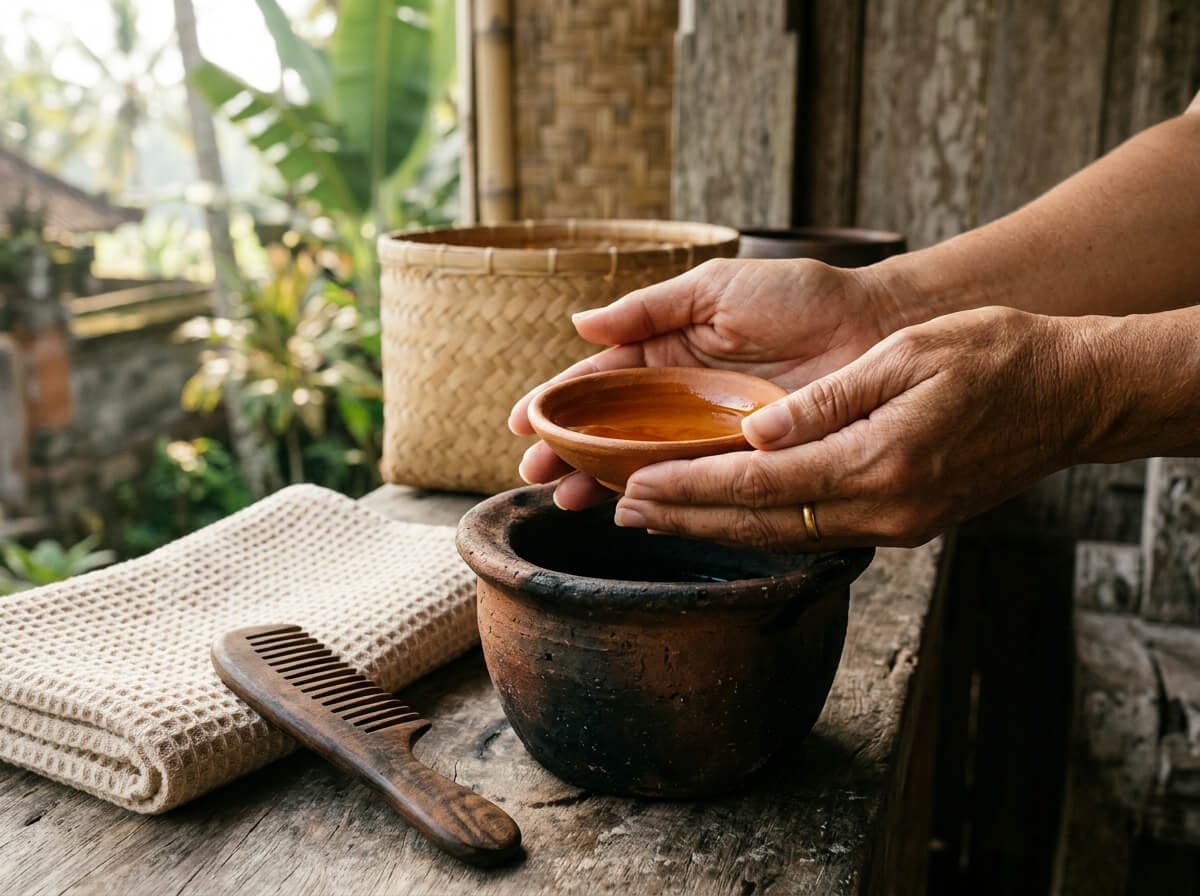
The same oil, applied carelessly or applied with intention, produces visibly different results over time. These are the techniques that matter most.
Scalp massage
The simplest, most evidence-backed of the techniques. A 2016 study in Eplasty found that four minutes of standardised scalp massage daily, over twenty-four weeks, produced measurable increases in hair thickness in healthy participants. The proposed mechanism is mechanical stimulation of dermal papilla cells, the cells at the base of each follicle that signal growth-phase activity. Use the pads of the fingers, not the nails, and move in slow circles across the entire scalp. Four to five minutes is enough. The action is part of the result; do not rush it.
Warm oil treatment
Warming a hair oil before application increases its viscosity, helps it spread further, and supports both scalp absorption and cortex penetration. The traditional Balinese way is to warm a small bowl of oil over a low flame or in a larger bowl of hot water until it feels comfortably warm to the touch, never hot. Apply to scalp and lengths, massage in, and leave for at least thirty minutes before washing. For thinning hair, a weekly warm oil treatment with the layered blend above, combined with the scalp massage, is the cornerstone of the practice.
Overnight protocols
Leave-in overnight treatments give the oils more time to do their structural work. A light kukui-led blend can be applied to the scalp and lengths before bed, hair tied in a loose braid or wrapped in a cotton or silk cloth to protect the pillow, and washed out the next morning. For dry, brittle hair, this protocol two or three times a week can shift the strand’s moisture profile within weeks. For oily scalps, an overnight treatment may be too rich; restrict it to the lengths only.
Combing through
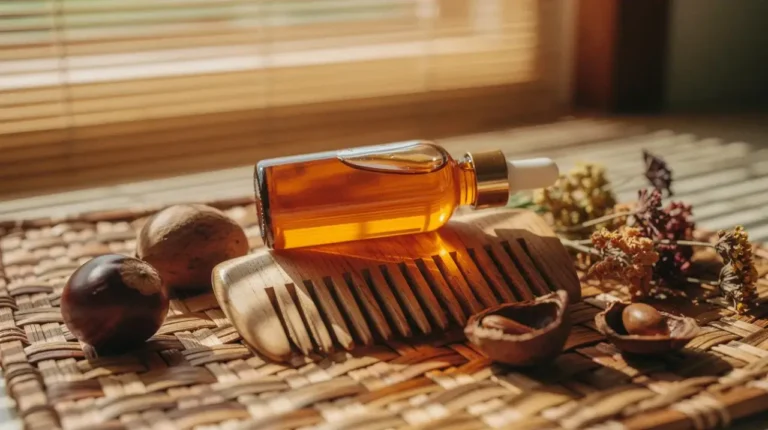
A wide-tooth wooden comb, used gently to distribute the oil from mid-shaft to ends, helps the product reach the strand evenly and reduces the static-friction load that contributes to breakage. A wooden comb is gentler than plastic, and the small mechanical action of combing through after oiling is part of why traditional hair practices, across many cultures, include a brush or comb step.
Frequency
Hair oil practice is cumulative, not one-shot. Two to three times a week is a reasonable cadence for most hair types. Daily scalp massage with a small amount of oil is fine for many people; daily heavy oiling of the lengths is usually too much. Watch your hair’s response, listen to it across weeks rather than days, and adjust. Real change in growth and thickness shows up in months, not in mornings. For a broader view of how to integrate haircare with everything else, our natural skincare routine guide traces the same slow-care logic across the wider body.
What you put on your hair, like what you put on your skin, comes from somewhere and supports someone. Choosing oils that are wild-harvested, traceably sourced, and small-batch crafted is part of choosing care that gives back. That, more than any one ingredient, is the foundation of botanical haircare that supports both growth and thickness for the long run.