Tamanu oil benefits: the Indonesian coastal oil island healers reached for first
Tamanu oil benefits have a way of sounding almost too good on a label: fade scars, calm breakouts, soften the look of fine lines, all from one dark green oil. We would rather give you the honest version. Tamanu oil is a real botanical with real evidence behind it, and it also carries limits worth knowing before you buy. It comes from a coastal tree that has grown across Indonesia and the Pacific for centuries, and island healers reached for it long before any brand poured it into a dropper bottle.
This guide walks through where tamanu oil comes from, what the science actually supports, what it cannot do, and how to fold it into a daily ritual with care. We make Tamanu Oil ourselves, cold-pressed and unrefined, so we will be straight about the whole picture, the strengths and the caveats alike. If you are building a wider routine around plant oils, our guides to Balinese face oil and natural body oils pair naturally with everything here.
Where tamanu oil benefits begin: the tree and the coast
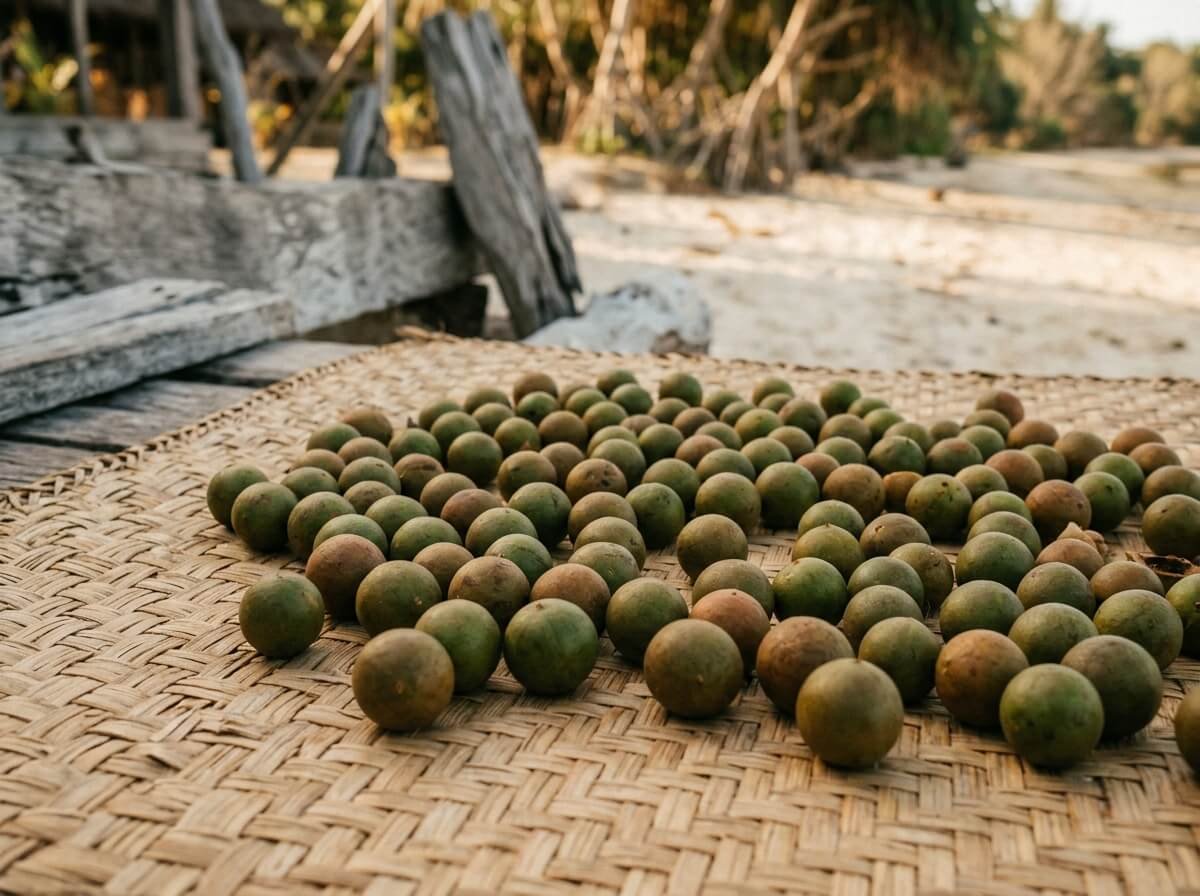
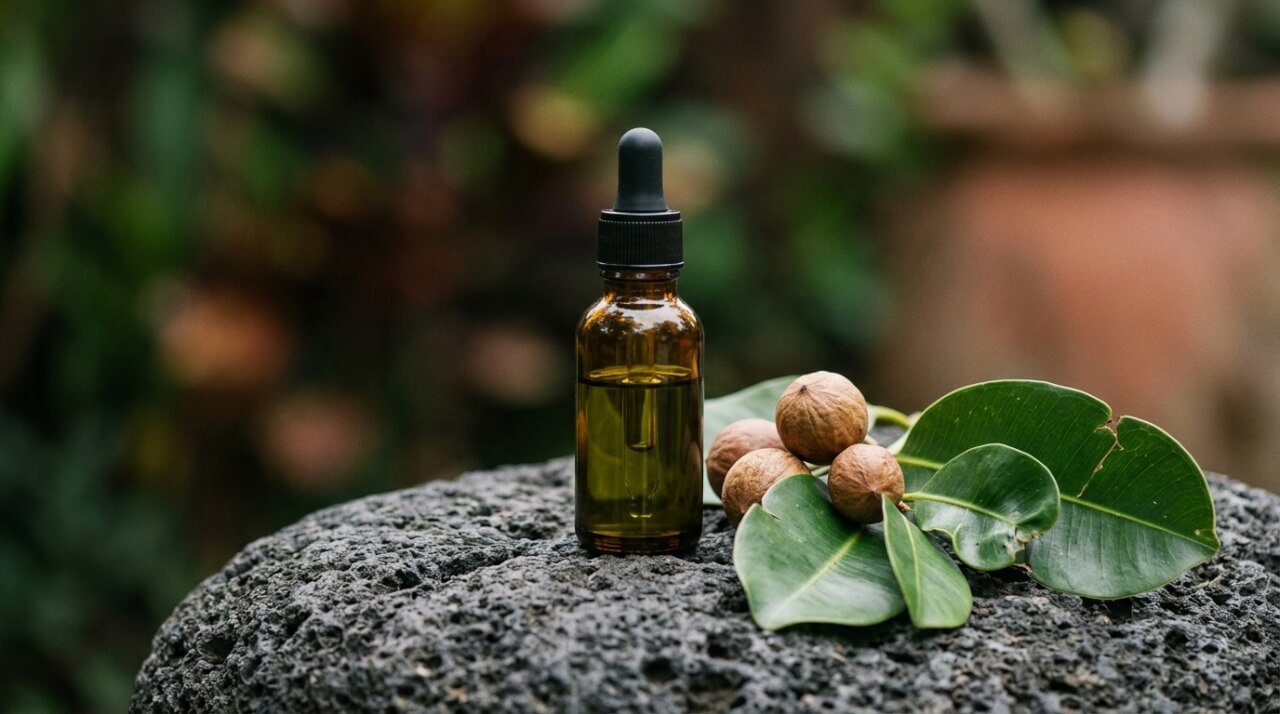
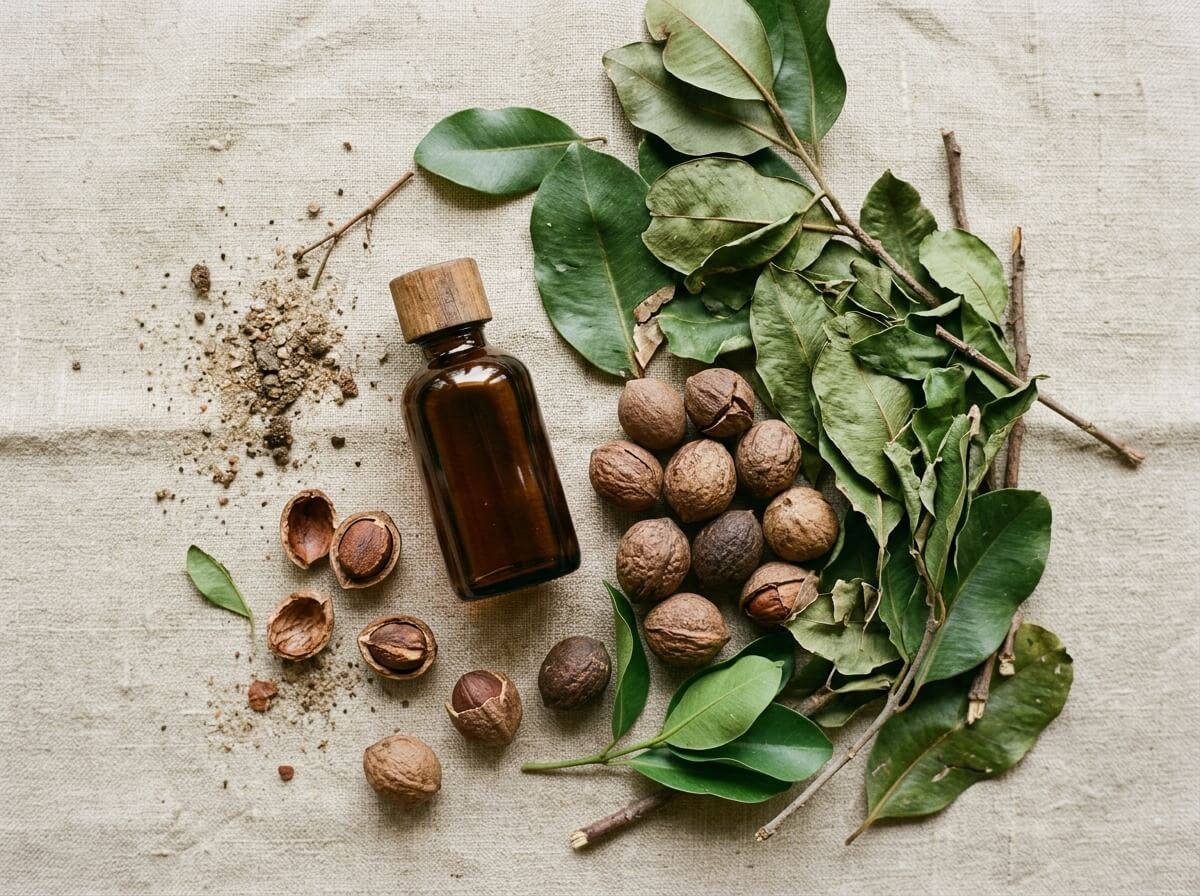
Tamanu oil is pressed from the nut of Calophyllum inophyllum, a broad, glossy-leafed evergreen that grows along tropical coastlines from Indonesia through the wider Pacific. In Indonesia the tree is known as nyamplung, and you will find it rooted in the sandy soil just back from the shore, its branches heavy with round green fruit. Inside each fruit sits a single nut, and inside that nut is the raw material for one of the most storied oils in island medicine.
The making of it is slow, which is part of the story. The nuts are gathered, then dried in the sun for weeks until the pale kernel turns sticky and deep with oil. Only then is the oil cold-pressed, emerging a thick, unmistakable green-gold. That drying step is not a quirk. It is what develops the oil, and it is why real tamanu has always been a patient, small-batch craft rather than a factory output.
For generations, coastal communities across Southeast Asia and Polynesia treated tamanu as a first-reach remedy for scrapes, burns, bites, and rough, weathered skin. That lineage matters to us. Like the illipe butter and kukui oil we source through our Forestwise partnership, tamanu is an ingredient whose value is inseparable from the people and place that carried its knowledge forward. You can read more about that heritage lens in our overview of Balinese skincare, and in the story of buah merah oil, another Indonesian botanical we hold to the same standard.
There is an ecological grace to the tree as well. Calophyllum inophyllum thrives in salt-sprayed, sandy coastal ground where little else will, holding shorelines together and offering shade and habitat along the way. A single mature tree can fruit generously year after year without being felled, which makes tamanu a genuinely regenerative harvest when it is gathered with respect. The nuts fall, they are collected, and the tree keeps standing. That is the kind of quiet, long-term relationship between people and plant that we believe good sourcing should protect, not strip.
The science behind tamanu oil benefits for skin

What makes tamanu unusual among carrier oils is that its activity does not come from fatty acids alone. It carries a group of compounds that most plant oils simply do not have, and this is where the credible tamanu oil benefits sit.
Calophyllolide and the anti-inflammatory story
Tamanu contains calophyllolide, a naturally occurring compound studied for its anti-inflammatory behaviour. In laboratory and animal wound-healing research, calophyllolide has been linked to calmer inflammation and faster tissue repair. This is the mechanism behind tamanu’s long reputation for soothing angry, reactive skin, and it is a genuine point of difference rather than marketing shorthand.
Antioxidants, fatty acids, and skin-barrier support
The oil is rich in delta-tocotrienol, a form of vitamin E with strong antioxidant activity, alongside a balanced profile of oleic, linoleic, palmitic, and stearic fatty acids. Linoleic acid in particular is a building block your skin barrier uses to hold water and stay resilient. That barrier support is the same reason we lean on oils like virgin coconut oil and argan in daily care, and it is worth understanding if you are choosing a natural face moisturizer that will actually hold up.
Why the deep green colour matters
That striking green-gold is not a cosmetic detail. The colour comes from the natural pigments and phytochemicals developed during the slow drying and cold-pressing of the nuts, the same fraction of the oil that carries much of its calming and antioxidant character. When tamanu is bleached and refined into a pale, neutral liquid, a good deal of that character goes with the colour. In other words, the green you can see is a rough visual signal of the compounds you cannot. It is one of the few cases in skincare where the look of an ingredient genuinely tells you something about what is inside.
What the research supports, plainly
- Calming visible redness and supporting skin recovering from minor damage.
- Antioxidant defence that helps skin stand up to daily environmental stress.
- Barrier nourishment that softens dryness and rough texture over time.
- A supporting role in the look of scars and post-blemish marks, studied but still modest in scale.
The honest caveat: much of this evidence comes from laboratory work, small studies, and long traditional use rather than large human trials. That does not make it empty. It makes tamanu a well-supported traditional oil with promising science, which is exactly how we think it should be described.
What tamanu oil can and cannot do
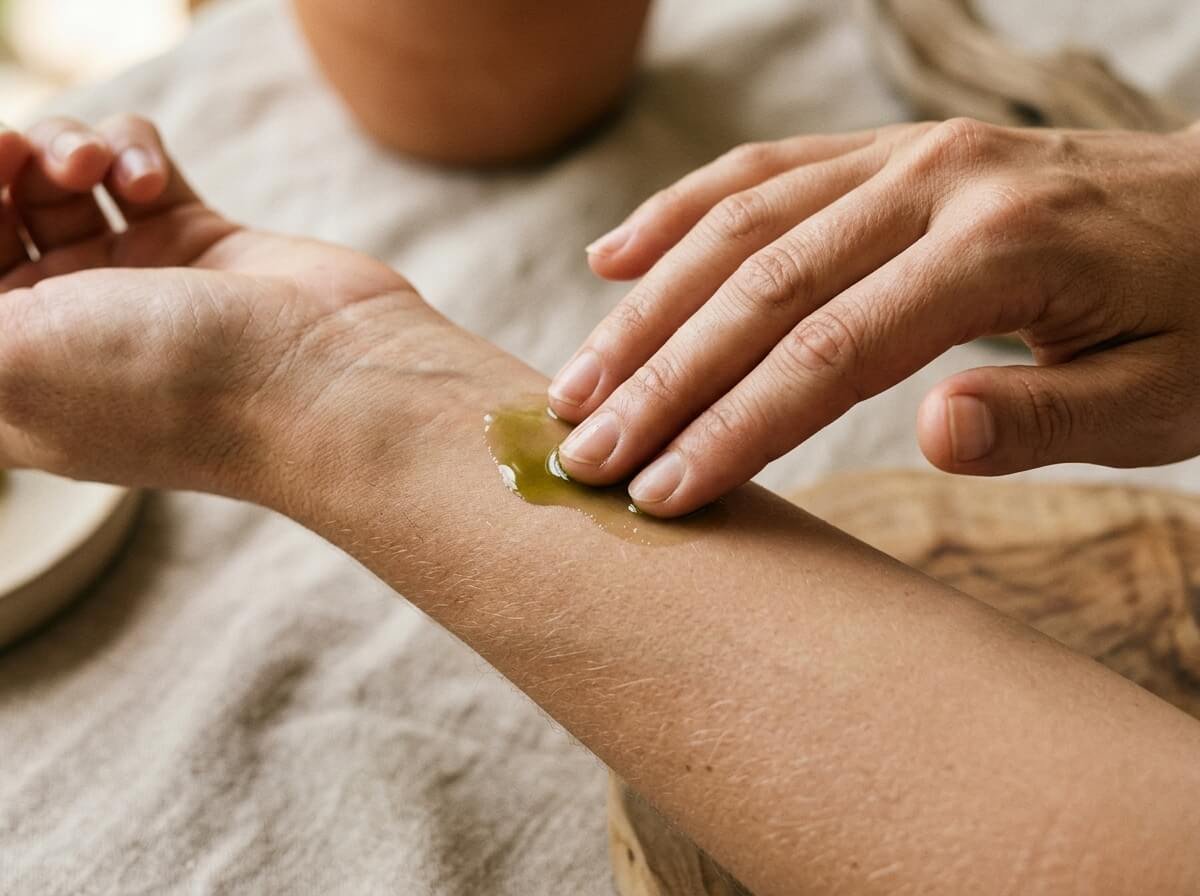
This is where we part ways with the miracle-oil version of tamanu. The claims worth trusting are specific and grounded. The ones worth ignoring are the sweeping, cure-everything promises.
Reasonable to expect
- Softer, more comfortable skin where dryness and rough patches sit.
- A calmer look on reactive, easily-reddened skin used gradually over weeks.
- Support for the appearance of old scars, stretch marks, and post-blemish marks, with patience rather than overnight change.
- A nourishing final step that helps seal in a lighter serum or gel beneath it.
Not what tamanu is for
- It is not a sunscreen. Some sources overstate its sun protection; treat it as skincare, not UV defence, and use a dedicated mineral SPF for that job.
- It is not an acne cure. It may calm the look of marks, but active, persistent breakouts need a considered routine, not a single oil.
- It is not a retinol. If firming and renewal are the goal, see our guide to a natural retinol alternative and to plant-based skincare for the look of ageing.
It is also worth being clear about texture and skin type. Tamanu sits at the richer end of facial oils. For dry, mature, or weathered skin it can feel like a relief, but skin that is naturally oily or easily congested may find it heavy on the face, even while loving it on the body. Comedogenicity is individual rather than a fixed score, which is exactly why we keep returning to the same simple advice: test it on your own skin, in a small amount, before you commit.
One more piece of honesty that rarely makes the label. Tamanu comes from a nut. Anyone with a tree-nut allergy should avoid it, and everyone should patch test first, because it is a rich oil that a small number of people find too heavy or sensitising. This is the difference between real care and a tidy marketing story, and we would rather you know.
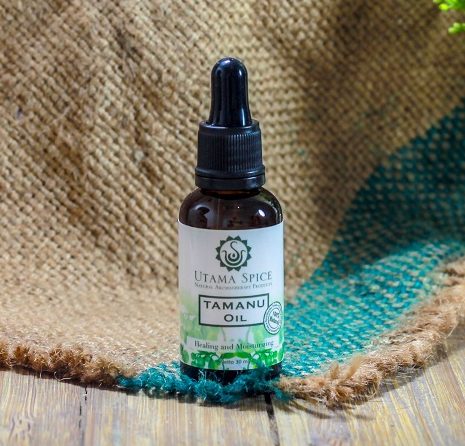
Cold-pressed tamanu oil, made in Bali
Our Tamanu Oil is pressed unrefined from sun-dried nuts, so it keeps the deep green colour and the compounds that matter. One honest ingredient, sourced with care.

How to choose a real tamanu oil

Not all tamanu on the shelf is equal, and the gap between a real oil and a tired, over-processed one is wide. A few honest checks tell you most of what you need to know.
- Colour. Genuine cold-pressed tamanu is a deep, unmistakable green-gold. If it is pale yellow or clear, it has likely been heavily refined and stripped of the compounds you came for.
- Aroma. Real tamanu has a rich, earthy, slightly nutty scent. A completely odourless oil usually means aggressive deodorising.
- Process. Look for cold-pressed and unrefined. Heat and solvents are cheaper and faster, and they cost the oil its character.
- Transparency. A brand that can name where the nuts grew and how the oil was made is telling you something. Silence usually is too.
Price can be a quiet signal too. Real cold-pressed tamanu takes weeks of drying and a generous quantity of nuts to yield a small bottle, so an oil sold very cheaply has usually cut a corner somewhere, whether in the pressing, the refining, or the sourcing. We are not saying pay the most. We are saying an honest oil reflects honest work, and the number on the shelf rarely lies about that.
This is the same standard we hold across the line, and it is really what the clean beauty conversation should be about: not a buzzword, but sourcing you can trace. Our own Tamanu Oil is cold-pressed and unrefined for exactly these reasons. If tamanu turns out to feel too rich for your skin, a lighter option such as argan oil or our Sensitive Face Serum can be a gentler starting point, and for targeted brightening many people prefer our Immortelle Helichrysum Face Serum.
How to use tamanu oil in a daily ritual
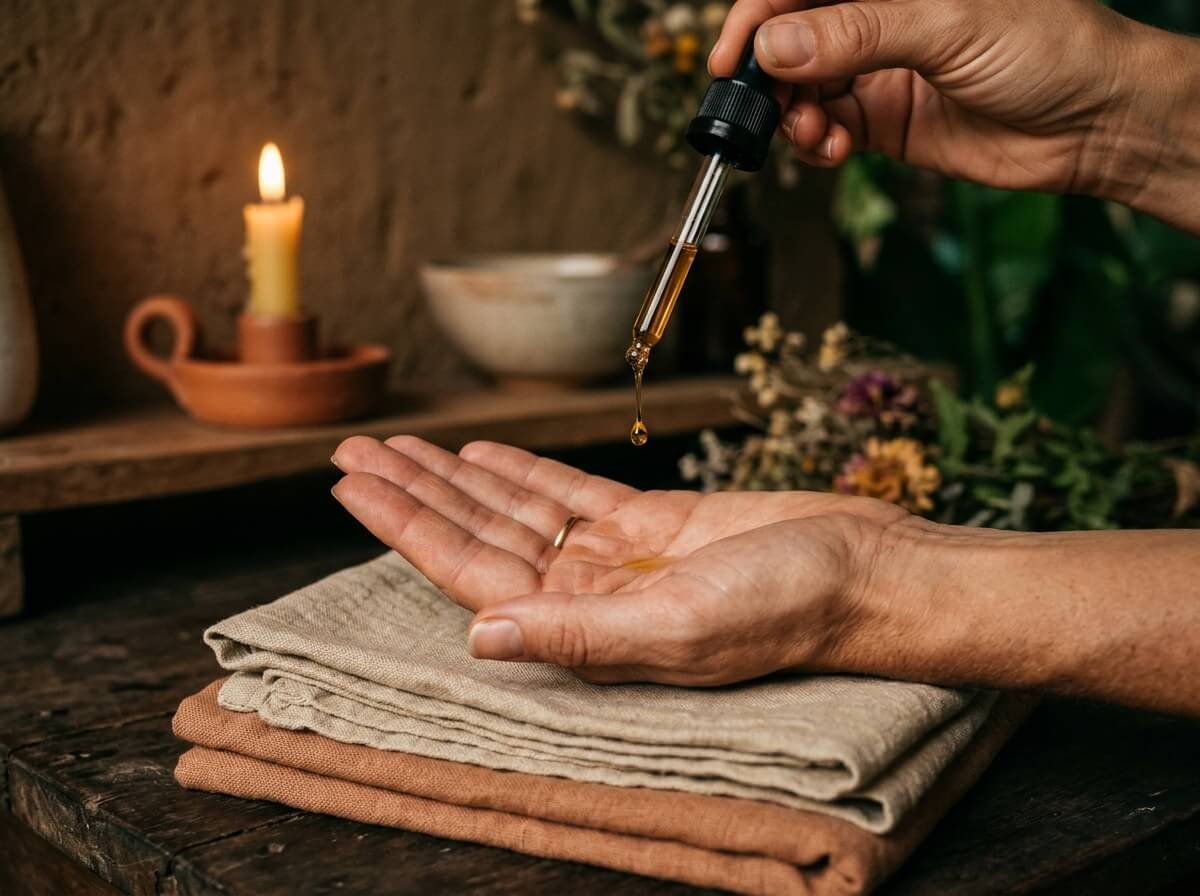
Tamanu is potent and rich, so a little goes a long way. Treat it as a considered step rather than a splash-it-everywhere oil, and it rewards you.
A simple way to begin
- Patch test. Smooth two or three drops on your inner forearm and wait 24 hours before using it on your face.
- Cleanse and layer. Apply tamanu to slightly damp skin, after any water-based serum or gel and before or in place of a cream.
- Use less than you think. Two to four drops is plenty for the face. Warm it between your palms and press it in rather than dragging.
- Go gently at first. Two or three evenings a week, then build up as your skin tells you it is comfortable.
For very dry or weathered skin, a drop of tamanu blended into virgin coconut oil or our Rose Allure Body Oil softens rough elbows, heels, and stretch-marked skin without feeling greasy. On the face, it layers beautifully over a hydrating gel such as aloe vera gel, sealing that water-light moisture underneath, which is a rhythm we explore in our guide to aloe vera gel for face. Used as an evening ritual, tamanu becomes less a product and more a small daily pause, which is the whole point of slow, sensory care.
Tamanu for body, hands, and hair
Tamanu is not only a facial oil. Its richness makes it a natural fit for the parts of us that take the most wear. Massaged into the body, it comforts dry shins, cracked heels, and the taut skin around healing marks and stretch marks, and it pairs well with the layering approach in our natural body oil guide. Warmed between the palms and pressed into rough hands or cuticles at night, a single drop goes a surprising distance. A tiny amount smoothed through the mid-lengths and ends of dry hair can tame frizz and add a soft shine, though a little truly is enough here, since too much will weigh hair down. Across all of these, the principle is the same one that runs through the whole Balinese face oil tradition: less product, more attention, applied as a moment of care rather than a rushed step.
Frequently asked questions about tamanu oil benefits
Is tamanu oil good for acne-prone skin?
It can help calm the look of redness and post-blemish marks thanks to its anti-inflammatory compounds. That said, tamanu is a rich oil, so patch test carefully and use it sparingly. It supports skin recovering from breakouts better than it prevents active ones.
Will tamanu oil fade my scars?
Tamanu has a long traditional and early scientific reputation for supporting the appearance of scars, stretch marks, and marks left behind by blemishes. Results are gradual and vary from person to person. Think in terms of weeks and months of consistent use, not overnight change.
Does tamanu oil protect against the sun?
No. Some sources overstate this. Tamanu is skincare, not sun protection. Pair it with a dedicated mineral sunscreen if UV defence is what you need.
Is tamanu oil safe for sensitive skin?
Many people with sensitive skin find it calming, but it comes from a nut and it is rich, so a patch test is essential and anyone with a tree-nut allergy should avoid it entirely. If in doubt, start with a lighter formula and introduce tamanu slowly.
Is tamanu oil good for eczema or very dry patches?
Its anti-inflammatory compounds and rich, barrier-supporting fatty acids are the reason tamanu has such a long history with dry, irritated, weathered skin. Many people find it soothing on eczema-prone patches, though skin conditions are personal and can flare unpredictably, so introduce it slowly and stop if it does not agree with you. For anything persistent or medically diagnosed, it is worth speaking with a dermatologist rather than relying on any single oil.
How long does it take to see results from tamanu oil?
For comfort and softness, many people notice a difference within the first week or two of regular use. For the look of scars, marks, and rough texture, think in longer arcs of six to twelve weeks. Tamanu rewards consistency more than intensity, so a little most evenings beats a lot once in a while.
Can I use tamanu oil every day?
Most skin tolerates daily use well once it has passed a patch test, though the face often prefers it in the evening. If your skin runs oily or congests easily, a few nights a week or body-only use may suit you better. Let comfort be your guide rather than a fixed rule.
How should I store tamanu oil?
Keep it in a cool, dark place with the cap closed. Its natural antioxidants help it keep well, and an amber or dark glass bottle protects the oil from light.
Tamanu oil earns its long reputation honestly: a coastal Indonesian botanical, patiently made, carrying real compounds that soothe, nourish, and support skin over time. It is not a miracle, and it does not need to be. The truth is quieter and more durable than any label promise. This is an oil that island communities trusted for generations because it worked, gently and reliably, and because the tree that gives it keeps giving without being taken from. Understood for what it is, applied with a little patience, and sourced from people who respect where it comes from, tamanu is a quietly remarkable oil. What you give it in care, your skin tends to give back.