Clove essential oil benefits: the Spice Islands origin, eugenol, and how to use it honestly
Clove is one of the oldest scents in the human story, and it grew up in our part of the world. The clove essential oil benefits people search for today, from clearer breathing to calmer skin to a warm, grounding aroma, all trace back to a single molecule and a single archipelago. That archipelago is Indonesia, and the tree, Syzygium aromaticum, has been called cengkeh here for centuries. This is a guide written from close to the source: what clove oil actually does, which clove oil you are buying, and how to use it with the respect it demands.
We will keep this honest. Clove is a powerful oil, and power cuts both ways. It carries real, research-backed uses, and it also sits among the more hazardous essential oils for skin. Care means telling you both halves of that truth, so you can bring this warming Indonesian botanical into your rituals with confidence rather than guesswork.
Clove essential oil and the Spice Islands it comes from

Before clove was a benefit list, it was a place. The clove tree is native to Maluku, the group of islands in eastern Indonesia the world once called the Spice Islands. Ternate and Tidore, two small volcanic islands there, are the botanical birthplace of clove, and for a long stretch of history they were the only place on Earth it grew. Whole fleets crossed oceans for the buds that dried on these shores.
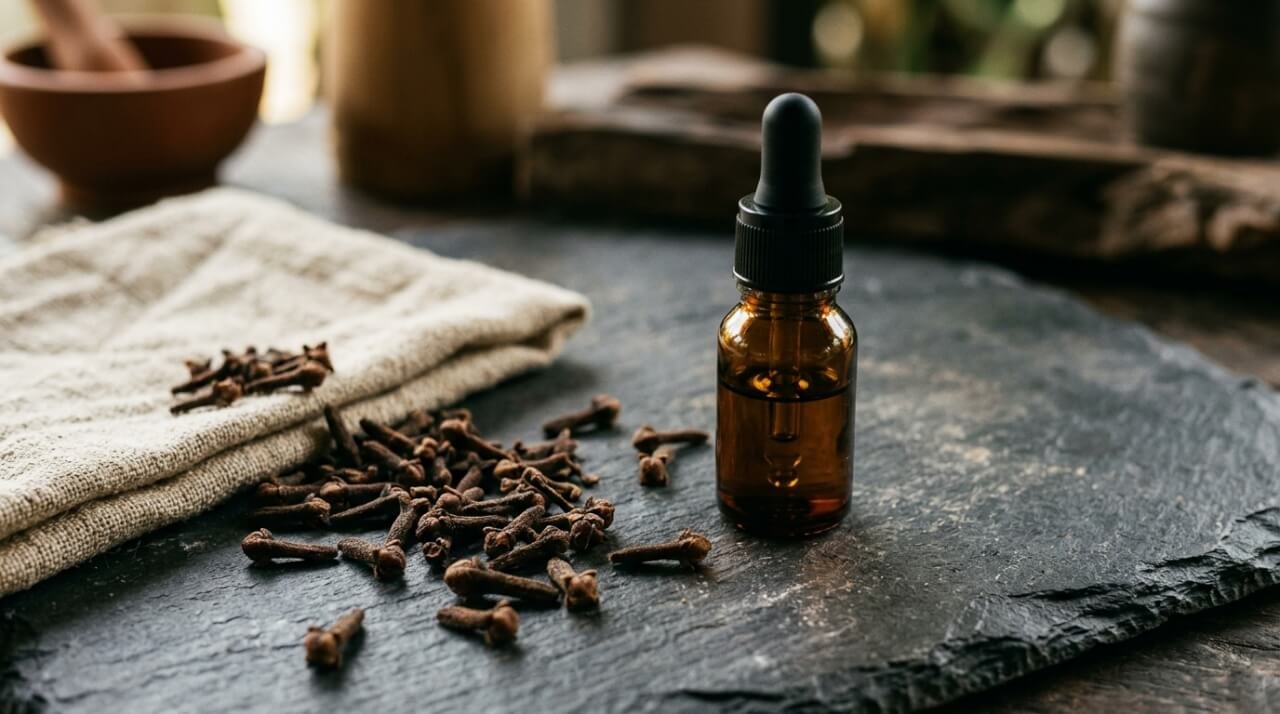
Today Indonesia remains the largest clove producer in the world, and cengkeh is woven through daily life here, in cooking, in kretek clove cigarettes, in medicine cabinets, and in ritual. When we talk about clove, we are not borrowing an exotic ingredient from a catalogue. We are talking about a plant that has grown alongside Indonesian communities for generations, a piece of the same heritage that shapes the rest of our work. If you want the wider context, our guide to Indonesian wellness traditions traces how spices like this one became everyday care.
The history is worth pausing on, because it explains why clove still carries such weight. For centuries the buds that dried on Ternate and Tidore were worth their weight in gold, and control of them shaped trade routes, wars, and empires. Clove was not a nice-to-have. It was a preservative in a world without refrigeration, a medicine in a world without pharmacies, and a currency in its own right. The tree eventually spread to Zanzibar, Madagascar, and beyond, but the origin never moved, and neither did the depth of knowledge here about how to grow, dry, and use it.
Provenance is not nostalgia. It is a quality signal. A clove oil that comes from where clove has always grown, harvested by people who understand the crop, tends to be a truer oil than one blended from the cheapest available source. Origin, tradition, and craft are the three questions we ask of every ingredient, and clove answers all three from within Indonesia itself.
The oil is steam-distilled from different parts of that tree, and the part matters more than most labels admit. That is where we go next.
Bud, leaf, or stem: the three clove oils and why the label matters
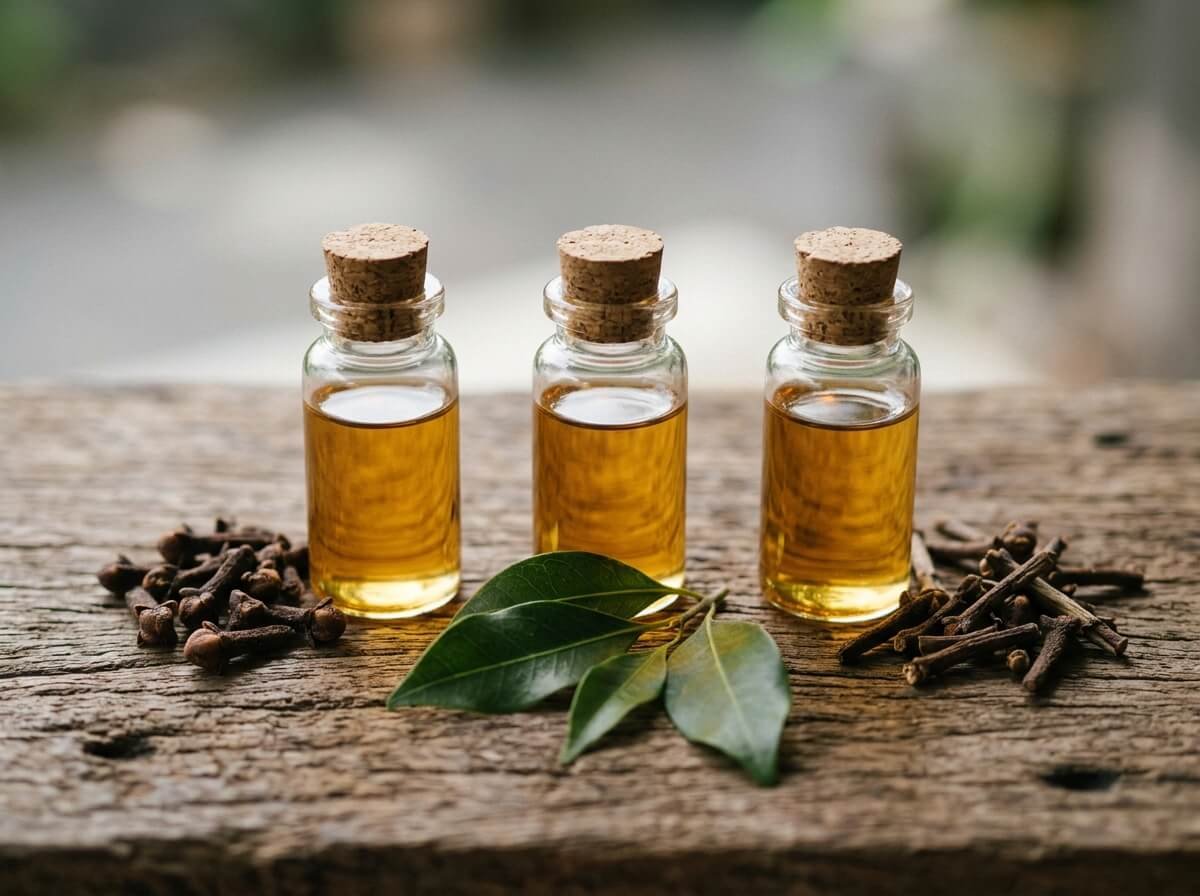
Here is the single most useful thing to understand before you buy: there is no such thing as one clove oil. There are three, distilled from three parts of the same tree, and they are not interchangeable.
Clove bud oil
Distilled from the dried flower buds, this is the finest of the three. It carries the roundest, sweetest aroma and the most balanced chemistry. It is also the most expensive, because the buds are hand-picked and command a premium. When a formulation calls for clove done well, this is the one.
Clove leaf oil
Distilled from the leaves, this is the workhorse, and the one most often sold plainly as “clove oil” without further detail. It is cheaper, higher in raw eugenol, and harsher in aroma, with a sharper, more medicinal edge. It has its place, but it is frequently priced and marketed as if it were bud oil.
Clove stem oil
Distilled from the stems that connect the buds, this sits between the other two in character and is the least common on the shelf. It is mostly used in larger-scale flavour and fragrance work.
The reason this matters is trust. If a bottle simply says “clove essential oil” with no part named, you cannot know what you are getting or judge whether the price is fair. A brand that respects you tells you which part it distilled. Our own Clove Essential Oil is a bud-derived oil, and we say so, because the difference is not a detail, it is the whole point.
If you remember one thing from this section, make it this: aroma and eugenol content shift with the plant part. Bud oil is rounder and gentler on the nose, leaf oil is sharper and higher in raw eugenol, stem oil sits in between. That single fact changes how you dilute, how you blend, and what you should reasonably pay. When the part is hidden, the honest answer is that you are buying blind.
Eugenol: the molecule that does the work, and demands respect

Almost everything clove is known for comes down to one compound: eugenol. In clove bud oil, eugenol can make up the large majority of the oil, often somewhere between 70% and 90%. It is the source of the warm, spicy aroma, and it is the reason clove has been used as a folk remedy for toothache for hundreds of years.
Eugenol is a genuine bioactive. It has measurable antimicrobial, antioxidant, and local-numbing properties, which is why it earns a place in dentistry and in natural preservation. But the same potency that makes it useful makes it demanding. Eugenol is a strong skin sensitizer and a mucous-membrane irritant. It is not a molecule to be careless with.
The strength of clove is not a marketing story. It is chemistry, and chemistry asks for care in both directions.
There is a reason eugenol shows up in both a dentist chair and a kitchen spice rack. As an antioxidant it helps slow the oxidation that turns fats rancid, which is part of why clove has served as a natural preservative for so long. As an antimicrobial it disrupts the cell walls of bacteria and fungi. As a local anaesthetic it dampens the nerve signals that carry pain. These are not vague wellness gestures, they are described mechanisms, and they are exactly why the oil deserves a careful hand.
Hold both of those facts together and clove stops being either a miracle or a menace. It becomes what it truly is: a precise tool that rewards knowledge. Unlike a gentle floral such as cananga, clove is never a drift-off-to-sleep-anywhere oil. It is used with intention, in small amounts, on purpose.

What the research on clove essential oil benefits actually supports
It is worth separating what the science supports well from what is still early. Honest sourcing of claims is as important to us as honest sourcing of botanicals.
Well supported
- Dental and oral relief. Eugenol has a long, well-documented history as a temporary numbing and antiseptic agent for toothache, which is why it still appears in dental products today.
- Antimicrobial action. Laboratory studies consistently show clove oil inhibiting a broad range of bacteria and fungi, which underpins its traditional use as a natural preservative.
- Antioxidant activity. Eugenol is a capable free-radical scavenger in study after study.
Promising but early
- Anticancer and anti-inflammatory research. There are interesting laboratory and animal findings, but these are early-stage and do not translate into home-use claims.
- Metabolic and digestive effects. Traditionally valued, still thinly studied in humans.
The takeaway is measured. Clove is a credible antimicrobial and a time-tested oral remedy, and it is a poor candidate for grand systemic promises. If you want a broader map of where different oils genuinely earn their keep, our essential oils uses chart lays it out without the hype.

Warmth from the Spice Islands, distilled with care
Our Clove Essential Oil is a bud-derived oil, hand-blended in Bali from a spice that grew up in these islands. Warm, grounding, and honestly labelled, ready for your diffuser, your boreh, or a carefully diluted massage blend.
Clove in Indonesian ritual and warming body care
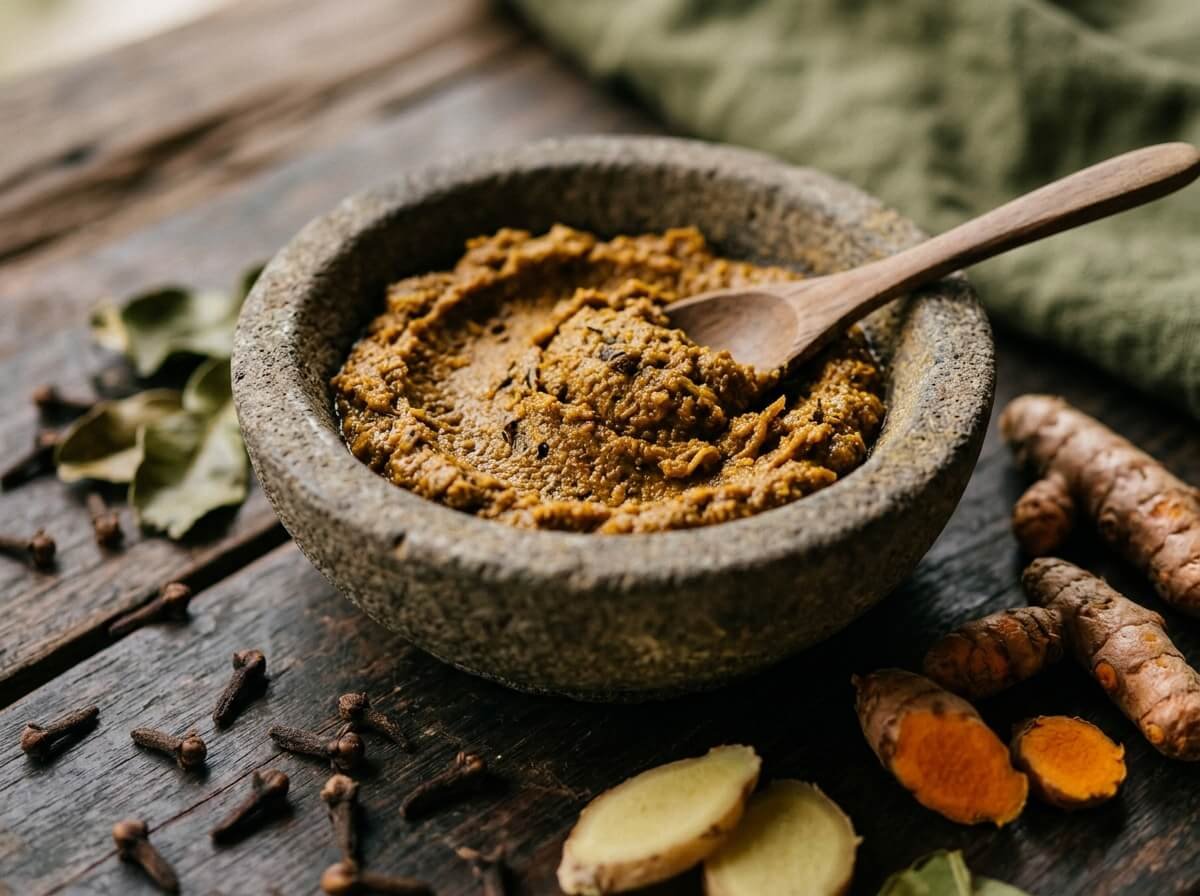
In Bali, warming spices are not a novelty. They are medicine, comfort, and ritual, handed down through generations of healers. Clove sits in that lineage alongside turmeric, ginger, and pepper.
You will find it in balinese boreh, the traditional warming spice paste applied to the body to ease aching muscles and chase off a chill after cold or damp. You will find its cousins in jamu, the herbal tonics that are still part of everyday Indonesian life. In these rituals clove is never used neat or in isolation. It is one warming note in a considered blend, carried in coconut, rice flour, or another base that tempers its intensity.
That is the spirit worth carrying into your own home. Clove earns its place in a warming massage oil blended into argan oil or virgin coconut oil, in a grounding diffuser blend on a rainy evening, or in the honest glow of a spiced candle like our Island Spice Candle. For diffuser pairings that hold together, our aromatherapy diffuser blend recipes give clove good company. It sits beautifully beside grounding oils such as patchouli when you want something warm and rooted.
Using clove oil safely: dilution ceilings and who should avoid it

This is the section that generic benefit posts tend to skate over, and it is the most important one. Clove is potent, and using it well means using it small.
- Never apply clove oil neat. Undiluted clove on skin is a real risk of burns, irritation, and lasting sensitization. Always dilute into a carrier first.
- Keep the dilution low. Because eugenol is such a strong sensitizer, safe dermal use of clove sits at a very low ceiling, around 0.5%. That is roughly one drop of clove oil in four to five teaspoons of carrier, not the higher dilutions you might use for a gentle oil.
- Choose the right carrier. A stable, skin-loving base matters. If you are new to blending, our guide to the best carrier oils to mix with essential oils is a good place to start.
- Patch test, every time. Apply a small diluted amount to the inner arm and wait 24 hours before wider use.
- Keep it away from mucous membranes and eyes. Eugenol is an irritant to sensitive tissue.
Who should avoid clove, or ask first
- People taking anticoagulant or blood-thinning medication. Eugenol can affect platelet aggregation, so clove is a genuine interaction to raise with a doctor, not a theoretical one.
- Pregnant and breastfeeding people, who should seek professional guidance before use.
- Young children, for whom clove is generally not appropriate for home use.
- Anyone with sensitive or reactive skin, who should treat clove with extra caution or skip it.
A note on the toothache tradition: eugenol genuinely numbs, which is why the folk remedy exists, but self-treating with strong clove oil in the mouth can burn soft tissue and damage the very gum you are trying to soothe. Traditional wisdom and modern caution agree here, go gently, and see a dentist for anything more than a passing ache.
Buying clove honestly: quality markers and spotting adulteration

Because eugenol is cheap to make in a lab, clove is one of the more commonly adulterated essential oils. Synthetic eugenol can be blended in, or clove leaf oil can be passed off as the finer bud oil. A few honest markers help you choose well.
- The plant part is named. Look for bud, leaf, or stem stated plainly. Silence usually means leaf oil sold as generic clove.
- The botanical name is present. Syzygium aromaticum (sometimes listed as Eugenia caryophyllata) should appear on the label.
- Origin is disclosed. Indonesia is the heartland of clove, and a producer proud of its sourcing will tell you where the buds came from.
- The price makes sense. True bud oil costs more than leaf oil. A suspiciously cheap oil labelled as bud oil is a flag.
- Honest aroma. Real clove bud oil smells warm, sweet, and rounded, not flat, chemical, or one-dimensionally sharp.
This is where transparency stops being a slogan and becomes a purchase decision. We would rather tell you clove is a bud oil, tell you its safe ceiling, and tell you who should avoid it, than sell you a warm feeling with the hard parts left out. That is what real care looks like: the whole truth, from a plant we have grown up beside. If clove speaks to you, meet it in our Clove Essential Oil, or explore it within our Revival Essential Oil Set for a wider warming palette.
Clove essential oil benefits: frequently asked questions
Is clove essential oil safe to put directly on skin?
No. Clove should never be applied neat. Eugenol is a strong sensitizer, and undiluted clove can cause burns and lasting skin reactions. Dilute it to a very low concentration, around 0.5%, in a carrier oil, and patch test before wider use.
What is the difference between clove bud oil and clove leaf oil?
Bud oil is distilled from the dried flower buds and is finer, sweeter, and more balanced, but more costly. Leaf oil is distilled from the leaves, is cheaper and higher in raw eugenol, and has a sharper aroma. Many oils sold simply as “clove oil” are leaf oil, so look for the plant part named on the label.
Can I use clove oil for a toothache at home?
Eugenol genuinely numbs, which is the root of the traditional remedy, but strong clove oil can burn gum and soft tissue if misused. Treat it as short-term comfort at most, keep it heavily diluted, and see a dentist for anything beyond a passing ache.
Who should avoid clove essential oil?
People on blood-thinning medication should ask a doctor first, because eugenol can affect platelet aggregation. Pregnant and breastfeeding people, young children, and anyone with sensitive skin should avoid it or seek professional guidance before use.
How do I know if clove oil is pure and not adulterated?
Check that the plant part and the botanical name Syzygium aromaticum are stated, that the origin is disclosed, that the price is consistent with real bud oil, and that the aroma smells warm and rounded rather than flat or chemical. Synthetic eugenol is cheap, so transparency on the label is your best protection.
What does clove oil blend well with?
Clove pairs naturally with other warming and grounding notes such as ginger, cinnamon, orange, and woody oils. For rooted evening blends it sits beautifully beside patchouli, and our diffuser recipes offer combinations that keep its intensity in balance.
Care means telling the whole story
Clove is a plant we know well, because it grew up where we did. The clove essential oil benefits worth trusting are the grounded ones: a credible antimicrobial, a time-tested oral remedy, a warming note in ritual body care with deep Indonesian roots. The claims worth holding lightly are the grand systemic ones that the research has not yet earned.
Used with knowledge, clove is a quietly powerful ally, warming, protective, and honest. Used carelessly, it can harm. We would rather hand you the whole story, the heritage and the hazard, so your rituals are built on truth rather than marketing. That is what you give, coming back to you as care that actually works.