Essential oils for scars: what actually helps, what does nothing, and the one safety rule every list skips
Search essential oils for scars and you will meet the same short list, repeated on a hundred pages, each one promising to fade, erase, or heal the mark on your skin. Some of that is true. Much of it is not. The honest version is quieter: a few plant oils can genuinely support a healed scar as it softens and settles, and the way you use them matters far more than which bottle you buy. This is the grounded guide, rooted in how skin actually repairs, how Balinese makers have used botanical oils for generations, and the one safety rule most scar lists leave out entirely.
We craft skincare in Bali, and we work with these oils every day, so we will not pretend a dropper can undo surgery or a decade-old mark. What we can do is show you what the research supports, what is wishful thinking, and how to build a gentle, patient ritual that respects both your skin and the truth.
What essential oils for scars can, and cannot, do
Let us set expectations honestly, because that is where most guides fail you. A scar is the body’s finished repair work: dense collagen laid down where skin was broken. Once a scar has formed and fully closed, no topical oil rebuilds it into the skin you had before. That is not a gap in the product. It is how healing works.
What botanical oils can do is real, if modest. They keep the scar tissue and the skin around it supple and hydrated, and well-hydrated scars tend to look flatter, softer, and less red over time. Massage with oil improves the way the tissue moves and feels. Some plant compounds are studied for calming the redness and discoloration that lingers after a wound has closed. A 2022 review of essential oils in scar and wound healing found several oils with promising anti-inflammatory and tissue-supporting activity, while also noting that the evidence is early and the quality varies. In other words: helpful support, not a cure.
There is a simple mechanism behind much of this, and it is worth understanding so you can spot honest products from hype. A scar that dries out looks rougher, redder, and more raised. An oil sits on the surface and slows water loss, which keeps the tissue hydrated and, over weeks, more comfortable and even. This is the same principle behind the silicone treatments dermatologists suggest, just gentler and drawn from plants. The oil is not reprogramming your collagen. It is holding moisture where the skin needs it, and letting your body do the settling on its own schedule.
Massage matters as much as the oil itself. Working a scar with slow, steady pressure encourages the tissue to stay soft and mobile rather than tight and cord-like, and many people find the daily minute of touch is where they see the most change. So when we talk about botanical oils for scars, we are really talking about a small ritual: a good oil, applied with intention, repeated with patience. The oil is the medium. The habit is the medicine.
So here is the frame we would offer a friend. Oils are best at influencing how a scar looks and feels, especially newer scars still in their softening phase. They do little for the deep structure of an old, settled scar. If a brand promises to erase a scar with a few drops, that is skincare theatrics, and it is exactly the kind of claim we refuse to make. Care that works starts with telling the truth about what care can reach.
Know your scar first, and why the difference matters
Before you reach for any oil, look at what you are actually working with. Scars are not one thing, and matching your approach to the type in front of you is the difference between a ritual that helps and one that wastes your time.
- Flat, discolored marks. Often the aftermath of acne or a small wound, these are less about texture and more about color: pink, red, purple, or brown. This is where the calming and tone-evening reputation of botanical oils has the most room to help. If breakouts are the source, our guide to natural acne treatment covers calming the skin before marks even form.
- Atrophic scars. Small depressions, like the pitted marks acne can leave behind. Oils keep the area soft and can subtly improve the surface, but they will not fill a depression.
- Hypertrophic scars. Raised, firm scars that stay within the border of the original wound. Consistent oil massage may help keep them pliable, though results are slow.
- Keloids. Raised scars that grow beyond the original wound. These need professional care, not a home oil ritual, and some essential oils can irritate them. When in doubt, see a dermatologist first.
- Stretch marks. A cousin of the scar, formed when skin stretches faster than it can adapt. We wrote a whole honest piece on what botanical oils can and cannot do for a natural stretch mark oil, and the same patient rules apply here.
Why does the type matter so much? Because it sets honest expectations, and honesty is where care begins. Flat, discolored marks are the most responsive to a patient oil ritual, since you are working on color and comfort rather than structure. Raised and pitted scars are harder, and the most stubborn ones deserve a professional opinion before you spend months hoping an oil will do a dermatologist’s job. Knowing which camp your scar sits in saves you both disappointment and wasted effort, and it points you toward the care that will actually help.
One rule sits above all the types: never work oils into a wound that has not fully closed. Broken skin needs clean, simple wound care, not aromatherapy. Essential oils belong to the phase after healing, when the skin is intact and the scar is settling. Get the timing right and everything else you do will work better.
The essential oils for scars worth actually knowing
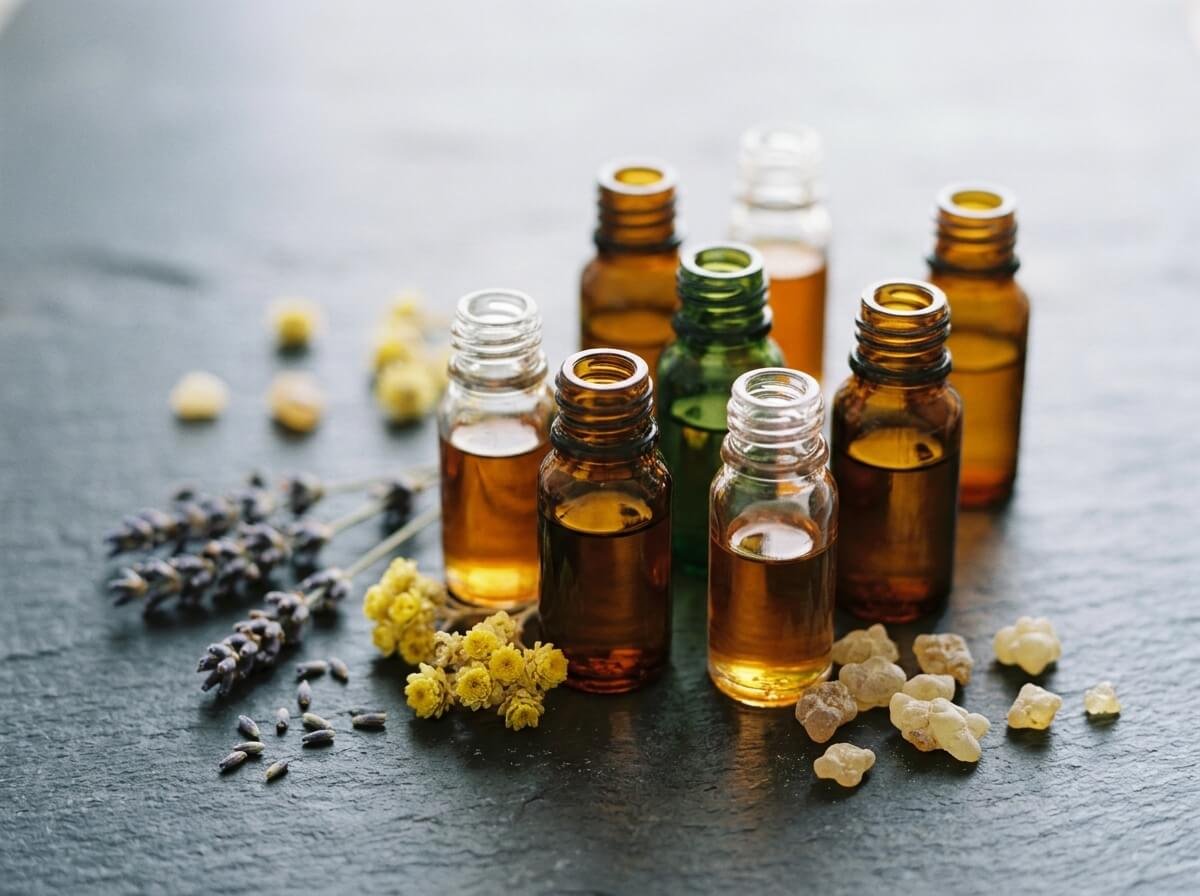
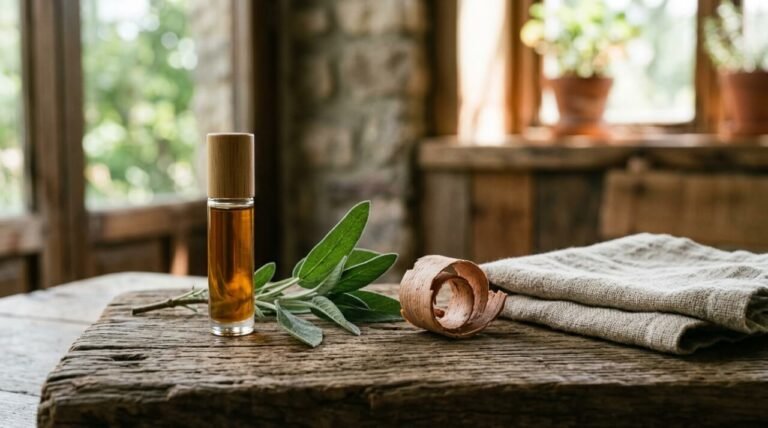
Most lists give you a dozen oils with no sense of which are worth your attention. Here is our shorter, more honest shortlist, chosen for a mix of tradition and the studies that exist. Remember that essential oils are the concentrated aromatic part of a plant. They are potent, and they always need diluting, which we cover in the next section.
Helichrysum
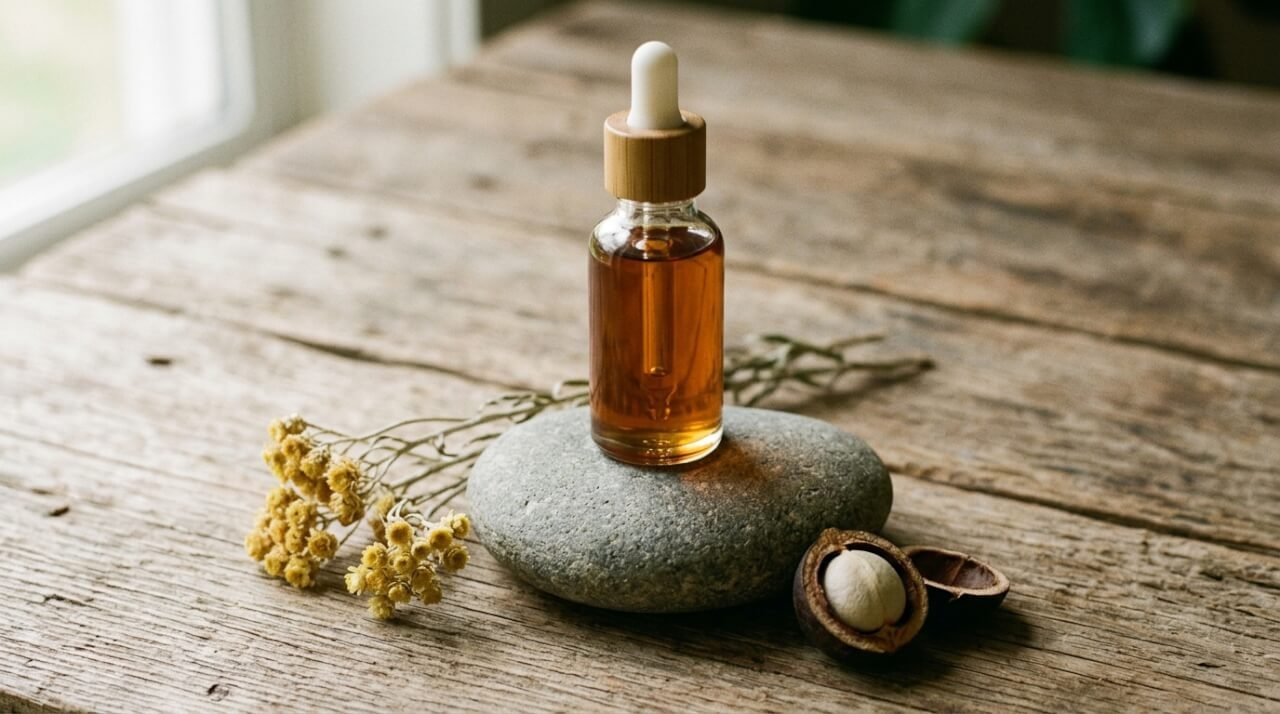
If we could pick one, it would be helichrysum, sometimes called immortelle. It has the longest-standing reputation for supporting skin regeneration and calming the look of scars and bruising, and it is gentle enough for most skin when properly diluted. It is the botanical at the heart of our Immortelle Helichrysum Face Serum, already blended into a carrier so you skip the guesswork.
Lavender
The gentle all-rounder. Lavender is among the most studied essential oils for calming skin and supporting comfortable healing after skin is closed. It is a sensible starting oil if you are new to this, and it layers kindly with almost everything else on this list.
Frankincense
A resinous, grounding oil traditionally reached for to support skin tone and the appearance of mature or settled scars. It works slowly and rewards patience, which is really the theme of this whole guide.
Rosehip
Technically a carrier oil rather than an essential oil, but it earns its place on any scar list. Rosehip is rich in the fatty acids and natural vitamin A compounds that skin uses for renewal, and it has a long, well-liked reputation for tone and texture on the face. It is light, it absorbs cleanly, and it makes an excellent base to dilute helichrysum or lavender into. If you only keep one facial oil for marks, this is a strong candidate.
Tea tree, for acne-prone skin
Tea tree will not fade a mark on its own, but if your scars come from breakouts, calming active acne is half the battle, because every new spot is a potential new mark. Used carefully and well diluted, tea tree can support clearer skin so fewer scars form in the first place. Prevention, quietly, is the most effective scar strategy there is.
Geranium and carrot seed
Geranium is valued for supporting skin elasticity and a more even look, while carrot seed oil brings antioxidant support that some people like for weathered or discolored areas. Both are worth knowing, both need careful dilution, and neither is a miracle, only a helper. Think of them as useful additions to a blend once you have your base and your hero oil sorted, rather than a place to start.
A word on the citrus oils you will see recommended, like lemon, for fading marks: they can make skin far more sensitive to sunlight, which can darken a scar rather than lighten it. That risk is real enough that we give it its own rule below. For the aromatic, grounding side of Indonesian botanicals, our note on patchouli essential oil benefits is a gentler place to start.
The one safety rule every essential oils for scars list skips
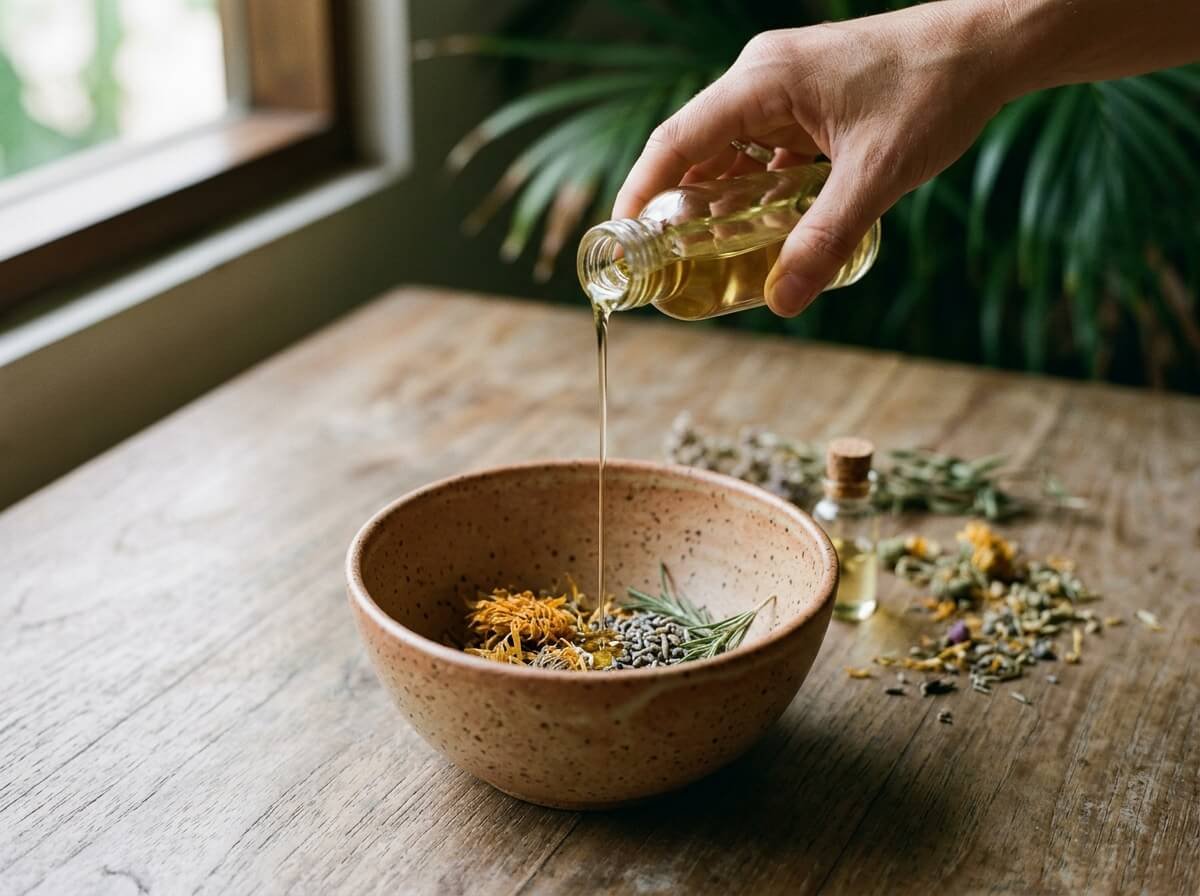
Here is the rule almost every list buries or forgets: never put an undiluted essential oil directly on your skin, and especially not on healing or scarred skin. Essential oils are concentrated. Applied neat, they can sensitize, irritate, or burn the very tissue you are trying to help, and they can leave a fresh mark worse than the one you started with. The carrier oil you choose is not an afterthought. It does at least half the work.
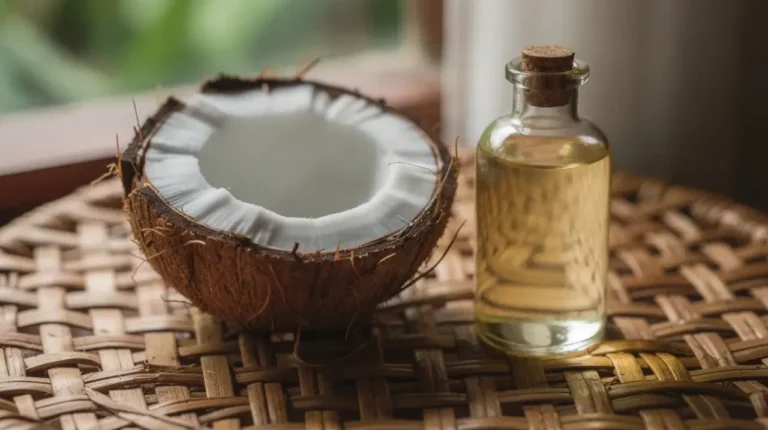
A carrier oil is the gentle plant oil that dilutes the essential oil and carries it into the skin. For scars, the carrier is often the real hero, because the nourishing, barrier-supporting oils are the ones that keep tissue supple day after day. Two we trust deeply:
- Tamanu. The coastal oil island healers reached for first, prized across the Pacific and Indonesia for supporting the look of scars and marks. Our Tamanu Oil 30ml is a single-ingredient carrier you can use on its own or as the base for a blend, and we explain its character in depth in our tamanu oil benefits guide.
- Rosehip and lighter facial oils. Well loved for tone and texture on the face. If you are weighing options, our comparison of argan oil versus tamanu oil shows how an everyday oil and a dedicated healer differ.
Keep the dilution modest. For most adults, a gentle facial dilution is roughly one to two drops of essential oil per teaspoon of carrier, a little lower on delicate or reactive skin, and up to about three drops per teaspoon on tougher areas of the body. When in doubt, go weaker. More essential oil does not mean more benefit, it means more risk, and scarred skin is already sensitive terrain.
Always patch test before you commit. Put a small amount of your finished blend on the inner arm, cover it, and wait a full day. If the skin stays calm, you are clear to use it on the scar. If it reddens, stings, or itches, wash it off and dilute further or drop that oil entirely. This one habit prevents almost every bad reaction we hear about, and it costs you nothing but a day of patience.
And respect the sunlight rule: if your blend contains citrus or any phototoxic oil, keep it to night use and protect the area from sun, or a scar can darken instead of fade. New scars are especially prone to picking up extra pigment from sun exposure, so daytime protection is part of the treatment, not an optional extra. If you want to skip the measuring entirely, a ready-made serum has already done this math for you, with the dilution, the carriers, and the safety balanced in the blend.
A gentle Balinese ritual for softening a scar
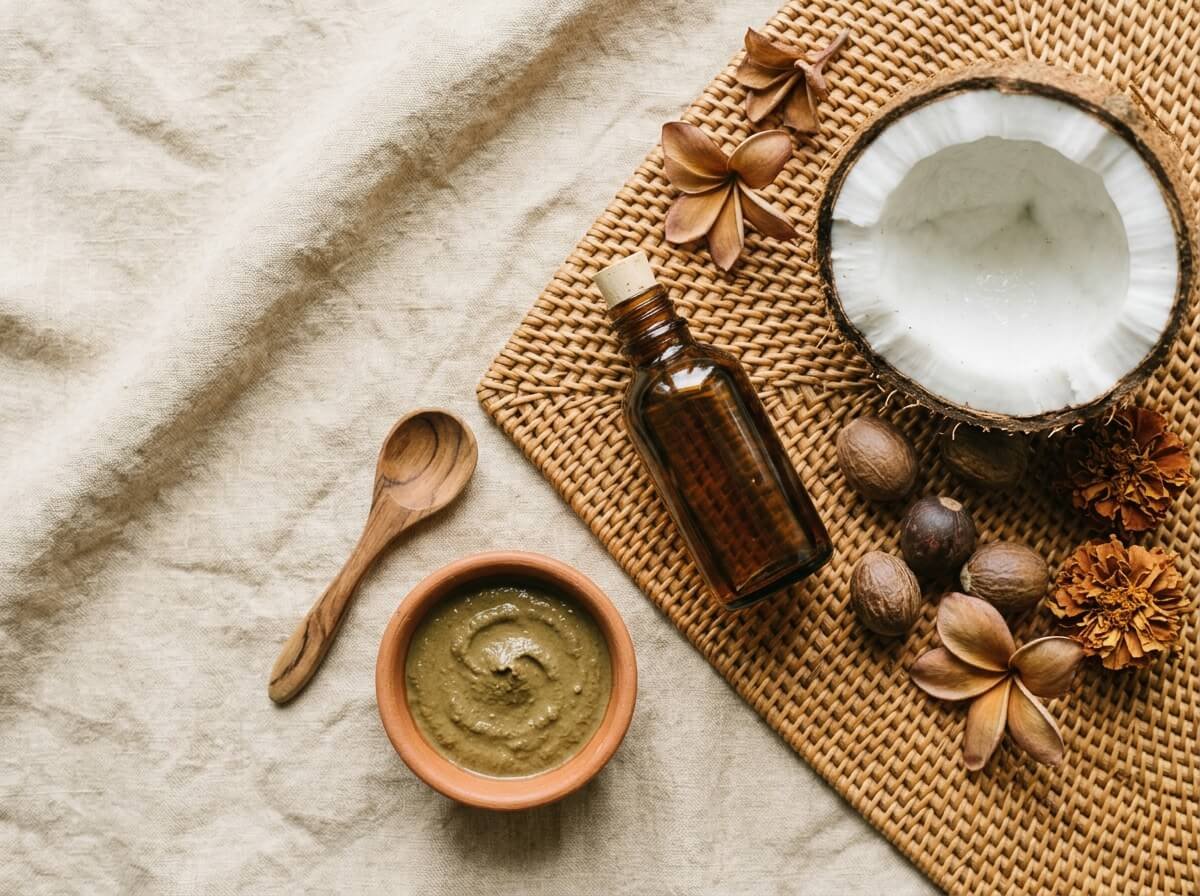
In Bali, care for the skin has always been a daily ritual rather than a rescue mission, and scars respond to exactly that kind of patient, repeated attention. Here is a simple routine you can keep for the weeks and months a scar takes to settle. Consistency, not intensity, is what moves the needle.
- Cleanse gently. Start with clean, dry skin. Nothing harsh, nothing stripping.
- Warm a few drops. Press a small amount of your diluted oil or serum between your fingertips to bring it to skin temperature.
- Massage, do not rub. Work the oil into the scar with slow circles for a minute or two. This is the part that helps the tissue stay soft and mobile, and it is quietly the most important step.
- Layer for moisture. On the body, follow with a richer cream or a soothing Aloe Vera Gel to lock in hydration. On the face, a light serum is usually enough.
- Repeat, twice daily. Morning and night, for as long as the scar is still changing. Give it weeks before you judge, not days.
One small, honest tip: take a photo of the scar in the same light every couple of weeks. Day to day, skin changes are invisible, and it is easy to feel like nothing is working and give up right before the slow progress becomes visible. A simple photo record keeps you patient and lets you see the real, gradual shift that daily care creates. That is the whole philosophy in miniature: small acts, repeated with care, adding up to something real.
For facial scarring, we reach for a helichrysum-based serum because the dilution and blend are already balanced for delicate skin. Our Immortelle Helichrysum Face Serum pairs that regenerative botanical with nourishing carriers, and if your skin runs reactive, the Sensitive Face Serum is a calmer alternative. To understand how a serum differs from a plain oil, our explainer on the natural face serum is a useful companion read, and our Balinese face oil story shows the heritage behind the blend.
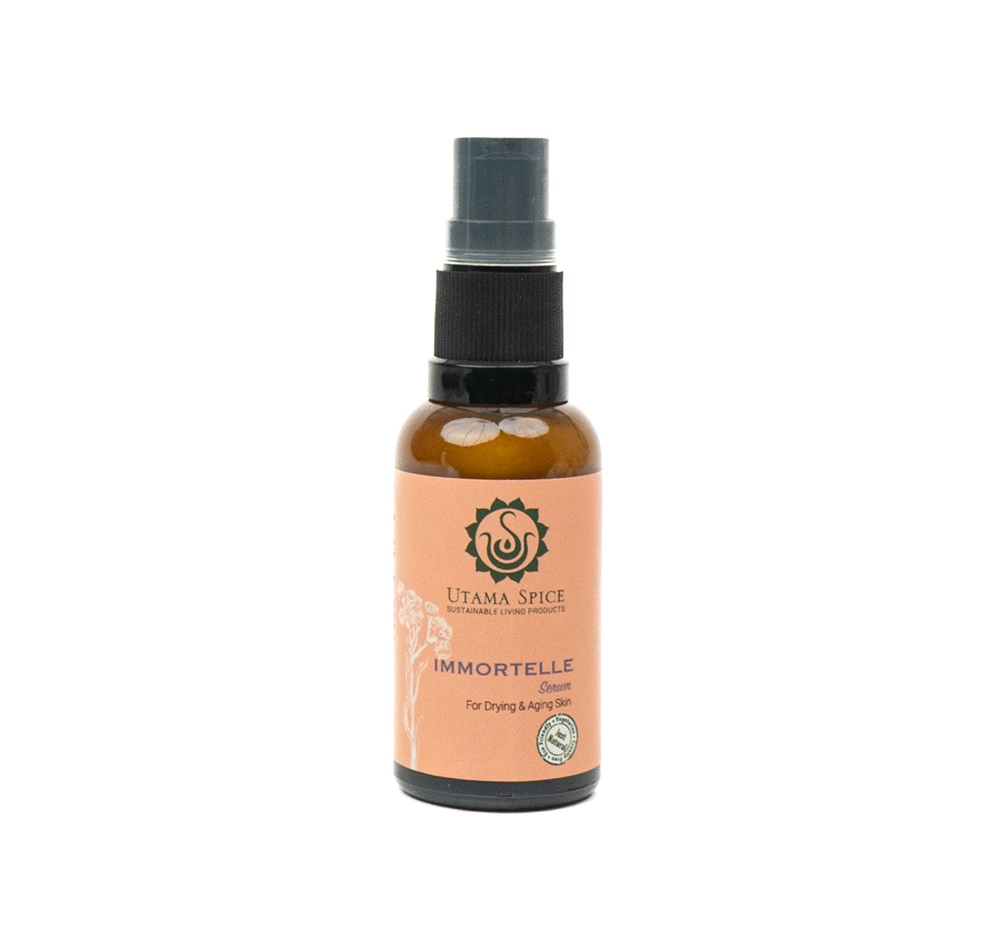
Helichrysum, already blended for you
Our Immortelle Helichrysum Face Serum blends the botanical most trusted for the look of scars with nourishing carrier oils, diluted and ready for delicate facial skin. No measuring, no guesswork, just a calm daily ritual crafted in Bali.
Frequently asked questions about essential oils for scars
Can essential oils remove old scars completely?
No, and any product that says so is overpromising. Old, settled scars are stable collagen, and no topical oil dissolves them. What consistent oil care can do is keep the area supple and, over time, soften how the scar looks and feels. Progress, not perfection, is the honest goal.
How long before I see any change?
Think in months, not days. Newer scars, still pink and softening, respond faster than mature ones. Most people using a diluted oil twice daily start to notice a smoother, calmer look somewhere between four and 12 weeks. If nothing has shifted after a few consistent months, oils are unlikely to be your answer, and a dermatologist can suggest more.
Can I put essential oils on a fresh cut or open wound?
No. This is the safety line that matters most. Essential oils belong on skin that has fully closed and healed, never on an open or weeping wound. Broken skin needs simple, clean wound care first. Bring in the oils only once the scar has formed.
Which carrier oil is best for scars?
Tamanu is our first reach for body scars, thanks to its long tradition of supporting marked skin. For the face, a lighter oil or a rosehip-based serum tends to feel better. Whichever you choose, the carrier is doing much of the real work, so pick one you will happily use every day. A side-by-side of argan and tamanu can help you decide.
Are essential oils safe for scars during pregnancy?
Some essential oils are not recommended during pregnancy, so this is a moment to keep it simple. A plain, gentle carrier oil like tamanu or a fragrance-light option is the safer route, and we would check with your midwife or doctor before adding any essential oil. For pregnancy-related marks specifically, our natural stretch mark oil guide keeps the same cautious spirit.
Final thoughts: patient care over quick fixes
Essential oils for scars are not magic, and we would never sell them as such. Used well, though, they are a genuinely good form of care: a diluted, well-chosen oil, massaged into healed skin twice a day, keeping the tissue soft while a scar quietly settles. The wins are gradual, honest, and real, which is exactly the kind of wellness we believe in. Choose the right oil, respect the safety rules, and give your skin the one thing every scar needs most, which is time.
What you give, you get back. Care for your skin gently and consistently, and it tends to return the favor. If you want to go deeper on how facial oils work, our guide to face oil versus body oil and our note on turmeric for skin are both good next steps.