How to layer natural skincare: the order that matters, and why more steps is not better
The idea that more steps means better skin is partly a marketing invention, partly a misreading of a real principle. The real principle is simple: apply products from thinnest to thickest, and let each one absorb before the next goes on. Everything else is variation on that core rule. Understanding how to layer skincare correctly means you can build a routine of three products or seven and know it is working, without guessing and without the pilling, the breakouts, or the products that seem to do nothing.
This guide walks through the layering logic in full, how it applies specifically to botanical and natural skincare (where oils, plant-based serums, and multi-use formulas behave differently from synthetic counterparts), and what Balinese skincare tradition offers as a counterpoint to the ten-step approach. By the end, you will know the order, why it works, and how to build a routine that fits how you actually live.
What skincare layering actually means (and why most guides overcomplicate it)
Skincare layering means applying products in a sequence that allows each one to function as intended. The concept rests on three observable properties: skin absorbs thinner, more water-based products more readily than thick or oily ones; occlusive ingredients create a surface barrier that slows the penetration of anything applied afterward; and certain active ingredients interact when applied in the same sequence, sometimes enhancing each other, sometimes working against each other.
The phrase “layering” does not mean more. It means ordered. A three-step routine applied in the right sequence will outperform a seven-step one applied without attention to order. The sequence is the thing, not the number of products.
Most guides present layering as a fixed hierarchy: cleanser, toner, serum, moisturiser, SPF. That hierarchy holds for standard product categories, but it does not fully account for natural and botanical skincare, where the lines between categories are much more permeable. A botanical toner might also function as a humectant. A face serum might be oil-based. A plant-based cream might contain both water and oil phases simultaneously. Knowing the principle behind the rule, thin before thick, water-soluble before oil-soluble, gives you the flexibility to make good decisions regardless of what category a product claims to be.
There is also a practical dimension: many people over-layer because they feel that each product is solving a different problem and more problems need more solutions. In reality, skin problems are usually addressed better by fewer, more targeted products applied correctly than by a crowded shelf of moderate performers applied in random order. Worth reading alongside this: our guide to skincare ingredients to avoid, which explains what to filter out before you even start building a routine.
The rule that organises everything: thin to thick, water before oil
The underlying logic is molecular weight and viscosity. Smaller molecules and watery formulas penetrate the skin more readily because the stratum corneum (the outer skin layer) allows lighter molecules through its lipid matrix more easily than large, heavy ones. Watery products deliver their ingredients before they evaporate or absorb, then clear the way for what comes next. Oil-based products sit on the surface and slow evaporation, which is why they belong later in the sequence.
If you apply an oil-based product first, you create a seal. Anything applied afterward sits on top of that seal rather than penetrating the skin, which means those later products are wasted at best and occluding at worst. This is why the order is non-negotiable for anyone who wants their products to actually work.
Working through it practically, the sequence looks like this:
- Cleanser: removes surface residue, opens the slate
- Toner or essence: hydrates the skin surface, often a water-based botanical extract or hydrosol
- Water-based serum: concentrated actives in a water-soluble base
- Treatment oil or face oil: lipid-rich, applied before or after moisturiser depending on the formula and skin type
- Moisturiser or face cream: emollient layer that locks in hydration and treats the surface barrier
- SPF (morning only): applied as the final step so it can form an even, protective film
Each step extends the benefit of the step before it. A good botanical toner makes serum actives penetrate more easily. A face cream locks in what the serum has deposited. SPF protects that investment from UV degradation before it has had time to act.
If you are using a face serum versus a face oil, the distinction matters here: a water-based serum goes before any oil step, always. The order is not interchangeable, and understanding that distinction simplifies every layering decision.
How botanical ingredients layer differently from synthetic formulas
Natural and botanical skincare presents layering questions that generic guides do not fully address, because the formulation logic is different. Synthetic skincare products are typically engineered around predictable penetration pathways, with synthetic emulsifiers, penetration enhancers, and carrier molecules that move actives into the skin at known rates. Botanical formulas work differently, and that difference changes where they sit in the sequence.
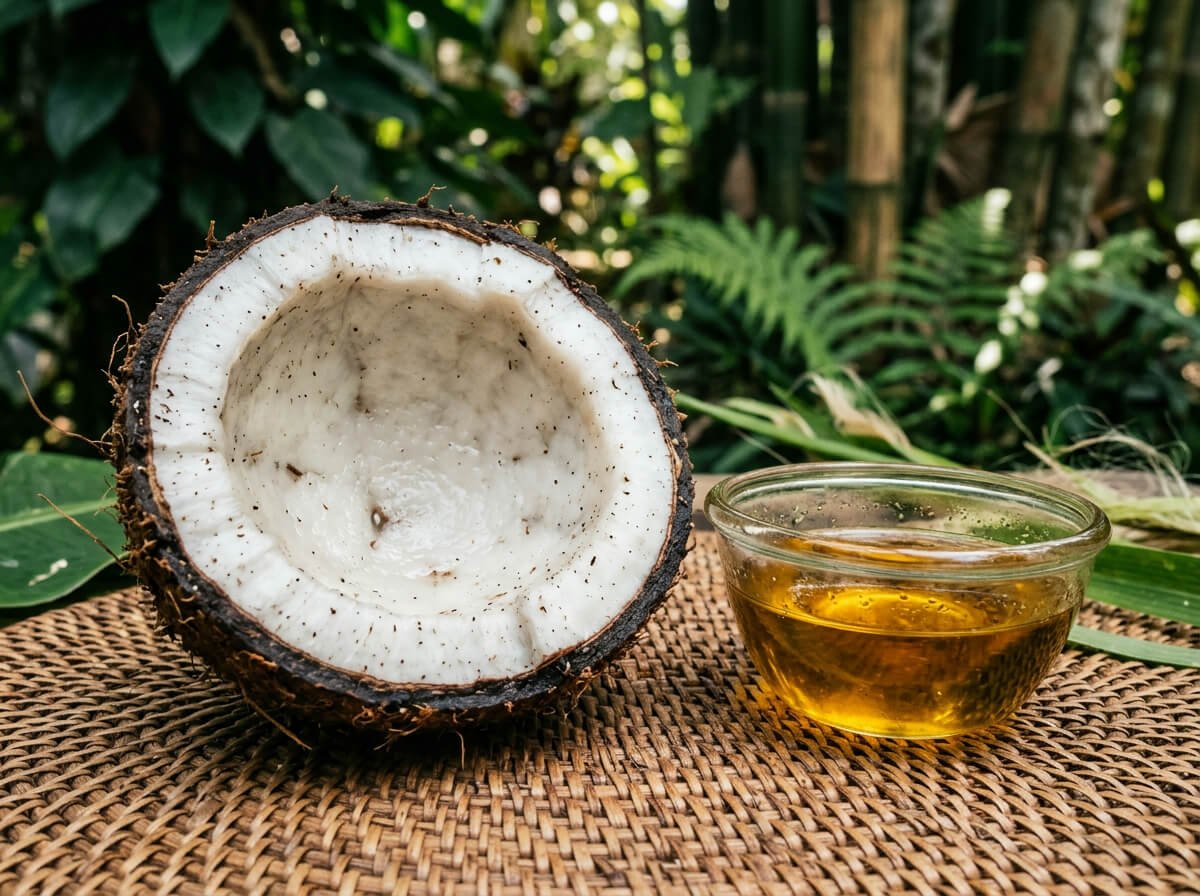
Many botanical serums are oil-based, not water-based. Cold-pressed plant oils such as coconut oil, kukui, rosehip, or argan are lipid-rich and behave as mid-layer treatments rather than conventional serums. They sit between a water-based serum step and a moisturiser step. If your serum is oil-based, it still goes before your moisturiser, but it does not go before a water-based toner or essence (those still go first, as the thinnest step).
Botanical toners and hydrosols are typically water-based mists or essences (rose water, aloe vera, green tea extract). These go immediately after cleansing, before anything else, because they restore the skin’s surface hydration and prepare it to absorb the next layer. Aloe vera gel is a good example: it is water-based, humectant, and soothing, making it an ideal first-hydration step before a serum or oil treatment.
The fatty acid composition of a botanical oil matters when sequencing. Oils high in linoleic acid (kukui, rosehip, some Balinese blends) tend to absorb more quickly and suit oilier or acne-prone skin. Oils high in oleic acid, such as certain coconut or illipe-butter-enriched preparations, are richer and better suited to dry or mature skin. The difference between coconut oil and illipe butter for skin illustrates this clearly: both are botanical, both are oil-based, but their fatty acid profiles mean they behave differently in a layering sequence. A more complex treatment serum like our Immortelle Helichrysum Face Serum contains lipid-soluble actives that require placement after any water-based steps and before the moisturiser for full efficacy.
A useful rule for natural skincare: sequence by the product’s base, not its category name. Is it predominantly water or oil? Water goes before oil, always. When in doubt, feel the product between your fingers. Watery and fast-evaporating: early. Oily and slower to absorb: later. Rich and occlusive: last.
The Balinese approach: fewer steps, richer ingredients

Balinese skincare tradition did not arrive at a ten-step routine. It arrived at highly concentrated botanical ingredients, used in small amounts, applied with intention and consistency. The philosophy is not accumulation. It is quality, ritual, and understanding what each ingredient does.
In traditional Balinese practice, cleansing is a careful act, often with botanical oils or herbal-infused preparations, rather than a foam that strips the skin. What follows is typically a concentrated botanical treatment applied to damp skin: a single oil, a herbal preparation, or a plant-based balm. The emphasis is on sourcing and efficacy, not product count. Two or three well-chosen ingredients applied in the right order, used consistently, produce better results than seven mediocre ones applied without thought.
This aligns closely with the “fewer steps, richer ingredients” model that many conscious-beauty consumers are moving toward. It is also the logic behind formulating a product to do more than one thing well. Our HydroBotanic 3-in-1 Hydrating Face Cream is built around this principle: a single formula that hydrates, calms, and supports the skin barrier in one step. It contains a botanical water phase and a lipid phase, making it both a hydration delivery vehicle and a barrier seal. In a layering context, it goes on after any serums or treatment oils as the final moisturising step, simplifying a routine without sacrificing the function of multiple separate products.

The Balinese approach also means using tactile feedback as a guide: warm a small amount of oil or cream between the palms, press it gently into slightly damp skin rather than rubbing it on dry, and notice how the skin responds. That attention, that slowing down to observe, is part of what makes a simple routine perform as well as a complicated one.
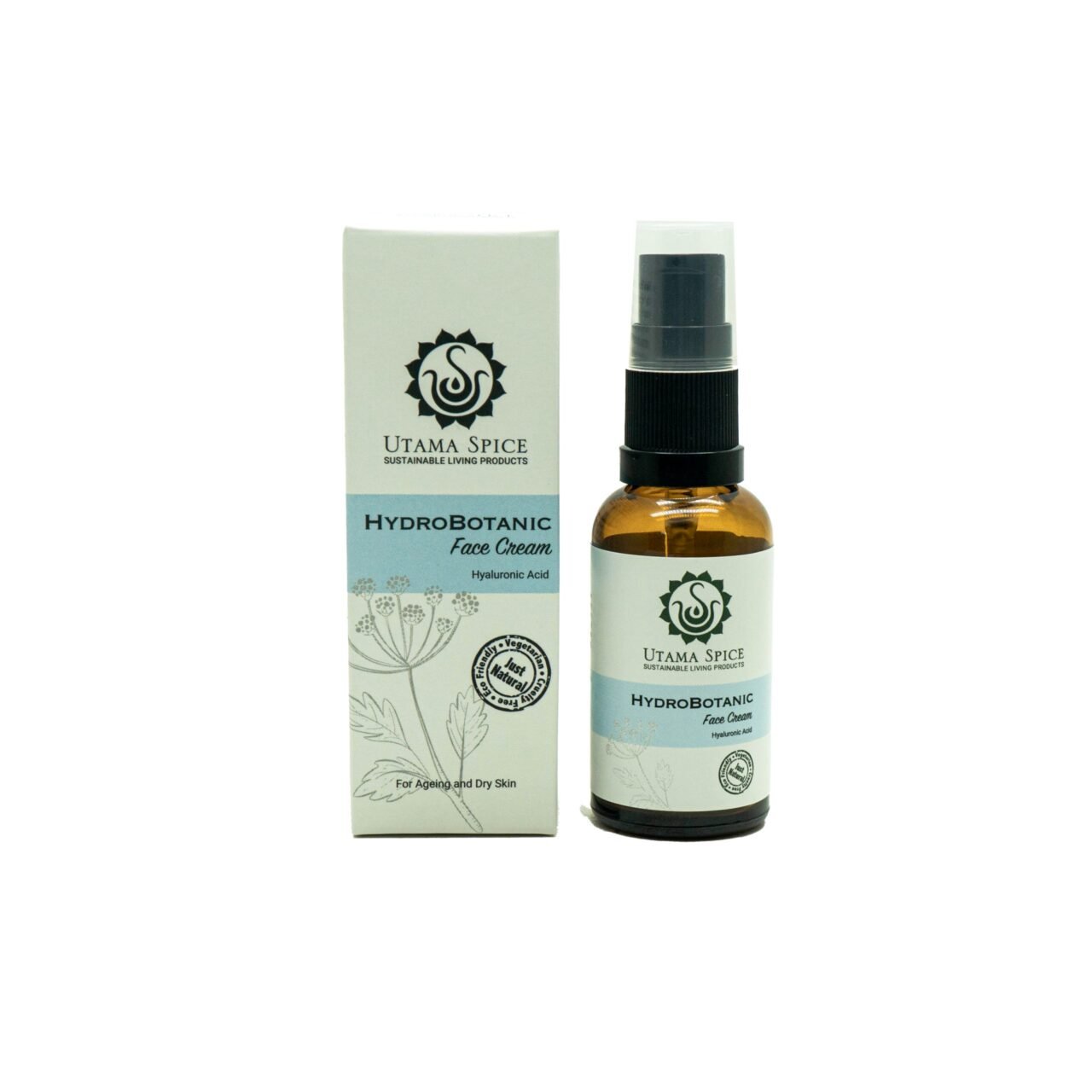
One step for hydration, calm, and barrier care
The HydroBotanic 3-in-1 Hydrating Face Cream simplifies the final step of your natural skincare routine without reducing its effectiveness. A botanical water phase and plant-derived emollients in one formula: hydrate, calm, protect.
Where face oil fits in the routine (the most asked layering question)
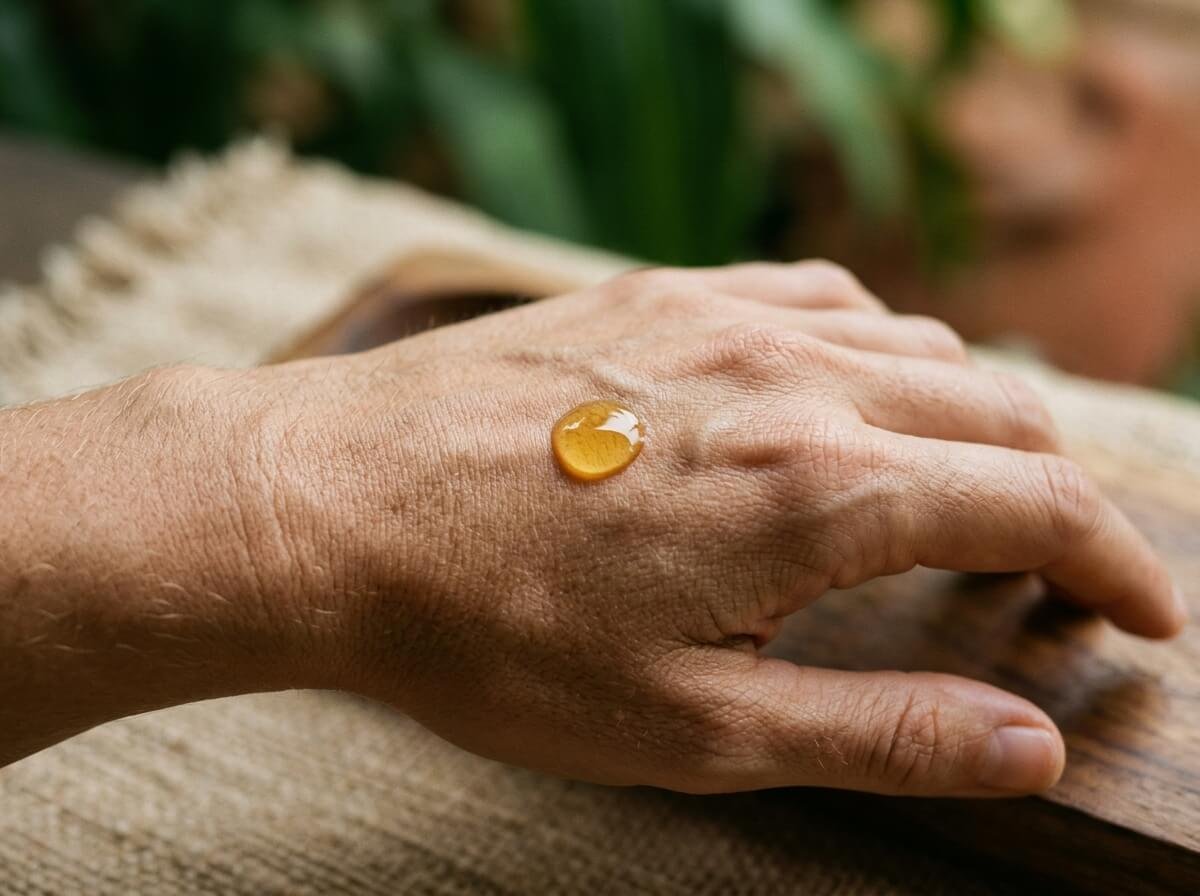
This is the question that comes up most often, and the honest answer is that it depends on two things: the formulation of the oil and what it is supposed to do for your skin.
Before moisturiser: if the face oil is a treatment delivering concentrated fatty acids, lipid-soluble actives, or barrier-repair lipids, it typically goes after serum and before moisturiser. The moisturiser’s emollient layer then seals the oil treatment in and prevents it from evaporating before it has had time to act. This is the conventional placement for dry, sensitive, or barrier-compromised skin, where the oil is a therapeutic ingredient, not a finishing step.
After moisturiser: if the face oil is predominantly occlusive (rich in saturated fats, heavier molecular weight), it can go over the moisturiser as a finishing seal. This applies most commonly to richer, heavier botanical oils used primarily to lock water in and create a protective surface layer rather than to deliver lipid-soluble actives into deeper skin layers.
Instead of moisturiser: some lighter botanical oils, particularly those with a high linoleic acid profile, can replace a moisturiser entirely for people with naturally oilier or combination skin who do not need the additional emollient layer of a cream. This is common in Balinese routine practice, where a single well-chosen oil functions as both treatment and barrier step in one. Our guide to face serum versus face oil explores this distinction further, including how to tell which your skin actually needs.
A practical test: apply the face oil to clean, slightly damp skin on its own, without a moisturiser over it. If it absorbs within a few minutes and skin feels balanced without greasiness, it is working as a treatment layer and belongs before moisturiser (or instead of it). If it provides a noticeable protective feel and sits on the surface longer, it belongs after. And if you incorporate the oil into a facial massage practice, that changes the rate of absorption too, which is worth factoring into your layering sequence.
A minimal layering routine for morning and evening
These are starting points, not prescriptions. Adjust based on your skin’s response over two to four weeks, which is how long most botanical ingredients need to show measurable change.
Morning routine
- Rinse or gentle botanical cleanser (many skin types do not need a full cleanse in the morning; a water rinse is often enough)
- Botanical toner or hydrosol mist, if using
- Water-based serum, if using
- Treatment oil or face oil, before moisturiser for most skin types
- Moisturiser or face cream
- SPF, last, every morning without exception
Evening routine
- Oil-based or botanical cleanser to dissolve SPF and surface residue. Our Bliss Botanical Face Wash works well here as a gentle botanically-formulated first-step cleanser for most skin types
- Second water-based cleanse if double-cleansing (see the oil cleansing method guide for how and when to use it)
- Toner or essence if skin feels tight after cleansing
- Treatment serum (concentrated actives work better at night when skin is more permeable)
- Face oil (evening is the best time for richer oils, as night skin absorbs lipid treatments more deeply)
- Richer moisturiser or barrier-support cream
The rule is identical for both routines: thin before thick. Morning is protection-oriented, antioxidants and SPF as the final layer. Evening is repair-oriented, more concentrated actives, barrier-support oils, richer moisturising. Night skin is measurably more permeable than day skin, which is why heavier treatment oils and richer creams perform better in an evening routine than a morning one.
Body skin layers by the same logic. A body oil like our Rose Allure Body Oil goes on before or instead of a body lotion, not after it, because the oil needs direct contact with skin to absorb rather than being blocked by an emollient barrier. Apply it while skin is still slightly damp after a shower, when the oil can absorb most effectively.
Questions people ask about layering skincare
Can I skip steps if I only have a few products?
Yes. The layering rule is about sequence, not quantity. A two-step routine of cleanser and face cream, applied in that order, is correctly layered. A five-step routine applied in the wrong order is not. Do not add products to fill perceived gaps. Add them only when a specific skin need is not being met by what you already use.
What happens if I layer in the wrong order?
The most common result is that certain products simply stop working. If you apply a face oil before a water-based serum, the serum cannot penetrate the oil barrier and sits on the surface rather than delivering its actives to the skin. You will not notice a dramatic reaction in most cases, just a gradual disappointment that products are underperforming. In some cases, occlusive products applied too early can contribute to congestion, particularly if they are rich in oleic acid and your skin is naturally oilier.
How long should I wait between steps?
Long enough for the previous product to absorb. For most water-based products, that is 30 to 60 seconds. For heavier face oils or thick treatments, one to two minutes is usually enough. You do not need to time it strictly. If the skin still looks shiny or wet, wait a little longer. If it has settled and feels neither sticky nor tight, the next product can go on.
Is more products always better for skin?
No, and this is worth stating clearly. More products increase the likelihood of a sensitising reaction, make it harder to identify which ingredient is causing a problem if skin reacts, and often result in layering conflicts where products cancel each other out or create an impenetrable film that prevents absorption. The most effective routines are usually the most focused: cleanser, treatment, protection. Everything else is supplementary and only worth adding when a clear gap exists in your skin’s current health.
Can I use a face oil every day?
For most skin types, yes. The key is matching the oil to your skin’s actual needs. Lighter oils (kukui, rosehip, squalane) can typically be used morning and evening without congesting even oilier skin. Richer oils (heavy coconut fractions, illipe-enriched blends) are better reserved for evening use or for very dry skin types. Our guide to argan oil benefits for skin covers one of the most versatile options in more depth, including how to tell whether it suits your skin type.
Does SPF always go last?
Yes. SPF must form an even, uninterrupted film on the skin’s surface to function correctly. Any product applied after SPF disrupts that film and reduces its protective factor. SPF is always the final morning step. Nothing goes over it except makeup, and a foundation’s SPF rating does not meaningfully supplement a dedicated sunscreen product.
Layering skincare correctly is less about memorising a fixed order and more about understanding one principle: thin absorbs before thick, water precedes oil, and each layer prepares the skin for the next. Once that logic is clear, you can apply it to any product, any routine, any skin type, and know you are using what you have as effectively as possible. The Balinese approach adds the reminder that quality always matters more than quantity, and that a routine done with attention and care will always outperform one done on autopilot with a full shelf of products.
Are toners and essences necessary?
Not for everyone, but they serve a genuine function when the rest of the routine calls for it. After cleansing, the skin’s surface pH shifts slightly and its hydration level drops. A botanical toner or hydrosol mist (rose water, green tea extract, aloe-based mist) rehydrates the surface and brings the pH back to a range where serums absorb more readily. If your serum is oil-based and you apply it straight after cleansing on dry skin, you may find it sits on the surface and takes longer to absorb. A water-based toner applied first gives the oil something to work into. If your serum is water-based and absorbs well without a toner, there is no requirement to add one. The question is always whether it is doing something your skin needs, not whether it belongs in a standard sequence.
Why does skincare pill or ball up, and does layering fix it?
Pilling happens when a product cannot absorb into the skin and instead sits on the surface, picking up friction from the next product or from your hands. The most common cause is applying a product before the previous one has fully absorbed, or applying a water-based product over an oil-based one. Layering correctly, in the right order and with sufficient time between steps, eliminates pilling almost entirely. If pilling persists even with good sequencing, the issue is usually too much product: a smaller amount of most skincare products absorbs more cleanly than a generous application. Try using half the amount you currently use and see whether pilling stops. Natural skincare products formulated with fewer synthetic emulsifiers can occasionally be more prone to pilling on the first application, particularly on skin that still has silicone residue from previous synthetic products. This typically resolves within one to two weeks as the skin adjusts.