Natural sunscreen ingredients: what each one actually does, and why Balinese skin wisdom starts after the sun
Search “natural sunscreen ingredients” and most guides hand you a recipe: melt this oil, whisk in that powder, pour into a jar. Few stop to explain what any of it actually does once it is on your skin. That gap matters, because not every ingredient in a natural sunscreen formula is doing the same job. Some physically block ultraviolet light. Some are plant oils riding on a reputation they have not earned. And some are not sunscreen ingredients at all, they are restoration ingredients, meant for the hours after the sun, not the hours during it.
That last category is where Balinese skin wisdom has always lived. Bali sits close to the equator, under some of the most intense UV exposure on Earth, and generations of Balinese skincare tradition grew up treating after-sun care as seriously as protection itself. This guide walks through what the ingredients in natural sunscreen actually do, mechanism by mechanism, then turns to the botanical ingredients that pick up where sun protection leaves off.
None of this is a substitute for reading your own dermatologist’s advice on sun exposure. It is a clearer map of the ingredient list, so the label in your hand makes sense.
What the word “natural” actually regulates on a sunscreen label
Worth saying plainly: the word “natural” is not a regulated term on a skincare or sunscreen label, in the United States or in most markets. A brand can call a formula natural without any third party verifying the claim. What is regulated, at least where sunscreen is concerned, is the active ingredient, and that is exactly why zinc oxide and titanium dioxide are the two names worth memorizing. They tell you something real. “Natural,” on its own, tells you almost nothing.
This is not a call to distrust every natural sunscreen brand. It is a reason to read past the front-of-label language and into the actual ingredient panel, which is where the honest answer always lives.
The two natural sunscreen ingredients that actually block UV: zinc oxide and titanium dioxide, explained
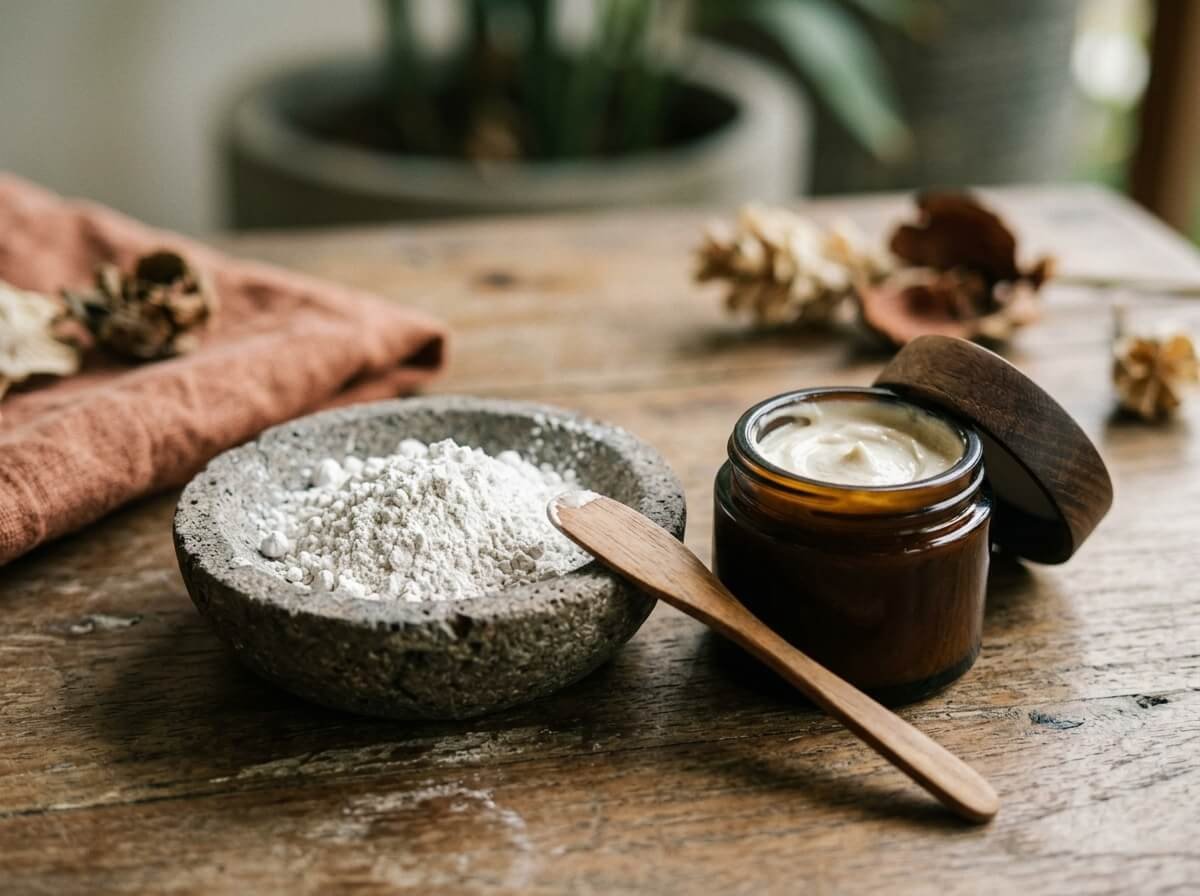
If a sunscreen calls itself natural or mineral, the active ingredient is almost always zinc oxide, titanium dioxide, or a combination of the two. These are physical, sometimes called mineral, UV filters. They work by sitting on top of the skin as a fine mineral layer and reflecting or scattering ultraviolet radiation before it reaches living skin cells.
Zinc oxide covers the widest range, blocking both UVA (the rays linked to premature aging and deeper skin damage) and UVB (the rays responsible for sunburn). Titanium dioxide leans more toward UVB and shorter-wave UVA. That is why many mineral formulas combine both: zinc oxide carries the broad-spectrum coverage, titanium dioxide fills in and often improves how the formula spreads without a heavy white cast.
This matters for reading a label honestly. Chemical sunscreens work differently, absorbing UV radiation and converting it to heat through compounds like oxybenzone or avobenzone. A truly mineral, natural sunscreen ingredient list should show zinc oxide or titanium dioxide as the active ingredient, not buried in an inactive list behind a chemical filter doing the real work.
Nano versus non-nano particles, and why it shows up on labels
Zinc oxide and titanium dioxide come in two particle sizes: nano and non-nano. Non-nano particles are larger and sit more visibly on the skin, which is what causes the classic white cast. Nano particles are milled smaller so the formula spreads more sheer, at the cost of raising questions among some formulators about how the particles behave in marine environments. Reef-conscious brands generally favor non-nano zinc oxide for this reason, which is worth checking if reef impact matters to you when swimming or snorkeling.
The concentration matters as much as the mineral itself. A formula listing five percent zinc oxide is offering meaningfully less coverage than one listing twenty percent, even if both call themselves natural. Concentration is one of the clearest, most overlooked numbers on a sunscreen label.
What the SPF number means once the active ingredient is confirmed
SPF is a laboratory measurement of how long it takes skin to redden under a controlled UV lamp with the sunscreen applied versus without it, not a promise about your specific skin, climate, or activity level. SPF 30 blocks roughly ninety-seven percent of UVB rays, and SPF 50 blocks roughly ninety-eight percent, a smaller jump than the numbers suggest. What changes the real-world outcome more than the SPF number is the amount applied, how evenly it is spread, and how often it is reapplied, whether the formula is mineral or chemical, natural or conventional.
Plant oils and SPF: the raspberry seed oil myth, and what coconut oil actually does under the sun
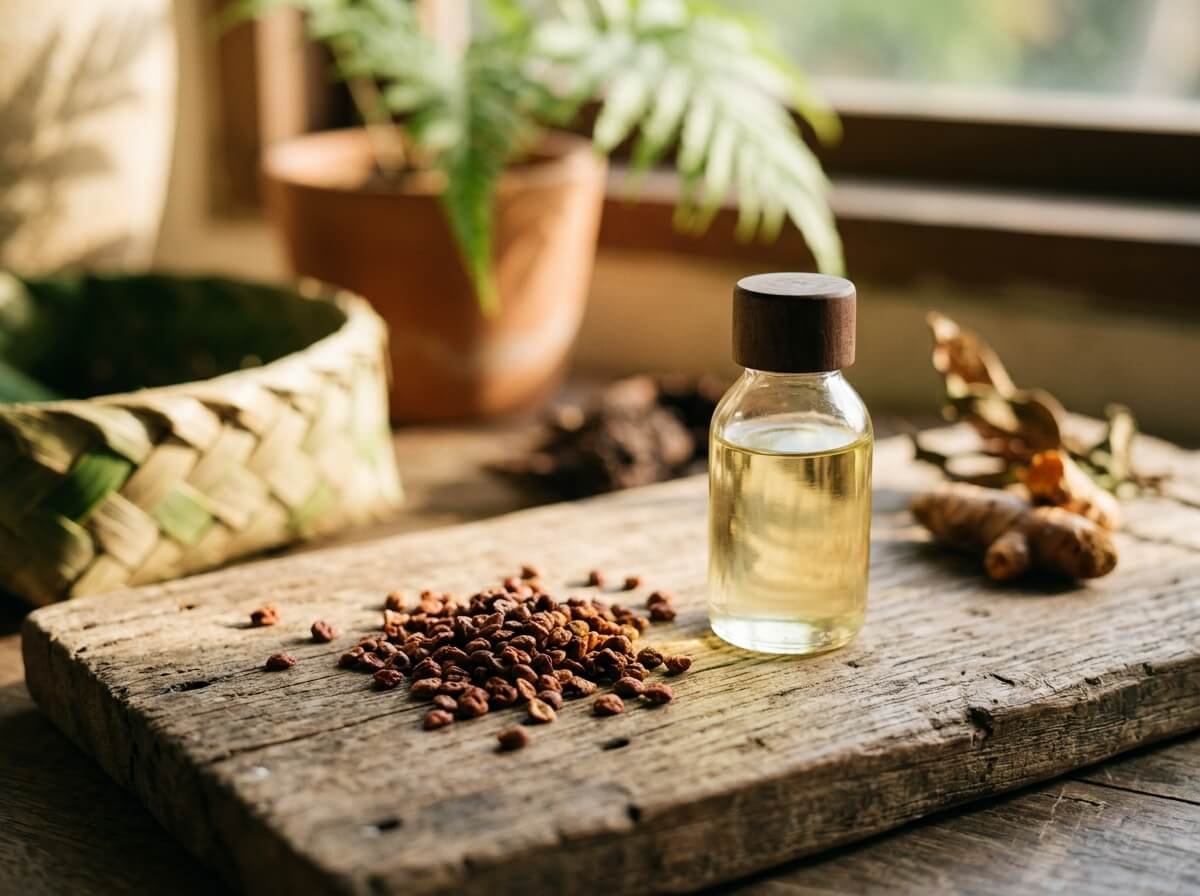
This is where a lot of natural sunscreen ingredient lists lose credibility. Raspberry seed oil is often cited as carrying an SPF between 28 and 50, a figure traced back to a single small lab study measuring UV absorbance in a controlled setting, not real skin, real light, or real time outdoors. No dermatology body has validated that number for practical use, and no reputable formulator relies on it as a stand-alone protection strategy.
Coconut oil carries a similar myth. Tested in isolation, coconut oil offers an SPF of roughly four to eight, which is not meaningful protection against a tropical sun. What coconut oil is genuinely good at is something else entirely: it is an emollient, meaning it fills in the gaps between skin cells and slows moisture loss, and its fatty acid profile calms and softens skin that has already been in the sun.
The myth persists because these numbers travel well online, stripped of the context that made them narrow lab findings rather than real-world guidance. Carrot seed oil, red raspberry seed oil, and shea butter show up in the same DIY sunscreen recipes, each carrying a similar borrowed SPF claim that does not hold up once a formula is exposed to actual sunlight over actual hours.
We wrote a full breakdown of what this oil does across the rest of a routine in coconut oil for skin, and the short version applies here too: coconut oil belongs in the after-sun conversation, not the protection conversation. Confusing the two is how sunburn happens to people who believed they were covered.
After-sun ingredients: where Balinese skin wisdom lives

Bali sits roughly eight degrees south of the equator, and the UV index there regularly climbs into the very high range for most of the year. Generations of Balinese households built their skincare rituals around that reality, and the emphasis was rarely on the idea of blocking the sun outright. It was on restoring skin quickly and consistently after exposure, using what grew nearby: aloe, coconut, and wild-harvested oils like kukui.
We trace this in more depth in natural after sun care, but the principle is worth stating plainly here: prevention and restoration are two separate jobs, and a natural skincare routine in a high-UV climate needs ingredients built for each one. Kukui oil, wild-harvested from candlenut trees and long used in Balinese ritual, is one of the traditional restoration oils that shows up again and again in this part of the world, valued for how it settles into dry, sun-stressed skin without feeling heavy.
The ritual itself is simple and repeatable, which is part of why it lasted. A cool rinse first, to bring down surface heat. A thin layer of aloe, applied while skin is still slightly damp, to lock in that cooling effect. Then, once the skin has calmed, a plant oil massaged in slowly, the same unhurried motion used across Balinese body oiling practice generally. None of the three steps requires blocking the sun retroactively. All three are aimed at what the skin needs once exposure has already happened.
This is not a rejection of modern sun protection. Zinc oxide and titanium dioxide remain the ingredients doing the actual blocking, and they belong on skin before sun exposure. The after-sun ingredients below are what Balinese tradition adds on top, for the hours protection cannot reach.
This is also why wild-harvested sourcing matters to us beyond a marketing line. Kukui and illipe, sourced through our Forestwise partnership in Kalimantan, are harvested by families who have worked the same groves for generations, the same continuity of knowledge that shaped the after-sun ritual described above. Restoration ingredients and the communities that harvest them are part of the same story, not two separate ones.
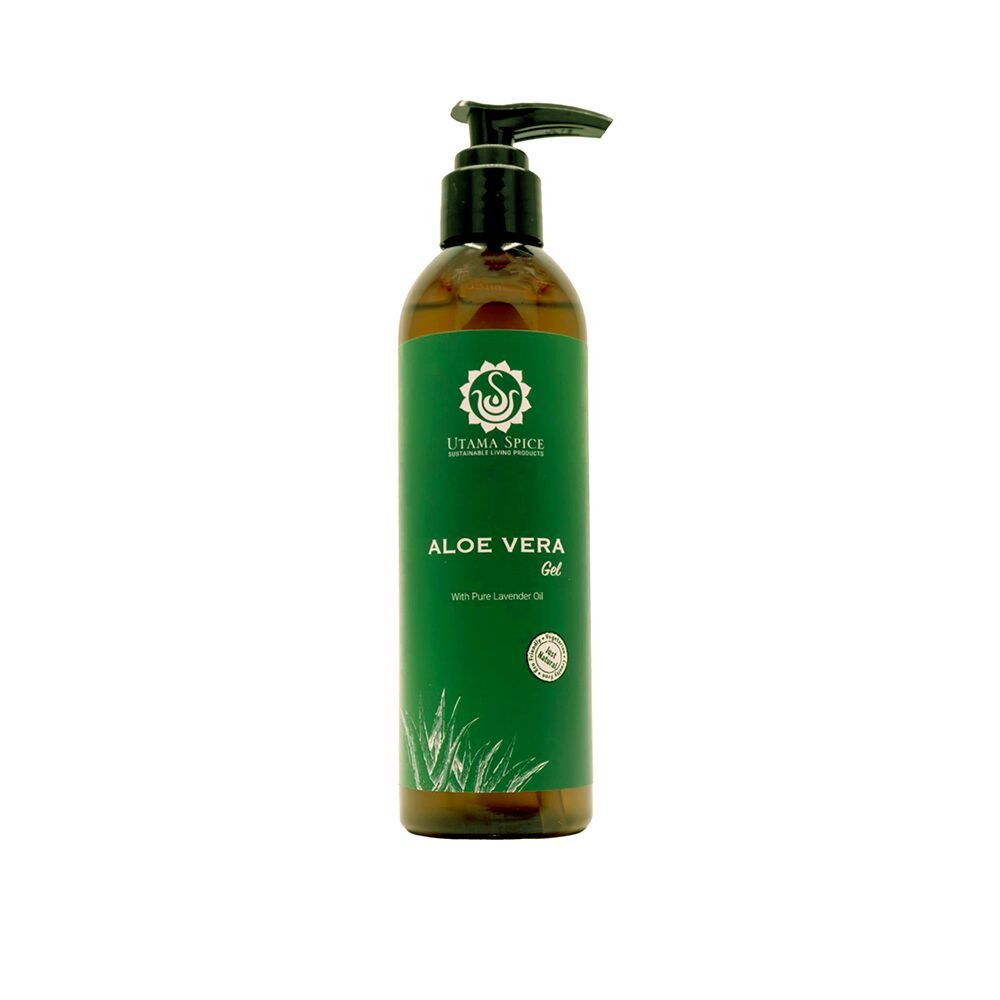
After the sun, skin needs restoration, not more filters
After any time in the sun, this cold-processed aloe vera gel does what no sunscreen ingredient can: it cools, soothes, and helps the skin barrier begin to restore itself.

Aloe vera: the most important post-sun ingredient, not a sunscreen
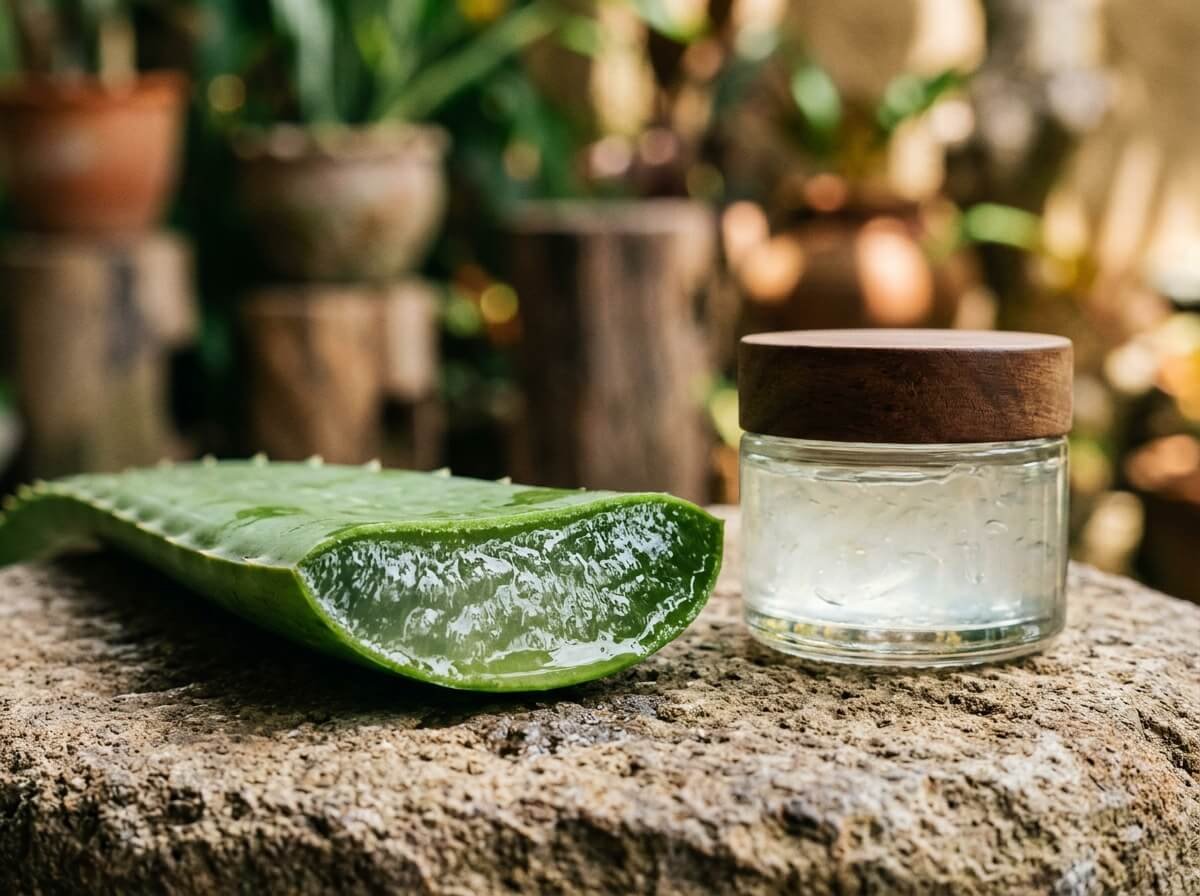
Aloe vera gets mentioned in natural sunscreen conversations constantly, and almost always in the wrong role. Aloe vera does not block UV radiation in any meaningful way. Its value shows up after exposure, through polysaccharides and compounds like acemannan that calm irritated skin, help retain moisture, and support the skin barrier while it recovers.
The gel is roughly ninety-nine percent water, which is part of why it feels instantly cooling on warm skin. That water content, combined with the polysaccharides that hold moisture at the skin surface, is what makes aloe useful in the minutes right after sun exposure, when skin is warm, slightly dehydrated, and its barrier is under more stress than usual.
This is why we treat our Aloe Vera Gel as an after-sun essential rather than a sunscreen substitute. The cold-processed gel is meant to go on once skin has already had its exposure for the day, cooling the surface and giving the barrier something to work with while it repairs. Used this way, alongside a genuine mineral sunscreen during the day, aloe fills the role Balinese tradition always gave it: care for what the sun leaves behind.
One honest note on labels: many commercial “aloe vera gels” list water and thickeners before aloe itself, with only a trace amount of actual aloe extract. Fresh-processed or high-percentage aloe gel looks and behaves differently, thinner, faster to absorb, and genuinely cooling on contact, rather than sitting on the surface like a lotion. A light layer applied two to three times through the day is usually enough; more does not speed recovery, it just sits unabsorbed.
Coconut oil and plant fats as skin restorers after sun exposure

Once skin has cooled and calmed, usually after aloe has done its first work, plant fats step in for the longer restoration. Cold-pressed coconut oil is rich in fatty acids that reinforce the skin barrier and slow water loss, which matters most in the day or two after sun exposure, when skin is working to repair itself and hold on to hydration.
This is a different job than protection, and a different timing too. Applying a heavy oil before sun exposure can trap heat against the skin and, for some skin types, contribute to breakouts in warm, humid conditions. Applying it afterward, once skin has cooled, gives the fatty acids time to settle in and support recovery without that trapped-heat effect.
Our Rose Allure Body Oil uses this same cold-pressed coconut base for exactly that after-sun window, when skin wants richness rather than more filtering. If your skin runs oily or breakout-prone, a lighter follow-up such as our Serenity Face Wash in the evening keeps pores clear without stripping the barrier you just spent the day restoring.
The pattern across every restoration ingredient here, aloe, coconut, kukui, is the same: none of them are trying to do what zinc oxide does. They are doing the second half of the job that most sunscreen conversations skip entirely.
How to read a natural sunscreen label without confusion

- Check the active ingredient line first. It should list zinc oxide, titanium dioxide, or both, not a chemical filter like oxybenzone or avobenzone.
- Look at the percentage. Broad-spectrum mineral protection generally needs a meaningful concentration of zinc oxide, not a trace amount padded out with plant oils.
- Do not count plant oils toward the SPF. Coconut oil, raspberry seed oil, and similar ingredients belong in the formula for texture and skin feel, not protection.
- Separate “reef-safe” claims from “natural” claims. They often overlap but are not the same promise, one is about UV filter type and particle size, the other is a broader ingredient philosophy.
- Expect a slight white cast from genuine mineral formulas. A natural sunscreen with zero visible cast and no zinc oxide or titanium dioxide as the lead ingredient deserves a second look.
- Check the application amount and reapplication window on the label. Most mineral formulas need a generous, visible layer and reapplication roughly every two hours outdoors, more often after swimming or heavy sweating.
We have written full buying guides for two specific formats if you want to go deeper: best natural sunscreen covers how to choose mineral protection generally, and natural sunscreen for face narrows in on facial formulas specifically. For the ingredients to avoid altogether across a natural routine, not just sunscreen, see skincare ingredients to avoid.
Utama Spice does not make or sell sunscreen. What follows this section, and everything above the ingredient breakdown, comes from an ingredient science perspective: the goal is a clearer label, not a product recommendation for daytime protection.
Shelf life and storage, briefly
Mineral sunscreens are generally stable, since zinc oxide and titanium dioxide do not degrade the way some chemical filters can under heat. Even so, check the expiration date and the texture before use each season. A formula that has separated, thinned unevenly, or changed color has likely lost some of its effectiveness, mineral or not, and is worth replacing rather than stretching through one more summer.
Frequently asked questions about natural sunscreen ingredients
Does any plant oil actually provide meaningful SPF?
No plant oil tested to date, including raspberry seed oil, provides SPF high enough to rely on as stand-alone protection. Treat plant oils as skin conditioning ingredients, not sun protection.
Is zinc oxide safe for sensitive or reactive skin?
Zinc oxide is generally well tolerated by sensitive skin because it sits on top of the skin rather than being absorbed, which is part of why mineral formulas are often recommended for reactive or easily irritated skin types.
Is titanium dioxide weaker than zinc oxide?
Not weaker, just narrower. Titanium dioxide covers UVB and shorter UVA wavelengths well, while zinc oxide covers the full UVA and UVB range. That is why most broad-spectrum mineral formulas combine both rather than relying on titanium dioxide alone.
Can I use aloe vera instead of sunscreen?
No. Aloe vera soothes and supports skin after sun exposure, it does not block UV radiation. Mineral sunscreen with zinc oxide or titanium dioxide is still the ingredient doing the protecting.
What should I put on my skin after a day in the sun?
Start with something cooling and hydrating, like aloe vera gel, then follow with a richer plant oil or body butter once skin has calmed, such as coconut oil or a formula like our Bliss Body Butter, to support the barrier while it recovers.
Why does mineral sunscreen leave a white cast and chemical sunscreen does not?
Mineral filters work by sitting on the skin surface and reflecting light, which is what creates the visible cast. Chemical filters absorb into the skin and convert UV to heat, which is why they appear invisible, at the cost of a different set of ingredient trade-offs.
How often should mineral sunscreen be reapplied?
Roughly every two hours during direct sun exposure, and immediately after swimming, sweating heavily, or towel-drying, since all three remove the mineral layer sitting on the skin surface.
Is a natural sunscreen automatically reef-safe?
Not automatically. Reef-safe generally refers to formulas that avoid oxybenzone and octinoxate and, ideally, use non-nano mineral filters. A sunscreen can call itself natural without meeting either condition, so check the active ingredient and particle size rather than the word “natural” alone.
Does mineral sunscreen expire faster than chemical sunscreen?
Not faster. Zinc oxide and titanium dioxide are mineral compounds and do not break down chemically the way some organic UV filters can under heat. Still, always check the printed expiration date and discard a formula that has visibly separated or changed texture.
Reading a natural sunscreen ingredient list closely is a small act of care, for skin during exposure and for skin afterward. Zinc oxide and titanium dioxide do the blocking. Aloe, coconut, and kukui do the restoring. Knowing which ingredient is doing which job is what turns a label into something useful, and it is the same principle that has guided skin care in high-UV climates like Bali for generations: protect honestly, then restore fully.