Natural body butter: a Balinese guide to deep, plant-based body care
Natural body butter is the workhorse of slow, ritual-based body care. Thicker than lotion, richer than oil, and built around raw plant fats that the skin actually recognizes, a well-made natural body butter restores moisture, softens texture, and protects the skin barrier through every season. The Balinese tradition behind Utama Spice has been blending butters like this since 1989, and the formula has stayed remarkably simple: a few pure plant butters, a few skin-loving oils, and nothing the rainforest cannot make.
This guide walks through what natural body butter actually is, how it differs from lotion, the ingredients to look for, the ones to walk away from, and the small daily rituals that turn a jar of plant butter into a long-term skin practice. If you want context on the wider family of natural body care, our carrier-oil guide for body oils is a useful companion read.
What natural body butter is, and why it matters
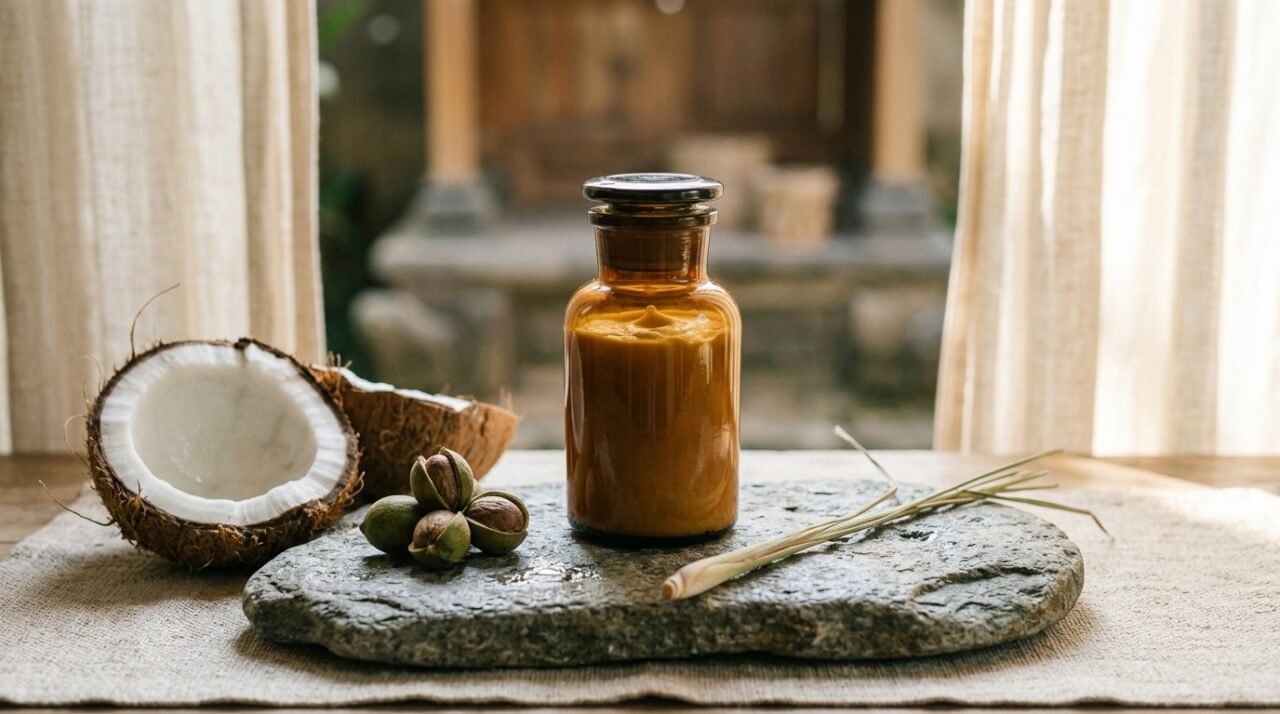
A natural body butter is a solid-to-soft, whipped or churned blend built around plant fats that are solid at room temperature. Shea butter, mango butter, cocoa butter, and Bali-grown illipe butter are the foundations. These are then loosened with carrier oils like coconut, kukui, and jojoba, and often perfumed with pure essential oils for sensory effect and gentle skin benefit.
The word “natural” carries weight here. A truly natural body butter contains no petroleum derivatives, no synthetic emulsifiers, no parabens, no PEGs, no silicones, and no synthetic fragrance. The texture comes from the butters themselves rather than from polymers or stabilizers. The colour is the colour of the plant. The scent, if any, comes from steam-distilled essential oils.
Why does this matter beyond label virtue? Plant butters share something important with human skin: a fatty-acid profile rich in oleic, stearic, linoleic, and palmitic acids. These are the same acid families that make up the skin’s own sebum and intercellular lipids. The skin recognises them, integrates them, and uses them to rebuild a barrier that holds water in and irritants out. Petroleum products sit on the surface and seal. Plant butters do something more interesting: they nourish.
For deeper background on how plant fats and skin actually interact, our piece on the science of coconut oil for skin covers the comedogenic ratings, lauric acid behaviour, and seasonal use that also apply to butter formulations.
Body butter versus body lotion: which one your skin actually wants
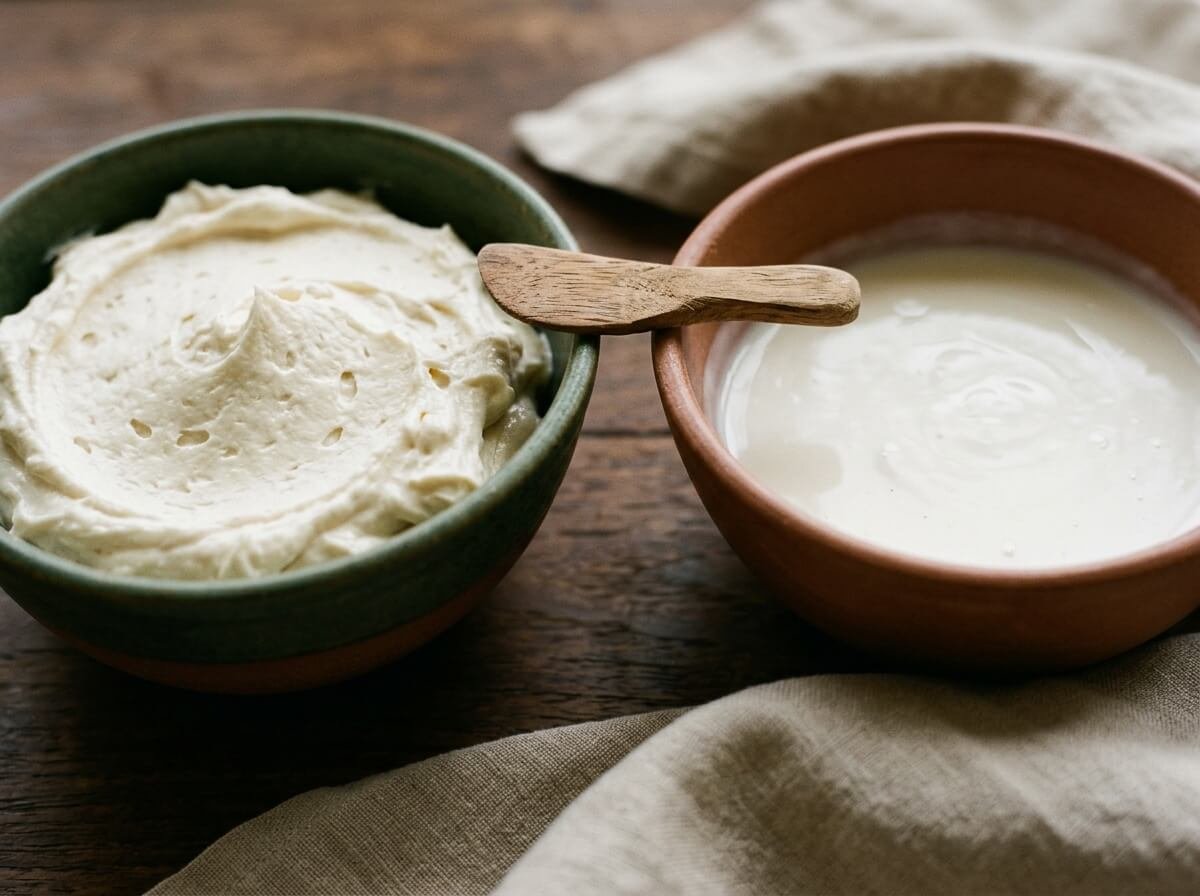
The question of butter versus lotion comes up in almost every conversation about natural body care, and the answer is not “one is better.” They are different formats designed for different needs. Understanding the difference is the fastest way to choose well.
Body lotion is an emulsion. It blends water and oil together with the help of an emulsifier, which gives it a lighter, faster-absorbing texture. Because water is the first ingredient, lotion delivers hydration quickly but evaporates faster, often requiring reapplication during the day. A good natural lotion, like our Cocoa Love Lotion, is ideal for daily use, humid climates, layering under clothing, and skin that prefers a lighter feel.
Body butter is anhydrous, meaning it contains no water. It is pure plant fat, whipped or churned into a soft, scoopable texture. Because there is no water to evaporate, body butter sinks in slowly, melts on contact with body heat, and stays on the skin much longer. The barrier-supporting effect is deeper and the protection lasts overnight or through harsh weather. This is the format that wins in dry season, after sun exposure, on rough heels and elbows, on stretch-marked skin, and on hands that face hot water all day.
A simple way to choose: if your skin feels thirsty and surface-dry, reach for lotion. If your skin feels tight, cracked, or weather-beaten, reach for butter. Many people use both, lotion in the morning, butter at night. For a fuller comparison of formats, our coconut body lotion guide covers the lotion side of the equation in detail.
The ingredient anatomy of a good natural body butter
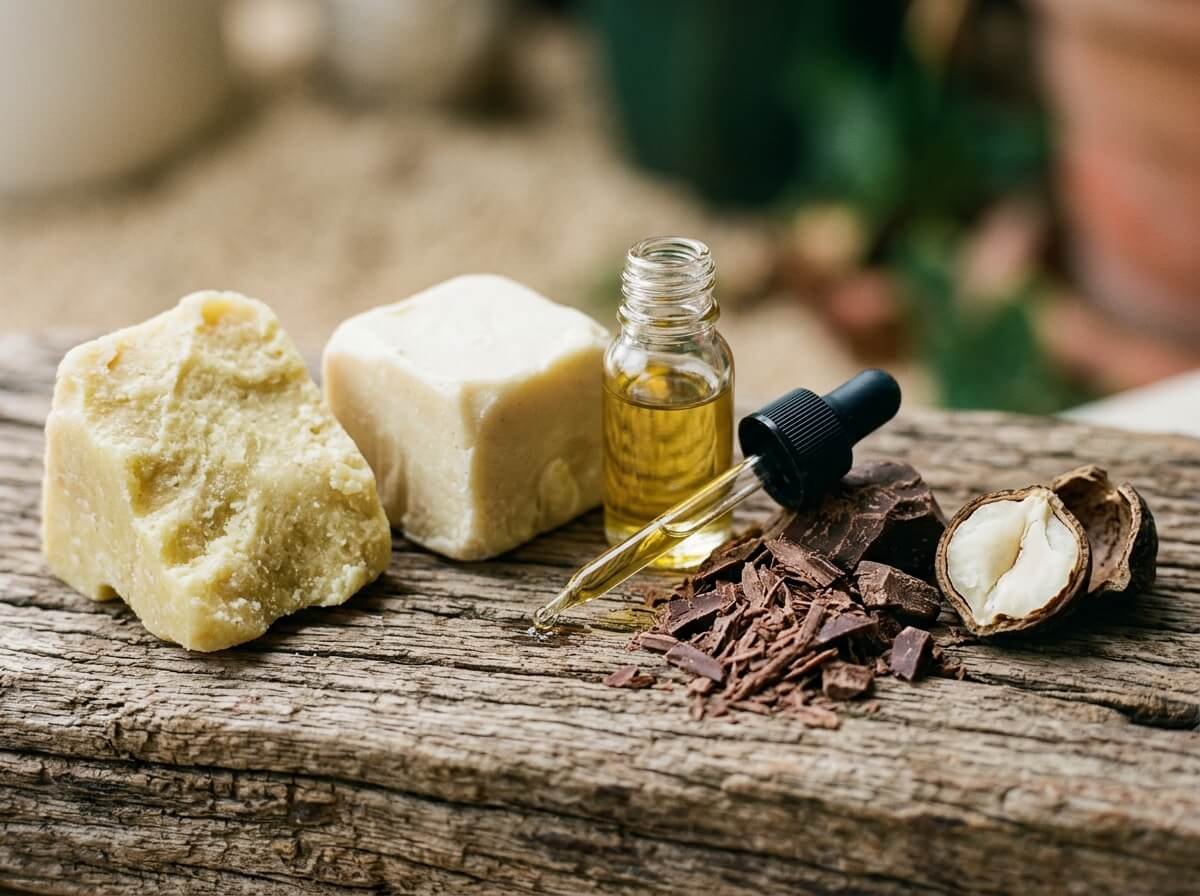
Behind every good jar is a short, honest ingredient list. Once you can read one, supermarket aisles become much easier to navigate. The four building blocks below appear in almost every well-formulated natural body butter.
Shea butter (Vitellaria paradoxa)
Pressed from the nut of the African shea tree, shea butter is the most common base in natural butters worldwide. It is rich in oleic and stearic acids and contains naturally occurring vitamin E and small amounts of cinnamic acid esters that offer mild anti-inflammatory effect. Unrefined shea has a soft, nutty scent and a slightly grainy texture if temperature-cycled. Refined shea is whiter, smoother, and almost odourless, but loses some of its phytonutrients.
Cocoa butter (Theobroma cacao)
Pressed from cocoa beans, cocoa butter is harder than shea at room temperature, melts cleanly at body temperature, and forms a long-lasting protective film. It is famous for its chocolatey aroma in unrefined form, and for its role in supporting elasticity in skin that stretches or scars. Many traditional stretch-mark balms rely on cocoa butter as the structural core.
Mango butter (Mangifera indica)
Pressed from the kernels of mango seeds, mango butter sits between shea and cocoa in firmness. It has a clean, almost neutral scent and is well-tolerated by sensitive skin. Mango butter is high in oleic acid and works as a gentle base butter when shea or cocoa would feel too heavy.
Illipe butter (Shorea stenoptera)
Less well known internationally, illipe butter is one of the most prized restorative butters in the world. It is harder than shea, with a fatty-acid profile remarkably close to cocoa butter, but its source is the Borneo rainforest rather than West Africa. Illipe is wild-harvested from the seed of the Shorea stenoptera tree by families who have worked the same rainforest groves for generations. Utama Spice sources illipe through the Forestwise partnership, an arrangement that gives long-term economic value to standing forest rather than to clearance. Illipe is the quiet secret of a serious body butter: it locks in moisture for hours and helps repair the skin barrier after sun, wind, or chlorine exposure.
Carrier oils that soften the texture
Pure butter is too solid to scoop comfortably. Most natural body butters add 10% to 30% carrier oils to bring the texture into the scoopable, melt-on-contact range. Cold-pressed coconut oil is the most common in tropical formulations. Kukui (candlenut) oil, traditionally used in Balinese ritual, adds slip without heaviness. Jojoba is technically a liquid wax that mirrors human sebum and offers excellent shelf stability. A well-formulated body butter usually contains two complementary carrier oils, not five.
Essential oils for scent and skin benefit
Pure essential oils give a natural body butter its scent. Lavender soothes, frankincense steadies, sweet orange lifts, ylang ylang calms, and bergamot brightens. Look for steam-distilled or cold-pressed oils named on the label by full botanical name. Walk away from anything that lists “fragrance” or “parfum” without identifying the source, that almost always means synthetic perfume oil, which can irritate skin and is a common source of contact dermatitis.
How to choose a quality natural body butter, label-side
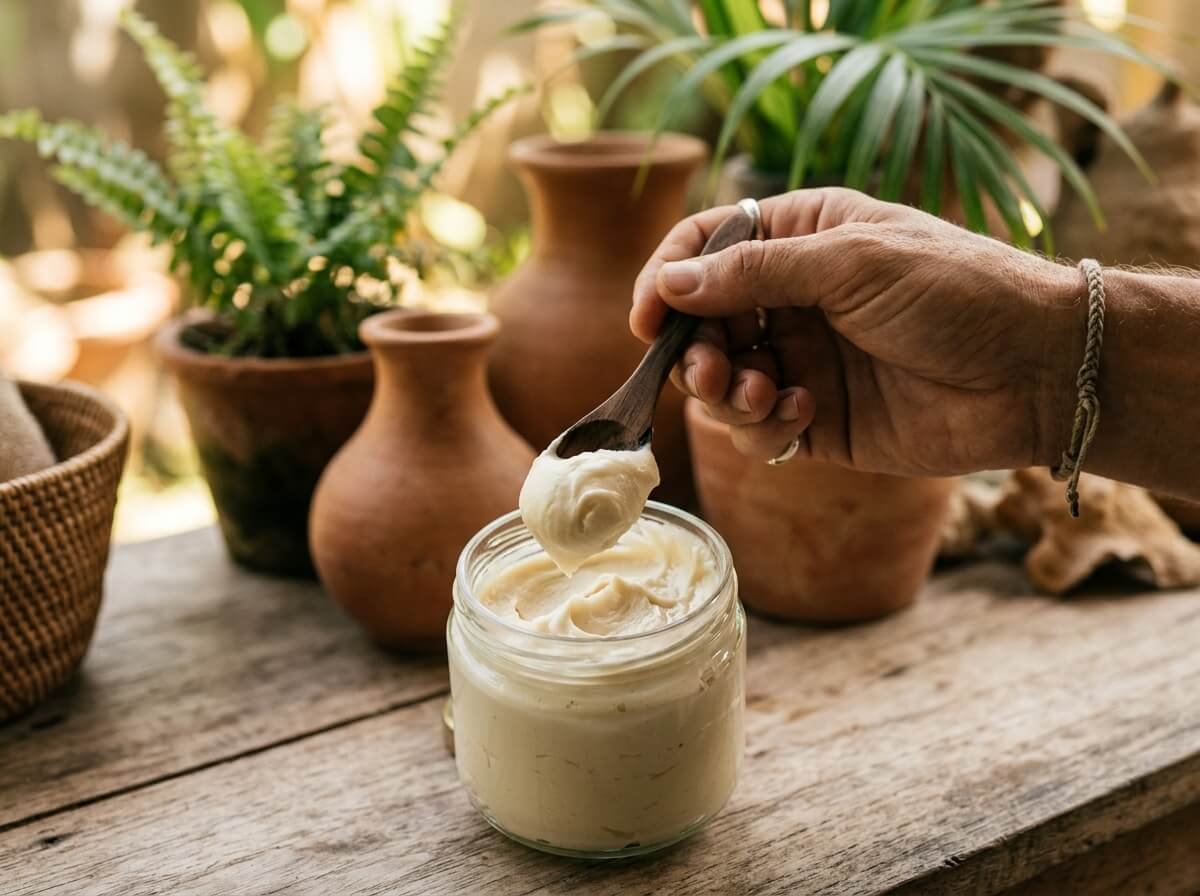
The body-butter shelf is crowded, and many products use the word “natural” without earning it. A short, transparent label is the most reliable signal. Use these five checks before you buy.

- Ingredient list under 10 items. A good body butter is built on a few raw butters and oils, not 30 lab-coded ingredients. If the list spills across the back of the jar in tiny type, that is usually a sign of synthetic stabilizers and fragrance load.
- A plant butter is the first or second ingredient. Look for shea, cocoa, mango, illipe, or kokum at the top. If “water,” “aqua,” or a thickener leads the list, you are looking at lotion sold as butter.
- No mineral oil, paraffin, or petrolatum. These are petroleum byproducts that sit on the skin surface and trap rather than nourish. They are cheap, shelf-stable, and have nothing to do with natural body care.
- Scent comes from named essential oils. The label should say “lavender essential oil,” not “fragrance.” Synthetic fragrance is one of the most common skin irritants and is allowed to hide hundreds of undisclosed chemicals under a single word.
- Packaging that respects what is inside. Glass jars, aluminium tins, or thick recycled-plastic tubs with refillable formats indicate a brand that has thought about the full life of the product, not just the sale.
The same five checks apply across the wider natural personal-care category. Our guide to choosing a quality coconut oil for skin uses the same label-reading framework and is worth a read if you want to sharpen the skill.
Daily ritual: how to use natural body butter for real results
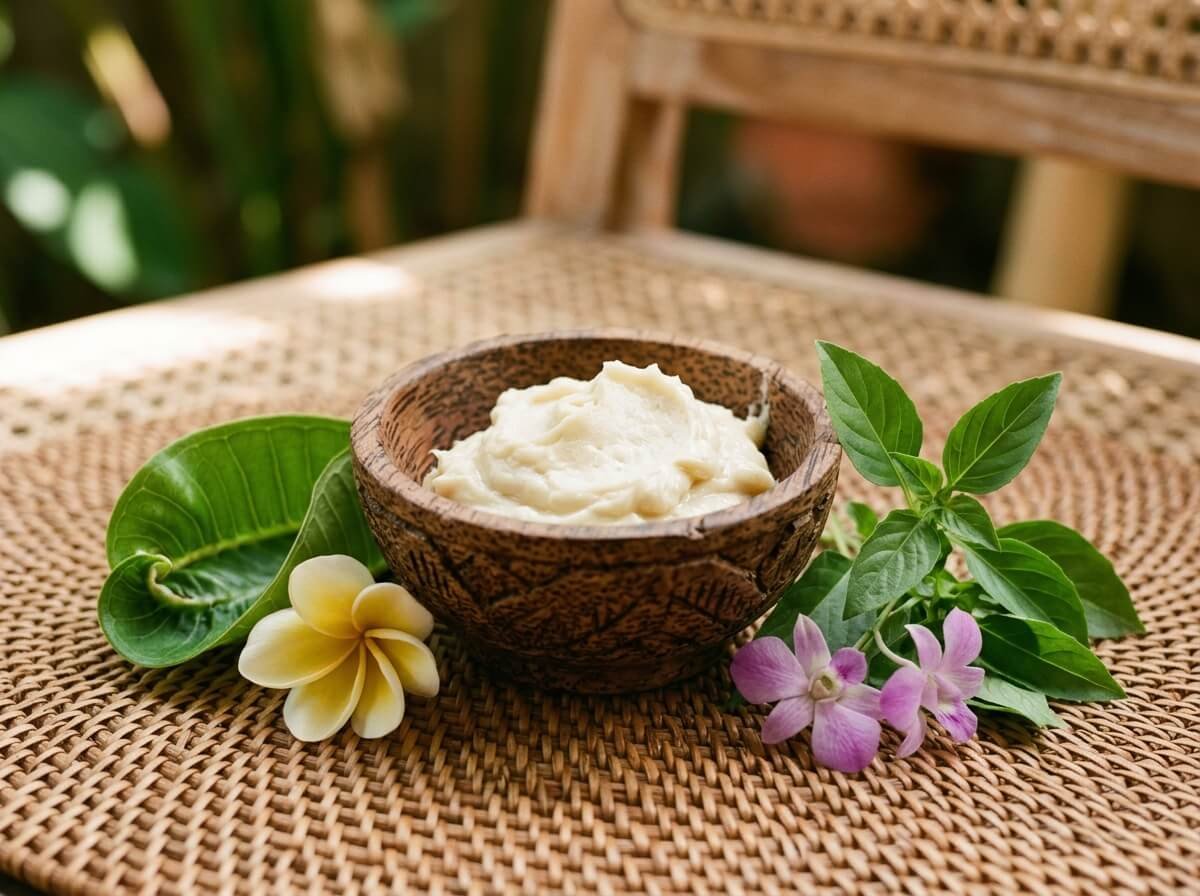
A jar of natural body butter is only as effective as the ritual around it. Application technique, timing, and skin condition all change how well the butter works. The Balinese approach to skincare is built on slow daily practice rather than on heroic weekly treatments, and these are the small habits that make the biggest difference.
- Apply to damp, freshly washed skin. A 30-second window after the shower is when the skin holds water most readily. A small pea of butter spread over still-damp skin will absorb cleaner and deeper than the same amount on dry skin.
- Warm the butter between your palms first. Plant butters melt on contact with body heat. A quick palm rub brings the butter to a smooth oil that spreads further with less product. Most people use far too much.
- Massage with intention, not pressure. Long upward strokes on legs, circular strokes on belly and hips, focused presses on heels, elbows, and knees. The massage is half the benefit. It increases circulation and slows you down enough to notice your own skin.
- Layer at night for restoration. A heavier application before bed on dry-prone zones (heels, elbows, knees, knuckles) lets the butter work for eight hours under cotton clothing. Morning skin will feel measurably different within a week.
- Use seasonally, not religiously. Body butter is brilliant in dry season, after travel, during long flights, in air-conditioned offices, and after sun exposure. In humid Bali afternoons your skin may prefer a lighter lotion or body oil. Match the format to the moment.

Bliss Body Butter, blended in small batches in Ubud
A whipped body butter built on shea, cocoa, and Bali-sourced illipe butter, softened with cold-pressed coconut and kukui oils, and scented with a calming blend of bergamot, rose geranium, sweet orange, and patchouli. No synthetic fragrance, no fillers, no parabens. Crafted in Bali since 1989.
Illipe butter and the rainforest behind it
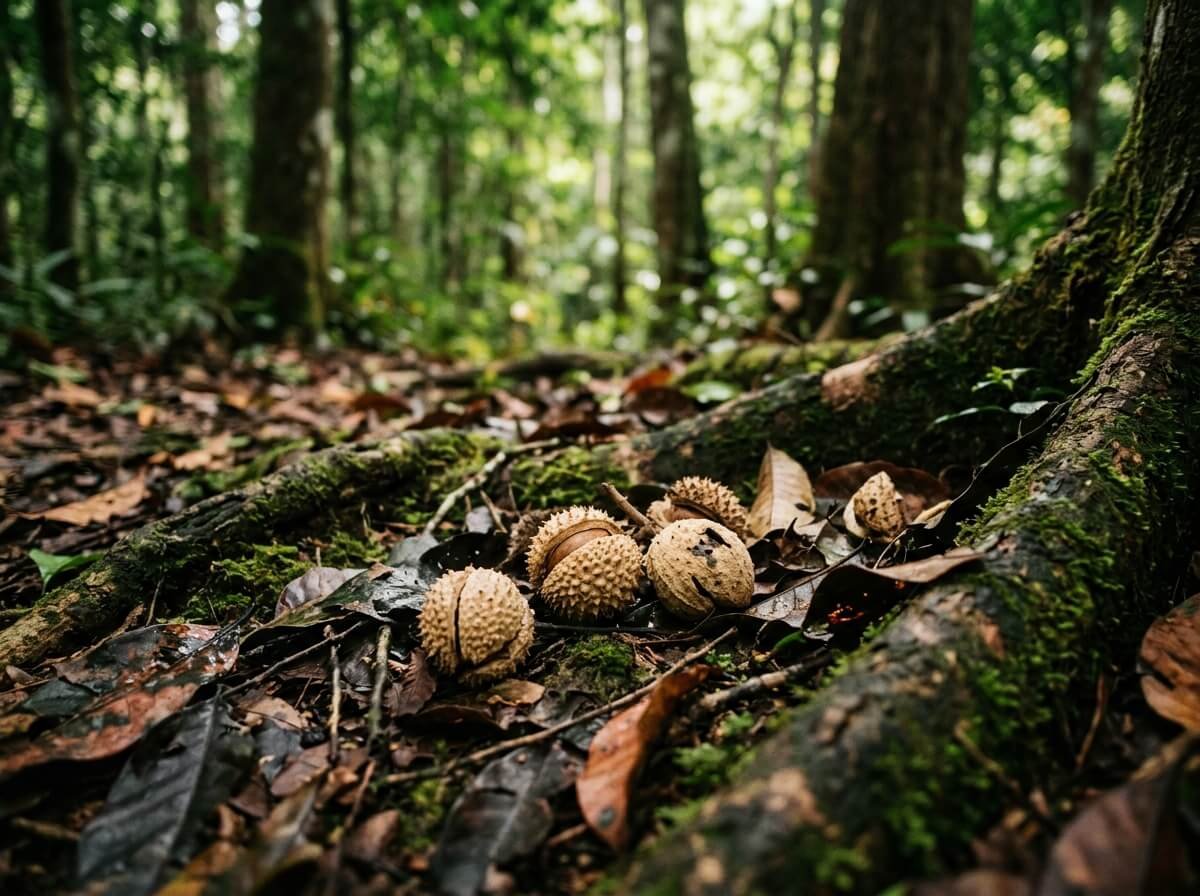
Most conversations about body butter stop at shea and cocoa. The third ingredient worth knowing, especially if you care about both skin and forest, is illipe. It is a story of where care for the body and care for the planet can be the same act.
Illipe butter is wild-harvested from the seed of the Shorea stenoptera tree in the rainforests of Kalimantan, the Indonesian portion of Borneo. The harvest is seasonal, gathered from the forest floor after the seeds fall naturally, and processed in small village cooperatives. The Forestwise partnership that supplies Utama Spice’s illipe pays harvesters meaningful, long-term income for keeping the forest standing. The economic value of a living rainforest, in this model, exceeds the value of clearance for palm or pulp. That is how a body butter becomes a vote.
On the skin, illipe behaves like cocoa butter’s quiet older sibling. The fatty-acid composition is similar, with high stearic and oleic content, but illipe melts smoothly without the waxy snap of cocoa and stays on the skin barrier longer. Combined with shea and a small percentage of coconut oil, illipe gives a body butter the long, deep moisture retention that makes a real difference in dry season. Our short companion piece on illipe butter as the rainforest’s quiet powerhouse goes deeper on the ingredient itself.
The same logic applies to the rest of the Utama Spice body line. Pure Energy Body Butter, with its uplifting bergamot blend, and the citrus-bright Lemongrass Ginger Delight Body Butter are built on the same rainforest-sourced butters in different sensory directions.
Refill, reuse, restore: closing the loop on body care
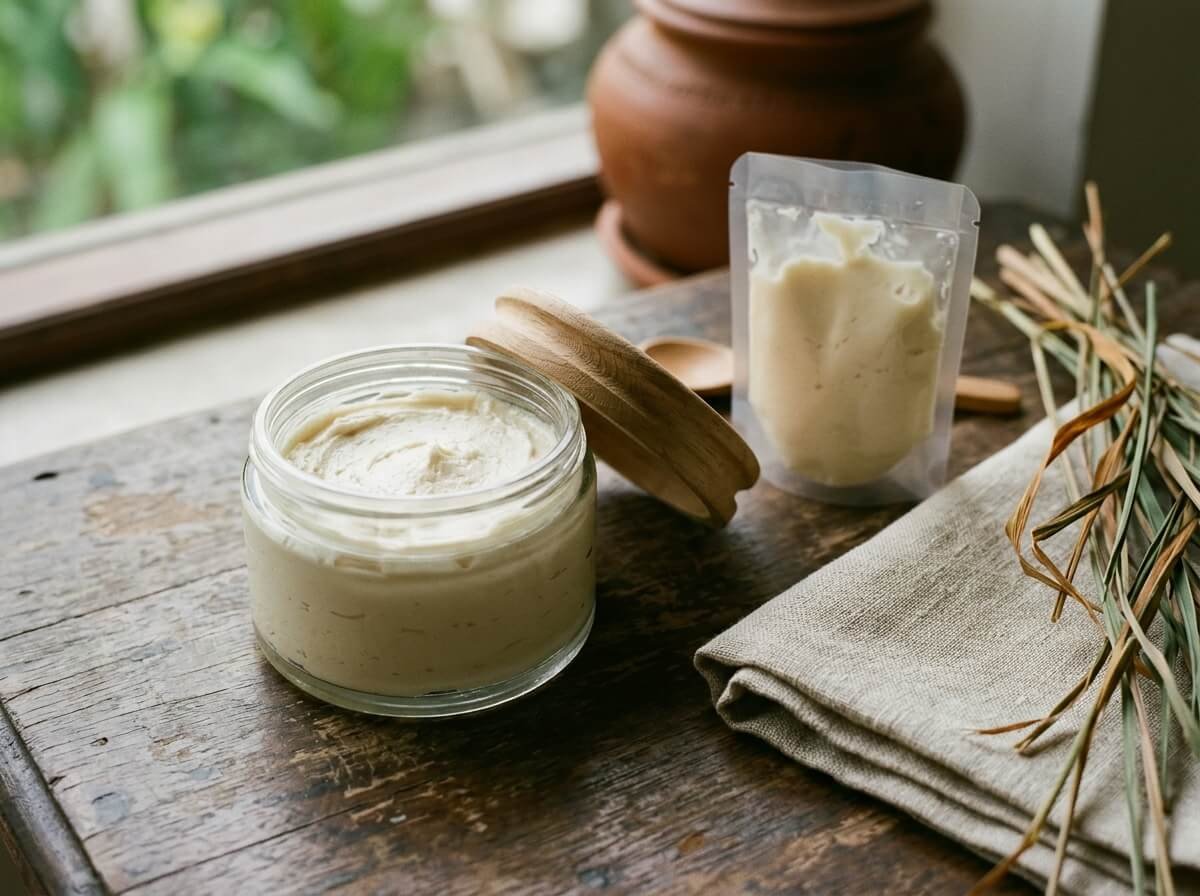
A natural body butter is only half the story. The other half is the jar it comes in. The body-care industry produces an extraordinary volume of single-use plastic packaging every year, much of which is never recycled despite the symbols on the bottom. A jar of body butter, in a typical household, gets used and binned in four to eight weeks. Multiply that across millions of households and a decade and the picture is clear.
The refill model rewrites this. A heavier first jar, designed to last for years, gets refilled from in-store stations or refill pouches that use a fraction of the packaging. Utama Spice has run refill stations as a default option since the very beginning, not as a marketing campaign. Refill culture is built into the way the brand is structured: the formulas are stable enough to dispense cleanly, the jars are thick enough to last, and the staff are trained to weigh and decant by gram.
For body butter specifically, refilling has a small extra ritual: clean the jar between fills, let it dry fully, and weigh the empty before topping up. The result is a body-care routine that quietly removes packaging from the waste stream over time. In 2025 alone, Utama Spice refill programs kept 2,245 bottles out of landfill, a number that grows as more customers join in.
Refill culture is one face of conscious living. The broader picture, including the ingredients you reach for and the rituals you build around them, shapes how care actually lands. Our archive of aromatherapy oil guides covers the scent side of body care in similar depth, for anyone building a fuller daily practice.
Frequently asked questions about natural body butter
Will natural body butter make my skin feel greasy?
It can if you use too much, or if you apply it to bone-dry skin without warming it first. The fix is technique: warm a pea-sized amount between your palms, apply to slightly damp skin, and give it a minute to absorb. A well-balanced formula like a whipped butter with a small percentage of carrier oils sinks in within two to three minutes, leaving softness rather than slick.
Can I use natural body butter on my face?
Sometimes, but with caution. Most body butters are formulated for the thicker skin of the body, not the more reactive skin of the face. Shea and mango butters are generally face-safe in small amounts on dry zones. Cocoa butter is more comedogenic and can clog facial pores on some skin types. If your face is very dry, test a small patch on the jawline first. For routine facial use, a lighter format like a facial oil or hydrating face cream is a better fit.
How long does natural body butter last?
An unopened jar of properly stored natural body butter, free of water and synthetic preservatives, lasts 12 to 18 months. Once opened, six to nine months is a safe window if you keep the jar away from direct sun, heat, and humid bathroom shelves. The first sign of going off is scent: rancid carrier oils smell sharp, almost crayon-like. Trust your nose.
Why has my body butter gone grainy?
Graininess in natural body butter is almost always caused by temperature cycling, especially with shea butter. When the butter warms past its melt point, then cools too slowly, the fatty acids re-crystallise into larger clumps. The fix is to store the jar in a consistently cool spot, away from windows and heaters. If graininess does appear, the butter is still completely safe and effective, just less smooth in feel.
Is natural body butter safe during pregnancy?
The plant butters themselves are widely considered safe and are often the foundation of traditional belly balms for stretch-mark care. The thing to watch is the essential oil blend. Some oils, including clary sage, rosemary, and high-cineole eucalyptus, are not recommended during pregnancy. If you are pregnant or breastfeeding, look for an unscented or pregnancy-safe formulation and consult your midwife or doctor when in doubt.
Final thoughts: small jar, long practice
Natural body butter is a small, simple product carrying a surprising amount of meaning. The right jar, used with a small daily ritual, restores skin barrier, slows down a busy morning, supports rainforest livelihoods through honest sourcing, and keeps another single-use plastic bottle out of landfill. It is one of the easiest ways to bring conscious living into a part of the day that already exists.
The Utama Spice philosophy, written into the brand from 1989, is that what you put on your body should come from the same place that nourishes your soul. A well-made natural body butter sits inside that idea exactly. Crafted in Bali, blended in small batches, refilled forever, and built on the quiet wisdom of plants that have been caring for skin long before any of us thought to read a label.
If this is the first step in a wider natural body-care practice, the next read is our guide to coconut body oil, which covers the lighter format that pairs beautifully with butter through the seasons.