Probiotic deodorant: what it actually is, and why care beats odor warfare
Probiotic deodorant is one of the quieter shifts in natural body care, and one of the most misunderstood. The word on the label promises friendly bacteria in a bottle. The truth is more interesting, and more useful. Most of what makes a probiotic deodorant work has less to do with living cultures and more to do with a simple idea: odor is an ecosystem problem, so the answer is care, not warfare.
In this guide we walk through why underarms smell in the first place, what “probiotic” actually means on a deodorant label (and what it often does not), how to read an ingredient list without being fooled, and what a calm transition looks like. We also share how we approach our own probiotic roll-ons, crafted in Bali, and where they fit in a routine that respects your skin.
Why underarms smell in the first place

Here is the first truth most deodorant marketing skips: fresh sweat has almost no smell. Your body has two main kinds of sweat glands. Eccrine glands cover most of your skin and release a watery, salty sweat that cools you down. Apocrine glands cluster in the underarms and groin, switch on at puberty, and release a thicker fluid rich in proteins, lipids, and odorless precursor molecules.
The smell arrives later, when bacteria living on your skin meet that apocrine fluid. Certain residents, mainly species of Corynebacterium and some Staphylococcus, have the enzymes to break those precursors down into volatile compounds. Two families do most of the work: sulfur-containing thioalcohols (the sharp, oniony note) and short branched fatty acids (the sour, cheesy note). A small number of bacteria produce a large share of the scent.
So underarm odor is not dirt, and it is not a moral failing. It is chemistry carried out by a living community. That community is your underarm microbiome, and like every ecosystem, its balance matters more than its size.
What conventional products do about it
Conventional products take one of two routes. Antiperspirants use aluminum salts to temporarily plug sweat ducts, which removes the food supply. Many deodorants add strong antimicrobials, alcohol, or fragrance to kill bacteria or mask the result. Both work in the short term. Research on the underarm microbiome, including small studies from university labs in Europe, suggests that years of this approach can shift the balance of who lives there, sometimes toward the very odor-forming species we were trying to quiet.
If you want the full background on aluminum and why so many people are moving away from it, our guide to choosing an aluminum free deodorant that actually serves your skin covers the mechanics in detail. This piece picks up where that one stops: what happens when we stop fighting the microbiome and start tending it.
What probiotic deodorant actually means
Probiotic deodorant is a deodorant that claims to support the underarm microbiome with beneficial bacteria, or with ingredients derived from them, rather than killing everything on contact. That is the idea. The reality on the shelf splits into three very different things, and the label rarely tells you which one you are holding.
Probiotics: living bacteria
The international definition, set by the World Health Organization and the Food and Agriculture Organization, describes probiotics as live microorganisms that, given in adequate amounts, offer a health benefit. The key word is live. Living bacteria need water, the right temperature, and protection from preservatives. A deodorant needs the opposite: it must stay stable on a warm bathroom shelf for a year or more, and it must resist contamination. Those two goals pull against each other.
This is the honest bit that most product pages skip. Keeping meaningful numbers of live cultures alive in a shelf-stable cosmetic is hard, and very few brands publish a live count at the end of shelf life. “Contains probiotics” can mean the bacteria were alive when they went into the batch, not when they reach your skin.
Postbiotics: what bacteria leave behind
Most deodorants sold as probiotic actually rely on postbiotics. These are ferment filtrates and lysates: the broth, peptides, organic acids, and cell fragments left after bacteria such as Lactobacillus have done their work. You will see them on labels as names like “Lactobacillus ferment” or “Lactococcus ferment lysate.” They are not alive, and that is fine. They are stable, they can help keep skin slightly acidic, and some show gentle antimicrobial activity that is selective rather than scorched-earth.
Prebiotics: food for the residents you want
The third route is prebiotics, usually sugars and fibers such as inulin or alpha-glucan oligosaccharide. Prebiotics feed the gentler, low-odor bacteria already living on your skin so they can hold their ground against the odor-formers. No new bacteria required.
None of these routes is a scam on its own. The problem is the single unregulated word stretched across all three. A thoughtful probiotic deodorant usually blends postbiotics or prebiotics with odor absorbers and botanicals. Knowing which is which lets you judge the product on what it actually does.
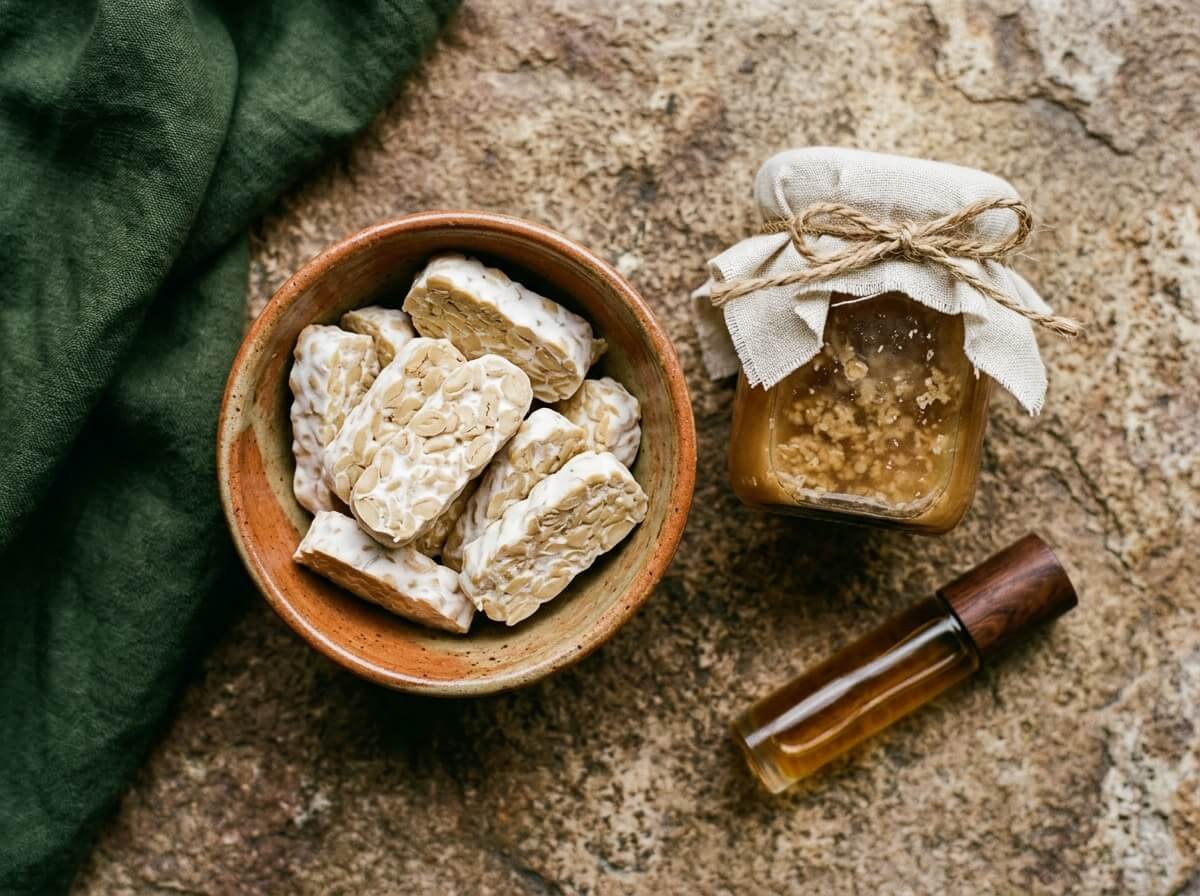
Indonesia has lived alongside fermentation for centuries, from tempeh to tape, the gently fermented cassava and sticky rice found across Java and Bali. That everyday familiarity carries a useful lesson: fermentation is a partnership with microbes, not a battle against them. Good probiotic care borrows the same patience.
Care, not warfare: rebalancing the microbiome instead of stripping it
Think of your underarm as a small garden. A conventional antimicrobial deodorant is like spraying the whole bed. Everything dies back, including the plants you wanted. What regrows first is often the fastest, hardiest species, and in the underarm that tends to mean Corynebacterium, the main odor-former. Many people know this pattern without the vocabulary: the stronger the product, the stronger the smell when it wears off.
A microbiome-friendly approach does three gentler things instead.
- It keeps skin slightly acidic, around the natural pH of 4.7 to 5.5, where odor-forming bacteria are less comfortable and the skin barrier holds firm.
- It absorbs moisture and odor with mild ingredients like arrowroot, clays, or plant powders, rather than blocking sweat ducts.
- It uses selective botanicals and postbiotics that calm the odor-formers without wiping out the whole community.
The result is quieter. Odor does not disappear forever, because a living body is not a sterile surface. But it usually becomes milder, more predictable, and easier to manage with a single morning application.
This is also why the shower matters as much as the deodorant. A harsh, high-pH bar soap can undo much of the balance you are building. A gentle, plant-based wash such as our Tea Tree Body Wash cleans without stripping, and tea tree adds a mild, selective freshness that suits the underarm. If you prefer a softer citrus note, our Tangerine Liquid Soap works the same way.
We wrote more about the skin as a living system in our Wellness Wednesday note, your skin is a living ecosystem, not a surface to scrub. The same principle runs through every part of a calm routine.
How to read a probiotic deodorant label without being fooled
Because “probiotic” is a marketing word, the ingredient list is where the truth lives. Read it slowly. Here is what to look for, and what each finding tells you.
Signs of a thoughtful formula
- A named ferment or lysate, such as Lactobacillus ferment or Lactococcus ferment lysate. This is a postbiotic, and it is honest to call it microbiome-supporting.
- A named prebiotic, such as inulin or alpha-glucan oligosaccharide, ideally in the first half of the list.
- A live culture count with a date, if the brand claims live bacteria. Without one, assume the claim describes the batch, not the bottle.
- Gentle odor absorbers, such as arrowroot, tapioca, kaolin clay, or zinc ricinoleate.
- Clear essential oil disclosure, so you can check for oils that do not suit your skin.
Signs to slow down
- Baking soda high on the list. It neutralizes odor well but sits at roughly pH 8 to 9, far above skin’s natural range. More on this below.
- “Probiotic” in large type with no ferment, lysate, culture, or prebiotic named anywhere. The word is doing work the formula is not.
- Strong alcohol near the top, which dries and stings freshly shaved skin.
- A single vague “fragrance” or “parfum” with no breakdown. It may be fine, but you cannot tell.
We go deeper on the wider deodorant label in natural deodorant ingredients to avoid, and on skincare labels in general in how to read the label without the fear. The habit is the same: names over claims, order over adjectives.
One more honest note. A short ingredient list is not automatically better, and a long one is not automatically worse. What matters is whether each ingredient has a job you can name.
The adjustment period: what a calm transition looks like

If you are moving to a probiotic deodorant from an antiperspirant, expect a few weeks of change. This is often described as an “armpit detox,” which is not quite right. Your body is not purging toxins. Two simpler things are happening.

First, your sweat ducts are no longer plugged, so you will notice moisture you had not felt in years. That is normal sweating returning, not a sign the product is failing. Second, your underarm microbiome is slowly rebalancing after a long period of disruption. While that settles, odor can briefly feel stronger or less predictable.
For many people this phase lasts somewhere between two and four weeks. Some notice very little. A few take longer, especially in humid climates like ours in Bali. Here is what helps:
- Apply to clean, fully dry skin. A probiotic roll-on works best on skin that is not already damp.
- Reapply midday on hot or active days rather than layering heavily in the morning.
- Wear breathable fabrics such as cotton and linen while you adjust.
- Wash with a gentle, low-pH cleanser rather than a harsh soap.
- Give it a full month before deciding. Judging after three days usually means judging the antiperspirant, not the new product.
Our full walkthrough, with week-by-week expectations, lives in how to switch to natural deodorant. If you want guidance shaped around different sweat and hair patterns, our guides to aluminum free deodorant for women and aluminum free deodorant for men cover the small differences in sweat and hair that change how a formula performs.
Sensitive skin and the baking soda pH trap
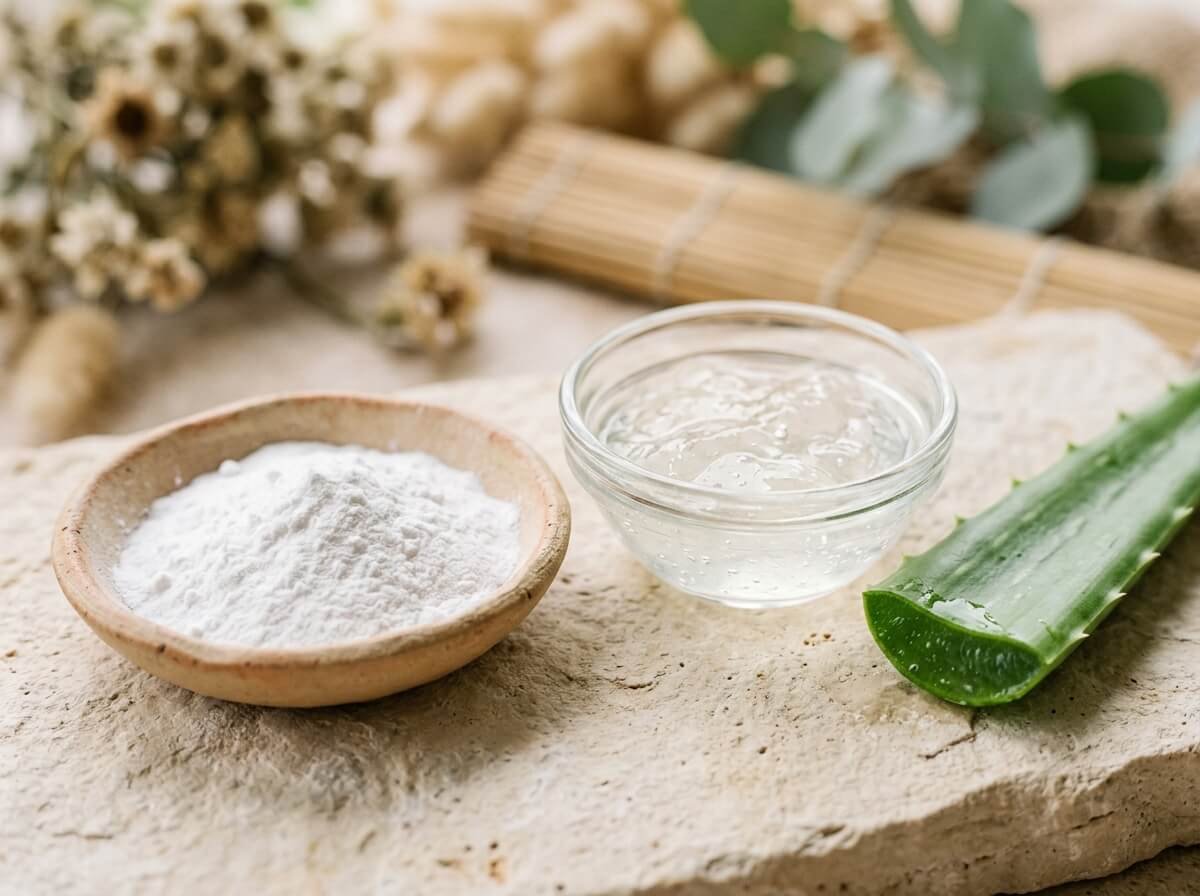
Many people come to probiotic deodorant after a bad experience with a natural one. The story is usually the same: a baking soda formula worked beautifully for a few weeks, then the underarm turned red, dark, itchy, or sore. That is not an allergy to “natural.” It is a pH problem.
Healthy skin sits on the acidic side, around pH 4.7 to 5.5. Baking soda dissolved in sweat sits around pH 8 to 9. Applied daily to thin, warm, often freshly shaved skin, that alkaline load wears down the acid mantle and weakens the barrier. Odor-forming bacteria also tend to prefer a less acidic environment, so the rebound smell can return along with the irritation.
A probiotic or postbiotic formula without baking soda sidesteps that trap entirely. It works with the skin’s acidity instead of pushing against it. For sensitive underarms, that difference is often the whole story.
A barrier-first routine for tender underarms
- Pause any deodorant for a day or two if the skin is broken or burning, and let it settle.
- Soothe with something plain and cooling. A thin layer of our Aloe Vera Gel after a shower calms heat without adding fragrance.
- Wait at least a few hours after shaving before applying any deodorant.
- Patch test any new product on the inner arm for two days before using it daily.
- Choose a formula without baking soda and with a short, readable list of essential oils.
Our guide to natural deodorant for sensitive skin goes further into this, and our broader piece on sensitive vs sensitized skin explains why less, done consistently, is usually the real fix.
The Utama Spice approach to probiotic deodorant
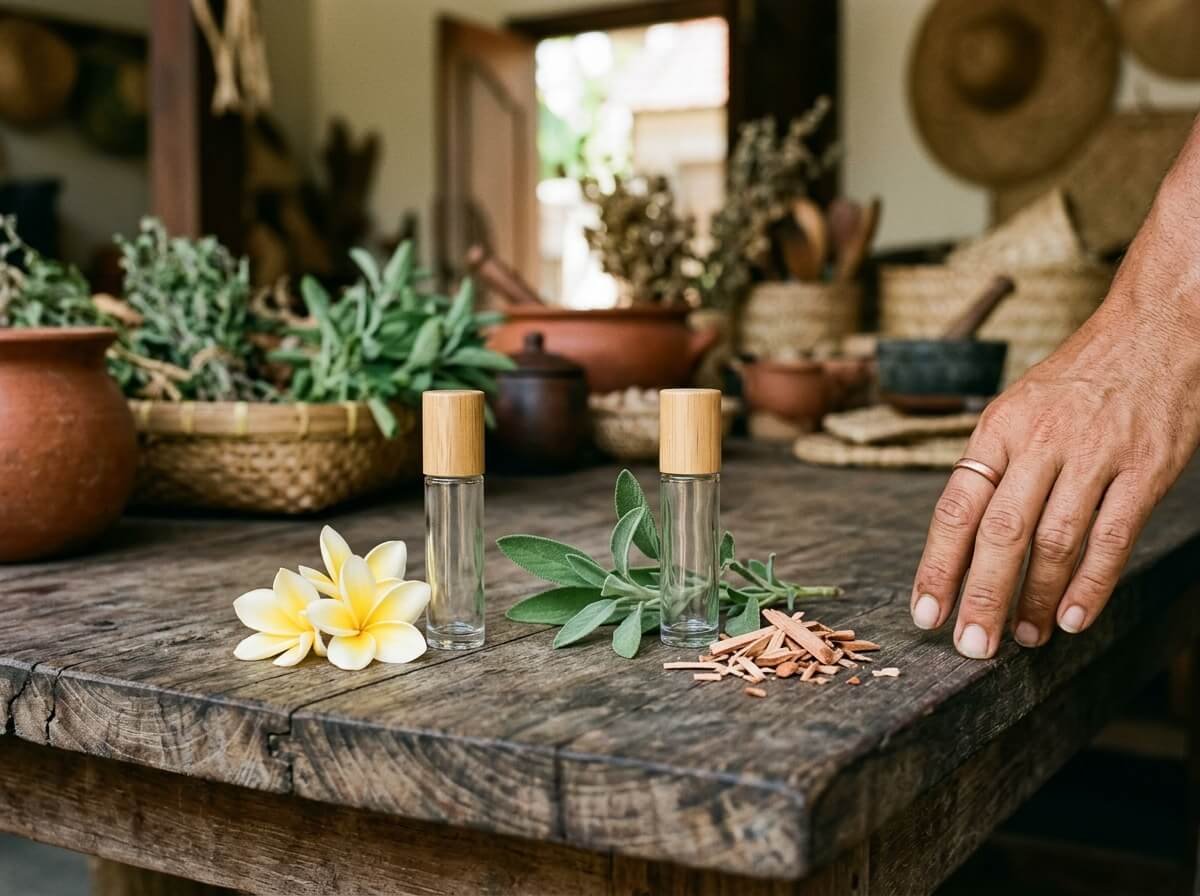
We have been crafting body care in Bali since 1989. When we began working on a deodorant again, the brief was simple: no aluminum, no baking soda burn, and no pretending. The result is our probiotic deodorant line, two roll-ons made at our workshop in Bali.
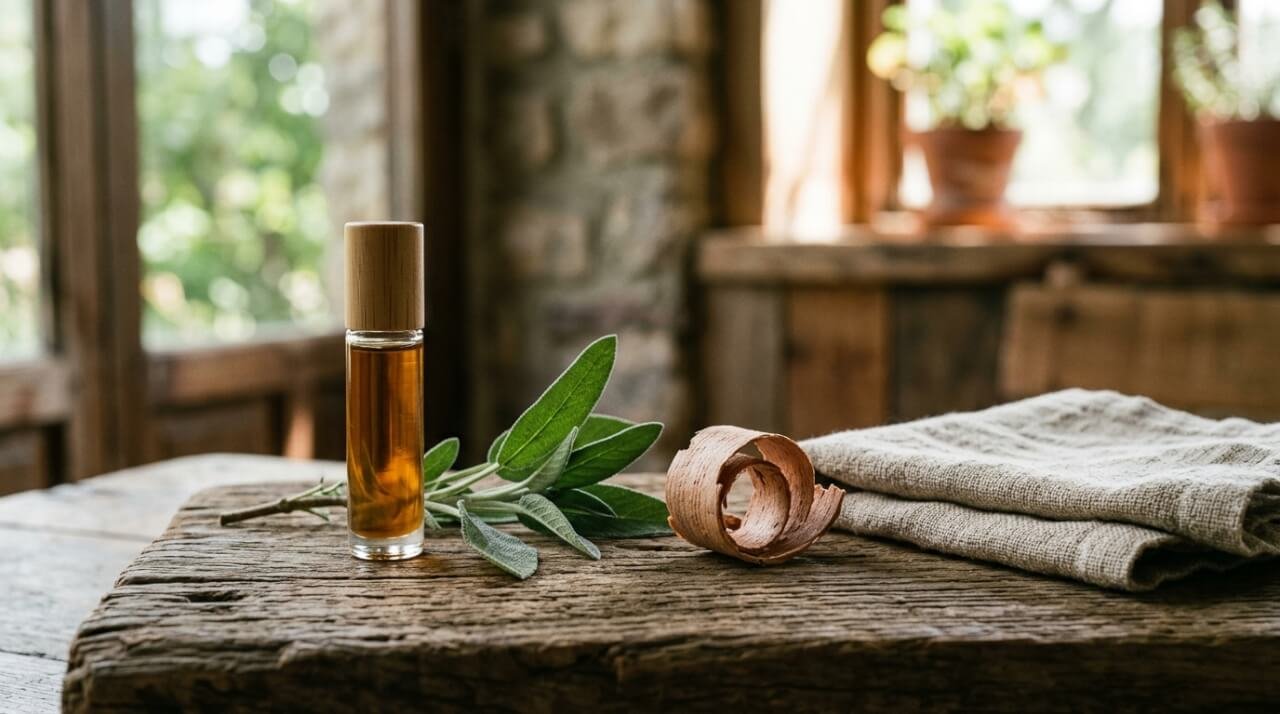
The Probiotic Deodorant in Nayla carries the soft floral profile of our Nayla apothecary blend. It feels like the first cool hour of a Bali morning: gentle, clean, and close to the skin. The Probiotic Deodorant in Sage + Cedar is grounded and woody, a scent that sits well on anyone who prefers something quieter and more earthy.
Both share the same approach. A probiotic base that supports your skin’s natural microbiome rather than stripping it. No aluminum and no parabens. Gentle enough for daily use, and suitable during pregnancy and breastfeeding. Both come in a 50ml glass roll-on bottle, because a product that sits in your bathroom every day should not add another piece of plastic to the world.
We also hold ourselves to the label test from earlier in this guide. Read our ingredient list the same way you would read anyone else’s. If something is unclear, ask us. Transparency is not a slogan to us. It is the reason Utama Spice exists.
A roll-on, by the way, suits sensitive underarms well. It glides on without the drag of a stick, which matters on freshly shaved or tender skin, and a little goes a long way.

Care, not warfare, in a glass roll-on
Our probiotic deodorant supports your skin’s natural microbiome instead of stripping it. Aluminum-free, paraben-free, and crafted in Bali, in grounding Sage + Cedar or soft floral Nayla.
Probiotic deodorant FAQ

Do the live cultures in probiotic deodorant really survive?
Sometimes, but often not in large numbers by the time the product reaches you. Keeping bacteria alive in a shelf-stable cosmetic is genuinely hard. Most effective probiotic deodorants rely on postbiotics (ferment filtrates and lysates) and prebiotics, which do not need to be alive to support the skin. If a brand claims live cultures, look for a count and a date.
Does probiotic deodorant actually work?
For most people, yes, as a deodorant. It reduces and softens odor by supporting a calmer, slightly acidic underarm. It does not stop sweat, because it is not an antiperspirant. Expect a few weeks of adjustment if you are coming off aluminum.
Is probiotic deodorant safe for sensitive skin?
It is often a better fit than baking soda formulas, because it works with skin’s natural acidity. Essential oils can still bother very reactive skin, so patch test first and choose a formula with a clear, short list of oils.
Can teenagers use probiotic deodorant?
Teenagers are often the people who benefit most, since apocrine glands switch on at puberty and a gentle habit set early tends to stay. Patch test first. For young children, odor is rarely a concern, and we suggest checking with a pediatrician before using any essential oil product.
Is probiotic deodorant safe during pregnancy?
Our two probiotic roll-ons are formulated to be suitable during pregnancy and breastfeeding. Skin can become more sensitive in pregnancy, so a patch test is still wise, and anyone with specific concerns should check with their midwife or doctor.
Roll-on, cream, or stick: which is better?
Each format can work. Sticks are travel-friendly but can drag on sensitive skin. Creams give fine control but mean using your fingers. Roll-ons glide easily, absorb quickly, and suit freshly shaved skin. Choose the format you will use calmly every day.
Can I make my own probiotic deodorant?
You can make a simple deodorant at home, but adding yogurt or probiotic capsules to a jar brings real contamination risk without a preservative system. If you enjoy making your own, keep batches tiny, store them cold, and use them within days.
How does probiotic deodorant fit a low-waste routine?
Choose glass over plastic where you can, finish what you open, and reuse or recycle the bottle. Our guides to a plastic free bathroom and refillable body care walk through the bigger picture, one shelf at a time.
Final thoughts: tend the garden
Probiotic deodorant is not a cure-all in a bottle, and it does not need to be. Its quiet strength is a change of stance. Instead of treating our bodies as a problem to sterilize, it treats them as a living system to support. Odor softens because the ecosystem settles, not because everything on the skin has been wiped out.
Read the label. Look for names, not promises. Give your skin a few calm weeks to rebalance. And choose products made by people willing to tell you exactly what is inside. That is what real care looks like, for your skin and for each other. What you give, you get back.