Cracked heels home remedy: a plant-butter guide to soft feet that keep their protection
If you have ever caught a heel on the bedsheet, or felt a fine split open as you stepped out of the shower, you already know how cracked heels feel. The good news is that a gentle cracked heels home remedy works for most people, and it does not need a cabinet of special tools. It needs a better understanding of why heels split, a little patience, and a rich plant butter or balm applied at the right moment. In this guide we walk through what is actually happening in the skin of your heel, why the thick callus there is not your enemy, how plant butters compare with petroleum jelly, and the simple nightly ritual we return to again and again in Bali, where bare feet and sandals are part of everyday life.
We also cover what to skip, and when a crack needs a podiatrist instead.
Why heels crack: thick callus, little oil, and pressure from every step
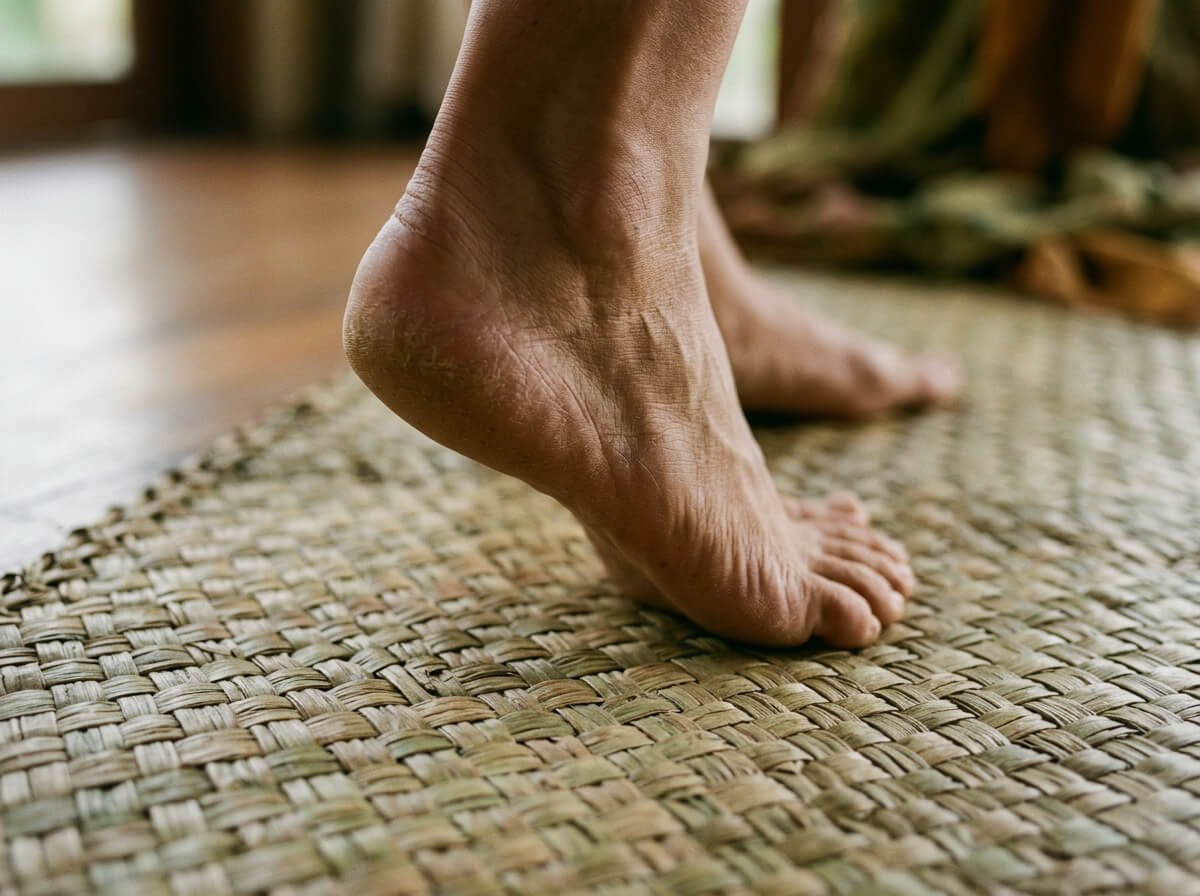
The skin on the soles of our feet is different from the skin anywhere else on the body. Its outer layer, the stratum corneum, is the thickest we have, built up over years of standing and walking. The soles also have no oil glands at all. Plenty of sweat glands, yes, but no sebaceous glands to lay down the light film of oil that keeps skin on our arms or face supple. So the heel is thick, and it is dry by design.
Now add pressure. Every time we stand, the soft fat pad under the heel spreads sideways under our weight. When the skin around the rim of the heel is soft and flexible, it stretches with that movement and nothing happens. When the rim is dry, thick, and stiff, it cannot stretch. It splits instead, usually in short lines that run toward the center of the heel. Those lines are fissures, and once one forms, every step pulls it open a little more.
Several everyday things make this more likely:
- Open-back shoes and sandals, which let the heel pad spread without support
- Standing for long hours, especially on hard floors like tile, stone, or concrete
- Dry air, air conditioning, and heated rooms
- Frequent washing with hot water and harsh soap, which strips what little moisture the skin holds
- Extra body weight, which increases pressure on the heel pad
- Age, since skin produces less of its own moisturizing factors over time
Some health conditions also show up first on the feet. Eczema and psoriasis can thicken and crack the heels. Athlete’s foot does not always itch between the toes; one form causes dry, scaly skin across the whole sole that looks a lot like ordinary dryness. Thyroid conditions and diabetes can both leave skin drier than usual. If your heels crack no matter what you do, or the skin on your soles peels in a moccasin-like pattern, it is worth asking a doctor or pharmacist to take a look.
A common question is whether a vitamin deficiency causes cracked heels. Severe shortages of nutrients like niacin or zinc can affect the skin, but they are rare, and they usually show up in other ways first. For most of us, the cause is simpler and more mechanical: thick skin, no oil, and pressure. That is actually reassuring, because it means the fix is within reach. If you have worked through our guide to repairing the skin barrier, many of the same principles apply here, only on the toughest skin we have.
The callus is not the enemy: soften the edges, do not strip the heel
Most advice about cracked heels starts with the same instruction: scrub it, file it, get rid of the hard skin. It feels like progress, but it misses what the callus is for.
A callus is the skin doing its job. When the same patch of skin meets repeated friction and pressure, it thickens to protect what lies beneath. That thickening is a defense, not a mistake. Strip it all away and the same pressure is still there the next morning, so the skin simply builds the callus again. Over-filing can also leave the heel raw and tender, and it can open small breaks in the skin that let bacteria in.
The real problem is not thickness. It is stiffness. A thick heel that stays soft and flexible does not crack. A thick heel that is dry and brittle does. So the goal shifts from removal to softening. We want the callus to stay, but we want its edges to bend instead of split.
That means:
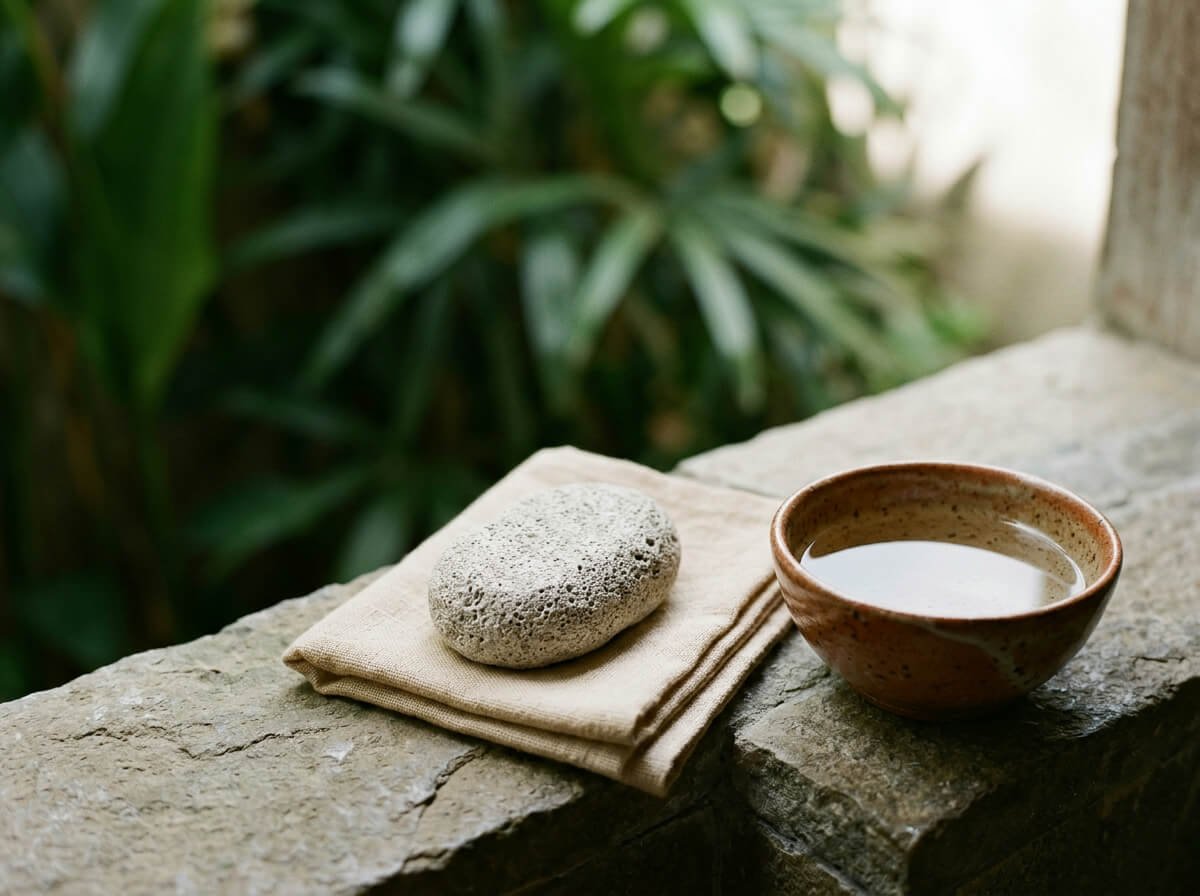
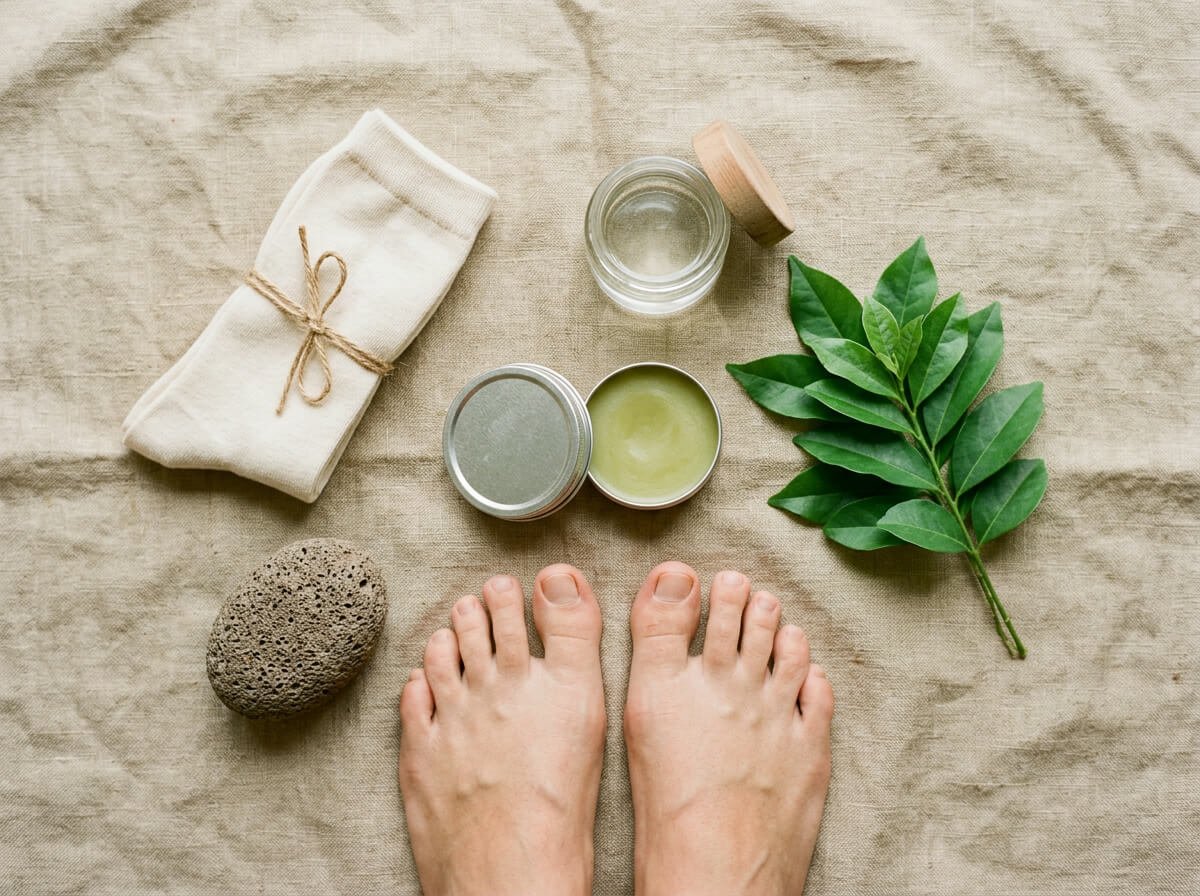
- Gentle, occasional smoothing rather than aggressive filing. A smooth pumice stone used lightly on damp skin, two or three times a week, is plenty for most people.
- Focus on the rim. The cracks start at the edges of the heel, so that is where a little smoothing and a lot of moisture pay off.
- Stop before it feels tender. If the skin turns pink or sore, you have gone too far.
- Moisture and a seal afterward, every time. Smoothing without moisturizing just exposes fresh, dry skin.
Think of it as tending, not sanding. Progress over perfection. A heel that is still a little thick but no longer splitting is a heel that is doing exactly what it should. The same gentle logic runs through our post on keratosis pilaris natural remedies, where harsh scrubbing also makes rough skin worse.
Plant butters as occlusives: how shea, cocoa, and illipe compare with petroleum jelly
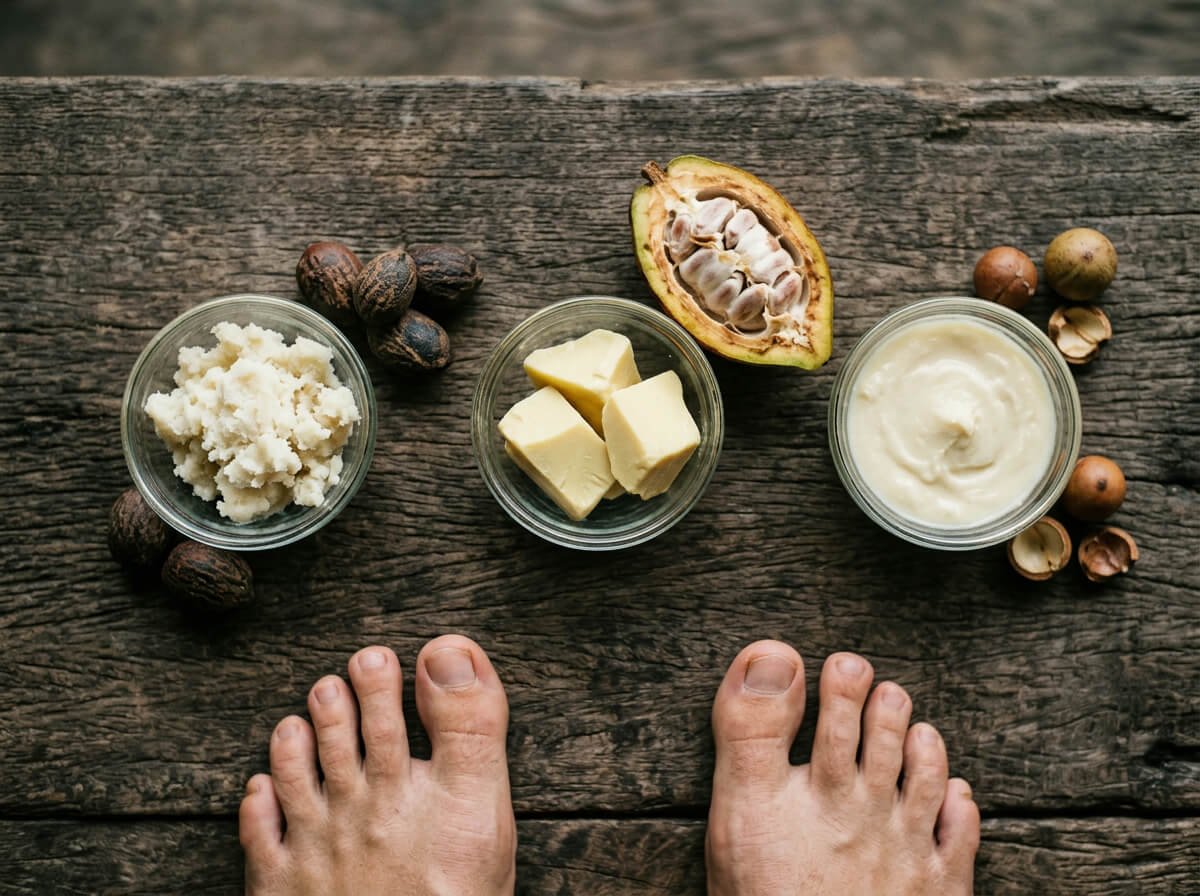
To understand why some creams help cracked heels and others barely touch them, it helps to know the three jobs a moisturizer can do. Humectants draw water into the skin. Emollients soften and smooth the gaps between skin cells. Occlusives form a protective layer on top that slows water from evaporating. Thick, dry heel skin needs the last two most of all: something to soften it, and something to hold the moisture in long enough to make a difference.
Petroleum jelly is the benchmark occlusive. It is very good at sealing skin, which is why so much foot advice leans on it. We will be honest: it works. But it is a byproduct of crude oil refining, and it only seals. It does not bring anything else to the skin.
Plant butters take a slightly different route. They are less completely sealing than petroleum jelly, but they still form a real protective layer, and they bring fatty acids that the skin can use. Here is how the three we know best compare.
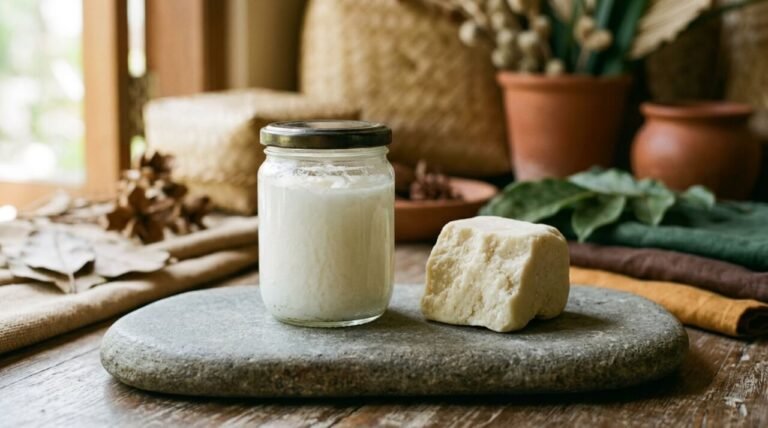
Shea butter
Pressed from the nuts of the shea tree in West Africa, shea is rich in oleic and stearic acids and soft enough to spread easily at room temperature. It is a gentle, forgiving butter that suits most skin. We explore it side by side with our own hero butter in illipe butter vs shea butter.
Cocoa butter
Cocoa butter is firm and melts close to body temperature, which gives it a slow, sealing feel on the skin. It holds up well on rough patches like heels and elbows. Our full guide to cocoa butter for skin covers its strengths and when it can feel too heavy.
Illipe butter
Illipe is the butter closest to our hearts. Wild-harvested from the fruit of Shorea trees in the rainforests of Kalimantan, it reaches us through our Forestwise partnership, which supports the families who have gathered illipe in the same groves for generations. Illipe is firmer than shea, high in stearic and oleic acids, and melts on contact with warm skin. It seals well and leaves skin soft rather than slick. You can read more in our post on illipe butter benefits.
Where coconut oil and beeswax fit
Virgin coconut oil is a lighter emollient that softens skin well. A 2004 trial in the Philippines found virgin coconut oil as effective and safe as mineral oil for mild to moderate dry skin, which is a meaningful result for an oil many of us already have at home. Beeswax adds a breathable seal on top. Put coconut oil and beeswax together and you have a balm, which is exactly how our Fresh Soul Body Balm is made.
Balm or butter for heels?
Both help. A balm has no water in it, so it is denser and stays on the skin longer, which makes it a natural fit for heels and elbows. A whipped body butter usually contains water and spreads more easily, so it suits a whole-body routine and drier legs. If you want the longer version, our guides to body balm vs body butter and what is body balm go deeper.
And a quiet truth worth saying once: a tub of petroleum jelly will seal your heels, but plant butters can do the same sealing job without a fossil-fuel base, while feeding the skin and supporting the forests and farms they come from. That is the kind of choice we believe in.
The nightly cracked heels home remedy: short soak, pat dry, butter on damp skin, cotton socks
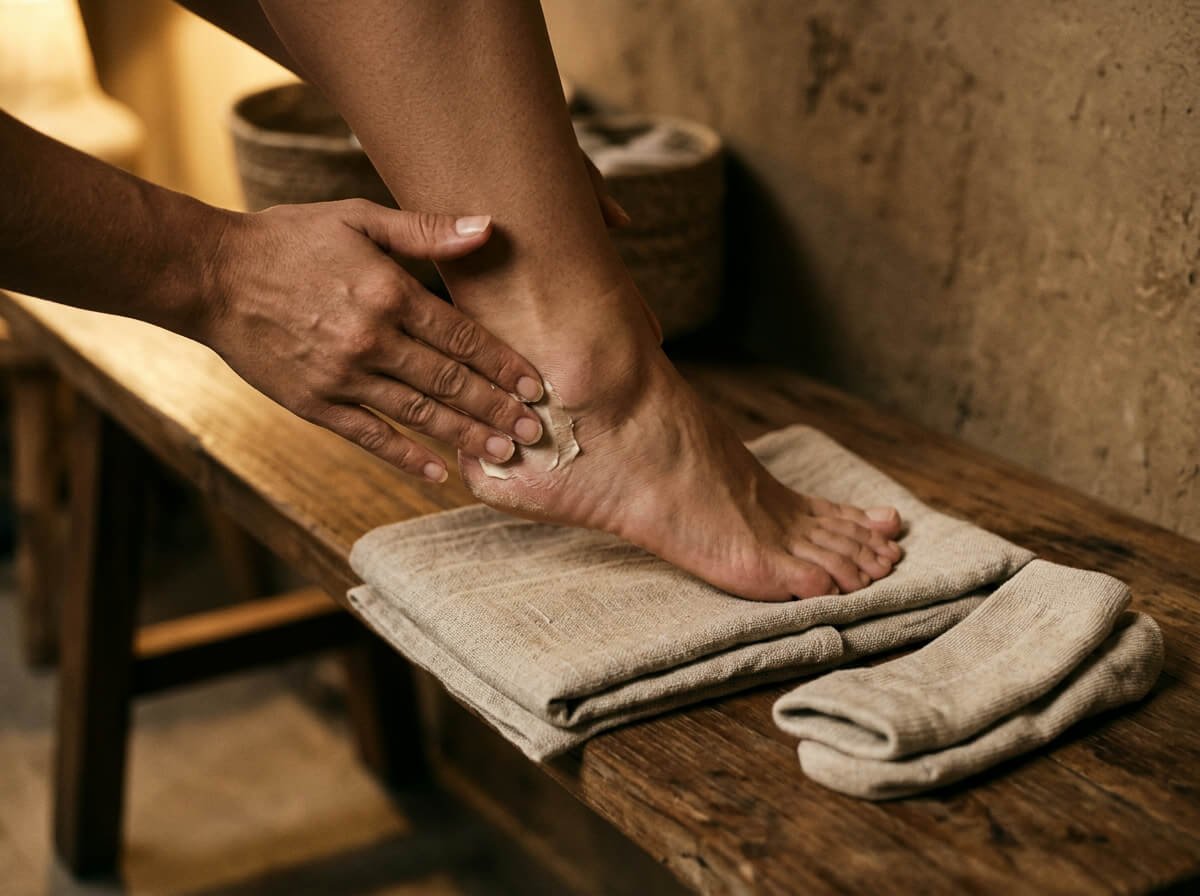
This is the heart of it. The order matters as much as the products, and it takes about 10 minutes before bed.
Step one: a short, warm soak
Soak your feet in warm, not hot, water for five to 10 minutes. Plain water is enough. This softens the callus and loads the outer layer of skin with water. Keep it short: long soaks can leave skin drier once the water evaporates.
Step two: a light smooth, if needed
If the rim of the heel is rough, run a smooth pumice stone over it a few times while the skin is still damp. Gentle strokes, one direction, and stop at the first hint of tenderness. Skip this step on most nights. Two or three times a week is plenty.
Step three: pat dry, but not completely
Pat your feet with a soft towel, leaving the heels slightly damp. This is the moment that makes the ritual work. Damp skin is full of water, and the butter or balm you apply next will hold that water in.
Step four: butter or balm, worked into the rim
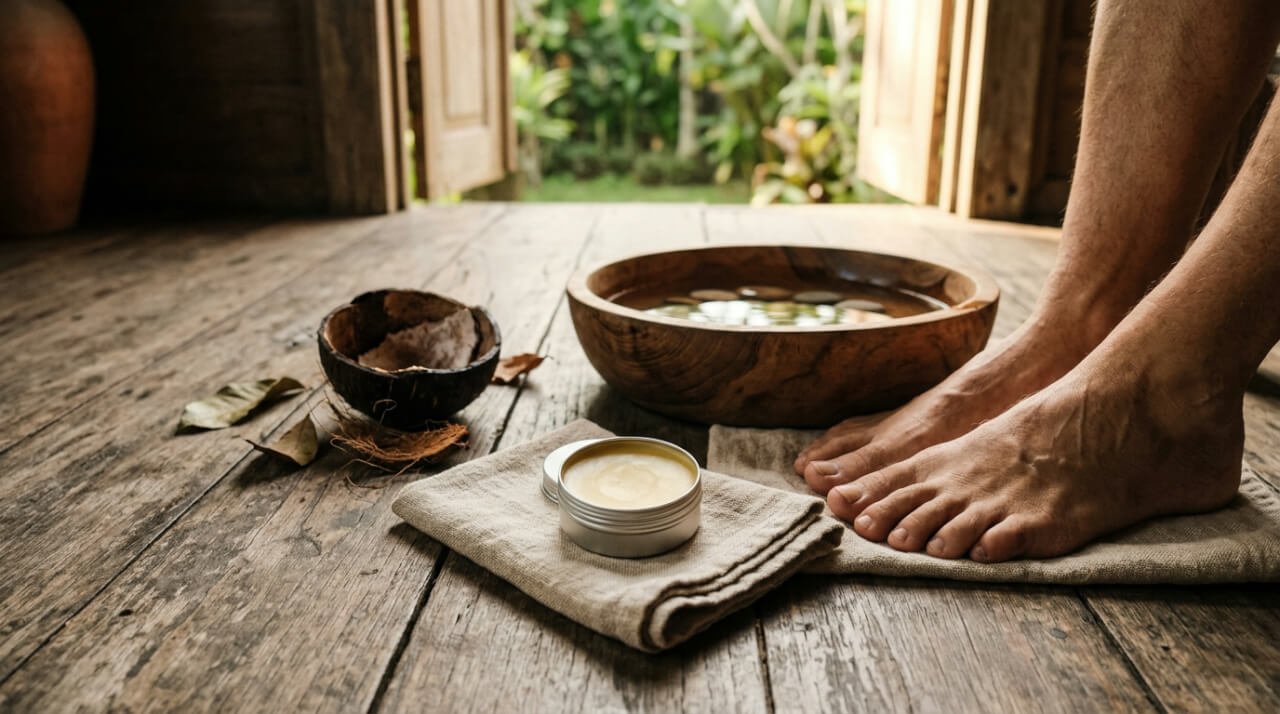
Warm a fingertip of balm or butter between your hands and press it into each heel, paying attention to the rim and any fine lines. Massage with your thumbs for a minute or two. It feels good, and it helps the butter settle into the rough edges. A rich balm like Fresh Soul suits this step well. Its coconut oil and beeswax base seals, and its blend of fennel, peppermint, vetiver, and nutmeg essential oils brings a warm, grounding scent to the end of the day. If you prefer something softer and lighter, our Lavender Dream Body Butter combines coconut oil and illipe butter with lavender.
Step five: cotton socks
Slip on a pair of clean, breathable cotton socks and go to sleep. The socks keep the butter on your heels instead of your sheets, and they create a gentle, warm seal overnight. In the morning, the skin should feel noticeably softer.

How long does it take?
Fine surface cracks usually soften within a few nights. Deeper but closed fissures often take two to three weeks of consistent care to close and stay closed. After that, a few nights a week keeps heels comfortable. Like most rituals, the results come from consistency rather than intensity. If you enjoy a slower version of this practice, our bedtime foot ritual and Monday foot massage turn this into a moment of real rest.
A note on care: any balm with essential oils, including peppermint, can sting on open or bleeding cracks. For split skin, use a single-ingredient oil like Virgin Coconut Oil or Tamanu Oil until the crack closes, and save the scented balm for intact skin. If you are pregnant or have very sensitive skin, a fragrance-free option is the gentler choice too.

A small tin for soft heels
Fresh Soul Body Balm is a dense, water-free blend of virgin coconut oil and beeswax with fennel, peppermint, vetiver, and nutmeg essential oils. Hand-blended in Bali for dry heels, elbows, and the nightly foot ritual. Best on intact skin.
Warm climates and sandal living: why heels crack in Bali too

Most guides treat cracked heels as a winter problem. Cold air outside, heated air inside, and skin dries out. That is true, and our winter skincare routine covers it. But in Bali we see cracked heels all year round, in one of the most humid places on earth. Humidity alone does not protect our feet.
Here is why warm-climate living can be hard on heels:
- Open-back footwear. Sandals and flip-flops are the everyday shoe across the tropics. They let the heel pad spread with every step, with nothing to hold it in.
- Hard, cool floors. Many homes here have tile, terrazzo, or stone floors, and like many Indonesian households we take our shoes off at the door. Walking barefoot on hard surfaces all day adds pressure and friction to the heel.
- Frequent washing. In the heat, we rinse our feet often, sometimes many times a day. Each wash without a moisturizer afterward leaves the skin a little drier.
- Sun, sand, and salt. Beach days and long walks dry the skin, and sand acts as a fine abrasive on the rim of the heel.
The answer is the same ritual, adjusted for the climate. Many of us here prefer a lighter touch in the daytime heat and save the richer balm for night. A thin layer of butter in the morning, worked into the heel rim, protects skin through a day in sandals. Then the full balm and socks ritual happens at night.
One small caution for tropical days: butters made with citrus oils like bergamot, such as our Pure Energy Body Butter, are best kept for evening use on feet that will be in open sandals and direct sun. Some citrus oils can make skin more sensitive to sunlight.
For more on the trend toward rich, soft, cushioned skin, our post on butter skin explores how the idea fits into everyday care, and our guide to natural body butter explains what to look for on an ingredient list.
What to skip: long daily vinegar soaks, razors and callus shavers, heavy filing
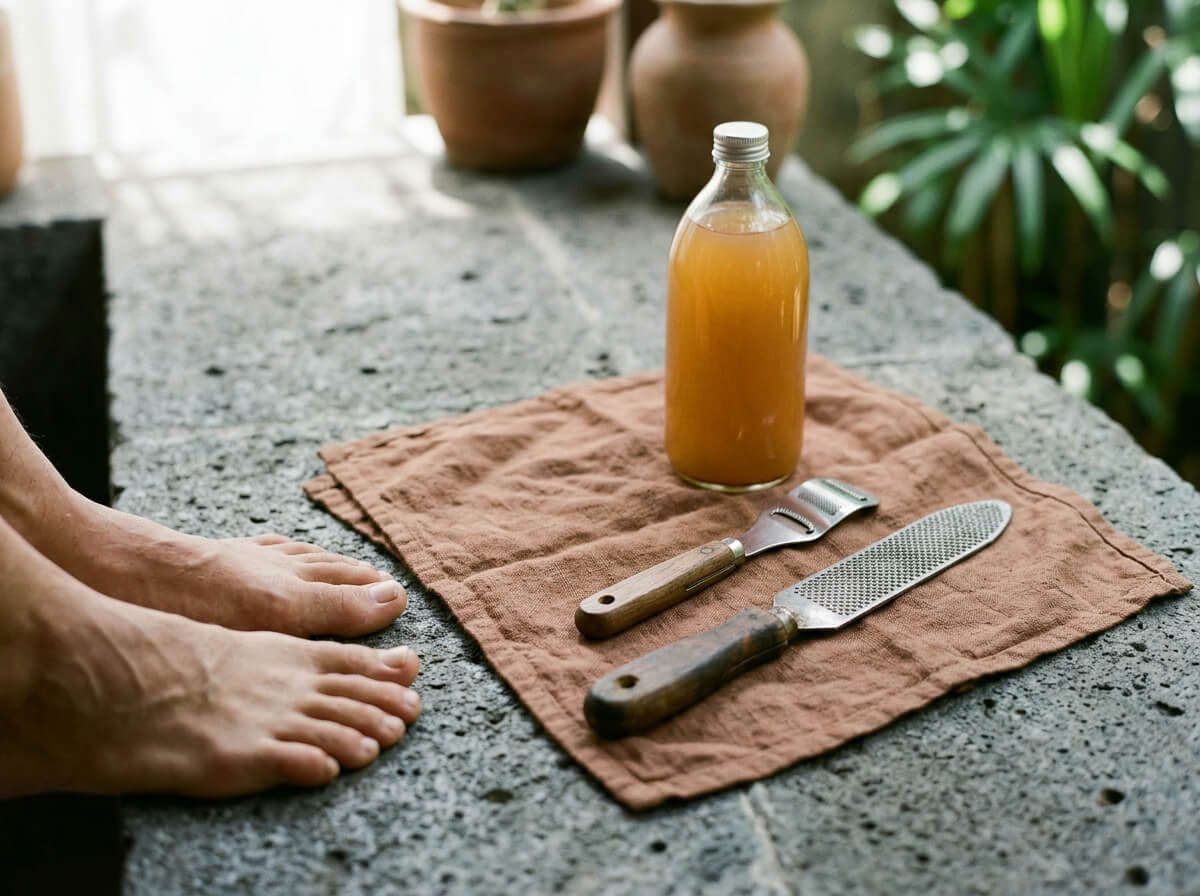
Home remedies for cracked heels circulate widely, and some of them do more harm than good. Here is what we would gently set aside.
Long daily soaks in vinegar or salt
Soaking feet for 20 minutes or more every day, especially in vinegar or Epsom salts, is common advice. A long soak feels good and softens skin temporarily. But once the water evaporates without a seal on top, the skin can end up drier than before. Vinegar is acidic and can sting or irritate any open crack. If you enjoy a soak, keep it short and warm, and always follow it with a butter or balm while the skin is damp.
Razors, callus shavers, and blades
Callus shavers and razor-style tools remove skin fast, and that is the problem. It is very easy to cut too deep, and a small cut on the foot can become infected. Podiatrists use blades in a clinical setting with sterile tools and training. At home, they are best left alone. This matters even more for anyone with diabetes or poor circulation.
Heavy filing and electric callus removers
Coarse metal files and electric grinders strip the callus quickly, which feels satisfying for a day or two. Then the pressure that built the callus returns, the skin rebuilds, and the cycle repeats, sometimes with tender, raw patches in between. Light smoothing with pumice is enough.
Cinnamon and strong spice oils on broken skin
Warming spice ingredients, such as the cinnamon bark in our Cocoa Love Body Butter, are a joy on intact skin but are better kept away from open cracks. Use them on soft heels, not split ones.
A note on urea
Urea creams are among the most studied treatments for thick, dry heels. Urea draws water into the skin and loosens the bonds between dead skin cells, and pharmacy foot creams often use it at 10% to 25%. It is a reasonable option to discuss with a pharmacist if plant butters alone are not enough. We do not make a urea product, and we would rather tell you the truth than pretend otherwise.
When cracked heels need a podiatrist
Most cracked heels respond to the home ritual above. Some do not, and some should never be treated at home in the first place. Please see a podiatrist or doctor if any of these apply.
If you have diabetes
This is the most important one. Diabetes can reduce feeling in the feet and slow healing, so a small crack can become an infected wound without much warning. Anyone with diabetes should check their feet daily and see a podiatrist for any crack, split, or sore, rather than trying to treat it alone. The same applies to anyone with poor circulation or a weakened immune system.
If the cracks are deep or bleeding
Deep fissures that bleed, hurt when you walk, or reach into the pink skin below the callus need professional care. A podiatrist can safely trim the hard edges, dress the crack, and sometimes use special dressings or tape to help it close.
If you see signs of infection
Spreading redness, warmth, swelling, pus, increasing pain, or a fever are all signs to see a doctor promptly.
If home care is not working
If you have followed a consistent routine for three to four weeks and the cracks are no better, something else may be going on. Athlete’s foot, eczema, psoriasis, and thyroid conditions can all cause stubborn cracked heels, and each needs its own treatment.
There is no failure in asking for help. A good podiatrist can set things right, and the gentle nightly ritual then helps keep heels comfortable afterward.
Cracked heels home remedy FAQ
Can coconut oil heal cracked feet?
Coconut oil is a good emollient for dry feet and softens rough skin well. On its own it is a lighter seal than a balm or butter, so it works best on damp skin, followed by cotton socks. For deeper dryness, a balm that combines coconut oil with beeswax holds moisture in for longer. Our guide to coconut oil for skin covers how to use it well.
Can petroleum jelly cure cracked heels?
Petroleum jelly is a very effective occlusive, so it can help heels hold moisture and soften. It does not add anything else to the skin. Plant butters and beeswax balms seal a little less completely, but they also provide fatty acids, and they come from renewable sources. Either way, the key is applying it to damp skin and covering with socks.
What deficiency causes heels to crack?
For most people, cracked heels are not caused by a deficiency. They come from dry, thick callus combined with pressure and open footwear. Severe shortages of nutrients like niacin or zinc can affect the skin, but these are rare. If cracks persist despite good care, talk to a doctor.
How long does it take for cracked heels to heal?
Fine surface lines often soften within a few nights of consistent care. Deeper fissures that have not broken the skin usually take two to three weeks. Bleeding or very deep cracks need a podiatrist.
Should I remove the hard skin on my heels?
Not all of it. The callus protects your heel. Gentle smoothing of the rim on damp skin, two or three times a week, is enough. The goal is soft edges, not a bare heel.
Can I do this if I walk barefoot all day?
Yes. Apply a thin layer of butter in the morning for daytime protection, then the full balm and sock ritual at night. If you spend long hours barefoot on hard floors, a soft mat where you stand most often helps too.
Final thoughts
Cracked heels are common, and they are rarely a sign that something is badly wrong. They are a sign that the toughest skin on the body needs a little softness to match its strength. Keep the callus, soften the edges, seal in moisture at night, and give it time. If you want to make this part of a slower weekend practice, our Slow Saturday foot ritual is a lovely place to begin. Small acts of care, repeated, are what bring our feet back to comfort.