Sustainable gift guide: what actually makes a self-care gift sustainable
Most gift guides are lists. A useful sustainable gift guide should start with a set of questions. Every November the same roundups return: bamboo this, eco that, a box tied with twine and called conscious. Some of those gifts are good. Many end up in a drawer by March, which is its own kind of waste. This guide takes a different route. We start with what actually makes a self-care gift sustainable (and it is rarely the box it ships in), then share the gifts we would give from our own shelves in Bali, and close with an honest look at how to spot a greenwashed pick.
We have been crafting in Bali since 1989. Our founder, Melanie Templer, began with a single incense and a few balms in her kitchen in Ubud. That history shapes how we think about giving. The kindest gift is something a person uses, finishes, and comes back to. Everything below follows from that idea.
What a sustainable gift guide should actually measure

A gift has a life after the wrapping comes off. That life is where sustainability is decided. Packaging matters, but it is the smallest part of the story. A recyclable box around a product nobody uses is still waste. It just arrives with better manners.
We find it helpful to look at a gift in three layers:
- What is inside. Can the person read and understand every ingredient? Were those ingredients grown, harvested, and processed with care for the people and places involved?
- What holds it. Is the container glass, tin, or another material that can be reused for years? Or is it a multi-material pump, a laminated pouch, or a plastic tray that has nowhere to go?
- What happens next. Will the gift be used up, refilled, repaired, or quietly abandoned? This is the layer most gift guides skip, and it is the one that decides the footprint.
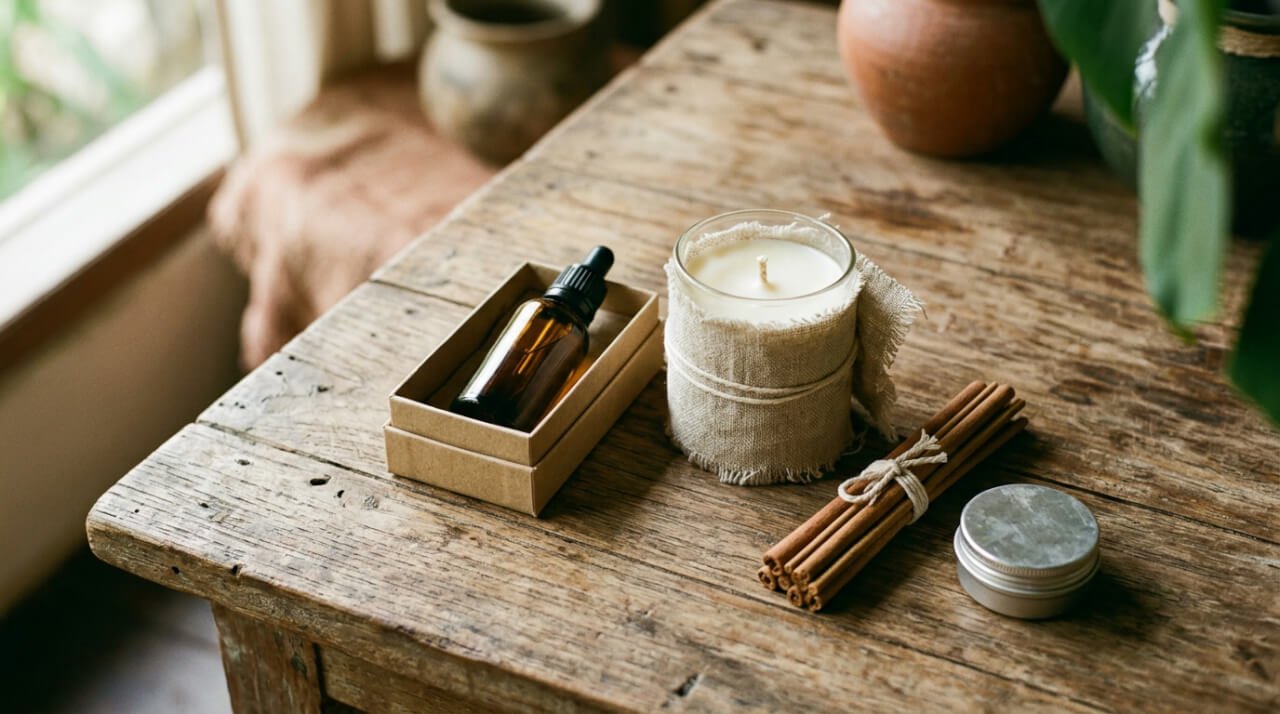
Seen this way, consumable gifts have a quiet advantage. A balm, an oil, a candle, or a bundle of incense is designed to be used up. When it comes in glass or tin, very little is left behind once it is finished, and what remains can often be reused. A gadget, a novelty item, or a gift set padded with miniatures tends to do the opposite: lots of material, little use.
It also helps to be clear about what sustainability does not mean. It does not mean the word “natural” printed on a label. It does not mean kraft paper or a leaf icon. It does not mean “recyclable” on a component that most local systems cannot actually process. We wrote about that gap in our short piece on why recyclable is not the same as recycled. A gift can carry every one of those signals and still be a poor choice.
So the measure we use is simple. A sustainable gift is one that gets used well, leaves little behind, and was made with care for the people who made it. Everything else is detail.
Three honest questions to ask before calling any gift sustainable
When we build our own sustainable gift guide for friends and family, we run every candidate through three questions. They take about a minute. They also remove most of the noise.
1. Does it have a refill path?
A refill path is the answer to “what happens when this runs out?” The strongest answer is a refill: the same container topped up again and again. In Bali, our refill stations have worked this way since day one, and in 2025 alone they kept 2,245 bottles out of landfill. Small numbers, real accounting.
We also know most people reading this do not live near a refill station in Bali. A refill path can take other honest forms. Some products come in larger refill formats, such as our Begone Bug Spray 230ml refill can, which tops up a smaller spray bottle you already own. Some objects can be repaired instead of replaced: the glass parts of our nebulizing diffusers are sold separately as the Danau Dua replacement glass set, so a cracked glass does not mean a new machine. And a well-made amber glass bottle can be reused for a home blend long after the original oil is gone. If you want the deeper framework, our guide to refillable body care walks through how to judge refill formats one by one.
2. Can you read every ingredient?
Turn the product over. If the ingredient list is long, vague, or missing, that is information. Many self-care gifts hide synthetic fragrance behind the single word “parfum,” which can stand for dozens of undisclosed compounds. A gift for someone with sensitive skin, a new baby at home, or a strong reaction to scent needs more clarity than that.
Short, readable lists are a good sign. Our Peppermint Lip Balm, for example, is coconut oil, beeswax, and two mint oils. That is the whole list. Our guide to skincare ingredients to avoid covers the common red flags in more detail, and it is worth a skim before any beauty purchase, gift or otherwise.
3. Will it still be used in a year?
This is the question that matters most, and the one that takes the most honesty. Picture the recipient’s bathroom shelf or bedside table next October. Is the gift there, half used and loved? Or is it in the back of a cupboard, still in its cellophane?
Gifts that last in daily use usually share three traits. They fit something the person already does (washing hands, winding down, reading before sleep). They are simple to use without instructions. And they feel good enough that reaching for them becomes a small pleasure rather than a chore. A lip balm passes this test easily. A 12-step skincare set for someone who uses soap and water usually does not.
If a gift passes all three questions, it is very likely a sound choice. If it fails two, no amount of eco packaging will rescue it. For a broader view of low-waste daily habits, our piece on zero waste skincare picks up where these questions leave off.
Gifting a ritual, not a product

Here is the idea we care about most in this guide. The most sustainable self-care gift is often not an object at all. It is a small practice, carried by an object.
In Bali, care is woven into the day through small, repeated acts: oil warmed between the palms before a massage, a balm pressed into tired feet at night, a quiet moment of scent at the end of the day. Many daily acts here also belong to a living religious tradition, and those are not ours to package or sell. What we can share, respectfully, is the rhythm underneath them. Care works best when it is small, regular, and tied to a moment in the day. We explore this more in our guide to Balinese beauty rituals.
That rhythm translates beautifully into gifting. When a gift arrives with a ritual attached, it is far more likely to be used. We think of it in three forms:
- A scent. A candle lit when the laptop closes for the day. A diffuser blend for the first quiet hour of the morning. Scent marks time, and marked time becomes habit.
- A practice. A body balm with a two-minute foot rub before sleep. A hand cream kept by the kitchen sink. The product is the prompt; the practice is the gift.
- A place. A single incense stick that signals the start of reading time, or a corner of the room that becomes the calm corner. A gift can help someone build a small sanctuary at home.
Incense is a good example. Our Temple Spice Incense was the very first Utama Spice product, hand-rolled from locally sourced spices. Pair it with our Bali reclaimed wood incense holder, which Balinese craftspeople make from repurposed chopsticks, and you have given someone a small evening ritual rather than a box of sticks. Our guide to natural incense sticks explains what separates hand-rolled incense from the synthetic kind.
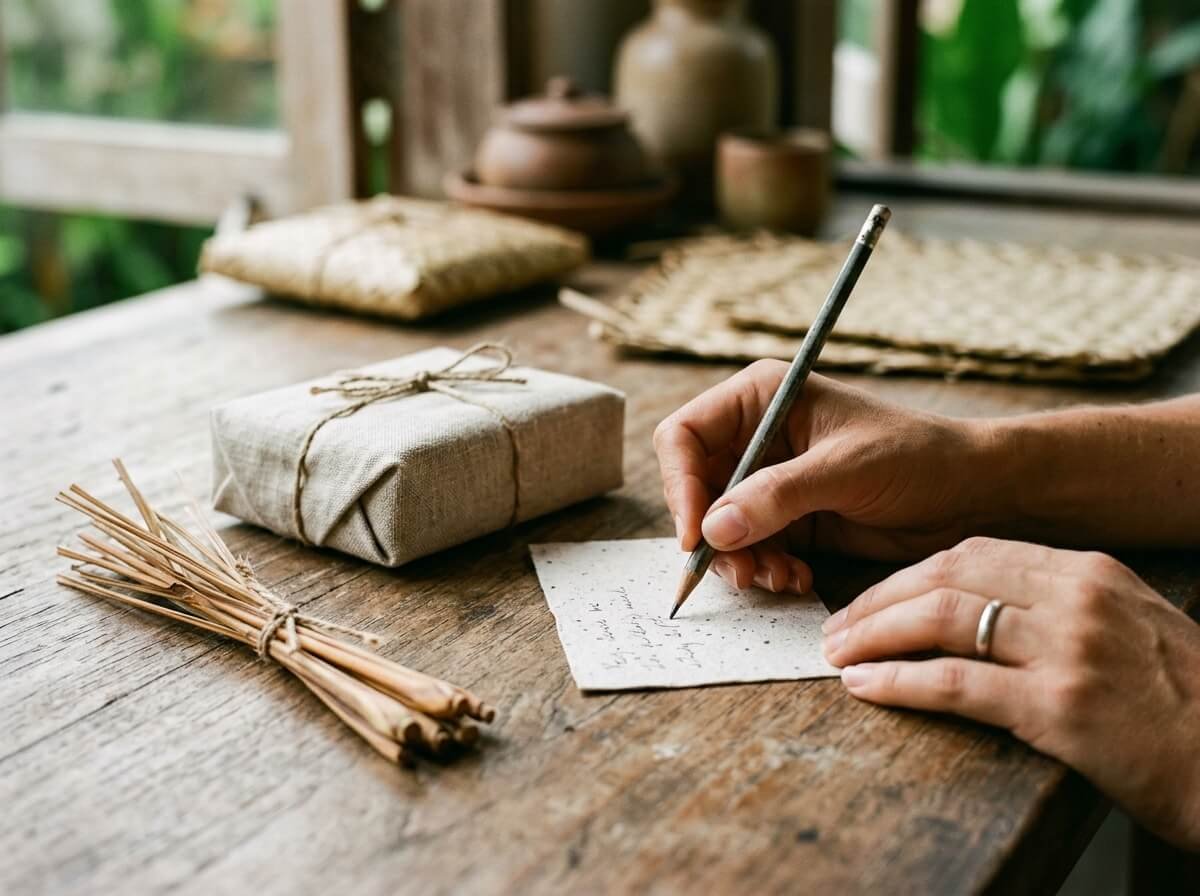
The simplest way to give a ritual is to write it down. Add a handwritten card with one line: “Light this when you close your laptop,” or “Rub this into your feet before bed, then lights out.” It costs nothing. It turns a product into an invitation. In our experience, it is also the part people remember.
Our sustainable gift guide picks: gifts that start a habit
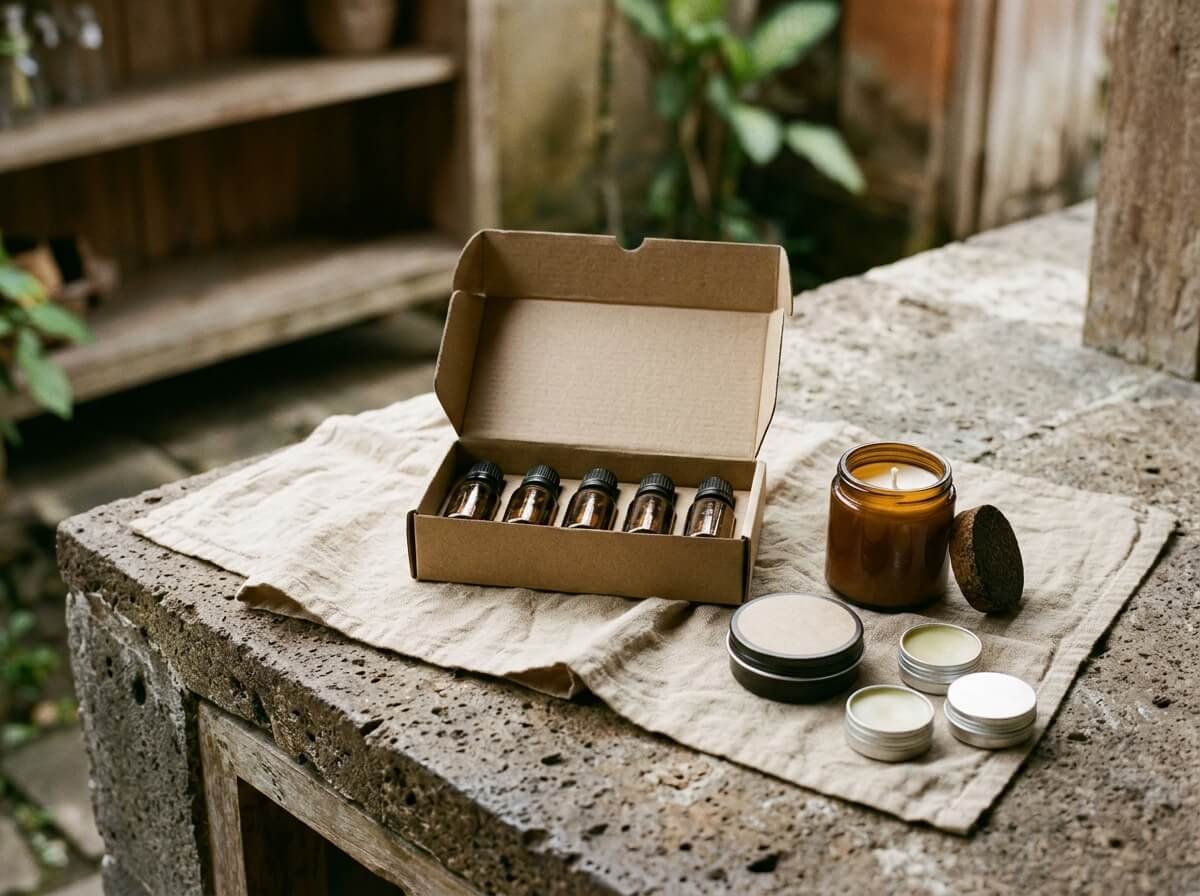
These are the gifts we would give from our own range. Each one passes the three questions above, and each comes with an honest note, because a good gift guide should tell you the limits as well as the strengths.
For the one who needs to slow down
The Perfect Balance Essential Oil Set holds five 5ml blends: Clearing, Focus, Pure Energy, Bliss, and Deep Calming. It arrives in presentation packaging with an info guide, so it is ready to give as it is. Five blends means five moods, and the small bottles are sized to be finished rather than forgotten. Honest note: these are concentrated oils. Diffuse them, or dilute them in a carrier oil before they touch skin, and keep citrus-led oils off skin that will see strong sun.
For the one who loves bold, warm scents
The Revival Essential Oil Set brings together origanum, cajeput, frankincense, pink grapefruit, and clove, five single oils in 5ml bottles. It suits someone who already enjoys aromatherapy and likes spice and resin over florals. Honest note: origanum and clove are strong oils that can irritate skin. They belong in a diffuser or in a very low dilution, and they are not suited to children’s skin.
For the one who winds down with light
Our Awakening Candle is soy wax scented with bergamot and orange peel oils, with a piece of red jasper set in the wax. It is petrochemical free and burns best in 30-minute sessions, which happens to be a lovely length for a ritual. If you are weighing candles against other scent formats, our comparison of reed diffusers vs candles lays out the trade-offs, and our guide to natural candles explains why the wax matters.
For tired hands and feet
The Fresh Soul Body Balm is a 30g tin of virgin coconut oil and beeswax with fennel, mint, vetiver, and nutmeg. It is small, it travels, and it begs to be used for a slow foot rub at night. Honest note: it contains beeswax, so it is not vegan, and anyone pregnant may want to check with their care provider about fennel first. For winter hands, our Radiant Hand Cream with jojoba and rosehip seed oils is a gentle everyday option; our winter skincare routine shows where it fits in a cold-weather ritual.
For stockings and small thank-yous
Lip balms are the quiet heroes of gifting. They get used to the very last swipe. Ours come in peppermint, cocoa, tangerine, and lemon pie, each built on coconut oil and beeswax. Tuck one into a card for a teacher, a neighbor, or a colleague. It is a small gift that will genuinely be finished.
If you want to experience these blends in daily ritual yourself before you give them, the Perfect Balance set is the one we reach for first. It is the gift we give most often, and it has the clearest path from box to habit.

Give a ritual: the Perfect Balance set
Five 5ml blends (Clearing, Focus, Pure Energy, Bliss, and Deep Calming), hand-blended in Bali and ready to give with an info guide inside. Small bottles, made to be finished, not forgotten.
For the person who has everything: aromatherapy and sensory gifts
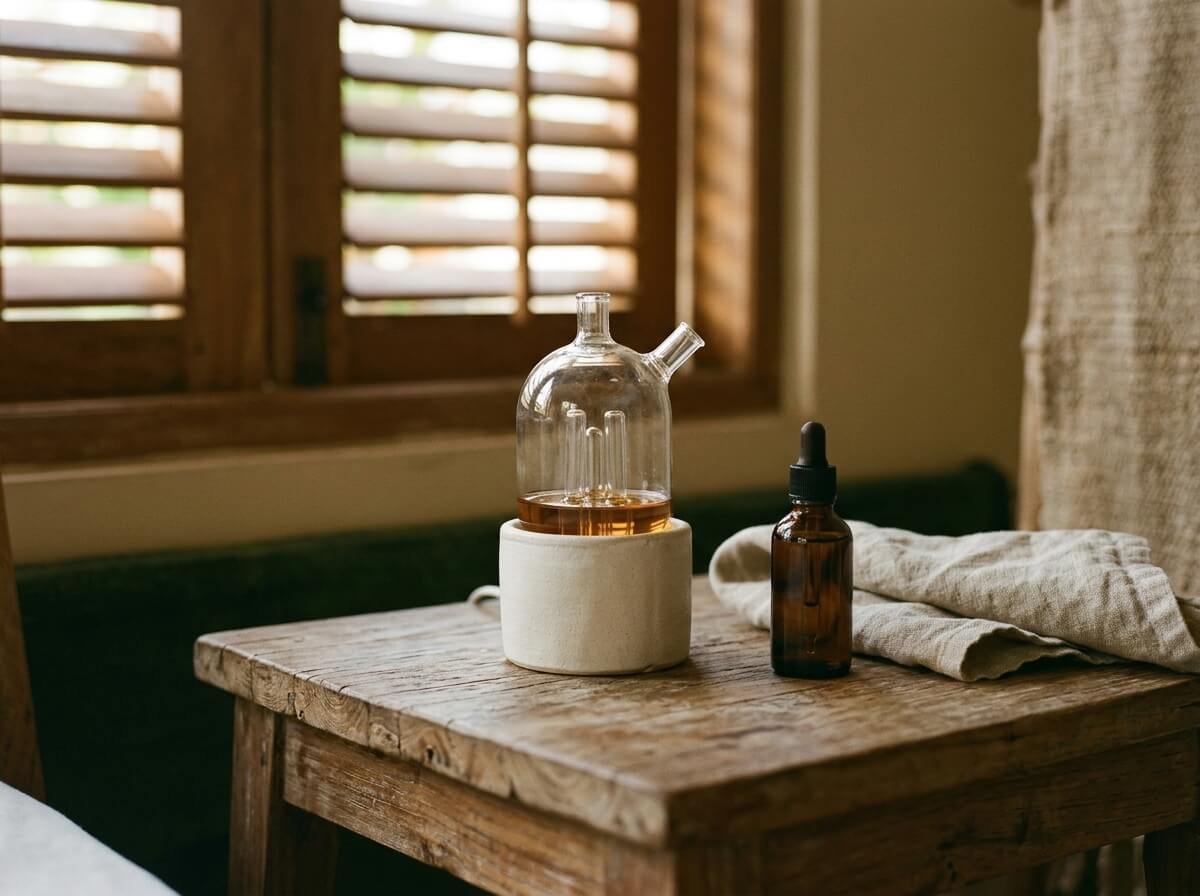
Everyone has someone on their list who already owns more than they need. For that person, more stuff is the least thoughtful gift. Sensory gifts work better. Scent, warmth, and touch take up almost no space, and they add to the day instead of the cupboard.
A diffuser built to be kept
If you are giving one larger object this year, make it something designed to last. Our Danau Dua diffuser pairs a ceramic base with lead-free hand-blown glass and runs on USB power with a 120-minute auto shut-off. It uses pure oils with no water, and its glass parts can be replaced on their own. That repairability is what makes it a sustainable gift rather than a seasonal one. Pair it with one of the oil sets above, and add a card with a few starter blends from our aromatherapy diffuser blend recipes. If the recipient is new to oils, our guide on how to choose an essential oil gift set will help you match the set to the person.
Scent they can wear
For someone who loves fragrance but wants to step away from synthetic perfume, a roller is a thoughtful swap. Our Pure Energy roller blends bergamot, orange, rosemary, and lemongrass in jojoba oil, already diluted for pulse points. Because bergamot is in the blend, it is best worn where the sun will not reach, such as the inner wrists under a sleeve or behind the ears.
The gift of time and touch
Some of the best gifts need only your hands. Offer a partner, parent, or friend a slow shoulder or foot massage, using a balm or a warmed oil. In Balinese homes, massage has long been part of family care, not a luxury. Our guide to Balinese massage oil covers the oils and the basic strokes. Write “one massage, your choice of evening” on a card, and you have given something no shop can wrap.
Something made by you
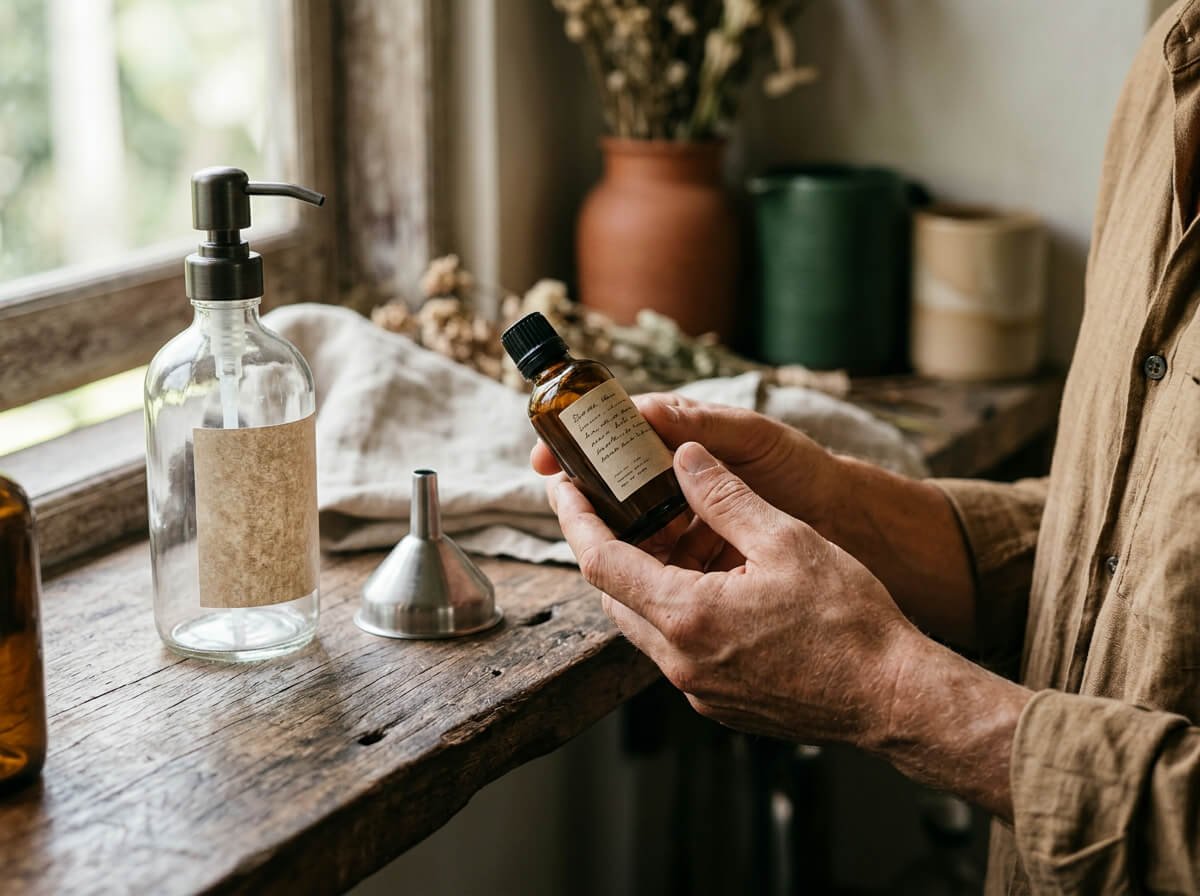
Homemade gifts carry a care that store-bought ones rarely match. A simple body oil in a reused amber bottle, a jar of bath salts, or a linen spray can all be made at the kitchen table. Our older guide to homemade essential oil gifts for the holidays is still a lovely starting point. Just keep dilutions low and label every jar with what is inside.
How to spot a greenwashed gift-guide pick
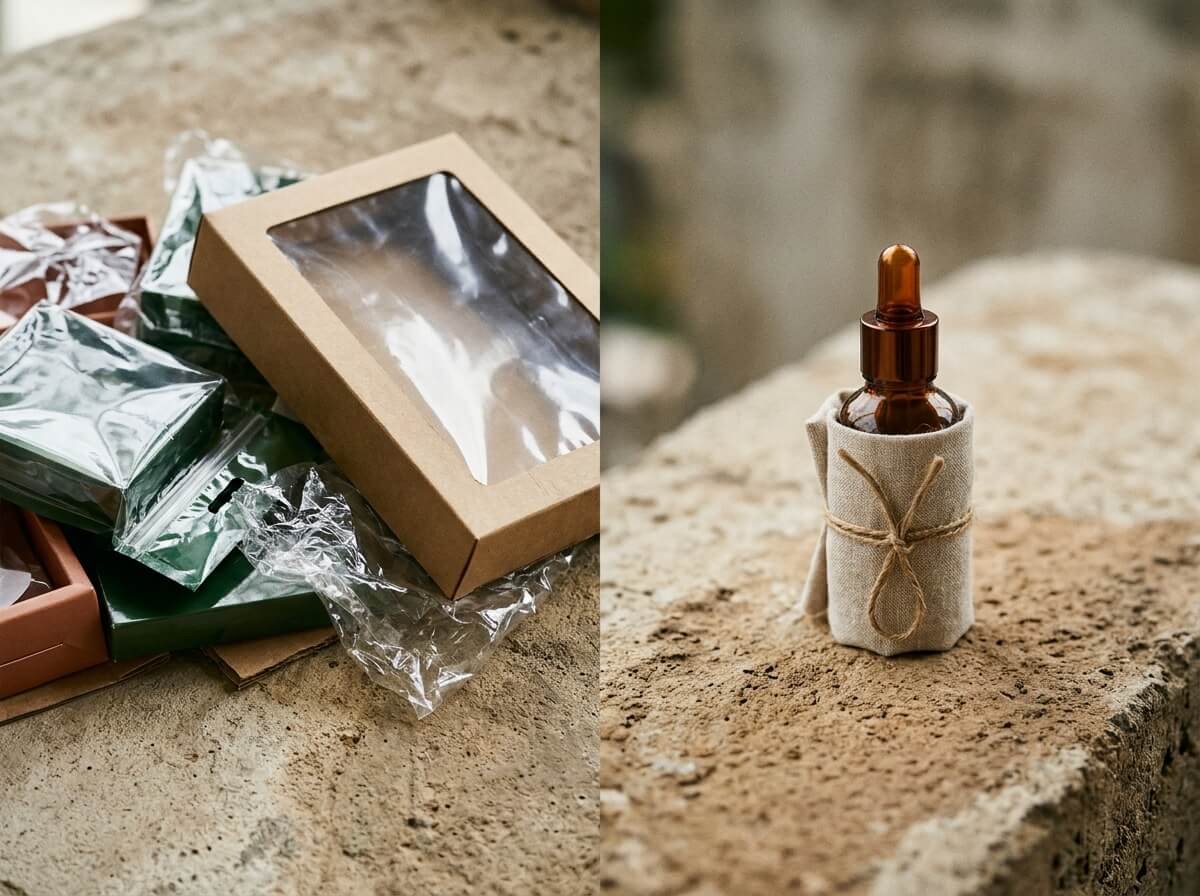
Gift season is greenwashing season. The language gets softer, the packaging gets browner, and the claims get vaguer. You do not need to become an expert to see through most of it. A few patterns cover the majority of cases.
- Words without substance. “Eco,” “green,” “conscious,” and “natural” are not standards. If the claim is not backed by an ingredient list, a material, or a number, it is decoration.
- The box is the whole story. A recycled-card box around a plastic tube of unreadable ingredients is a packaging upgrade, not a sustainable gift. Look past the outside.
- Padding. Sets built from many tiny samples, a plastic insert tray, and shredded filler often contain more packaging than product. Fewer, fuller items are almost always better.
- “Recyclable” on mixed materials. Pumps, sprayers, and laminated pouches combine plastics, metal springs, and films that most local systems cannot separate. Recyclable in theory is not recycled in practice.
- Offsets instead of change. Plastic and carbon credits can be a meaningful addition. They are not a substitute for using less.
That last point is one we hold ourselves to. Through our partnership with Seven Clean Seas, we fund the removal of ocean plastic equivalent to what we produce, which you can read about in our note on our Seven Clean Seas partnership. We see it as one layer of responsibility, alongside refills, glass, and smaller formats, never as a replacement for them. Ask the same of any brand on your gift list.
The good news is that honest gifts are easy to recognize once you know what to look for: readable ingredients, reusable containers, a clear refill or repair path, and makers who explain their limits rather than hide them. For ideas beyond gifting, our guide to a plastic free bathroom applies the same lens to everyday products.
Sustainable gift guide FAQ
What is the most sustainable gift?
The one that gets used. A modest gift that becomes part of someone’s daily routine has a far lighter footprint than an impressive one that sits unused. Consumables in reusable containers (balms, oils, candles, and incense) and experiences (a massage, a shared meal, a class) tend to score best.
Are essential oil sets a sustainable gift?
They can be. Look for amber glass bottles, clear labeling of each oil, small sizes that will be finished, and minimal inner packaging. Avoid sets padded with plastic trays or synthetic “fragrance oils” that are not true essential oils. Include a note on safe dilution if the recipient is new to oils.
How do I wrap a gift sustainably?
Use fabric. A square of linen, cotton, or a scarf wraps almost any shape, ties with a simple knot, and becomes part of the gift. Plain paper tied with cotton string also works, as long as it is free of foil and glitter. Reuse boxes and paper you already have before buying new.
Is a candle a sustainable gift?
A well-made one is. Choose plant waxes such as soy over paraffin, which comes from petroleum, and look for scent from essential oils rather than undisclosed fragrance. A candle in a sturdy glass that can be cleaned and reused as a jar or planter doubles its useful life.
Are experience gifts more sustainable than products?
Often, yes, because they create memory instead of material. The two can also work together. A small product that carries an experience, such as a balm with a promised foot rub or incense with a quiet evening, gives both.
What should I avoid in a self-care gift?
Unreadable ingredient lists, the single word “fragrance” or “parfum” with no detail, heavy plastic packaging, and anything the person is unlikely to use. If you are unsure of someone’s skin or scent preferences, a lip balm, a candle, or an unscented option is a safe and kind choice.
Our brand has a simple line we return to often: what you give, you get back. This season, let your sustainable gift guide be short: give something that will be used, finished, and remembered. That is what makes a gift sustainable. The box is the least of it.