Winter blues: small rituals of light, warmth, and scent
The light changes first. Afternoons close in early, mornings stay grey, and somewhere in late November the body starts asking for more sleep, more bread, and fewer plans. For many of us this is the winter blues: a heavier, flatter mood that arrives with the short days and lifts when the light returns. It is common, it is human, and it often responds well to small, steady rituals. This guide sorts what the research actually supports from what is simply comforting, walks through daily practices of light, warmth, scent, movement, and connection, and draws a clear line where self-care ends and a doctor’s care begins.
We write from Bali, where the “winter” we know is the wet season, so we also look at the readers most guides forget: people in a southern summer, people flying north for the holidays, and people in the tropics watching weeks of rain roll in. The rituals travel well. The honesty matters everywhere.
Winter blues or SAD: an honest line between the two
Winter blues is not a medical diagnosis. It is an everyday phrase for a seasonal dip: lower energy, a wish to hibernate, less patience, a pull toward comfort food, and a mood that feels muted rather than broken. You still work, see friends, and enjoy things, just with less spark. It usually comes and goes with the darker months.
Seasonal affective disorder (SAD) is different. It is a recognised form of depression with a seasonal pattern. The US National Institute of Mental Health describes symptoms that typically last four to five months a year and that go beyond a low mood: persistent sadness most of the day, nearly every day, loss of interest in things once enjoyed, oversleeping, changes in appetite and weight, trouble concentrating, and feelings of hopelessness or worthlessness. The American Psychiatric Association estimates that about 5% of adults in the US experience SAD, and it is more common the farther people live from the equator.
A simple way to hold the difference:
- Winter blues feel like a dimmer switch. Life is quieter, but it still works.
- SAD feels like a switch turned off. Daily life starts to fall apart, and it lasts for weeks.
Only a doctor or mental health professional can tell the two apart for certain, and the Mayo Clinic overview is a calm place to read more. Everything in this guide is for the milder end of the spectrum. Rituals are care, not treatment. If anything in the final sections sounds familiar, please treat that as your sign to reach out.
One useful habit before anything else: notice and note. A few words in a notebook each evening (sleep, energy, mood out of 10) turns a vague grey feeling into something you can see. After two weeks you will know whether it is drifting, steady, or sinking, and that small record is useful if you ever do talk to a doctor.
Why short days pull our mood down
Our bodies keep time with light. Bright light in the morning signals the brain’s internal clock that the day has begun. It helps set when we feel alert, when melatonin (the hormone that prepares us for sleep) rises in the evening, and how settled our sleep feels. In winter, sunrise comes late, the light is weaker, and many of us leave home in the dark and return in the dark. The clock gets a fainter signal, and it can drift.
Researchers who study SAD point to a few connected threads: the shifted body clock, changes in serotonin activity (a brain chemical involved in mood), and longer melatonin release on dark days, which can leave us sluggish well into the morning. None of these are flaws. They are the same rhythms that once helped people conserve energy through lean seasons. They just sit awkwardly with alarm clocks, desk jobs, and December deadlines.
There is a gentler layer too. Winter changes how we live. We move less, go outside less, see fewer people, and eat more of the soft, heavy food that cold weather invites. Each of these nudges mood a little on its own. Together they create the “everything slows” feeling many of us recognise.
This is good news in a quiet way. If light, rhythm, warmth, movement, and connection are part of the cause, they are also where small rituals can help. We cannot change the angle of the sun. We can change what we do with the light we have.
Morning light: the free daily ritual for winter blues
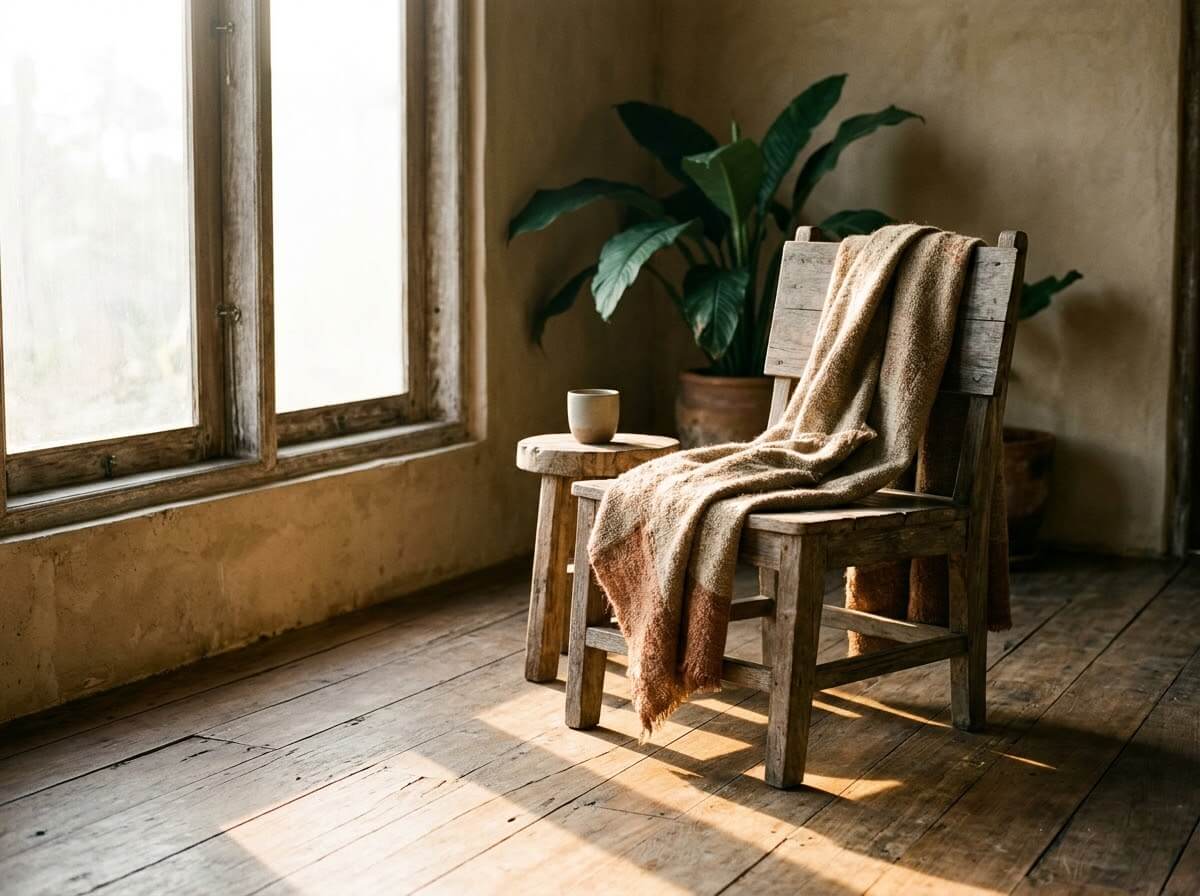
If you take one practice from this guide, make it this one. Get bright light into your eyes within an hour of waking, ideally outdoors.
Here is why it works so well. Indoor lighting is usually a few hundred lux (a measure of light intensity). Outdoor daylight, even on an overcast winter morning, is often several thousand. A short walk under a grey sky still gives the body clock a far clearer “morning” signal than a bright kitchen. Sunglasses, windows, and screens all soften that signal, so where it is safe and comfortable, go without them for a while. Never look directly at the sun.
A simple morning light ritual:
- Open curtains and blinds as soon as you wake, before the kettle.
- Step outside for 10 to 20 minutes within the first hour: a walk, a slow coffee on the step, a trip to the shop on foot.
- If going outside is not possible, sit beside your brightest window for breakfast, facing the light.
- Keep the time roughly consistent, weekends included. Rhythm is the point.
- In the evening, do the opposite: dim the lights and soften screens an hour before bed so the clock reads “night” clearly.
You may have heard of light boxes. Bright light therapy, usually a lamp of about 10,000 lux used for 20 to 30 minutes in the morning, has some of the strongest evidence of any approach for SAD, and doctors often recommend it. It is still a clinical tool. People with bipolar disorder, certain eye conditions, or medicines that increase light sensitivity need medical advice first, and the timing matters. If you are considering one, talk to a doctor rather than buying the brightest lamp online.
For most people with milder winter blues, the free version is enough to feel a difference: the same light, the same time, every morning. Pair it with something you enjoy, a warm cup, a few stretches, or the scent cue we cover below, and it stops feeling like a task. It becomes the first small act of care in the day.
Warmth and touch: rituals the body reads as safety
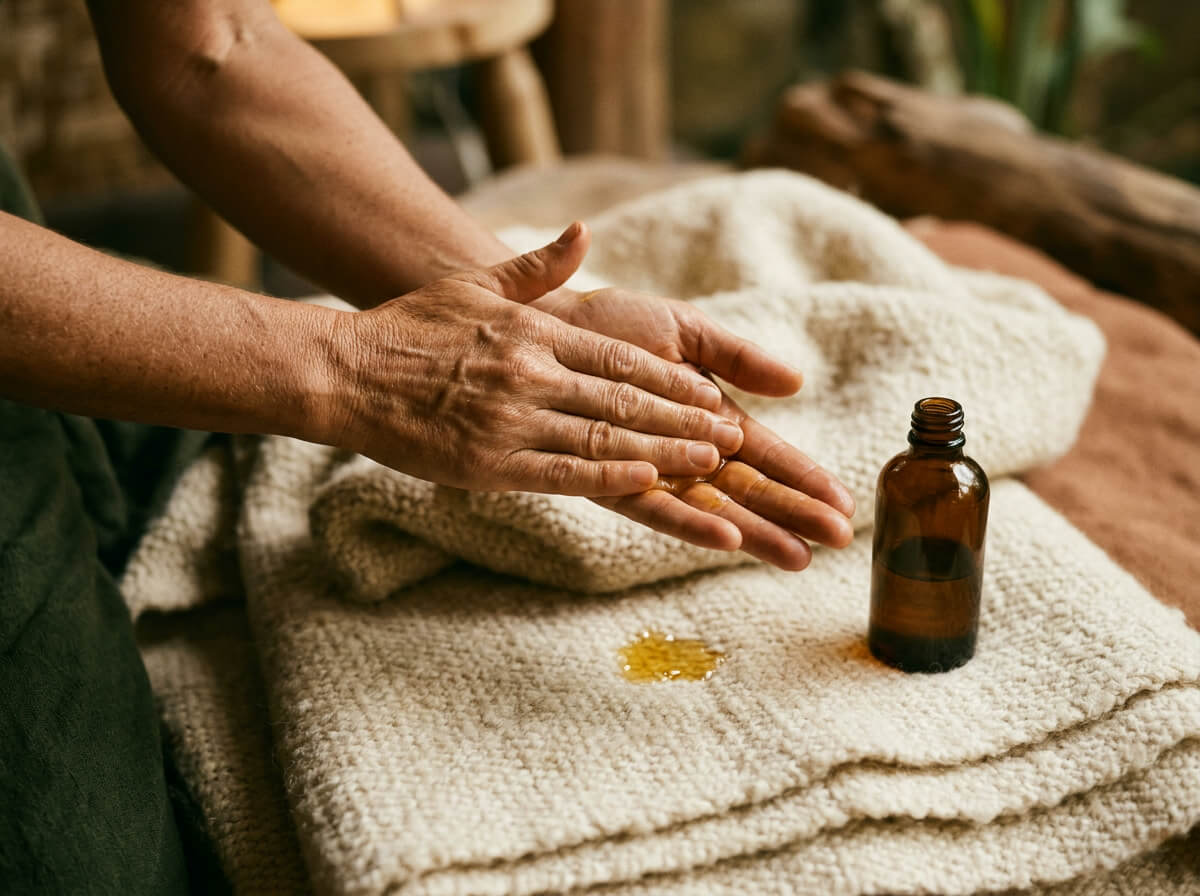
Cold makes us tense. Shoulders creep up, hands stay in pockets, and we hold ourselves tightly against the weather. Warmth does the opposite. A warm bath, a heavy blanket, or a hot drink held in both hands tells the nervous system it can soften. There is no special mechanism here, just the body’s old reading of warmth as shelter.
Touch works in a similar way. Gentle, slow pressure on the skin is one of the oldest forms of comfort we have. In Bali, massage is part of everyday family care, not a luxury reserved for spas. You do not need anyone else to borrow that wisdom. A short self-massage with a body oil is enough.
A five-minute evening warmth ritual:
- Run a warm shower or bath, and keep the water warm rather than hot, which can dry winter skin further.
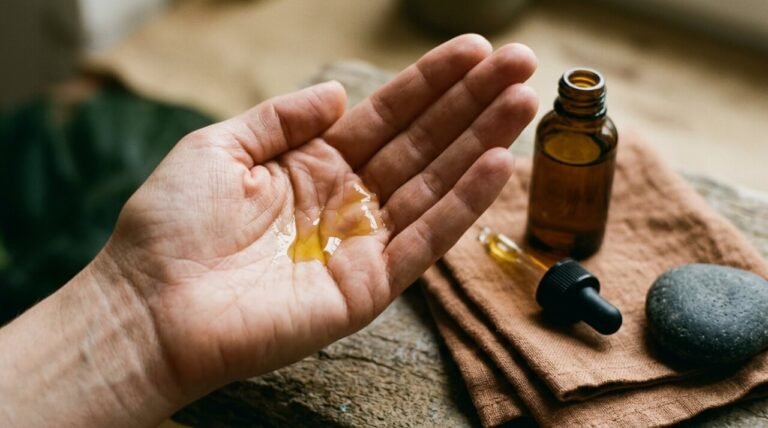
- Pat skin until it is just damp, then warm a few drops of body oil between your palms.
- Use long, slow strokes up the arms and legs, and circles over the shoulders and the back of the neck.
- Breathe out longer than you breathe in. Let the shoulders drop.
- Finish in socks and a soft layer, and keep the room dim.
Our guide on how to use body oil covers the damp-skin method in detail, and our Balinese massage oil piece shares the strokes and the tradition behind them. If cold air is also leaving your face tight and flaky, our winter skincare routine pairs well with this ritual.
Warmth also lives in the small things: wool next to the skin, a hot water bottle at your feet, soup on the stove, a candle on the table at dinner. None of these will lift a heavy mood on their own. What they do is make the dark evenings feel held rather than endured, and that shift in feeling is worth more than it sounds. A natural beeswax candle at the evening meal is a small signal that the day is closing, gently.
Scent as an anchor, not a cure
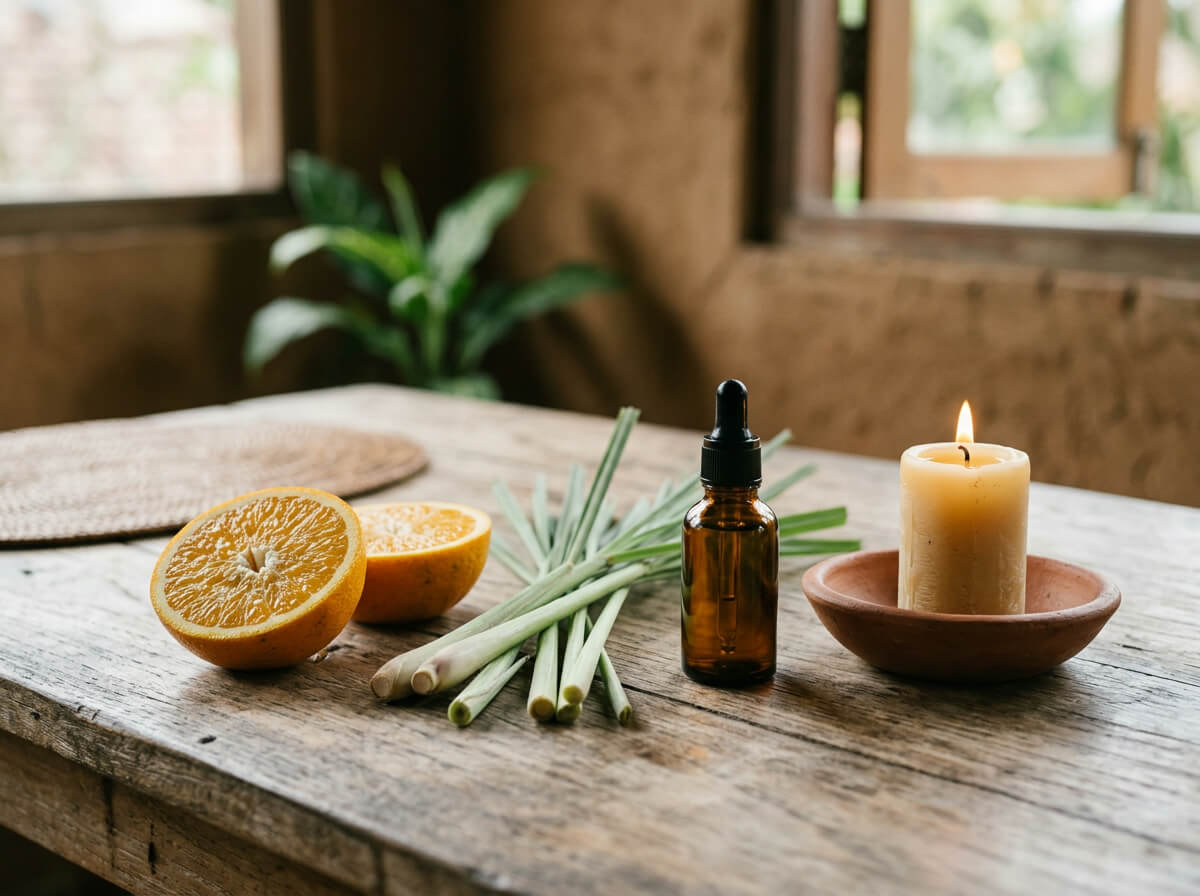
Scent goes straight to memory and feeling. A smell can return us to a kitchen, a season, or a person faster than any photo. That is why it works so well as a ritual cue: the same bright scent each morning becomes a signal that it is time to open the curtains, step outside, and begin.
Let us be honest about the evidence. A handful of small studies have looked at citrus scents and mood. One often-cited Austrian study found that people in a dental waiting room who smelled orange oil reported lower anxiety than those who smelled nothing. Other small trials on bergamot and lemon point in a similar calming direction. These studies are small, often short, and hard to blind (you know when you smell orange). They suggest comfort and a lighter mood in the moment. They do not show that essential oils treat depression, SAD, or anything clinical, and no honest brand should tell you otherwise.
So we use scent the way generations have: as a companion to good habits, not a replacement for them.
Bright scents for the morning
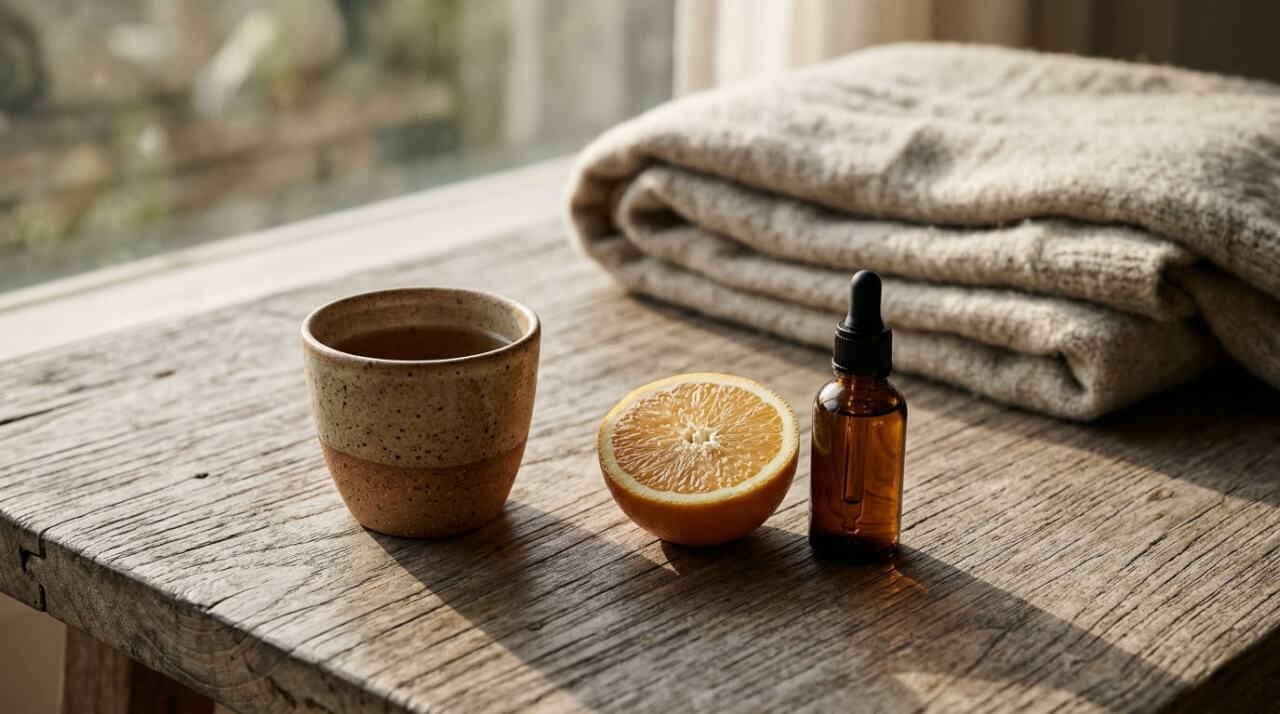
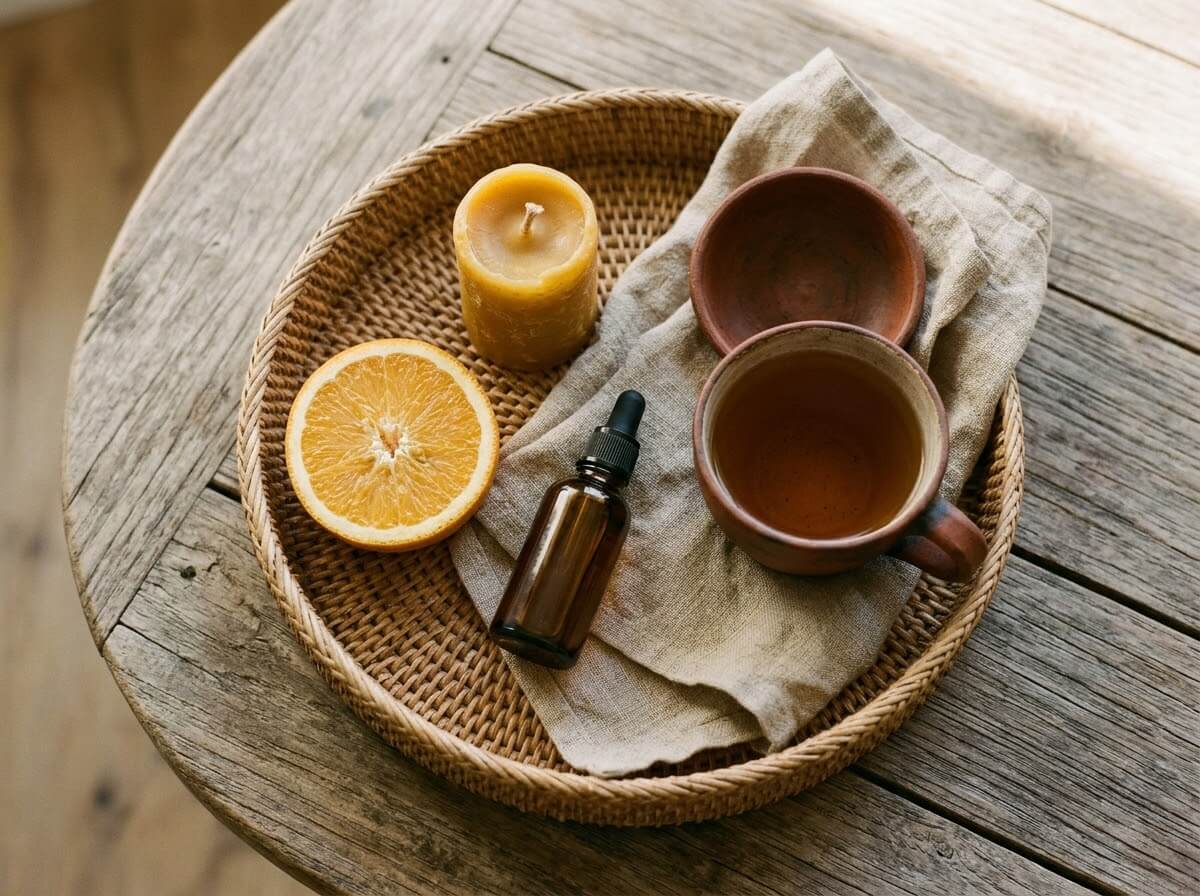
Citrus is the natural choice for dark mornings. Orange essential oil smells like sunlight in a bottle: sweet, round, and easy to love. Three to five drops in a diffuser while you make breakfast by the window is a gentle way to pair scent with light. Lemongrass essential oil brings a greener, crisper edge if sweet citrus feels too soft. Our deep dives on sweet orange essential oil benefits and lemongrass essential oil benefits cover their chemistry and safe use.

For a simple morning blend, try three drops of orange and one of lemongrass. More recipes live in our guide to essential oil blends for your diffuser.
A note on citrus and skin
Diffusing citrus is fine. Putting some citrus oils on skin before sun exposure is not. Bergamot in particular is phototoxic, which means it can cause burns or dark patches when skin meets sunlight. Our Pure Energy essential oil roller blends bergamot with lemongrass, orange, and rosemary, so we suggest rolling it on the wrists for evenings indoors, or on clothing, rather than before a sunny walk. Our bergamot essential oil benefits guide explains the details.
Softer scents for the evening
As the day closes, shift from bright to calm. A lit Citrus Fresh Candle of beeswax and coconut oil carries the morning brightness into dinner, while lavender and soft florals suit the hour before bed. Our guide to essential oils for sleep covers the evening side of this rhythm.

A bright morning cue for dark mornings
Our Orange Essential Oil is pure sweet orange, 10ml, nothing added. Three to five drops in a diffuser while you sit by the window with breakfast turns morning light into a small, sensory ritual. A comfort and a cue, never a cure.
Movement, connection, and the December pile-up

Of all the self-care tools for low mood, regular movement has a solid body of evidence behind it. You do not need a gym. A brisk daily walk, ideally in the morning light, does double duty: light for the body clock and movement for mood. Gentle yoga, dancing in the kitchen, or cycling to work all count. Aim for something most days rather than something heroic once a week.
Connection matters just as much. Winter makes it easy to cancel plans and stay in, and a little hibernation is fine. Too much of it, and the quiet becomes isolating. Keep a few small anchors in the week: a standing phone call, a walk with a friend, a shared meal. These are not grand gestures. They are threads that keep us held.
When holiday stress meets low light
December adds its own weight. Searches for “holiday stress” rise every year alongside “winter blues”, and the two are easy to confuse. One is about light and rhythm. The other is about too many plans, too much spending, and too many expectations, often at the exact moment our energy is lowest.
A few honest ways to ease the overlap:
- Say no to one thing. Choose the gathering that matters and let one go without guilt.
- Protect your mornings. Keep the light walk even on busy days. It is the anchor that holds the rest.
- Give rituals, not more stuff. A shared walk, a handwritten note, or a small refillable gift carries more meaning than a pile of plastic. Our sustainable gift guide and hostess gift ideas lean this way.
- Notice the stress in your body. Tight jaw, shallow breath, a puffy, tired face. Our piece on cortisol face explains what stress can and cannot do to skin, and why rest helps more than any cream.
- Keep sleep steady. Late nights and lie-ins scramble the body clock just when it needs consistency.
For gentle support with stress itself, our guide to essential oils for stress and anxiety offers calm, honest options to pair with the habits above.
Winter blues somewhere warm: summer, travel, and Bali’s grey wet season
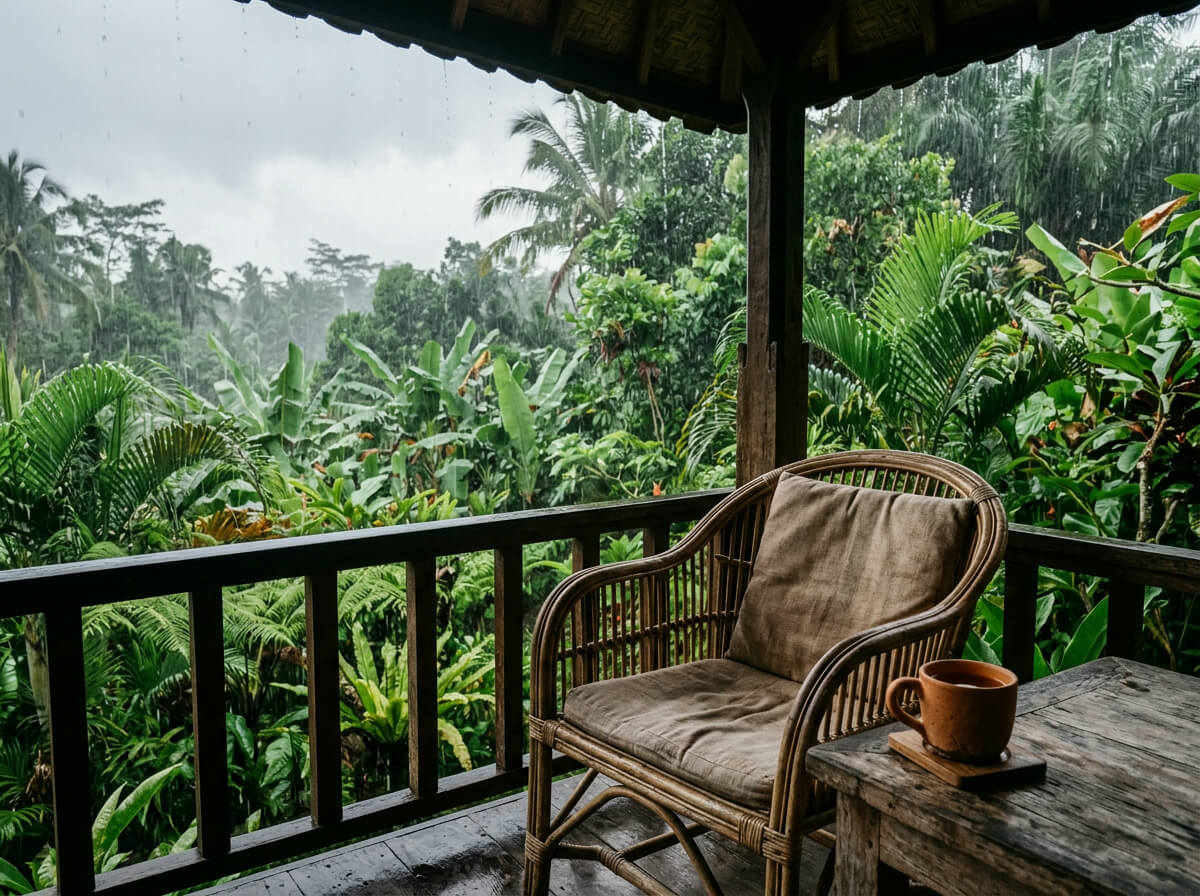
Most writing about winter blues assumes a snowy northern December. Many readers live somewhere else entirely, and the rituals still apply, just with different timing.
In the southern hemisphere. For readers in Australia, New Zealand, or South Africa, December is midsummer. Winter blues, if they come, arrive around June and July. And for a smaller group of people, the pattern runs the other way: a less common summer form of seasonal mood change, linked with heat, long days, and disrupted sleep, is also recognised. If summer is your harder season, the same tools adapt well: cool mornings outdoors before the heat, a dark and cool bedroom, and steady routines.
Travelling north for the holidays. Flying from a sunny place into a northern winter is a double shift: jet lag scrambles the body clock just as daylight shrinks. Get outside in the morning light at your destination from day one, keep meals and sleep close to local time, and go easy on late nights for the first few days. Your rhythm will thank you.
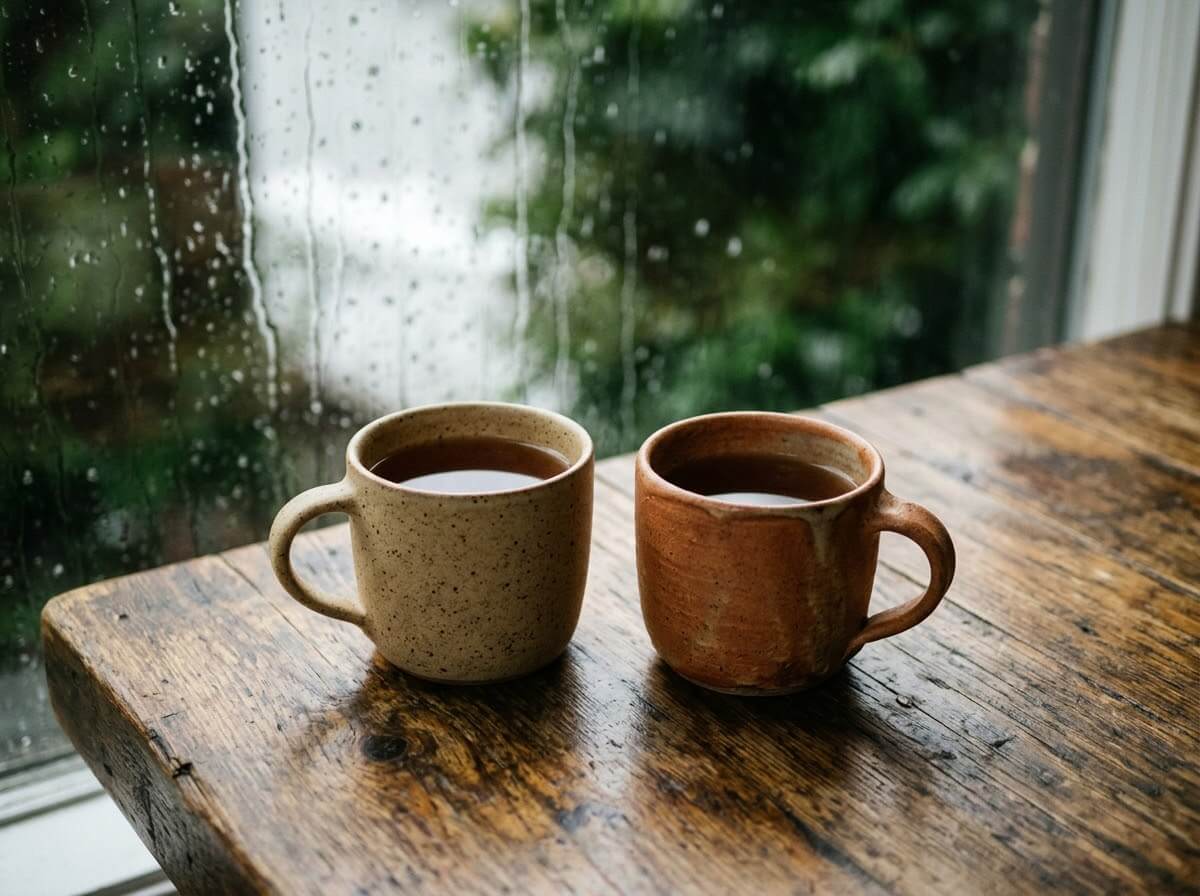
In the tropics. Here in Bali, the wet season runs roughly from November to March. There is no cold and no short days, yet there can be stretches of heavy cloud and rain that keep people indoors and dim the light for days at a time. Many people living in the tropics notice a flatter mood in those weeks. The response is the same: step outside during the brighter breaks, keep moving, keep rhythm, and keep company. Balinese family life has long made space for shared meals and gathering, and that connection carries through the rainy months. We share that as a reminder rather than a remedy. Every culture has its ways of holding each other through a hard season.
Wherever you live, the principle holds. Low light and disrupted rhythm can dim our mood. Light, warmth, movement, and connection help bring it back.
When it is more than the blues
This is the most important section of this guide, so we will keep it plain.
Please see a doctor or mental health professional if:
- Low mood lasts most of the day, nearly every day, for two weeks or more.
- You lose interest in things you usually enjoy.
- Sleep or appetite changes sharply, either much more or much less.
- You struggle to get through work, study, or daily care.
- You feel hopeless, worthless, or numb.
- You turn to alcohol or other substances to get through the days.
If you have any thoughts of harming yourself, reach out now. Call your local emergency number or a crisis line. In the US, call or text 988 (988 Suicide and Crisis Lifeline). In the UK and Ireland, Samaritans are on 116 123. In Australia, Lifeline is on 13 11 14. If you are elsewhere, your doctor or local emergency service can connect you with support. You do not need to wait until things feel unbearable.
SAD and depression are treatable. Doctors may suggest talking therapy, light therapy, medication, or a mix, and many people feel much better with the right help. Rituals of light, warmth, and scent can sit alongside that care. They never need to replace it.
If you are reading this for someone you love, the most useful ritual may be the simplest: a cup of tea, a walk, and the question “how are you, really?” asked with time to listen.
Winter blues FAQ
Do essential oils help winter blues?
They can be a pleasant part of a routine, and small studies suggest citrus scents may ease feelings of stress in the moment. They are not a treatment for SAD or depression. Use them as a cue that pairs with morning light, movement, and connection.
What is the difference between winter blues and SAD?
Winter blues are a mild, common seasonal dip in mood and energy that does not stop daily life. SAD is a form of depression with a seasonal pattern that lasts weeks or months and interferes with work, relationships, and daily care. A doctor can tell the difference.
How long do winter blues last?
They tend to follow the light, settling in as days shorten and easing as they lengthen again in spring. If a low mood lasts two weeks or more most days, or feels heavier than “blue”, talk to a doctor.
Does vitamin D help with winter blues?
The evidence is mixed. Vitamin D levels often drop in winter, and correcting a true deficiency matters for overall health, but trials on vitamin D for mood show inconsistent results. Ask a doctor for a blood test before supplementing, especially at higher doses.
When is the right time of day for light?
Morning, within about an hour of waking. Morning light gives the body clock its clearest signal. Evening bright light, including screens, does the opposite.
Can I use a light box at home?
Many people do, but it is worth speaking to a doctor first, especially if you have bipolar disorder, an eye condition, or take medication that increases light sensitivity.
Winter asks us to slow down. We can meet it with care: open the curtains, step into the light, warm our hands, breathe in something bright, and keep each other close. And when the grey feels like more than weather, we reach out. What you give, you get back.