Dark underarms: the four real causes, and why the fix starts with your razor and your deodorant
Dark underarms are one of the most common skin concerns there is, and one of the most quietly carried. Many of us notice the shadow in a mirror or a photo, feel a flicker of embarrassment, and reach for whatever the internet suggests: lemon, baking soda, potato, a stronger scrub. We want to slow that moment down. In most cases, underarm darkening is the skin’s honest response to something it meets every day, and the fix begins with finding that something, not with fighting your own skin.
This guide sorts dark underarms into four real causes and shows how to tell which one is yours. We look at when darkening is a health signal worth a doctor’s visit, why some “natural” deodorants make things worse, and how shaving, friction, and tropical heat add up. Then we share the gentle remedies with real reasoning behind them, the popular ones to skip, a realistic timeline, and direct answers to the questions people ask most.
One note before we begin. This is not a guide to whiter skin. Underarm skin is naturally a little deeper in tone than the skin around it for many people, and that is normal. Our aim is calmer, healthier skin with an even, comfortable tone, whatever your natural shade.
Why underarms darken: the four causes, and how to tell which is yours
The underarm is a demanding place for skin. It is a fold, so it stays warm and damp. It moves constantly, so it rubs. It is shaved, waxed, or plucked more than almost anywhere else, and it is coated in product every morning. Each of these stresses can trigger darkening, but they do it in different ways, and the fix for one can be useless for another.
Cause one: friction and shaving, which leave marks
When skin is irritated or slightly injured, pigment cells called melanocytes respond by producing extra melanin. Dermatologists call the result post-inflammatory hyperpigmentation, or PIH. Every pass of a razor scrapes away a thin layer of the outer skin. Tight sleeves and constant arm movement add friction. Over months, those small injuries leave a flat, brownish shadow. PIH usually feels smooth and looks a little uneven or patchy. It often follows the outline of where you shave or where a seam sits.
Cause two: deodorant irritation
Irritant contact dermatitis is simply skin reacting to something applied to it. In the underarm, the usual triggers are a high pH, a heavy fragrance load, alcohol, or a formula that stings freshly shaved skin. The first signs are redness, itch, stinging, or a rash. When that irritation repeats every day, it leaves PIH behind. If your dark underarms appeared or worsened after switching products, this is the likeliest suspect.
Cause three: acanthosis nigricans
This one is different. Acanthosis nigricans is a thickening of the skin, not just a colour change. It feels velvety or slightly leathery, and it often appears in several folds at once: the underarms, the back and sides of the neck, the groin. It is most often linked to insulin resistance, and it deserves a doctor’s eye rather than a scrub. We give it its own section below.
Cause four: buildup that simply washes off
Sometimes the darkness is not in the skin at all. Dead skin cells, sweat, and residue from deodorant can collect in the creases of the underarm and form a faint grey or brown film. This is more common when washing is quick or when a product leaves a waxy layer. It tends to look slightly dull or dusty rather than evenly brown. Dermatologists have a name for a stubborn version of it, terra firma-forme dermatosis, and they can often confirm it in seconds by wiping the area with an alcohol swab. If it lifts, it was buildup.
A quick way to sort yours
- Smooth, flat, patchy, and worse where you shave? Most likely friction and shaving PIH.
- Red, itchy, or stinging before it darkened? Look first at your deodorant.
- Velvety, thicker, and also on your neck or groin? See a doctor about acanthosis nigricans.
- Dull, slightly grey, and shifts a little with a warm, gentle wash? Probably buildup.
Many people have more than one cause at once, such as a harsh deodorant on freshly shaved skin under a tight synthetic top. That is good news, in a way: there are several small things to change, and each one helps.
When dark underarms are a health signal

Most dark underarms are harmless. But a small number of cases point to something worth checking, so here we want to be direct.
Acanthosis nigricans and insulin resistance
When the body has more insulin circulating than usual, as happens with insulin resistance, that insulin can stimulate skin cells to multiply. The skin in folds thickens and darkens into the soft, velvety texture typical of acanthosis nigricans. It is commonly seen alongside type 2 diabetes or prediabetes, polycystic ovary syndrome (PCOS), and higher body weight. Certain medicines, including some hormone treatments and high-dose niacin, can also cause it.
Acanthosis nigricans is not dangerous on its own, and it is not your fault. It is a message. It can show up years before blood sugar problems are diagnosed, which is why it is worth listening to. A doctor can run a simple blood test, and when the underlying cause improves, the skin often softens and lightens over many months.
Signs that call for a doctor rather than a home remedy
- The skin feels thick, velvety, or leathery, not just darker.
- Darkening appears in the neck folds, groin, or knuckles as well.
- It spread quickly, over weeks rather than years, especially in adulthood.
- You also have unexplained weight changes, thirst, tiredness, or irregular periods.
- The area is red-brown, scaly, or itchy in a way that does not settle. A bacterial condition called erythrasma and some fungal infections can look like this, and they need treatment, not scrubbing.
Sudden, widespread acanthosis nigricans in an adult is rare, but it can occasionally be linked to internal illness, so it should always be seen promptly. None of this is meant to worry you. It is meant to save you months of lemon juice when your body wants a conversation with a professional.
The deodorant question: baking soda, pH, and why natural is not automatically gentle
Here is an uncomfortable truth for an industry, including the natural one. Many people switch to a natural deodorant to be kinder to their skin, and some of them end up with more irritation and darker underarms than before. The reason is usually one ingredient.
Why pH matters
Healthy skin sits on the acidic side, roughly pH 4.5 to 5.5. That slightly acidic surface, sometimes called the acid mantle, helps hold the skin barrier together and keeps the microbiome in balance. Baking soda, listed on labels as sodium bicarbonate, dissolves in sweat to around pH 8 to 9. That is a big step in the wrong direction, applied every single day, to skin that is often freshly shaved.
Baking soda is popular because it works well against odour. For some people it is fine. For many others, it starts a slow cycle: a few good weeks, then redness, itching, or a burning rash, then darkening as the irritation repeats. We explain the chemistry more fully in our guide to natural deodorant ingredients to avoid.
The irony in home remedies
Many of the top home remedies for dark underarms recommend rubbing on baking soda paste. If your darkening is irritation-driven, that is like treating a burn with more heat. The paste may seem to work because it scrubs away a little dead skin, but the high pH and abrasion keep the irritation cycle turning.
What else to look for on the label
- Fragrance load. Undisclosed “fragrance” or long lists of essential oils can irritate a sensitive fold.
- Alcohol high on the list. It stings shaved skin and dries the barrier.
- Strong acids in a leave-on product. Some deodorants now include exfoliating acids. They can help some people and inflame others, especially after shaving.
A calmer approach
If you suspect your deodorant, stop it for a week or two and see what your skin does. Wash gently, keep the area dry, and let it settle. Then choose a formula without baking soda, with a short, readable ingredient list. Probiotic formulas take a different route, working with the skin’s bacteria rather than trying to wipe them out. We made our Probiotic Deodorant in Sage + Cedar and its soft floral sister, Nayla, without baking soda for exactly this reason. Our guide to probiotic deodorant explains how that works, and if your skin is reactive, our natural deodorant for sensitive skin guide walks through a barrier-first reset before you switch. When you do switch, go slowly. Our honest transition guide covers what to expect in the first few weeks.
Shaving and friction: the blade, the direction, the fabric
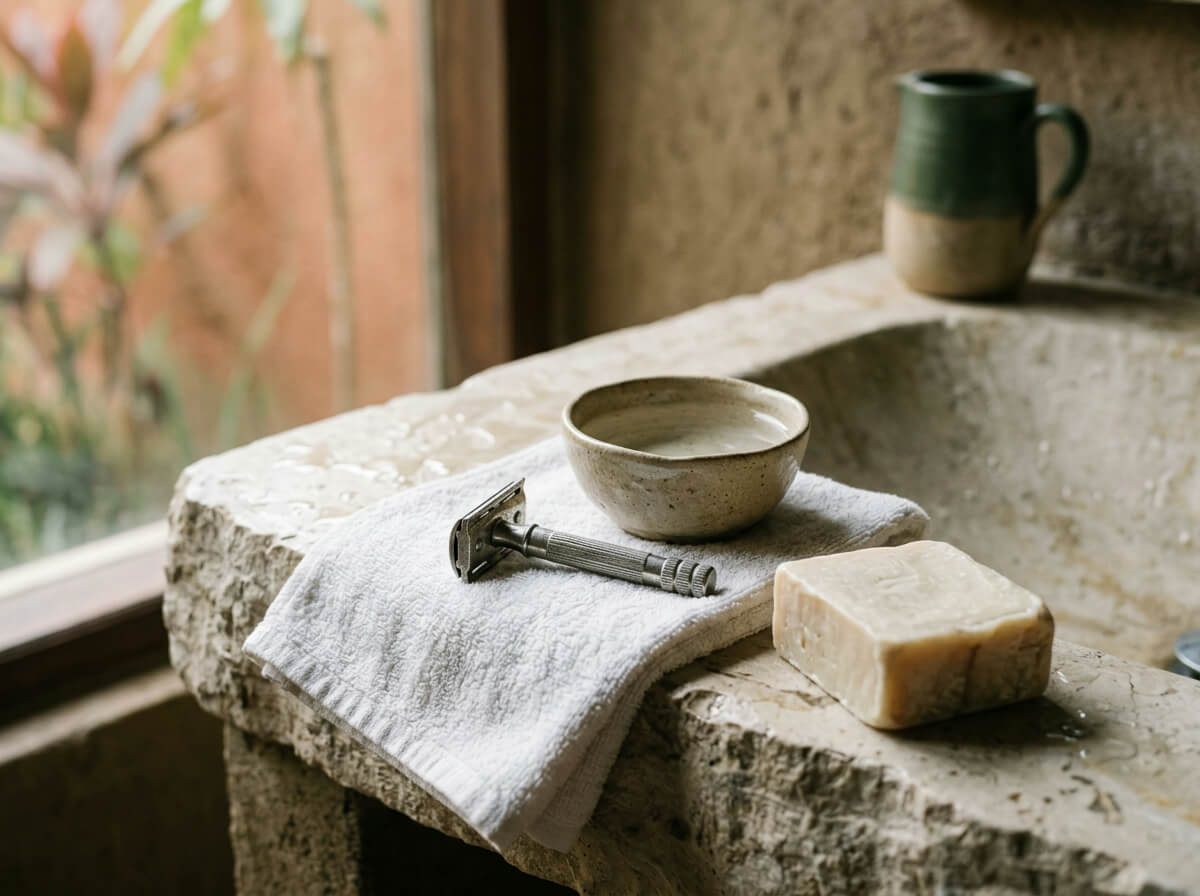
For many people, the razor is a major driver of dark underarms. The underarm is curved, the hair grows in several directions, and the skin is thin. That combination makes small cuts and scrapes almost inevitable with a careless shave.
Kinder shaving, step by step
- Shave at the end of a warm shower, when hair is soft and skin is hydrated.
- Use a fresh, sharp blade. A dull blade drags and needs more passes.
- Use a slick layer, such as a gentle cleanser or a little plant oil, never a dry shave.
- Shave with the grain first. Underarm hair often grows in two or three directions, so take a moment to look. Go against the grain only if you must, and lightly.
- Use fewer passes. Each extra pass removes more of the protective outer layer.
- Skip deodorant straight after shaving. Give the skin a few hours, or shave at night so it can rest before morning.
Consider shaving less
An electric trimmer leaves a little stubble but causes far less trauma. Shaving every few days instead of daily can make a visible difference to dark underarms within a couple of months. For those considering laser hair removal, it is worth asking a qualified practitioner about lasers suited to deeper skin tones, because the wrong setting can itself cause PIH.
The stubble shadow
Here is something few guides mention. If your hair is dark and your skin is light to medium, some of what looks like darkening is simply hair beneath the surface, visible through thin skin right after shaving. It is not pigment at all. If the shadow is grey-blue, dotted, and fades a little when hair grows out or after waxing, that is likely what you are seeing. If you also get bumps, our guide to razor bumps goes deeper, and the same follicle story explains strawberry legs.
Fabric and friction
Tight sleeves, synthetic fabrics, and bra straps that sit close to the underarm all rub. That friction is constant and gentle, but over a year it adds up. Looser cuts, natural fibres, and seams that do not sit right in the fold all help. We cover friction care more broadly in our guide to preventing chafing naturally.
Heat, sweat, and dark underarms in humid climates

Life in a humid, tropical place like Bali makes every one of these causes a little stronger. Heat keeps the underarm warm and damp for more of the day. Sweat softens the outer layer so it scrapes more easily, and it carries deodorant across the skin. Damp skin also rubs harder against fabric than dry skin does.
Why humid climates tip the balance
- More sweat means more contact with your deodorant. If a formula is even slightly irritating, humidity spreads it further and longer.
- Softer skin is more easily injured. Shaving damp, sweat-softened skin in the afternoon heat is harder on it than shaving after a cool morning shower.
- Folds stay moist. Warm, damp folds are where erythrasma and fungal infections thrive.
Small habits that help in the heat
- Wear loose linen or cotton on hot days, and change out of damp clothes after exercise.
- Rinse the underarms with cool water and pat them dry rather than rubbing.
- Apply deodorant to fully dry skin, not straight after a hot shower while you are still flushed.
- Let the underarms breathe in the evening. A few hours without product gives the skin a rest.
A routine that is fine in a cool, dry city can become irritating in a humid one, so travellers should expect to adjust their products and shaving rhythm when the climate changes.

A deodorant that leaves your barrier in peace
Our Probiotic Deodorant in Sage + Cedar is aluminum-free, paraben-free, and made without baking soda, so it works with your skin’s natural acidity instead of against it. A grounded, woody scent in a 50ml glass roll-on, crafted at our workshop in Bali.

Gentle remedies with real reasoning, and the ones to skip
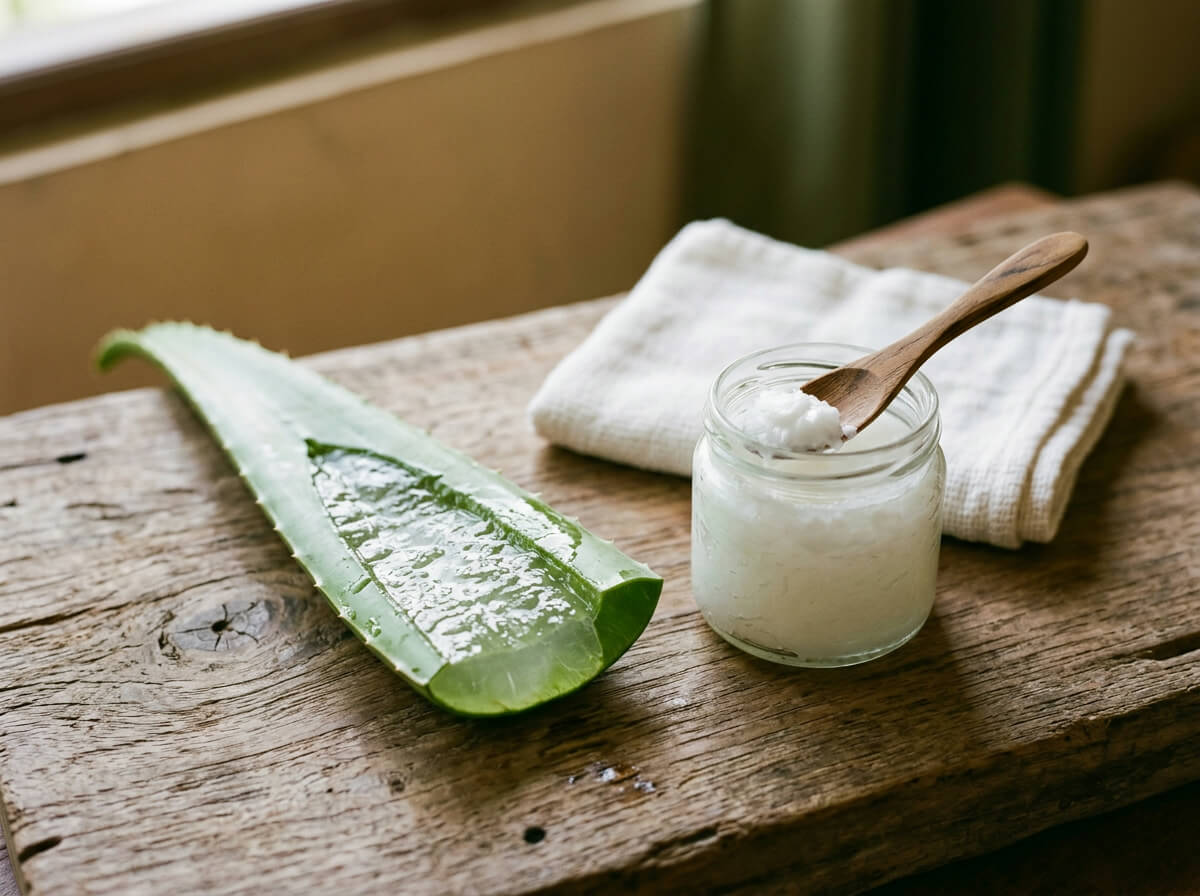
Once you know the cause of your dark underarms and have removed the trigger, gentle care can help the skin recover and the tone even out. The goal is to calm, protect, and wait, not to strip.
Remedies worth keeping
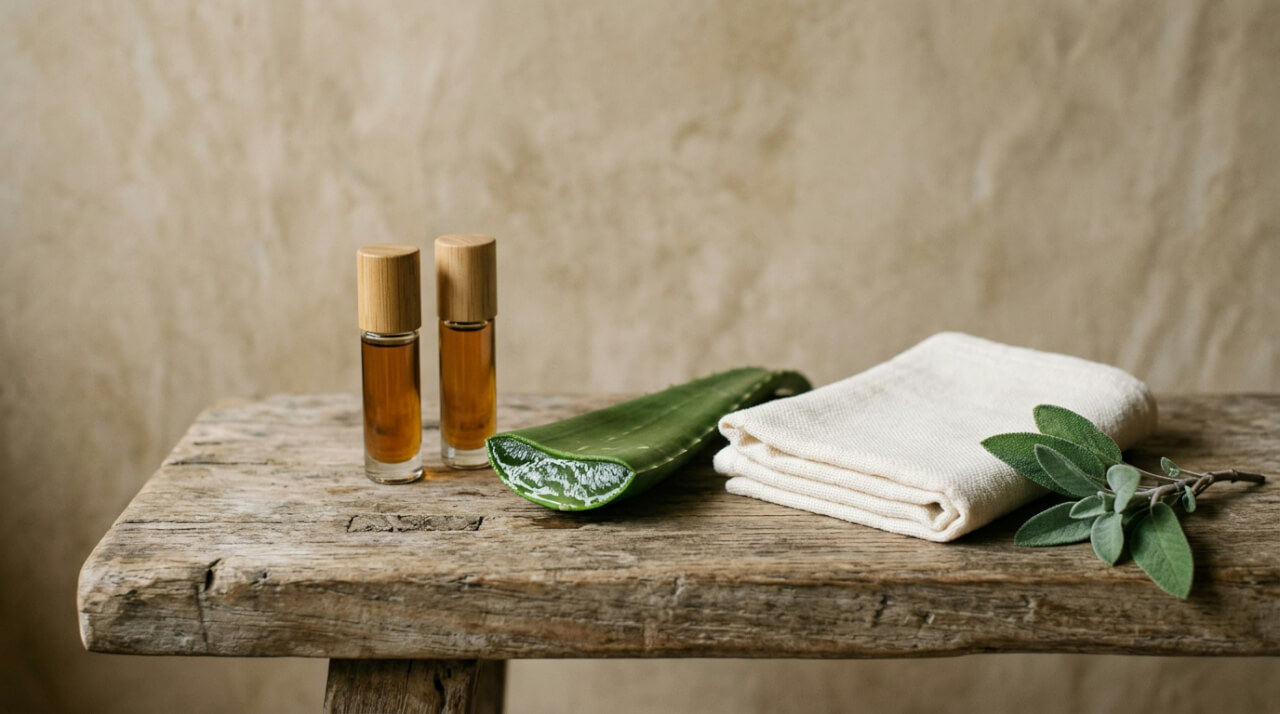
Aloe vera. Aloe gel cools and soothes irritated skin, and it hydrates without heaviness. Lab studies suggest a compound in aloe called aloesin may gently slow melanin production, though the evidence in people is still modest. Its real value here is calming irritation so new PIH stops forming. Apply a thin layer at night or after shaving. Our Aloe Vera Gel pairs aloe leaf with a touch of lavender essential oil, so patch test it first if your skin is reactive. Read more in our aloe vera gel for skin guide.
Plant oils for the barrier. A healthy barrier heals faster and reacts less. A few drops of Virgin Coconut Oil massaged into dry, unbroken skin at night softens the area and supports the barrier. Use a thin layer only, and skip it if you have a fungal or bacterial rash. Our coconut oil for skin guide covers when it helps and when it does not. On non-shaving days, a little Lavender Dream Body Butter, made with coconut oil and wild-harvested illipe butter from Kalimantan, can comfort the surrounding skin, though we would keep fragranced products off freshly shaved or broken skin.
Soft exfoliation, sparingly. If buildup is part of your story, a warm, damp cotton washcloth in the shower, moved in slow circles once or twice a week, is usually enough. A low-strength lactic acid product can help some people, but never on freshly shaved or irritated skin. Gentle and occasional beats strong and frequent.
Niacinamide. We do not make a niacinamide product, but it deserves an honest mention. Dermatologists often suggest it because it can reduce pigment transfer to the skin’s surface and is usually well tolerated.
Remedies to skip
Lemon juice. Lemon is acidic, which stings shaved skin, and citrus juice can react with sunlight to cause a burn-like rash called phytophotodermatitis. That rash can leave its own dark marks behind. The idea that lemon “bleaches” skin is not supported, and the risks are real.
Baking soda paste. As above, its pH works against the barrier. It turns irritation-driven darkening into a longer story.
Apple cider vinegar. Undiluted vinegar has caused chemical burns when left on skin, especially under occlusion, which is exactly what an underarm fold provides.
Potato and other “bleaching” juices. Potato juice is mostly water and starch. It is unlikely to harm you, but the lightening claims rest on thin evidence.
Unregulated whitening creams. This one matters most. Some skin-lightening creams sold online or without proper labelling have been found to contain mercury or high-strength steroids. Both can cause serious harm. Calm, even skin is a worthy goal. Changing who you are is not, and no honest product should promise it.
Patch test everything
Before using anything new, try a little on the inner forearm for a day or two. If it stings, itches, or turns red, it is not for your underarms.
A realistic timeline: what fades in weeks, what never will

The online promise of lighter underarms “overnight” is not how skin works. Melanin sits in the outer layer, which renews itself slowly. Here is a more honest picture.
Buildup: days
If your darkening was dead skin and residue, a few gentle washes can make a visible difference within a week.
Irritation and shaving PIH: weeks to months
Once the trigger stops, most people notice a softening within six to 12 weeks. Deeper or long-standing marks can take several months or longer. The key word is “once the trigger stops.” If you keep shaving roughly or using an irritating deodorant, new pigment keeps forming as the old pigment fades, and progress stalls. This is why strong scrubs and acids so often backfire: they create the very irritation they promise to remove.
Acanthosis nigricans: months, with the right care
When the underlying cause, such as insulin resistance, is addressed, the skin can soften and lighten gradually over many months. Topical care alone rarely changes it much, which is why the doctor’s visit comes first.
Your natural tone: never, and that is fine
Some underarm darkness is simply your skin. Folds are often naturally deeper in tone, especially in melanated skin. No amount of care will change that, and nothing needs to. Darker skin tones are also more prone to PIH, which means gentleness matters even more. Harsh treatments are a bigger risk for deeper skin, not a faster fix.
Track it kindly
Take a photo of your dark underarms in the same light once a month rather than checking the mirror daily. Small changes are easier to see over time. Our guide to fading dark spots naturally explains the same slow arc of pigment renewal on the face and body.
Frequently asked questions about dark underarms
How do you get rid of dark underarms fast?
There is no safe fast fix, and anything that promises one is likely to irritate. The fastest real progress comes from removing the cause: switching away from an irritating deodorant, shaving more gently or less often, and wearing looser fabric. If buildup is involved, a gentle wash can show change within days. Irritation marks usually take six to 12 weeks to soften.
How should I exfoliate my underarms?
Gently and rarely. A warm, damp cotton washcloth moved in soft circles once or twice a week is enough for most people. Never exfoliate freshly shaved, broken, or irritated skin, and avoid gritty scrubs, which can cause the micro-injuries that lead to more darkening.
How can I remove dark underarms at home?
At home, the tools that help most are subtraction and patience. Pause products that sting, choose a deodorant without baking soda, shave with a sharp blade and fewer passes, keep the area dry in the heat, and soothe with aloe at night. If the skin is velvety or thick, or the darkening is spreading, see a doctor before trying anything else.
Should I apply baking soda to my armpits?
We would not. Baking soda sits around pH 8 to 9, well above the skin’s natural acidity. It may scrub away a little surface buildup, but it can also trigger the irritation that causes darkening in the first place. If you like how a paste feels, a warm washcloth does the same gentle work without the pH shock.
Can deodorant cause dark underarms?
Yes, indirectly. A deodorant that irritates the skin, through high pH, fragrance, or alcohol, can lead to post-inflammatory darkening over time. Darkening that began or worsened after a product switch is a strong clue.
Are dark underarms a sign of diabetes?
Usually not. Most dark underarms come from friction, shaving, or products. But if the skin feels thick and velvety and appears in other folds like the neck, it may be acanthosis nigricans, which is often linked to insulin resistance. A doctor can check with a simple blood test.
Final thoughts
Dark underarms are rarely a problem to attack. They are a pattern to read. Once you know whether your skin is telling you about a razor, a deodorant, a tight sleeve, a humid afternoon, or something your body wants a doctor to look at, the path forward becomes calm and clear.
The steps are small. A sharper blade and fewer passes. A deodorant without baking soda. Looser linen on hot days. A little aloe at night. A monthly photo instead of a daily worry. None of them is dramatic, and that is the point. Skin restores itself when we stop asking it to fight.
What you give, you get back. Give your underarms patience and gentleness, and over weeks and months, most skin answers in kind.