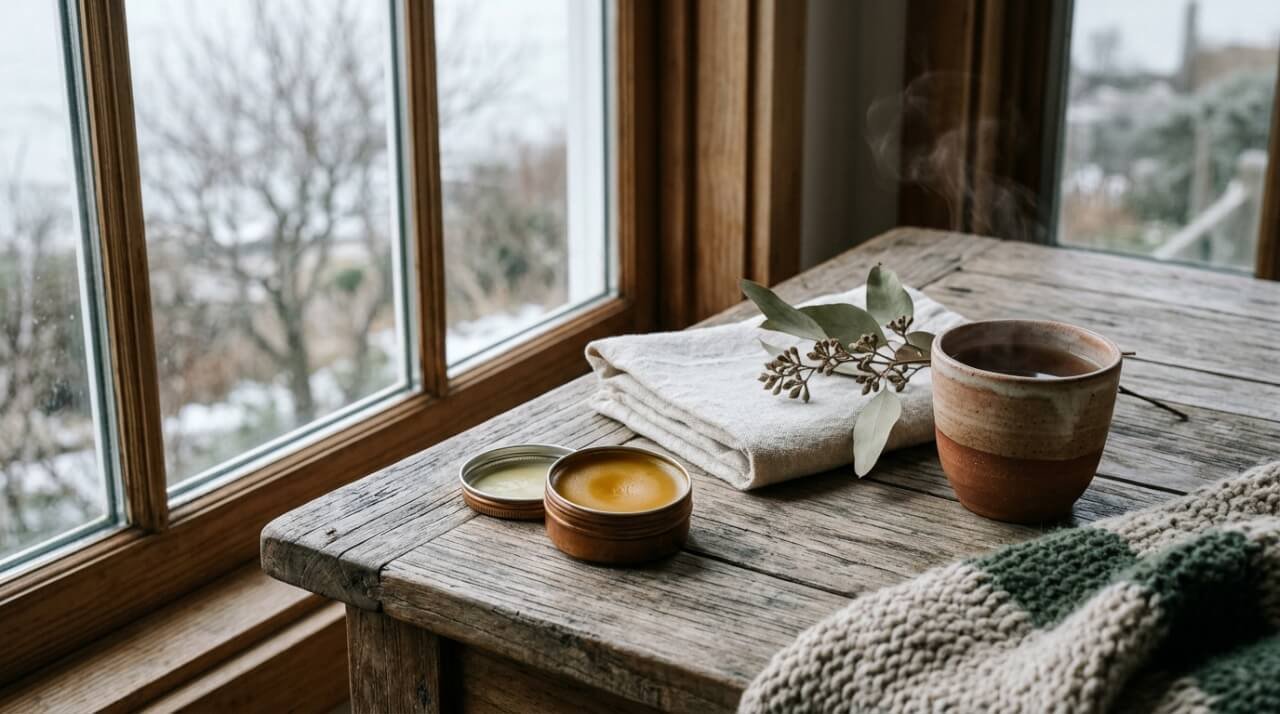
Winter skincare routine: swap the format, don’t add more steps
Every year, the first cold snap sends us to the shop for something new. A thicker serum, a second moisturizer, an overnight mask, a special eye cream. By January the bathroom shelf is crowded and our skin still feels tight. A good winter skincare routine rarely needs more steps. It needs the same few steps in a richer format: a balm where you used a lotion, an oil sealed over your cream, a warm shower instead of a hot one.
This guide explains why winter skin behaves differently, why a seasonal swap works better than stacking new products, and how to adjust your face, body, hands, and lips without starting from scratch. We also cover something most winter guides skip: what to do if you move between a cold climate and the tropics, as many of our customers do, and need one routine that rotates with the seasons rather than two that compete.
Why your skin needs a winter skincare routine at all

Your skin does not suddenly become a different skin in December. What changes is the air around it, and the habits we fall into when it gets cold. Three forces work together, and most guides only talk about one of them.
1. Cold air holds less water
Cold air simply cannot carry as much moisture as warm air. When the outside humidity drops, water leaves the top layer of your skin faster, a process dermatologists call transepidermal water loss. The outermost layer, the stratum corneum, is only about 15 to 20 cells deep. It relies on a thin mortar of ceramides, cholesterol, and fatty acids to hold water in. In dry air that mortar works overtime.
2. Indoor heating dries the air even further
Then we come inside and turn the heater up. Warming cold air without adding water drops its relative humidity even lower, often well under 30% in a heated room. So skin moves from dry air outside to drier air inside, all day, for months. This is why your face can feel fine on a winter walk and tight an hour later at your desk. If you live with central heating, a simple room humidifier, or even a bowl of water near the radiator, helps. Our guide to the essential oil diffuser humidifier explains how these devices differ and when each one is worth it.
3. Hot showers strip the lipids you need most
The third force is the one we choose. A long, hot shower feels like care on a cold morning, but hot water dissolves the skin’s own oils far faster than warm water does. We wrote a short piece on why a hot shower can leave your skin feeling tight, and the effect doubles in winter, because the barrier is already under strain from the air.
Put the three together and you have one story, not three separate problems: dry air pulls water out, heating makes the air drier, and hot water removes the oils that were meant to hold the water in. The result is the familiar winter picture of tightness, flaking, rough elbows, split knuckles, and a dull, papery texture. If your skin is already stinging or cracking, start with our guide on how to repair skin barrier damage naturally, then come back to the seasonal swap.
The honest fix: a richer format, not more steps
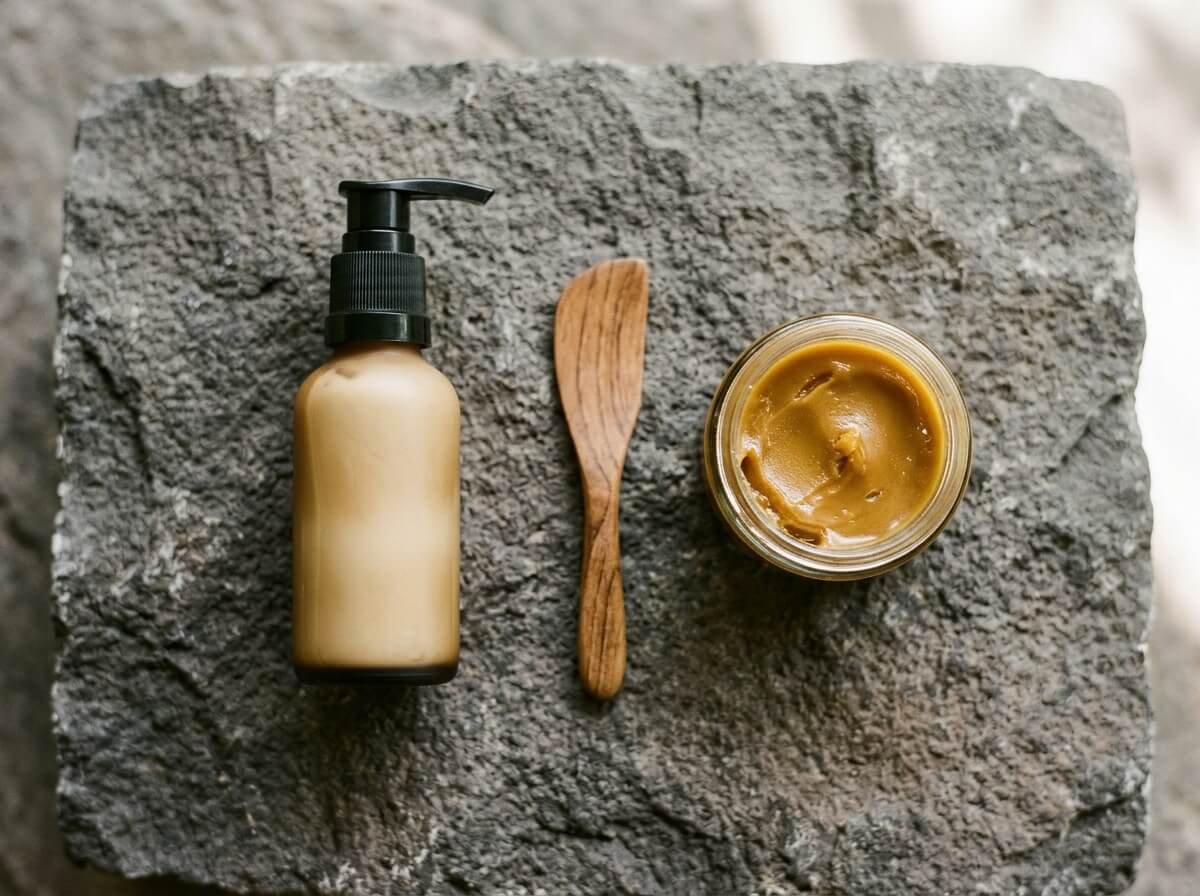
Here is the truth the shopping lists leave out. Winter does not create a need for new categories of product. It changes the balance your skin needs between three kinds of ingredient.
- Humectants draw water into the skin. Glycerin, aloe, honey, and hyaluronic acid all belong here.
- Emollients soften and fill the gaps between skin cells. Most plant oils, like coconut, argan, and jojoba, do this job.
- Occlusives form a light seal over the surface that slows water loss. Beeswax and plant butters, such as cocoa and illipe, are classic examples.
In humid weather, a light lotion that is mostly water and humectant does the job well, because the air helps keep that water in place. In dry winter air, humectants on their own have less to work with, and water evaporates from the surface before it can settle. What skin needs in winter is more emollient and more occlusive, the oils and butters that hold everything else in. That is a change of format, not a change of routine.
So the rule for a winter skincare routine is simple. Keep the steps you already have. Swap each one for its richer cousin.
- Foaming cleanser becomes a cream or oil-based cleanser, or plain warm water in the morning.
- Light lotion becomes a body butter or an anhydrous balm.
- Gel moisturizer becomes a cream, sealed with a few drops of face oil.
- A once-a-day lip balm becomes a balm in every coat pocket.
Anhydrous simply means “without water.” Balms and butters are mostly oils, waxes, and plant fats, so they are concentrated and slow to evaporate. Our guide to body balm vs body butter walks through how each texture behaves in different climates, and body oil vs body butter covers when an oil is enough on its own.
There is a quieter benefit, too. Fewer products means fewer jars, fewer bottles, and less to throw away in spring. A seasonal swap respects both your skin and your bin. We have been making balms in Bali since 1989, and the idea has never changed: a few honest, concentrated products, used well, do more than a crowded shelf.
Your face in winter: one richer layer, not five new serums
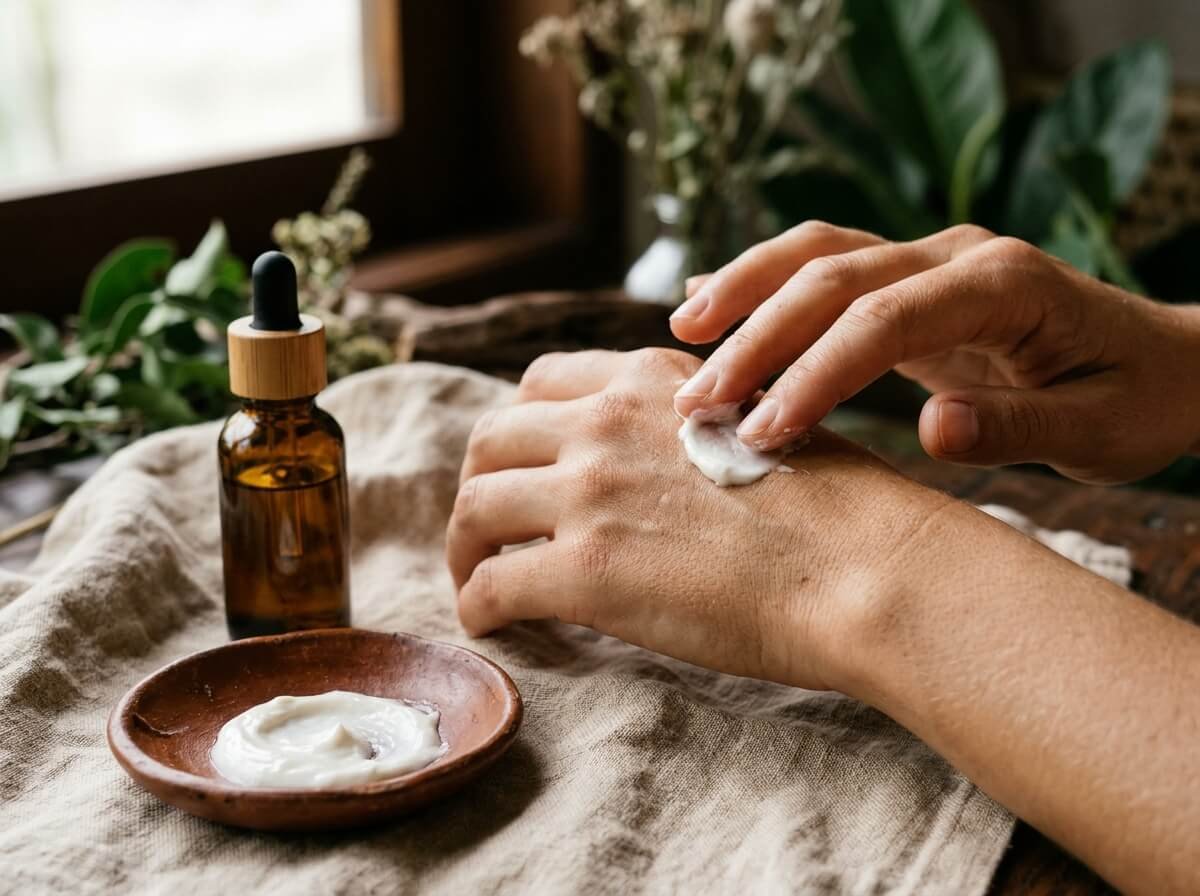
Facial skin is thinner than body skin and sits in the wind all day, so it often shows winter first. The swap here is gentle and precise.
Cleanse less, and more softly
If your face feels squeaky after washing, your cleanser is taking too much. In winter, many people do well rinsing with lukewarm water in the morning and cleansing properly only at night. If you wear sunscreen or makeup, an oil cleanse followed by a mild wash removes it without stripping. Keep the water warm, never hot, and pat dry with a soft towel rather than rubbing.
Seal your moisturizer with a few drops of oil
This is the single most useful winter change for the face. Apply your usual moisturizer to slightly damp skin, then warm two or three drops of a face oil between your fingertips and press it over the top. The cream brings water and humectants; the oil holds them in. Our Natural Face Serum is an oil-based blend of argan, jojoba, coconut, and cocoa butter with lavender, cananga, rose geranium, and patchouli, and it works well in exactly this role. If you prefer a single oil, Argan Oil is light enough for most skin types and absorbs without a heavy film. Our natural face oil guide explains how to match an oil to your skin.
If you would rather use one product than two, a richer cream can do both jobs. Our guide to natural face cream explains how a 3-in-1 format combines humectants, ceramides, and plant oils in a single step, which suits anyone who wants winter care to stay simple.
Treat rough patches, not your whole face
Winter dryness is rarely even. The sides of the nose, the corners of the mouth, and the skin around the eyes tend to flake first. Rather than switching your whole routine, press a drop of something richer onto just those patches at night. Tamanu Oil, a thick, green coastal oil long used across Indonesia and the Pacific, is a good choice here. It is fragrance-free and single-ingredient, so it suits sensitive patches well.
Keep your sunscreen
UVA light, which ages skin, is present all year, and fresh snow reflects a large share of UV back up at your face. A winter skincare routine still ends with sunscreen in the morning. If your usual one feels drying, look for a cream texture and apply it over your sealed moisturizer.
And go easy on exfoliation. Strong acids and scrubs remove the very cells that are holding water in. If you exfoliate in summer twice a week, once a week, or less, is plenty in winter.
Your body in winter: when a balm or butter beats a lotion
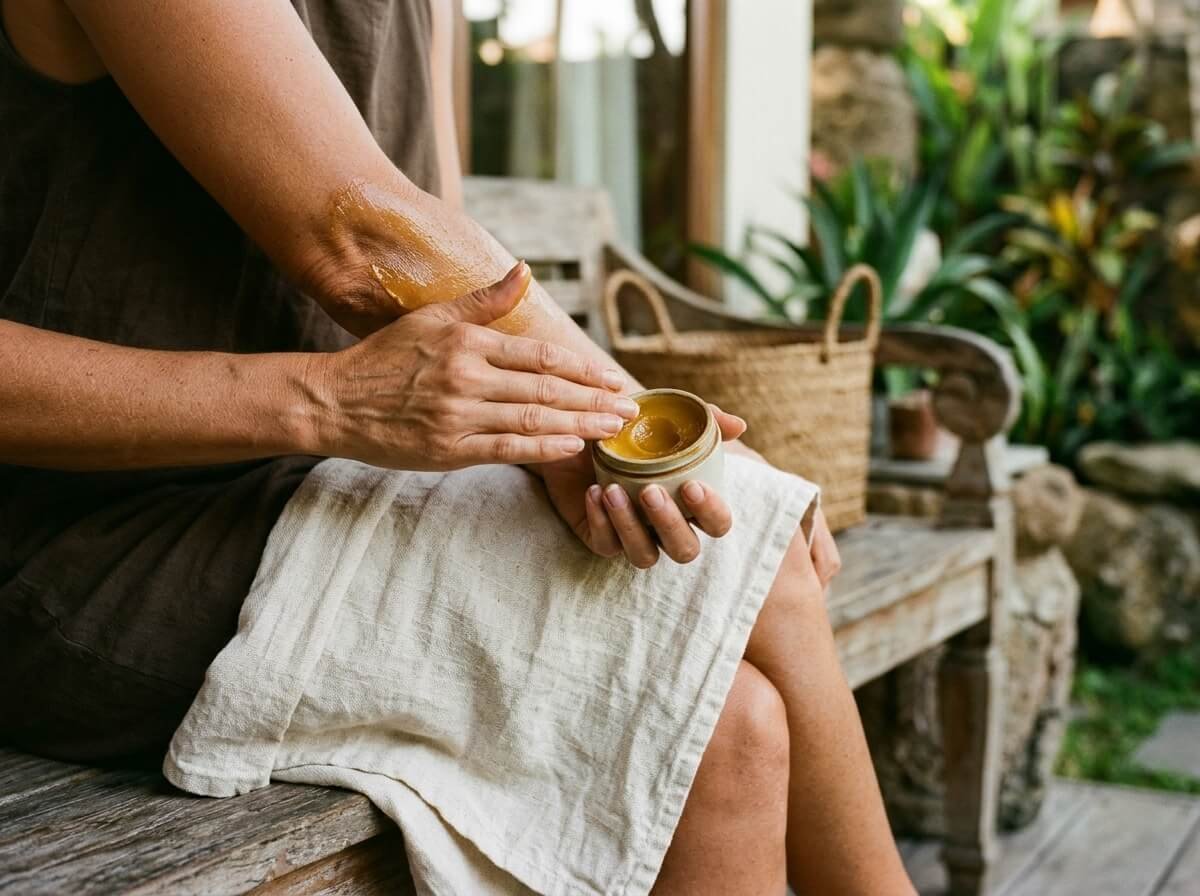
Body skin has fewer oil glands than the face, especially on the shins, forearms, elbows, and feet. These are the places that turn ashy and rough first in cold weather, and they are where the format swap makes the clearest difference.
A lotion is an emulsion, mostly water, held together with a little oil. It feels light and absorbs fast, which is why it suits humid weather. A body butter is mostly plant fats, often with a little oil to soften it. A balm is firmer still, usually oils thickened with beeswax or a plant wax, with no water at all. In winter, that shift from water to fat is the whole point. The fats stay on the skin longer and slow the water loss that dry air drives.

Which format for which part of you
- Arms, legs, and torso: a body butter, applied once a day after bathing. Lavender Dream Body Butter is enriched with aloe and suits evening use, while Pure Energy Body Butter, with bergamot, is brighter for mornings. Bergamot can make skin more sensitive to sunlight, so keep it to covered areas on sunny days.
- Very dry or sun-weathered skin: Cocoa Love Body Butter keeps the formula short: cocoa butter and virgin coconut oil infused with vanilla and cinnamon. Patch test first if you react to cinnamon.
- Elbows, knees, heels, and cracked spots: a balm. These areas need the most occlusion and the least water.
A note on coconut oil in the cold
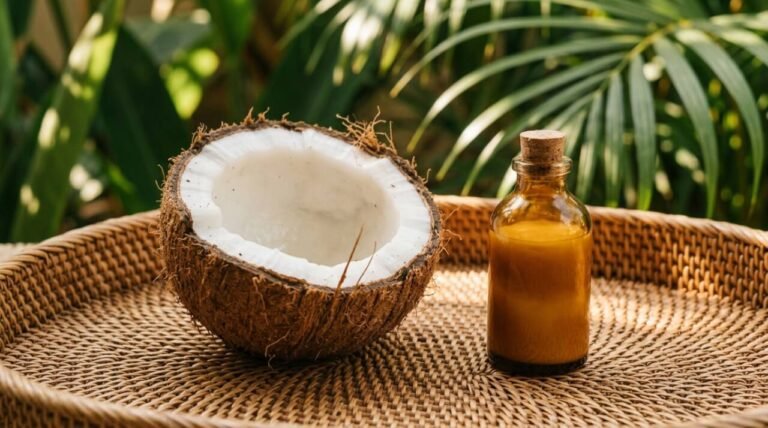
Many of our products are built on Balinese coconut oil, and coconut oil turns solid below about 24°C. In a Bali bathroom it is liquid. In a winter bathroom in Melbourne, Toronto, or Seoul, your balm or butter will feel firmer than you expect. That is not a fault. Scoop a little, hold it between your palms for a few seconds until it softens, then press it into skin rather than rubbing. Warmth from your hands is part of the ritual.
Timing matters more than quantity
Apply your butter or balm within about three minutes of stepping out of the bath, while skin is still slightly damp. You are sealing in water that is already there, so you need far less product than you would on bone-dry skin. Our guide on how to use body oil explains this damp-skin method step by step, and the same logic applies to butters and balms. If you want to know more about the rich plant fats behind many traditional Indonesian body products, read our piece on illipe butter benefits, the wild-harvested Kalimantan butter that behaves beautifully in cold weather.
For the roughest spots, our Fresh Soul Body Balm is the format we reach for. It is one of the oldest recipes in our range: virgin coconut oil and beeswax with fennel, mint, vetiver, and nutmeg essential oils. A small tin goes a long way on heels, elbows, and knuckles.

Swap your lotion for a winter balm
Fresh Soul Body Balm is hand-blended in Bali from virgin coconut oil and beeswax, with fennel, mint, vetiver, and nutmeg. It contains no water, so a fingertip warmed between your palms seals dry elbows, heels, and knuckles after a warm bath.
The parts people forget: hands, lips, and the shower itself
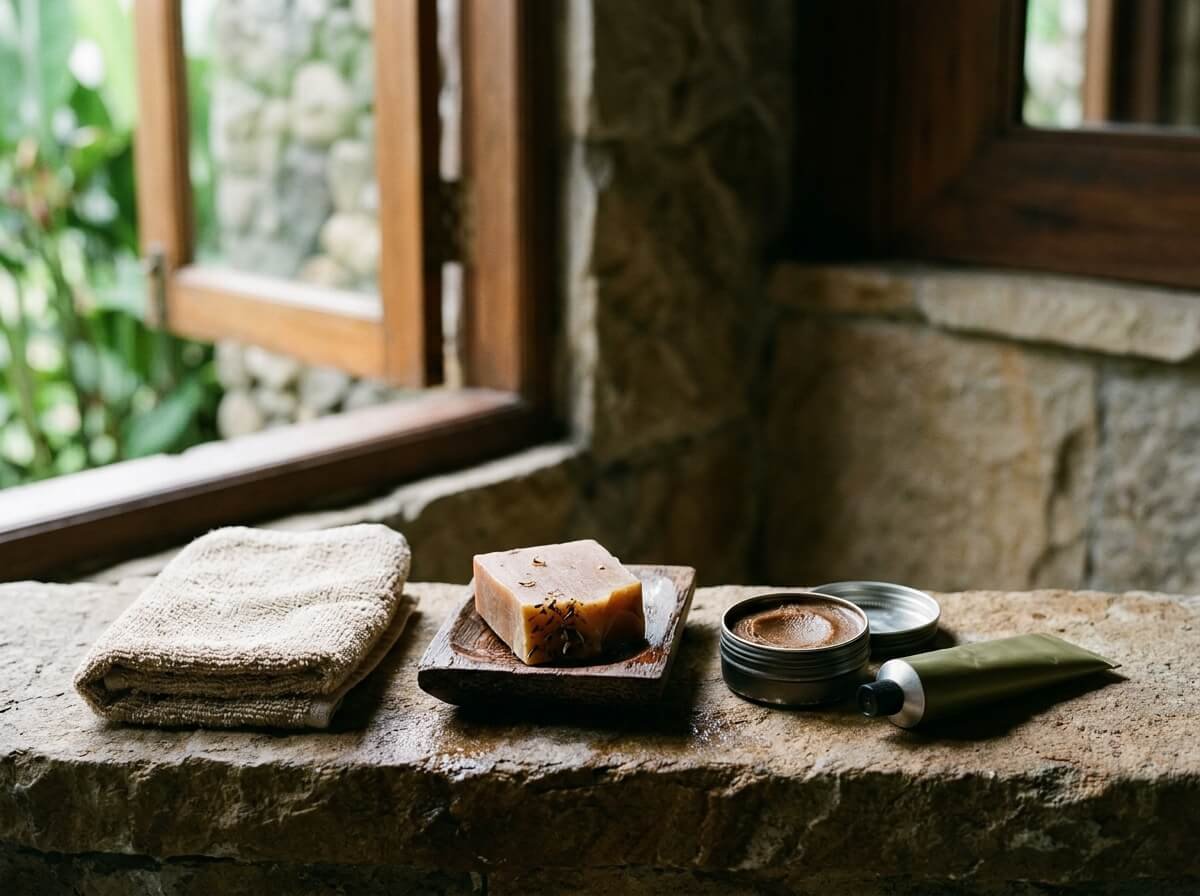
A winter skincare routine that covers face and body can still miss the places that suffer most. Hands and lips have almost no oil glands of their own, and the shower is where much of the winter damage begins.
Hands
We wash our hands many times a day, then step out into cold wind. The result is tight, split knuckles and rough cuticles by midwinter. The fix is frequency, not strength. Keep a small hand cream by every sink you use and apply a pea-sized amount after each wash, while hands are still a little damp. Our Radiant Hand Cream comes in a 30 ml size that fits a coat pocket. At night, rub a little balm into cuticles and knuckles before bed. Our guide to natural hand cream explains what to look for in a formula that actually repairs working hands.
Lips
Lips lose water faster than almost any other skin on the body. Licking them makes it worse, because saliva evaporates and takes moisture with it. A simple beeswax-based balm, applied before you go outside and again before sleep, is all most lips need. Keep one in each coat. Our Lemon Pie Lip Balm and Peppermint Lip Balm are small enough to keep everywhere. For cracked lips that need more help, our older post on how to treat chapped lips in the winter is still a useful read.
The shower itself
Changing how you bathe costs nothing and may do more than any product. Try these four shifts for one month.
- Turn the water down to warm. If your skin turns pink, it is too hot.
- Keep it short, around five to 10 minutes.
- Use a gentle, plant-based wash only where you need it: underarms, groin, and feet. Water alone is enough for shins and forearms most days.
- Pat dry, then apply your butter or balm within three minutes.
If you use liquid soap, winter is also a good time to start refilling rather than buying new bottles. One glass pump bottle, refilled through the season, is a small act of care that adds up. Our refill stations in Bali have kept 2,245 bottles out of landfill in 2025 alone.
Travelling between climates: one winter skincare routine, seasonally rotated

Plenty of people split their year between two very different skies. Some spend the northern winter in Bali, others fly from humid Ubud to a cold, centrally heated city for the holidays. Most winter guides assume you live in one climate. If you move between two, it is tempting to keep two full routines. You do not need to.
Instead, think of your routine as one set of steps with two settings. The steps stay the same: cleanse, moisturize, seal, protect. Only the format of each step changes with the humidity.
- Cleanse. Humid setting: a light gel or liquid wash. Dry setting: a cream or oil cleanse, or water alone in the morning.
- Moisturize the face. Humid setting: a light cream on its own. Dry setting: the same cream on damp skin, sealed with two or three drops of face oil.
- Body. Humid setting: a light lotion or a few drops of body oil. Dry setting: a body butter all over and a balm on elbows, knees, and heels.
- Hands and lips. Humid setting: as needed. Dry setting: after every wash, and before every walk outside.
- Protect. Sunscreen in both settings, every morning.
Pack the richer versions in your bag before you fly, not after you land. Skin begins to feel the change on the plane, where cabin air is drier than most deserts. Our travel skincare routine guide covers the journey itself, from cabin-dry to Bali-humid and back again.
There is wisdom in this from home, too. In Bali the seasons are wet and dry rather than hot and cold, and the same idea holds there: a richer oil in the dry months, a lighter touch in the rains. The same ritual, tuned to the air. Our own range began this way, with a few balms made in Melanie Templer’s kitchen in Ubud in 1989.
Winter skincare routine FAQ
Do I need to buy new products every winter?
Usually not. Most people need one or two richer formats, such as a body butter or balm and a face oil, rather than a whole new set. Keep your existing cleanser, moisturizer, and sunscreen if they suit you, and add a sealing layer on top. When spring comes, put the balm back in the cupboard and use it again next year.
Is a natural oil enough for winter skin on its own?
For many people with normal skin, yes, as long as you apply it to damp skin so there is water to seal in. Oil on bone-dry skin softens the surface but does not rehydrate it. In very dry, heated rooms, or on very dry skin, a butter or balm with beeswax or plant fats gives a firmer seal than oil alone.
How do I know my skin needs a format change and not another product?
Watch how long the comfort lasts. If your skin feels fine for an hour after moisturizing, then tight again, your products are working but evaporating too fast. That calls for a richer format or a sealing layer, not a new active ingredient. If your skin stings, burns, or reacts to products it used to tolerate, the barrier may be damaged, and the answer is to simplify and repair before adding anything.
Should I use a heavier moisturizer at night?
Night is a good time for your richest layer, because your skin loses more water while you sleep and nothing is rubbing against it. Many people use a light cream in the morning, so makeup and sunscreen sit well, and the same cream sealed with oil, or a richer cream, at night.
Can oily or acne-prone skin skip the richer winter layer?
Oily skin can still be dehydrated in winter, and harsh cleansing often makes breakouts worse by triggering more oil. Keep your cleanser gentle, use a light cream, and if you add oil, choose a lighter one such as jojoba or argan and use only a drop or two. Avoid heavy butters on breakout-prone areas of the face.
Are essential oils in balms safe for dry, winter skin?
In well-made balms they are present at low levels and most people tolerate them well on intact skin. Dry, cracked skin is more reactive, though, so patch test a new product on the inner arm first, avoid applying scented balms to open cracks, and choose a fragrance-free oil, such as tamanu, for very sensitive patches. If you are pregnant, check essential oil products with your midwife or doctor.
Does drinking more water fix winter dry skin?
Staying hydrated matters for your whole body, but extra water does little for the outer layer of your skin if the barrier keeps losing it to dry air. Think of it the other way round: the fats you put on the surface, plus warmer showers and more humid rooms, do most of the work. Our 2022 post on how to replenish dry, winter-damaged skin has more everyday tips.
A quiet seasonal swap
Winter asks for less than the shops suggest. Skin needs the same care in a richer form, applied at the right moment, in warmer water and a little more humid air. Here is the whole routine in one place.
- Morning: rinse with lukewarm water, apply your cream to damp skin, seal with two or three drops of face oil, then sunscreen. Lip balm before you leave.
- Through the day: hand cream after every wash. Lip balm before every walk outside.
- Evening: a short, warm shower or bath. Gentle cleanse for the face. Body butter on damp skin within three minutes, balm on elbows, knees, heels, and knuckles.
- Weekly: exfoliate once, gently, or not at all.
- At home: lower the heating a little and add moisture to the air where you can.
That is it. No 10-step regimen, no new shelf. Just a few honest products, swapped with the season, and the small daily ritual of caring for the skin you live in. What you give, you get back.