Keratosis pilaris natural remedies: why scrubbing harder is not the fix
If the backs of your arms feel like fine sandpaper, you are in very large company. Those small, rough bumps have a name, keratosis pilaris, and searches for keratosis pilaris natural remedies tend to lead to the same advice: scrub harder, buy a rougher glove, try one more exfoliating trick. We want to offer a calmer path. Keratosis pilaris is not dirt, and it is not a failure of your routine. It is a texture your skin makes, and it responds far better to softening than to force.
In this guide we explain what is happening inside each little bump, why aggressive scrubbing so often makes things look worse, and how a gentle rhythm of lukewarm water, occasional clay, and rich plant butters can smooth texture over time. We will also be honest about where natural care reaches its limit, and when a pharmacy cream or a dermatologist is the wiser next step. Progress, not perfection, is the whole idea.
What keratosis pilaris actually is (and what it is not)
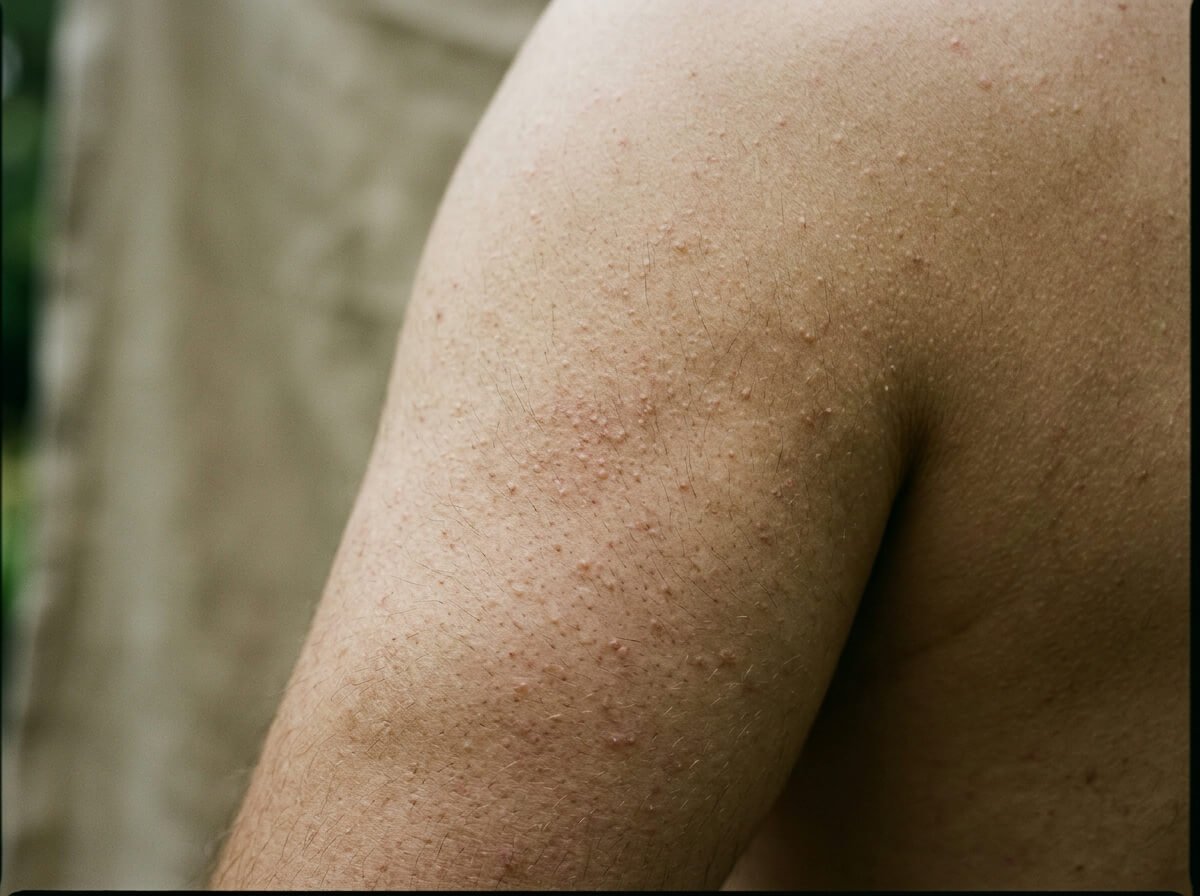
Keratosis pilaris, often shortened to KP and nicknamed “chicken skin,” is a common and harmless skin condition. Keratin, the tough protein that makes up the outer layer of our skin, builds up around the opening of a hair follicle. Instead of shedding quietly, it forms a tiny plug. Each plug becomes one small, firm bump, sometimes skin-coloured, sometimes pink or red, and occasionally a little darker on deeper skin tones.
The usual places are the backs of the upper arms, the fronts of the thighs, and the buttocks. Some children and teenagers also get it on their cheeks. The bumps rarely hurt. Some people notice mild itching, especially when the air is dry.
Why some people have it and others do not
KP tends to run in families. It often shows up in childhood, peaks in the teenage years, and softens for many people as they move through adulthood. It is closely linked with naturally dry skin and is more common in people who also live with eczema or other dry-skin conditions. In other words, it is largely a trait you were born with, shaped by how well your skin barrier holds on to water.
That matters because it changes the goal. We are not trying to fix something you did wrong. We are trying to help skin that naturally builds up keratin shed it more smoothly, and stay supple enough that the plugs feel less rough.
What it is not
- Not a hygiene problem. Washing more often will not clear it, and harsh soaps can make it worse.
- Not contagious. You cannot catch it or pass it on.
- Not acne. The bumps are keratin plugs, not clogged oil and bacteria, so drying acne treatments usually just add irritation.
- Not dangerous. It is a cosmetic texture, not a sign of illness. If bumps are painful, spreading fast, or look very different from the description above, a doctor should take a look.
Once we see KP as a texture rather than a flaw, the kindest approach also turns out to be the most effective one.
Why scrubbing harder often backfires
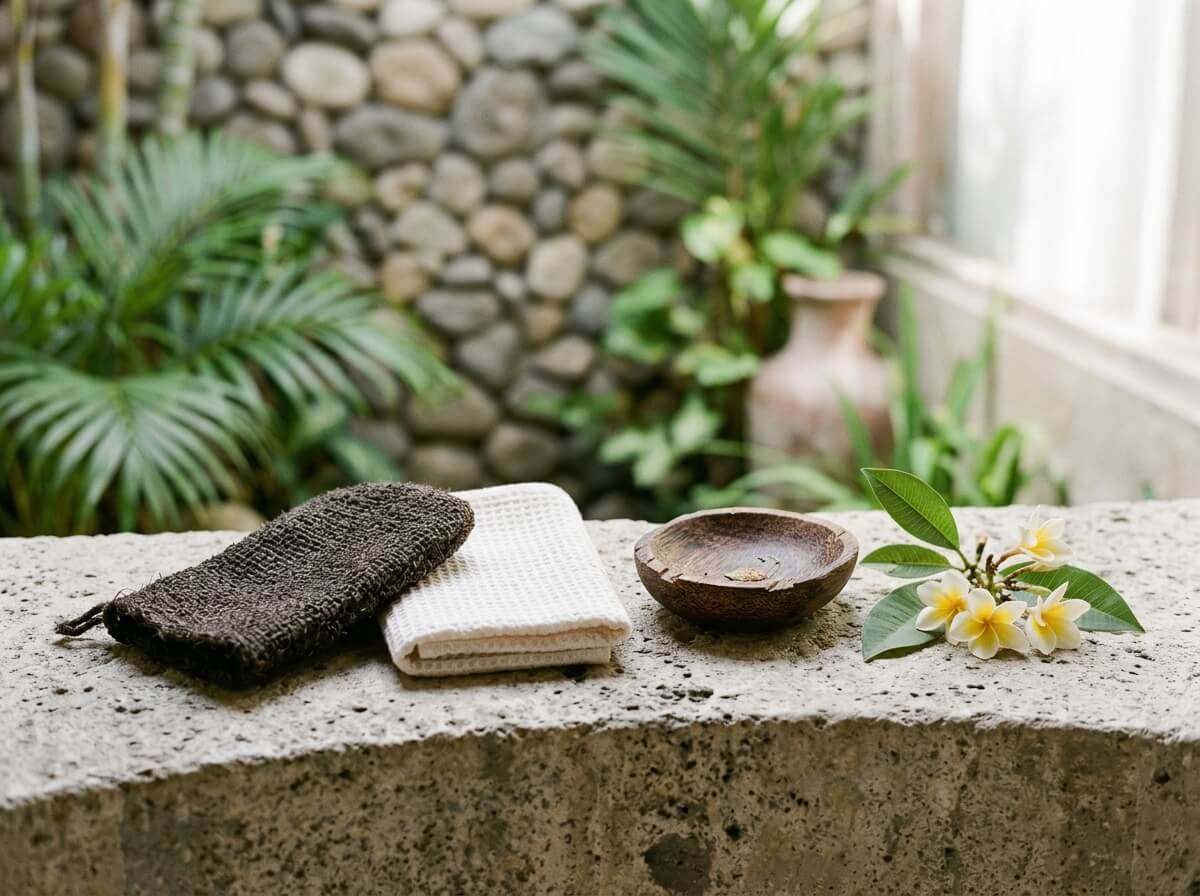
It feels logical. The bumps are rough, so rub them smooth. Much of the advice online leans into this, recommending daily sessions with coarse mitts, salt scrubs, or stiff brushes. For a few hours afterwards the skin may even feel softer. Then the redness arrives, and a week later the texture is back, often more noticeable than before.
Here is why. The keratin plug sits in the follicle opening, partly below the surface. Friction removes the top layer of skin around it, but it does not neatly pull the plug out. What it does do is strip away the natural oils and the outer barrier that keep the skin hydrated. Skin that loses water becomes drier and rougher, which is exactly the environment that encourages more keratin build-up. Friction also irritates the follicle, and irritated follicles look redder and more inflamed. Dermatology guidance on KP consistently warns against hard scrubbing for this reason.
The quiet habits that add up
Scrubbing is the most visible culprit, but several everyday habits strip skin in the same way:
- Long, hot showers. Hot water dissolves the skin’s protective lipids. We wrote more about this in our note on hot water and the skin barrier.
- Harsh, high-foaming cleansers. Strong surfactants leave skin feeling “squeaky,” which is really the feeling of oils being removed. A mild, low-foam natural body wash is a kinder daily choice.
- Rough towelling. Rubbing yourself dry is a small daily scrub. Patting is gentler.
- Picking. Squeezing the bumps can leave marks and dark spots that last far longer than the KP itself.
None of this means exfoliation is forbidden. It means it should be occasional, gentle, and always followed by care. The skin needs to feel respected, not punished.
Keratosis pilaris natural remedies that soften instead of strip
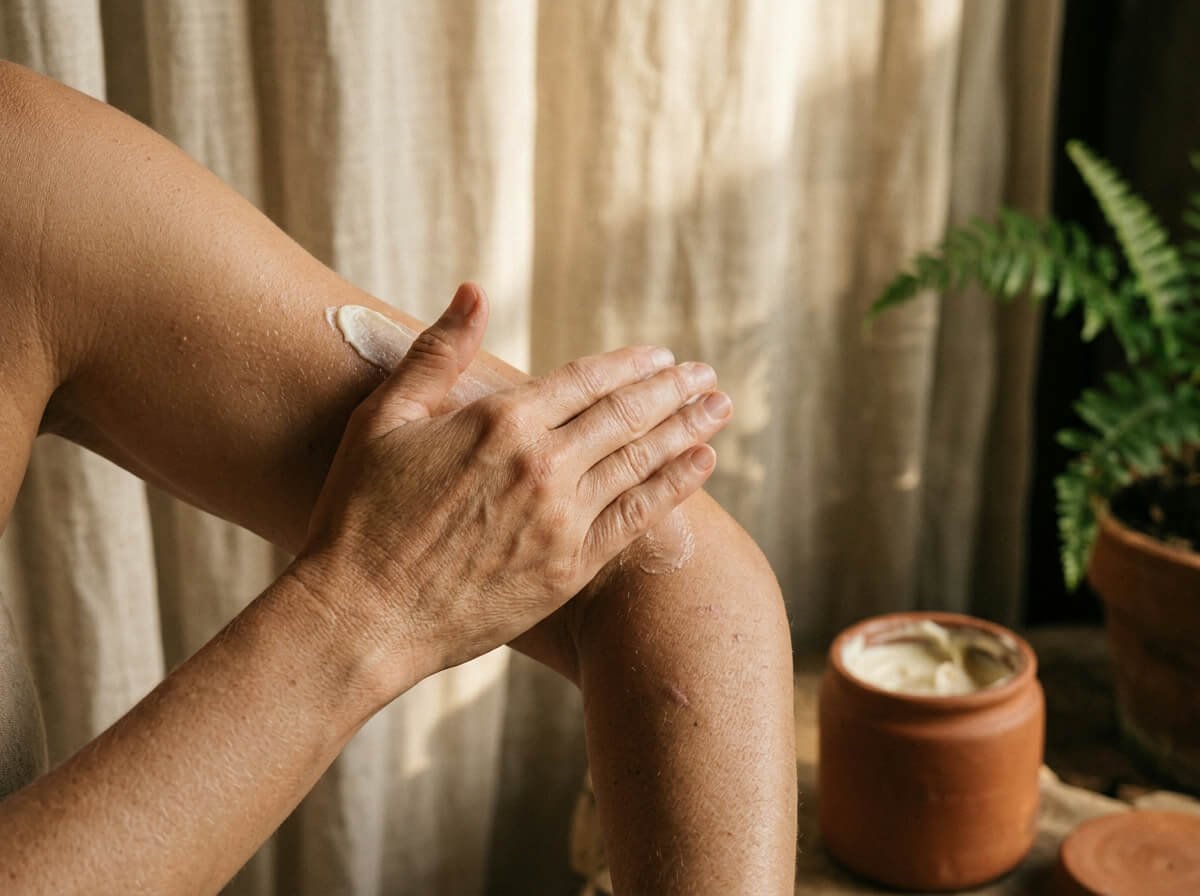
The most reliable keratosis pilaris natural remedies share one principle: keep the skin soft and well hydrated so keratin can shed in its own time. That sounds simple because it is. The work is in doing it consistently.
1. Lukewarm water and short showers
Keep showers to around 10 minutes in lukewarm water. Use a gentle cleanser only where you need it, and let plain water do the rest. This alone helps many people within a few weeks, because the barrier stops losing ground every day.
2. Moisturise on damp skin, within a few minutes
Pat the skin until it is damp, not dry, then apply an oil or butter straight away. The fats seal in the water that is still sitting on the surface. This is the single habit we would choose if we could only choose one. Our guide on how to use body oil walks through the technique in detail.
3. Choose richness over fragrance
For KP, the texture of a moisturiser matters more than its scent. Thicker butters stay on the skin longer and give the plugs more time to soften. If your skin is reactive, lean towards simpler formulas with fewer essential oils. Our Pure Energy Body Butter, made with coconut oil and illipe butter, is built for exactly this kind of lingering contact. A single-ingredient oil like Tamanu Oil is a calm option for small, irritated patches.
4. Gentle, occasional exfoliation
Once or twice a week is plenty. A soft cotton washcloth in light circles, or a thin layer of clay left on briefly and rinsed away, is enough. If the skin turns pink or stings, take a step back.
An honest note on what works best
We believe in plant oils and butters, and we craft them every day. We also believe in telling the truth. The ingredients with the strongest clinical evidence for KP texture are keratolytics, mainly urea, lactic acid, and salicylic acid, which loosen the keratin plug directly. We do not make those creams. If several weeks of consistent moisturising leave you wanting more, a pharmacy body cream with urea or lactic acid is a reasonable next step, and you can keep using a natural butter alongside it on the days your skin feels tight. For inflamed, itchy, or widespread KP, a dermatologist can offer prescription options. Natural care and good science are not rivals. They work best side by side.
Coconut oil and illipe butter: what they can and cannot do
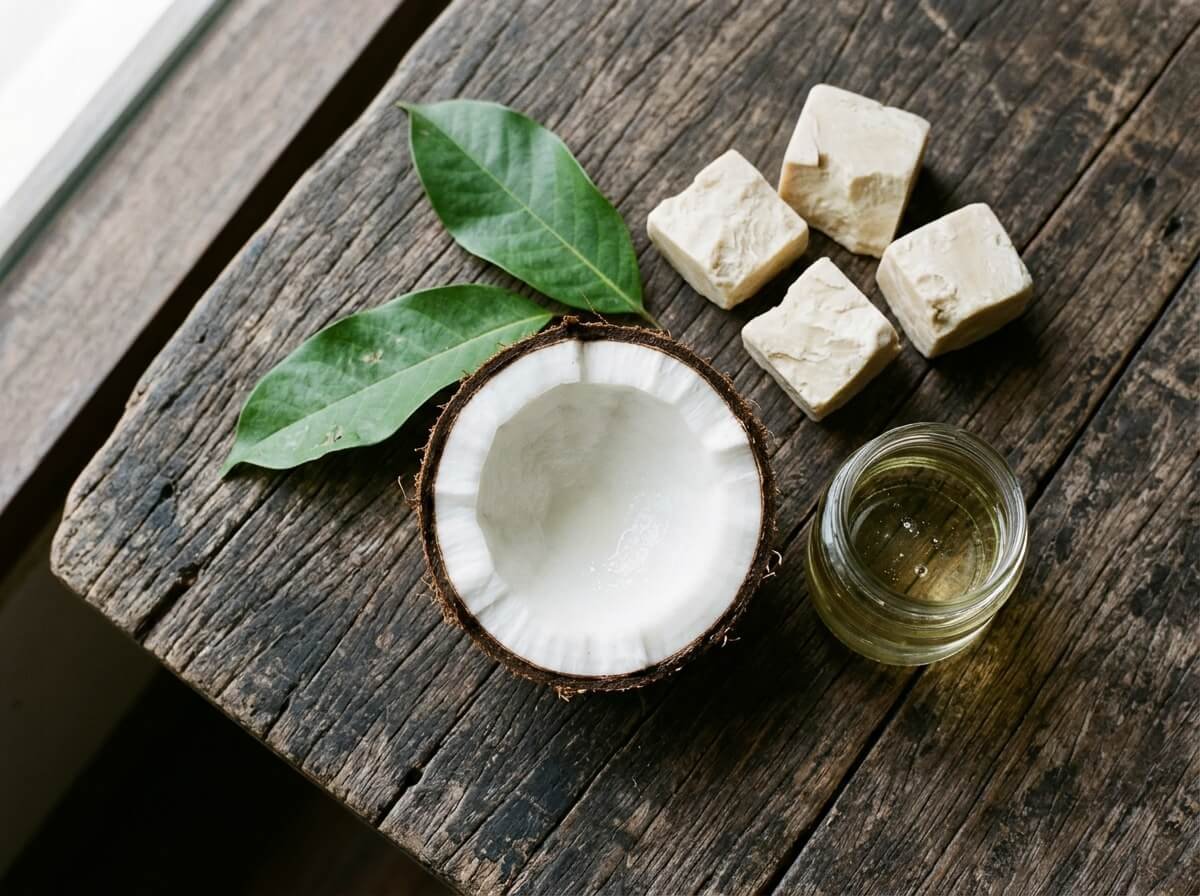
Coconut oil appears on almost every list of KP remedies, often with big promises attached. Let us be clear about its real role, because it is a useful one.
Coconut oil: a barrier ally
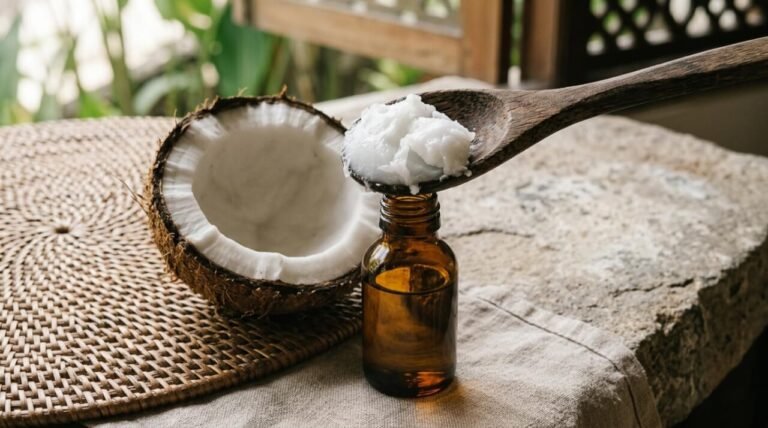
Virgin coconut oil is rich in saturated fatty acids that sit on the skin and slow water loss. In a small clinical trial on dry skin, virgin coconut oil improved skin hydration as well as mineral oil did, without side effects. That is exactly what KP-prone skin needs: steady moisture so the outer layer stays flexible. What coconut oil does not do is dissolve keratin plugs or “cure” KP. Think of it as daily support, not a treatment.
Our Virgin Coconut Oil is cold-pressed from Balinese coconuts sourced through our Aluan partnership. It melts on contact with warm skin, which makes it easy to spread over damp arms and thighs straight after a shower. If you want the deeper science of how it behaves on skin, our guide to coconut oil for skin covers it in detail. One caution: on the face, coconut oil can feel heavy for acne-prone skin, so keep it to the body if breakouts are a concern.
Illipe butter: richness from the rainforest
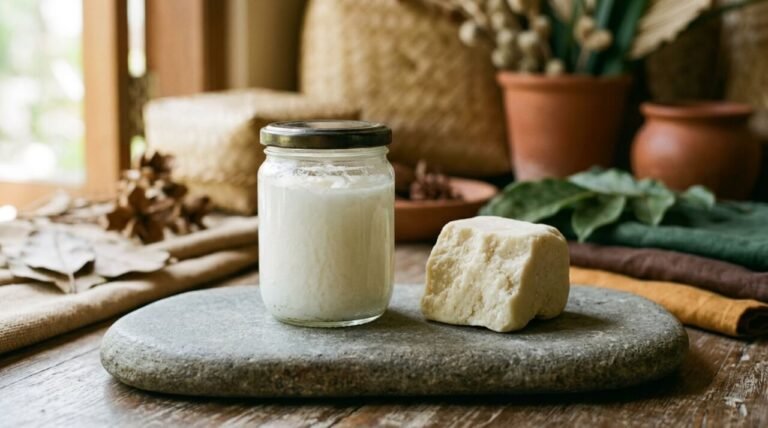
Illipe butter comes from the nuts of Shorea trees in Kalimantan’s rainforest. Families who have tended the same groves for generations wild-harvest it, and we source it through our Forestwise partnership, which keeps the forest standing because the forest pays. The butter is firm at room temperature and rich in stearic and oleic acids, the same family of fats that help skin hold its shape and moisture. On KP, that firmness is a quiet strength: it lingers on the skin longer than a light oil, giving rough patches hours of softening contact. We explore it further in our piece on illipe butter benefits.
Oil, lotion, or butter?
Texture is personal. Oils absorb into damp skin quickly and suit humid days. Lotions are lighter still. Butters are the most occlusive and suit dry seasons, air-conditioned rooms, and stubborn patches. If you are unsure which fits your skin, our comparison of body oil vs body butter and our guide to coconut body lotion will help you choose. Many people with KP end up using an oil in the morning and a butter at night.
A realistic weekly keratosis pilaris routine
The best routine is the one you will keep. This one takes a few minutes a day, with one slower ritual each week.
Every day
- Cleanse gently. Lukewarm water, a mild body wash only where needed, and no more than 10 minutes.
- Pat, do not rub. Leave the skin slightly damp.
- Seal within three minutes. Press a palm-sized amount of oil or butter into the arms, thighs, and anywhere else the bumps appear. Use slow, upward strokes and let the warmth of your hands melt the butter in.
- Repeat at night if your skin is dry. A second, lighter layer before bed makes a real difference in dry seasons.
Once or twice a week: the clay ritual
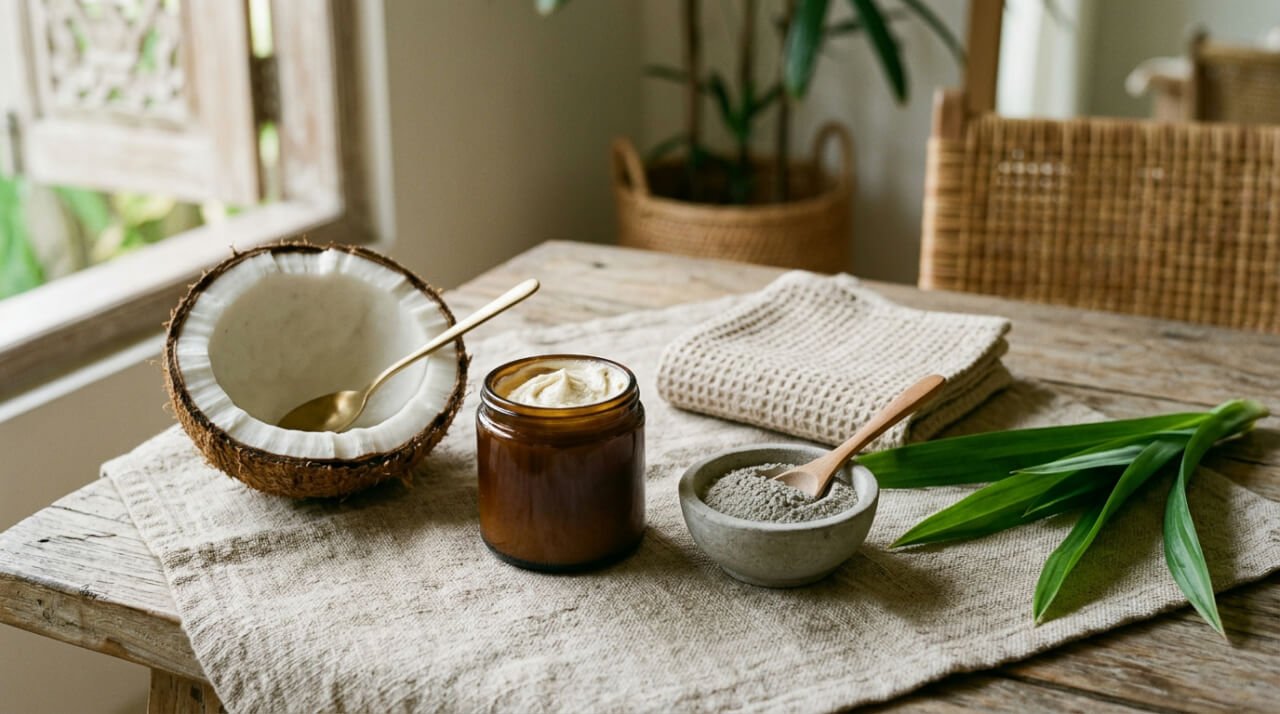
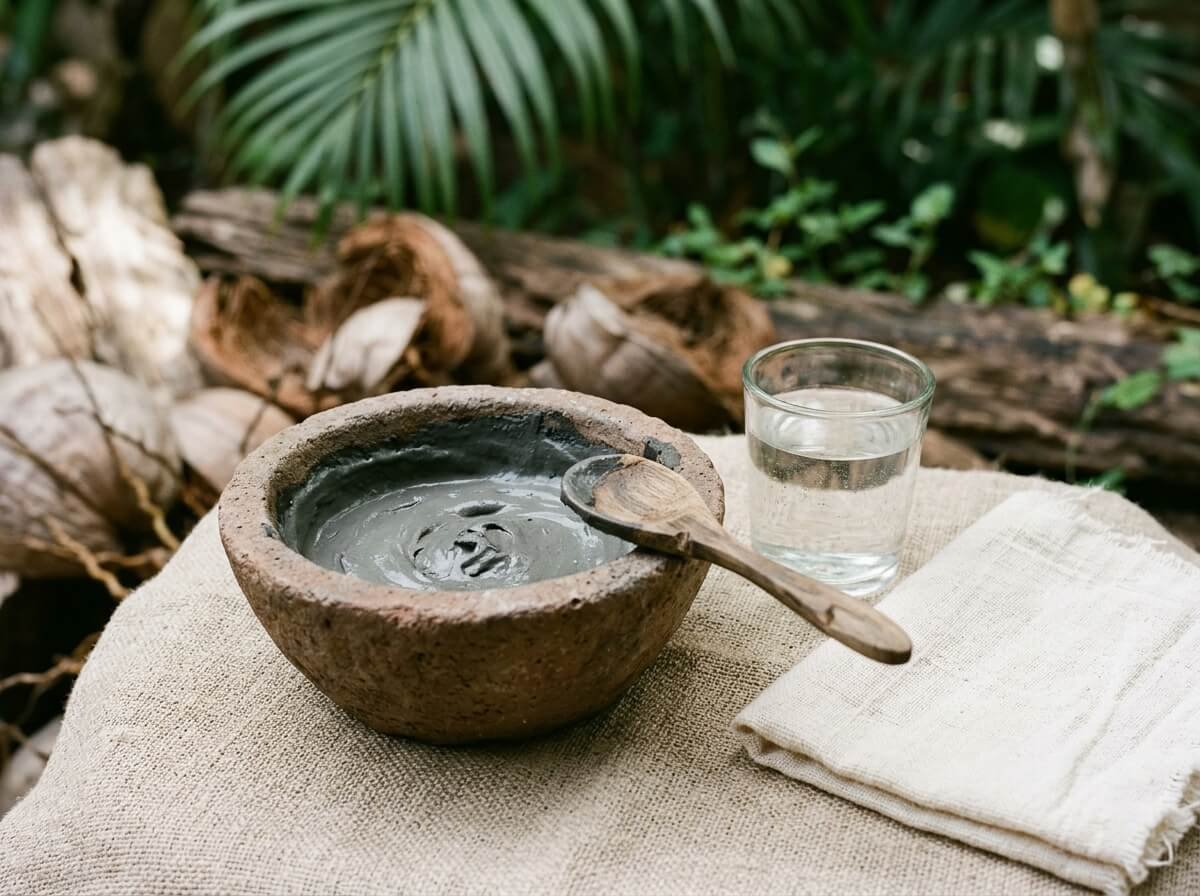
Volcanic clay has a long history in Indonesian body care. For KP, we use it as a soft weekly reset rather than a scrub. Mix a spoonful of Face and Body Clay with water until it is smooth like yoghurt. Spread a thin layer over the bumpy areas, leave it for five to eight minutes while it is still slightly tacky, then soften it with warm water and rinse with gentle circles of your fingertips. Do not let it dry to cracking, and do not scrub it off. Follow straight away with your oil or butter on damp skin.
Clay will not unplug follicles on its own. What it offers is a gentle polish, a pause in the week, and skin that drinks in the butter that follows. If you love masks, our guide to mud mask vs clay mask explains how the two differ.
A word on traditional scrubs
Many readers ask about lulur, the Javanese and Balinese body ritual made with rice, turmeric, and fragrant roots. Lulur is a gentle, ceremonial practice, and our article on the lulur scrub honours its roots. If you enjoy it, keep the pressure light on KP areas and make it an occasional ritual, not a daily fix. The tradition itself was never about force.
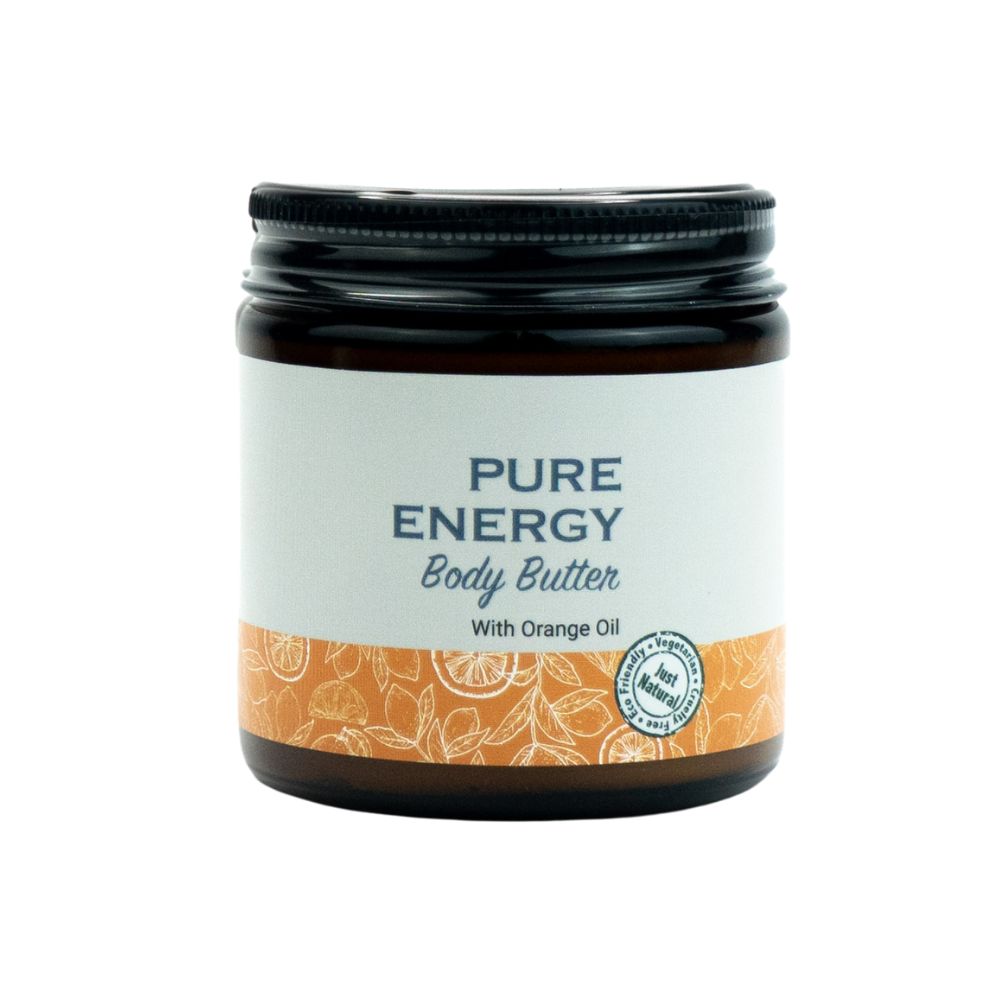
Soften rough patches with coconut and illipe
Our Pure Energy Body Butter blends Balinese coconut oil with wild-harvested illipe butter from Kalimantan, a rich, lingering layer for damp skin after your shower. It carries bergamot and orange, so we suggest using it in the evening or on covered skin, and patch testing first.
What to expect: managing texture, not erasing it
This is the part most guides skip, and it is the part that protects your peace of mind. KP is a trait, so it does not disappear for good with any product, natural or otherwise. What changes is how it looks and feels.
A gentle timeline
- First one to two weeks: skin feels less tight and less rough to the touch, even if the bumps still look the same.
- Weeks three to eight: many people notice the bumps feel flatter and redness calms, especially once scrubbing has stopped.
- Beyond two months: texture settles into a softer baseline. If it has not shifted at all by now, this is a good moment to add a urea or lactic acid cream, or speak with a dermatologist.
KP usually returns if the routine stops. That is not failure. It is simply how a trait behaves. The good news is that the routine is pleasant: warm hands, a scent you love, a few quiet minutes after a shower.
Keep a simple note
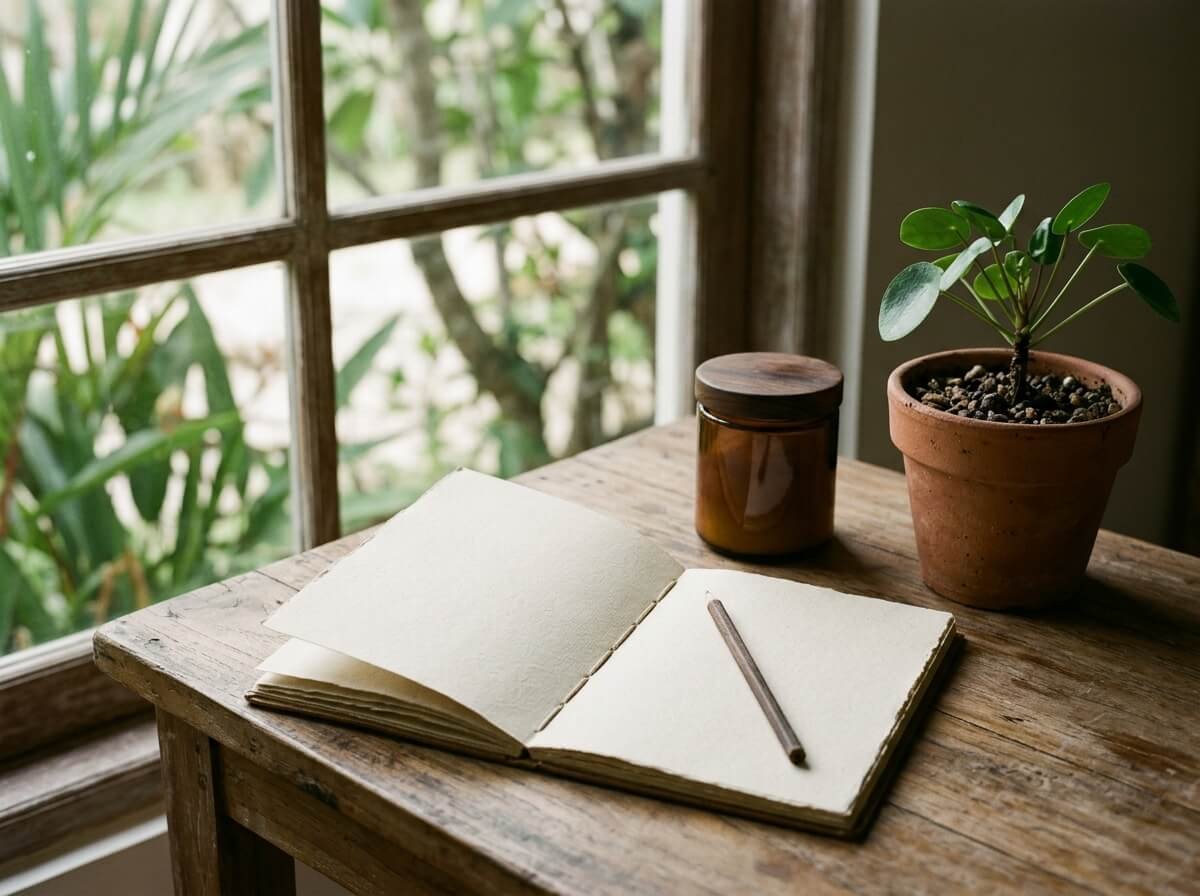
Because change is slow, it is easy to miss. Take one photo of the same patch of skin in the same light each fortnight, or jot a line in a notebook. Progress you can see makes consistency much easier.
When to see a doctor
Seek medical advice if the bumps are painful, pus-filled, spreading quickly, or come with intense itching. A professional can rule out other conditions and offer stronger treatments if you want them. Our guides to essential oils for eczema and essential oils for psoriasis may also help if you suspect something more than KP is going on.
A climate note: humid Bali versus dry winter air

KP often softens in warm, humid months and flares in cold, dry ones. Moisture in the air keeps the outer layer of skin supple, so keratin sheds more easily. Here in Bali, many people notice their bumps are milder for most of the year. Readers in colder climates often see the opposite as heating switches on.
In humid, tropical climates
- A light oil on damp skin is usually enough during the day.
- Save butters for the evening, or for time spent in air-conditioned rooms, which dry the air more than people expect.
- Sweat and sunscreen can sit on the skin, so a gentle rinse at the end of the day helps.
In dry or cold climates
- Move to a richer butter, twice a day if you can.
- Keep showers short and lukewarm, even when hot water is tempting.
- A humidifier in the bedroom supports skin overnight.
For a fuller seasonal approach, our winter skincare routine and our guide on how to repair the skin barrier pair well with everything here.
Frequently asked questions about keratosis pilaris
Can keratosis pilaris be cured naturally?
No treatment, natural or medical, cures KP permanently, because it is a hereditary trait. Natural care can make it much softer and less visible, and many people find it fades with age.
Is coconut oil good for keratosis pilaris?
It is a helpful daily moisturiser for the body because it slows water loss and keeps skin supple. It does not dissolve keratin plugs, so think of it as support rather than a fix.
How often should I exfoliate KP?
Once or twice a week, gently. Daily scrubbing with coarse gloves or salt tends to irritate follicles and dry the skin, which can make bumps look redder.
Does diet affect keratosis pilaris?
There is no strong evidence that any specific diet clears KP. Eating well supports skin in general, but the most reliable changes happen on the skin itself, through gentle cleansing and consistent moisture.
Can I use essential oil body butters on KP?
Many people can. Patch test first on a small area for two days. If your skin is reactive, choose simpler formulas. Some citrus oils, including expressed bergamot, can make skin more sensitive to sunlight, so apply those blends in the evening or on covered skin.
Is it safe for children?
KP is common in children and is harmless. Short lukewarm baths and a plain, fragrance-free moisturiser are a gentle start. For young children, check with your doctor before using products with essential oils or any acid-based cream.
Will KP come back if I stop?
Usually, yes. Think of your routine as ongoing care, like brushing your teeth, rather than a course with an end date.
Final thoughts: softer skin through steady care
Keratosis pilaris asks for patience more than effort. Put the coarse glove away. Turn the water down. Seal damp skin with something rich, every day, and give yourself one slower clay ritual each week. Be honest with yourself about progress, and reach for a urea or lactic acid cream, or a dermatologist, if your skin needs more than plant care alone can give.
Most of all, let go of the idea that your skin needs to be smooth to be good enough. Bumps on the backs of the arms are part of being human, shared by millions of people. Care for them the way you would care for anything you love: gently, consistently, and without punishment. For more on building a simple body ritual around natural butters, our guide to natural body butter is a good place to begin. If you would rather keep things fragrance-light, Lavender Dream Body Butter offers a softer, single-note scent.