How to get rid of blackheads naturally: what is in your pores, and the gentle routine that clears them
Lean in close to a mirror and they are usually there: small dark dots across the nose, the chin, and the crease beside the nostrils. Most of us were taught that they are dirt, and that the cure is to scrub harder. Neither is true. If you want to know how to get rid of blackheads naturally, the first step is understanding what is sitting in the pore, because the gentle answer and the effective answer turn out to be the same one. Blackheads respond to softening, balance, and patience. They do not respond well to force.
In this guide we explain what a blackhead actually is, how to tell it apart from the normal pore lining that almost everyone mistakes for blackheads, and why the harsh kitchen remedies that fill the internet make things worse. Then we share a simple botanical routine, the right way to use clay, an honest word on squeezing and strips, and a realistic timeline. No promises of poreless skin. Pores are part of healthy skin, and our aim is to keep them clear, not to make them disappear.
What a blackhead actually is (and why it is not dirt)
Every pore on the face is the opening of a hair follicle, and most of those follicles are attached to a sebaceous gland. The gland makes sebum, the waxy, protective oil that keeps skin supple and helps hold water in. Sebum travels up the follicle and spreads across the surface. Along the way, the follicle lining sheds skin cells, and those cells normally ride the sebum out and wash away.
A blackhead forms when that flow slows down. The cells lining the follicle shed unevenly and stick together, sebum builds up behind them, and a soft plug forms in the opening. Dermatologists call it an open comedone. When the plug stays under a thin layer of skin, it is a closed comedone, better known as a whitehead. When the opening stays wide and the top of the plug meets the air, it turns dark.
That dark colour is not dirt. It comes from the way the oils and the skin pigment in the plug oxidise when exposed to air, and from the way light scatters through a packed, irregular plug. This is why washing harder never fully removes a blackhead. You are not looking at something sitting on the skin. You are looking at the top of something sitting inside it.
What makes a pore more likely to plug
A few factors raise the odds, and most of them are not about hygiene at all.
- Sebum output. Hormones, mainly androgens, set how much oil our glands produce. This is why blackheads often arrive in the teenage years and can flare with hormonal shifts later in life.
- Sticky shedding. Some skin sheds its cells in clumps rather than one by one. This tendency runs in families.
- Heavy products. Thick, occlusive oils, waxy hair pomades, and some makeup can add to the plug, especially along the hairline and jaw.
- Heat and humidity. Here in Bali we see how sweat, sunscreen, and humid air combine on the skin through the long wet season. Nothing evaporates, and everything sits.
- Friction and pressure. Phone screens, helmet straps, and resting a chin on a hand all press on the same pores day after day.
Blackheads are a mild, non-inflammatory form of acne. They are not infected and they rarely hurt. If your skin is also breaking out in red, sore spots, our guide to natural acne treatment covers that side of the picture. Here we stay with the dark dots.
Blackhead or sebaceous filament? How to tell before you treat
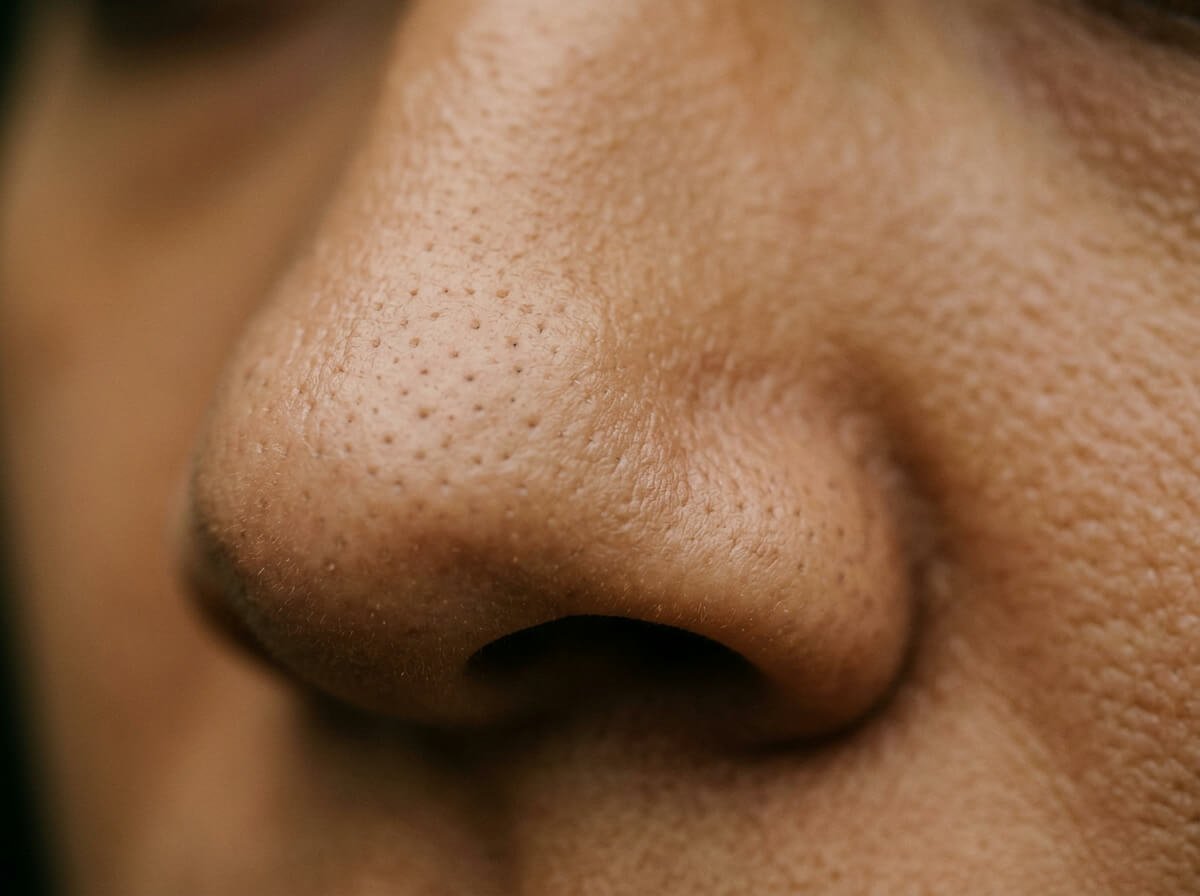
This is the part almost nobody explains. Many of the “blackheads” people fight on their noses are not blackheads at all. They are sebaceous filaments, and every adult has them.
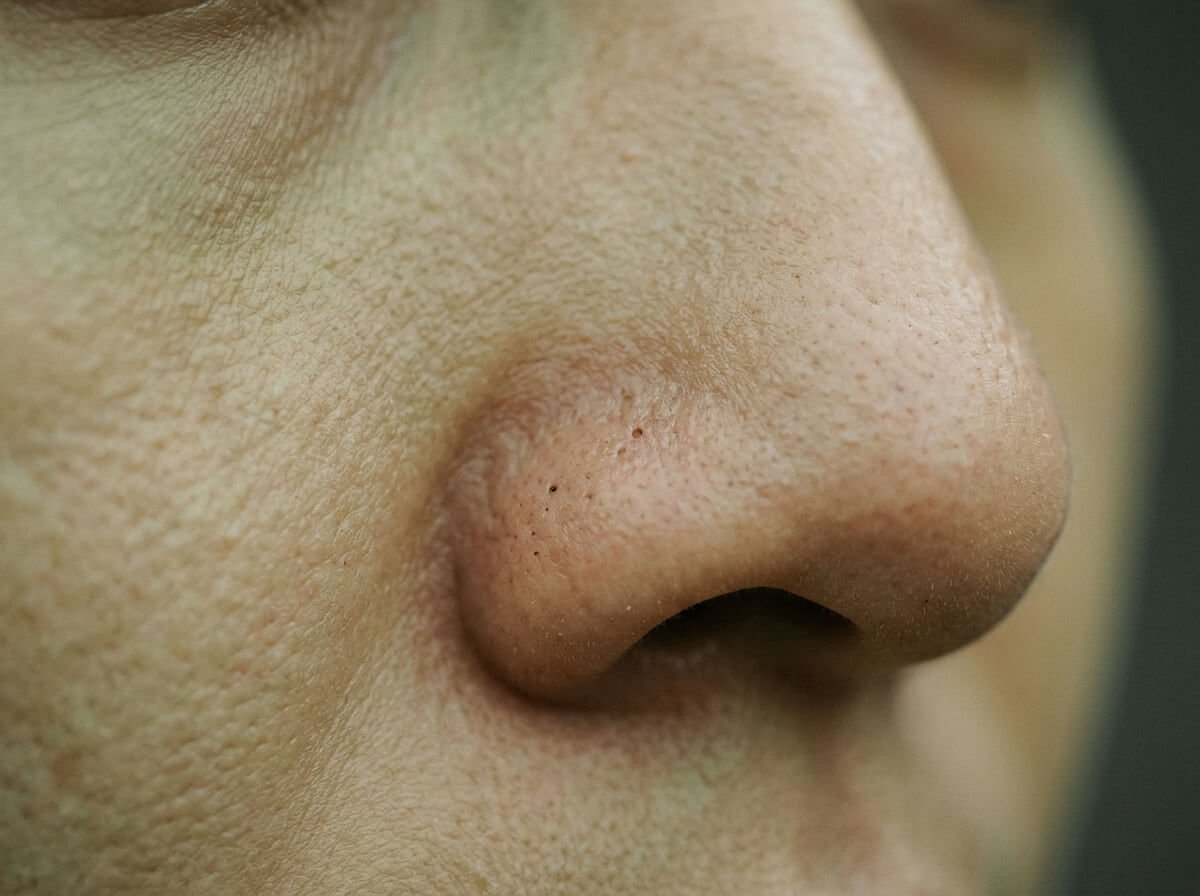
A sebaceous filament is a thin, hair-like column of sebum and skin cells that lines the follicle and guides oil to the surface. It is a normal part of skin, not a blockage. On the nose, chin, and forehead, where the glands are larger, the tops of these filaments show as tiny grey, beige, or pale yellow dots.
How to tell the difference
Look closely in good daylight.
- Colour. Sebaceous filaments look grey, beige, or faintly yellow. True blackheads look darker, closer to black or deep brown.
- Pattern. Filaments sit in an even, regular pattern across the nose, a bit like a fine dotted grid. Blackheads are scattered, uneven, and fewer in number.
- Feel. Filaments are flat to the skin. A blackhead can feel slightly raised or rough under a fingertip.
- Return time. If you clear a filament, it quietly fills again within a few weeks. A true blackhead, once cleared, stays gone until a new plug forms.
Why it matters
If what you see is mostly sebaceous filaments, no routine, product, or tool will remove them for good, and none should. The filament is doing a job. What we can do is keep them small and less visible by softening excess sebum, managing oil through the day, and not irritating the area. That is a different goal from “eliminate,” and a much kinder one.
This reframing ends a lot of frustration. People strip, squeeze, and strip again, chasing a smooth nose that skin is not built to have. Progress over perfection is not just a gentle philosophy here. It is how pores work.
Why stripping your skin backfires, and the harsh “natural” tricks to skip
When pores feel clogged, the instinct is to scrub them clean and dry them out.
Our skin’s surface is slightly acidic, usually somewhere around pH 4.5 to 5.5. That acidity, together with a thin layer of lipids, forms the barrier that keeps water in and irritants out. Harsh cleansing pulls away those lipids and pushes the pH up. The skin feels tight, then flaky, then sensitive. And flaky, irritated skin does not shed its cells more evenly. Irritation can make the follicle lining even more prone to clumping, which is the very thing that starts a blackhead.
You may have heard that stripping makes skin “overcompensate” with more oil. The honest picture is more nuanced. Sebum output is mostly set by hormones, and how often we wash does not change it much. But the barrier damage is real, and a shiny, tight, irritated face is a common result of trying too hard. Our guide on how to repair your skin barrier goes deeper if your skin already feels raw.
The kitchen remedies to put back in the cupboard
Some of the most shared “natural” blackhead remedies are among the harshest things you can put on your face. Natural does not automatically mean gentle.
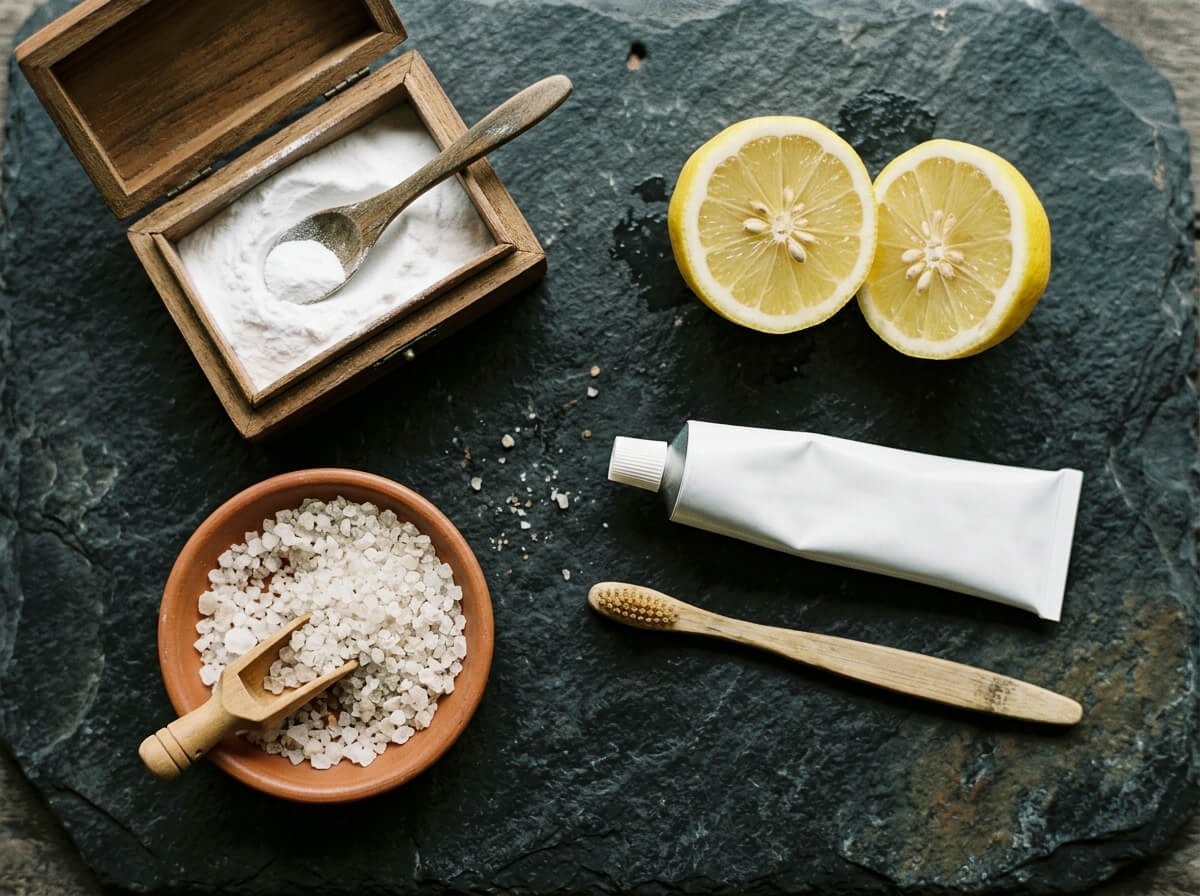
- Baking soda. It is strongly alkaline, around pH 8 to 9, well above the skin’s natural acidity. Used as a scrub or paste, it disrupts the acid mantle and leaves skin dry and reactive.
- Lemon juice. It is very acidic, and citrus juice can also cause a painful reaction called phytophotodermatitis when skin is exposed to sun afterwards: redness, blistering, and dark marks that can last for months. Under a tropical sun, this is a real risk.
- Salt and sugar scrubs on the face. Sharp crystals can create tiny tears in facial skin. They are better kept for the heels and elbows. Our guide to a natural face scrub explains gentler options for the face.
- Toothpaste. It was formulated for teeth. Foaming agents, menthol, and flavour oils can burn and irritate facial skin.
- Glue and peel-off charcoal masks. They pull at the surface and can leave skin red and sore, while taking only the very tops of plugs and filaments with them.
We will say this plainly, as a natural skincare brand: coming from a kitchen does not make an ingredient kind to skin. The natural approach is the one that works with the skin’s own chemistry.
How to get rid of blackheads naturally: a gentle four-step routine
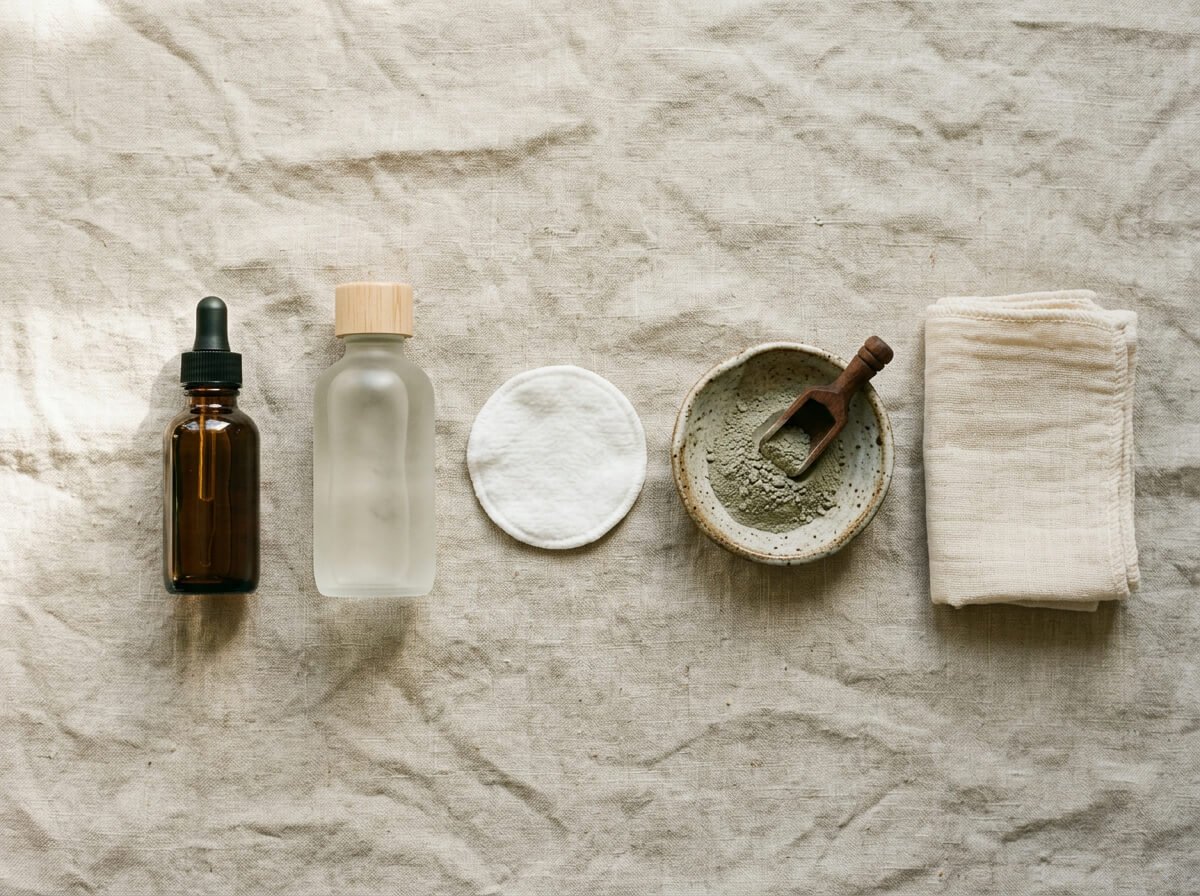
So what does work? The routine below is simple on purpose. Each step does one job: soften the plug, cleanse without stripping, manage surface oil, and keep the skin balanced so it sheds evenly.
Step one: soften with oil, or cleanse gently
Sebum is an oil, and oil dissolves oil. This is the logic behind oil cleansing. Massaging a light plant oil into dry skin for a minute or two helps loosen the waxy sebum sitting in the top of the pore, which water and foam alone struggle to shift. Our full guide to the oil cleansing method walks through technique, and double cleansing explains how to follow it with a second, water-based wash.
The choice of oil matters. Jojoba is a liquid wax that closely resembles the wax esters in our own sebum, and it is a favourite for blackhead-prone skin. Some oils are more likely to clog, and we will be honest about one of our own: virgin coconut oil, which we love for body and hair, rates high on comedogenicity scales and is not the oil we would choose for a blackhead-prone nose. Those scales come from older lab tests and are imperfect, but they are a useful starting point. Our list of non-comedogenic oils will help you choose.
If oil cleansing feels like too much, a gentle, non-stripping face wash does the job well. Our Bliss Botanical Face Wash cleanses without leaving that tight, squeaky feeling. Use lukewarm water, never hot, and pat dry.
Step two: tone the oily zones with witch hazel
Witch hazel carries natural tannins, plant compounds with a mild astringent effect that helps take the shine off oily areas. Sweep a little over the nose, chin, and forehead with a cotton round after cleansing. Our Witch Hazel is distilled with a little grain alcohol, so we suggest keeping it to the oily T-zone rather than the whole face if your cheeks run dry. Read more on why witch hazel is good for your face, or see our wider guide to choosing a natural toner.
Step three: clay, once or twice a week
Clay absorbs excess surface oil and helps lift loosened debris. It is a weekly ritual, not a daily one, and the details matter enough that we give it its own section below.
Step four: do not skip moisture
This is the step oily skin most often drops, and it is the one that keeps everything balanced. A dehydrated surface sheds unevenly, which feeds the very clumping that starts a plug. A light, fluid moisturiser or face oil helps the outer layer stay supple. Our Oily Face Serum is a water-based serum with jojoba and tea tree, made for exactly this kind of skin: hydration without heaviness. Tea tree has some modest clinical evidence for mild acne, and our guide to tea tree essential oil benefits explains what it can and cannot do. For a wider comparison, see the best face serum for oily skin.

A simple weekly rhythm
- Every evening: oil cleanse or gentle wash, witch hazel on the T-zone, light serum.
- Every morning: splash of lukewarm water or a quick gentle wash, light serum, and sunscreen.
- Once or twice a week: clay mask in the evening, after cleansing and before toning.
That is the whole routine. Clear pores come from small, repeated acts of care, not one hard scrub on a Sunday night.
Clay done properly: how often, how long, and why it should never crack
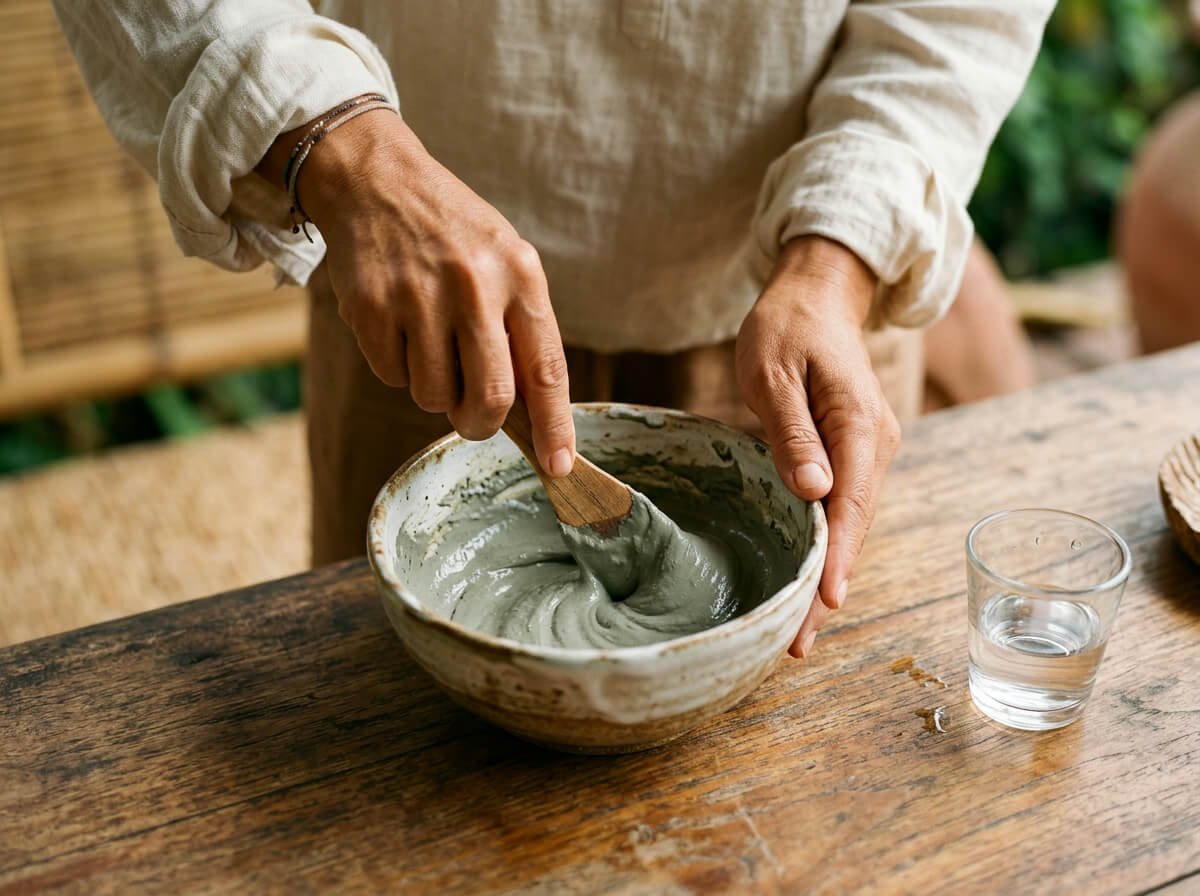
Clay is one of the oldest skin care materials there is. In Indonesia, clay from volcanic soil has long been part of how people cared for their skin, and it remains one of the most useful tools for oily, congested skin today. Clays such as kaolin and bentonite take up oil from the surface, and as the mask is rinsed away it helps carry loosened cells and residue with it.
How to use clay for blackheads
- Start with clean skin. Cleanse first so the clay meets your skin, not the day’s sunscreen.
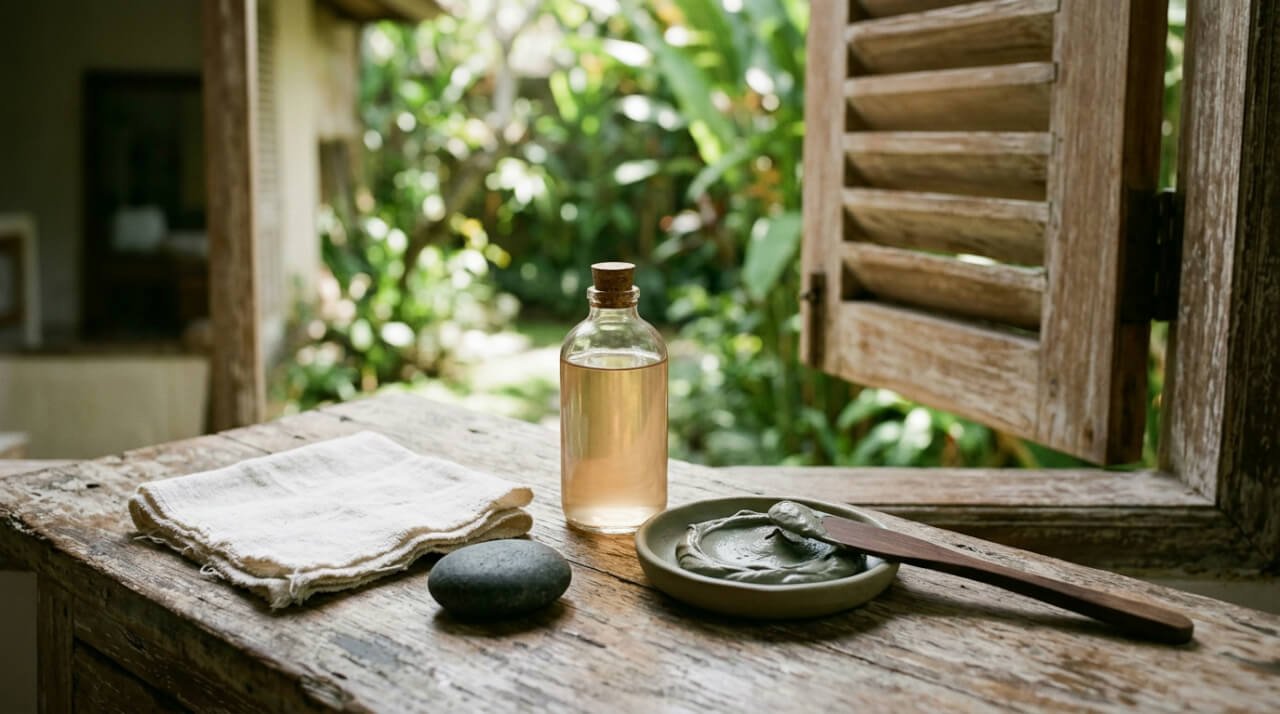
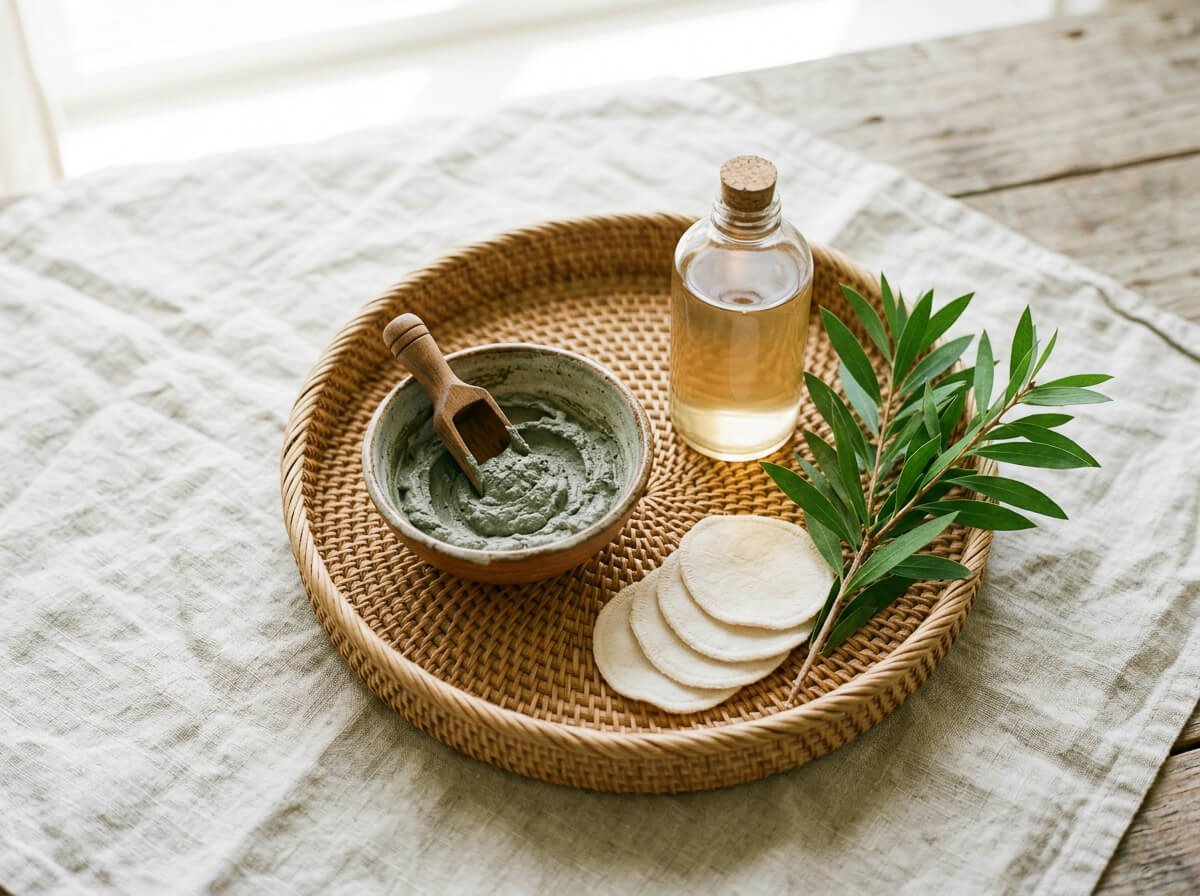
- Mix a smooth paste. Blend about a teaspoon of powder with a little water, aloe gel, or plain unsweetened yoghurt until it is the texture of soft cream. Use a wooden or ceramic spoon and bowl.
- Apply a thin, even layer. Focus on the nose, chin, and forehead. Keep it away from the eyes and lips.
- Leave it on for about 10 minutes. Rinse while the mask is still slightly damp and cool to the touch.
- Rinse with lukewarm water, using soft circles, then tone and moisturise.
Why clay should never crack dry on your face
That tight, cracked, statue feeling is not a sign the mask is working harder. Once clay is fully dry, it starts drawing water from the skin itself, which leaves it parched and more likely to shed unevenly. If you like a longer mask, mist your face lightly with water halfway through to keep the clay supple.
How often
Once or twice a week is plenty for oily skin. Once a week, or only on the T-zone, suits combination and drier skin. More is not better.
Our Face and Body Clay is a volcanic ash based clay, a fine powder you mix fresh each time, with nothing added and nothing to preserve. For deeper reading, our guide to a clay mask for oily skin covers technique, and mud mask vs clay mask explains how the two differ.

A weekly clay ritual for clearer pores
Our Face and Body Clay is a fine volcanic ash based powder you mix fresh with a little water, nothing added. Ten slow minutes, once or twice a week, rinsed before it cracks. It will not erase your pores, and we will never say it does. It simply helps keep them clear.
Squeezing, strips, and tools: the honest version
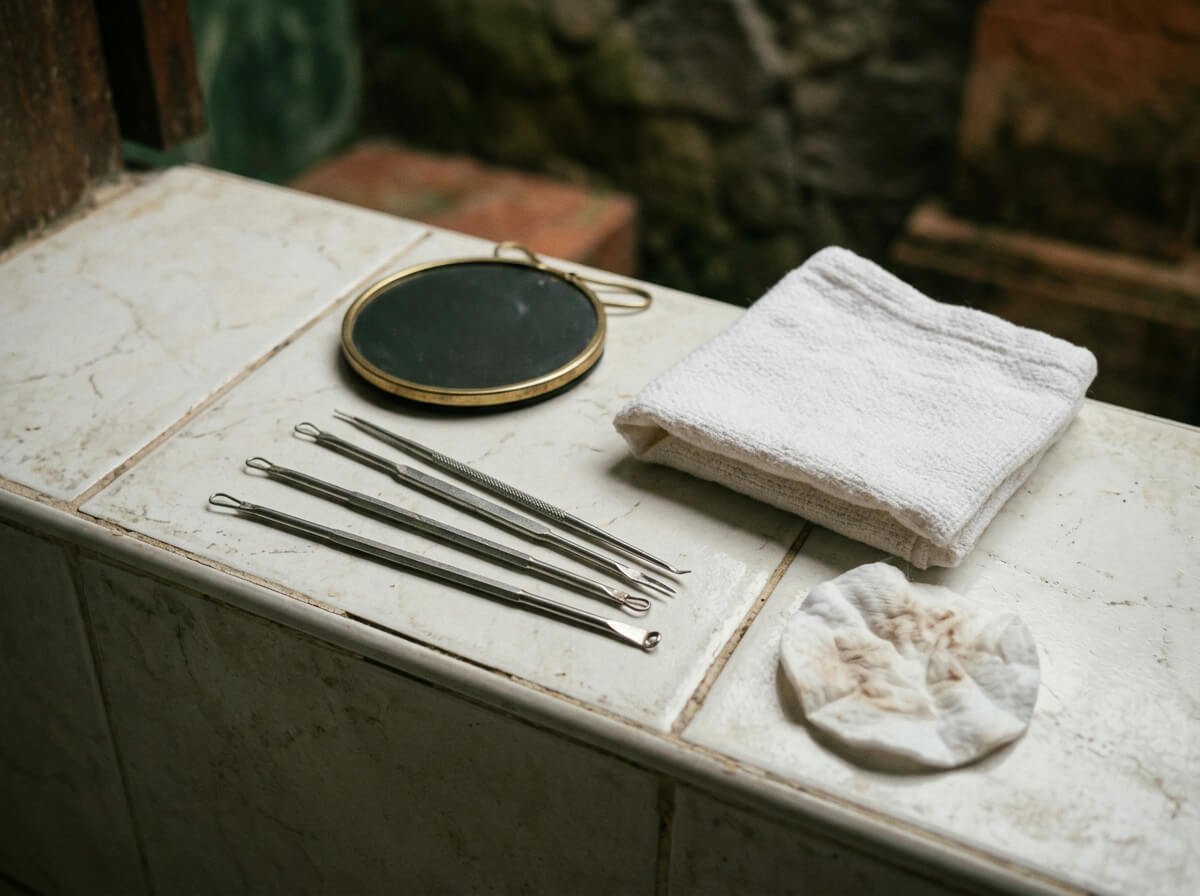
We all know the pull of the bathroom mirror. Here is the honest version.
Squeezing with fingers
Pressing on a pore can push some of the plug out. It can also push part of it deeper, rupture the follicle wall, and turn a quiet blackhead into a red, inflamed spot. Fingernails break the skin, and repeated pressure can leave broken capillaries on the nose and cheeks. On deeper skin tones, any inflammation can leave dark marks, known as post-inflammatory hyperpigmentation, that linger far longer than the blackhead would have.
Pore strips
Strips grab the tops of plugs and filaments and lift them out. The result looks satisfying on the strip, but it is temporary. Sebaceous filaments refill within weeks, and the adhesive can irritate the surface, especially if used often or on skin that is already sensitive. If you enjoy them now and then, use them on clean, dry skin, no more than once a week, and never on broken or sunburnt skin.
Extractor tools
Metal loop tools need training to use well. In the hands of an experienced aesthetician or dermatologist, after the skin has been properly softened, extraction can be useful for stubborn true blackheads. At home, without good light and a light touch, it is easy to bruise and scar the skin.
What to do instead
Keep up the softening routine, and let the plugs loosen and lift on their own over time. If one particular blackhead bothers you, a warm, damp cloth held on the spot for a minute after cleansing will soften it. If it is ready, it will often come away with a gentle wipe. If it is not, leave it for another day. Patience is a skin care ingredient too.
Patience, timelines, and the small habits that keep pores clear

How long does it take to get rid of blackheads naturally? Longer than the internet promises, and that is normal.
A realistic timeline
Our outer skin renews itself in a cycle of roughly four weeks in young adults, and more slowly as we age. Comedones also take weeks to form beneath the surface before we ever see them. That means any routine needs at least one full cycle to show a difference, and usually six to eight weeks to show a clear one. Change a routine every week and you never learn what is working.
Expect the first change to be texture: skin that feels smoother and less congested. The visible dots tend to fade next. Sebaceous filaments will still be there, a little smaller and calmer.
Small habits that help
- Change your pillowcase once or twice a week. It collects oil, hair products, and sweat that press against the face every night.
- Wipe your phone screen regularly, and try not to rest it against your cheek and chin on long calls.
- Keep hands away from the face. Chin-resting and nose-touching add oil and pressure to the same few pores.
- Watch your hair products. Heavy oils and waxes can migrate to the forehead and hairline.
- Wash off sweat and sunscreen at the end of a hot day. In humid climates, a quick evening cleanse matters more than an intense morning one.
- Choose a light sunscreen. Sun protection is essential, and a mineral zinc formula applied in a thin layer works well for many oily skin types.
- Notice your diet, without obsessing. Some research links high sugar, high glycaemic diets with more acne, while the evidence on dairy is mixed.
For a fuller daily structure, our natural skincare routine guide lays out a simple morning and evening rhythm, and our post on the skin microbiome explains why a calm, unstripped surface supports clearer skin over time.
When to look beyond a natural routine
If you have followed a gentle routine consistently for eight to 12 weeks and blackheads remain stubborn, or if they are mixed with painful, inflamed breakouts, it is worth speaking to a pharmacist or dermatologist. The most studied over-the-counter options for comedones are salicylic acid, an oil-soluble acid that works inside the pore, and retinoids such as adapalene, which help the follicle lining shed evenly. We do not sell these, and we will not pretend that a botanical routine replaces them for everyone. For many people, a gentle routine is enough. For some, it is the calm foundation that makes a targeted treatment easier to tolerate.
Frequently asked questions about blackheads
Can blackheads go away on their own?
Sometimes. A small blackhead can loosen and lift out as skin sheds naturally, especially with a gentle softening routine. Others sit for months. Sebaceous filaments never go away permanently, because they are a normal part of the pore.
Does steam open your pores?
Pores do not have muscles, so they do not open and close like doors. Warmth does soften sebum slightly, which is why a warm cloth before cleansing can help. Hot steam held close to the face can dilate small blood vessels and aggravate sensitive or rosacea-prone skin, so a warm, damp cloth is the gentler option.
Are blackheads a type of acne?
Yes. Blackheads and whiteheads are comedones, the mildest, non-inflammatory form of acne. They are not caused by poor hygiene, and they are not infected.
What is the best natural ingredient for blackheads?
There is no single answer, and we are wary of anything sold as one. A light, low-clogging oil such as jojoba for softening, clay once or twice a week for oil, witch hazel for the oily zones, and a light moisturiser for balance work better together than any one ingredient alone. Our older guide to natural pore cleansers lists a few more options.
Should I exfoliate to remove blackheads?
Gentle exfoliation, a few times a week at most, helps skin shed evenly. Harsh grains and daily scrubbing do the opposite. Our guide on how to safely exfoliate your face explains how to find the right balance.
Do blackheads mean my skin is dirty?
No. The dark colour comes from oxidation of the oils and pigment inside the plug, not from dirt. Washing more often or more harshly will not change it, and it may irritate the skin.
Are teenagers more prone to blackheads?
Yes. Hormonal changes in the teenage years increase sebum output, which is why blackheads often appear around the nose and forehead first. Our natural skincare routine for teenagers keeps things simple and kind.
The short version
Blackheads are plugs, not dirt. Many of the dots on our noses are normal filaments, not blackheads at all. The way to clear pores is to soften, cleanse gently, use clay with care, and keep skin balanced, then give it time. It is a quieter approach than scrubs, strips, and lemon juice. It is also the one that lasts.