
How to get rid of milia gently: why patience beats picking
Those tiny white bumps that sit under the eye or across the cheekbone, firm as a grain of sand and stubborn as a stone, are almost always milia. If you are searching for how to get rid of milia, here is the calm truth first: they are harmless, they are not pimples, and they do not respond to squeezing. What they respond to is time, gentle turnover, and removing whatever helped them form. This guide walks through what milia actually are, how to tell them apart from look-alikes, why they show up, what helps at home, what to leave alone, and when a dermatologist is the kinder choice.
We will also say something most milia guides skip. In natural skincare, rich textures are often treated as automatically good. Thick balms, heavy eye creams, and coconut oil pressed onto thin under-eye skin can be part of the problem. Natural does not always mean right for that spot. Matching texture to the area of skin is a quiet skill, and it is one of the most useful things we can teach.
What milia actually are, and why they will not pop
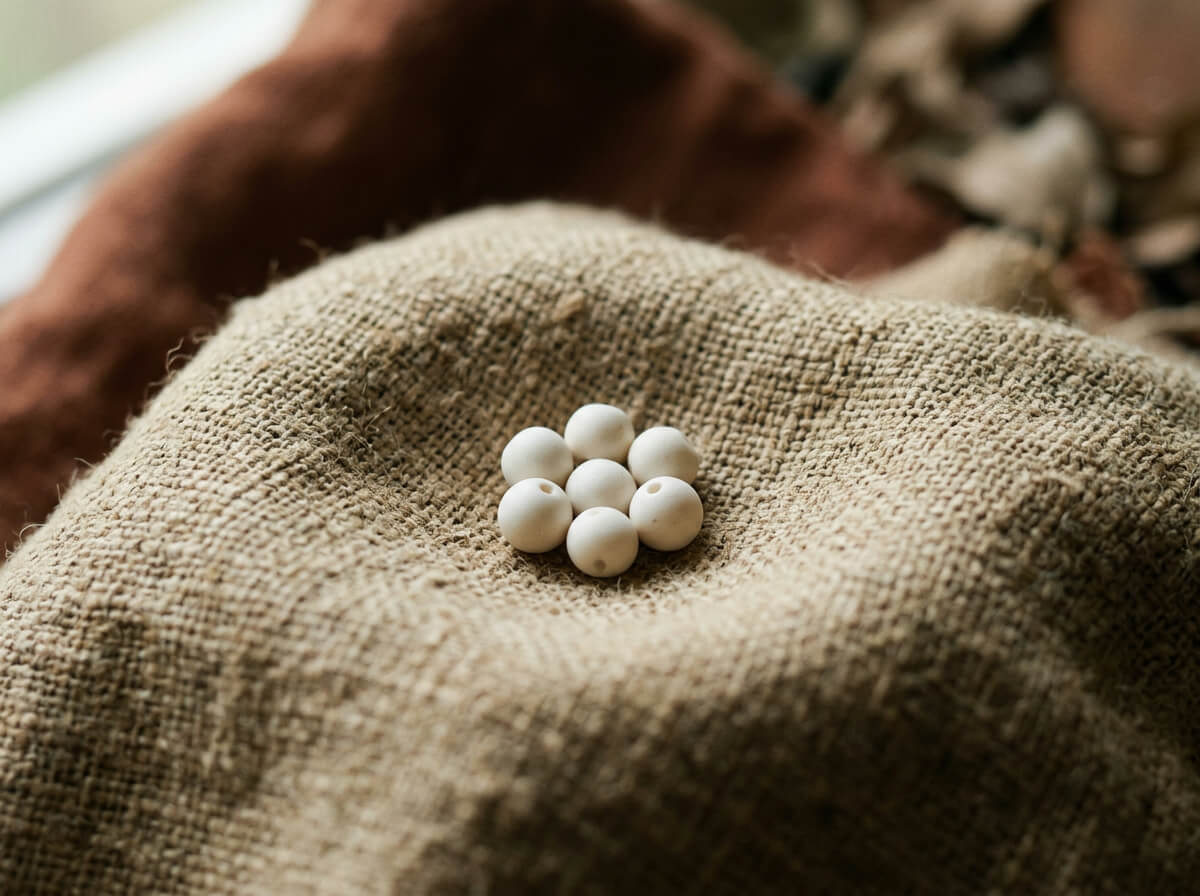
Milia are small cysts filled with keratin, the same tough protein that makes up the outer layer of skin, hair, and nails. Normally, keratin-rich cells shed from the skin surface so quietly we never notice. Sometimes a little of that keratin gets trapped just beneath the surface instead. The skin closes over it, and a tiny pearl forms: white or slightly yellow, usually one to two millimeters across, smooth, firm, and painless.
That structure explains almost everything about how they behave. A whitehead (a closed comedone) is a pore plugged with a soft mix of oil and cells. It sits in an opening that already exists. A milium has no opening at all. It is a tiny sealed sac under a thin roof of skin. That is why pressing on one does nothing except irritate the skin around it. There is nothing soft to push out and no pore for it to travel through.
Dermatologists generally sort milia into two families:
- Primary milia form on their own, from keratin trapped in the skin without an obvious injury. They are common on the eyelids, cheeks, nose, and forehead in adults, and they appear in a large share of newborns.
- Secondary milia form after something has disturbed the skin: blistering, burns, rashes, procedures such as dermabrasion, long-term sun damage, long-term use of strong topical steroids, or a reaction to heavy creams and ointments.
There are rarer forms too, such as clusters on a raised patch of skin (milia en plaque) or many milia appearing suddenly. Those deserve a professional look rather than home care.
For most of us, though, milia are a few small, stubborn pearls. They are not an infection, they are not contagious, and they are not a sign of poor hygiene. So we are not trying to attack a bump. We are helping skin return to its natural rhythm of shedding.
Is it milia? A calm look-alike guide, and when to see a dermatologist
Several common bumps look like milia at a glance. Before choosing any routine, look closely in daylight and notice color, texture, any central dip, and whether the bump changes over a week or two.
- Closed comedones (whiteheads): softer and often slightly skin-colored, they come and go with breakouts and usually sit in oilier areas such as the forehead and chin. Our guide on how to get rid of blackheads naturally covers this family of congestion.
- Syringomas: small, skin-colored or yellowish bumps, often in clusters on the lower eyelids. They come from sweat ducts, not trapped keratin, and they do not respond to home care at all.
- Xanthelasma: soft, flat, yellow patches on the eyelids, usually near the inner corner. These are deposits of cholesterol-rich material, and they are worth mentioning to a doctor because they can be linked to blood lipid levels.
- Sebaceous hyperplasia: soft yellowish bumps with a tiny central dip, common on the forehead and cheeks in mid-life. They are enlarged oil glands rather than cysts.
- Molluscum contagiosum: pearly, dome-shaped bumps with a small dimple in the center. This is a viral skin infection, common in children, and it can spread.
- A pearly bump that grows, bleeds, or does not heal: this needs a dermatologist promptly. Some skin cancers can look smooth and pearly early on, and no blog post should be the thing that delays a proper look.
So when is it time to book an appointment? We would suggest seeing a dermatologist if the bumps are spreading or appearing in large numbers suddenly, if they sit right on the eyelid margin, if they itch, hurt, bleed, or change, if you are not sure what they are, or if they bother you enough that waiting months feels unkind to yourself. A dermatologist can confirm milia in moments, and the in-office removal is quick.
Why milia appear: heavy textures, sun, and over-scrubbing
Primary milia sometimes appear with no clear trigger. Often, though, a few common threads are worth an honest look, because removing a trigger is the best prevention we have.
Heavy textures in the wrong place
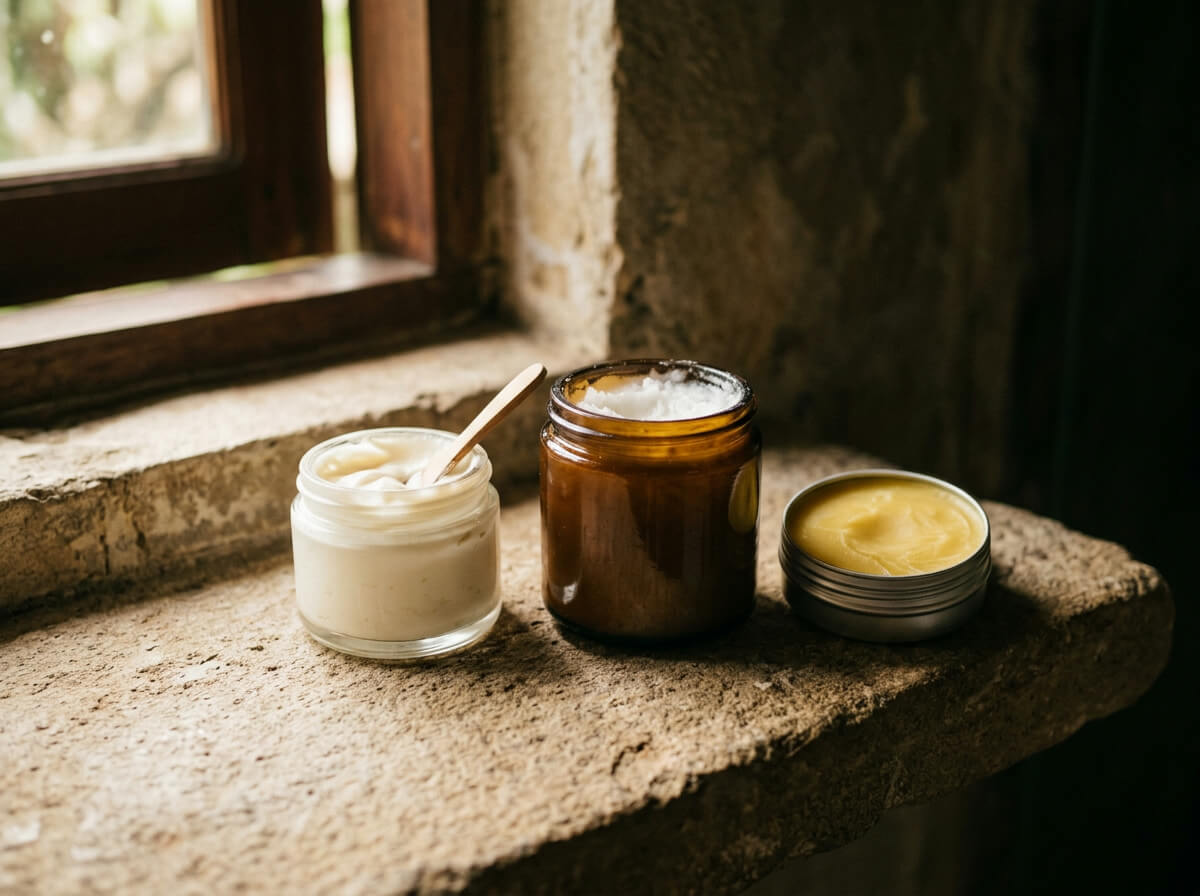
Skin around the eyes is among the thinnest on the body, with fewer oil glands than the rest of the face. It also tends to receive the richest products we own. Thick eye creams, balms, petrolatum-based ointments, and dense oils can sit on that delicate skin for hours. Dermatology sources commonly list heavy creams and ointments as a contributor to secondary milia, and many people notice their milia cluster exactly where their richest product goes.
This is where natural skincare needs some truth-telling. Coconut oil is a beautiful, versatile oil, and we use it across our body and hair care. We love it on dry hair, elbows, and heels. On the thin skin under the eyes, though, it is often too heavy for many people, and it is one of the products we hear about most from people who developed milia after switching to a more natural routine. The same goes for solid body butters and thick balms. They are wonderful on the body. They do not belong on the eyelids.
A heavy synthetic cream can do exactly the same thing. The point is weight and placement, not the source of the ingredient.
Sun damage over years
Chronic sun exposure thickens and roughens the outer skin over time and slows its natural shedding. Dermatologists list long-term sun damage as one of the classic causes of secondary milia, especially on the cheeks and around the eyes. Daily sun protection is one of the few things that both prevents new milia and protects skin in every other way too.
Over-scrubbing and skin trauma
This one surprises people. Aggressive scrubs, harsh peels, and picking can injure the skin enough to trigger secondary milia as it heals. Trying to scrub milia away can create more of them. Burns, blistering rashes, and some cosmetic procedures can do the same thing.
Long-term strong steroid creams
Using potent topical steroids on the face for long stretches can thin the skin, and milia are a recognized side effect. If you rely on a prescribed steroid, do not stop it on your own. Do raise milia with the prescriber, as there may be a gentler plan.
The pattern: milia often form when skin is smothered or stressed. The home approach that follows is the opposite: lighter, calmer, and protected.
How to get rid of milia gently at home
Let us be clear about what home care can and cannot do. No cleanser, mask, or oil will dissolve a keratin cyst overnight. What gentle care can do is support the skin’s natural turnover, so the thin roof over a milium sheds a little faster, and remove the conditions that keep new ones forming. Many milia, especially newer ones, do clear on their own over weeks to months. Our job is to support that process without getting in its way.
Here is the routine we would suggest, done consistently for at least six to eight weeks before judging it.
- Cleanse once or twice a day with a gentle wash. Use lukewarm water and a mild, non-stripping cleanser, and pat dry with a soft cloth. Our Bliss Botanical Face Wash is a gentle daily option, used on the face and kept away from the eye area, as its label advises. Our guide to choosing a natural face wash goes deeper on cleansers.
- Swap heavy textures for light ones near the eyes. Stop putting thick balms, butters, or coconut oil on the area where your milia sit. If the under-eye area feels dry, use a very small amount of a light product, applied with a ring finger and kept off the lash line. Our guide to natural eye cream explains how to keep eye care light.
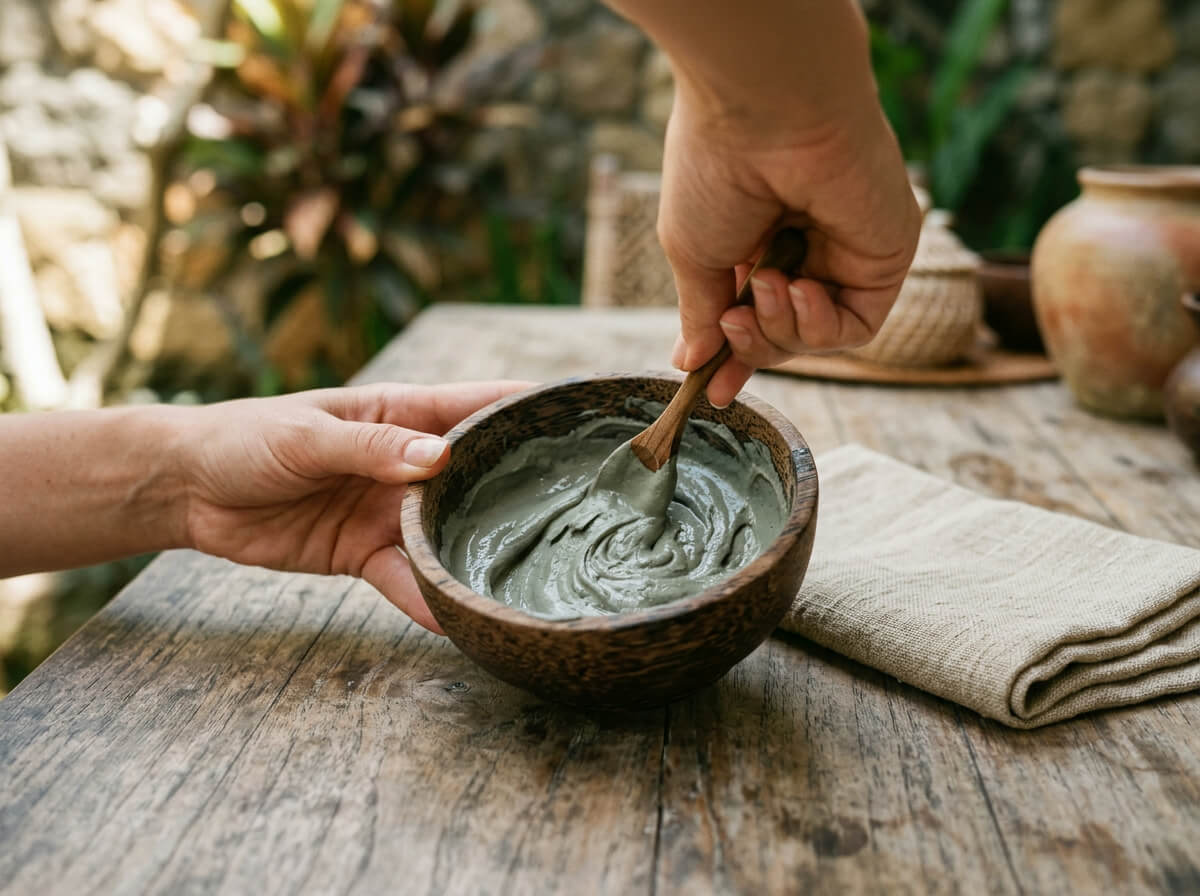
- Use a mild clay mask once a week, away from the eyes. Clay does not pull milia out, whatever some product copy suggests. What a mild mask can do is lift surface oil and loosened cells, so skin around milia on the cheeks, nose, and forehead stays clear and calm. Our pure volcanic Face and Body Clay mixes with a little water. Leave it on for around 10 minutes, rinse before it cracks dry, and never take it onto the eyelids.
- Try a warm compress, with gentle expectations. A clean cloth soaked in warm (not hot) water, held over the area for a few minutes, feels soothing and may soften the surface slightly. It will not melt a cyst. Think of it as a calm ritual that sits alongside the rest of the routine.
- Protect the skin every morning. A mineral sunscreen protects against the sun damage that slows shedding in the first place. More on this in the prevention section below.
What about retinoids and acids?
Dermatologists often suggest a topical retinoid for small milia because it speeds up skin cell turnover. Adapalene is available without prescription in some countries, and stronger retinoids need a prescription. Mild chemical exfoliants such as lactic or glycolic acid can also help over time. These are not products we make, and we would rather say so than pretend a botanical oil does the same job. If you are considering them, ask a pharmacist or dermatologist about how to start slowly, and avoid retinoids if you are pregnant or trying to conceive.
Plant-based options such as bakuchiol are gentler, and we have written about them in our guide to natural retinol alternatives. In honesty, there is no good research showing bakuchiol clears milia specifically, so treat it as a supportive part of overall skin care rather than a milia treatment.
A realistic timeline
Some milia fade within a few weeks. Others, particularly older ones in adults, can stay for many months. If nothing has changed after two to three months of consistent, gentle care, that is a sign the cyst is settled in and a dermatologist’s help will be faster and kinder than more waiting.

A weekly clay ritual, kept away from the eyes
Our Face and Body Clay is pure volcanic clay. Mix a spoonful with water, smooth it over the cheeks, nose, and forehead, and rinse after around 10 minutes. A calm, weekly way to keep skin clear while milia take their time.
What not to do: needles, steam, and harsh scrubs
Some popular milia advice is risky. Here we would rather be honest than popular.

Do not use needles or lancets at home
Professional extraction works because a trained clinician uses a sterile blade or needle to make a tiny opening, then eases the keratin out with precision and good lighting. Home attempts with sewing needles, pins, or bought lancets carry real risks: infection, scarring, pigment changes, and, around the eyes, injury to the eye itself. Watching a video does not transfer the training. Please leave this one to a professional.
Do not steam and squeeze
Steaming the face and then squeezing milia is a popular routine, and it is one we would not recommend. Steam does not open a cyst, because there is no opening there to begin with. Squeezing a sealed sac mostly bruises the skin around it, and very hot steam can aggravate sensitive skin or broken capillaries. Pressure and heat can leave you with a red, sore patch and the same white pearl underneath.
Do not scrub harder
More friction feels logical for a stubborn bump, but it backfires. Harsh scrubs, rough brushes, and gritty pastes can injure the skin, and injured skin can form new secondary milia as it heals. If you enjoy physical exfoliation, keep it gentle and occasional, away from the eyes, as we explain in our guide to natural face scrubs and our older piece on how to safely exfoliate your face.
Do not trust miracle claims
Be wary of any product, natural or not, that promises to dissolve milia overnight. Milia clear on the timeline of skin turnover, which is slow. Patience is not the absence of action. With milia, it is the action.
Newborn milia: why the kindest care is no care
Tiny white dots across a newborn’s nose, cheeks, and chin are extremely common. Estimates suggest around 40% to 50% of newborns have them. Similar small white cysts can appear on the gums or roof of the mouth, where they are often called Epstein pearls.
Here is the reassuring part. Newborn milia are harmless, and they usually clear on their own within a few weeks to a few months as the baby’s skin settles into its own rhythm of shedding. No treatment is needed. In fact, almost every treatment would be a step in the wrong direction.
What gentle care looks like for a baby with milia:
- Wash with plain lukewarm water once a day, and pat dry with a soft cloth. A very mild baby wash is fine for the body, but the face rarely needs it.
- Skip creams, oils, and lotions on the face. Heavy textures can make things worse, not better. This includes coconut oil, which is often recommended for babies with good intentions.
- Do not squeeze, scrub, or pick. A newborn’s skin is delicate, and the bumps will go on their own.
- Keep the area clean and dry from milk and drool, gently wiping with a soft damp cloth.
Milia are also easily confused with baby acne, which tends to look like small red or pus-filled bumps and often appears a few weeks after birth. Baby acne also usually clears on its own. Ask your pediatrician if the bumps look inflamed, if your baby seems unwell or has a fever, if a rash spreads, or if milia are still there after a few months. In rare cases, persistent milia alongside other unusual skin, hair, or nail signs can point to something that deserves a closer look.
If you are building a gentle care routine for a new baby more broadly, our guide to essential oils safe for babies explains why most essential oils should stay away from newborn skin, and our reflection on pijat bayi, the Indonesian tradition of baby massage, offers a ritual of touch for when baby is a little older. For milia, though, the wisdom is simple. Less is more, and time does the work.
Preventing milia: match texture to the skin
Once milia have cleared, prevention is mostly about small daily choices.
Think in zones, not in one routine
We often treat the face as one kind of skin. It is not. A useful habit is to think in zones:
- Eye area: the lightest textures you own, in the smallest amounts, kept off the lash line. No butters, balms, or solid oils here.
- Cheeks: usually tolerate a light serum or lotion, and sometimes a richer cream in dry seasons.
- Forehead, nose, and chin: often oilier, often happier with very little.
If you love facial oils, our guide to face serum vs face oil can help you choose lighter options for areas prone to congestion. Our Natural Face Serum is a light botanical serum for the cheeks and forehead. It contains essential oils, so keep it away from the eyes. Our wider guide to a natural face moisturizer explains how to choose weight by skin type.
Make mineral sunscreen a daily ritual
Because long-term sun damage is one of the most consistent causes of milia, daily sun protection is the most useful habit we can suggest. A mineral sunscreen based on zinc oxide sits on the skin and reflects and absorbs UV. Our Zinc Natural Sunscreen SPF50 is made with water, zinc oxide, vitamin E, and beeswax. Apply it to the face each morning, and keep a thinner layer around the eyes rather than packing it on. A wide-brimmed hat and shade in the middle of the day do the rest. For a closer look at choosing sun care, see our guides to natural sunscreen for the face and natural sunscreen ingredients.
Keep exfoliation gentle and regular
Gentle, regular turnover helps skin shed keratin before it gets trapped. For most people that means a mild clay mask or soft exfoliation once a week, and nothing harsh. If you are curious how clay compares with other masks, our guide to mud mask vs clay mask explains the difference.
Take care of the barrier
Calm skin sheds more evenly, so avoid over-washing and stacking actives. Our guides to repairing the skin barrier and the skin microbiome explain why a lighter routine helps.
Prevention is not a single product. It is a quiet pattern: lighter textures near the eyes, daily sun care, gentle turnover, and patience with the skin’s own timing.
Frequently asked questions about how to get rid of milia

How long do milia last?
It varies. Newborn milia usually clear within a few weeks to a few months. In adults, some milia fade within weeks, while others can last for many months or longer, especially secondary milia. If gentle care has not helped after two to three months, a dermatologist can remove them quickly.
Can I pop milia like a pimple?
No. Milia have no opening, so there is nothing to push out. Squeezing usually bruises and irritates the skin, and it can lead to scarring. Professional extraction uses a sterile tool to make a tiny opening first, which is why it should be done by a trained clinician.
Does coconut oil cause milia?
Coconut oil does not cause milia in everyone. It is a heavy texture, though, and heavy textures on thin skin, particularly around the eyes, are a common contributor. If you notice milia where you apply coconut oil, try keeping it to the body and hair and using a lighter product on the face.
Will a clay mask get rid of milia?
Not directly. Clay cannot draw out a sealed keratin cyst. A mild weekly clay mask can help keep surface oil and loose cells in check around the area, which supports the skin’s turnover. Think of it as supportive care rather than a treatment.
What is the fastest way to get rid of milia?
The fastest way is a visit to a dermatologist. Removal is quick, usually takes a few minutes, and is done with sterile tools. At home, the honest answer to how to get rid of milia is slower: gentle cleansing, lighter textures, sun protection, and time.
Are milia a sign of something serious?
Usually not. Most milia are harmless. See a doctor if they appear suddenly in large numbers, appear on a raised plaque of skin, come with other unusual symptoms, or if you are unsure whether a bump is milia at all.
A closing thought on patience
Milia teach a quiet lesson. Not every mark on the skin needs to be fought. Some need understanding, time, and the simplest care we can offer. Lighter textures near the eyes. Gentle cleansing. Sun protection every morning. A weekly clay ritual that respects the skin rather than scouring it. And the honesty to call a professional when patience has done all it can.
That is how we think about care in general. Truth before trends. Gentleness before force. Progress, not perfection. If your milia take a little while to leave, that is not failure. It is skin, working at its own pace, and we can learn to work with it.