How to use body oil: a Balinese guide to daily skin ritual
Most guides on how to use body oil stop at the mechanics: apply it after a shower, use less than you think, wait before you get dressed. All of that is true. But it leaves out the part that makes body oil worth the bottle: why it works, why timing matters so much, and why a ritual that has anchored daily care in Bali for generations still makes more sense than most of what sits on a modern bathroom shelf.
This guide covers both. We start with the skin science, then move to choosing an oil for your skin and your climate, a clear step-by-step method, the Balinese context behind it, and the small mistakes that turn a nourishing oil into a greasy one. If you have just bought your first bottle, or you have one gathering dust because it “never sinks in,” this is for you.
Why body oil fell out of favor, and why it is coming back
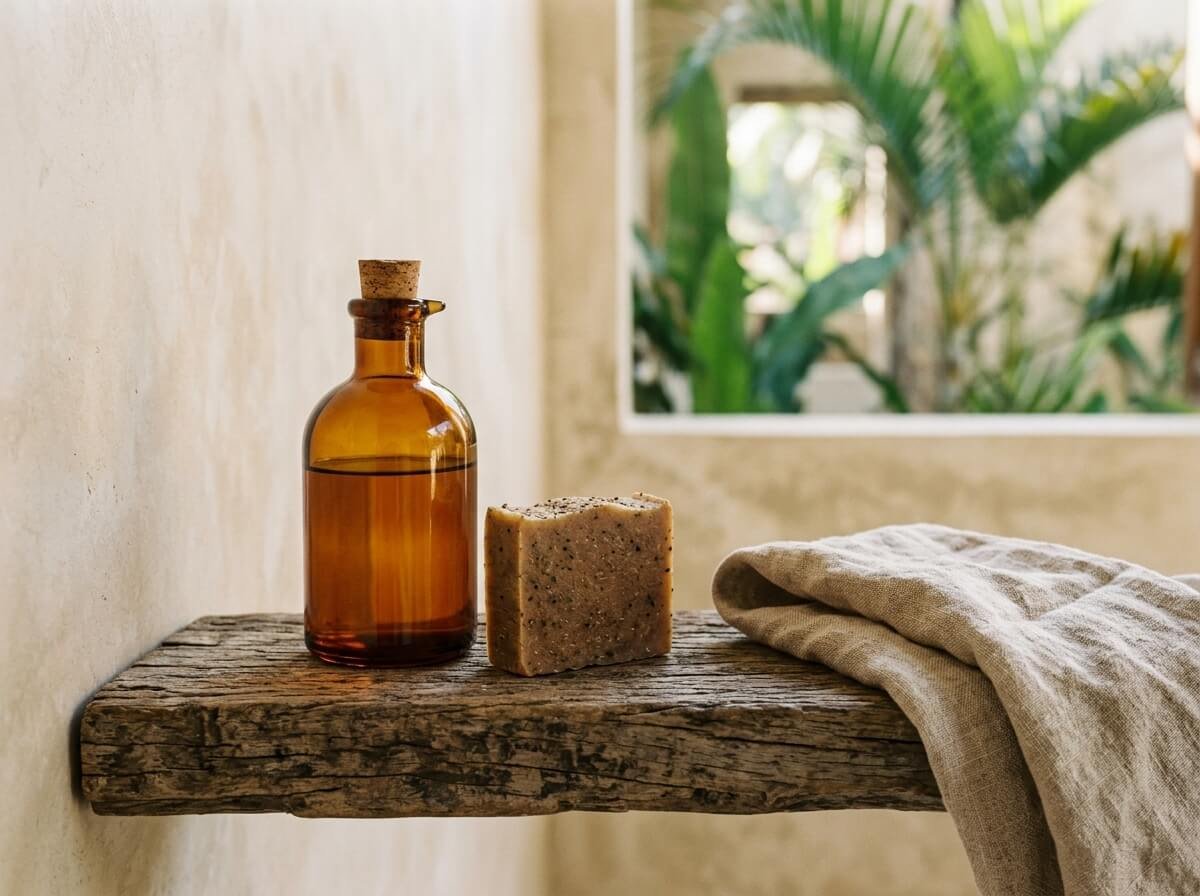
For most of human history, caring for skin meant oil. Coconut in the tropics, olive around the Mediterranean, sesame across South Asia. People pressed what grew around them and rubbed it into skin after bathing. It was simple, local, and it worked.
Then lotion arrived and changed the shelf. Lotion is mostly water, held together with emulsifiers, thickened with waxes, and protected with preservatives so it can sit in a warm bathroom for two years. It feels light, it disappears fast, and it pumps neatly from a bottle. Those are real advantages. They also made oil feel old-fashioned and messy by comparison.
In Bali, oil never left. Coconut oil is still pressed in village kitchens, still warmed between palms after the evening bath, and still the base of the massage oils that families use on each other at home. Utama Spice began in Melanie Templer’s kitchen in Ubud in 1989, and that same everyday relationship with oil shaped the first things she made. It still shapes how we blend today.
Now the rest of the world is circling back. People who read ingredient lists have noticed that many lotions list water first and the nourishing oils far down the list. Others want fewer products with fewer ingredients. And many simply miss the feeling of a slower, more sensory routine. Body oil answers all three. One ingredient list you can read in a breath. One bottle that does the job of several. A few quiet minutes that feel like care rather than a chore.
There is an honest point to make here. Body oil is not a trend. It is one of the oldest skincare practices we have, and it did not need a rebrand to work. What it needs is to be used properly, which is where most of the frustration comes from.
How body oil works on skin (the science, without the jargon)
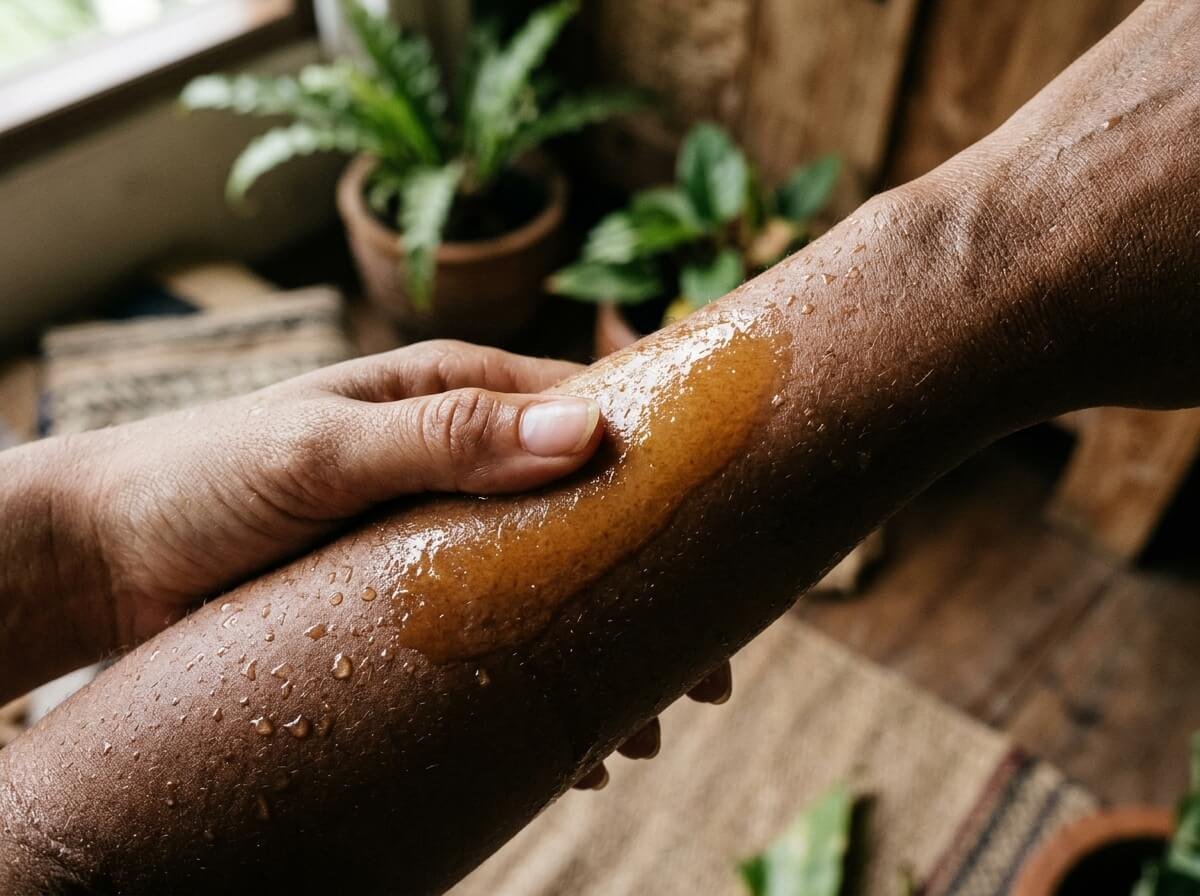
Your skin’s outer layer works like a brick wall. The bricks are flattened skin cells. The mortar between them is a mix of lipids: ceramides, cholesterol, and fatty acids. That lipid mortar is what keeps water in and irritants out. When it is thin or disrupted, skin feels tight, looks dull, and flakes. We go deeper on this in our guide to how to repair your skin barrier.
Because that mortar is made of lipids, plant oils speak a similar language. They do two jobs at once. First, they soften: oils slip into the spaces between surface cells and smooth the rough edges, which is why skin looks brighter within minutes. Second, they slow water loss: a thin film of oil on the surface reduces how fast water evaporates out of the skin. Some oils also bring fatty acids, such as linoleic acid, that the skin can use in its own barrier.
Here is the part most guides skip. Oil does not add water to skin. It holds in the water that is already there. That is why damp skin matters so much. Straight after a bath or shower, the outer layer is swollen with water. Oil applied in that window traps a share of it. Oil applied to dry skin an hour later has much less water to hold, so it sits on top and feels greasy.
Lotion works differently. It brings its own water, plus humectants like glycerin that draw water in, and some oil to slow it escaping. That is useful on very dry skin, and it is why some people pair the two. Our comparison of body oil vs body butter walks through when a richer, more occlusive layer earns its place.
Climate changes the rules too. In humid Bali, the air is already full of water, skin loses moisture slowly, and a few drops of a light oil go a long way. In a heated apartment in a northern winter, dry air pulls water out of skin all day, so oil on damp skin matters more and you may want a heavier oil or a lotion underneath. We wrote a short note on how humidity changes oil absorption if you split your year between climates.
How to choose a body oil for your skin and your climate
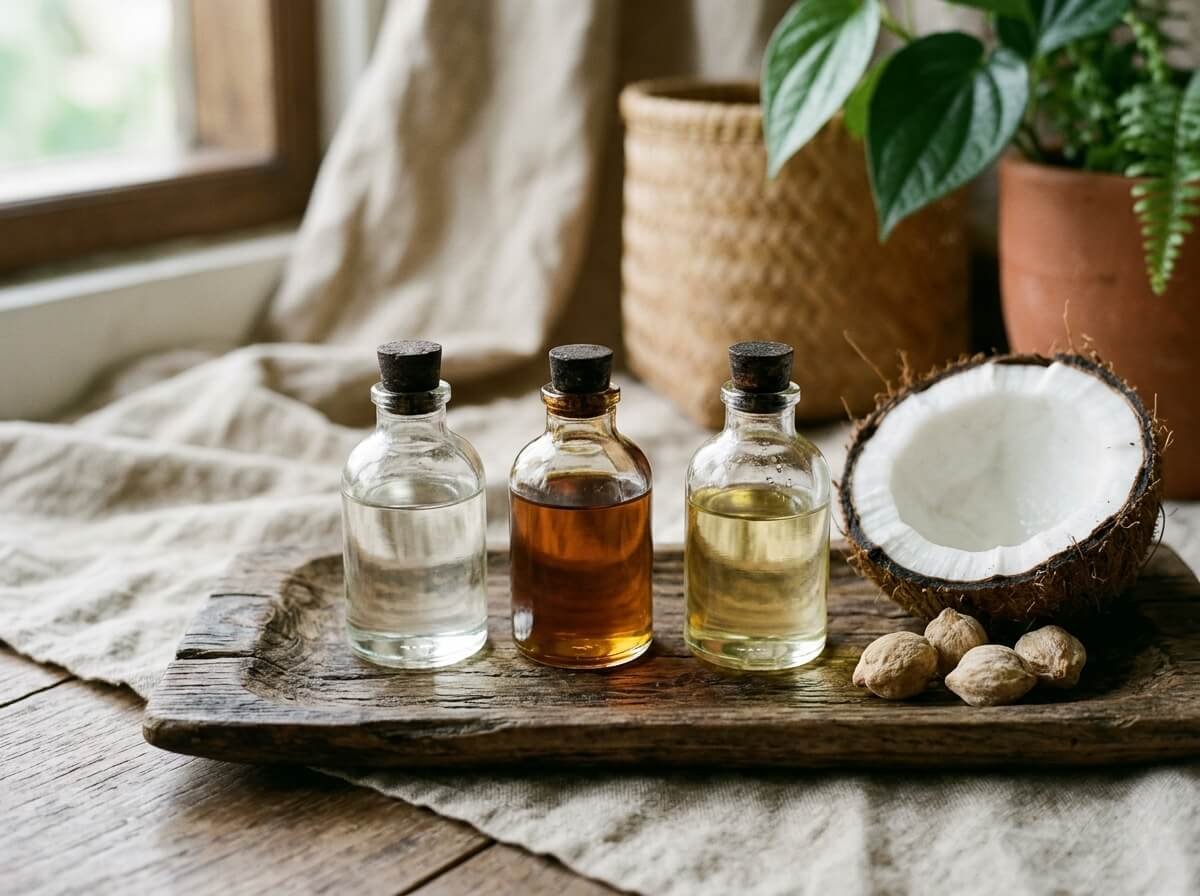
Not all plant oils behave the same way. They differ in weight, in how fast they absorb, and in the fatty acids they carry. Our carrier oil guide for every skin type goes oil by oil. Here is the short version for choosing a daily body oil.
Dry, tight, or dull skin
Look for richer oils high in oleic and lauric acids. Virgin coconut oil is the backbone of Balinese body care for good reason: it spreads easily, smells clean, and softens rough areas like elbows and shins. A bottle of cold-pressed Virgin Coconut Oil is the simplest place to start. Our deeper guide to coconut body oil covers how to choose and layer it. Kukui (candlenut) oil is another traditional choice across Indonesia and the Pacific, lighter than it looks and kind to weathered skin; read more in our kukui oil explainer.
Normal or combination skin
A blended body oil works well here, with a lighter carrier for glide and a richer one for softness. Our Lavender Body Oil pairs soya and coconut oils with lavender, a balance that absorbs well on damp skin without feeling heavy.
Oily or breakout-prone body skin
Choose lighter, faster-absorbing oils and use less. Argan Oil is a good fit: it is non-comedogenic for most people and leaves little residue. Apply it to the driest zones only, such as shins and forearms, rather than the back and chest.
Sensitive or reactive skin
Fragrance, including essential oils, is the most common trigger. Start with a single-ingredient oil and patch test it on the inner forearm for 24 to 48 hours. Tamanu is single-ingredient and fragrance-free; our Tamanu Oil is cold-pressed and works well on small, rough patches.
Scented or unscented
Scent is half the ritual for many of us. A blend like our Lemongrass Ginger Body Oil is warming and wakeful in the morning. Keep in mind that it contains cinnamon bark and fennel, so it is not the right choice during pregnancy or on broken skin. If you want to scent your own oil, our guide on how to dilute essential oils covers safe ratios for body use.
Match the oil to the season
In heat and humidity, choose lighter oils and fewer drops. In cold, dry months, go richer, apply more generously, and consider a body butter on the roughest areas at night.
Look at the bottle, too
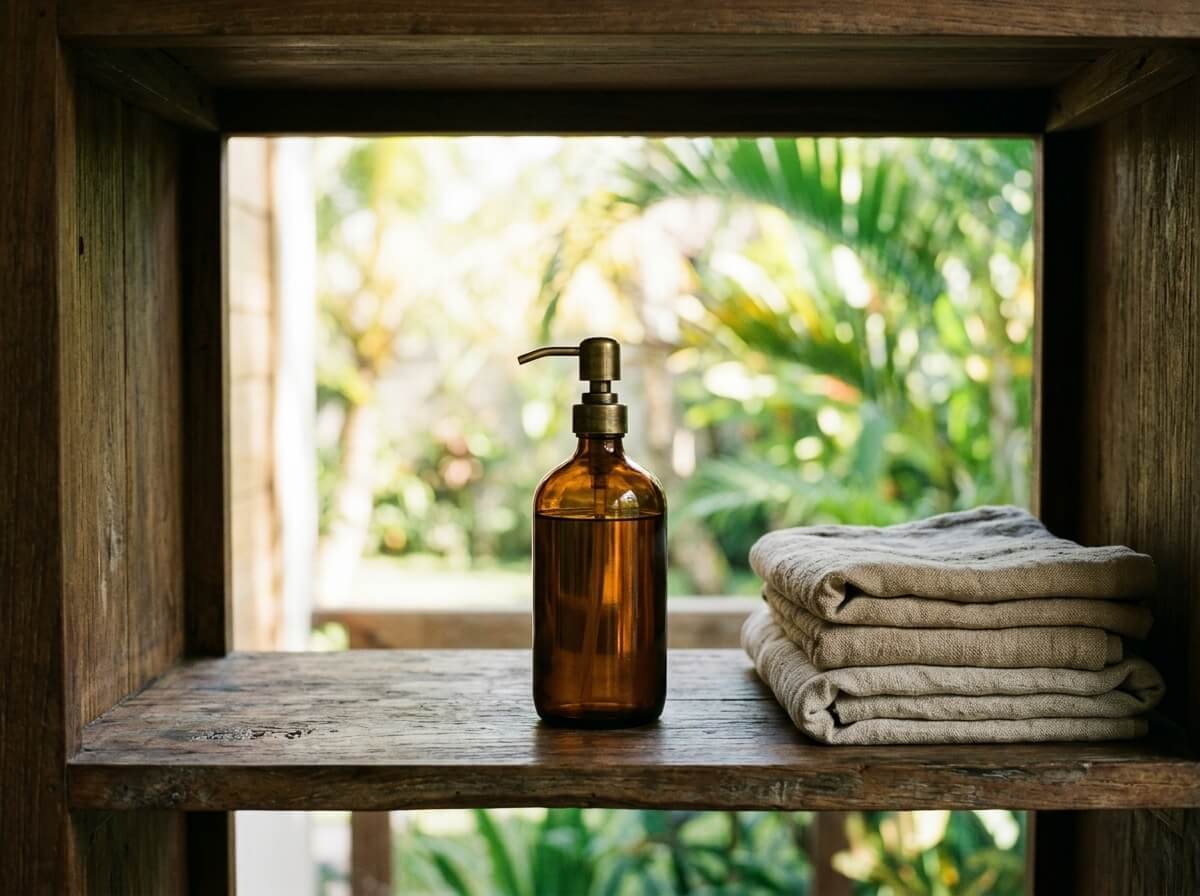
How an oil is packed matters as much as what is inside. Glass protects oil from the chemicals that can leach out of soft plastics, and dark glass slows the light damage that turns oil rancid. A good bottle is also one you can keep. Wash it, refill it, and use it again. Every refill is a small act of care, for your skin and for the place your empties would otherwise end up.

Begin your evening oil ritual
Our Lavender Body Oil blends soya and coconut oils with pure lavender, hand-blended in Bali. Warm a teaspoon between your palms after your evening bath, press it into damp skin, and let the scent slow the day down.
How to use body oil: a step-by-step ritual
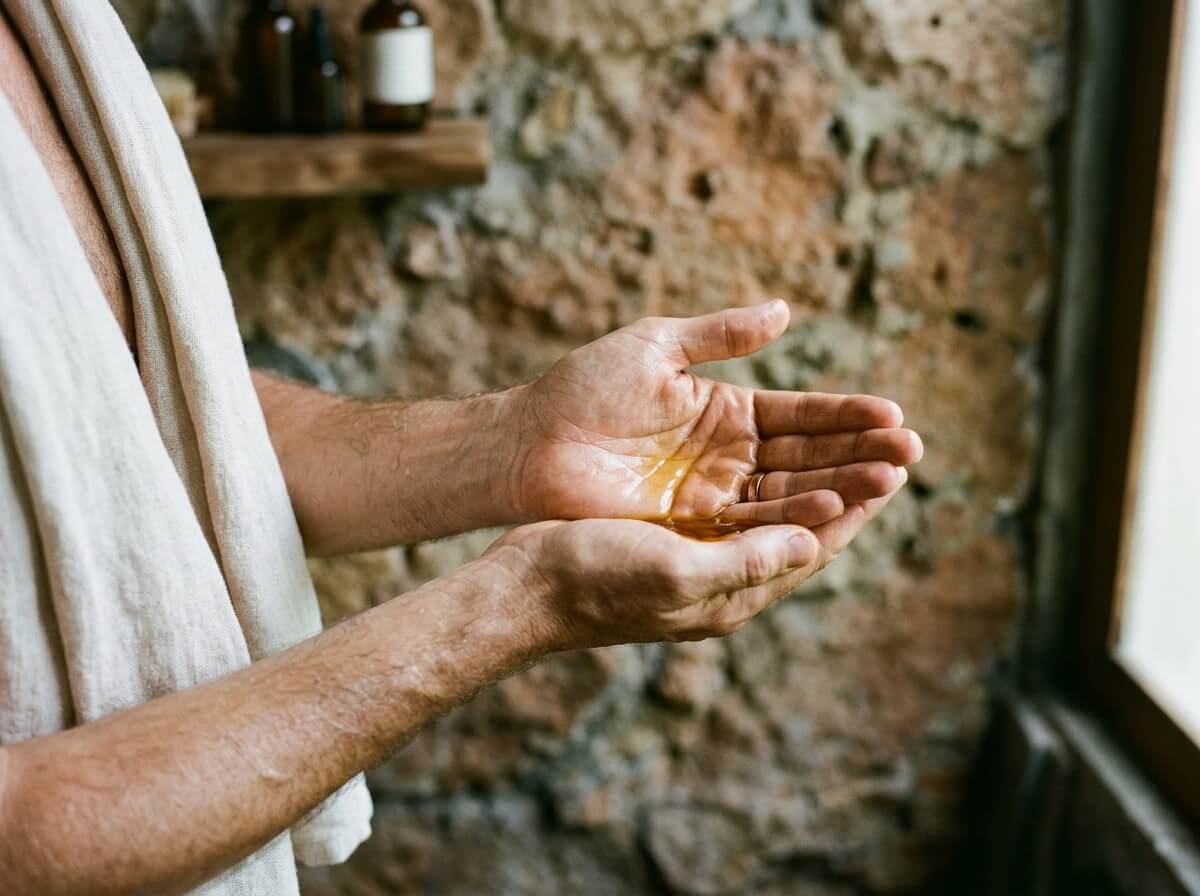
Here is how to use body oil so it sinks in rather than sits on top. The whole ritual takes about three minutes.
1. Bathe in warm water, not hot
Hot water strips the same lipids you are trying to protect. Warm water softens skin and opens the absorption window without the stripping. A gentle cleanser helps too; our guide to natural body wash explains what to look for.
2. Pat, do not rub
Step out and press a towel against your skin to lift the drips. You want skin damp to the touch, not wet and not dry. This is the window. Aim to start within a minute or two.
3. Warm the oil in your palms
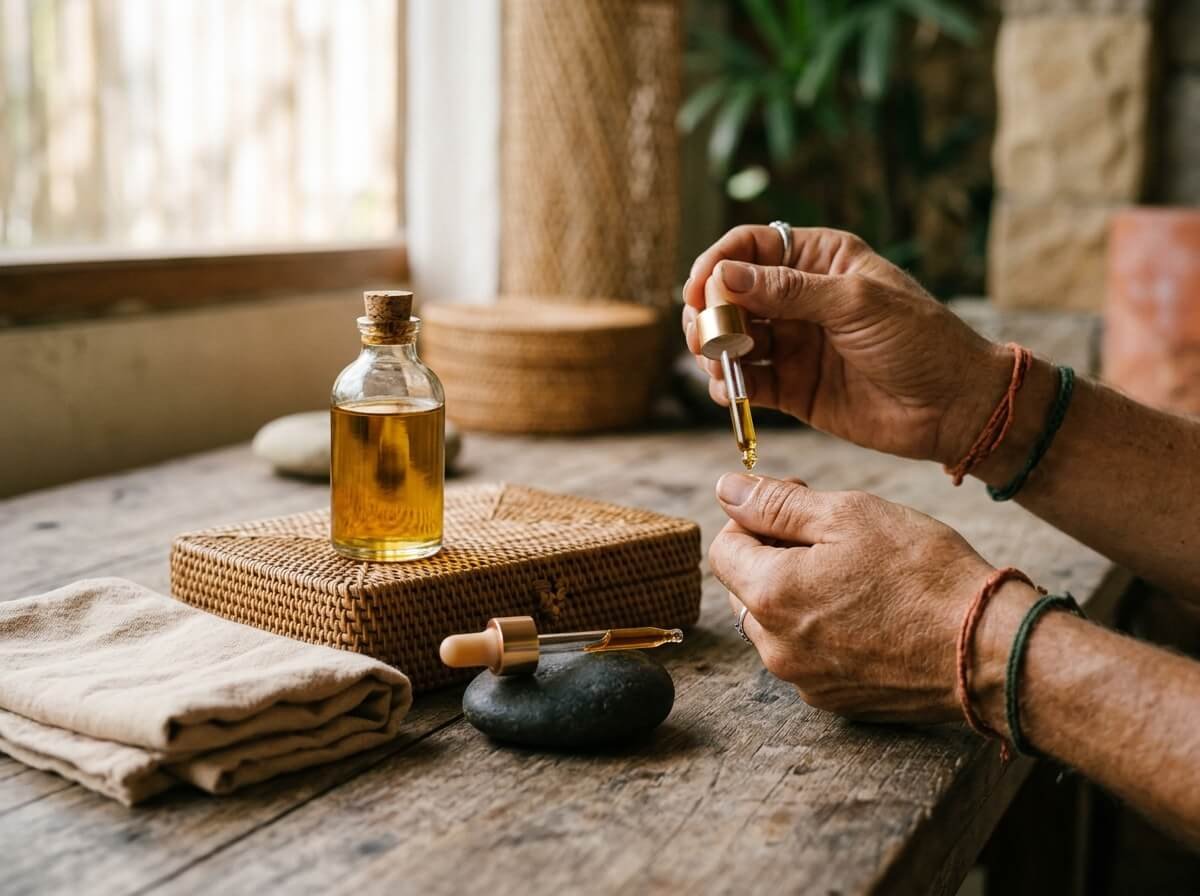
Pour a small pool, about a teaspoon for the whole body, into one palm. Rub your hands together for a few seconds. Warm oil spreads further, so you use less. We love this small pause; it is the moment care becomes a ritual. There is a short note on the palm-warming ritual if you want to slow it down further.
4. Use long strokes toward the heart
Start at the feet and ankles and move up the legs in long, unhurried strokes. Then the arms, hand to shoulder. Then the belly in slow circles, the chest, and as much of the back as you can reach. Many massage traditions share this upward direction, and it simply feels calming.

5. Give extra time to the dry zones
Elbows, knees, heels, shins, and the backs of the arms tend to be driest. Press a few more drops into these and let them rest a moment longer under your hands.
6. Let it settle before dressing
Give it five to ten minutes. Brush your teeth, make tea, or simply sit. If skin still feels slick after ten minutes, you used too much; next time, use less. Press a towel lightly over any spot that still shines.
Morning or evening?
Both work, and they do different jobs. In the morning, use a little less so clothes go on easily, and choose a brighter scent like lemongrass or citrus to wake the senses. In the evening, be more generous, take your time, and choose a calming scent such as lavender. Evening is when most of us have the few unhurried minutes that turn oiling into a true ritual. Skin also does much of its repair overnight, so a layer before bed gives it a quiet head start.
Adjusting for your climate
In tropical heat, halve the amount and favor the dry zones. In winter, you can apply oil, then a light lotion on top for the driest areas, or mix two or three drops of oil straight into a palmful of lotion such as our Coconut Lotion Lavender.
The Balinese way with body oil
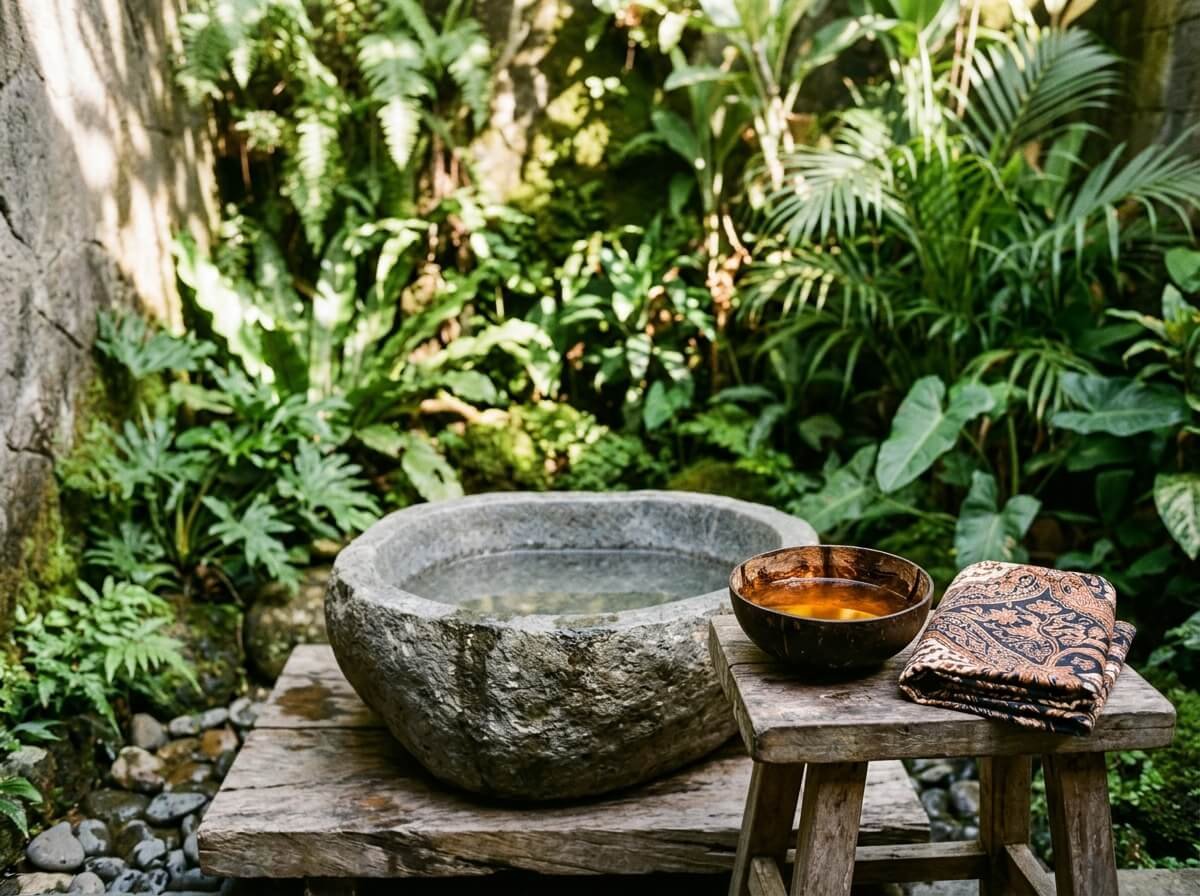
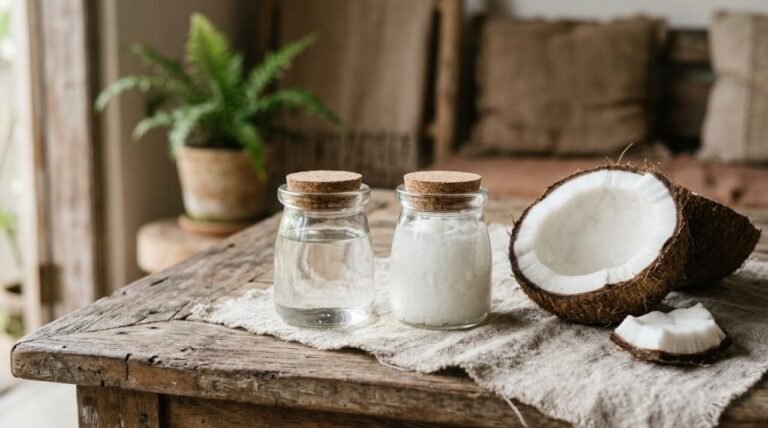
In Bali, oil is not a step in a routine. It is part of how a day begins and ends. The bath is often taken twice daily in the tropical heat, and oil follows as naturally as drying off. Coconut oil, made in home kitchens by slowly cooking down coconut milk, has been the everyday choice for generations. It moisturizes, it protects skin from sun and salt, and it is warmed into the scalp and hair as well.
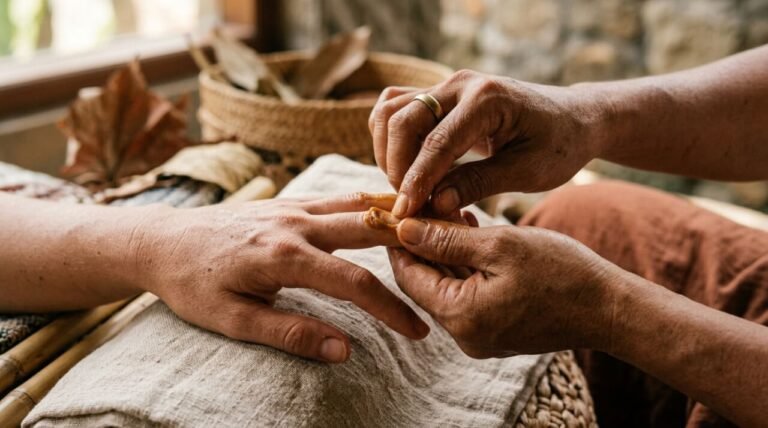
Oil is also central to care between people. Balinese massage, practiced by healers and in family homes, uses warm oil and long, firm strokes to ease tired muscles after work in the fields. Our guide to Balinese massage oil goes deeper into the oils and aromatics used.
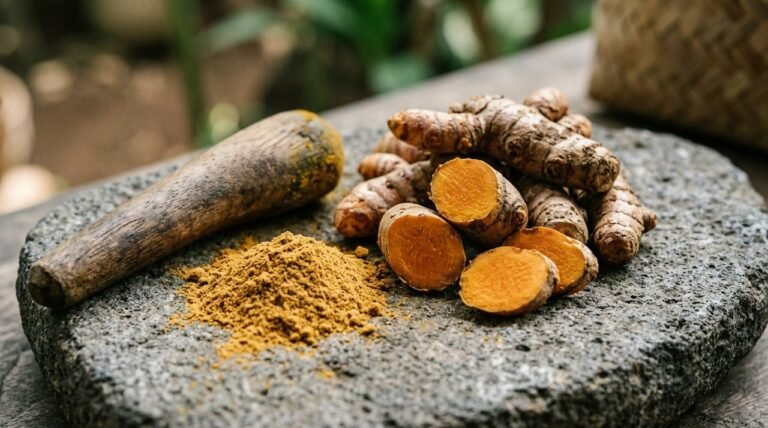
Oil also closes many of Indonesia’s traditional body treatments. Lulur, a scrub of rice powder, turmeric, and spices that came to Bali from the royal courts of Central Java, is traditionally followed by an oil massage to seal in softness. It has long been part of the preparations before a wedding. Our lulur scrub guide explains the full sequence. For a wider view of these practices, see our piece on Balinese beauty rituals.
What can we take from this without borrowing what is not ours? A few simple principles that apply anywhere:
- Oil follows water. Bathing and oiling belong together.
- Less, more often. A light daily layer beats an occasional heavy one.
- Use your hands. Oiling is touch, and touch is part of the care.
- Let scent set the tone. Lemongrass and ginger in the morning, lavender in the evening.
None of this is exotic. It is what happens when people live close to the plants that grow around them and pay attention to their own skin. That is the heritage we try to honor in every bottle we blend in Bali.
Common body oil mistakes, and how to avoid them
Almost every complaint about body oil traces back to one of these.
Applying to dry skin
The most common mistake. Without water underneath, oil has nothing to hold and sits on the surface. Apply within a couple of minutes of bathing. If you missed the window, mist skin with water or wipe it with a damp cloth first.
Using too much
“Greasy” is almost always a quantity problem. A teaspoon covers most bodies. Start smaller and add to dry zones.
Oiling in the shower
Some people apply oil before turning the water off. It can work, but oil on a shower floor is a slip risk, and much of it rinses away. If you try it, apply oil to your feet last, after you step out.
Rushing into clothes
Dressing straight away moves the oil from your skin onto fabric. Give it five to ten minutes. Over time, oil left in fabric can oxidize and mark pale linen, so wash sheets and towels regularly.
Mixing with the wrong layers
Oil applied before a water-based lotion can block the lotion from absorbing. Put lighter, water-based products on first and oil last. Keep body oil away from freshly shaved or waxed skin if it is scented, as essential oils can sting.
Storing it badly
Plant oils oxidize with light, heat, and air. Keep the bottle closed, away from the sunny windowsill, and use it within about a year of opening. If it smells like old nuts or crayons, it has turned rancid; compost it. Our tips on how to store essential oils apply to body oils as well. And remember that virgin coconut oil turns solid below roughly 24°C (76°F). That is normal. Warm the bottle in your hands or stand it in warm water.
Expecting oil to fix everything
Body oil softens and protects. It does not replace drinking water, a mild cleanser, or sun protection. On sunburned skin, cool the heat first with aloe and wait until the burn has settled before adding oil; our guide to natural after-sun care covers the order.
Frequently asked questions about how to use body oil
Should I use body oil before or after lotion?
After. Water-based lotion goes on first, oil goes on last to seal. Or mix a few drops of oil directly into your lotion.
Can I use body oil every day?
Yes. A light daily layer on damp skin is the most effective way to use it. In very humid weather, every other day may be enough.
How much body oil should I use?
About a teaspoon for the whole body, warmed between your palms. Use a few extra drops on elbows, knees, and heels.
Can I use body oil on my face?
It depends on the oil. Body oils are often richer and can be scented, which facial skin may not tolerate. Our guide to face oil vs body oil explains the difference.
Does body oil help with stretch marks?
Oil keeps skin supple and comfortable as it stretches, and massage can make the area feel softer. Honest truth: no oil can erase established stretch marks. See our guide to natural stretch mark oil for what to realistically expect.
What else can body oil do?
Quite a lot. A drop on cuticles softens them overnight. A thin layer before shaving helps the razor glide. A small bottle makes a minimal travel kit: body moisturizer, hair-end smoother, and massage oil in one.
Will body oil stain my clothes or sheets?
Fresh oil that has absorbed rarely transfers. Problems come from using too much or dressing too fast. Wait five to ten minutes and wash linens regularly.
Is body oil safe during pregnancy?
Unscented, single-ingredient oils such as virgin coconut oil are the gentlest choice. Avoid blends with essential oils like cinnamon or fennel, and check with your midwife or doctor before using any scented product.
A small ritual, every day
Learning how to use body oil well comes down to a few quiet habits: damp skin, warm hands, less oil than you expect, and a few minutes to let it settle. Choose an oil that suits your skin and your climate, store it away from heat, and let scent set the mood of your morning or evening.
It is one of the simplest acts of care we know, and one of the oldest. In Bali, it has never gone out of fashion. What you give your skin each day, you get back.